Nguthungulli Julian Rocks: The Name, The Reserve And The Snorkel Rules
The rocks off Byron Bay carry one of the oldest names on the coast and some of the newest rules. Here is what Nguthungulli means, what the reserve protects, and what actually happens on a snorkel visit.
Short answer
Nguthungulli is the Bundjalung word for 'Father of the World'. The dual name Nguthungulli Julian Rocks was adopted in July 2023, and the NSW National Parks page now reads Nguthungulli Julian Rocks Nature Reserve. The rocks sit in Cape Byron Marine Park, about 2.5 km offshore, inside a sanctuary zone where snorkelling is permitted and fishing is not.
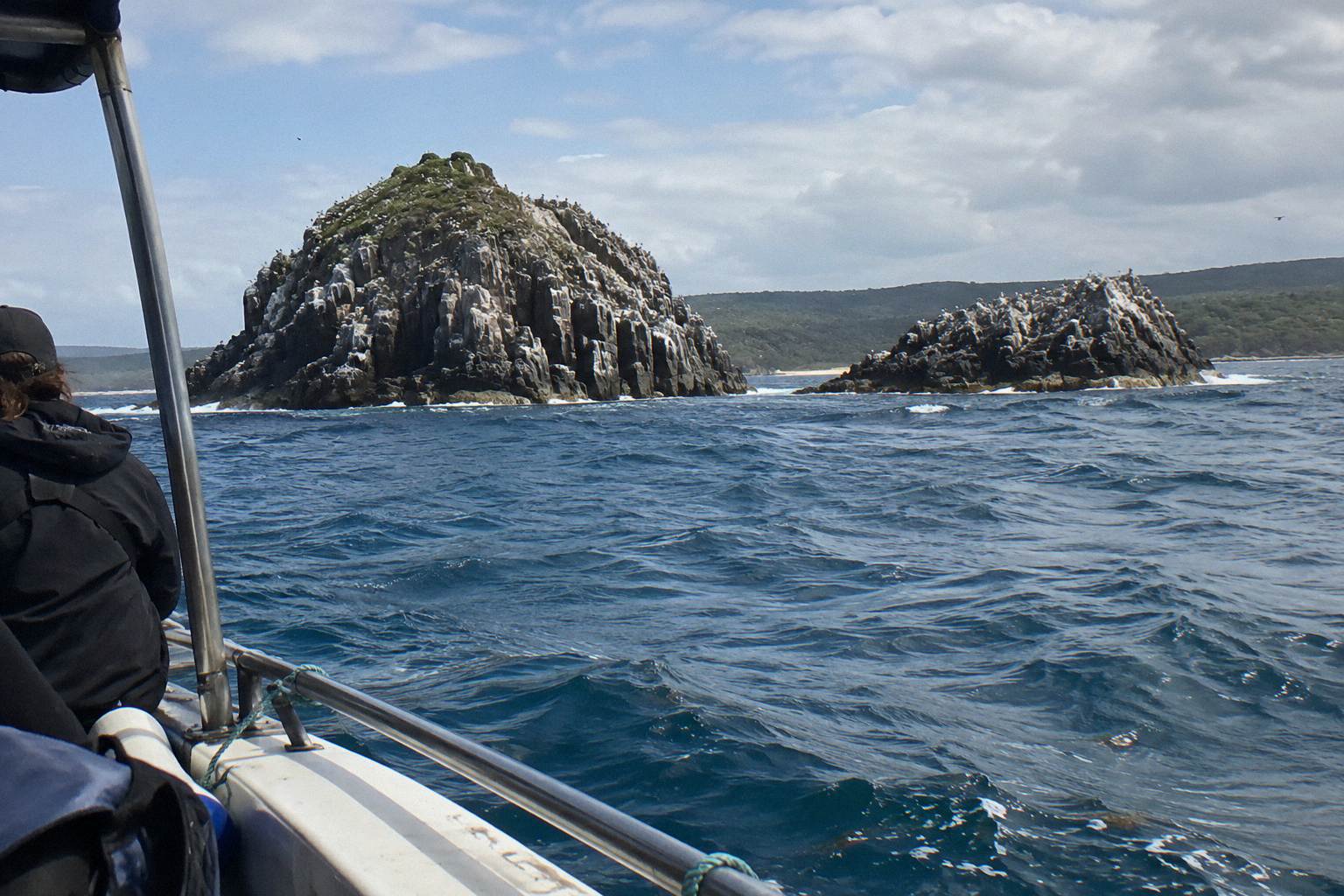
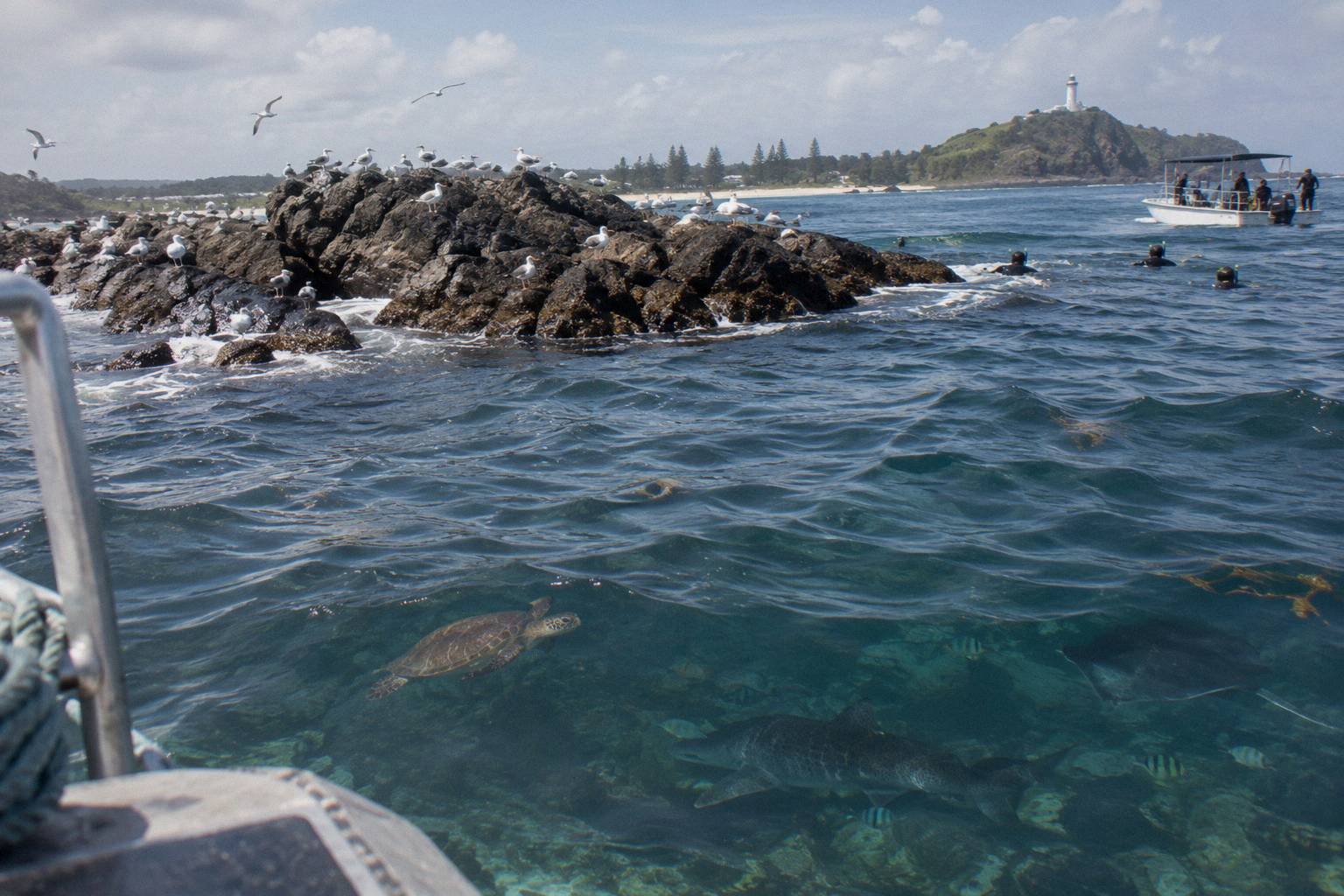
Nguthungulli Julian Rocks is a pair of rocky islets about 2.5 km off Cape Byron, and the name now attached to them is one of the more significant recent acts of recognition on the NSW north coast. In July 2023 the reserve officially took the dual name Nguthungulli Julian Rocks Nature Reserve, pairing the Bundjalung name with the one Europeans later gave the rocks. The NSW National Parks page title now reads that way, and the change is more than cosmetic: it puts the Bundjalung story of the place alongside the colonial one on every official document that mentions it.
For snorkellers, the name matters less than the protection it sits inside. The rocks lie within Cape Byron Marine Park, in a sanctuary zone where fishing and collecting are banned and snorkelling is explicitly permitted. That single fact shapes everything about a visit: why the marine life is so abundant, why the boats use moorings instead of anchors, and why there are speed limits, no-touch rules and bird-sanctuary restrictions around the rocks themselves. This guide walks through the name, the reserve and the rules, then covers what a snorkel trip to the rocks actually involves and which tours visit it.
What Does Nguthungulli Mean?
"Nguthungulli" is the Bundjalung word for "Father of the World". The dual name Nguthungulli Julian Rocks was adopted in July 2023, and the NSW National Parks and Wildlife Service page for the reserve now carries the title Nguthungulli Julian Rocks Nature Reserve. One local operator describes Nguthungulli as "the local Arakwal name" in its own tour copy, which is the operator's wording rather than an official attribution.
The Bundjalung People of Byron Bay, the Arakwal, hold a strong association with the land and sea in the northern parts of Cape Byron Marine Park, while the Jali people are associated with the southern section, according to the NSW Department of Primary Industries and Regeneration's page for the marine park. That association long predates the marine park itself, which was only established in November 2002, and the naming of the reserve in 2023 was a formal acknowledgment of a connection that had never lapsed.
There is also a story attached to the rocks themselves. A reported Bundjalung story, carried by Wikipedia citing a published source, tells that a spear broke a canoe in two, and the two halves of that canoe became the rocks. It is worth being clear about status: this is a reported story, told here as it was recorded, not a claim about geology or an official account. The name and the story do that work on their own.
The dual naming matters in a practical way too. Search for the reserve, the moorings or the marine park rules and you will now meet both names, sometimes in the same sentence: Nguthungulli Julian Rocks in the official title, Julian Rocks in everyday Byron Bay speech, and both on tour listings. If you are planning a trip, it helps to know they refer to exactly the same two islets, and that every rule in this guide applies to the place regardless of which name a website uses. The NSW National Parks page for Nguthungulli Julian Rocks Nature Reserve is the official reference for the reserve's name and status.
What Is The Nguthungulli Julian Rocks Nature Reserve?
Nguthungulli Julian Rocks is a nature reserve about 2.5 km offshore from Byron Bay, sitting inside Cape Byron Marine Park. The marine park runs about 37 km of coast from the Brunswick River north training wall to Lennox Head and covers about 220 km2 of state waters out to 3 nautical miles. Snorkelling is a permitted activity in the sanctuary zones, which make up 27.5% of the marine park.
“This was an incredible experience! We got lucky with the conditions and saw a huge variety species. Loved this even more than when I snorkelled the Great Barrier Reef. Not to be missed!”
The two layers of protection are easy to confuse, so it is worth separating them. The nature reserve, managed under the National Parks framework, covers the rocks themselves. The marine park, managed with DPIRD involvement, covers the water around them and runs the zoning. A snorkel trip interacts mostly with the marine park rules, because you are in the water, but the reserve status is what makes the rocks a bird sanctuary, a point covered in the rules section below.
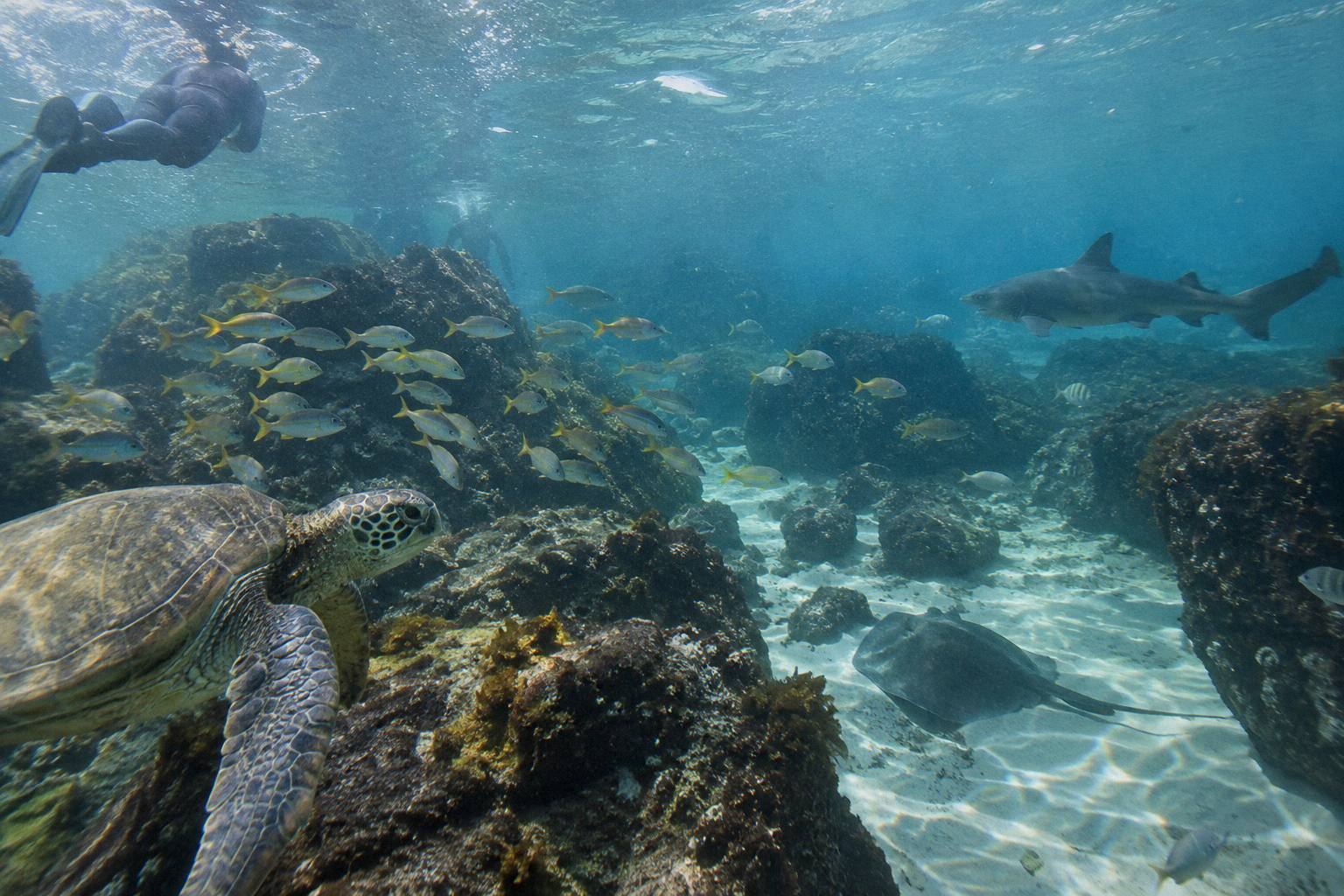
The reserve's own area is not printed here. Sources disagree on a figure and none of the verified official pages state one plainly, so this guide states none rather than repeating a number that may be wrong. What is stated, clearly and repeatedly, is what the place holds. The DPIRD page for the marine park puts it directly: "Nguthungulli Julian Rocks is home to many fascinating animals, including sharks, rays, turtles, eels, starfish and corals."
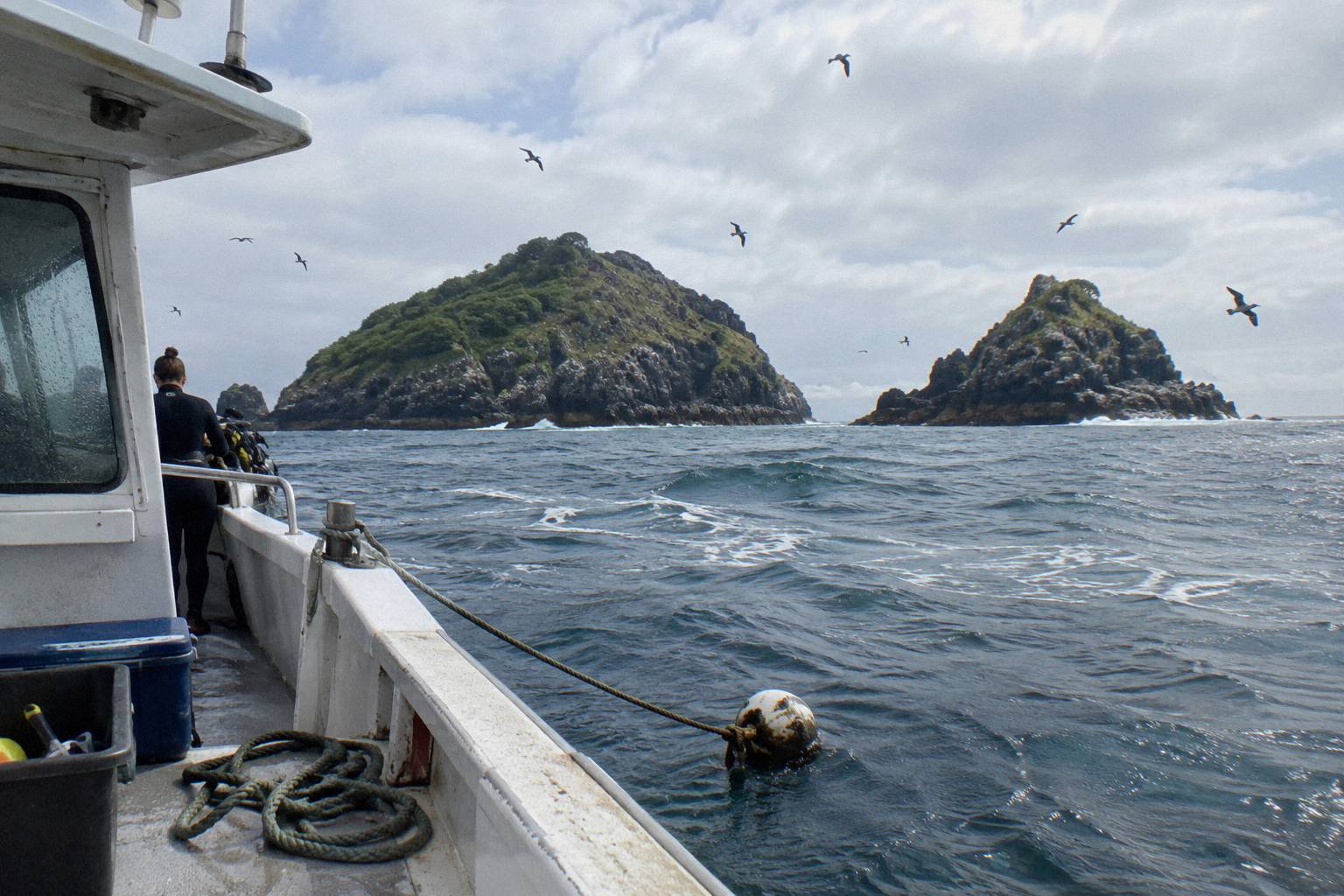
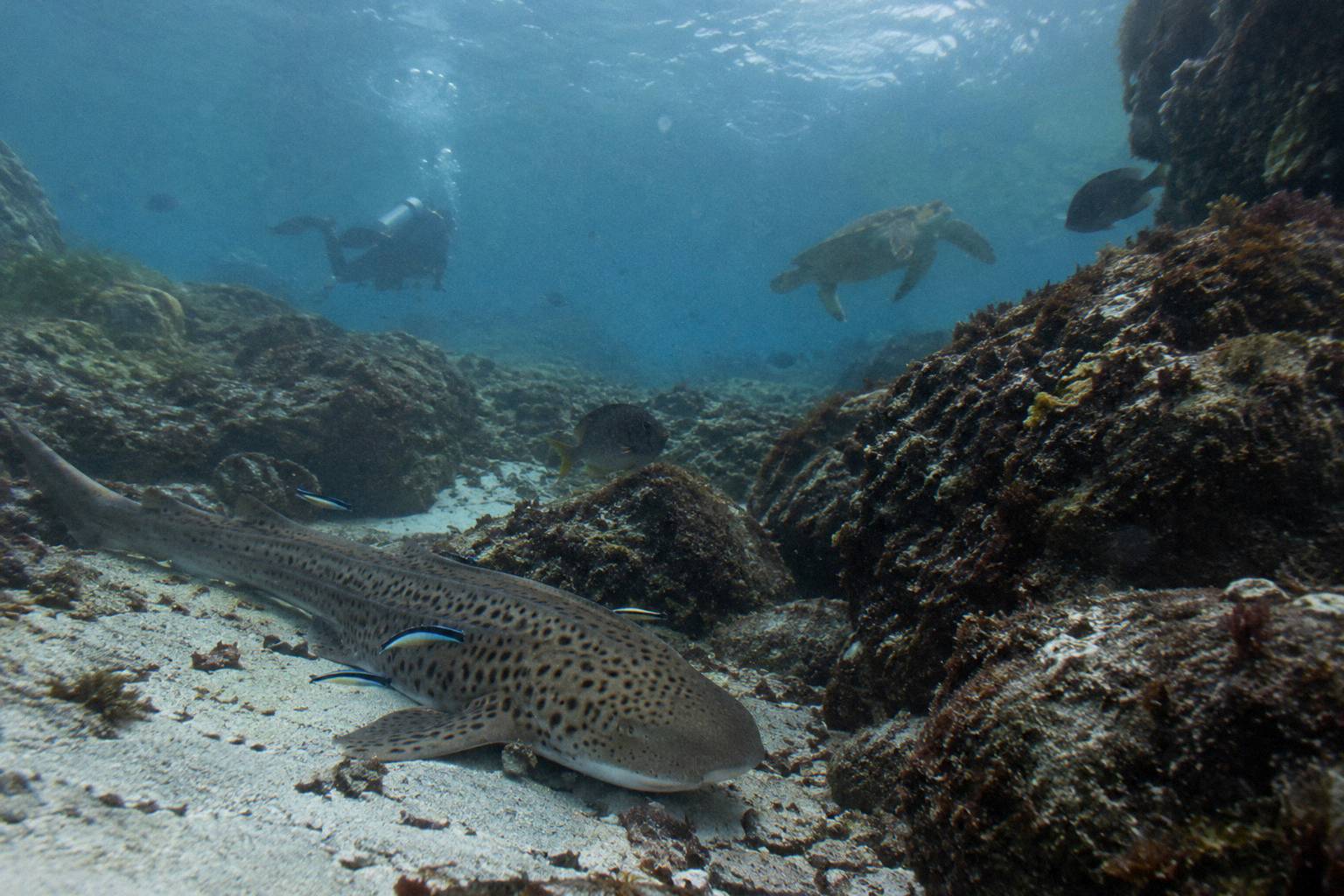
Why is the marine life so rich here? The answer is the East Australian Current. The marine park sits where that warm tropical current meets cooler southern waters, and operators attribute the abundance to exactly that convergence, describing the site as holding "over 1000 marine species" and "more than 500 different species of fish". Those are operator wordings, not official counts, and they are presented here as what the operators say rather than what a survey found. Still, the underlying mechanism is real and is described on the DPIRD's own Cape Byron Marine Park page: tropical and temperate species overlap at this latitude, which is why a summer snorkel can turn up leopard sharks more often associated with warmer water while a winter dive can find grey nurse sharks.
Getting there is quick. The rocks are about 2.5 km offshore, and operators put the boat ride from Byron Bay at about 5 minutes, with Byron Bay Dive Centre's FAQ saying approximately 5 to 10 minutes. From Brunswick Heads Boat Harbour, both Blue Seafaris and Out Of The Blue Adventures run a speedboat that takes 15 minutes each way. Whichever departure you use, the trip is more about the hour in the water than the transit, and even travellers prone to queasiness generally manage it, a point covered in more depth in the piece on whether seasickness hits the Julian Rocks boat ride.
Several operators run trips to the rocks, and the three below are the core snorkel options for this site, spanning different meeting points and formats.
The featured trip among those is the Blue Seafaris Julian Rocks Snorkelling Tour, which runs about 2.5 hours from Brunswick Heads Boat Harbour, from AUD 94 per person, rated 4.5 across 448 reviews on its booking page. The Turtle School trip takes a different shape, meeting in Byron town with transport to the boat, and the Byron Bay Dive Centre sea turtle snorkel is a turtle-focused version of similar length. Each is covered in the section on what a visit involves.
What Rules Apply When You Snorkel Nguthungulli Julian Rocks?
The rocks sit in a sanctuary zone, the highest level of protection in the marine park: no fishing, no collecting, no anchoring on reefs, and all species protected. Boats must travel at 4 knots or less within 200 m of the rocks, may not anchor within 700 m, and use one of seven marine park moorings with a 2 hour maximum stay. Fish feeding, including shark feeding, is prohibited.
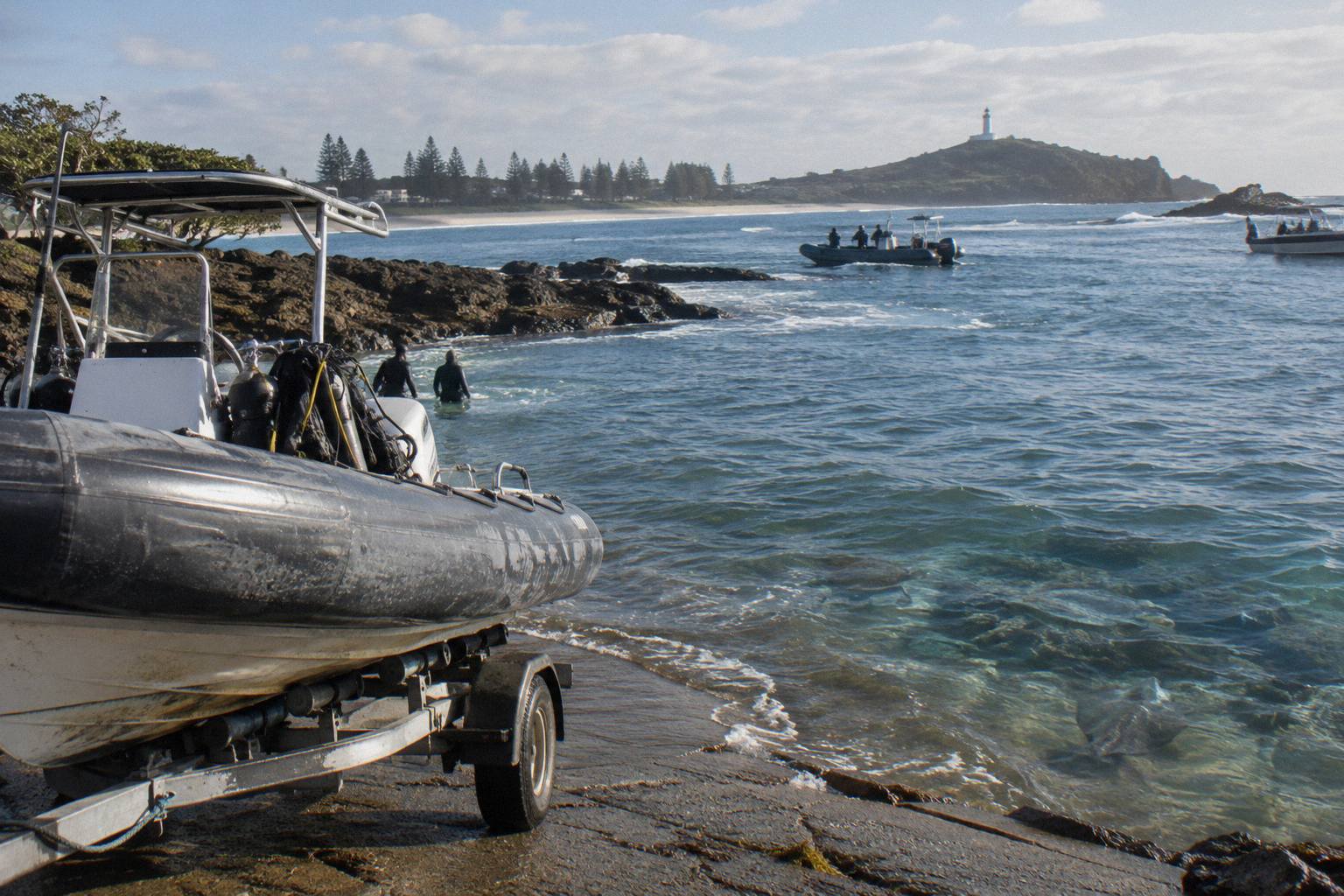
The sanctuary zone rules come from the DPIRD user guide and zoning pages, and they are the reason a snorkel at the rocks feels different from a snorkel off a general beach. Sanctuary zones cover 6,118 ha, or 27.5% of Cape Byron Marine Park, and within them the permitted activities are those that do not harm any animal, plant or habitat: boating, surfing, snorkelling, diving and permitted research and education. Everything extractive is out. The Cape Byron Marine Park user guide spells out the vessel rules in detail.
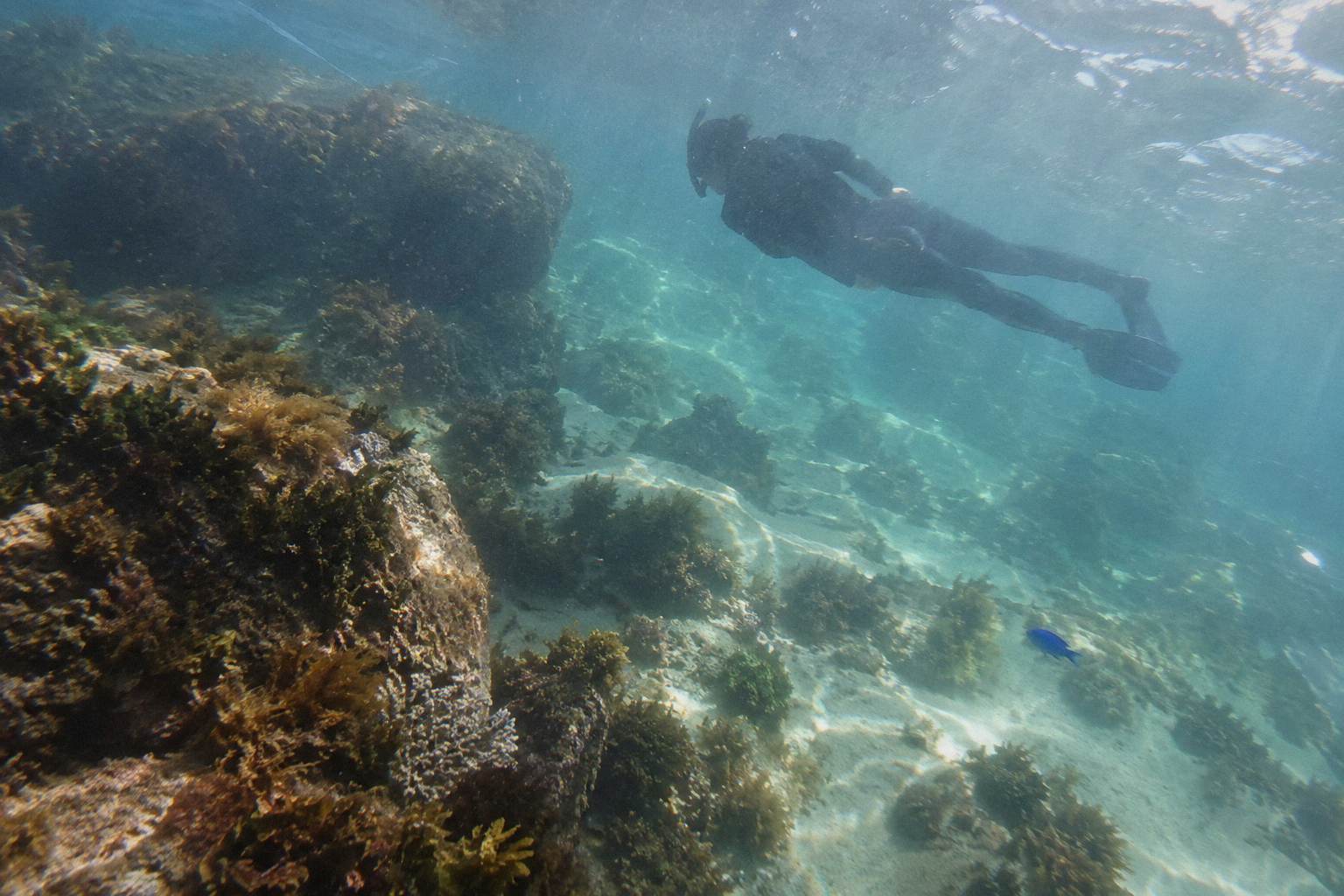
The vessel rules matter to snorkellers more than they first appear. Because anchoring is not permitted within 700 m of the rocks, the boats that take you out pick up one of the seven Marine Parks moorings instead. Those moorings serve vessels up to 15 tonnes or 10 m in length, in winds of 24 knots or less, with a maximum of 2 hours on a mooring, no fishing from a vessel on a mooring, and no rafting of one vessel to another. That 2 hour cap is one reason snorkel trips are structured around roughly an hour in the water: the schedule is built around the mooring rules, not around your stamina.
| Rule | What applies | Where it comes from |
|---|---|---|
| Sanctuary zone | No-take, highest protection; no fishing or collecting; all species protected | DPIRD zoning pages |
| Anchoring | Not permitted within 700 m of the rocks, nor on any reef in a sanctuary zone | DPIRD user guide |
| Speed | 4 knots maximum within 200 m of the rocks | DPIRD user guide |
| Moorings | Seven moorings, vessels to 15 tonnes or 10 m, winds to 24 knots, 2 hour maximum | DPIRD user guide |
| Feeding | Fish feeding and shark feeding prohibited marine-park-wide | DPIRD user guide |
| Collecting | Collecting or destroying animals and spear fishing prohibited at the rocks | NSW Government page |
For the snorkeller, the rules translate into simple behaviour on the water. Byron Bay Dive Centre's guidance is representative: waterproof cameras only, no flash, and do not touch, collect or harass marine life. Those requirements sit on top of the sanctuary zone law rather than replacing it. Nothing in the verified sources states an official approach distance in metres for wildlife, so none is invented here; the operative instruction is simply not to touch, chase or harass.
The rocks themselves carry one more protection. The NSW Government page notes that the rocks are a bird sanctuary, used by gulls, terns, tattlers, cormorants and plovers. That status belongs to the reserve layer described earlier and is why the visitor experience at Nguthungulli Julian Rocks is entirely a water experience: the trip is about what swims around the rocks, not what stands on them. If you are weighing whether the restrictions dim the experience, the answer from every angle is the opposite, and the deeper comparison lives in the guide to the marine park rules that shape a Byron Bay snorkel.
“Ride out, location, gear. And what we saw was great! Really enjoyed it. Signage and directions where to meet could be improved.”
Rules this strict exist because the site supports species worth protecting. The DPIRD user guide names grey nurse sharks among the threatened species of the marine park, and winter snorkellers and divers sometimes share the water with them, a meeting covered calmly in the article on whether swimming with grey nurse sharks at the rocks is safe.
If a guided trip to the rocks sounds like the right way to meet these rules without memorising them, the turtle-focused option below runs from a town meeting point with everything included.
That town meeting point is the Turtle School trip's real distinguishing feature: you check in at Byron Plaza on Jonson Street and are transported to the boat at The Pass, so no car is needed for the whole outing. It runs about 2.5 hours with roughly 60 minutes in the water, and the same operator, Byron Bay Dive Centre, supplies the snorkel gear and wetsuit as part of the trip.
What Does A Snorkel Visit To The Reserve Involve?
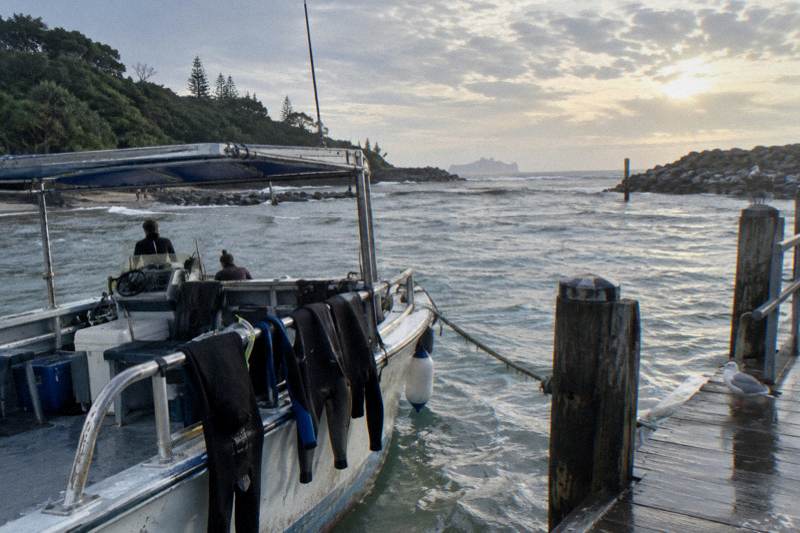
A typical trip runs 2.5 to 3 hours total with roughly an hour in the water, in shallow sheltered areas 3 to 12 m deep around the rocks. Gear, including wetsuit, mask, fins and snorkel, is included by the operators on this site's roster. Meetings points differ: Brunswick Heads Boat Harbour for two operators, Byron town with a transfer for another.
The in-water portion is shorter than the trip length, and that is by design. The Turtle School trip, run by Byron Bay Dive Centre, lists about 2.5 hours total with 60 minutes in the water. The Blue Seafaris and Out Of The Blue trips run about 2.5 hours each from Brunswick Heads Boat Harbour. Snorkellers stay in the shallow, sheltered parts of the site, which one operator describes as 3 to 12 m deep, while divers on the same reef work the 8 to 24 m contours. For most visitors an hour face-down in that range is plenty, and the boats time it around the mooring limits described above.
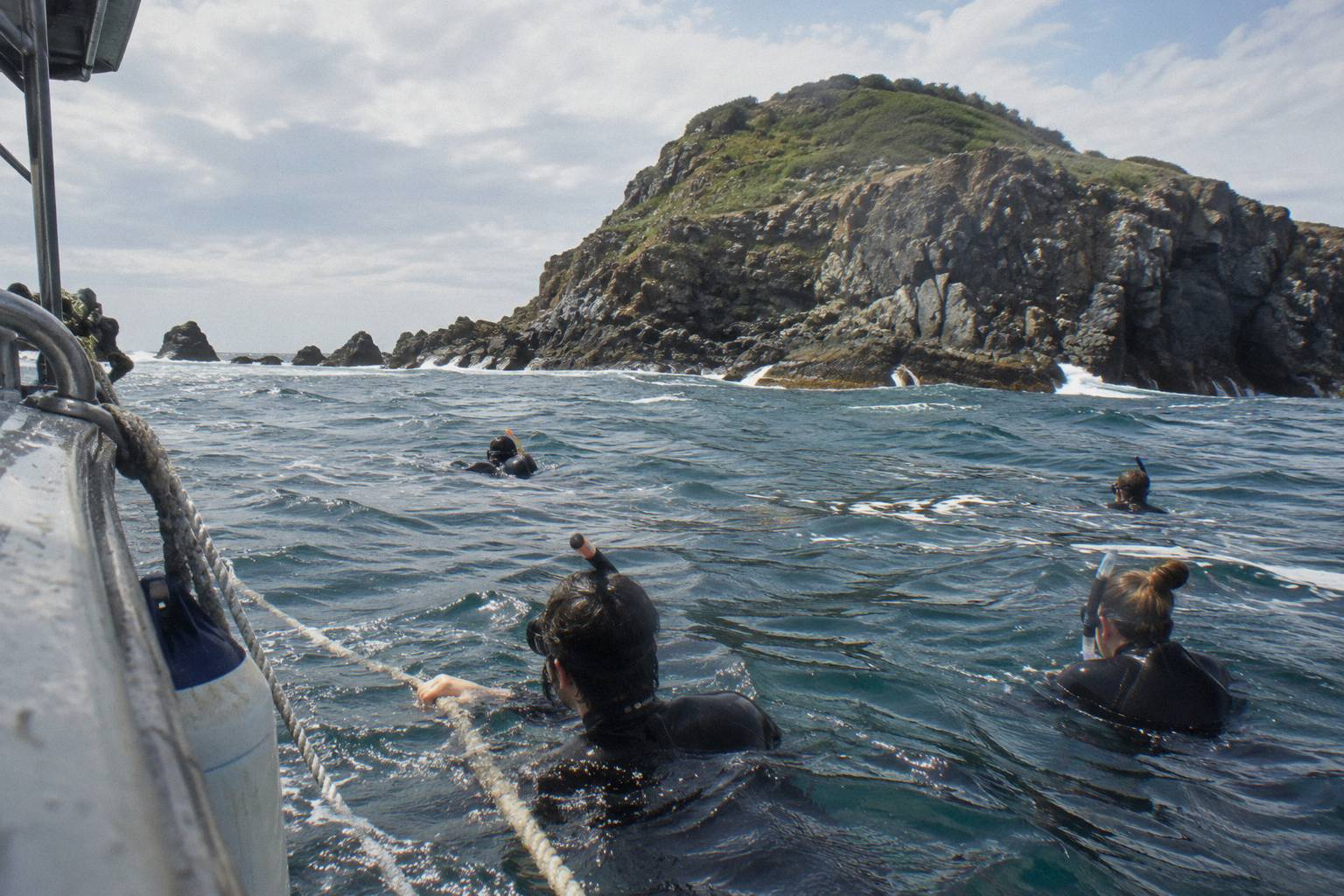
Practical comfort details come straight from operator pages. Byron Bay Dive Centre includes snorkel gear and wetsuit, advises 5 mm long wetsuits for the duration, notes that no prescription masks are carried (contact lenses are fine), and keeps ginger seasickness tablets on the boat while recommending you bring your own. Lifejackets are on board, and a long wetsuit or a pool noodle is suggested for nervous snorkellers. Those small details answer most of the questions first-timers ask, and the fuller walk-through, from briefing to boat to water, is in the guide on what actually happens on a Julian Rocks snorkel day.
The roster of trips breaks down cleanly by meeting point and format:
| Trip | Operator | Meeting point | Length | Price and rating |
|---|---|---|---|---|
| Blue Seafaris snorkel | Blue Seafaris | Brunswick Heads Boat Harbour | about 2.5 hours | from AUD 94, 4.5 across 448 reviews |
| Out Of The Blue snorkel | Out Of The Blue Adventures | Brunswick Heads Boat Harbour | about 2.5 hours | from AUD 94, 4.4 across 167 reviews |
| Turtle School snorkel | Byron Bay Dive Centre | Byron Plaza, transfer to The Pass | about 3 hours | rating and price are on the booking page |
| Sea turtle snorkel | Byron Bay Dive Centre | check the booking page | about 2.5 hours | no price or rating printed |
A note on the Out Of The Blue figures: a second booking page for the same trip shows 4.7 across 58 reviews. Both are given plainly here because both are real readings of real listing pages, and the difference between them is a reminder of why this site prints review counts beside ratings rather than letting a bare number imply a large pool. The featured Blue Seafaris trip, from AUD 94 per person, is the one this site links most often, and you can check availability alongside the fuller write-up in the guide to choosing a Julian Rocks snorkel operator.
Age and fitness thresholds differ by operator, which matters for families. Minimum ages of 5, 7 and 10 years appear across operator pages, and the Byron Bay Dive Centre turtle trip states 10. Swim standards also vary: Blue Seafaris asks that you be comfortable swimming in open water and offers pool noodles, while the Out Of The Blue Adventures trip and the Turtle School (Byron Bay Dive Centre) tour require 200 m unassisted, and the separate Byron Bay Dive Centre sea turtle trip asks for 25 m. If that raises questions for your group, the family angle is covered in detail in the guide to taking kids on the Julian Rocks snorkel trip.
For the turtle-focused version of the same reef, the Byron Bay Dive Centre sea turtle snorkel below is the same operator's near-identical second listing.
What Marine Life Does The Reserve Protect?
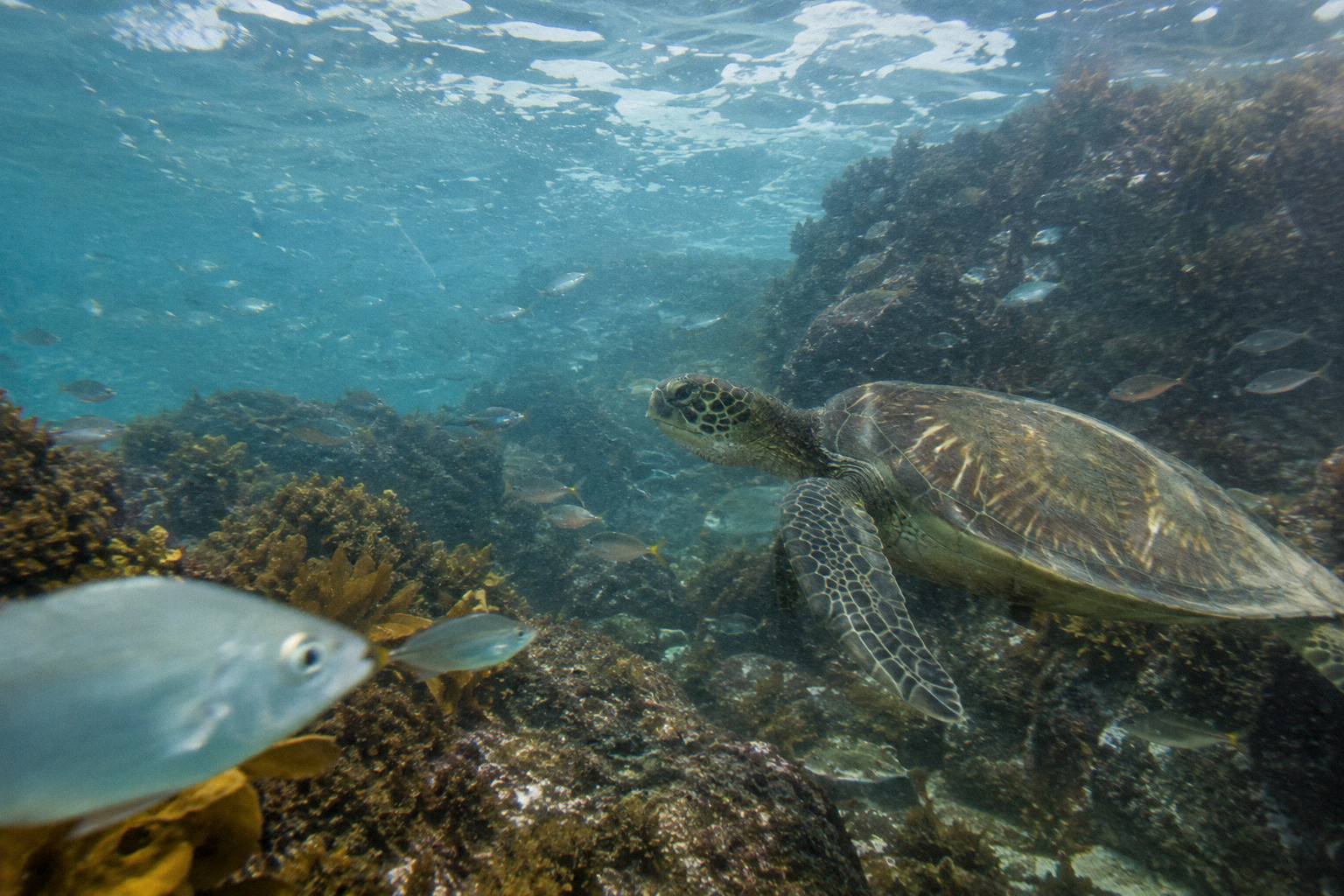
Turtles are present year-round, with green, hawksbill and loggerhead turtles all listed, though no operator guarantees them. Leopard sharks visit from December to April and grey nurse sharks from June to November, per one operator's season guide. Rays, wobbegongs, octopuses, eels, nudibranchs and hundreds of fish species round out the reef.
“We had such a good time, Harry was wonderful and had great energy, we were so happy with the tour!”
The seasonal rhythm is the part first-time visitors most often get wrong. Summer, roughly December to April, brings manta rays and leopard sharks, with the leopards gathering mostly in the Needles sandy arena during the warmer months. Winter brings the endangered grey nurse sharks, which one operator reports in the sand trenches from June to November, though those trenches sit at diving depths rather than snorkel depths. Turtles bridge both seasons: Byron Bay Dive Centre says they "can be spotted year-round throughout the whole day" but is equally clear that "we can't guarantee sea turtles will be there". Honesty about that uncertainty is the norm across operator pages here, and the realistic view is in the piece on whether you will reliably see turtles, sharks and rays snorkelling here.
| Season | Signature sightings | Notes |
|---|---|---|
| December to April | Leopard sharks, manta rays, turtles | Leopards gather in the Needles sandy arena |
| June to November | Grey nurse sharks | Sand trenches, mostly at diving depths |
| All year | Turtles, rays, wobbegongs, octopuses, eels, nudibranchs | Turtles never guaranteed |
The sanctuary rules are why this calendar holds. A reef where fish feeding is prohibited, collecting is banned and all species are protected behaves differently from a fished reef: the animals are present at natural densities and go about ordinary business around snorkellers. That is the quiet argument for the whole zoning framework described above, and it is the reason a site this small, two islets 2.5 km from a famous beach, supports the species list the operators describe. For the fuller picture of what swims here and when, see the guide to Julian Rocks marine life through the year.
Because the reef sits in open ocean, conditions vary. Strong swells, currents, surges, cold water and winds are all possible, and one operator flags strong northerlies between September and Christmas. Winter water can drop to around 17 °C, against an average nearer 20 °C, which is why the 5 mm wetsuit advice exists. None of this makes the trip forbidding, but it does make the weather-cancellation question worth understanding in advance, as covered in the post on what happens when a trip is cancelled for weather.
One adjacent option belongs on the same list of ways to meet the reserve's wildlife, even though it keeps you on the surface the whole time: the guided dolphin kayak trip below.
Should You Visit Nguthungulli Julian Rocks On A Tour?
Yes, and for most visitors a tour is the only practical way. The rocks are 2.5 km offshore in open ocean inside a sanctuary zone, so a licensed vessel with mooring access, gear and a guide is how the place is experienced. Trips run from AUD 94 per person for about 2.5 hours, with two operators meeting at Brunswick Heads and one in Byron town.
The case for a guided trip is structural rather than commercial. The moorings, the 4 knot zone, the no-anchor rule and the sanctuary protections mean the site works on a managed basis: boats that know the rules, crews that brief snorkellers on them, and gear suited to the water temperature. Swimming to the rocks from the beach is a question people ask, and the honest answer, covered in the post on whether you can swim to Julian Rocks from the beach, is not encouraging. The tour is the experience.
Which tour depends on where you are staying and what you want from the hour in the water. Brunswick Heads suits anyone with a car, and both operators based there run about 2.5 hour trips at the same from-price of AUD 94 per person. The Byron town meeting point of the Turtle School trip suits anyone without transport, with the transfer to The Pass built in. Families with children under 10 should check the age minimums carefully before booking, since the thresholds vary from 5 to 10 years depending on the operator.
Beyond the snorkel roster, the adjacent trips are worth knowing about. The dolphin kayak tours and the whale watching trip run about 2.5 hours each per their booking pages, with no price or rating printed here because none is stated. They share the same coastline and, in season, some of the same animals, and the comparison between paddling and snorkelling is drawn out in the guide on the Byron Bay dolphin kayak versus the snorkel trip.
For the reserve itself, the pairing of ancient name and modern rules is the story. As Julian Rocks Snorkelling covers throughout this site, the protection is the product: the name recognises who has always belonged here, and the sanctuary rules are why the snorkelling is what it is.
Before the closing questions, here once more are the three core snorkel options for a visit to the rocks.
Common Questions About Nguthungulli Julian Rocks
What Does Nguthungulli Mean?
Nguthungulli is the Bundjalung word for "Father of the World". The dual name Nguthungulli Julian Rocks was adopted in July 2023, and the NSW National Parks page for the reserve now carries the title Nguthungulli Julian Rocks Nature Reserve.
Is Julian Rocks The Same Place As Nguthungulli Julian Rocks?
Yes, exactly the same two islets, about 2.5 km offshore from Byron Bay. Julian Rocks is the long-standing everyday name; Nguthungulli Julian Rocks is the official dual name adopted in July 2023. Every rule and tour in this guide applies to the one place.
Can You Snorkel In The Sanctuary Zone At Julian Rocks?
Yes. Snorkelling is explicitly listed among the activities permitted in sanctuary zones of Cape Byron Marine Park, alongside boating, surfing, diving and permitted research and education, provided nothing is harmed. Fishing, collecting and anchoring on reefs are what the zones prohibit.
Can You Land On The Rocks?
This guide makes no claim about landing. The NSW Government page notes the rocks are a bird sanctuary used by gulls, terns, tattlers, cormorants and plovers, and the snorkel experience is entirely in the water around them.
How Long Do Boats Stay At The Rocks?
Marine Parks moorings at Julian Rocks have a maximum stay of 2 hours, and vessels may not anchor within 700 m of the rocks. That limit is one reason snorkel trips are structured around roughly an hour in the water within a 2.5 to 3 hour total trip.
How Much Does A Snorkel Trip To Nguthungulli Julian Rocks Cost?
Blue Seafaris and Out Of The Blue both run trips from AUD 94 per person for about 2.5 hours. The Turtle School and sea turtle trips from Byron Bay Dive Centre run about 2.5 hours, with rating and price on the booking page. All figures are per person and change by date.