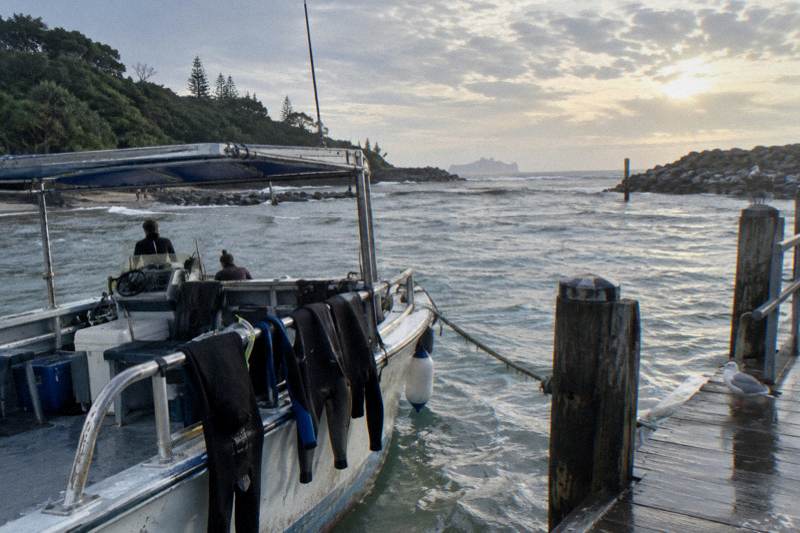
What Happens On A Snorkel Day At Julian Rocks, Hour By Hour
Every Julian Rocks tour day follows the same arc: a meeting point, a short boat ride, a briefing, roughly an hour in the water and a ride home. The details differ by operator, and this guide lays out only what the operators and the marine park authority state.
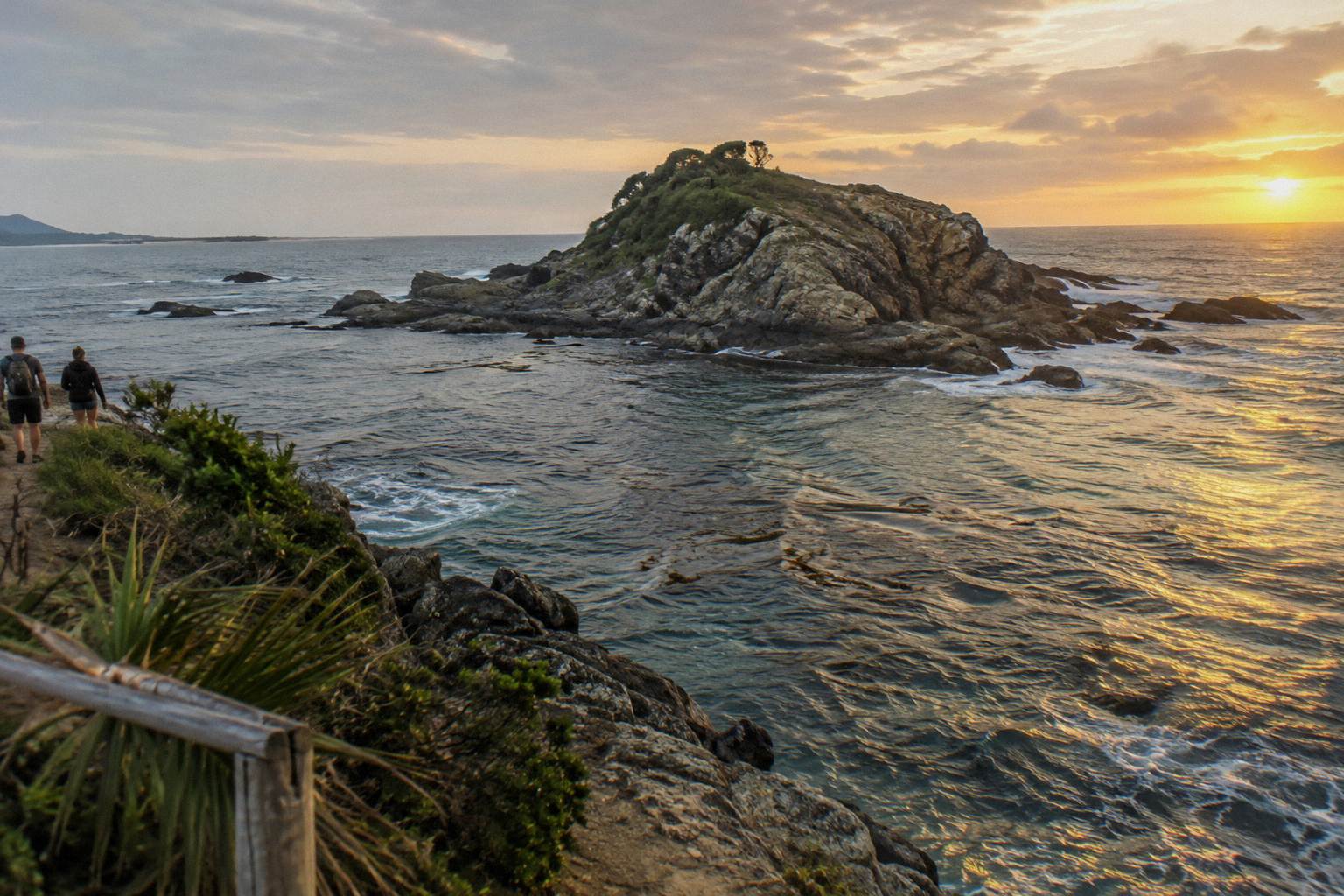
Short answer
A Julian Rocks snorkel day runs about 2.5 to 3 hours total. Turtle School meets in Byron Bay town, transfers you to The Pass and gives you about 60 minutes in the water; Blue Seafaris and Out Of The Blue run about 2.5 hours from Brunswick Heads Boat Harbour. The boat ride from Byron Bay takes 5 to 10 minutes, and the rocks sit about 2.5 km offshore.
What Does A Julian Rocks Snorkel Day Involve From Start To Finish?
A Julian Rocks snorkel day is a short, contained outing: you meet the operator, get fitted with gear, ride a boat out to the rocks, spend roughly an hour in the water with a guide, and return. Total time is about 2.5 hours for the Brunswick Heads trips and about 2.5 hours for the Byron Bay Dive Centre trips, of which around 60 minutes is in the water. The rocks themselves sit about 2.5 km offshore.
That is the whole shape of the day, and it is worth setting expectations early: this is not an all-day expedition. Nobody camps on the rocks, which are a protected nature reserve where landing is not part of any snorkel trip. The day is a loop, out and back, sandwiched around a single sustained snorkel session in shallow, sheltered water.
The rocks are formally named Nguthungulli Julian Rocks Nature Reserve, and the surrounding waters fall inside Cape Byron Marine Park, which stretches about 37 km of coast from the Brunswick River north training wall to Lennox Head and covers about 220 km2 of state waters out to 3 nautical miles. The Julian Rocks Snorkelling guide you are reading walks the day in order, from the meeting point to the swim back to the boat, using only the details the operators and the NSW Government publish.
One thing to hold in mind before anything else: no two operators run the same day. The Brunswick Heads trips and the Byron Bay town trips differ in meeting point, transfer, duration and swimming requirements, and those differences are the single biggest thing to check before you book. The rest of this guide takes each stage of the day in turn and states exactly what is on record for each trip.
Where Does The Day Begin: Brunswick Heads Or Byron Bay?
The day begins at one of two meeting points. Blue Seafaris meets at 43 Harbour Way, Brunswick Heads Boat Harbour, and Out Of The Blue also meets at Brunswick Heads Boat Harbour, both a short drive north of Byron Bay town. Turtle School meets at Byron Plaza on Jonson Street in Byron Bay itself, then runs transport to The Pass, where its boat departs.
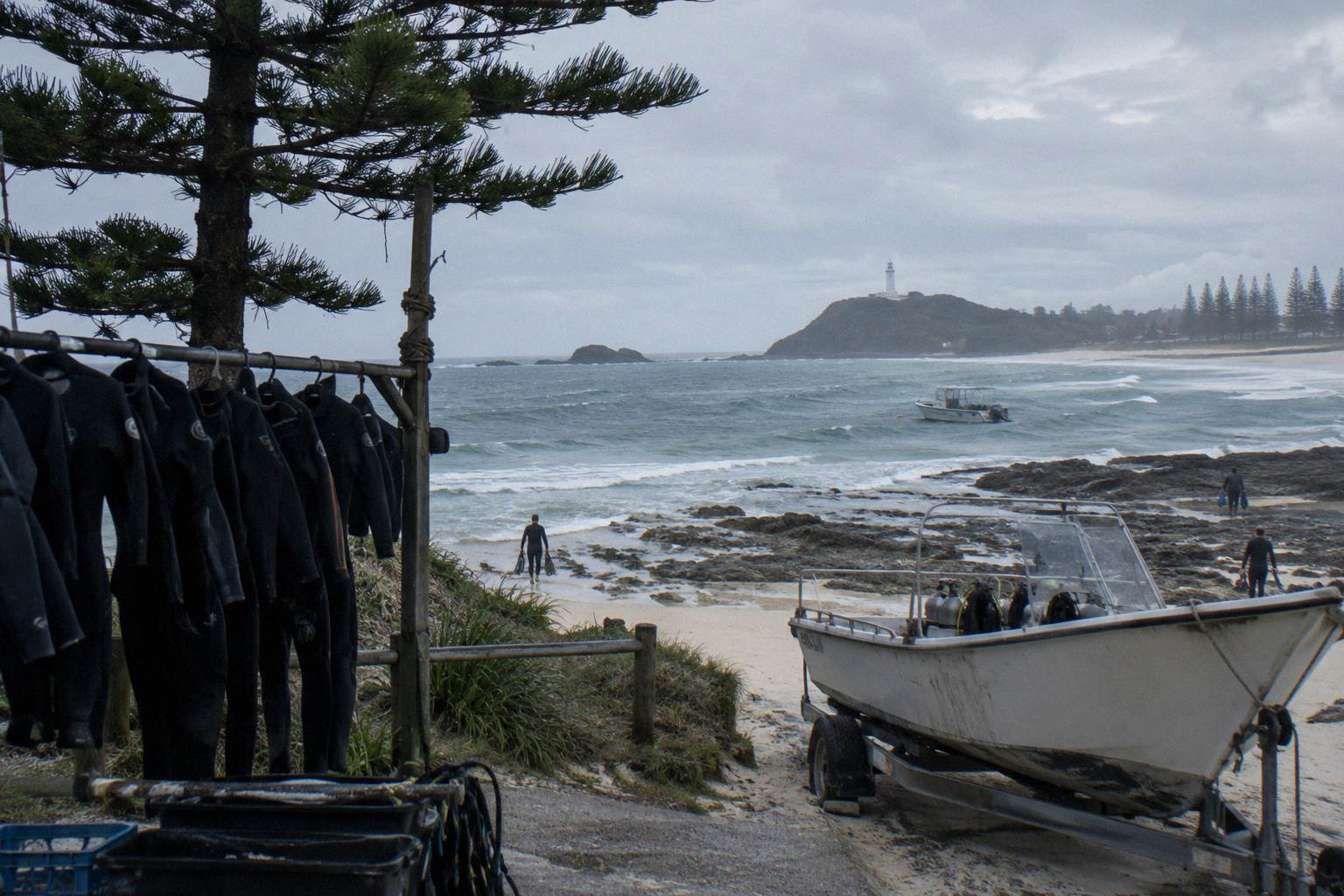
The Brunswick Heads start is the quieter of the two. Boat harbours are working marinas rather than beaches, so you check in at a marina berth, get geared up on or beside the vessel, and motor out of the harbour wall into open water. Blue Seafaris, described on its listing as biologist-guided, runs about 2.5 hours from here; so does Out Of The Blue. Both Brunswick Heads listings state a 15 minute speedboat ride each way to the rocks. The 5 to 10 minute crossing belongs to the Byron Bay departures.
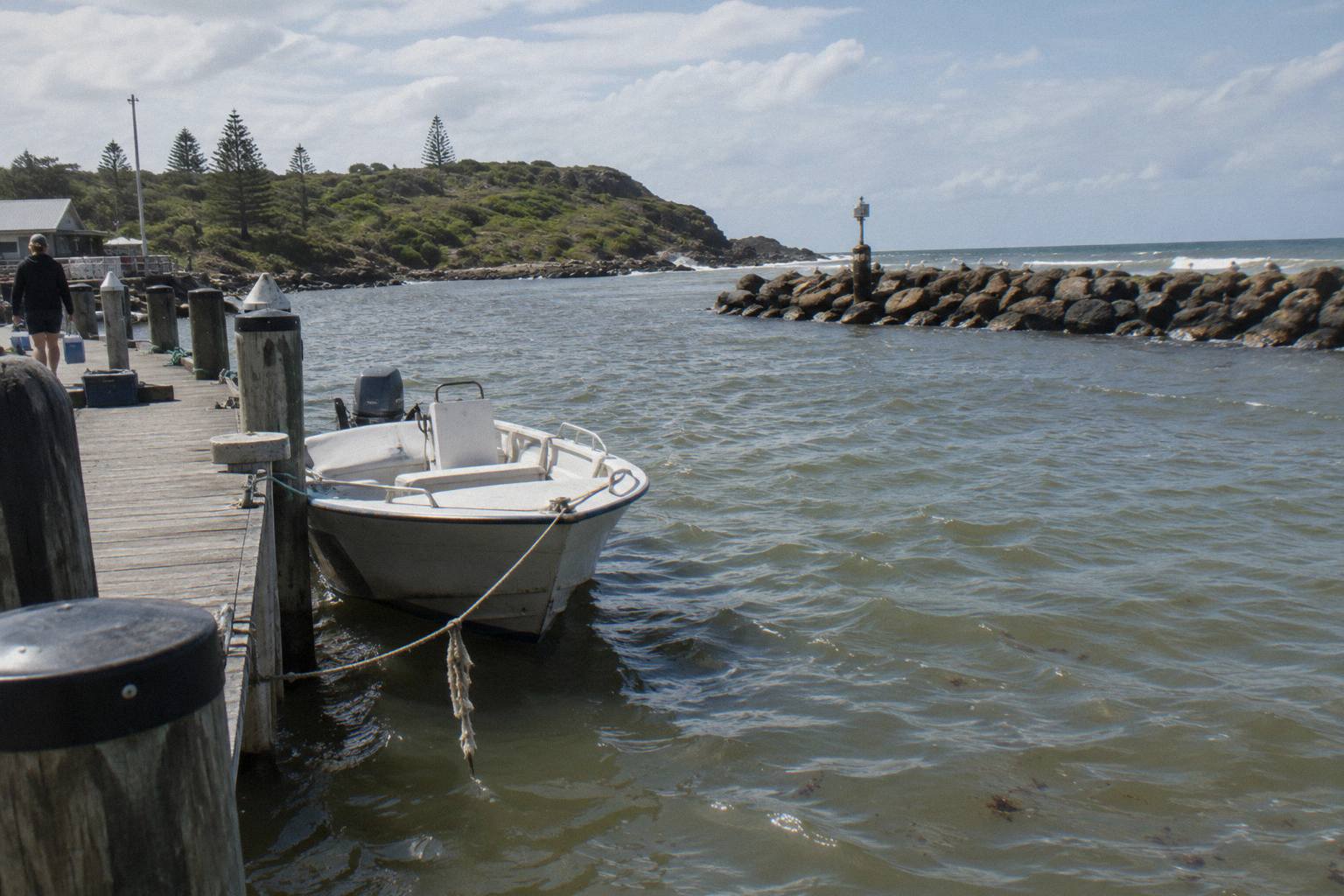
The Byron Bay start is different in character. Turtle School, the booking name for the Byron Bay Dive Centre trip, meets at its shop at Byron Plaza, 5/90-96 Jonson Street, in the middle of town. From there the operator's page says transport runs to The Pass, the sheltered beach on the cape's eastern side, and the boat departs from there. The booking page is explicit that there is no pick-up from accommodation, so you make your own way to the shop. One wrinkle worth knowing: the operator's own FAQ page gives its dive store address as 5 Marvell Street, and the two pages disagree, so confirm the shop address when you book.
For the Byron Bay Dive Centre Sea Turtle Snorkel, the whale watching trip and the two kayak trips, no meeting point is printed on the booking pages. Check the meeting point on the booking page for those.
If you are weighing up how the town-meeting trips compare with the marine park rules they operate under, our guide to the Cape Byron Marine Park snorkel rules covers the zone boundaries and boat speed limits in more detail.
Between those two starts, the decision usually comes down to where you are staying and whether you want a town meeting point with a transfer or a direct marina departure.
What Happens Before You Get On The Boat?
Before the boat, three things happen at every operator: check-in, gear fitting and a safety briefing. Fins, mask, snorkel and wetsuit are included on the Byron Bay Dive Centre trips, and the operator advises 5 mm long wetsuits for the duration of the swim. Each operator sets a swimming standard: Blue Seafaris asks that you be comfortable swimming in open water, while Out Of The Blue Adventures and Turtle School (Byron Bay Dive Centre) require 200 m unassisted. The exact wording of the briefing is not published, so no guide can quote it.
Check-in is where the day's practical filters appear. The Byron Bay Dive Centre trip sets a minimum age of 10 on its operator page, but no single industry-wide minimum exists: one operator sets 7 and requires prior open-ocean snorkelling experience plus the ability to swim 200 m unassisted, another sets 5 and caps its tours at 12 passengers with a naturalist guide on board. The minimum age for the Blue Seafaris and Out Of The Blue trips is not stated on their booking pages, so ask the operator before booking for children. Our page on taking kids on the Julian Rocks snorkel trip works through this in detail.
“Ride out, location, gear. And what we saw was great! Really enjoyed it. Signage and directions where to meet could be improved.”
Gear fitting is straightforward but has a few trip-specific notes worth flagging. The Byron Bay Dive Centre FAQ states that no prescription masks are carried, so wear contact lenses if you need correction; contact lenses are fine. Lifejackets are on board, and the operator suggests a long wetsuit or a pool noodle for nervous snorkellers, which is a useful signal that floating support is normal and available rather than embarrassing. Ginger seasickness tablets are on the boat, but the operator recommends bringing your own if you know you are prone.
The health rules are the operator's own, not universal. Byron Bay Dive Centre prohibits guests with pregnancy or back or spinal injuries from vessel-based activities; that is its rule, and you should not generalise it to other operators, nor assume other operators are more lenient without asking.
Cancellation terms matter at this stage too, because the weather call is usually made on the morning. Byron Bay Dive Centre contacts guests by text or phone if weather or sea conditions are unsuitable, offering a full refund or a reschedule, and its cancellation policy is 48 hours with a 100 percent fee inside that window; bookings made through an agent follow the agent's refund policy. That makes the day before your trip the real deadline for changing plans, not the morning itself.
How Long Is The Boat Ride To Julian Rocks?
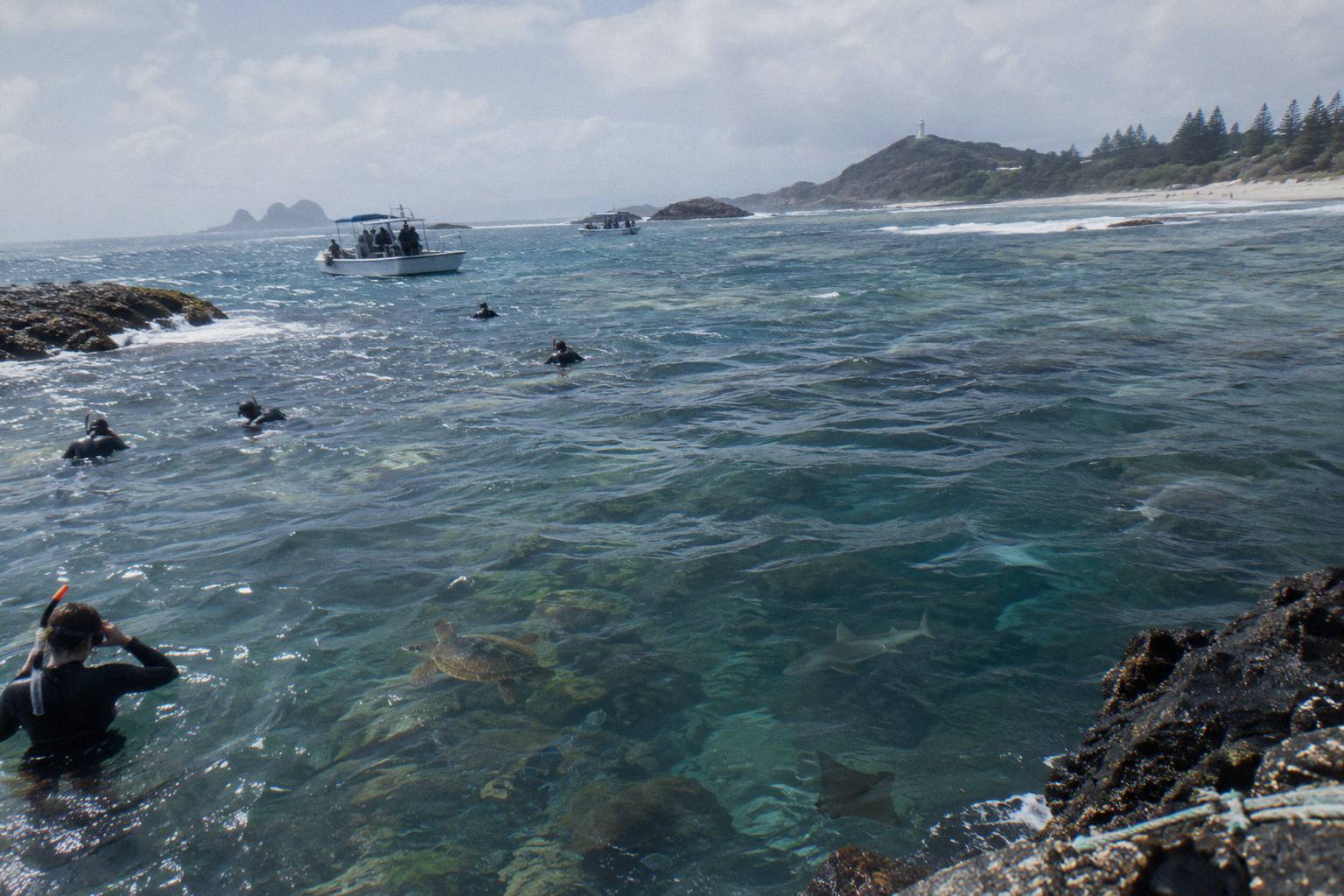
The boat ride from Byron Bay to Julian Rocks takes about 5 to 10 minutes according to Byron Bay Dive Centre, with another operator simply stating about 5 minutes. The rocks lie about 2.5 km offshore, so this is one of the shortest offshore transits of any major Australian snorkel site. Both Brunswick Heads listings state a 15-minute speedboat ride each way to the reserve.
That short ride is a genuine structural feature of the day. It means the boat component is a commute rather than a crossing, which matters for anyone who is nervous on vessels or prone to seasickness: the exposure window to open-ocean swell is measured in minutes, not hours. It also means the total trip duration is dominated by the in-water time and the shore-side logistics, not the transit.
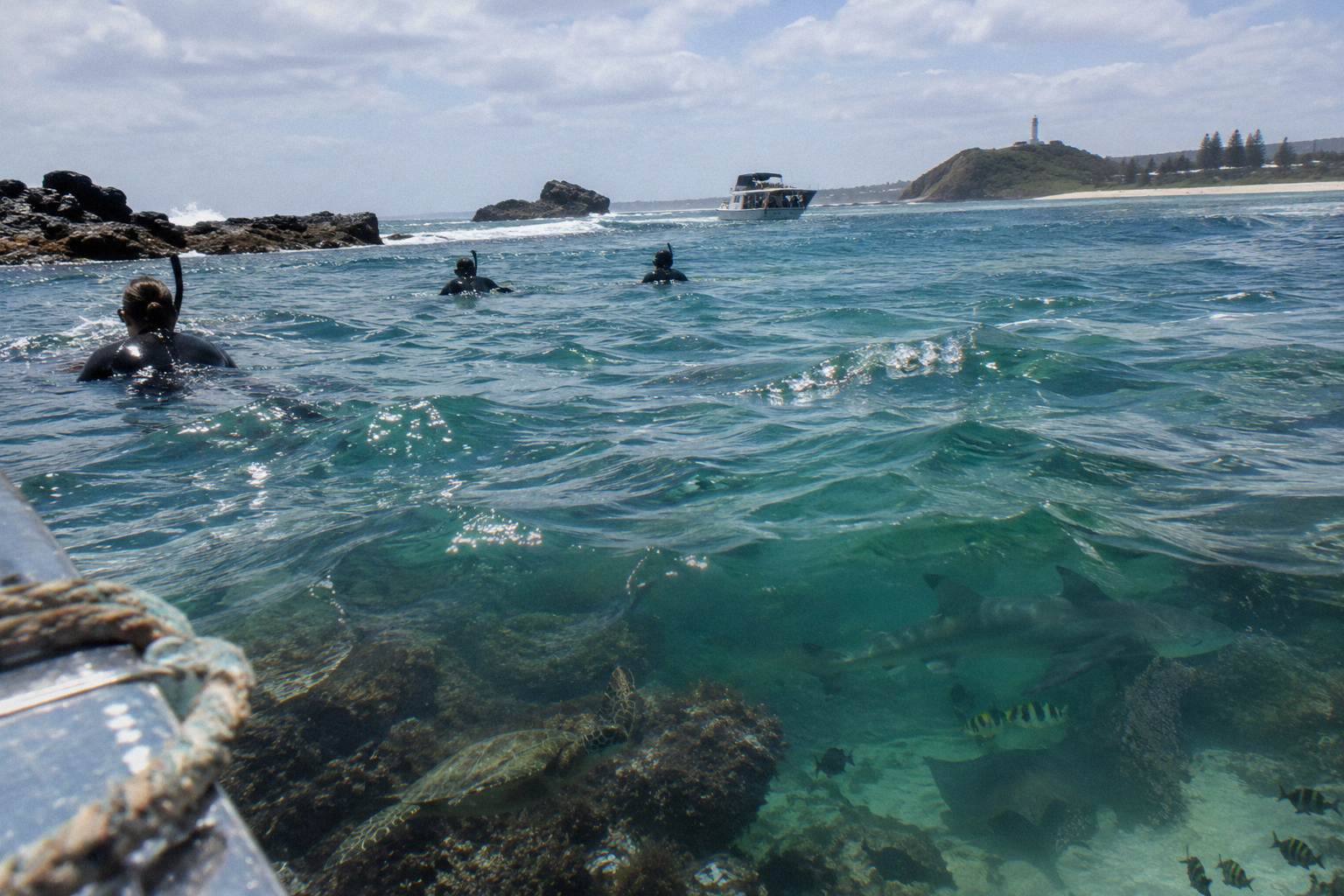
What the ride feels like depends on the departure point. A run out of The Pass puts the cape between you and the open Pacific for part of the trip; a run from Brunswick Heads heads east from the river mouth across open water. Neither is better on paper, and conditions vary by day, so treat the stated 5 to 10 minute figure as a Byron Bay figure and leave the Brunswick Heads transit unstated, as the operators do.
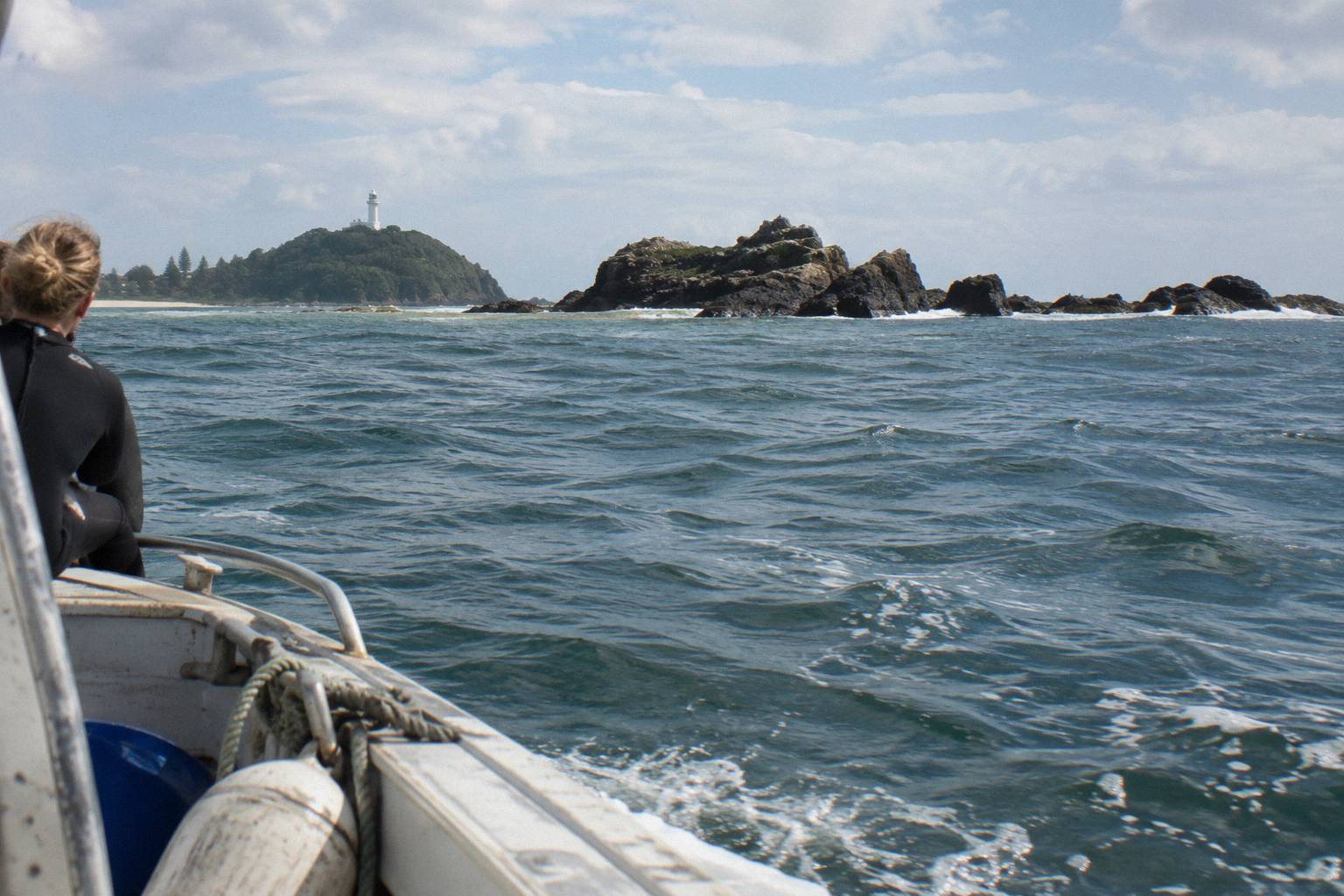
Approaching the rocks, the marine park rules start to shape the day in ways you will notice. Vessels must limit speed to 4 knots within 200 m of Julian Rocks, anchoring is not permitted within 700 m of the rocks, and there are seven marine park moorings with a 2 hour maximum stay. The DPIRD user guide sets those limits, and they explain why the boats idle in rather than roar up: your skipper is complying with a speed zone, not being cautious about you. The DPIRD Cape Byron Marine Park page carries the authoritative summary.
What Happens During The Snorkel Itself?
The snorkel itself is a single session of about 60 minutes in shallow, sheltered water. The Byron Bay Dive Centre trip states about 2.5 hours total with about 60 minutes in the water; operators describe the snorkel areas as the shallow, sheltered parts of the rocks, 3 to 12 m deep, where trips see turtles, rays and a variety of colourful fish and crustaceans. Divers use the deeper 8 to 24 m sites.
“We had such a good time, Harry was wonderful and had great energy, we were so happy with the tour!”
The depth distinction is the key to understanding what your hour looks like. The rocks are a dive site as well as a snorkel site, and the two experiences are genuinely different: divers descend the 8 to 24 m trenches and gutters, while snorkellers stay over the shallow sheltered margins where light reaches the bottom and the marine life concentrates. If you are deciding between the two, our comparison of snorkelling versus diving at Julian Rocks breaks it down.
What you do with your hour is swim, float and look. The operator FAQ rules give the shape of it: do not touch, collect or harass marine life, waterproof cameras only, no flash. That last one is a marine park requirement rather than an operator preference, and it is worth internalising before you get in: the fish are habituated to slow, quiet snorkellers, and the site's tame behaviour is a product of decades of no-touch, no-chase practice.
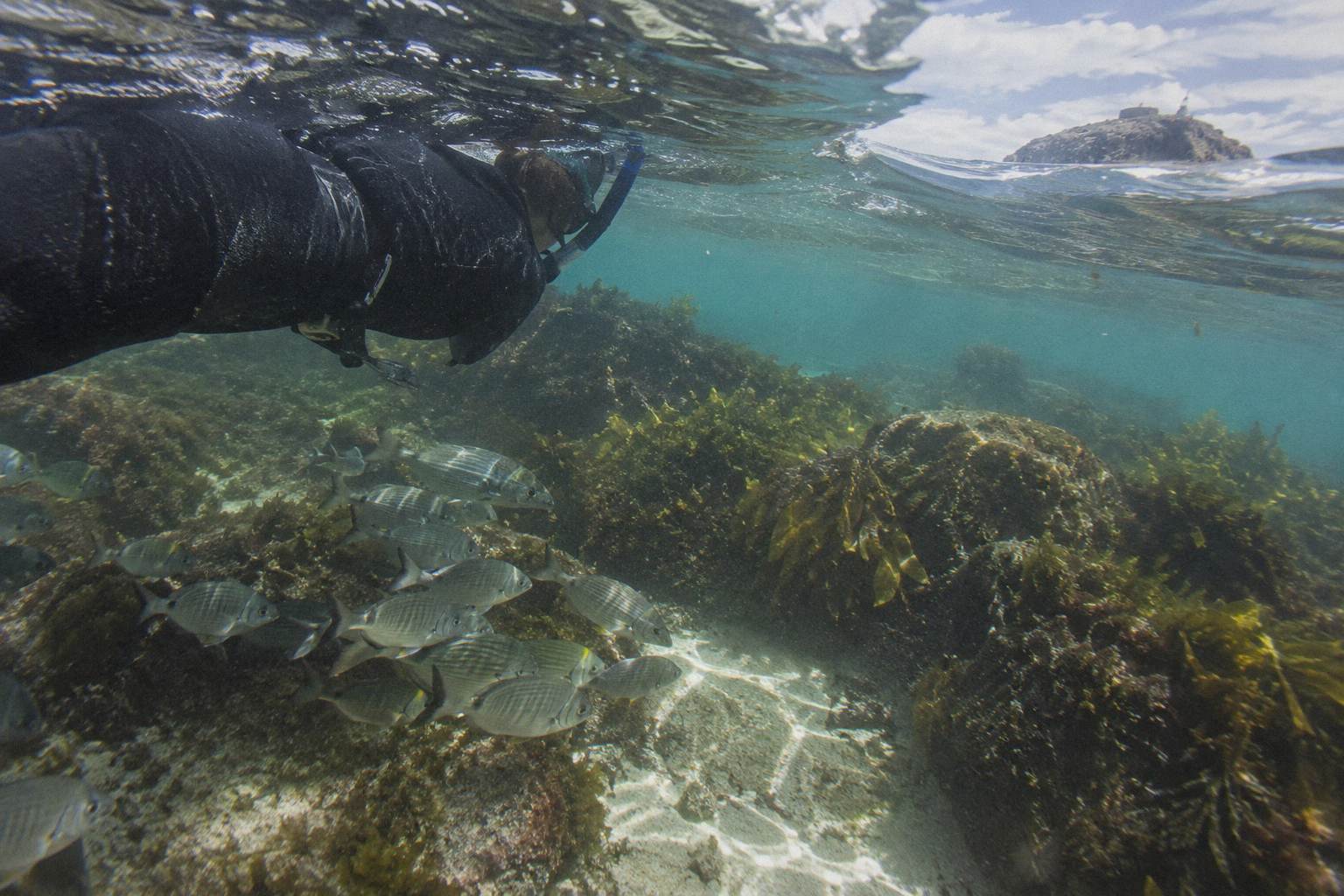
Water temperature shapes the hour more than most first-timers expect. One dive operator notes winter water can drop to 17 °C with an average around 20 °C, which is why the 5 mm long wetsuit advice exists and why every trip includes one. Our month-by-month breakdown of Byron Bay water temperature by month is worth a read before you pick a date.
If an hour in the water sounds like more swimming than your group wants, there is a surface-only alternative that still gets you over marine life: the guided dolphin kayak trip from Cape Byron Kayaks runs about 2.5 hours and covers the cape's waters by paddle rather than fin, with meeting point and price on the booking page.
What Marine Life Might You See And When?
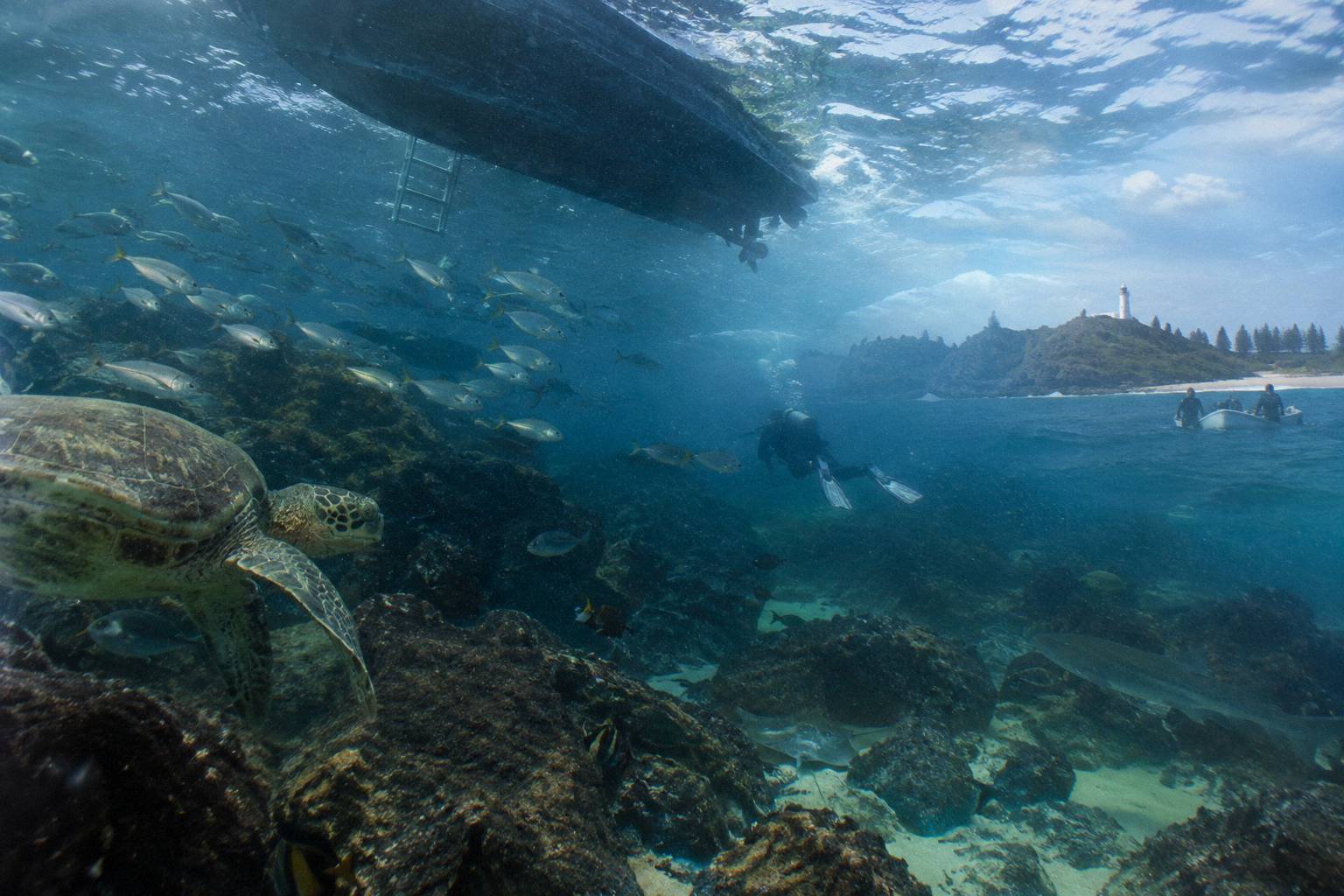
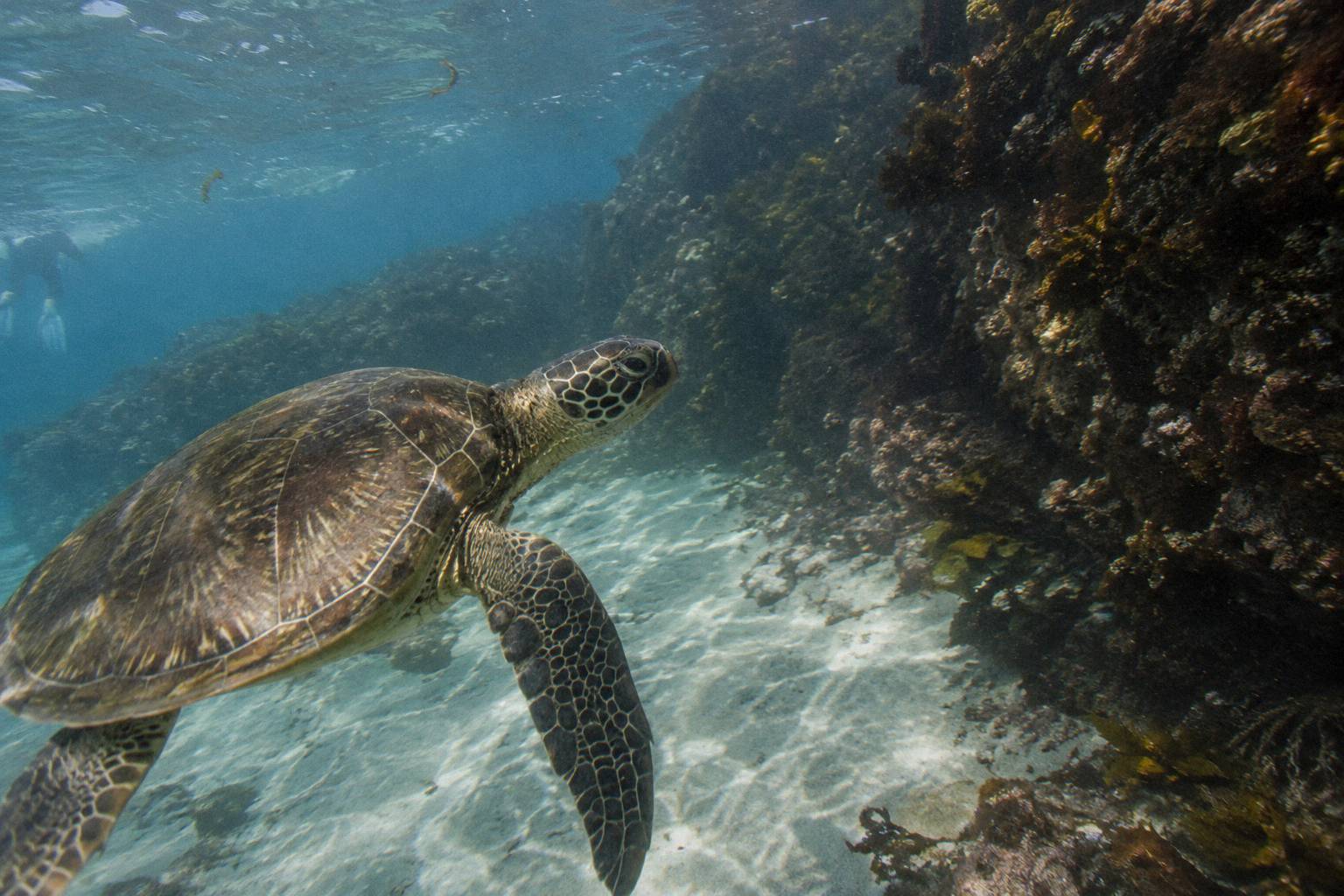
Turtles are the headline: green, hawksbill and loggerhead turtles are listed year-round, though no operator guarantees them. Leopard sharks appear December to April and grey nurse sharks June to November in dive-site seasons per one operator, manta rays come in summer, and rays, wobbegongs, octopuses, eels and nudibranchs are present all year.
The seasonal layering is the part most first pages of search results miss. The site sits where the East Australian Current meets cooler southern water, and operators attribute the density of life to that convergence, quoting "over 1000 marine species" and "more than 500 different species of fish" in their own marketing words. Attribute those numbers to the operators: there is no official census, and DPIRD's own description is the more measured "home to many fascinating animals, including sharks, rays, turtles, eels, starfish and corals."
The honest framing on turtles comes from Byron Bay Dive Centre itself, which states turtles "can be spotted year-round throughout the whole day" but "we can't guarantee sea turtles will be there." That is about as straight an answer as wildlife tourism ever produces, and it is a better basis for planning than any promise. Our longer piece on whether you will reliably see turtles, sharks and rays snorkelling Julian Rocks goes deeper on hit rates.
| What | When it is seen | Where the season comes from |
|---|---|---|
| Green, hawksbill, loggerhead turtles | Listed year-round, no guarantee | Operator pages and Byron Bay Dive Centre FAQ |
| Leopard sharks | December to April, warmer months | One dive operator's dive-site seasons |
| Grey nurse sharks | June to November, colder months | Same operator; dive depths of 8 to 24 m, not snorkel depths |
| Manta rays | Summer months | Operator page |
| Wobbegongs, bull rays, eagle rays | All year | One dive operator's site notes |
| Humpback whales | May to November per one operator, June to October per another; seen from the boat, not while snorkelling | The two operators' own pages differ |
That table's last row is a fair example of why this site attributes everything: two reputable operators publish overlapping but different whale seasons, so the honest statement is that both exist and the boat ride may include a whale sighting in the cooler months.
What Gear Is Included And What Should You Bring?
Fins, mask, snorkel and wetsuit are included on the Byron Bay Dive Centre trips, with transport from the central meeting point to The Pass. You should bring swimwear worn under clothes, a towel, your own seasickness tablets if prone, contact lenses instead of prescription masks, and a waterproof camera without flash. Reef shoes and sunscreen are practical additions.
The gear list is short because the operators carry the technical end of it. The 5 mm long wetsuit is the item that surprises people used to tropical snorkelling: this is warm-current water, not bathwater, and the suit doubles as buoyancy for nervous swimmers. The operator's suggestion of a pool noodle as flotation support is an official one, which means you can ask for it without feeling like the odd one out.
What you bring beyond that is mostly logistics. If you are meeting in Byron Bay town and being transferred to The Pass, you need whatever you want for after the swim in the vehicle the operator provides; the booking page states no accommodation pick-up, so plan to leave anything you do not need at your own lodging. If you are meeting at Brunswick Heads, a marina car park is a simpler place to manage dry bags and towels than a town shop.
| Item | Included on the trip | Notes |
|---|---|---|
| Mask, snorkel, fins | Yes, Byron Bay Dive Centre trips | Included on the operator's stated gear list |
| Wetsuit (5 mm long advised) | Yes, Byron Bay Dive Centre trips | Advised for the full in-water duration |
| Prescription masks | No | Byron Bay Dive Centre carries none; contact lenses fine |
| Lifejackets | On board | Long wetsuit or pool noodle suggested for nervous snorkellers |
| Ginger seasickness tablets | On the boat | Own tablets recommended if prone |
| Transport to departure point | Yes, from Turtle School shop to The Pass | No accommodation pick-up |
| Camera | Bring your own | Waterproof only, no flash, marine park rule |
Our fuller Julian Rocks snorkel packing list itemises the rest, but the short version is that the operators cover the water side and you cover the land side.
What Rules Shape The Day At A Marine Park?
The rocks sit in a sanctuary zone where all species are protected, fishing and collecting are banned, and anchoring on reefs is prohibited. Boat rules include a 4 knot limit within 200 m, no anchoring within 700 m, seven moorings with a 2 hour maximum, and a ban on fish feeding including shark feeding. Sanctuary zones cover 6,118 ha, 27.5 percent of the marine park, and snorkelling is a permitted activity in them.
For a snorkeller, these rules mostly arrive as instructions rather than obstacles: stay with your guide, do not touch anything, no flash photography, and the boat's slow approach. But the zone map explains the day's geography. Cape Byron Marine Park was established in November 2002 with zones and rules commencing May 2006, and the sanctuary zoning is precisely why the fish at the rocks behave the way they do, continuing to feed and rest in shallow water within metres of snorkellers.
| Rule | What it means on the day |
|---|---|
| Sanctuary zone, no take | No fishing, collecting or harming any animal, plant or habitat while you snorkel |
| No touching or harassing marine life | Includes turtles; hands off, keep distance |
| No flash photography | Cameras must be waterproof and flash-free |
| 4 knots within 200 m | Your boat slows well before the mooring |
| Seven moorings, 2 hour max | Trips time their stay around this limit |
| No fish or shark feeding | Do not bring or use bait of any kind |
The cultural layer sits alongside the regulatory one. "Nguthungulli" is the Bundjalung word for "Father of the World", officially adopted as part of the dual name in July 2023, and Bundjalung lore tells of a spear breaking a canoe in two, the halves becoming the rocks, as the reported story goes. The Bundjalung People of Byron Bay (Arakwal) hold a strong association with the land and sea of the northern parts of the park, the Jali people the southern section. The NSW National Parks page for the reserve is the official source for the naming and reserve status.
One trip here takes a different angle: Out Of The Blue Adventures also runs a whale watching trip with a marine biologist on board, about 2.5 hours, priced and rated on its booking page.
What If The Weather Turns?
If weather or sea conditions are unsuitable, Byron Bay Dive Centre contacts guests by text or phone and offers a full refund or a reschedule. Its cancellation policy is 48 hours with a 100 percent fee inside that window, and agent bookings follow the agent's policy. The site is open ocean: strong swells, currents, surges, cold water and winds are all possible, which is why the weather call exists.
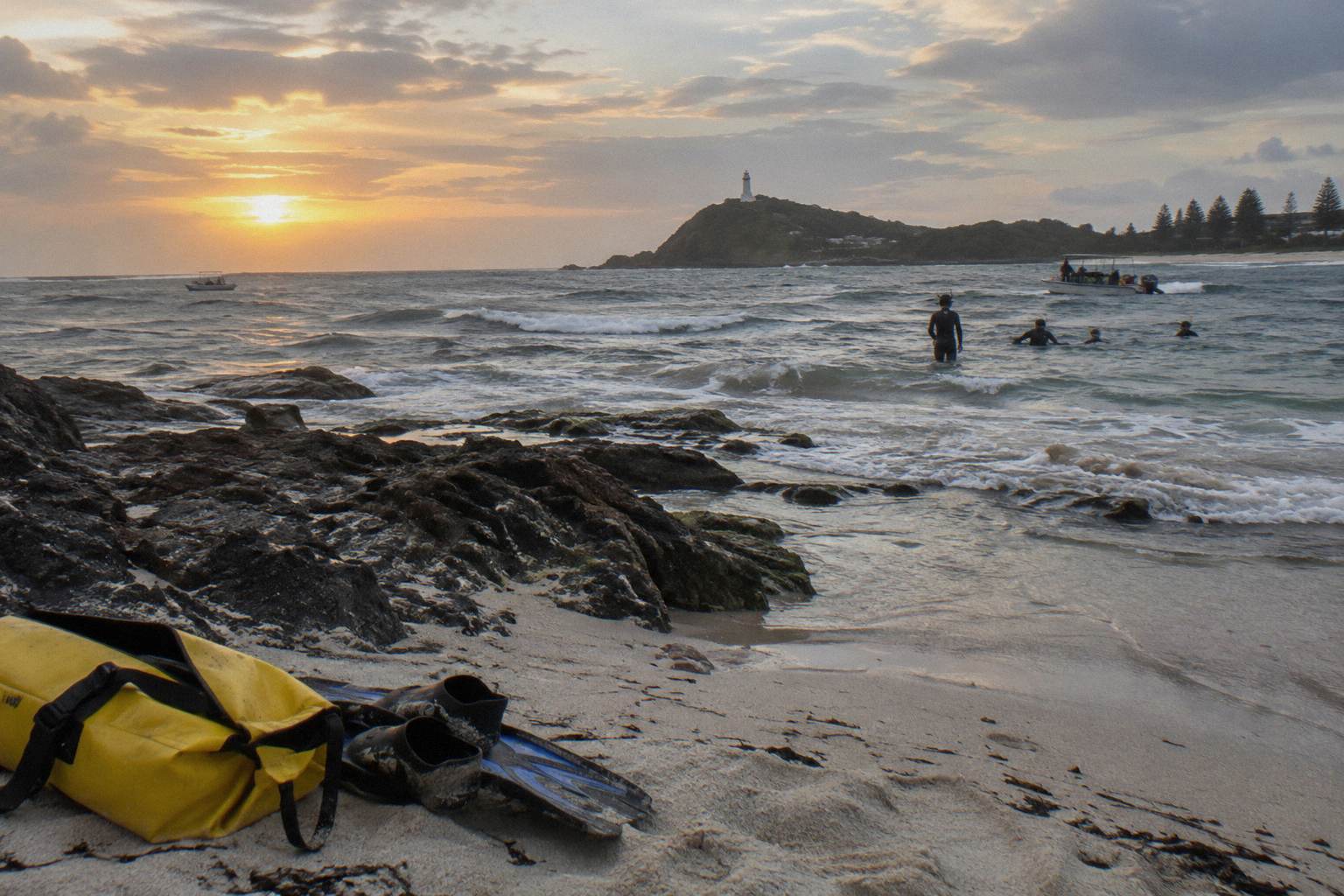
This is the stage of the day most guides skip, and it is the one that most often changes your plans. Julian Rocks is an open-ocean site, not a sheltered bay, and one dive operator's own conditions note lists strong swells, currents, surges, cold water and winds without softening. Operators also flag strong northerlies between September and Christmas as a pattern to watch. The practical consequence is that your confirmed booking is provisional on the morning's conditions, and a text message can change the day.
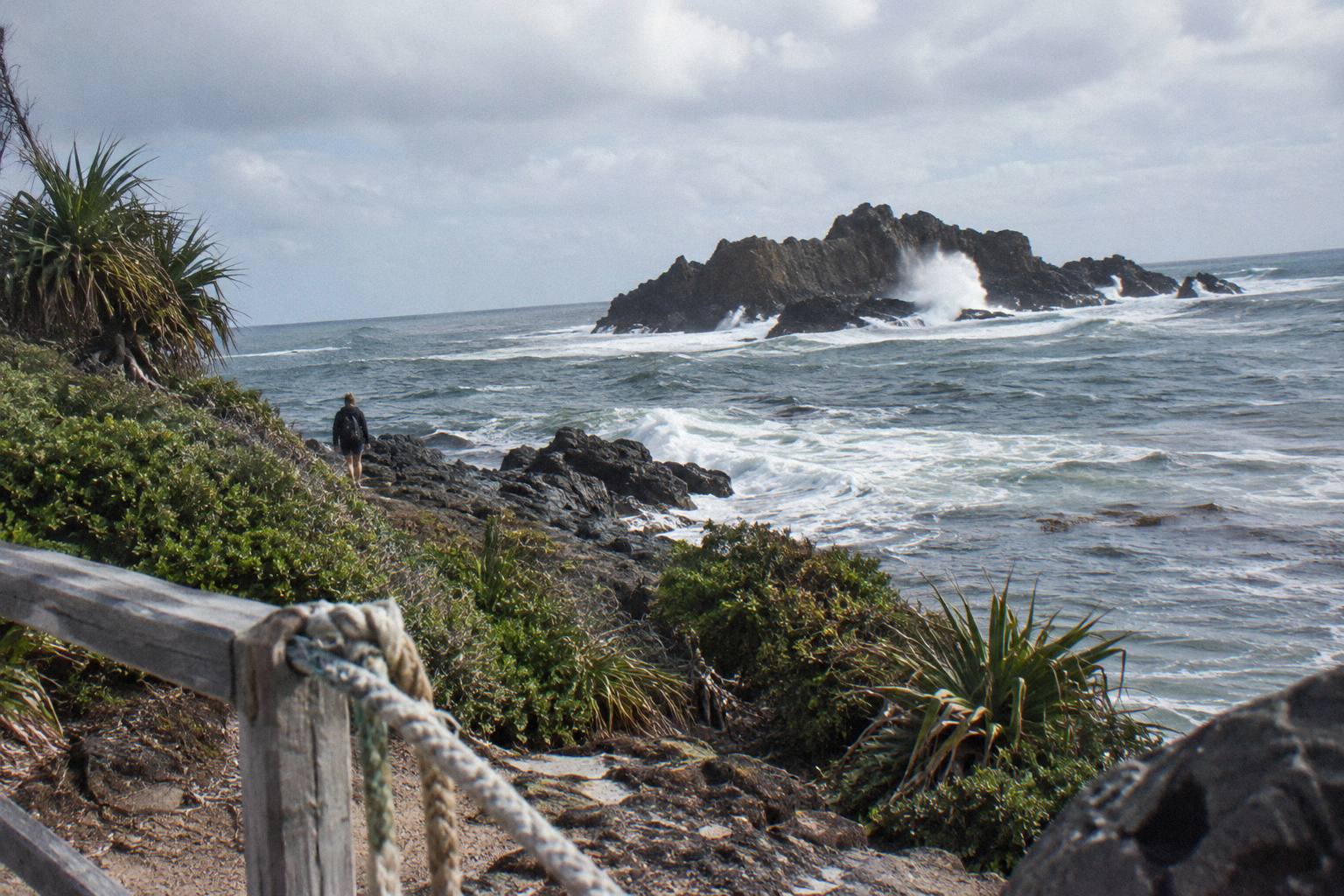
Plan for it the way locals do: keep your Julian Rocks morning flexible, do not stack an immovable afternoon commitment behind it, and know before you book which refund path applies to you. If you booked through an agent rather than the operator directly, the agent's policy governs, which can differ from the operator's own 48 hour terms. Our post on what happens if the trip is cancelled for weather covers the mechanics, and checking Byron Bay sea conditions before a snorkel trip is worth doing the evening before.
Flexibility pays in the other direction too. Because the trips are short, a reschedule usually fits later the same day or the next morning without derailing a holiday, and operators who run daily or near-daily trips can often absorb a weather-driven shuffle.
How Do The Trips Compare When You Book?
The Blue Seafaris trip runs about 2.5 hours from Brunswick Heads Boat Harbour, from AUD 94 per person, rated 4.5 across 448 reviews on its booking page. Out Of The Blue also runs about 2.5 hours from Brunswick Heads, from AUD 94, rated 4.4 across 167 reviews on its main booking page. The two Byron Bay Dive Centre trips run about 2.5 hours with price and rating on the booking page.
Those are the booking-page facts, and they are the right facts to compare on: duration, meeting point and in-water structure. The Brunswick Heads trips suit anyone staying north of Byron or wanting a marina departure; the town trips suit anyone in Byron Bay itself who wants to walk to check-in and be transferred to The Pass. Neither is the better trip in the abstract, and rankings by rating would be misleading when the review pools differ this much in size. A second booking page for the Out Of The Blue trip shows 4.7 across 58 reviews, which is worth knowing but does not settle anything.
| Trip | Meeting point | Duration | In-water time | Price and rating |
|---|---|---|---|---|
| Blue Seafaris, 2.5-Hour Snorkel | 43 Harbour Way, Brunswick Heads Boat Harbour | About 2.5 hours | Not stated | From AUD 94; 4.5 across 448 reviews on the booking page |
| Out Of The Blue, Brunswick Heads | Brunswick Heads Boat Harbour | About 2.5 hours | Not stated | From AUD 94; 4.4 across 167 reviews on the main booking page |
| Turtle School, 3-Hour Snorkel | Turtle School, Byron Plaza, Jonson Street, then transfer to The Pass | About 3 hours | About 60 minutes | Price and rating are on the booking page |
| Byron Bay Dive Centre Sea Turtle Snorkel | Check the meeting point on the booking page | About 2.5 hours | Not stated on the booking page | Price and rating are on the booking page |
Booking lead time is the last variable. Because the trips are short and the boats are small, the 12-passenger cap used by one operator illustrates how quickly a good-weather morning can fill. Our post on how far in advance to book a Julian Rocks snorkel trip looks at the seasonal pressure points, and school holidays and whale season are the obvious ones.
Common Questions About What Happens On A Julian Rocks Snorkel Day
How Long Is A Julian Rocks Snorkel Trip In Total?
The Brunswick Heads trips run about 2.5 hours each. The Byron Bay Dive Centre trips run about 2.5 hours in total, of which about 60 minutes is spent in the water.
How Long Does The Boat Ride To Julian Rocks Take?
From Byron Bay the ride takes about 5 to 10 minutes according to Byron Bay Dive Centre, with another operator stating about 5 minutes. The rocks are about 2.5 km offshore. Blue Seafaris and Out Of The Blue Adventures list a 15-minute speedboat ride each way from Brunswick Heads Boat Harbour.
What Is Included On A Julian Rocks Snorkel Trip?
On the Byron Bay Dive Centre trips, fins, mask, snorkel and wetsuit are included, along with transport from the Turtle School meeting point in Byron Plaza to The Pass. Lifejackets are on board and ginger seasickness tablets are carried. No prescription masks are available, so wear contact lenses if you need correction.
Where Do The Julian Rocks Snorkel Trips Leave From?
Blue Seafaris meets at 43 Harbour Way, Brunswick Heads Boat Harbour, and Out Of The Blue also meets at Brunswick Heads Boat Harbour. Turtle School meets at Byron Plaza, Jonson Street, Byron Bay, and transfers guests to The Pass for the boat departure. There is no accommodation pick-up.
What Happens If The Trip Is Cancelled For Weather?
Byron Bay Dive Centre contacts guests by text or phone if weather or sea is unsuitable and offers a full refund or a reschedule. Its cancellation policy is 48 hours with a 100 percent fee inside the window, and bookings made through an agent follow the agent's refund policy.
Will I See Turtles On A Julian Rocks Snorkel Trip?
Green, hawksbill and loggerhead turtles are listed at the rocks year-round, and the operator notes they can be spotted year-round throughout the day, but no operator guarantees sea turtles will be there.