Snorkelling Or Scuba Diving At Julian Rocks: Which One Suits You
Julian Rocks sits in 3 to 12 m of sheltered water for snorkellers and 8 to 24 m for divers, so the choice between the two comes down to depth, certification and how long you want to stay under.
Short answer
Snorkel trips at Julian Rocks stay in shallow, sheltered areas 3 to 12 m deep for roughly 60 minutes in the water. Diving reaches 8 to 24 m, needs Open Water certification and a minimum age of 12 with Byron Bay Dive Centre. Snorkel trips start from AUD 94 per person; no dive prices are printed here.
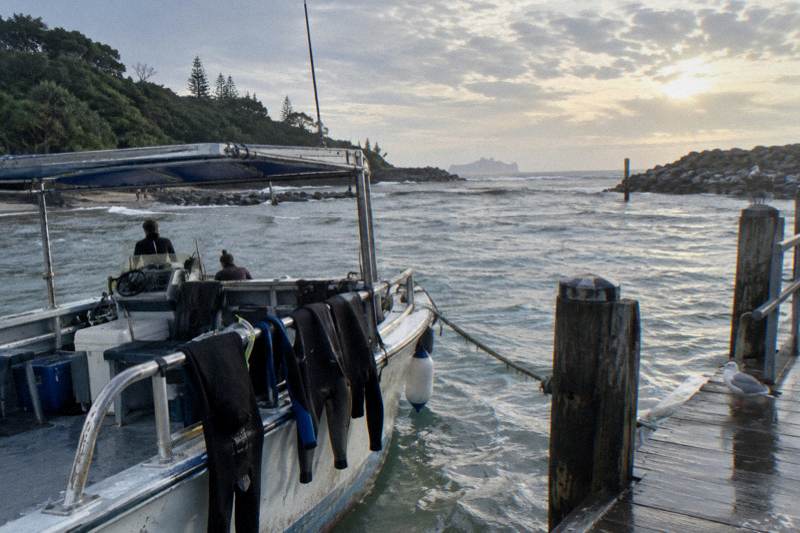
Nguthungulli Julian Rocks is one of the few places on the Australian east coast where a snorkeller and a certified diver can stand on the same beach, board boats ten minutes apart, and end up in genuinely different worlds. The rocks lie about 2.5 km off Byron Bay, and the boat ride out is 5 to 10 minutes depending on where your trip launches from. What separates the two experiences is depth: snorkel trips stay in the shallow, sheltered areas of 3 to 12 m, while the dive sites run 8 to 24 m down the rock faces and into the sand trenches.
That gap in depth drives everything else in this comparison: what marine life is reachable, how long you stay in the water, what training and minimum ages apply, and what the trip actually is. The NSW Department of Primary Industries and Regional Development lists sharks, rays, turtles, eels, starfish and corals among the animals at the rocks, but not all of them sit in snorkel range. Grey nurse sharks, for example, gather in the sand trenches at 15 to 24 m between June and November, depths only divers reach.
This guide lays out both formats side by side using operator-stated facts and booking-page figures, then helps you match one to your situation. If you are leaning toward snorkelling, the featured trip on this page is the Out Of The Blue Julian Rocks Snorkelling Tour, from AUD 94 per person and about 2.5 hours long, and there is more background in the complete Julian Rocks Byron Bay guide.
What Is The Difference Between Snorkelling And Diving At Julian Rocks?
The core difference is depth and time: snorkel trips stay in shallow, sheltered water of 3 to 12 m with about 60 minutes in the water, while diving at the rocks runs 8 to 24 m, requires Open Water certification, minimum age 12 with Byron Bay Dive Centre, and gives certified divers about 50 minutes underwater on a fun dive. Neither format is a harder or softer version of the other, they are different zones of the same reef.
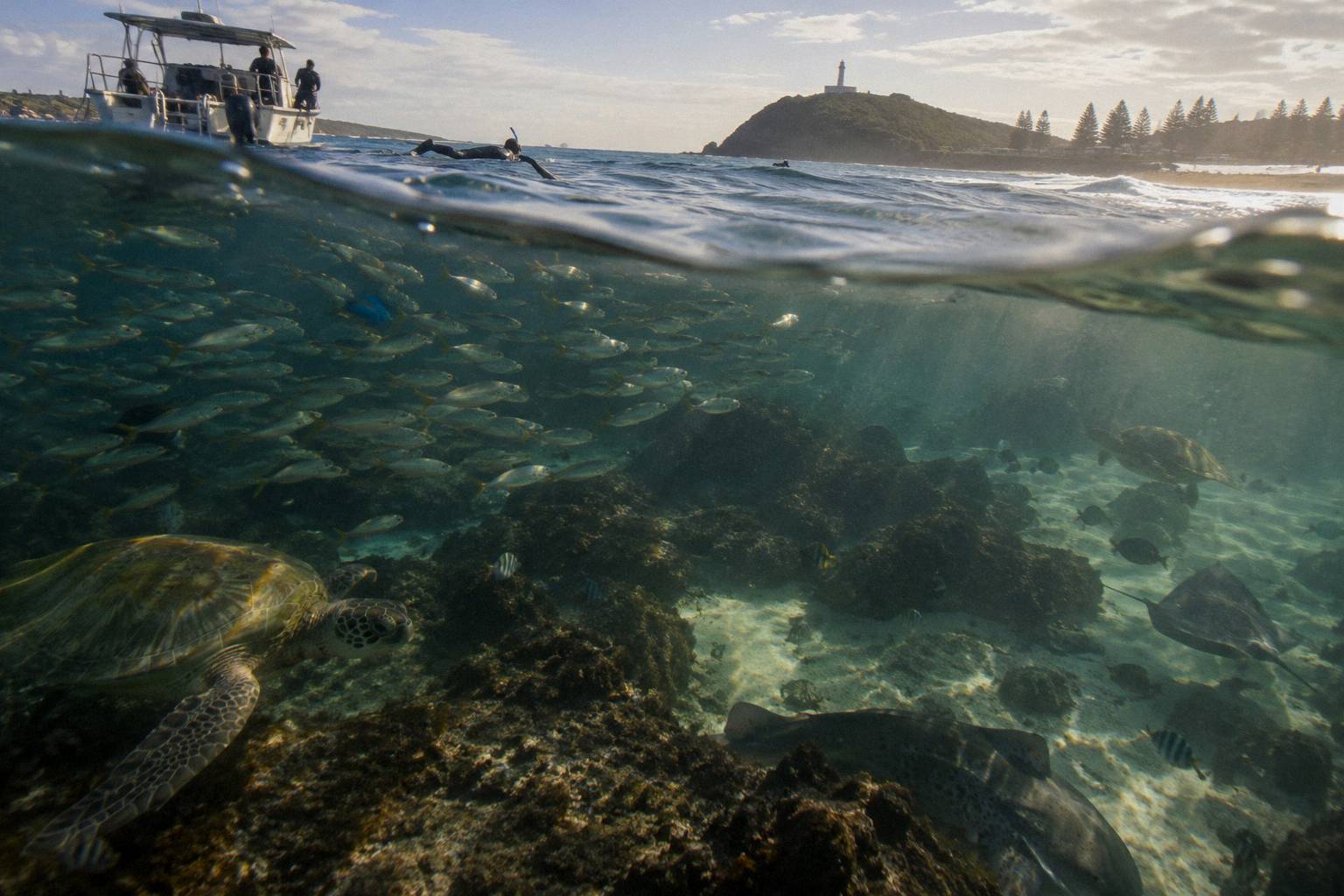
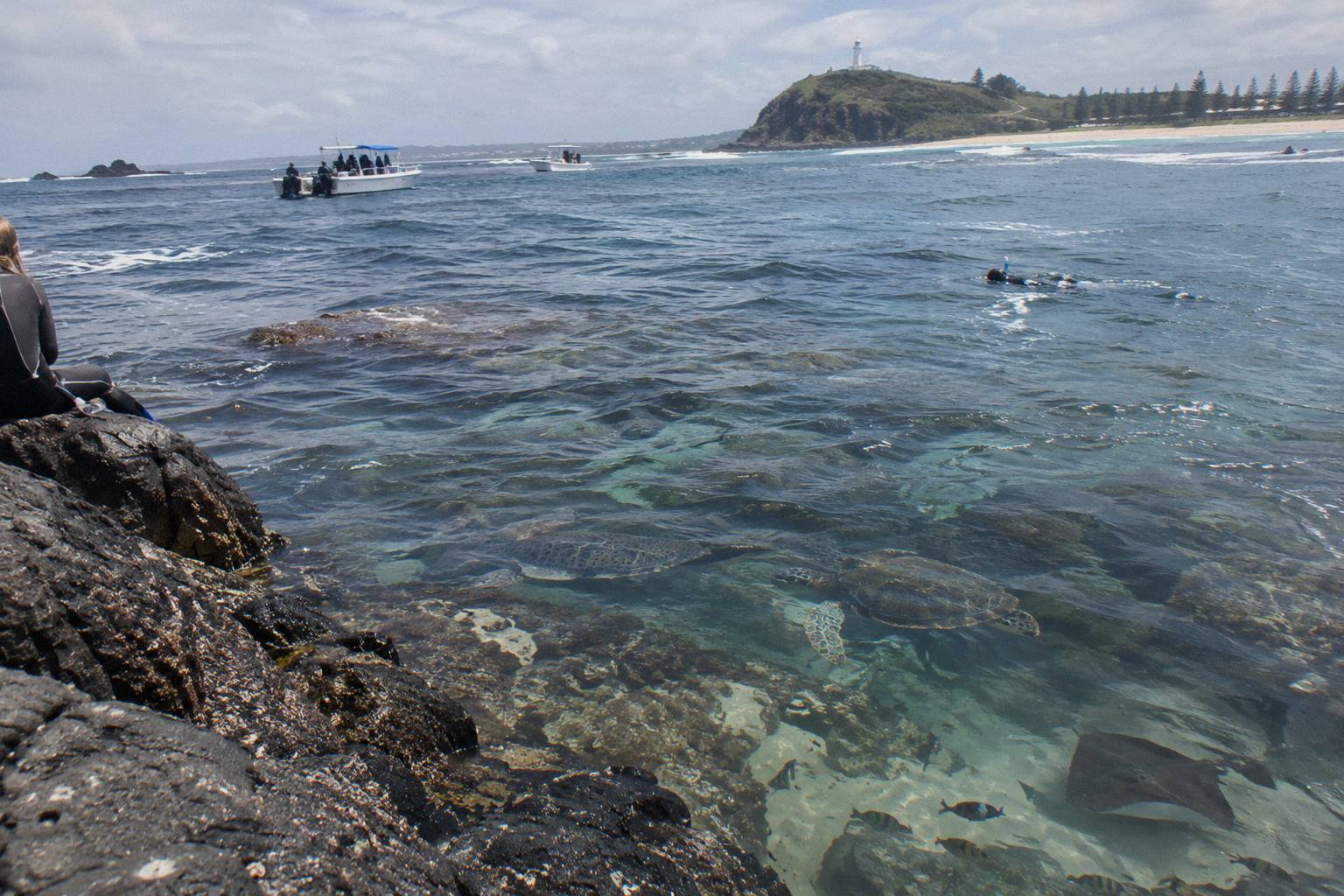
The shallow sheltered areas where snorkel boats moor are described by one dive operator as holding "turtles, rays, a variety of colourful fish and crustaceans". Three metres is shallow enough that sunlight reaches the bottom clearly on a good day, and twelve metres is still well within surface-view range for a snorkeller floating above. The dive sites, by contrast, follow the rock structure down: the Needles, the Line of Smiles and the sand trenches between them, at 8 to 24 m. Wobbegong sharks, bull rays, eagle rays and shovelnose rays are listed at those dive sites all year by one dive operator.
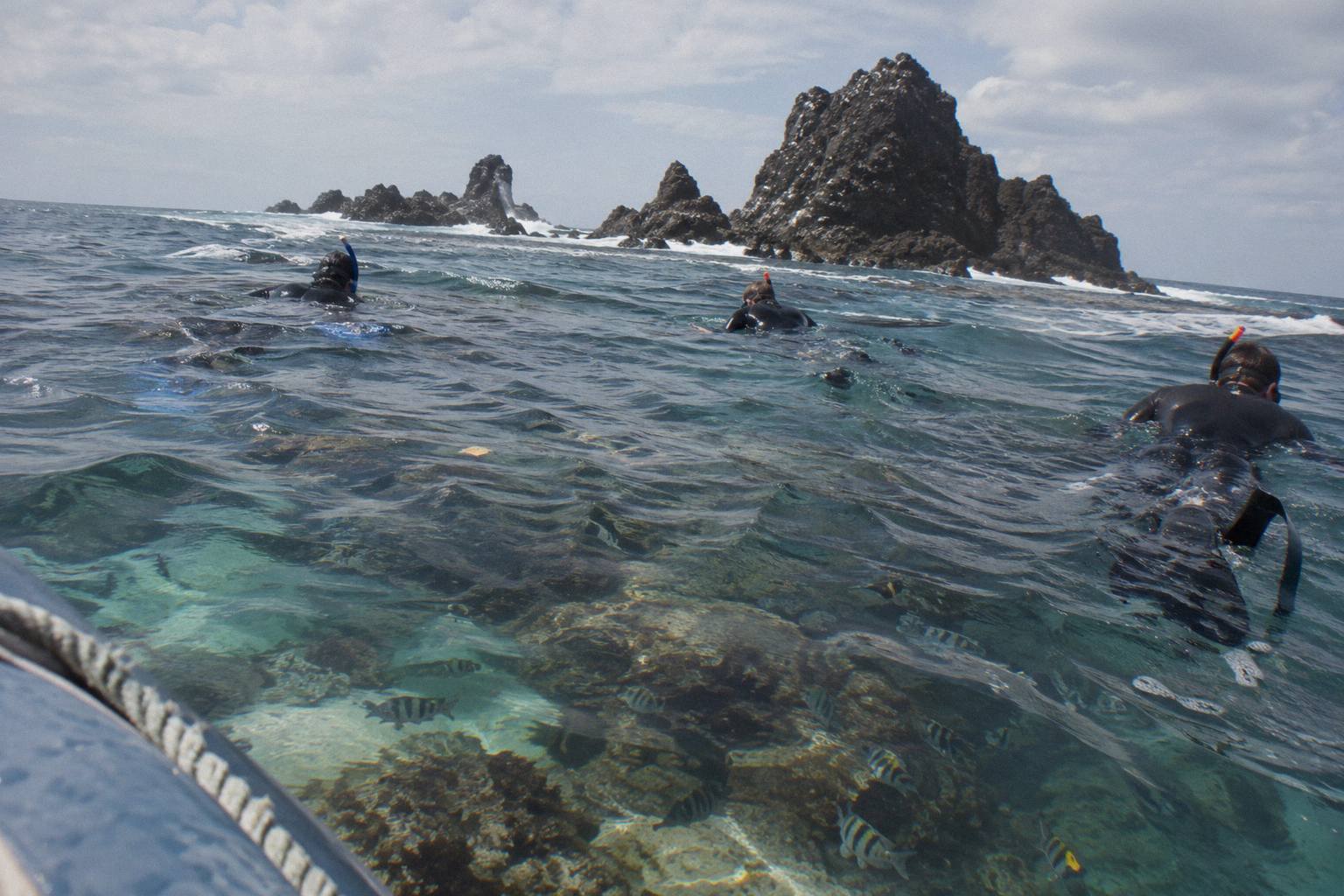
Time in the water differs less than you might expect. Byron Bay Dive Centre's Sea Turtle Snorkel Tour runs about 2.5 hours in total with about 60 minutes in the water. Its Fun Dive is about 2.5 hours with about 50 minutes underwater. The dive is denser, the snorkel session is longer at the surface, and the boat ride is the same short hop for both.
Gear is another quiet difference. Snorkel trips include fins, mask, snorkel and a wetsuit in the price, and Byron Bay Dive Centre advises 5 mm long wetsuits for the duration of a snorkel session. Diving adds a tank, weights, regulator and buoyancy compensator, and a certification card you must already hold. The site does not cover the intro scuba product, so if you have never dived before, this comparison is between snorkelling and certified diving only.
Which Should You Choose: Snorkel Or Dive?
Choose snorkelling if you want a shorter commitment, no certification, a lower minimum age for kids, and time in the same water as turtles and rays; choose diving if you hold an Open Water certification and want the 8 to 24 m zone, the sand trenches and the reef faces that snorkellers physically cannot reach. Most first-time visitors to Byron Bay choose the snorkel.
“Ride out, location, gear. And what we saw was great! Really enjoyed it. Signage and directions where to meet could be improved.”
The honest framing is this: the rocks are a single reef system, and the marine park's zones protect all of it equally, but the two formats sample different parts. DPIRD notes the rocks are shaped by the East Australian Current meeting cooler southern waters, which is why tropical and temperate species overlap here. Snorkellers ride the top of that overlap; divers drop through it.
Here is how the choice looks against common situations:
| Your situation | Better fit | Why |
|---|---|---|
| No dive certification | Snorkel | Diving requires Open Water certification; snorkelling needs none |
| Kids under 10 | Snorkel | Snorkel minimums run as low as 5 or 7; dive floor is 12 plus certification |
| Certified diver, first visit | Dive | The 8 to 24 m reef faces and trenches are unreachable from the surface |
| Mixed group of divers and non-divers | Both, split up | Snorkel and dive boats use the same short crossing from the same area |
| Nervous swimmer | Snorkel | Lifejackets, wetsuit flotation and pool noodles are operator-stated support |
| Short on time or budget | Snorkel | Half-day trips from AUD 94 per person on two booking pages |
If your group mixes swimmers and non-swimmers, or adults and young children, the snorkel format is the only one with a path forward. Minimum ages for snorkel trips run as low as 5 with one operator and 7 with another, while Byron Bay Dive Centre's Sea Turtle Snorkel Tour states minimum age 10. Diving's floor is 12 with a certification requirement attached. The kids on the Julian Rocks snorkel trip guide breaks the age rules down family by family.
If you are a certified diver who has already snorkelled the shallows, the dive is the obvious next step, and the Julian Rocks diving guide covers the dive sites in detail. Everyone else should read the next section before spending money.
These three trips cover the snorkel side of the choice:
Each launches from a different point: Out Of The Blue and Blue Seafaris meet at Brunswick Heads Boat Harbour, while Turtle School meets at Byron Plaza in Jonson Street with transport to the boat at The Pass. Prices and ratings sit on each live listing, and the two Brunswick Heads trips both show from AUD 94 per person on their booking pages.
How Deep Do You Go On Each Trip?
Snorkel trips stay in shallow, sheltered areas of 3 to 12 m, according to one dive operator's description of its snorkel product; dive trips at Julian Rocks run 8 to 24 m, with the grey nurse shark sand trenches sitting at 15 to 24 m. A snorkeller floats on the surface and looks down; a diver descends the full water column.
The 3 to 12 m snorkel band matters more than it sounds. At the shallow end you can stand-up fin over coral bommies and see detail clearly; at the deep end you are free-diving territory if you want to dive down, though trips do not teach or require that. Visibility in this band varies with season and swell, and the Julian Rocks visibility by season guide explains what to expect month by month.
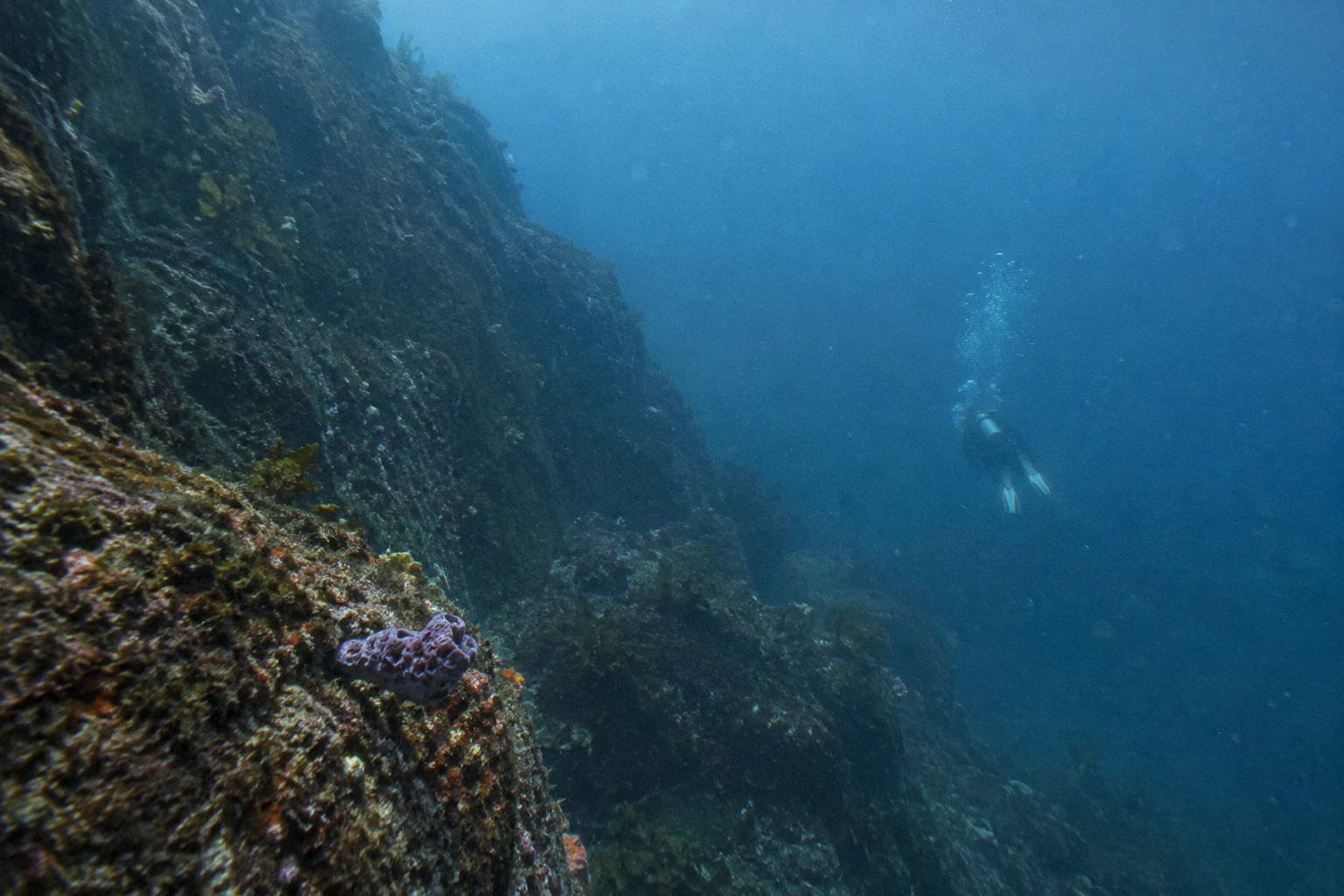
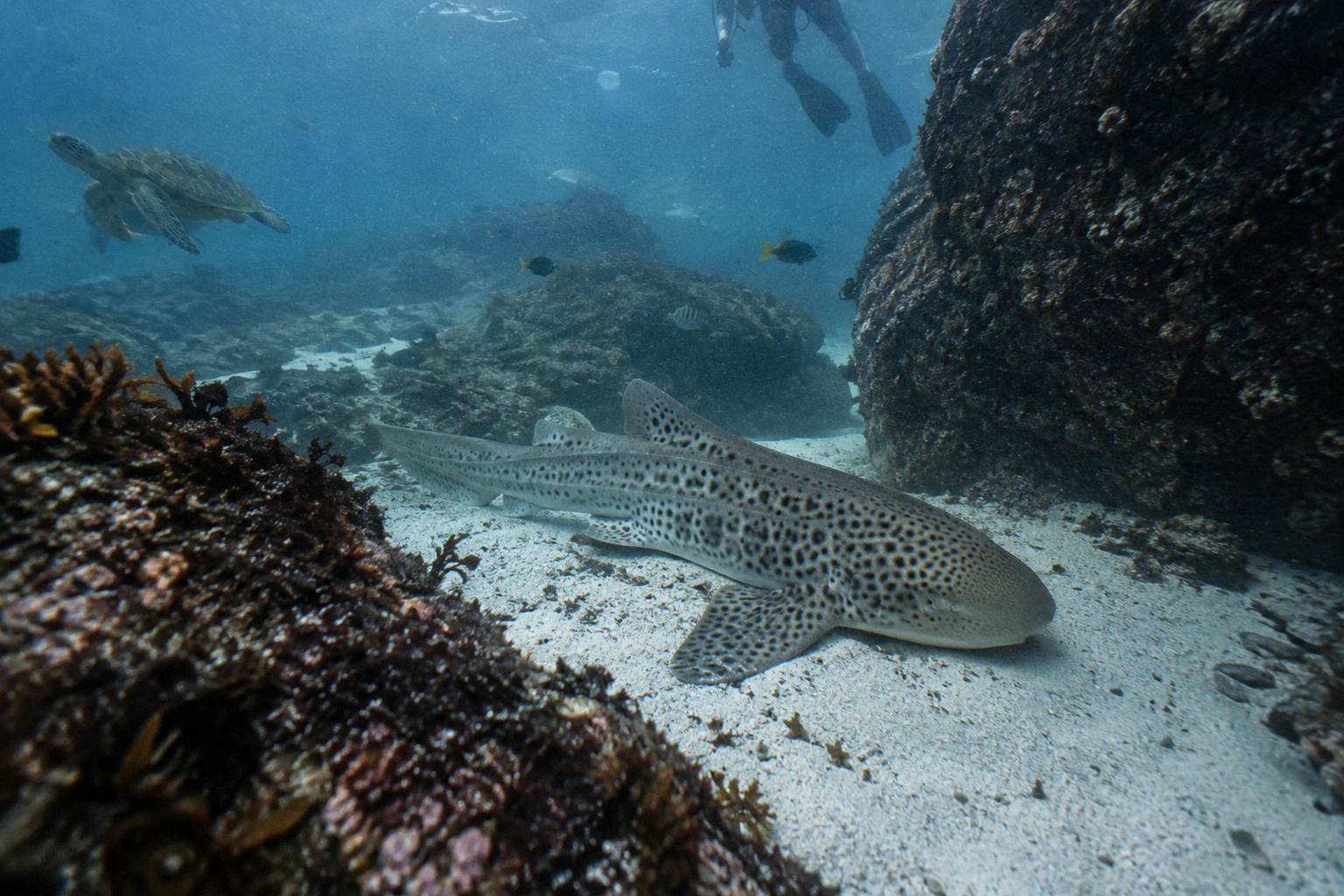
The dive band's lower half is where the trenches lie. One dive operator describes grey nurse sharks in the sand trenches "during colder months (June-November)", at diving depths of 8 to 24 m, which are not snorkel depths, and grey nurse sharks are rarely seen on snorkel trips. That is a structural fact about where the animals sit, not a promise in either direction. Leopard sharks, by contrast, gather in the Needles sandy arena during the warmer months from December to April, and the Needles sits within the range snorkellers can view from above on calm days.
Here is the comparison in one table:
| Factor | Snorkel trip | Certified dive |
|---|---|---|
| Water depth | 3 to 12 m, shallow sheltered areas | 8 to 24 m, reef faces and trenches |
| Time in the water | About 60 min (Byron Bay Dive Centre); about 1 hour (another operator) | About 50 min (Byron Bay Dive Centre Fun Dive) |
| Certification | None | Open Water required |
| Minimum age | 5, 7 or 10 depending on operator | 12 (Byron Bay Dive Centre) |
| Gear included | Fins, mask, snorkel, wetsuit | Full dive gear with certification |
| Typical reach | Turtles, rays, colourful fish, crustaceans | Trenches, wobbegongs, grey nurse sharks in season |
The bottom row is the one to read carefully. It lists what each format can physically reach, not what any trip guarantees. The operator itself says it cannot guarantee turtles will be there on any given day.
Curious about the snorkel side of that depth question in more detail? The how deep is the water where you snorkel Julian Rocks post takes the 3 to 12 m band apart metre by metre.
What Marine Life Can You Actually Reach?
Snorkellers are described as seeing turtles, rays, colourful fish and crustaceans in the shallows; divers add the reef faces and trenches, where wobbegongs and bull, eagle and shovelnose rays are listed all year, and grey nurse sharks gather from June to November. Turtles, in three species, are listed all year in both formats.
The all-year list is shared. One dive operator's page records turtles, rays, crustaceans, nudibranchs, octopuses, eels and fish present year-round at the rocks, and names green, hawksbill and loggerhead turtles specifically. Byron Bay Dive Centre says turtles can be spotted year-round throughout the whole day, and in the same breath says it cannot guarantee sea turtles will be there. Seasonal overlays sit on top of that base: manta rays and leopard sharks in the summer months, endangered grey nurse sharks in the cooler winter water.
The split is in the seasonal column. Leopard sharks in the Needles arena from December to April are a warm-water, mid-depth phenomenon that calm-day snorkellers can view from above. Grey nurse sharks in the trenches from June to November are a diver's sighting, full stop. The grey nurse sharks Julian Rocks guide and the leopard sharks Julian Rocks guide cover each season properly.
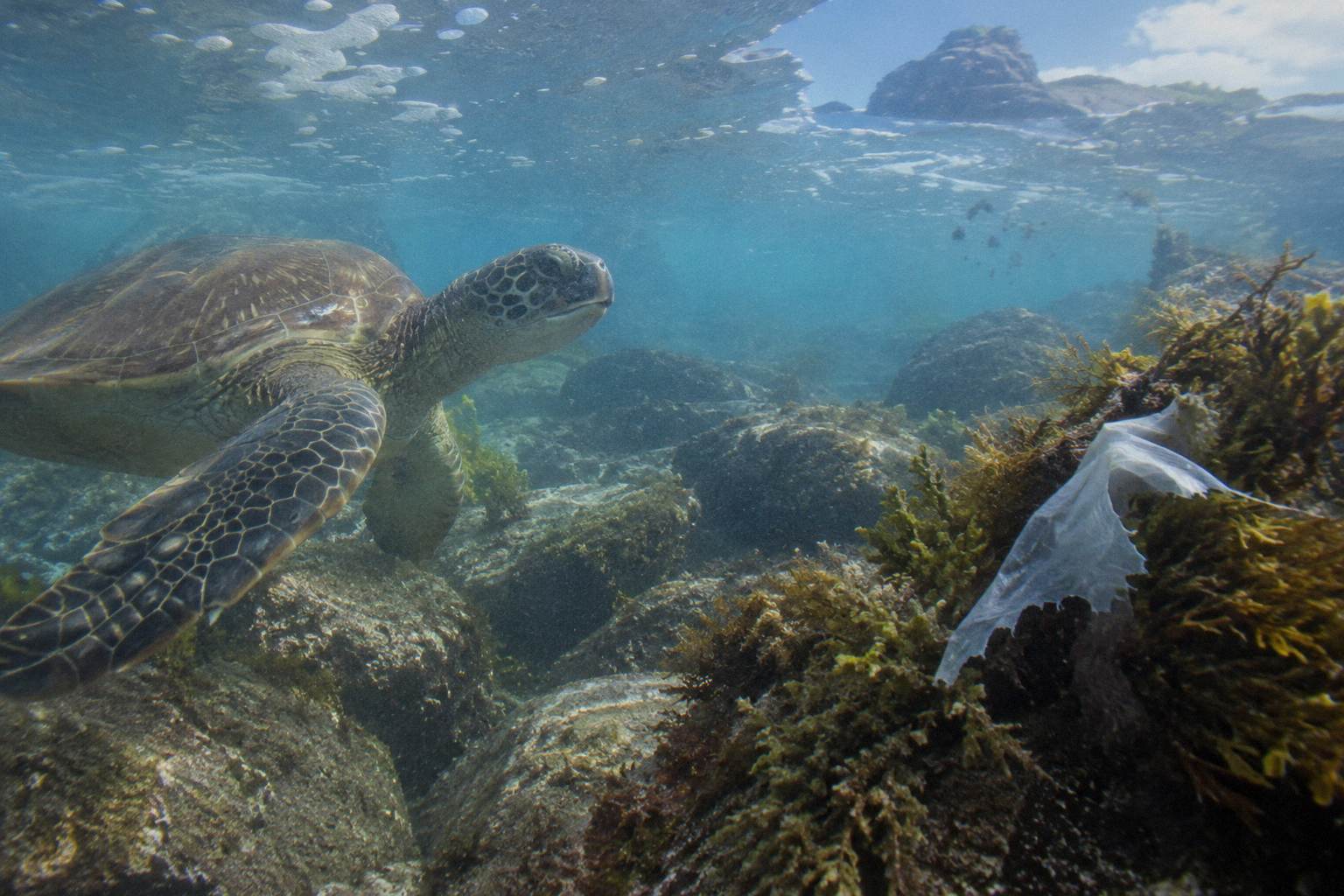
Rays bridge the two zones. Bull rays, eagle rays and shovelnose rays are listed at the Needles and Line of Smiles all year, and the Needles band overlaps the top of the snorkel range on still days. If your whole reason for the trip is one specific animal, match the animal to the format before you book, and read will you reliably see turtles, sharks and rays snorkeling Julian Rocks for the honest odds.
What Are The Rules For Each Format?
Both formats operate inside Cape Byron Marine Park under the same rules: no anchoring within 700 m of Julian Rocks, a 4 knot speed limit within 200 m, and seven marine park moorings with a 2 hour maximum stay. Snorkelling is a permitted activity in the sanctuary zones, which cover 27.5% of the park.
The sanctuary zoning is why the reef looks the way it does. Sanctuary zones are strictly no-take: all fishing and collecting is banned, anchoring on reefs is prohibited, and every species inside them is protected, according to the DPIRD Cape Byron Marine Park user guide. Permitted activities are those that do not harm any animal, plant or habitat, and the department explicitly names boating, surfing, snorkelling and diving among them. So the format choice does not change your legal footprint at all; both are welcome.
The moorings explain the rhythm of a trip. With a 2 hour maximum on a mooring, boats rotate through, which is one reason snorkel sessions run about an hour rather than all morning. The full rule set is laid out in the Cape Byron Marine Park snorkel rules guide, and the broader context of the reserve itself is in the Nguthungulli Julian Rocks Nature Reserve guide.
“We had such a good time, Harry was wonderful and had great energy, we were so happy with the tour!”
Who Can Join: Ages, Swimming Ability And Health Rules
There is no single minimum age or fitness standard for the rocks; each operator sets its own. Snorkel minimums run 5, 7 and 10 years depending on the operator, Out Of The Blue Adventures requires a 200 m unassisted swim and removes snorkelers who cannot manage it, and Turtle School (Byron Bay Dive Centre) asks for a 200 m unassisted open-ocean swim, minimum age 10, prohibiting guests with pregnancy or back or spinal injuries from vessel-based activities; its separate sea turtle tour sets the bar at 25 m unassisted.
The spread is wider than most people expect. For the Blue Seafaris and Out Of The Blue trips, no minimum age, swimming standard or weight limit is stated in the sources: not stated, ask the operator. Sundive Byron Bay and Wild Byron set the other markers: Sundive Byron Bay requires minimum age 7, open-ocean snorkelling experience, the ability to swim 200 m unassisted, accompanying guardians for ages 7 to 18, and GP clearance for guests over 65. Wild Byron sets minimum age 5, caps tours at 12 passengers and runs a naturalist guide.
| Requirement | Byron Bay Dive Centre (Turtle School) | Sundive Byron Bay | Wild Byron | Blue Seafaris / Out Of The Blue |
|---|---|---|---|---|
| Minimum age | 10 | 7 | 5 | Not stated; ask the operator |
| Swimming | Comfortable swimming in open water | Must swim 200 m unassisted before booking | Able to swim at least 200 m unassisted in open ocean | Swim at least 25 m unassisted; no life jackets to snorkel in |
| Medical | Pregnancy, back or spinal injuries prohibited from vessel activities | GP clearance over 65 | None stated | Not stated; ask the operator |
Diving's bars sit above all of these: Open Water certification and minimum age 12 with Byron Bay Dive Centre for its fun dive, and its combined Turtle School plus Snorkelling scuba option requires minimum age 12 as well. If a health question is driving your decision, the honest answer is to ask your doctor, then ask the operator; no operator page substitutes for either conversation.
Byron Bay Dive Centre also stacks the deck for nervous snorkellers: lifejackets on board, a long wetsuit or pool noodle suggested for flotation, and no prescription masks, though contact lenses are fine. Its ginger seasickness tablets on the boat are a small detail that matters on a short open-ocean crossing.
What Does Each Trip Cost?
The only prices this site prints are booking-page from-prices: Blue Seafaris from AUD 94 per person and Out Of The Blue from AUD 94 per person, both about 2.5 hour snorkel trips. Turtle School and the Byron Bay Dive Centre sea turtle snorkel print no price here, and no dive prices are stated at all: check each live listing.
Those two AUD 94 figures are per person, in Australian dollars, from each trip's own booking page, and they move with date and demand. What they buy is the full snorkel package: boat transfer, gear and wetsuit, and roughly an hour in the water. The ratings on those pages, 4.5 across 448 reviews for Blue Seafaris and 4.4 across 167 reviews for Out Of The Blue, describe the snorkel experience, not a ranking; a second booking page for the Out Of The Blue trip shows 4.7 across 58 reviews for the near-identical product.
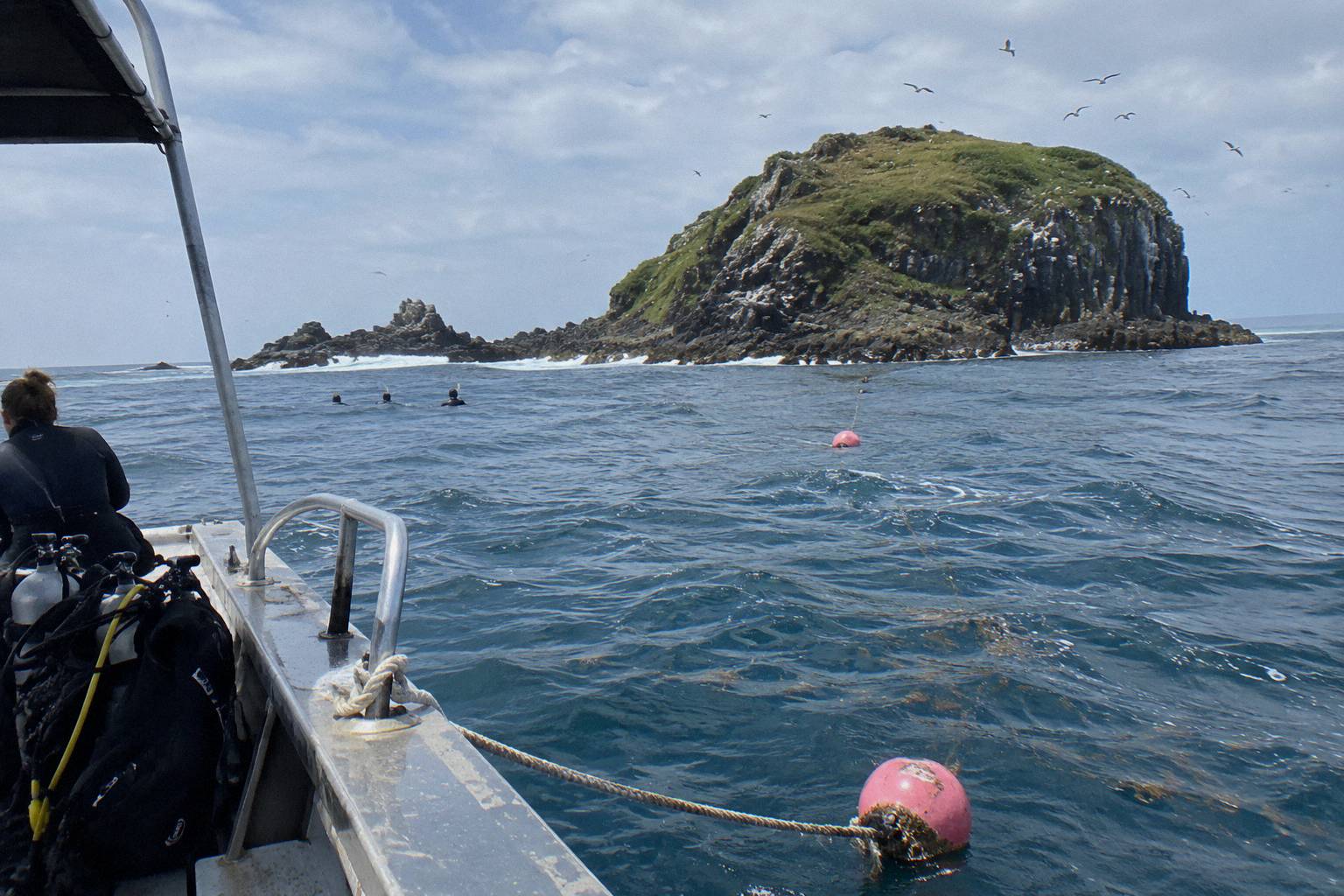
Dive pricing is deliberately absent here because the verified sources do not carry comparable booking-page dive prices. Operators' own direct prices exist on their sites, but this site does not print operator-direct prices for these products; the live listings are the source of truth. What is comparable is structure: snorkel trips include all gear in one price, dive trips add certification you must already hold, so the dive's real cost includes whatever you spent getting certified, whenever that was.
| Trip | Format | Duration | Booking-page price | Rating on the listing |
|---|---|---|---|---|
| Blue Seafaris Julian Rocks Snorkelling Tour | Snorkel | About 2.5 hours | From AUD 94 per person | 4.5 across 448 reviews |
| Out Of The Blue Julian Rocks Snorkelling Tour | Snorkel | About 2.5 hours | From AUD 94 per person | 4.4 across 167 reviews (a second booking page shows 4.7 across 58) |
| Turtle School Julian Rocks Snorkelling Tour | Snorkel | About 3 hours | On the booking page | On the booking page |
| Byron Bay Dive Centre fun dive | Dive | About 2.5 hours | Not printed here | Not printed here |
The featured Blue Seafaris snorkel from Brunswick Heads is the natural first check for most readers comparing tour formats:
Blue Seafaris runs the same about 2.5 hour format from the same harbour, described on its listing as biologist-guided, rated 4.5 across 448 reviews on its booking page. Meeting at 43 Harbour Way, Brunswick Heads Boat Harbour, it suits readers staying north of Byron township.
What Does A Trip Day Look Like For Each?
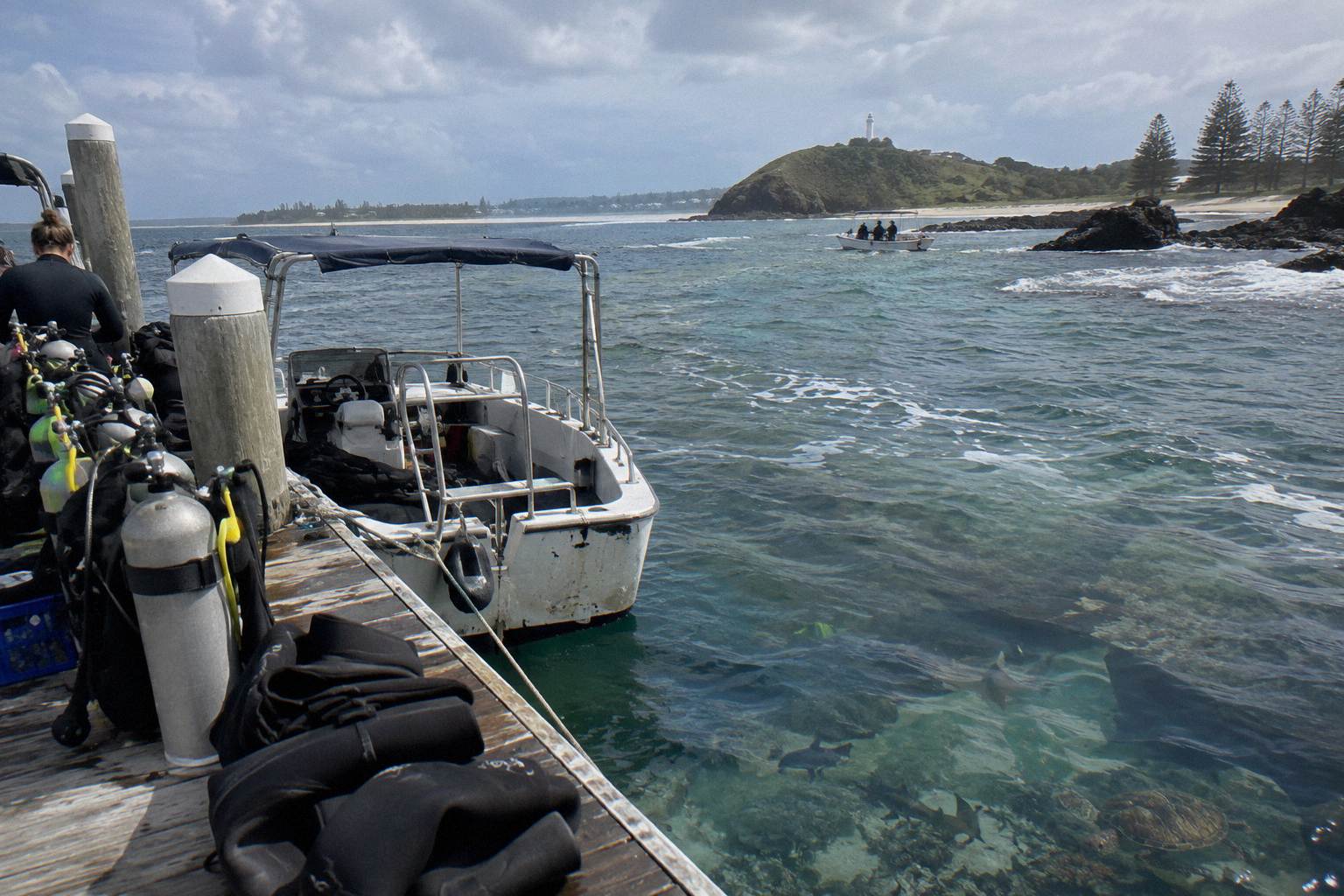
A snorkel day is 2.5 to 3 hours door to door: check-in, a 5 to 10 minute boat ride, about 60 minutes in the water, and the ride back; the Turtle School version adds transport from Byron Plaza to the boat at The Pass. A dive day is similar in shape, about 2.5 hours for a fun dive with about 50 minutes underwater, plus gear assembly and certification checks before boarding.
The Brunswick Heads launch suits anyone driving the coast, since the harbour has parking and the boats load from a marina jetty. The Byron Bay launches, The Pass among them, put you closer to town but depend on beach and surf conditions on the day. Either way, the crossing is short: operators put the boat ride at 5 to 10 minutes, which is why these trips pack into half a day so easily.
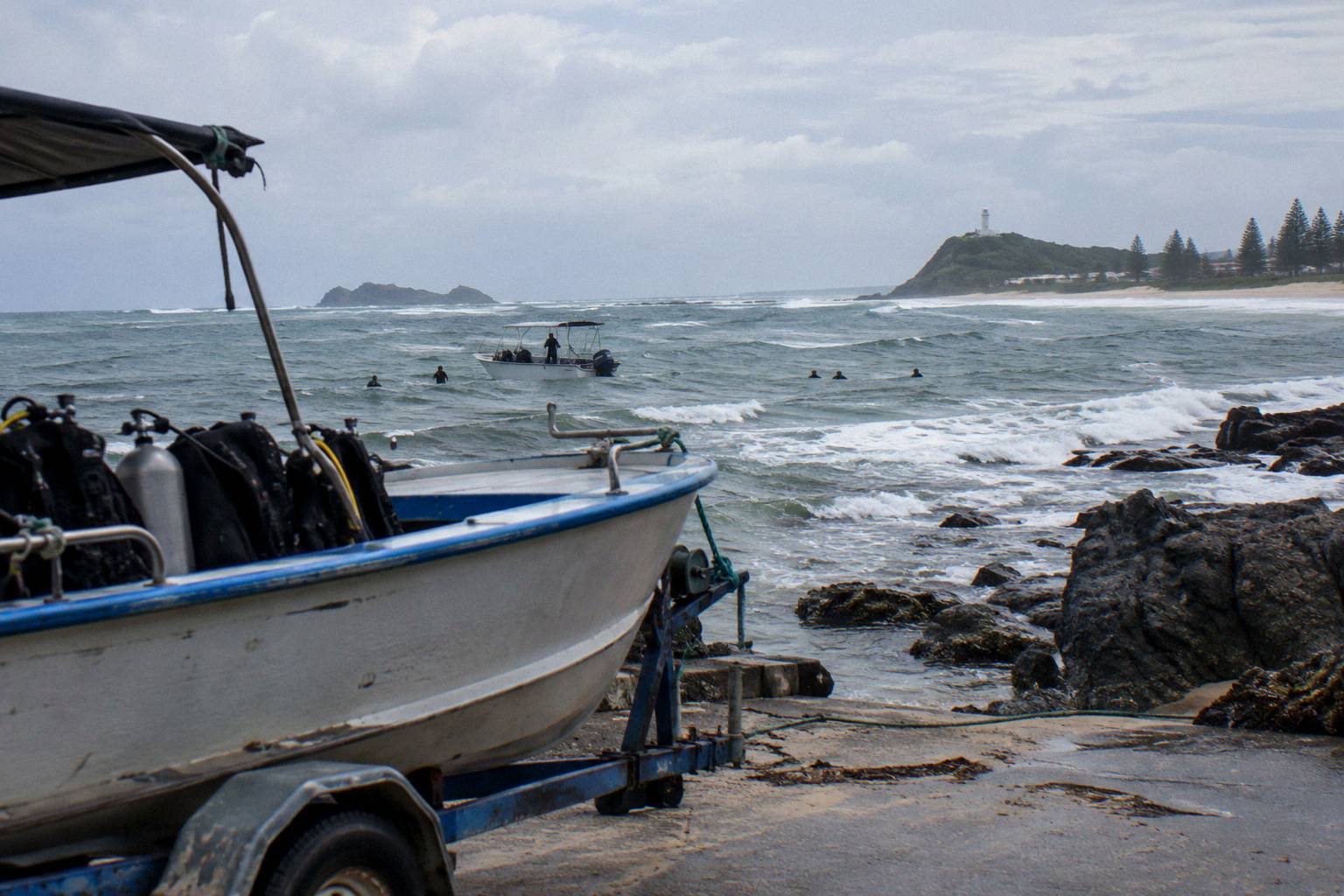
Weather is the wildcard. The site is open ocean, and one dive operator notes strong swells, currents, surges, cold water and winds are all possible. Byron Bay Dive Centre's policy is representative of the trade: if weather or sea is unsuitable, guests are contacted by text or phone with a full refund or reschedule, and its cancellation window is 48 hours with a 100% fee inside it. The what happens on a Julian Rocks snorkel day guide walks through the full timeline, and what if the trip is cancelled for weather covers the refund mechanics.
Turtle School's version of the day is the town-based one: meet at Byron Plaza on Jonson Street, get transported to The Pass, and let the boat do the rest. That shape suits travellers without a car in Byron, and its about 3 hour total with about 60 minutes in the water matches the longer snorkel format:
Its rating and price are on the booking page. If turtles specifically are the draw, Byron Bay Dive Centre also lists a near-identical sea turtle snorkel product from Byron town, about 2.5 hours, with no price or rating printed here; the live listing carries both.
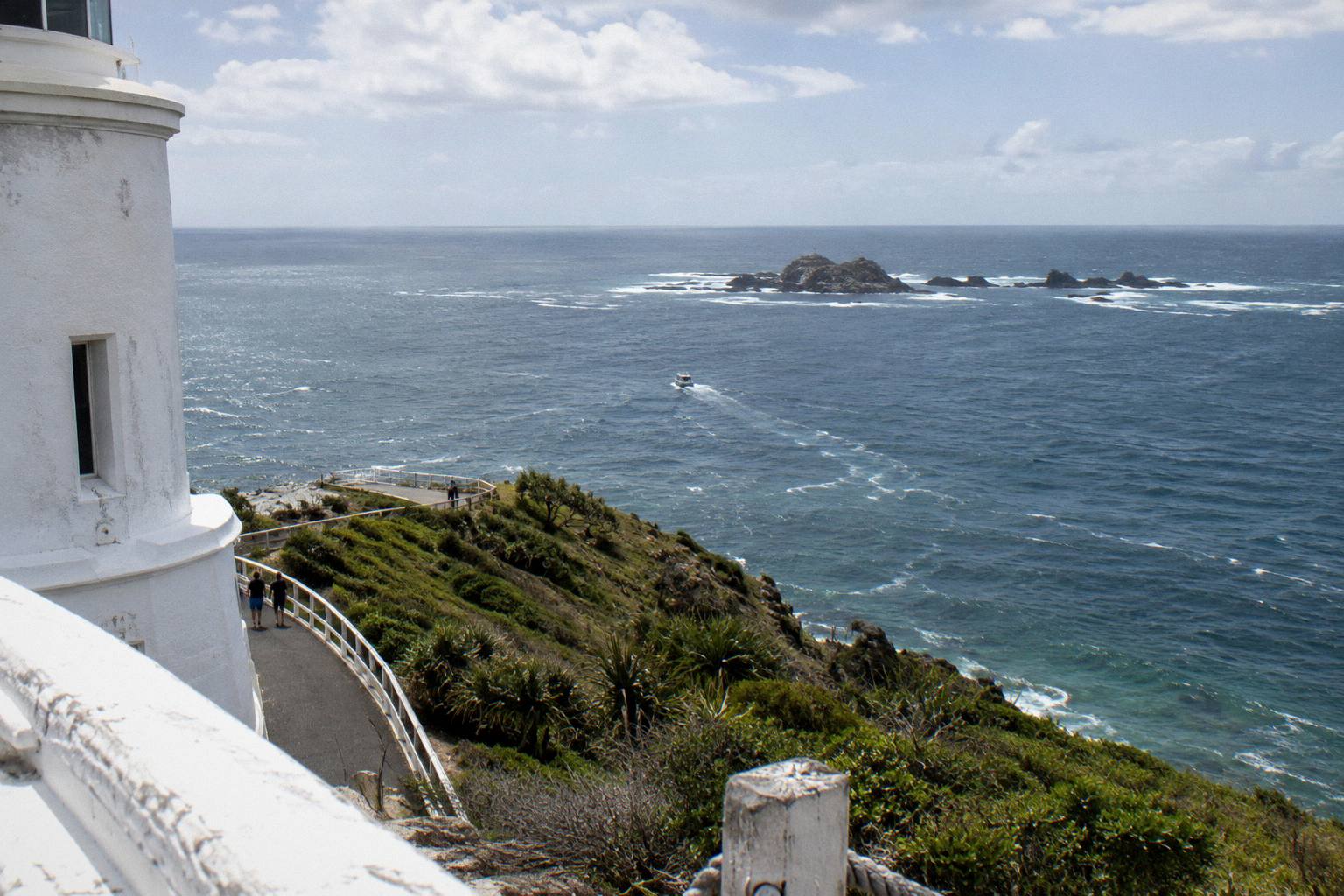
Which One Suits Families, Nervous Swimmers And Certified Divers?
Families with children under 10 have snorkel-only options from age 5 or 7 depending on operator; nervous swimmers have lifejackets, wetsuit flotation and pool noodles on the Byron Bay Dive Centre trips; certified divers should dive the rocks once and snorkel them another day, because the two formats genuinely do not overlap at the trenches.
For families, the age table above is the deciding column. A seven year old can snorkel the rocks with the right operator but cannot dive anywhere; a twelve year old who is certified can do both. The practical family pattern, one parent diving while the other snorkels with the kids, works from Brunswick Heads, where Blue Seafaris runs the Julian Rocks snorkel trip and the harbour is an easy waiting place.
For nervous swimmers, honesty helps: this is an open-ocean site and the operator wording says so plainly. But the support stack is real. Lifejackets on board, long wetsuits for buoyancy, pool noodles, and a guide in the water beside you are all operator-stated features of the Byron Bay Dive Centre trips. The is it safe to snorkel at Julian Rocks post takes the question seriously without inventing statistics, and the briefing for nervous snorkellers post describes what the pre-water talk covers.
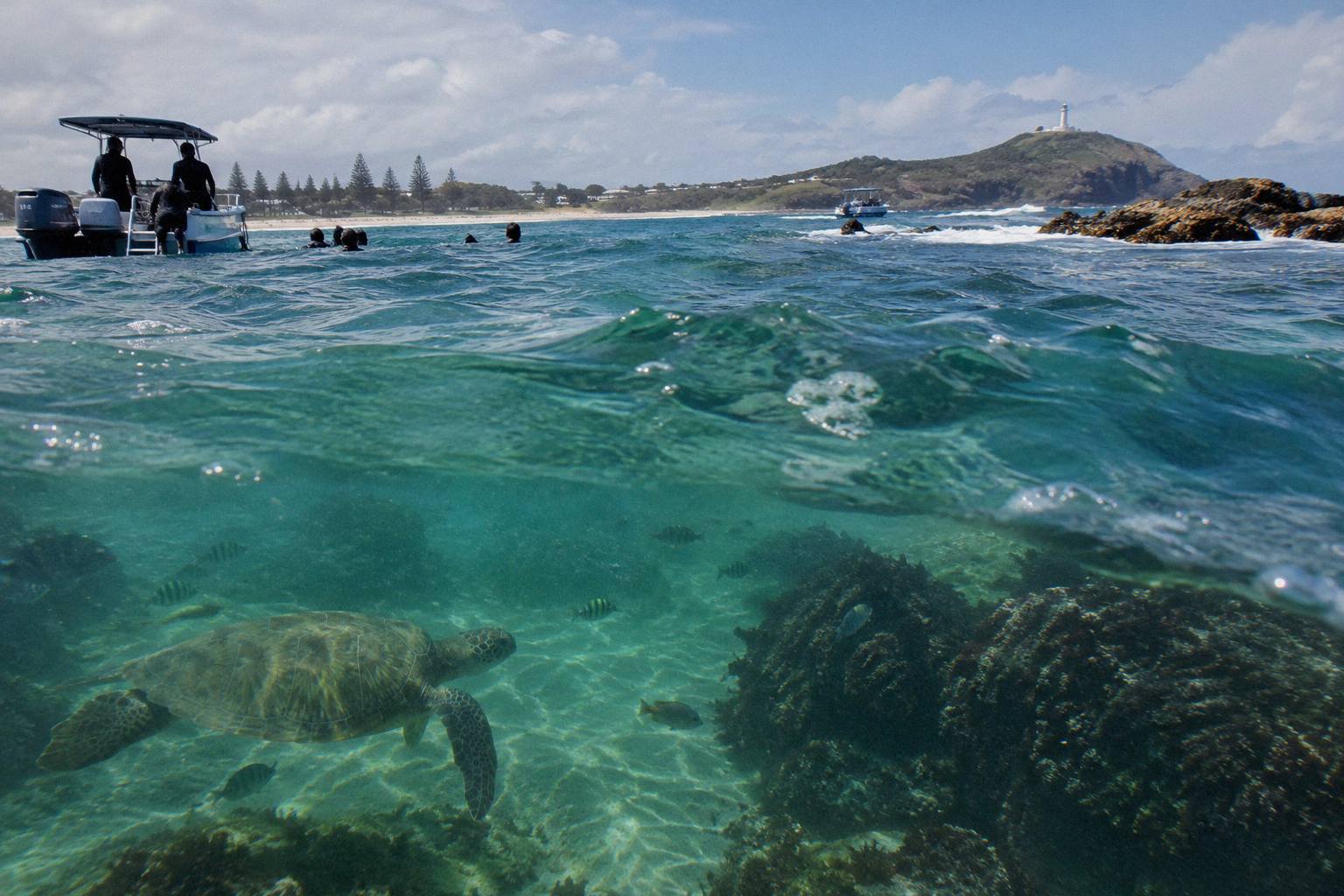
For certified divers, the decision is simpler than it looks. Dive the trenches in winter for the grey nurse season, and snorkel the shallows in summer when the leopard sharks sit in the Needles arena. Split across two days, you see both halves of the reef system that Julian Rocks Snorkelling exists to document: the 3 to 12 m band everyone can reach, and the 8 to 24 m band only a cylinder opens up.
For the undecided middle, the sea turtle snorkel from Byron town is the gentlest on-ramp:
Common Questions About Snorkelling Or Diving At Julian Rocks
What Is The Difference Between Snorkelling And Diving At Julian Rocks?
Depth and access. Snorkel trips stay in shallow, sheltered areas of 3 to 12 m with about 60 minutes in the water, while dives run 8 to 24 m with about 50 minutes underwater and require Open Water certification. Gear, minimum ages and skill requirements all follow from that split.
Do I Need Certification To Dive At Julian Rocks?
Yes. Byron Bay Dive Centre's fun dive requires Open Water certification and minimum age 12. There is no uncertified diving covered on this site, and the intro scuba product is outside its scope.
Can Snorkellers See The Grey Nurse Sharks?
Rarely. Grey nurse sharks gather in the sand trenches at 15 to 24 m between June and November, which are dive depths, not snorkel depths. Snorkellers work the 3 to 12 m band, where turtles, rays and reef fish are the listed sightings.
How Much Does A Snorkel Trip Cost Compared With A Dive?
The booking pages show Blue Seafaris from AUD 94 per person and Out Of The Blue from AUD 94 per person, both about 2.5 hours. Dive prices are not printed here; check the live listing. A dive's true cost also includes the certification you already hold.
What Is The Minimum Age For Each Format?
Snorkel minimums vary by operator: 5, 7 and 10 years appear on operator pages, and the Blue Seafaris and Out Of The Blue booking pages state none, so ask the operator. Byron Bay Dive Centre's fun dive requires minimum age 12 plus certification.
Which Is Better For A First Visit To Byron Bay?
For most first-time visitors, the snorkel. It needs no certification, runs a half day, includes all gear, and puts you over the same reef system in the 3 to 12 m band where turtles, rays and reef fish are listed all year. Certified divers with a preference for depth should dive it and snorkel it on a second day.