Julian Rocks Diving: Sites, Depths And How It Differs From Snorkelling
Julian Rocks is the best-known dive site on the far north coast of NSW, but most visitors experience it from the surface. Here is how the dive and snorkel experiences actually differ.
Short answer
Dive depths at Nguthungulli Julian Rocks run 8 to 24 m, and snorkel trips stay in shallow sheltered areas of 3 to 12 m. The certified Fun Dive with Byron Bay Dive Centre takes about 2.5 hours with about 50 minutes in the water, minimum age 12, and requires Open Water certification. Grey nurse sharks gather in the sand trenches at 15 to 24 m, depths snorkellers do not reach.
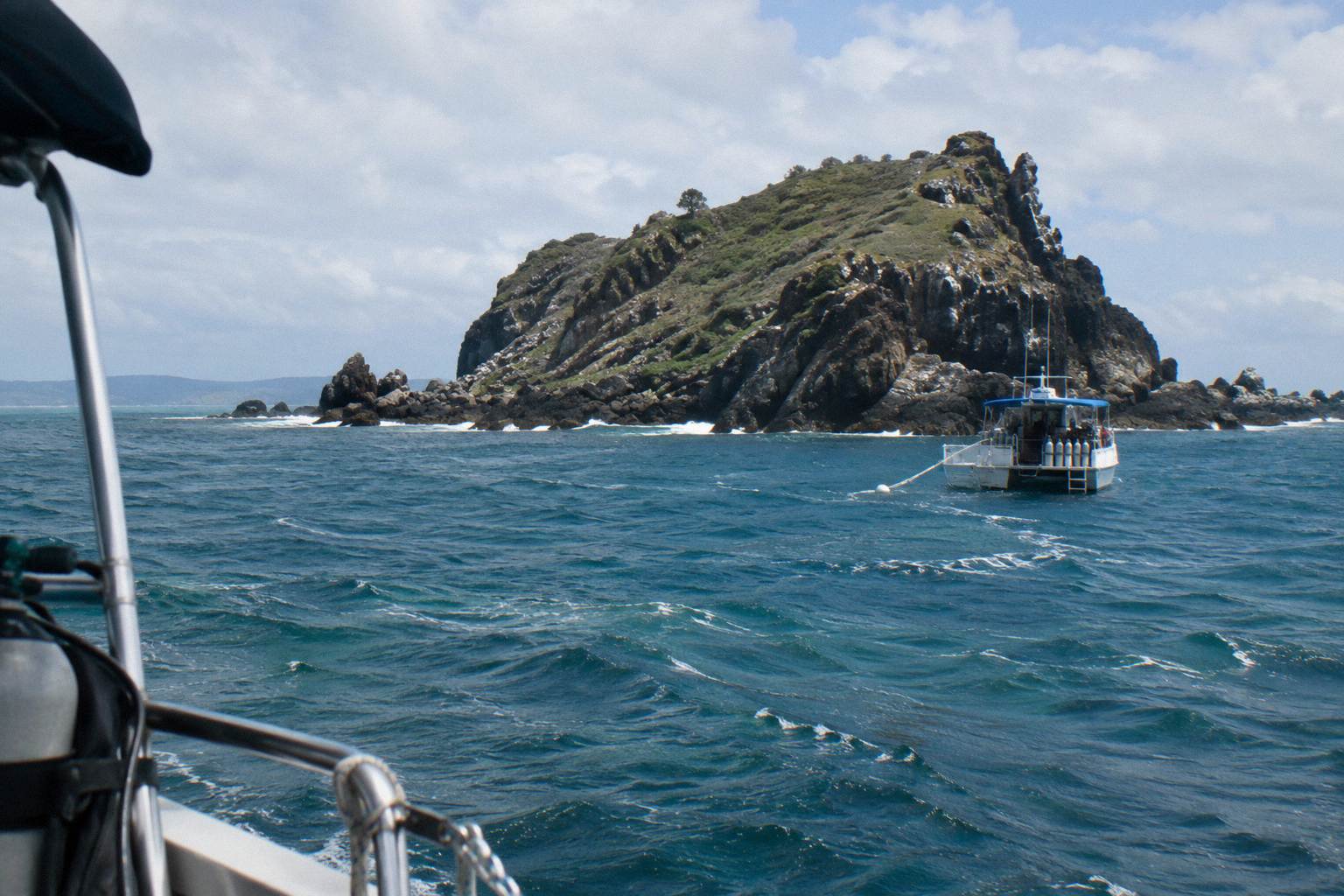
Nguthungulli Julian Rocks sits about 2.5 km off Cape Byron, and the same rock formation serves two very different crowds: certified divers descending to 24 m, and snorkellers floating above the shallows. The site is protected inside Cape Byron Marine Park, which runs about 37 km of coast from the Brunswick River north training wall to Lennox Head and covers about 220 km2 of state waters out to 3 nautical miles. The park was established in November 2002, and its zones and rules commenced in May 2006. That sanctuary status is a large part of why the marine life here is so dense, and it shapes almost every rule your trip will run under, from where the boat can anchor to how long it can stay.
This guide sets out what diving at the rocks involves, the depths and seasons that matter, and the honest comparison with a snorkel trip. The short version: diving goes deeper, needs certification, and reaches the sand trenches where grey nurse sharks gather. Snorkelling stays shallow and still delivers turtles, rays and clouds of fish, without a licence and without a full-day commitment. Most people who visit Julian Rocks Snorkelling never strap on a tank, and they do not leave disappointed. The reef's shallow half is genuinely rich, and the surface view of it is the version most travellers can actually access.
What Is Diving At Julian Rocks Actually Like?
Diving at Julian Rocks means a short boat ride to a protected reef where dive depths run 8 to 24 m, with about 50 minutes in the water on the certified Fun Dive. Byron Bay Dive Centre requires Open Water certification and a minimum age of 12 for that trip. The rocks sit about 2.5 km offshore, with operators putting the boat ride from Byron Bay at about 5 to 10 minutes.
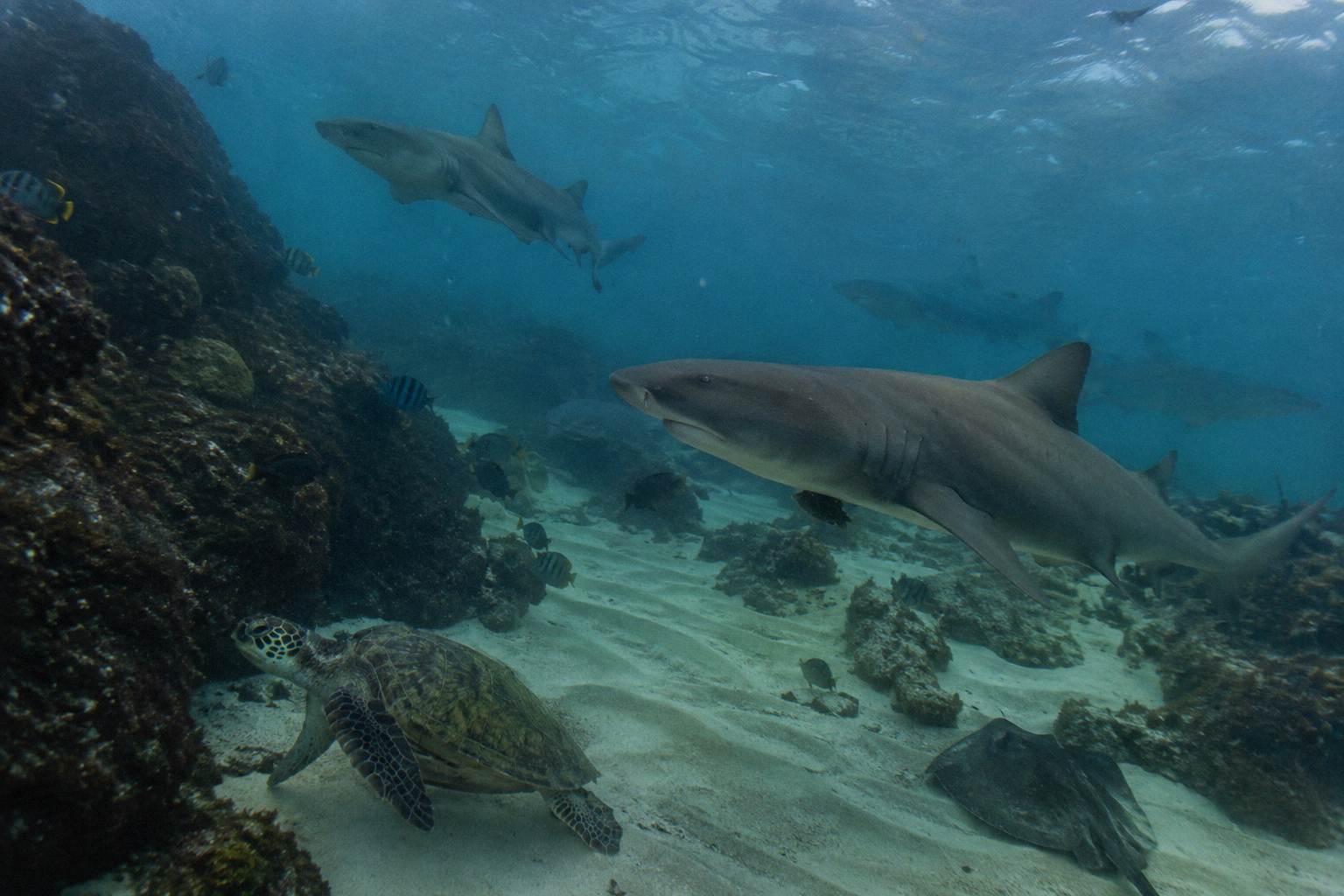
The experience is built around the meeting of two water masses. The East Australian Current pushes warm tropical water down the coast, and cooler southern waters push back, so the marine park sits at a biological crossroads. Operators describe this convergence as supporting "over 1000 marine species" and "more than 500 different species of fish". Those are operator figures, not an official census, but the underlying pattern is real and visible: tropical species appear here that you would normally associate with far-north reefs, alongside temperate-water residents that rarely venture further north. It is the mix, rather than any single animal, that makes the site unusual for the NSW coast.
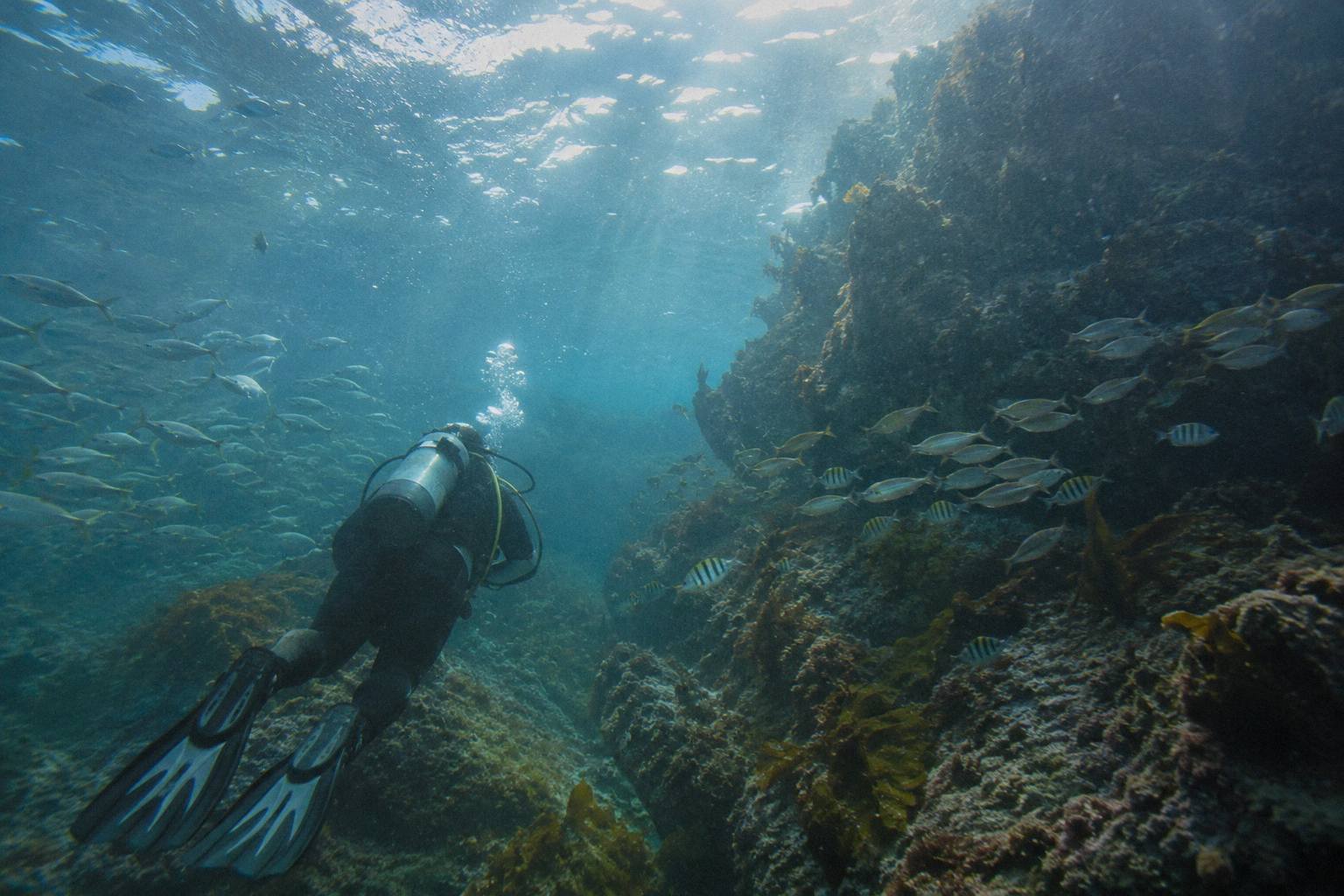
DPIRD, the NSW department that manages the marine park, describes the rocks plainly: "Nguthungulli Julian Rocks is home to many fascinating animals, including sharks, rays, turtles, eels, starfish and corals." Divers get the full vertical range of that. The reef structure includes sandy arenas, trenches, gutters and walls, and different sites hold different residents at different times of year. Conditions are open-ocean: one dive operator notes that strong swells, currents, surges, cold water and winds are all possible, which is why trips run to the weather, not to a fixed timetable. A calm morning can turn into an unworkable afternoon, and skippers make the call on the day.
The cultural layer matters too, and it is worth knowing before you drop into the water. "Nguthungulli" is the Bundjalung word for "Father of the World", and the dual name was officially adopted in July 2023. Under Bundjalung lore, retold in several published sources, a spear broke a canoe in two and the two halves became the rocks. The Bundjalung People of Byron Bay (Arakwal) hold a strong association with the land and sea in the northern parts of the marine park, and the Jali people in the southern section. The rocks are not just a dive site; they are a place with a creation story attached, and the naming change in 2023 put that story back on the official map.
“Amazing snorkelling experience! Guides were great- super friendly and knowledgeable!”
How Deep Do The Dive Sites Go?
Depth is the single biggest difference between the two ways of seeing Julian Rocks. A diver at 20 m in a trench is in a different world from a snorkeller at 4 m above the reef crest, even though both entered the water from boats a few hundred metres apart. The light changes, the temperature drops a little, the species mix shifts, and the whole rhythm of the reef slows down. The trenches are where one dive operator reports grey nurse sharks gathering "during colder months (June-November)", and where winter visits can find the sand gutters full of them. Those are dive depths, and this site will not pretend otherwise: snorkellers do not reach the trenches, and grey nurse sharks are rarely seen on snorkel trips. Anyone telling you a snorkel ticket gets you to the winter shark aggregation is selling the wrong product.
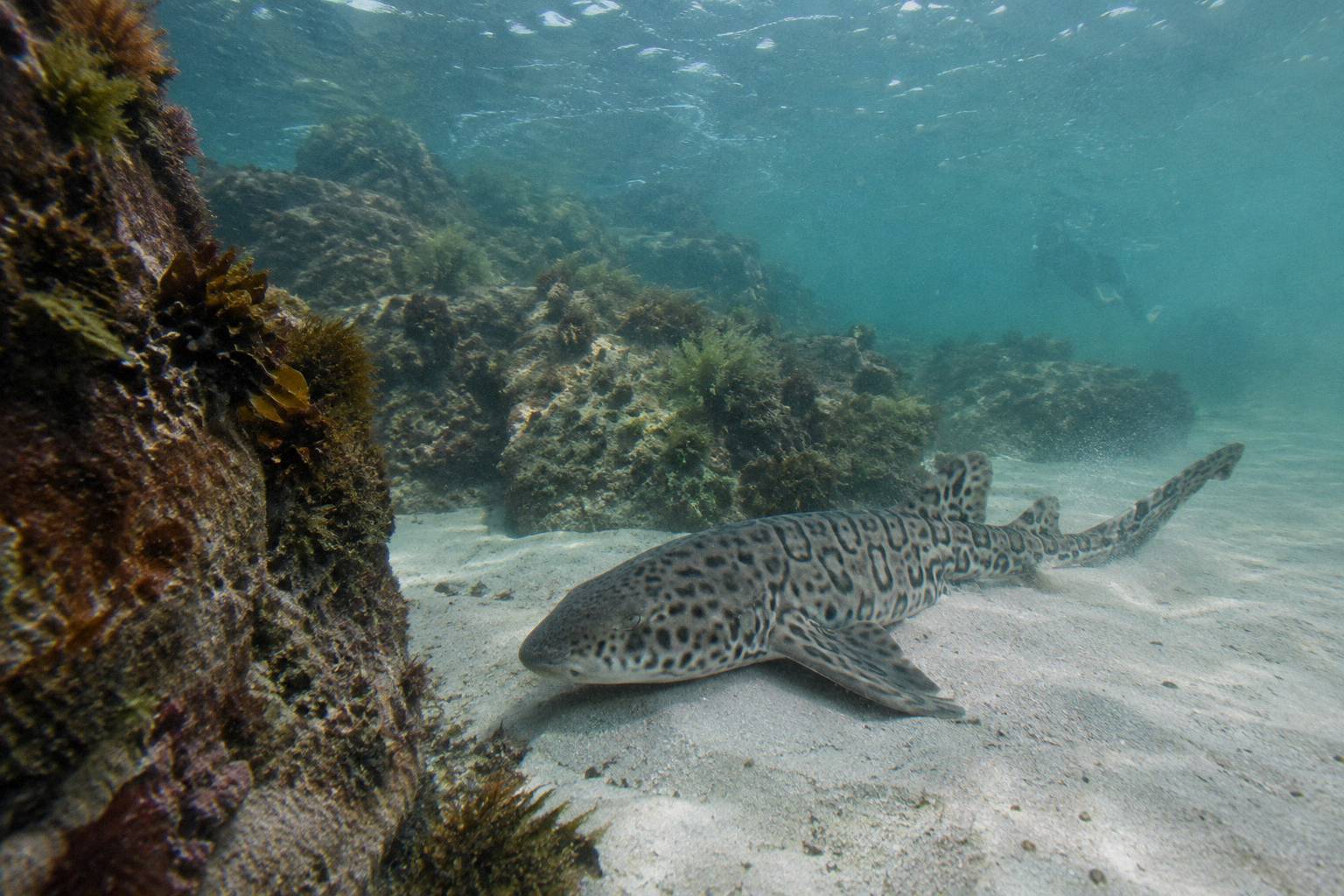
The named dive sites give the picture structure. The Needles is a sandy arena where leopard sharks gather "during the warmer months from December to April" in one dive operator's wording, and the Line of Smiles is another dive-site name that appears on operator pages. Wobbegong, bull rays, eagle rays and shovelnose rays are reported at those sites all year. None of this comes with a sighting promise, and no honest operator makes one. Seasons shift what is likely, weather shifts what is possible, and fish do not read the calendar.
| Zone | Depth range | Who reaches it | What is reported there |
|---|---|---|---|
| Shallow sheltered areas | 3 to 12 m | Snorkellers and divers | Turtles, rays, colourful fish and crustaceans |
| Main reef structure | 8 to 24 m | Certified divers only | Reef walls, gutters, eels, nudibranchs, octopuses |
| Sand trenches | 15 to 24 m | Certified divers only | Grey nurse sharks, June to November |
| The Needles sandy arena | Within dive depths | Certified divers only | Leopard sharks, December to April |
A practical note on reading that table: the depths are operator-reported figures for the site, not a description of any single trip. Where a dive goes on the day depends on certification, conditions and the skipper's call. If the trenches are the reason you want to dive, say so when you book, and ask what the recent conditions have allowed. Our Julian Rocks visibility by season guide covers what water clarity typically does through the year, because visibility shapes a dive at depth even more than it shapes a snorkel. A diver at 20 m in green water sees a fraction of what the same site offers in a clear week.
How Does Diving Compare With Snorkelling Here?
Snorkelling delivers the shallow half of Julian Rocks: turtles, rays, colourful fish and crustaceans in 3 to 12 m of sheltered water, from about AUD 94 per person, with no certification needed. Diving adds the deep reef and the trenches from 8 to 24 m but requires Open Water certification and a minimum age of 12 on the Fun Dive.
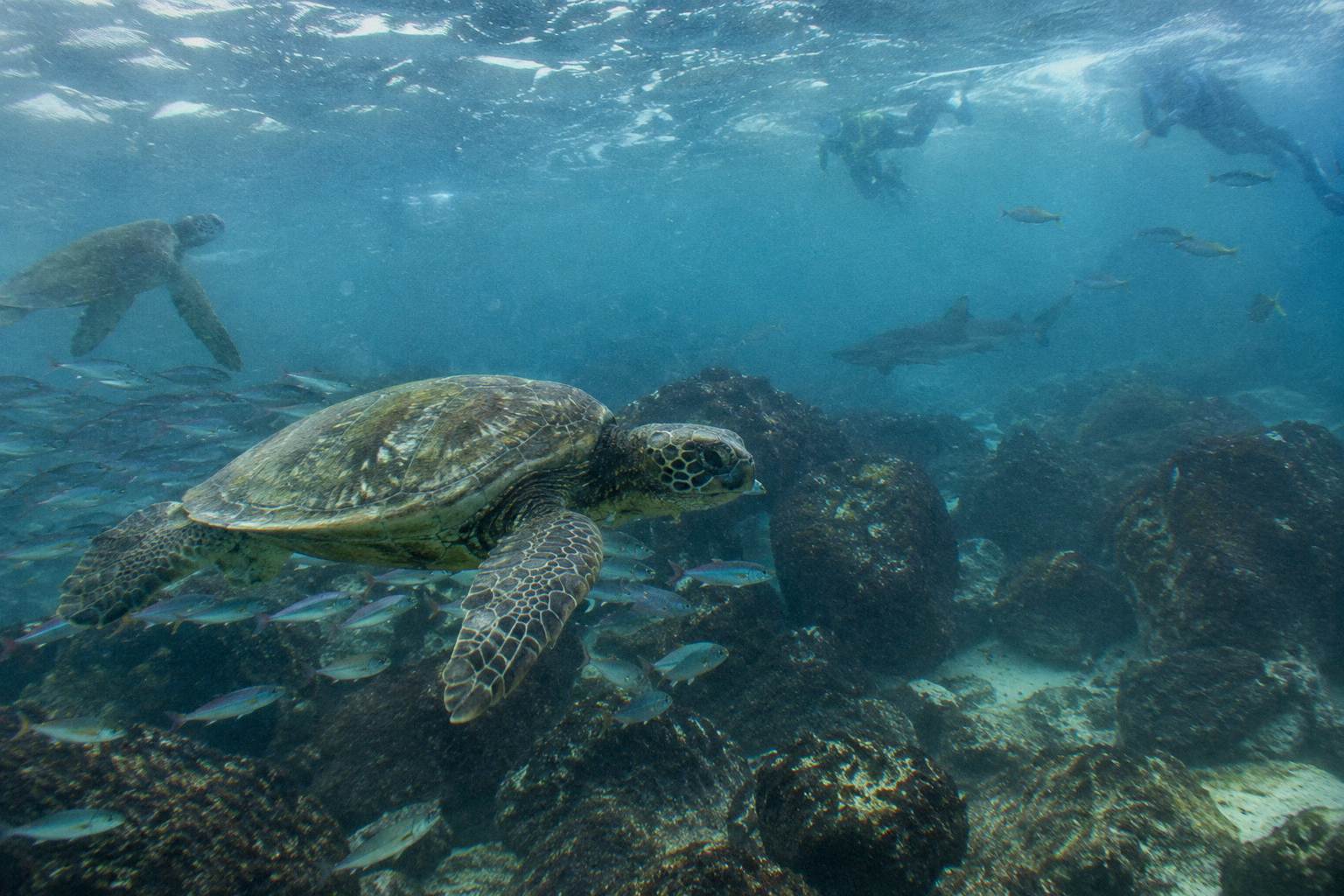
The honest comparison comes down to what you want from the water. If the goal is to see turtles, rays and dense fish life in warm-ish water with minimal fuss, the snorkel trip already delivers that. Blue Seafaris runs a 2.5-hour trip from Brunswick Heads Boat Harbour rated 4.5 across 448 reviews on its booking page, from AUD 94 per person. Out Of The Blue runs a similar 2.5-hour trip, also from Brunswick Heads, from AUD 94 per person, rated 4.4 across 167 reviews on its main booking page, and a second booking page shows 4.7 across 58 reviews. Those review pools differ in size, and we print the counts so you can weigh them yourself rather than taking a bare number on trust.
Diving buys depth, bottom time and the trench experience. The Fun Dive with Byron Bay Dive Centre is about 2.5 hours with about 50 minutes in the water, minimum age 12, and Open Water certification is needed. There is also a combined Turtle School plus Snorkelling option of about 4 hours with about 60 minutes in the water, minimum age 10. No dive prices are printed on this site; check the operator's live listing for current figures, since dive pricing moves with season and demand.
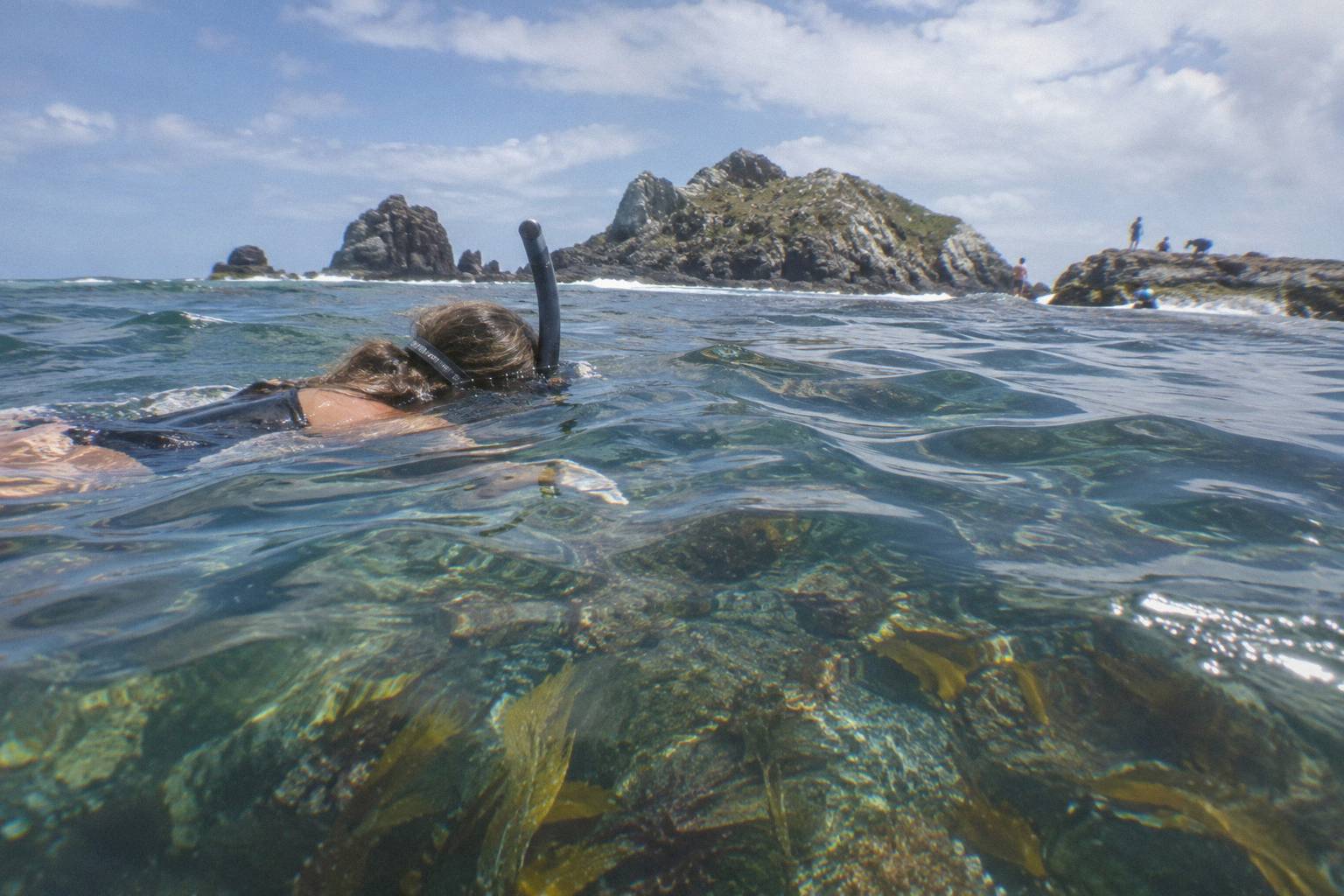
There is a middle path worth naming. The Turtle School trip, run by Byron Bay Dive Centre, is about 2.5 hours, meeting at Byron Plaza in Jonson Street with transport to the boat at The Pass. Its rating and price are on the booking page. A second near-identical scope trip, the Byron Bay Dive Centre Sea Turtle Snorkel, also runs about 2.5 hours. Both are snorkel trips with a strong educational framing rather than dives, and they suit a visitor who wants more time and more interpretation than a standard snorkel run. If you are still undecided on format, our snorkelling or diving comparison works through the choice in more detail.
One more contrast worth knowing before you choose: the boats leave from different places. Blue Seafaris and Out Of The Blue both meet at Brunswick Heads Boat Harbour, a short drive north of Byron Bay, and each runs a speedboat out to the rocks, 15 minutes each way. Turtle School meets in central Byron Bay. The 5 to 10 minute crossing you may have read about refers to departures from Byron Bay itself. If you are staying in town without a car, the meeting point decision can matter more than any difference in the water.
What Certification, Age And Fitness Do You Need?
The Fun Dive requires Open Water certification and a minimum age of 12. Snorkel trips have no certification requirement, though minimum ages differ by operator, with 5, 7 and 10 years appearing on operator pages. Every participant must be able to swim, and one operator requires confident open-ocean swimming ability for its snorkel trips.
“We saw so many sharks and turtles and different types of rays, the instructors and the skipper were great the whole time knowing the best spots and helping out along the way. I would recommend the early session as it was nice and quiet out by the rocks. One of the best things you can do on the east Coast.”
Diving has hard gates. The Fun Dive at Byron Bay Dive Centre needs an Open Water card and a minimum age of 12, and its combined Turtle School plus Snorkelling option lists a minimum age of 10. The intro scuba product, where non-divers try a dive under supervision, is deliberately not covered on this site; if that is what you are after, contact the operators directly. There is no way around the certification requirement for the Fun Dive, and no operator at the rocks will take an uncertified diver to depth.
Snorkelling is more open but not gate-free. Minimum ages differ by operator: 5, 7 and 10 years appear on operator pages, and the Byron Bay Dive Centre turtle trip states 10. Swim standards differ too. Out Of The Blue Adventures requires snorkellers to swim 200 m unassisted before booking; crew remove anyone who cannot, with no refund. The Turtle School tour run by Byron Bay Dive Centre asks for the same 200 m in open ocean. Blue Seafaris asks that you be comfortable swimming in open water, offering pool noodles rather than flotation jackets. The separate Byron Bay Dive Centre sea turtle tour sets a 25 m unassisted minimum and expects comfort in the water, with no life jackets to snorkel in.
| Requirement | Fun Dive (certified) | Turtle School Snorkel | Blue Seafaris Snorkel |
|---|---|---|---|
| Certification | Open Water needed | None | None |
| Minimum age | 12 | 10 (stated on operator page) | Check the live listing |
| Total duration | About 2.5 hours | About 3 hours | About 2.5 hours |
| Time in the water | About 50 minutes | About 60 minutes | Not stated on the listing |
| Meeting point | Check the operator's page | Byron Plaza, Jonson Street | 43 Harbour Way, Brunswick Heads |
| Gear included | Yes, per operator page | Mask, fins, snorkel, wetsuit | Per the listing |
| Price on this site | Not printed | On the booking page | From AUD 94 per person |
Health restrictions exist on both sides of the fence. Byron Bay Dive Centre's tour page states that guests who are pregnant or have back or spinal injuries are prohibited from vessel-based activities. Gear is included on the trips: fins, mask, snorkel and wetsuit on the Byron Bay Dive Centre trips, with 5 mm long wetsuits advised for the duration in the water. There are no prescription masks, so contact lenses are the workaround. Nervous snorkellers can hold a long wetsuit or a pool noodle for buoyancy, and lifejackets are on board. Ginger seasickness tablets are carried on the Byron Bay Dive Centre boat, though bringing your own is recommended. For the fuller what-to-bring picture, our Julian Rocks snorkel packing list is the practical companion.
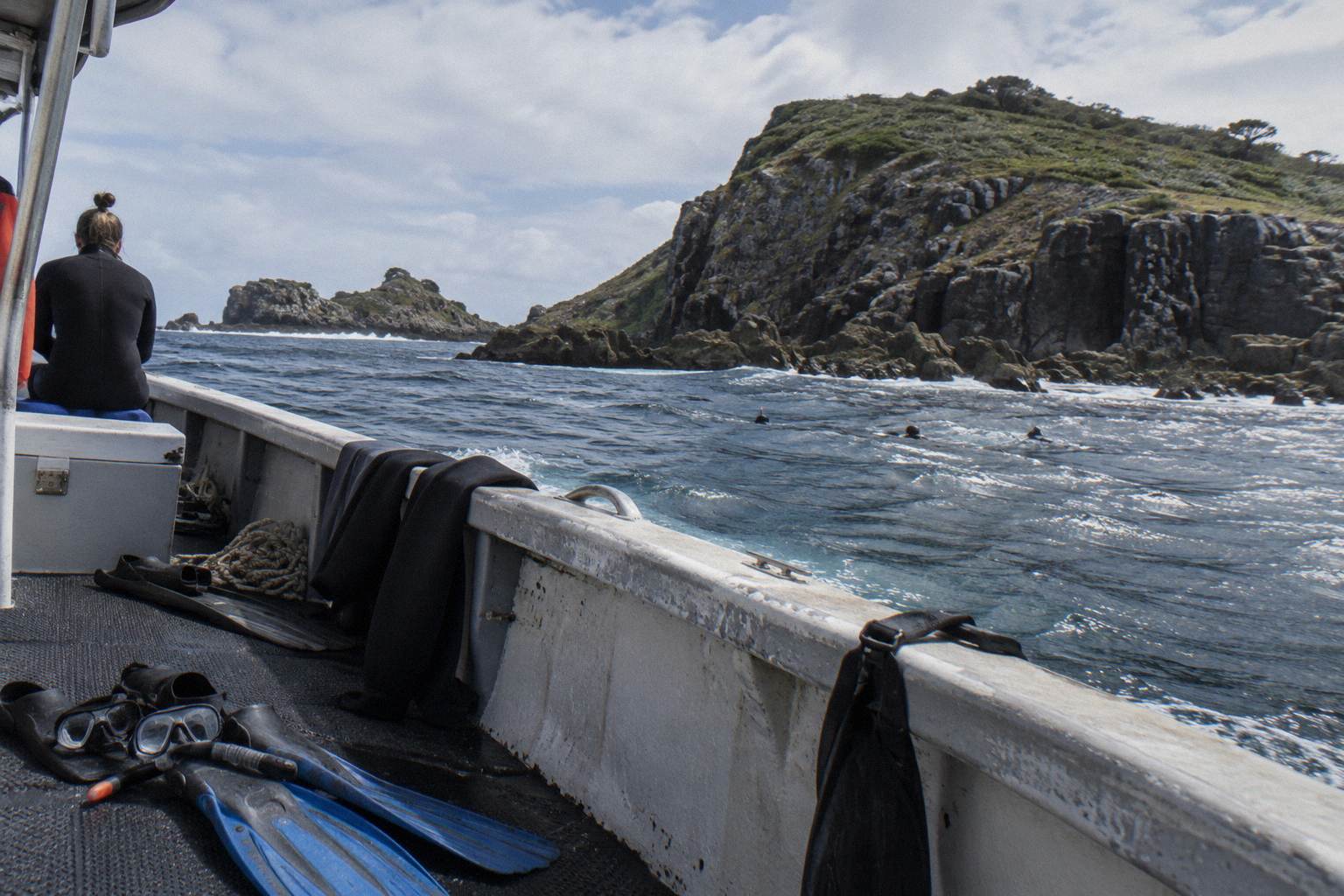
Fitness expectations are worth a paragraph of their own, because the open-ocean setting surprises visitors who have only snoralled off a beach. Swimming in the ocean involves surge, current and swell, and even strong pool swimmers can find the first five minutes disorienting. Operators brief every group before entry, and our piece on the pre-trip briefing for nervous snorkellers explains what that covers. If you are unsure whether the ocean side of the trip suits you, the fitness expectations explainer is the honest read.
What Marine Life Can Divers See That Snorkellers Cannot?
The headline split is depth-driven: grey nurse sharks gather in sand trenches at 15 to 24 m from June to November, which snorkellers do not reach. Leopard sharks school in the Needles sandy arena from December to April at dive depths. Turtles, rays, wobbegongs and reef fish appear across the range all year, and snorkellers regularly see the shallow portion of that mix.
Seasons do a lot of work here, and they deserve their own reading. In summer months, one dive operator's page lists manta rays and leopard sharks; in cooler winter water, endangered grey nurse sharks. Turtles, rays, crustaceans, nudibranchs, octopuses, eels and fish are listed all year. The user guide of the marine park itself names grey nurse sharks among the park's threatened species, which tells you how significant the winter aggregations are, and why the trenches get the attention they do from visiting divers.
| Marine life | When it is reported | Where | Reachable snorkelling? |
|---|---|---|---|
| Green, hawksbill, loggerhead turtles | All year | Across the site | Yes, commonly |
| Leopard sharks | December to April | The Needles sandy arena | Occasionally, in shallows |
| Grey nurse sharks | June to November | Sand trenches, 15 to 24 m | Rarely |
| Manta rays | Summer months | Around the site | Sometimes, near the surface |
| Wobbegong, bull, eagle and shovelnose rays | All year | The Needles, Line of Smiles | Partially, in shallow water |
No sighting is guaranteed, and the operators are candid about it. Byron Bay Dive Centre says turtles "can be spotted year-round throughout the whole day" but the operator says it cannot guarantee turtles will be there. Anyone selling you a certain shark or a certain turtle is overselling; the honest framing is seasons plus luck plus conditions. Water temperature follows the same seasonal logic: winter water can drop to 17 °C with an average around 20 °C, in one dive operator's wording, and strong northerlies can blow between September and Christmas, which affects both dives and snorkels. Our best month to snorkel guide unpacks the calendar month by month, and the Julian Rocks marine life guide covers the species in depth.
For snorkellers who want the wildlife without the certification, the adjacent wildlife trips are worth a look. A guided dolphin kayak trip and a sea kayak tour focused on dolphins and turtles each run about 2.5 hours per their booking pages, with no price or rating printed here. Whale watching with a marine biologist, also about 2.5 hours, runs in season. These are surface trips, so they trade reef time for encounters in the open water around Cape Byron, and they suit visitors whose main interest is megafauna rather than reef detail. The dolphin kayak versus snorkel comparison works through that trade-off properly.
What Rules Protect The Site And Shape Your Trip?
Julian Rocks sits in a sanctuary zone where anchoring is banned within 700 m, boats are limited to 4 knots within 200 m, and seven marine park moorings carry a 2 hour maximum. Snorkelling and diving are both permitted activities in sanctuary zones, but all species are protected and nothing may be touched, collected or fed.
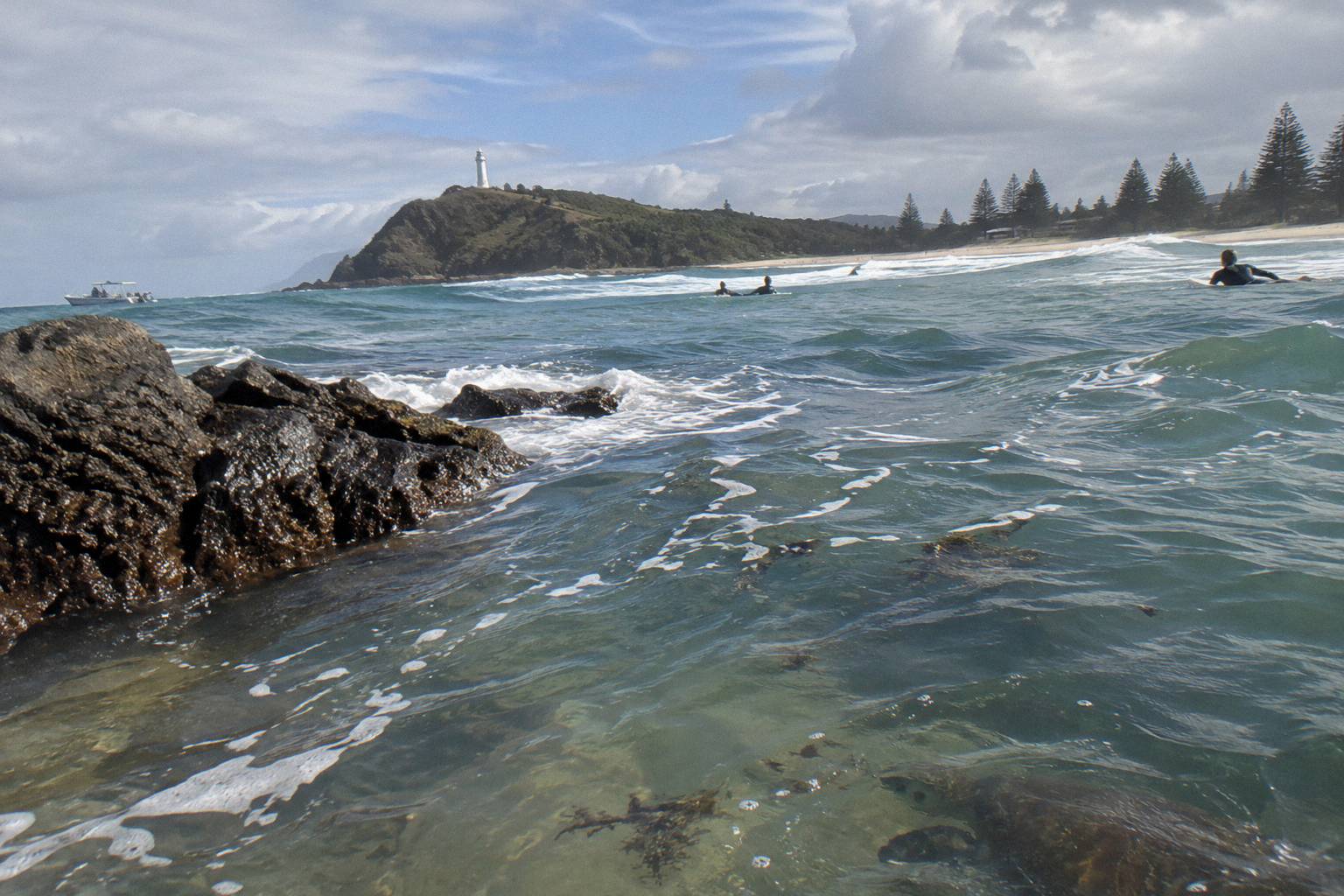
The rules are not fine print; they are why the site is what it is. Sanctuary zones cover 6,118 ha, or 27.5% of Cape Byron Marine Park, and they ban all fishing and collecting as well as anchoring on reefs. Permitted activities are those that do not harm any animal, plant or habitat, which explicitly includes boating, surfing, snorkelling, diving and permitted research and education, according to the DPIRD marine park page. The moorings are for vessels up to 15 tonnes and 10 m in winds of 24 knots or less, with no fishing from a moored vessel and no rafting, per the marine park user guide.
For a visitor, the practical upshots are simple. The 2 hour mooring limit is one reason trips run about 2.5 to 3 hours total with roughly 50 to 60 minutes in the water: the boat rides out, ties up, runs the session, and moves off within its window. The no-touch rule is enforced by operator policy as well as park law: Byron Bay Dive Centre's FAQ asks that guests not touch, collect or harass marine life, and cameras must be waterproof with no flash. Fish feeding, including shark feeding, is prohibited in the marine park, which is part of why the sharks here behave naturally rather than associating boats with food.
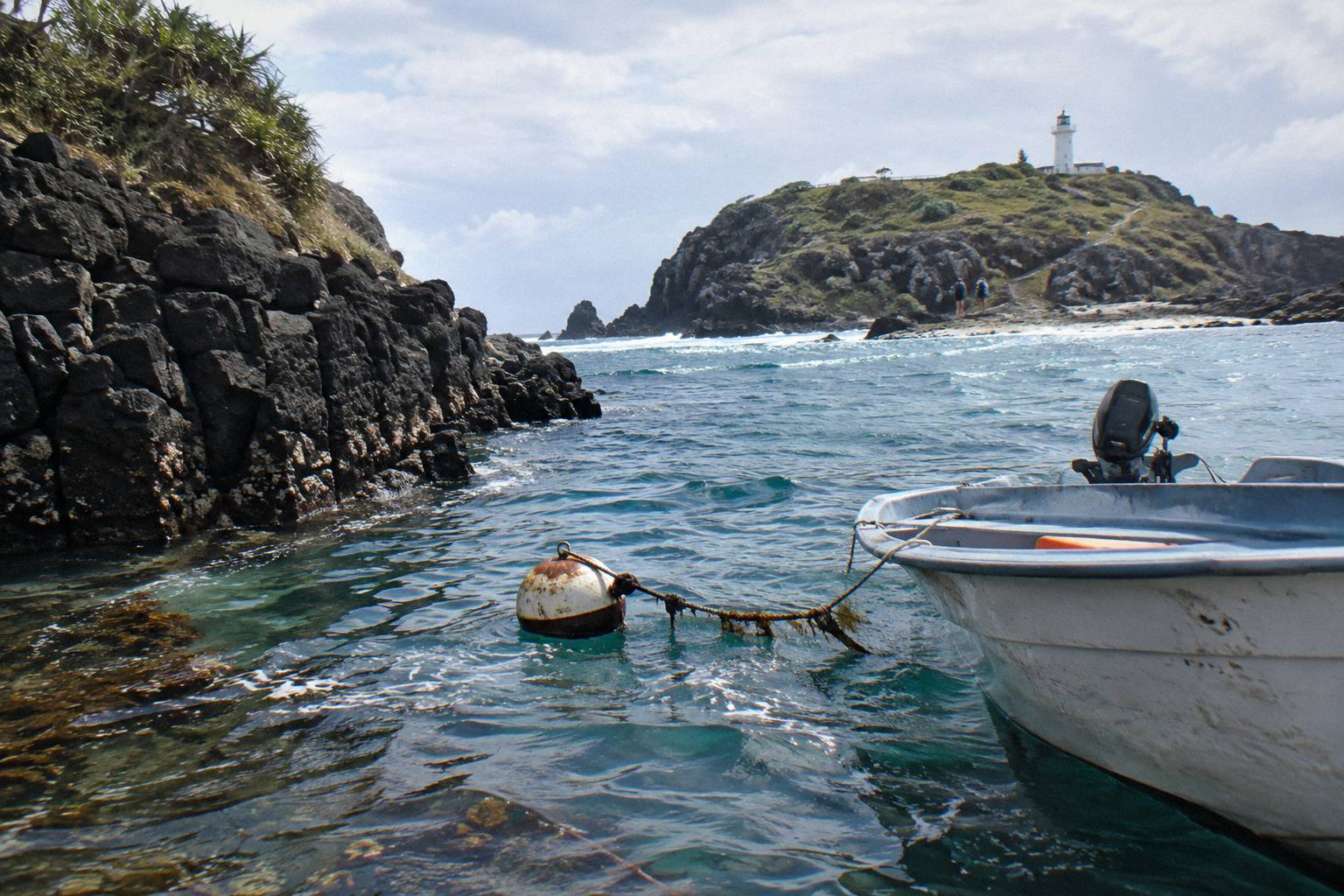
The weather rules matter as much as the park rules. This is an open-ocean site, and when the sea does not suit, operators cancel. Byron Bay Dive Centre contacts guests by text or phone and offers a full refund or reschedule; its standard cancellation window is 48 hours, with a 100% fee inside that window. Booked through an agent, the refund follows the agent's policy. That is worth knowing when you book, especially in the windy shoulder season. Our weather cancellation explainer walks through what happens and when, and the marine park snorkel rules guide covers the zone rules in full.
“This was an incredible experience! We got lucky with the conditions and saw a huge variety species. Loved this even more than when I snorkelled the Great Barrier Reef. Not to be missed!”
Which Trip Should You Actually Book?
The decision tree is short. Certified and chasing grey nurse sharks in winter or leopard sharks in summer: dive, and dive in season. Not certified, or travelling with kids: snorkel, and pick the operator whose minimum age and meeting point fit your group. Blue Seafaris meets at 43 Harbour Way, Brunswick Heads Boat Harbour, and Out Of The Blue also meets at Brunswick Heads Boat Harbour, so both suit visitors with a car. Turtle School meets at Byron Plaza on Jonson Street with transport to the boat at The Pass, which suits visitors staying in town without a vehicle.
Timing your booking matters more than most visitors expect. Trips run to the weather, and the good-weather windows fill first in peak season. The general advice on this site is to book early and treat the 48 hour cancellation window as your flexibility buffer rather than your default plan. If your dates are fixed around a weekend or school holidays, booking a few days ahead is the safer play, and our how far in advance to book guide has the detail on each season's pressure points.
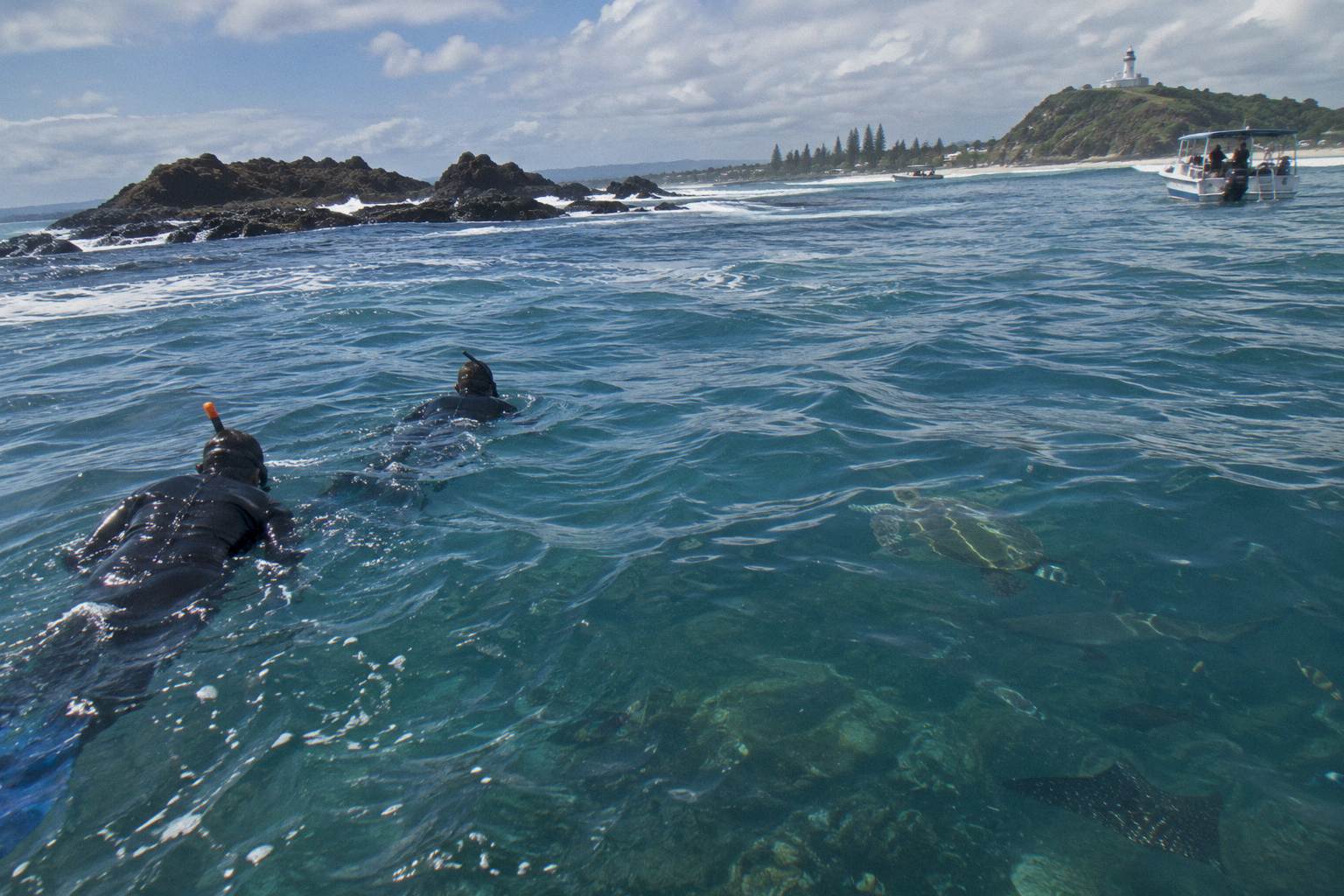
For certified divers weighing a return trip, the honest advice is that Julian Rocks rewards repeat visits across seasons more than it rewards any single day. A December dive and a July dive are close to two different sites: leopard sharks and mantas in the warm water, grey nurses in the cold. Snorkellers get a smaller slice of that seasonal swing, but the slice they get, turtles and rays in clear shallow water, is the part of the reef most people actually remember. You can also check availability on the Blue Seafaris listing if you already know the snorkel format is right for you.
Common Questions About Julian Rocks Diving
How Deep Is The Diving At Julian Rocks?
Dive depths at the rocks run 8 to 24 m. The sand trenches where grey nurse sharks gather from June to November sit at 15 to 24 m. Snorkel trips stay in shallow sheltered areas of 3 to 12 m.
Do You Need Certification To Dive Julian Rocks?
Yes. The Fun Dive with Byron Bay Dive Centre requires Open Water certification and has a minimum age of 12. It runs about 2.5 hours with about 50 minutes in the water.
Can Snorkellers See Grey Nurse Sharks At Julian Rocks?
Rarely. Grey nurse sharks gather in the sand trenches at 15 to 24 m from June to November, which are dive depths, not snorkel depths. Snorkellers sometimes see leopard sharks in the warmer months instead.
What Is The Difference Between Diving And Snorkelling At Julian Rocks?
Depth and access. Divers work the reef from 8 to 24 m including the trenches; snorkellers float over shallow sheltered areas of 3 to 12 m where turtles, rays and colourful fish are reported all year. Snorkelling needs no certification and starts from AUD 94 per person.
How Old Do You Need To Be To Dive Or Snorkel At Julian Rocks?
The Fun Dive lists a minimum age of 12 with Open Water certification. For snorkelling, minimum ages differ by operator: 5, 7 and 10 years appear on operator pages, and the Byron Bay Dive Centre turtle trip states 10.
When Is The Best Season To Dive Julian Rocks?
It depends on what you want to see. December to April brings leopard sharks in the Needles sandy arena and summer manta rays; June to November brings grey nurse sharks to the trenches. Turtles are reported all year, with no sighting guaranteed.