Is There A Snorkel Briefing For Nervous First-timers At Julian Rocks?
What Julian Rocks operators actually say about briefings, nervous-snorkeller support and entry rules, plus which trip fits a first-timer and what to ask before booking.
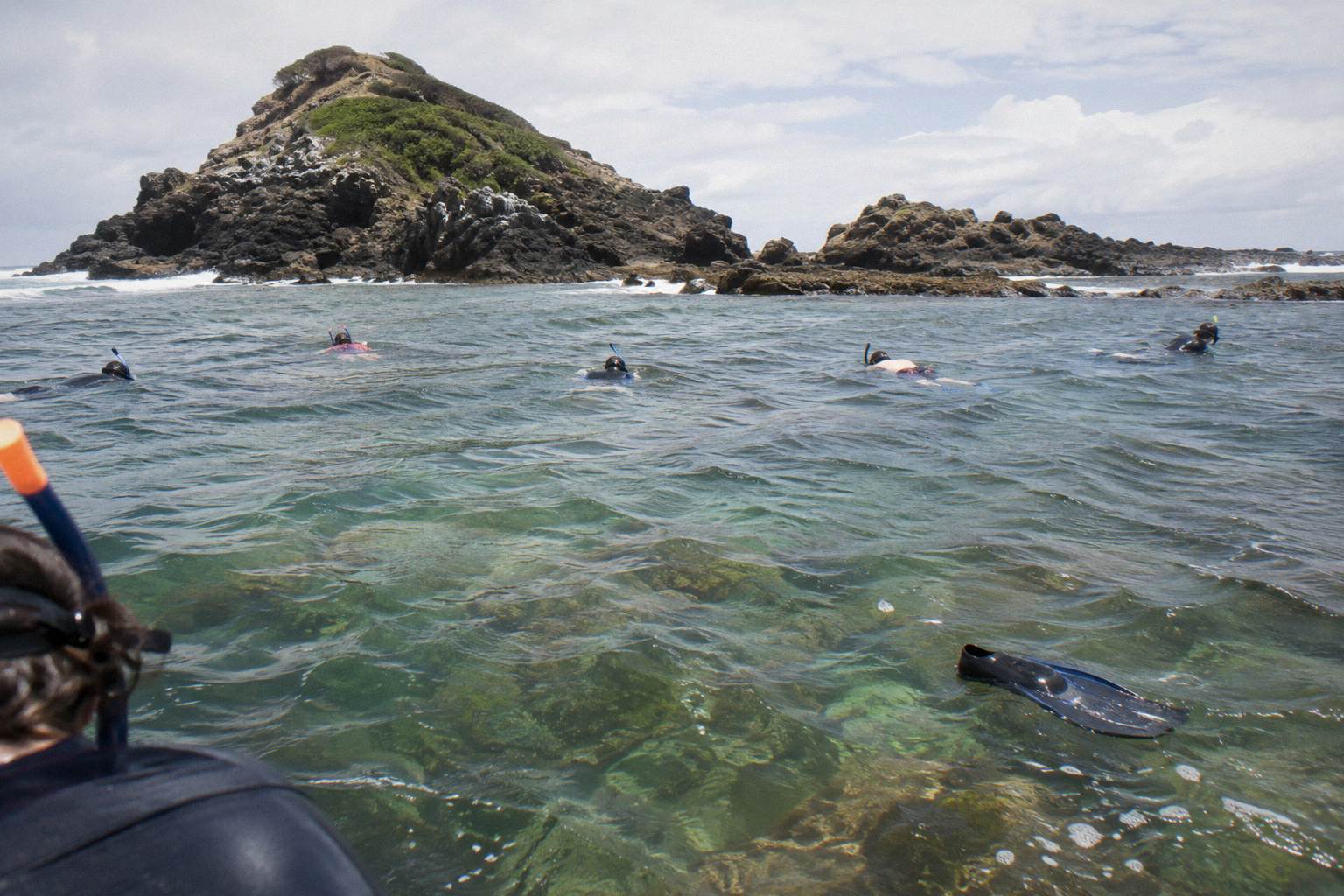
Yes in substance, no in print: every snorkel trip includes on-shore gear fitting and a safety talk before the boat leaves, but none of the three operators' pages spells out a step-by-step briefing script, so the exact content is not stated. What is on record is stronger than a script anyway. Byron Bay Dive Centre's Turtle School trip names nervous snorkellers directly, suggests a long wetsuit or a pool noodle for them, and carries lifejackets on the boat. That is a published commitment to anxious guests, and it is the right place to start.
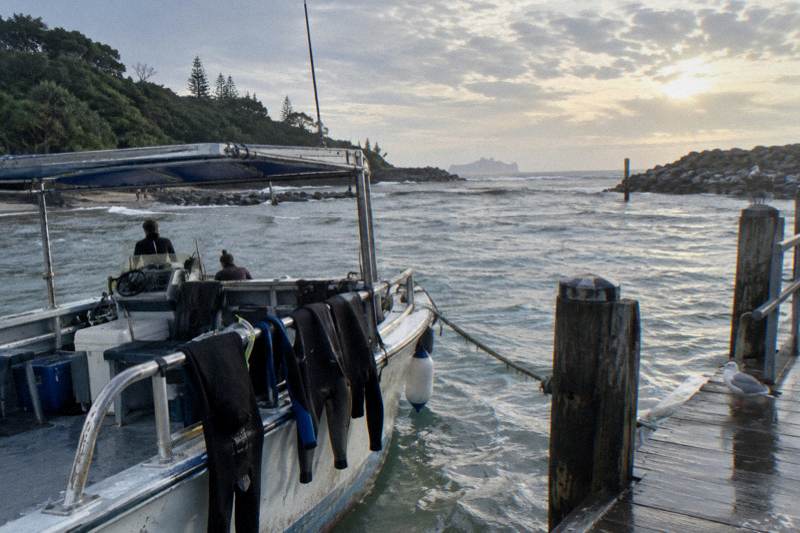
Julian Rocks sits about 2.5 km off Cape Byron, and the boat ride out runs roughly 5 to 10 minutes depending on where the vessel leaves from. That short transit matters to a nervous first-timer more than any itinerary line: there is no long open-ocean crossing between you and the site, and the marine park's rules keep vessels at 4 knots or less within 200 m of the rocks, so the final approach is slow. The site itself is inside a sanctuary zone of Cape Byron Marine Park, where snorkelling is a permitted, low-impact activity alongside surfing and diving.
The honest gap in the record needs saying once and clearly. None of the operator pages or booking listings describes what the pre-trip briefing covers minute by minute, how long it runs, or whether there is a separate session for anxious swimmers. If that level of detail decides the trip for you, ask the operator or check the booking page before you pay. Everything below is built from what is actually stated: gear inclusions, swim requirements, minimum ages, cancellation terms and the one trip that addresses nerves by name.
For a nervous first-timer, the practical choice is between three trips. The Turtle School snorkel from Byron town is the one whose own pages talk about nervous snorkellers. Blue Seafaris and Out Of The Blue both run about 2.5 hours from Brunswick Heads Boat Harbour and both list from AUD 94, Blue Seafaris at 4.5 across 448 reviews and Out Of The Blue at 4.4 across 167.
What The Turtle School Trip Says About Nervous Snorkellers
Byron Bay Dive Centre's sea turtle snorkel is the only trip on this roster whose published pages address nervous snorkellers directly: it suggests a long wetsuit or a pool noodle as float support, states lifejackets are on board, and requires every participant to swim at least 25 m unassisted and be comfortable in the ocean. Those four statements come from the operator's own FAQ, and together they sketch the shape of a trip that expects anxious guests rather than being surprised by them. The rest of the briefing content is not stated, so ask the operator what the on-beach session covers.
The trip itself runs about 2.5 hours in total with about 60 minutes in the water, across a range of tour times through the day. Meeting is at Turtle School, Byron Plaza, on Jonson Street in the town centre, with transport included from there to The Pass, where the vessel departs. Gear is included: fins, mask, snorkel and wetsuit, with 5 mm long wetsuits advised for the full duration in the water. Turtles are listed as visible year-round at the rocks, though the operator is blunt that sightings can't be guaranteed.
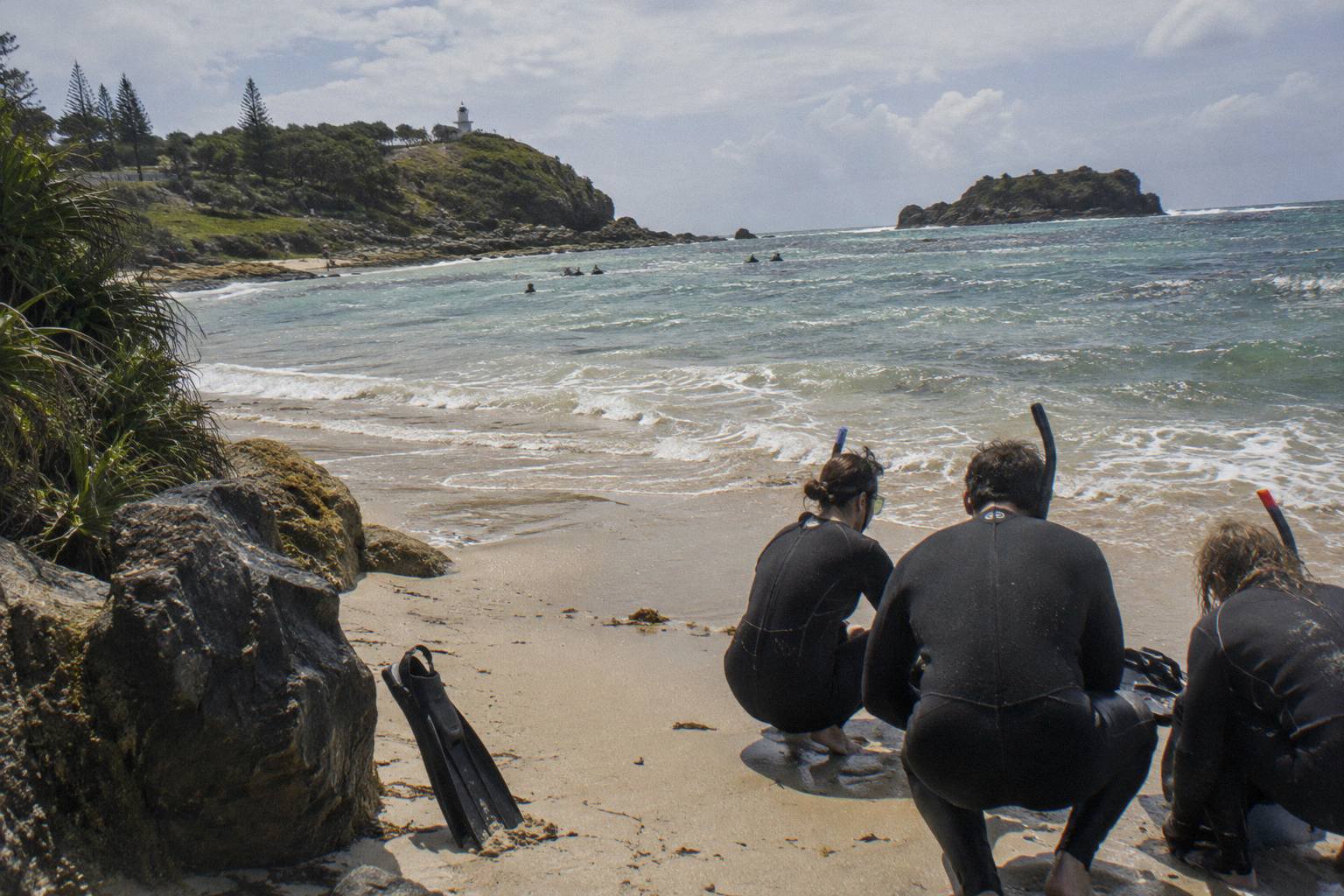
The FAQ carries several details a nervous first-timer will want in one place. Contact lenses are fine but prescription masks are not carried, so plan accordingly if you wear glasses. Ginger seasickness tablets are on the boat, and the operator recommends bringing your own as well. Cameras must be waterproof and flash-free, and the standing rule is not to touch, collect or harass marine life, which matches the marine park's own protections. Guests who are pregnant or have back or spinal injuries are prohibited from vessel-based activities, and that is this operator's rule, not a universal one.
The cancellation terms are unusually generous in structure: if the weather or sea is unsuitable, the operator contacts guests by text or phone with a full refund or a reschedule. Voluntary cancellations follow a 48-hour policy with a 100% fee inside the window, and a booking made through an agent follows the agent's refund policy. For a nervous first-timer, the weather clause matters most: the operator, not you, makes the call on unsafe seas, and you are not out of pocket when it does.
There is also practical comfort in the meeting-point logistics. Starting at a shop in the town centre rather than on a beach means gear fitting, questions and any last-minute nerves can be worked through on dry land with staff around you, before the short drive to The Pass. A nervous first-timer who dreads the moment of arrival at a strange harbour will find this sequence gentler: town, shop, chat, drive, beach, boat. Nothing in the sources promises a hand-holding service, but the structure of the day is on your side.
Do You Have To Be A Strong Swimmer To Join A Julian Rocks Trip?
Each operator sets its own bar, and they are not the same: the Turtle School (Byron Bay Dive Centre) trip requires that you swim at least 200 m unassisted in open ocean, Out Of The Blue Adventures applies the same 200 m standard before you book, and Blue Seafaris asks that you be comfortable swimming in open water, with pool noodles on offer and no flotation jackets for non-swimmers. No single Julian Rocks entry rule exists. The standard that applies is the one on the page of the specific trip you book.
For the two Brunswick Heads trips, swim standards do apply. The Blue Seafaris listing says you must be comfortable swimming in open water, and the Out Of The Blue listing requires every snorkeller to swim 200 metres unassisted, with crew sending anyone who cannot onto the vessel with no refund. Neither listing states a weight limit, so write to the operator if that matters to you. Both are about 2.5-hour trips, Blue Seafaris described as biologist-guided, and both list from AUD 94 per person. The age question works the same way: operator pages across this roster show minimums of 5, 7 and 10 years, so the number that counts is the one attached to your trip.
The gap between those standards is wide enough to change your plans. A confident ocean swimmer barely notices a 200 m requirement; a pool-only swimmer who has never swum in open water should read it as a stop sign for that particular trip and look at the alternatives instead. The site's own deeper answer on this is worth reading alongside the operator pages: our piece on whether non-swimmers can snorkel at Julian Rocks walks through the same evidence in more detail.
| Trip | Swim or experience requirement (operator-stated) | Minimum age | Other notes |
|---|---|---|---|
| Turtle School (Byron Bay Dive Centre) | Must be able to swim at least 200 m unassisted in open ocean | 10 | Long wetsuit or pool noodle suggested for nervous snorkellers; lifejackets on board |
| Sundive Byron Bay | Open-ocean snorkelling experience mandatory; 200 m unassisted swim | 7 | Kids 7-18 need an adult guardian; over 65 needs GP clearance |
| Wild Byron, vessel Apollo 2 | Not stated beyond "must swim" | 5 | Max 12 passengers; naturalist guide |
| Blue Seafaris | Comfortable swimming in open water | Pool noodles offered; no flotation jackets for non-swimmers | Biologist-guided; about 2.5 hours; 15-minute speedboat from Brunswick Heads |
| Out Of The Blue | Must be able to swim 200 m unassisted before booking | Crew remove snorkellers who cannot; no refund | About 2.5 hours; 15-minute speedboat from Brunswick Heads |
The pattern in that table is the useful thing. The strictest published entry rules belong to the operator running the shortest water time, while the trip with the longest total duration and the most nervous-snorkeller language also has the plainest swim standard. If the entry rules feel like a maze, the framing in our guide to choosing a Julian Rocks snorkel operator sorts the same differences by traveller type.
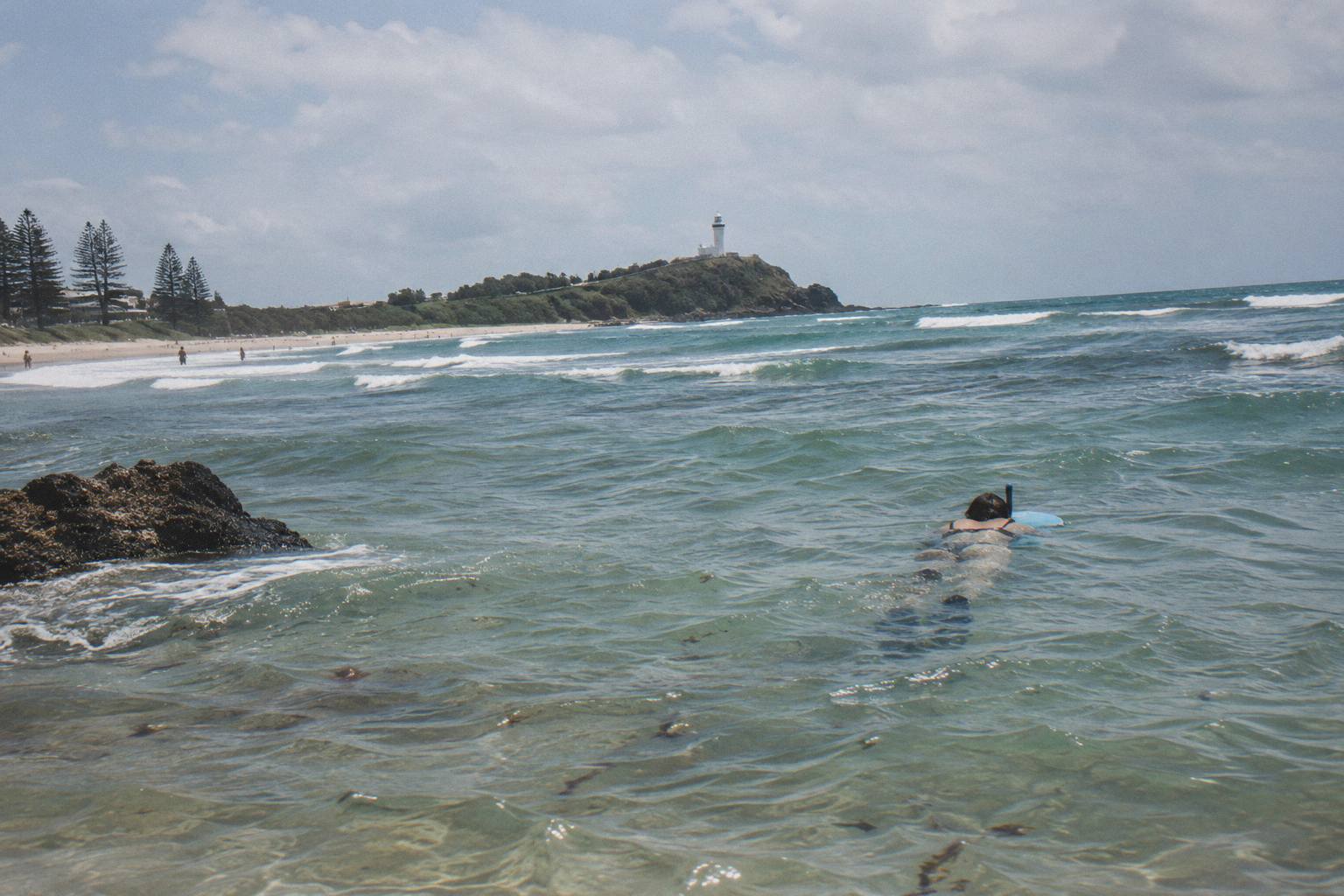
One more layer of honesty helps here. Every operator here states a standard, not just a vibe. Blue Seafaris asks that you be comfortable swimming in open water; Out Of The Blue Adventures and Turtle School both want 200 m unassisted, and the Byron Bay Dive Centre turtle tour draws its line at 25 m. But a stated requirement is still a self-assessment, not a test with a clipboard. Nobody times you at the beach. The operator is trusting you to know your own ability, and the corollary is that you owe yourself the same honesty: overstate your confidence and the person who suffers is you, sixty minutes into open water. Understate it and you may skip a trip you would have handled fine. Somewhere in between sits the right call, and the five questions in the next section are designed to help you find it before money changes hands.
What To Ask The Booking Desk Before You Pay
Ask five things: whether there is a dedicated briefing for first-timers, what float support is actually on the boat, how many guests share each guide, what the sea-state cancellation threshold is, and whether you can stay on the vessel if you change your mind in the water. None of these is answered consistently across the listings, and every one of them is a fair question for a nervous snorkeller to put in writing before booking.
The first question is the one this whole page circles. Since briefing content is not stated anywhere in the sources, the only way to learn whether your trip runs a five-minute deck talk or a full beach session with mask practice in shallow water is to ask. Frame it concretely: "I've never snorkelled in the ocean, what happens before we get in the water?" A good operator answers that question easily, and how easily it answers is itself information. The wider set of guides lives on Julian Rocks Snorkelling.
The middle three questions are about the water, not the paperwork. Float support ranges across this roster from lifejackets on board to a suggested pool noodle; group sizes run from a 12-passenger cap at one operator to unstated at others; and the weather-cancellation mechanics differ, with at least one operator promising a text or phone call and a full refund or reschedule when the sea is unsuitable. The last question, staying on the boat, is the one nobody publishes. Ask it anyway, because knowing you have a dignified exit removes most of the pressure before it builds.
| Ask this | Why it matters for a nervous first-timer | What the sources already say |
|---|---|---|
| Is there a first-timer briefing, and how long? | Sets expectations for the scariest ten minutes | Not stated by any operator; ask directly |
| What float support is on the boat? | A noodle or lifejacket changes the in-water experience | Turtle School: lifejackets on board, long wetsuit or noodle suggested |
| How many guests per guide? | More attention per guide calms nerves | One operator caps tours at 12 passengers with a naturalist guide |
| When do you cancel for sea state, and who decides? | Removes the fear of a bad-water day | Turtle School: operator contacts you, full refund or reschedule |
| Can I sit out the snorkel and stay on the boat? | A planned exit lowers the stakes | Not stated anywhere; ask before booking |
One more question belongs on your list if motion is your worry rather than the water: the crossing is short, but the site is open ocean where swells, currents and wind all happen. Our post on whether you will get seasick on the Julian Rocks boat covers the tablets-and-timing side, including the ginger tablets the Turtle School boat carries.
Timing the questions matters as much as asking them. Send your email a week or more before your travel date, not the night before, because you want room to switch trips if the answers disappoint. Booking well ahead is its own anxiety treatment on this coast: our guide to how far in advance to book a Julian Rocks snorkel trip explains the seasonal squeeze. And keep the operator's replies, so that on the day you can point back to what was promised rather than arguing from memory on a jetty.
Which Trip Fits Your Kind Of Nervous
Match the trip to the source of the nerves: if it is the water itself, the Turtle School trip's pool-noodle language and 60-minute water time suit you; if it is the crowds, the 12-passenger naturalist-guided trip is the published small-group option; if it is simply the unknown, either Brunswick Heads 2.5-hour trip from AUD 94 is a low-commitment first taste. Naming the fear is the whole trick, because the roster answers each one differently.
The water-nervous first-timer should read the Turtle School FAQ closely. It is the only operator text that anticipates you: pool noodle, long wetsuit, lifejackets, a comfortable-swimming standard that excludes nobody who belongs in the sea. The 2.5-hour total with 60 minutes in the water also means most of the trip is boat time, briefing time and transit, not endurance swimming. The site's general Julian Rocks Byron Bay guide fills in the site-level context if you want the fuller picture before committing.
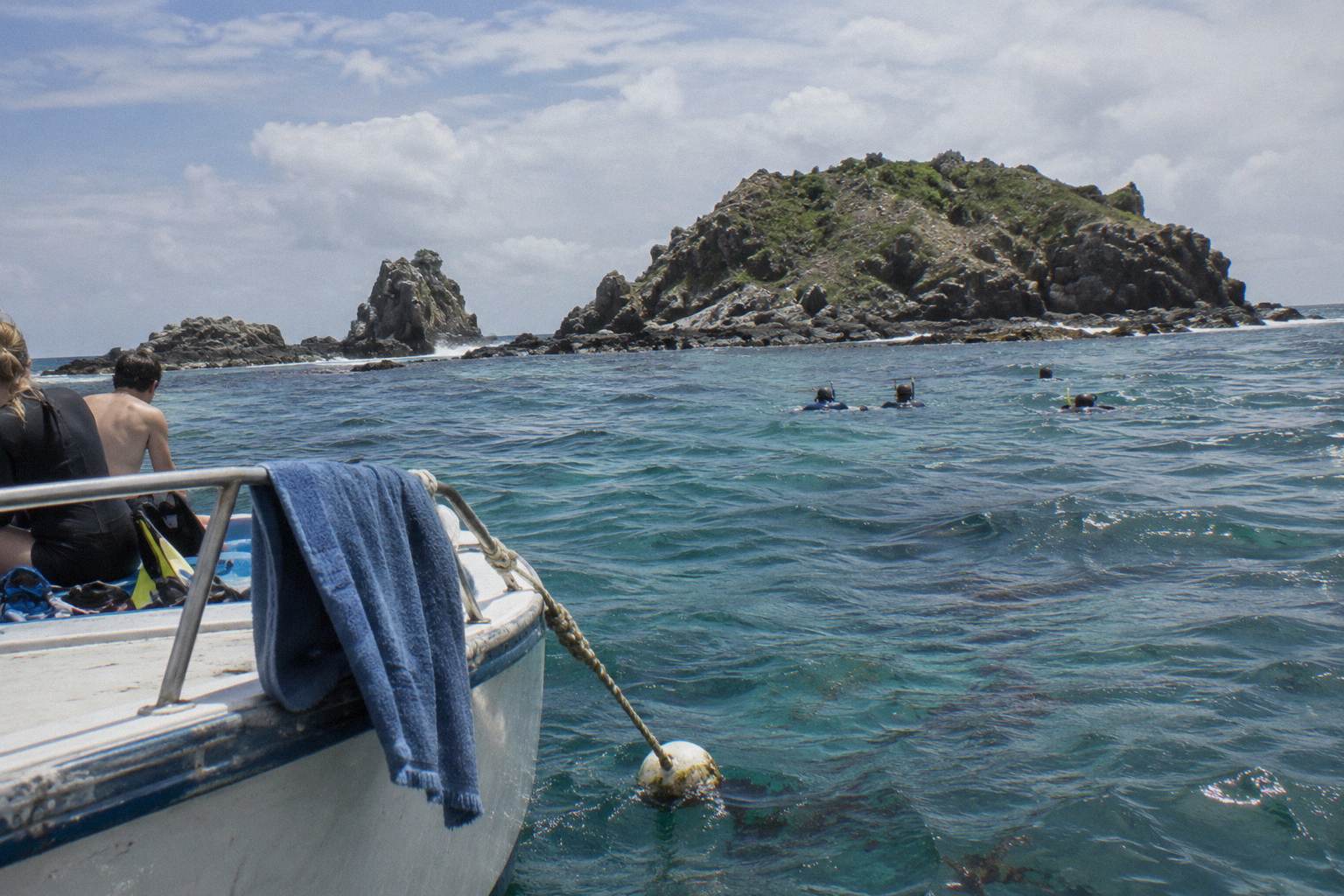
The crowd-nervous traveller has one published number to work with: a 12-passenger cap with a naturalist guide aboard. The two Brunswick Heads trips publish no passenger cap, so if boat density is the deciding factor, that is a sixth question for the booking desk. Ratings that sizeable tell you the trips run smoothly; they tell you nothing about the briefing, which is why the questions above still matter.
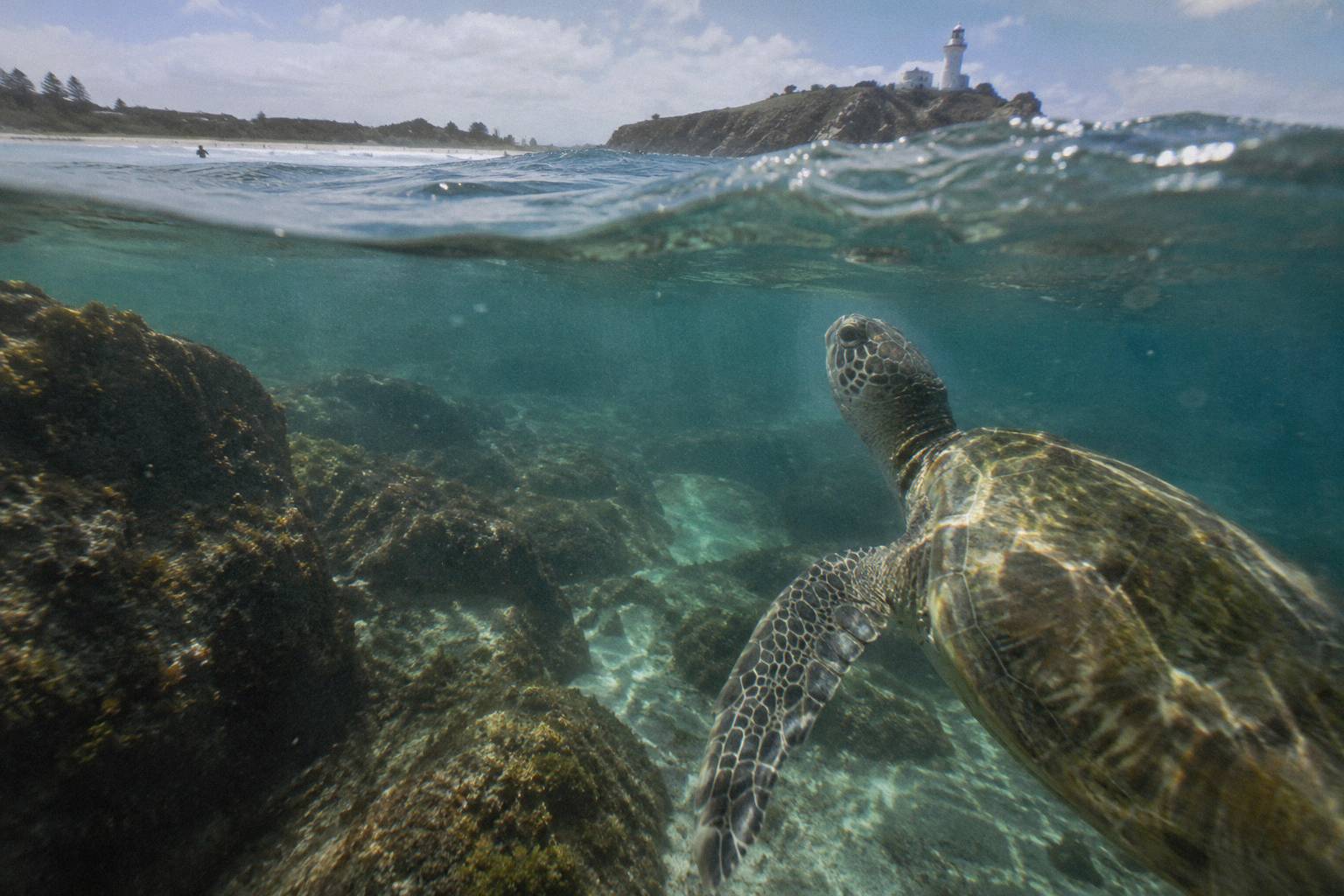
The fact-nervous traveller, the one who wants to know the water is not deep or the sharks are not dangerous, is served by the site's other pages rather than operator promises. Snorkel trips stay in shallow sheltered areas of 3 to 12 m at the rocks, and the seasonal wildlife, from leopard sharks in the warmer months to grey nurse sharks in winter, is documented in our Julian Rocks marine life guide. Reading those two pages before you book does more for composure than any briefing script could.
A fourth type deserves a line: the companion who is not nervous at all but is booking for someone who is. If that is you, resist the urge to minimise. The most useful thing you can do is book the trip whose rules match your partner's real swimming, ask the five questions yourself so they do not have to, and treat the pool noodle as a tool rather than an embarrassment. Operators write nervous-snorkeller guidance precisely because some guests need it, and the Turtle School text reads like it was written by people who have seen the full range of first-timers.
Blue Seafaris' 2.5-hour biologist-guided trip is the natural pick for a first-timer who wants an expert voice on the boat without a longer commitment.
Out Of The Blue runs the same duration from the same harbour at the same from-price, and its 167 reviews make it a solid like-for-like comparison.
If this page has done its job, the unknowns are now named questions rather than vague dread. Pick the trip whose stated rules fit your swimmer, send the booking desk your five questions, and let the operator's own answers finish the reassurance this article can only start.
Common Questions About Nervous First-Time Snorkellers At Julian Rocks
Is There A Snorkel Briefing For Nervous First-Timers At Julian Rocks?
Every trip includes pre-departure preparation, but the exact briefing content is not stated by any operator. Byron Bay Dive Centre's Turtle School trip goes furthest: it suggests a long wetsuit or pool noodle for nervous snorkellers, keeps lifejackets on board, and requires participants to swim at least 200 m unassisted in open ocean. For anything beyond that, ask the operator or check the booking page before you book.
Do I Need To Be A Strong Swimmer To Snorkel Julian Rocks?
It depends on the operator. The Turtle School trip requires comfortable swimming and comfort in the ocean. One operator requires previous open-ocean snorkelling experience and a 200 m unassisted swim. Another states only that participants must swim. The Brunswick Heads trips publish no standard: ask the operator.
What Float Support Is Available If I Panic?
The published record names lifejackets on the Turtle School boat, plus a suggested long wetsuit or pool noodle for nervous snorkellers. Nothing is stated for the other trips, so ask the booking desk what float aids are carried before you pay.
What Happens If The Sea Is Too Rough On My Day?
Byron Bay Dive Centre states it contacts guests by text or phone when weather or sea is unsuitable, offering a full refund or reschedule. Its voluntary cancellation window is 48 hours, with a 100% fee inside it. Other operators' weather terms are not stated: confirm them at booking.
Is There A Minimum Age For Nervous Young Snorkellers?
Minimum ages differ by operator: 10 on the Turtle School trip, 7 at one operator and 5 at another. The Blue Seafaris and Out Of The Blue listings state none. The minimum that applies is the one on the page of the trip you book.