Julian Rocks Visibility By Season: What Snorkellers Can Expect
No official source publishes a visibility figure for Julian Rocks, so this guide sets out what the operators themselves state about seasons, conditions and cancelled trips, and how to use that when choosing when to go.
Short answer
No public visibility figure exists for Julian Rocks in metres. Operators describe an open-ocean site where strong swells, currents, surges, cold water and winds are possible, with strong northerlies typically blowing between September and Christmas. The operator decides whether the sea is suitable, and Byron Bay Dive Centre offers a full refund or reschedule when it calls a trip off.
What Can You Actually See Underwater At Julian Rocks?
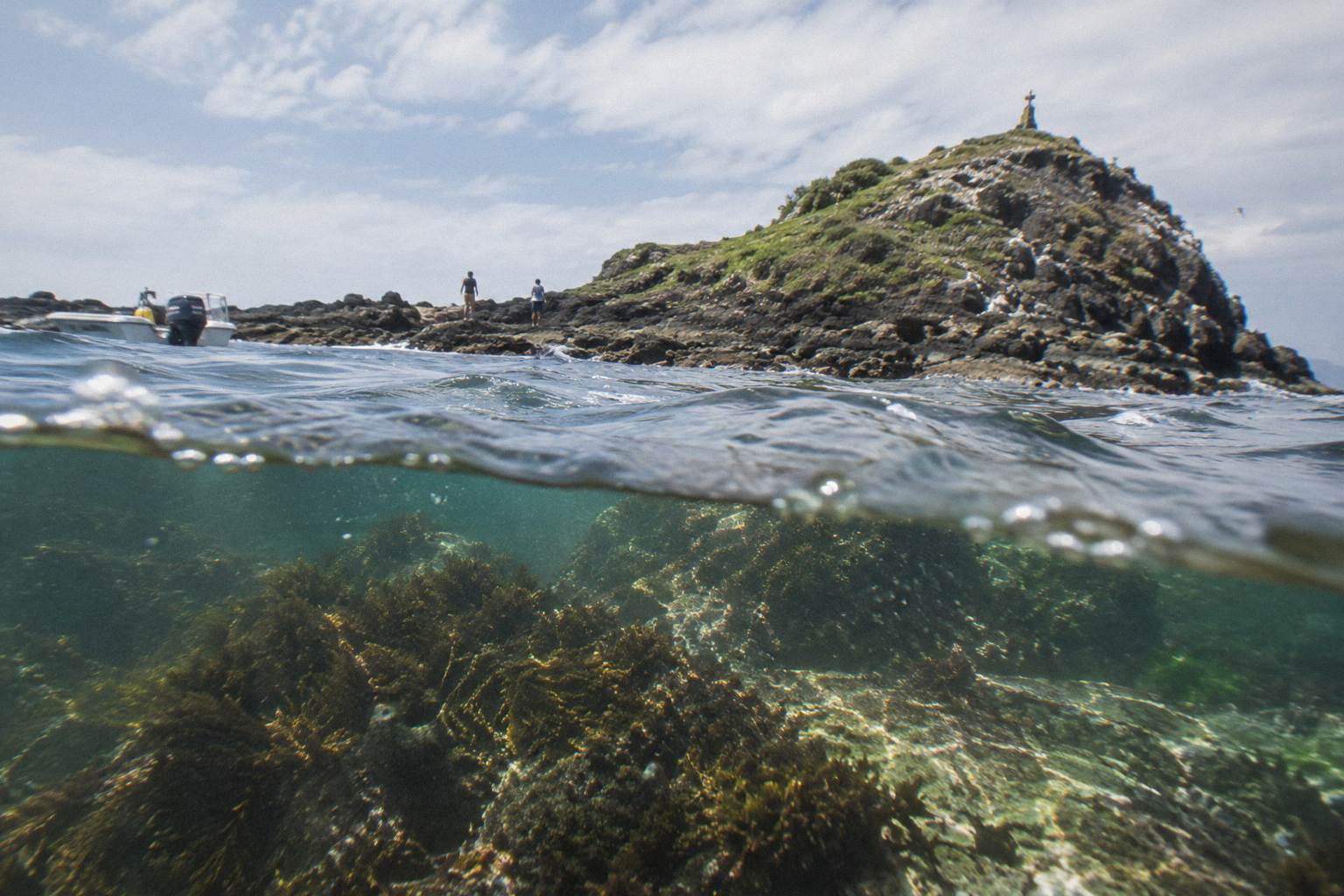
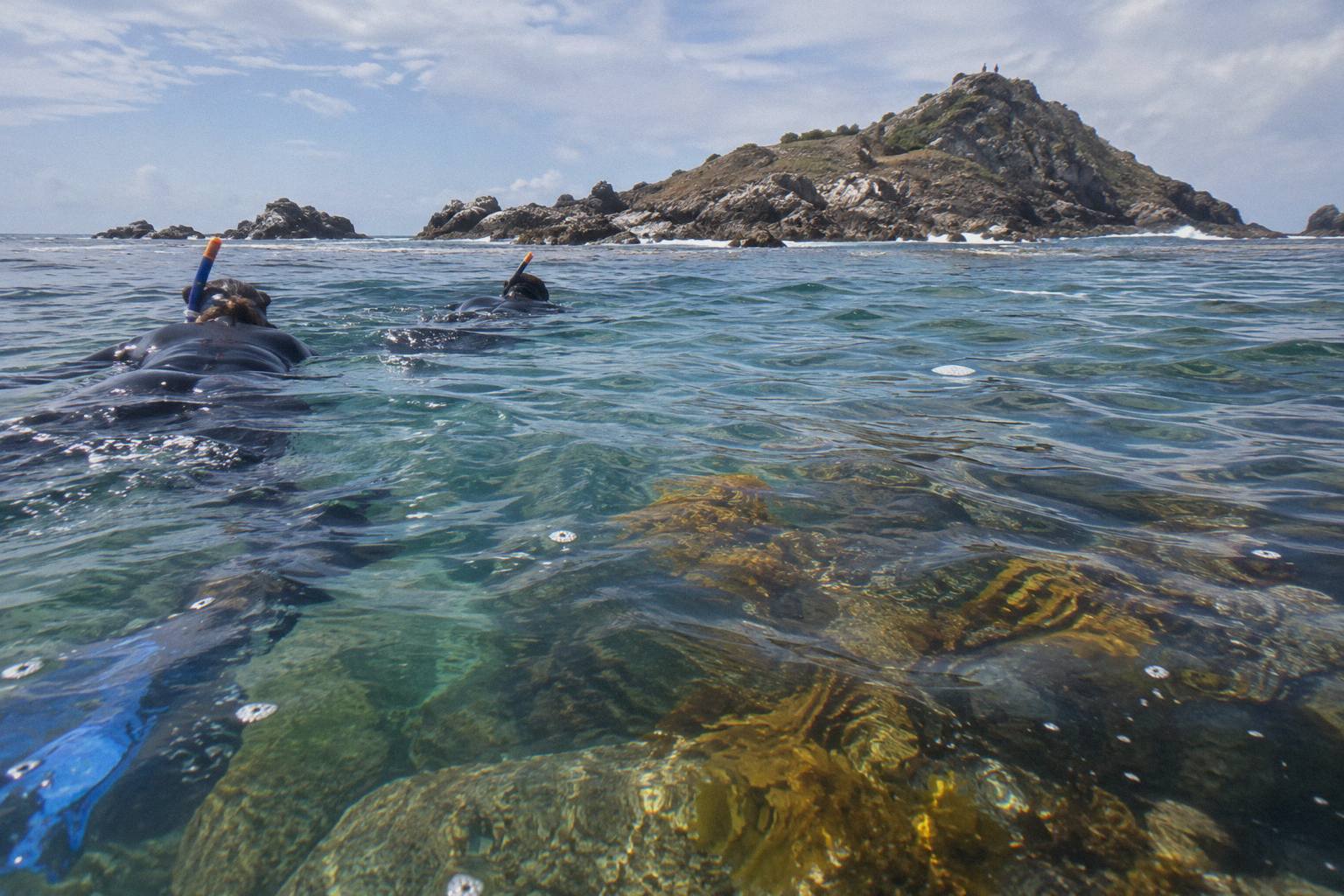
Snorkellers at Julian Rocks can expect clear, shallow, sheltered water in the areas the boats use, but no operator or agency publishes a visibility figure in metres, and this guide will not invent one. The site sits about 2.5 km offshore in open ocean, snorkel trips stay in shallow sheltered areas of 3 to 12 m, and the operator decides whether the day runs.
Julian Rocks, or Nguthungulli, sits inside Cape Byron Marine Park, which stretches about 37 km of coast and covers roughly 220 km2 of state waters. The marine park exists because the East Australian Current meets cooler southern water here, and that same convergence is what shapes both the marine life and the day-to-day feel of the water. One operator credits the site with "over 1000 marine species"; another says "more than 500 different species of fish". Those are operator wordings, not agency counts, but they point at the same truth: this is a genuinely productive patch of ocean, not a swimming pool.
What no source gives, anywhere, is a number for how far you can see horizontally underwater. There is no metres figure, no monthly average, no visibility forecast in the verified research behind this page. If you find a website quoting "10 to 20 m visibility" for Julian Rocks, that number did not come from an operator page or a government source on file here, and you should treat it with suspicion. For what the water actually feels like month to month, the site's Byron Bay water temperature guide covers the seasonal picture in detail.
The site itself publishes Julian Rocks Snorkelling guidance built only from operator and agency pages, and this article follows the same rule: if a figure is not stated by a source, it does not get printed. That discipline matters on this topic more than most, because visibility is exactly the kind of thing a confident-sounding travel site will invent.
Which Season Suits Which Snorkeller?
The sources describe seasons by marine life, not by water clarity: summer months bring manta rays and leopard sharks, leopard sharks mostly from December to April; cooler winter water brings endangered grey nurse sharks from June to November at dive depths; and turtles are listed all year with no guarantee. Since no visibility figure exists by season, the honest seasonal question is not which month is clearest but which wildlife and which weather risk you will accept.
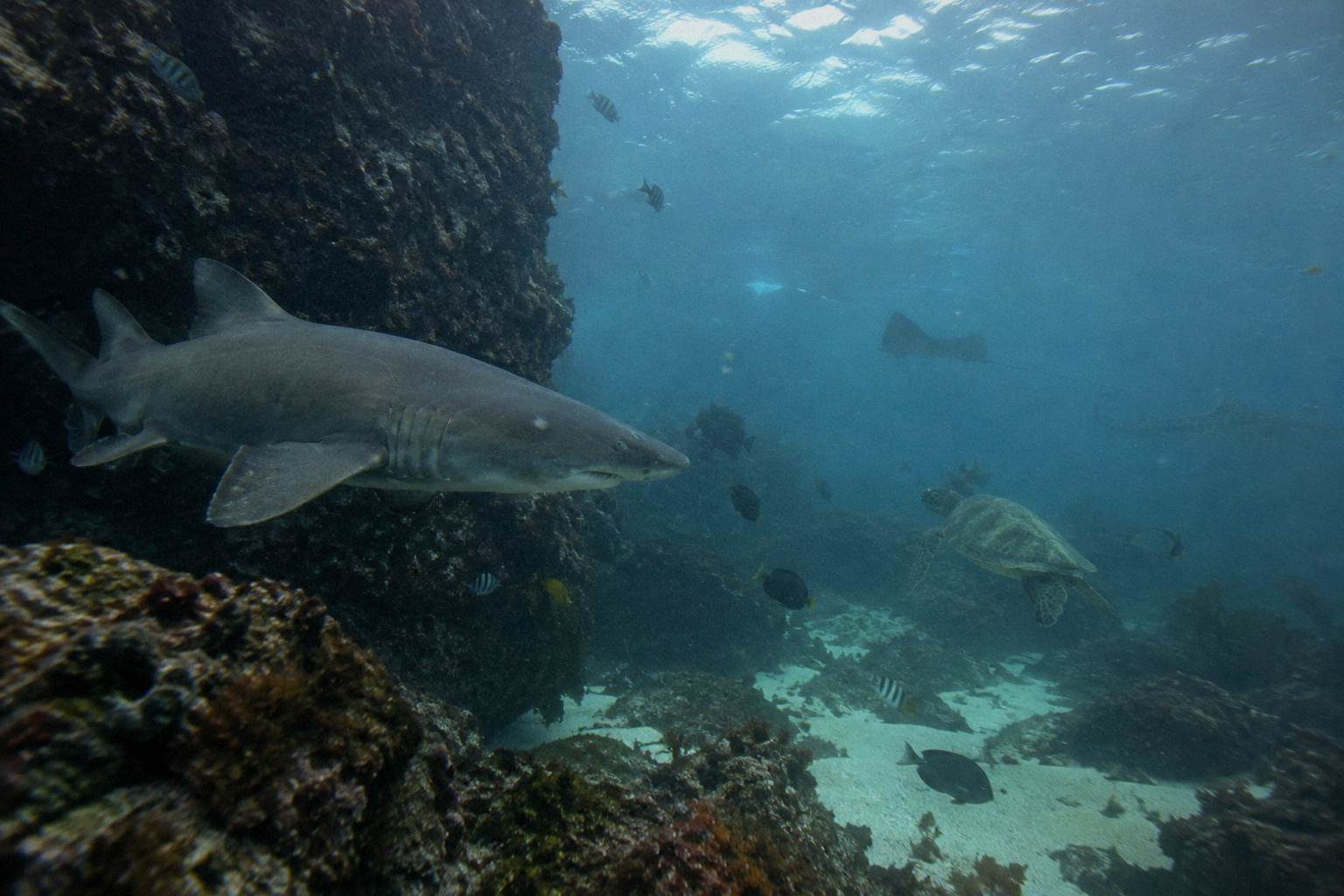
There is no season ranking here, because ranking seasons by clarity would require clarity data that does not exist. What the operators do publish is a picture of what shares the water with you, and when. One dive operator places leopard sharks in the Needles sandy arena "during the warmer months from December to April", and grey nurse sharks in the sand trenches "during colder months (June-November)". The trench detail matters: those sand trenches sit at dive depths of 8 to 24 m, deeper than the 3 to 12 m shallow sheltered areas where snorkel trips actually operate, so the grey nurse season is a dive-site fact, not a promise for your snorkel. The site's grey nurse sharks at Julian Rocks guide unpacks that distinction.
Turtles are the constant. Green, hawksbill and loggerhead turtles are listed year-round, and Byron Bay Dive Centre says turtles "can be spotted year-round throughout the whole day", while adding plainly that "we can't guarantee sea turtles will be there". That pairing, year-round presence plus no guarantee, is the most honest sentence any operator publishes about this site and it applies to clarity too.
Weather risk also runs on a seasonal clock. One dive operator warns that strong northerlies can blow "between September and Christmas", which in practice means the last part of the calendar year carries a higher chance of boats being unable to use the more exposed parts of the site, or of trips being rescheduled. That is operator wording about wind, not a visibility measurement, but wind is the thing that actually stirs the water and cancels boats, so it is the closest honest seasonal signal you have. Winter water at the site "can drop to 17 °C (avg. ~20 °C)" per that same operator's dive-site page; that is its own winter figure for a dive page, printed here once, and it is not a monthly temperature. No official monthly sea-temperature source was found for this location, so this article deliberately prints no month-by-month temperature table.
For choosing between them, traveller type does the work that visibility data cannot:
| Traveller type | Season worth targeting | Why, per the sources |
|---|---|---|
| First-time snorkeller, flexible dates | Any season, avoid late September to Christmas if possible | Northerlies blow strongest then, raising the chance of rescheduling |
| Turtle-focused visitor | All year | Green, hawksbill and loggerhead listed year-round; no guarantee stated |
| Leopard shark hopeful | December to April | Operator places leopard sharks in warmer months |
| Grey nurse enthusiast | June to November, but plan to dive | Sand trenches are at 8 to 24 m, below snorkel depths |
| Whale-season traveller | May to November or June to October | Operators differ; see below |
One whale-season trap deserves its own sentence. Operators disagree on the whale window: one dive operator runs whale trips "between May and November", while Byron Bay Dive Centre lists whale watching June to October. Both are printed here, attributed, and deliberately not merged, because there is no single official season to reconcile them against. And in no case should a whale expectation attach to a snorkel trip: no operator on file promises whales from a snorkel boat. If whales are the priority, the whale season and your Byron Bay snorkel trip guide separates the two products properly.
How Do Operators Decide Whether The Water Is Good Enough?
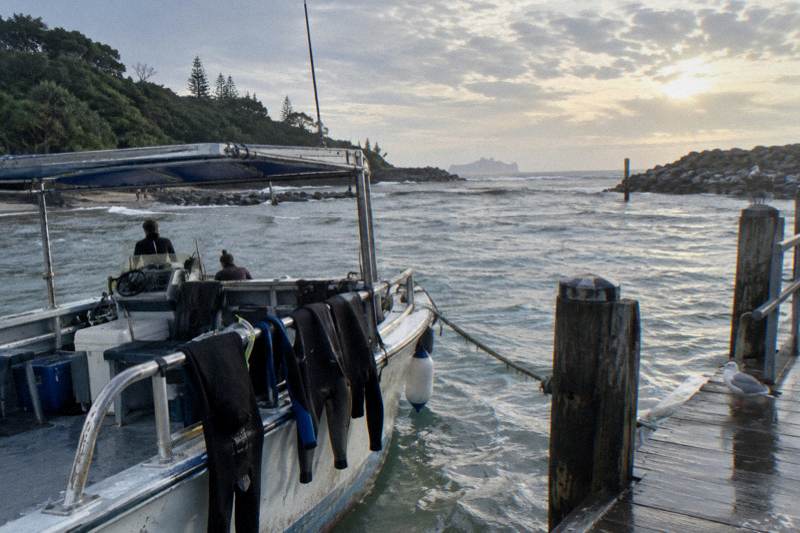
Byron Bay Dive Centre states that when weather or sea conditions are unsuitable, guests are contacted by text or phone and offered a full refund or a reschedule. That is the clearest published statement on file about who decides and what happens next. For every other trip, the cancellation terms are on the booking page, and this article prints nothing further, because nothing further is on file.
“An unforgettable experience in a unique place, accessible to all with very friendly professionals. I highly recommend it.”
The decision structure at this site is simple and it protects you. Julian Rocks is an open-ocean site, and one operator describes it plainly: "strong swells, currents, surges, cold water and winds" are all possible. Because of that, the operator watches the conditions and makes the call, not you. Byron Bay Dive Centre's published policy is that an unsuitable sea triggers contact by text or phone, then a full refund or a reschedule. Its cancellation window is 48 hours, with a 100% fee inside that window, and if you booked through an agent, the refund follows the agent's policy rather than the operator's. That last clause is easy to miss and worth reading twice: the operator's generosity does not automatically flow through a third-party booking.
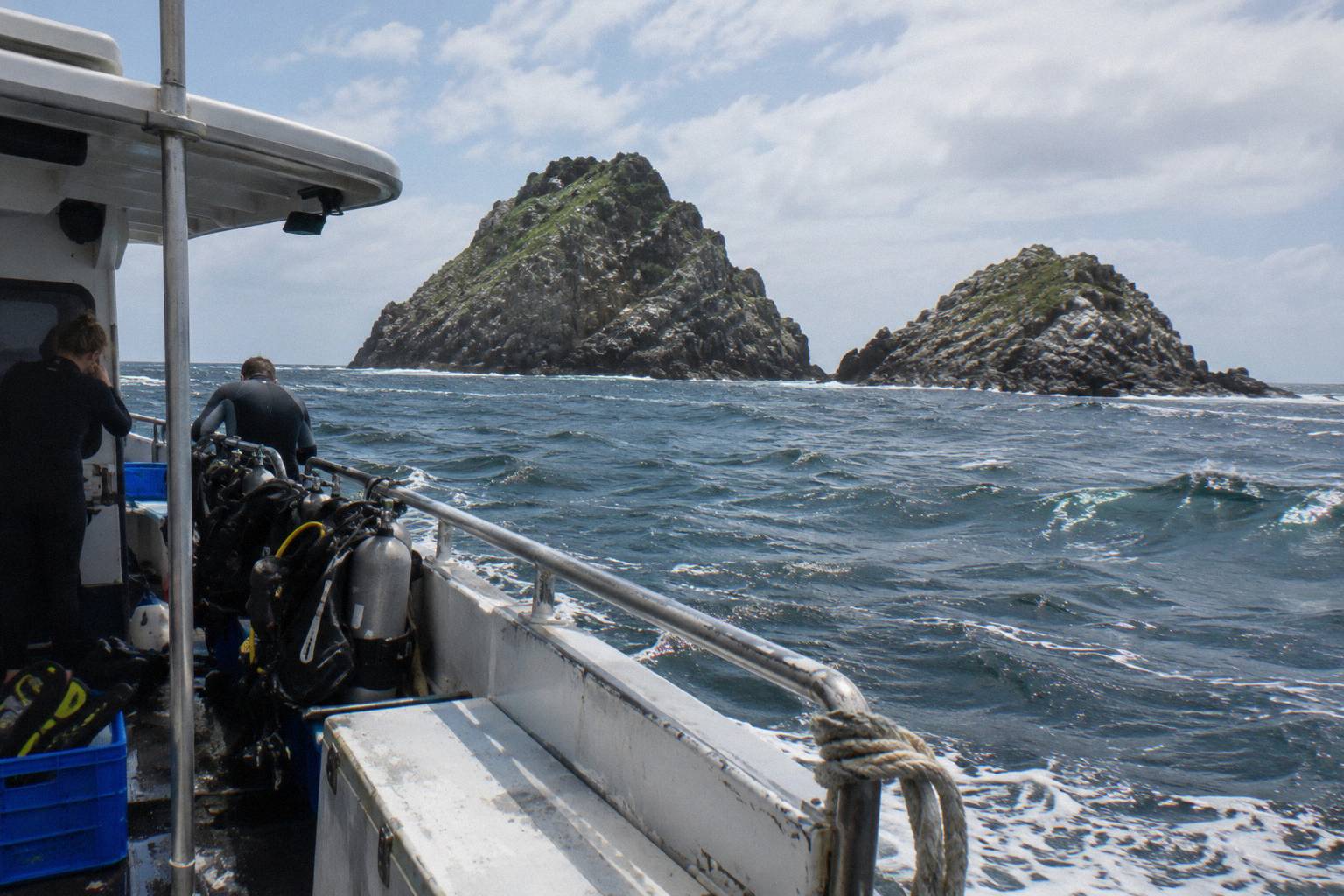
For the other trips in this site's roster, the booking pages' cancellation terms are not on file here, so the honest line is exactly this: the cancellation terms are on the booking page. Check them before you pay, and specifically check what happens when the operator, rather than you, cancels. Reputable coastal operators in New South Wales almost universally reschedule or refund when they call a trip off, and the policy above from one operator is consistent with that culture, but a culture is not a contract. The marine park rules published by DPIRD also shape the day in ways worth knowing: vessels limit speed to 4 knots within 200 m of the rocks, anchoring is not permitted within 700 m, and the seven marine park moorings carry a 2 hour maximum. None of that changes the water, but it explains why the boats behave so gently near the site.
There are also protection rules that touch what you can do in the water regardless of season. Fish feeding, including shark feeding, is prohibited in the marine park, and collecting is not permitted in the sanctuary zones that cover 27.5% of the park, or 6,118 ha. Snorkelling itself is a permitted activity in sanctuary zones, which is why the trips run at all. The site's Cape Byron Marine Park snorkel rules guide carries the full set, but the short version for a visibility-worried reader is that the rules protect what you came to see and place no burden on you beyond not touching anything.
Which Trips Fit A Snorkeller Worried About Murky Water?
Three snorkel trips run to Julian Rocks, and the differences that matter when you are nervous about conditions are duration, meeting point and price transparency: Blue Seafaris runs about 2.5 hours from Brunswick Heads at from AUD 94; Out Of The Blue runs about 2.5 hours from Brunswick Heads at from AUD 94; Turtle School runs about 2.5 hours from Byron Bay town with a transfer to the boat. None publishes a visibility promise.
Start with the featured trip. The Blue Seafaris Julian Rocks Snorkelling Tour, a biologist-guided snorkel from Brunswick Heads, runs about 2.5 hours, meets at 43 Harbour Way, Brunswick Heads Boat Harbour, and costs from AUD 94 per person, rated 4.5 across 448 reviews on its booking page. For a reader whose main worry is the water rather than the wildlife, a biologist guide is quietly reassuring: someone on the boat is paid to read the site, and the sheltered shallow areas snorkellers use are chosen on the day by the crew, not fixed in advance. You can compare it against the others on the Julian Rocks snorkel tours page and check availability once you have settled your dates.
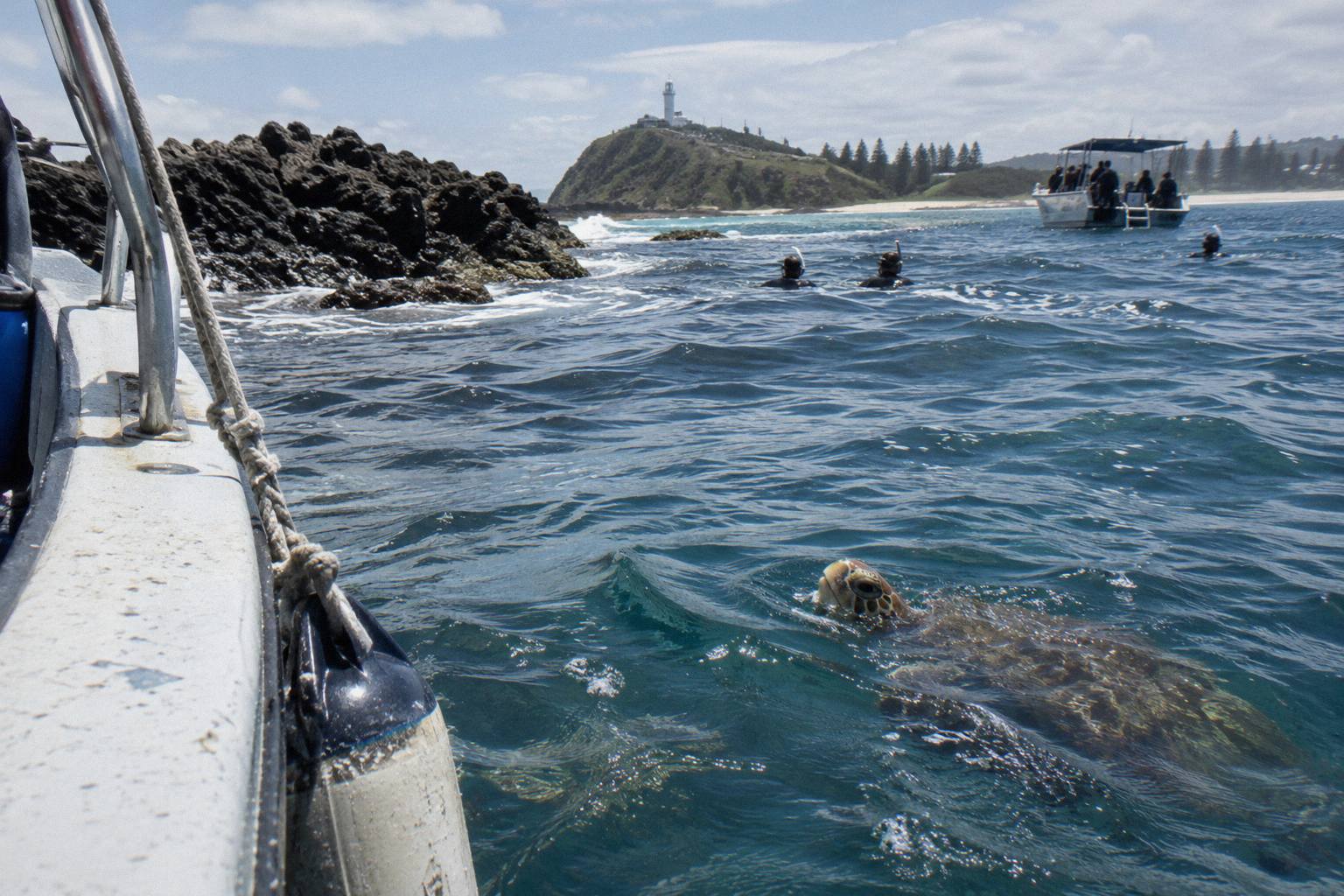
Out Of The Blue runs its Julian Rocks snorkelling tour from Brunswick Heads Boat Harbour too, about 2.5 hours, from AUD 94 per person, rated 4.4 across 167 reviews on its main booking page, and a second booking page for the same trip shows 4.7 across 58 reviews. Two review pools for one product is not a red flag; it is a reminder that ratings describe crowds of different sizes, which is why this site always prints the count beside the number. Neither listing promises water clarity, and the meeting point matches Blue Seafaris, so if your dates are fixed and one operator's boat is full or weather-shifted, the other is a genuine like-for-like fallback from the same harbour.
“This was an incredible experience! We got lucky with the conditions and saw a huge variety species. Loved this even more than when I snorkelled the Great Barrier Reef. Not to be missed!”
Turtle School, run by Byron Bay Dive Centre, takes a different shape: about 2.5 hours total, meeting at Turtle School in Byron Plaza on Jonson Street with transport to the boat at The Pass. Its rating and price are on the booking page, and this article prints nothing further on either, because the reads disagree. The longer duration and town meeting point suit a visitor staying in Byron Bay without a car, and the operator's own FAQ answers several nervous-snorkeller questions directly: all participants must be able to swim at least 200 m unassisted in open ocean and be comfortable in the sea, 5 mm long wetsuits are advised, fins, mask, snorkel and wetsuit are included, no prescription masks are carried though contact lenses are fine, and ginger seasickness tablets are on the boat. There is a fuller walk-through in the site's what happens on a Julian Rocks snorkel day guide.
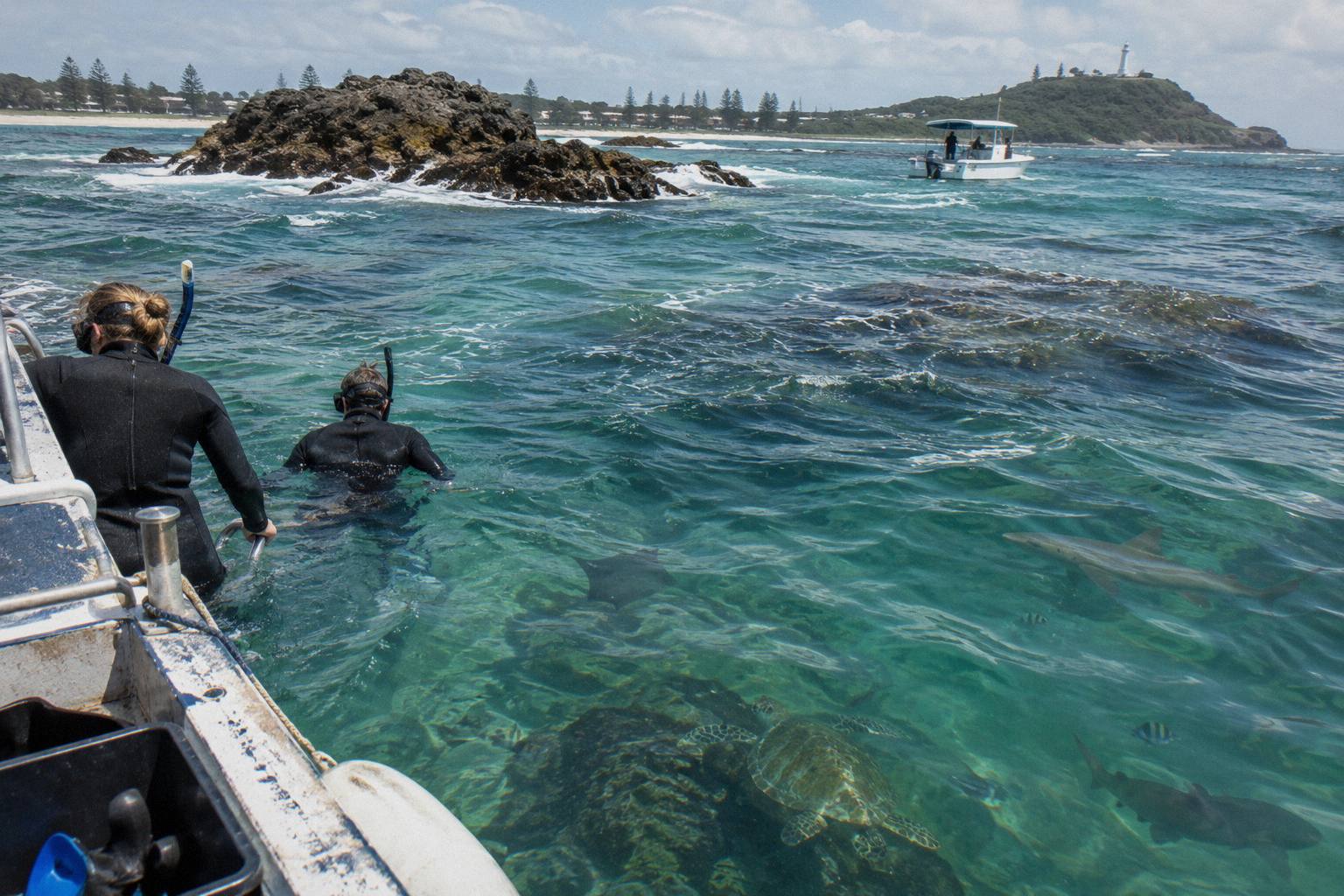
Byron Bay Dive Centre also lists a second booking page of near-identical scope, the sea turtle snorkel from Byron town, about 2.5 hours, with no price or rating printed here. On its operator pages that trip includes 60 minutes in the water, a minimum age of 10, and a stated minimum of comfortable swimming. For a worried snorkeller, the in-water time figure is the useful one: roughly an hour in the water means the rest of the 2.5 hours is briefing, gearing up and the boat ride, so a patch of stirred-up water does not necessarily ruin the whole outing.
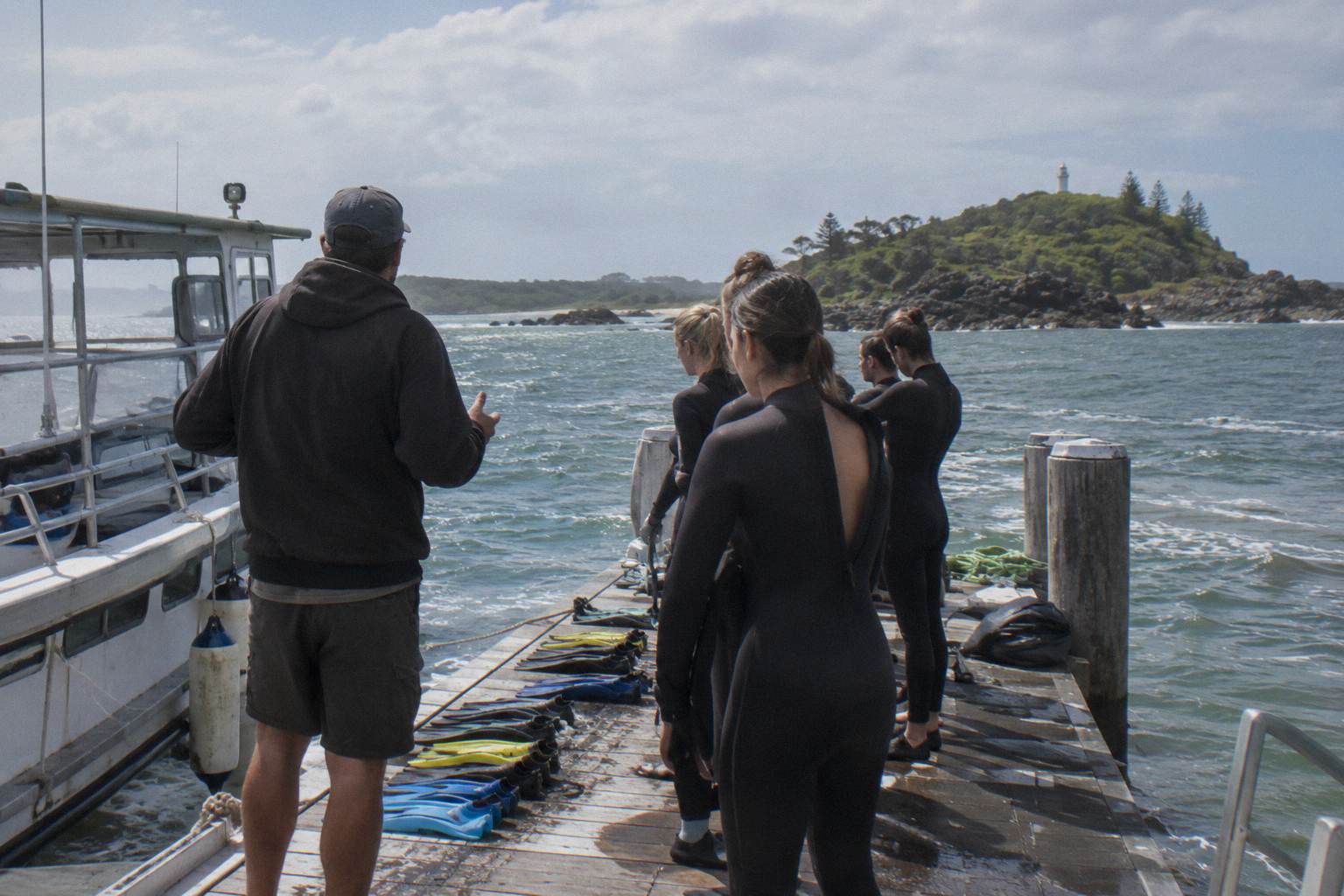
The side-by-side view, using only what the booking pages state:
| Trip | Duration | Meeting point | Price stated | Rating on the booking page |
|---|---|---|---|---|
| Blue Seafaris snorkel | About 2.5 hours | 43 Harbour Way, Brunswick Heads Boat Harbour | From AUD 94 | 4.5 across 448 reviews |
| Out Of The Blue snorkel | About 2.5 hours | Brunswick Heads Boat Harbour | From AUD 94 | 4.4 across 167 reviews; a second booking page shows 4.7 across 58 reviews |
| Turtle School snorkel | About 3 hours | Byron Plaza, Jonson Street, with transport to The Pass | On the booking page | On the booking page |
| Byron Bay Dive Centre sea turtle snorkel | About 2.5 hours | Not stated, check the booking page | No price printed | No rating printed |
If a boat trip feels like the wrong exposure to open ocean altogether, two adjacent products in the roster run about 2.5 hours each with no price or rating printed: a guided dolphin kayak from Cape Byron Kayaks and a sea kayak tour with Go Sea Kayak. The site's Byron Bay dolphin kayak vs snorkel trip comparison works through that trade honestly. Kayaking does not give you the underwater view at all, but for some nervous swimmers it is the version of the day that actually happens rather than the one that gets cancelled in the car park.
What Should You Ask Before Booking?
Ask the booking desk five things: what happens if you cancel for weather, what the cancellation window is on your side, whether the day's site choice adapts to conditions, what the swimming requirement is, and what the minimum age is. Every one of those questions is answerable from published operator material, and none of them requires a visibility figure that does not exist.
Turning the verified facts into a checklist is the most useful thing a worried reader can carry away from this page. Each row below comes from an operator page or a booking page on file, and each is the kind of question a desk answers in one sentence:
| Question to ask | Why it matters | What the sources show |
|---|---|---|
| What happens if the operator cancels for sea conditions? | Sets your worst case | Byron Bay Dive Centre: contact by text or phone, full refund or reschedule |
| What is the cancellation window if I cancel? | Fees inside the window can be 100% | Byron Bay Dive Centre states 48 hours; other trips carry their terms on the booking page |
| Does the snorkel site change with conditions? | The rocks have multiple shallow sheltered areas | Snorkel trips use shallow sheltered areas of 3 to 12 m |
| How well must I swim? | Open-ocean snorkelling is not a pool | One operator requires 200 m unassisted; another requires comfortable swimming |
| What is the minimum age? | Differs sharply by operator | 5, 7 and 10 years appear on operator pages; the Byron Bay Dive Centre turtle trip states 10 |
| What gear is included? | Wetsuit choice changes comfort in cooler water | Turtle School includes fins, mask, snorkel and wetsuit; 5 mm suits advised |
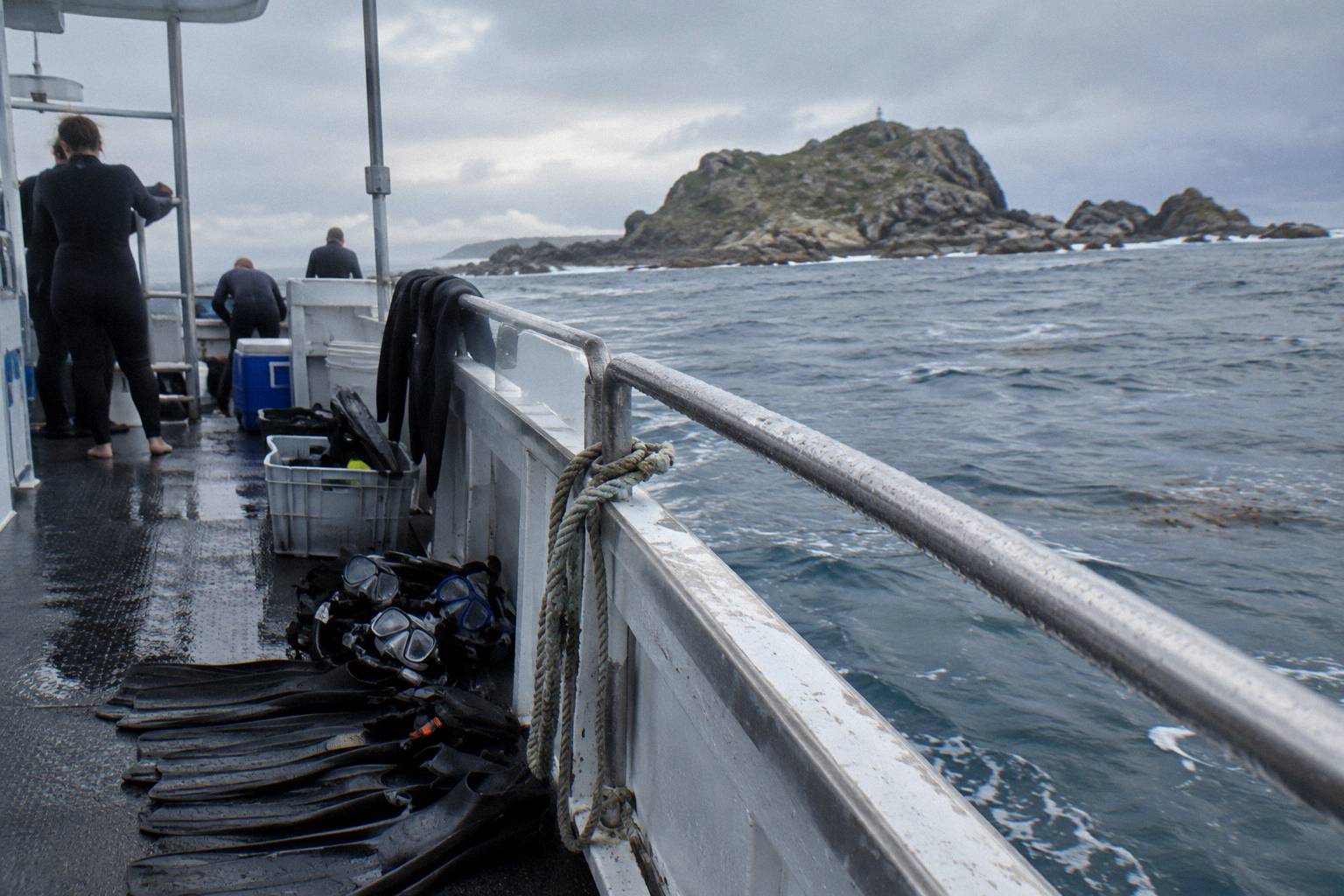
Two of those rows deserve expansion because they catch people out. The swimming requirement is real: this is an open-ocean site with possible currents and surge, and operators screen for it. One operator on file requires the ability to swim 200 m unassisted in open ocean and previous open-ocean snorkel experience; another simply requires comfortable swimming and comfort in the ocean. Neither is a formality, and answering honestly is how you avoid a miserable hour. The site's can non-swimmers snorkel at Julian Rocks post takes that question in full.
The minimum age spread is the other quiet trap. Across operator pages the stated minimums are 5, 7 and 10 years, with the Byron Bay Dive Centre turtle trip stating 10. A family that assumes the lowest number applies everywhere can arrive at the wrong harbour with a disappointed eight-year-old. Confirm the age on your specific trip's booking page before you promise a child anything; the site's kids on the Julian Rocks snorkel trip guide goes deeper for families.
What Else Changes Your Day At The Rocks?
Beyond wind and season, the published facts point to three more things that shape a Julian Rocks outing: the short boat ride of about 5 to 10 minutes, the marine park's protective rules around the rocks, and the cultural weight of the site's dual name Nguthungulli, adopted in July 2023. None of these changes the water clarity, and all of them change the experience of the day.
“Ride out, location, gear. And what we saw was great! Really enjoyed it. Signage and directions where to meet could be improved.”
The ride out is short because the rocks lie only about 2.5 km offshore, and operators put the boat trip at roughly 5 to 10 minutes from Byron Bay. For a nervous traveller that brevity is a genuine comfort: there is no long open-water crossing to endure before the snorkel, and if conditions turn, the return is equally quick. Trips departing from Brunswick Heads make a longer run of it to reach the same site, which is one reason the Brunswick-based operators run about 2.5 hour schedules that fit briefing, sailing and snorkelling into one block.
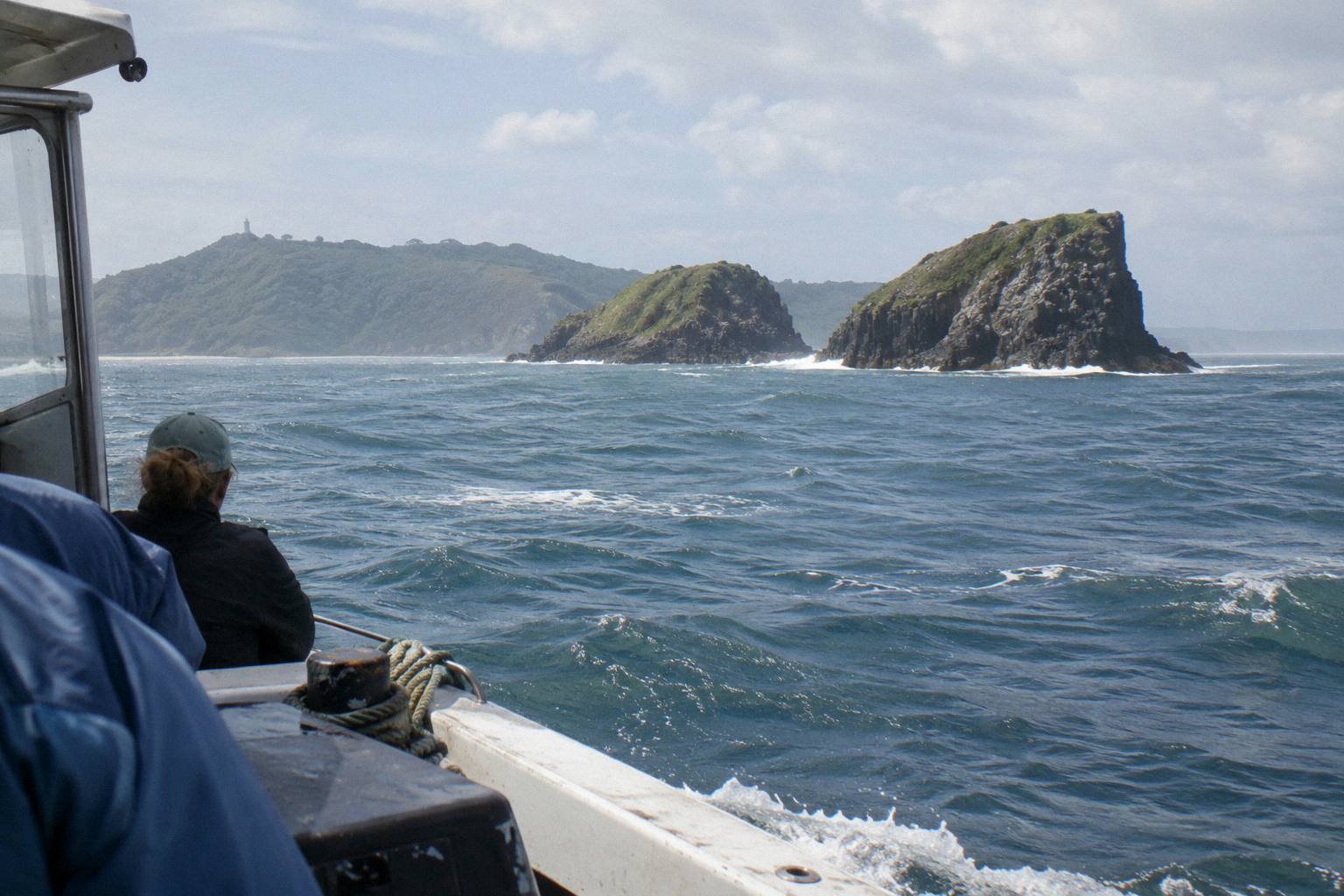
The name itself carries history worth knowing before you get in the water. "Nguthungulli" is the Bundjalung word for "Father of the World", and the dual name for the nature reserve was officially adopted in July 2023; the NSW National Parks page for the reserve now leads with it. Bundjalung lore, as reported, tells of a spear breaking a canoe in two, the two halves becoming the rocks. The Bundjalung People of Byron Bay (Arakwal) hold a strong association with the land and sea in the park's north, the Jali people in its south. Snorkelling here happens inside that living cultural landscape, and the sanctuary zone rules that keep the reef unfished are part of the same respect. The site's Nguthungulli Julian Rocks Nature Reserve guide tells that story at length.
Practically, if you are building the whole day around the trip, the best month to snorkel Julian Rocks guide weighs season, wildlife and crowds together, and the Julian Rocks snorkel trip cost guide breaks down what you pay for. For seasickness specifically, the fact that one operator stocks ginger tablets on the boat and recommends bringing your own says everything about the ride out; the site's post on whether you will get seasick on the Julian Rocks boat is the honest companion read.
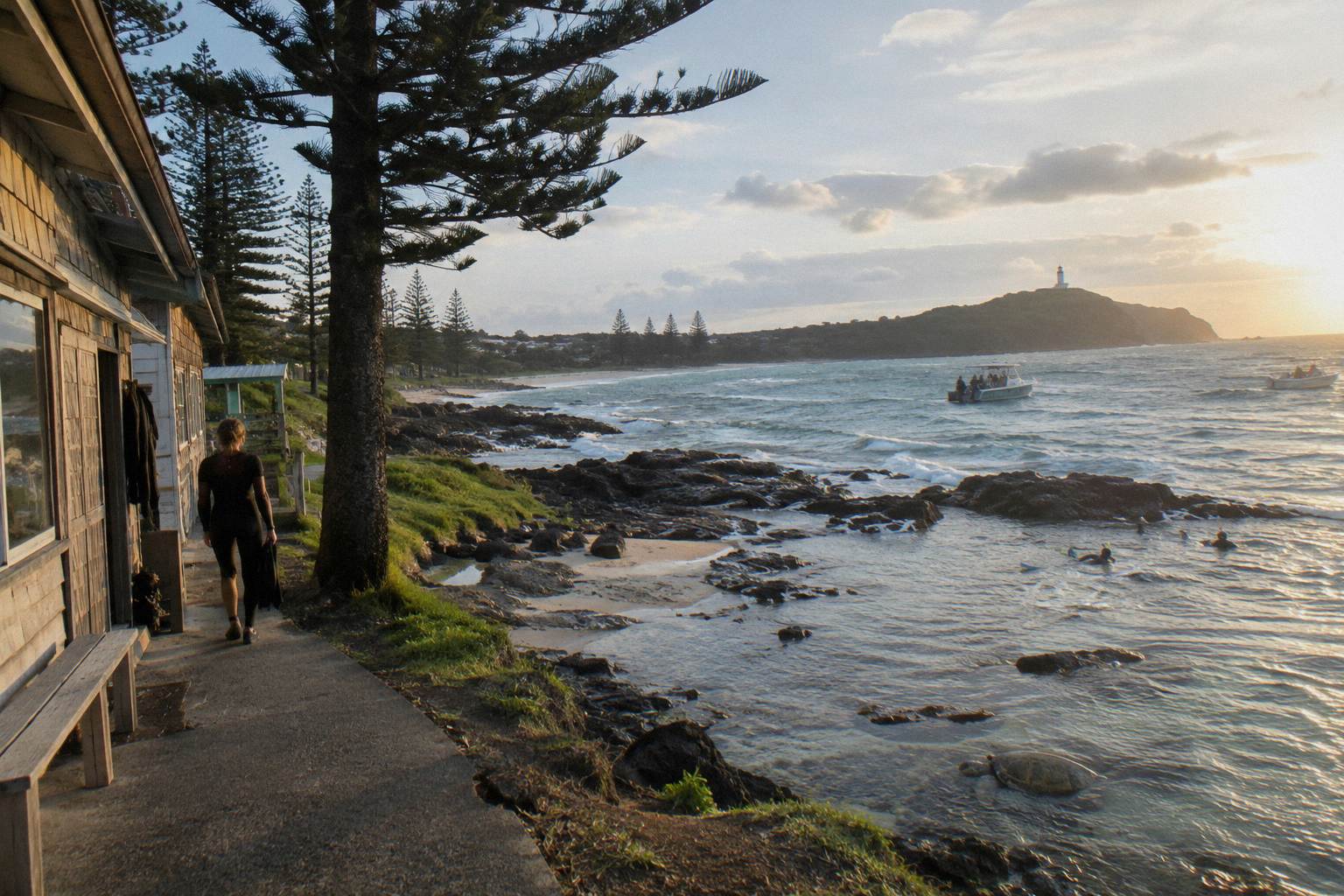
The last word on planning belongs to conditions on the day rather than any season. The operator's own FAQ page is the single most useful public source on how a Julian Rocks day actually runs, from wetsuit advice to cancellation handling, and the site's guide on where to check Byron Bay sea conditions shows what to look at before you leave home. Check the sea forecast, read your trip's cancellation terms once, and let the crew make the water call. That division of labour is exactly how the operators here have designed it.
Common Questions About Julian Rocks Visibility
What Is The Visibility At Julian Rocks?
No visibility figure in metres exists in any operator or agency source on file. Operators describe an open-ocean site where strong swells, currents, surges, cold water and winds are possible, and snorkel trips use shallow sheltered areas of 3 to 12 m. Clarity varies with conditions and the operator decides whether the day runs.
Which Month Has The Best Visibility At Julian Rocks?
No source ranks months by clarity, and this guide does not either. The only seasonal weather signal published by an operator is that strong northerlies can blow between September and Christmas, which is the period most likely to disrupt trips. Marine life, not visibility, is what the seasonal records actually describe.
What Happens If The Water Is Too Rough To Snorkel?
Byron Bay Dive Centre states that when weather or sea conditions are unsuitable, guests are contacted by text or phone and offered a full refund or a reschedule. For every other trip, the cancellation terms are on the booking page; check them before you pay.
Can I See Turtles All Year At Julian Rocks?
Green, hawksbill and loggerhead turtles are listed year-round, and Byron Bay Dive Centre says turtles can be spotted year-round throughout the day, while stating plainly that it cannot guarantee sea turtles will be there.
Is The Water Cold In Winter At Julian Rocks?
One operator's dive-site page states winter water can drop to 17 °C with an average of about 20 °C. That is the operator's own winter figure and the only one printed here; no official monthly sea-temperature source exists for this location.
Do Snorkel Trips Get Cancelled For Weather Often?
No cancellation frequency is published by any operator, so nothing honest can be printed. What is published is the process: the operator makes the call, contacts you, and either refunds or reschedules, with a 48 hour cancellation window on one operator's policy and terms on the booking page for the rest.