Grey Nurse Sharks At Julian Rocks: Season, Behaviour And Snorkel Safety
Grey nurse sharks are one of the threatened species named in the Cape Byron Marine Park's own user guide, and they gather around Julian Rocks in the colder months. Here is what the operators and the marine park authorities actually say, and what it means for a snorkel trip.
Short answer
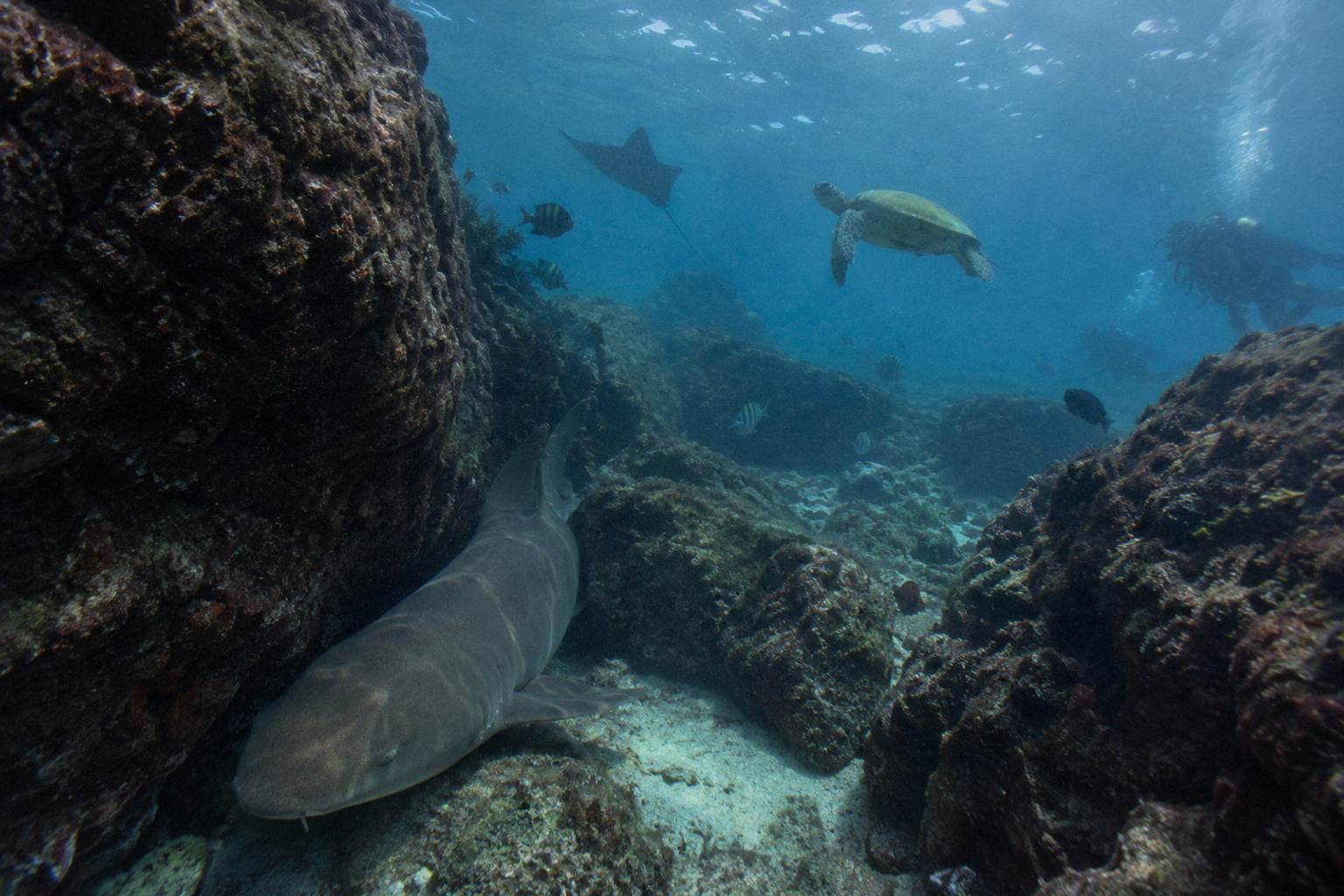
Grey nurse sharks are seen around Julian Rocks from June to November, per one dive operator's season guide. They gather in sand trenches at dive depths of 8 to 24 m, which are below snorkel depths, and they are rarely seen on snorkel trips. Snorkel trips stay in shallow sheltered areas of 3 to 12 m where turtles and rays are the headline sightings.
Grey nurse sharks are the quiet headline of a Byron Bay winter. The NSW marine park user guide names them among the threatened species of Cape Byron Marine Park, and one dive operator's season page describes the sand trenches around Julian Rocks filling with them during the colder months. For a snorkeller weighing up a trip, the honest summary is more modest: these are deep-water gatherings, at depths snorkel trips do not reach.
This guide sets out what the sources actually say, which operator states what, and how to decide whether a Julian Rocks snorkel trip fits you if grey nurse sharks are the reason you are reading. Julian Rocks Snorkelling publishes this site as a research resource; every figure below comes from the operators' own pages, their booking pages, or the NSW Government agencies that manage the marine park.
When Is Grey Nurse Shark Season At Julian Rocks?
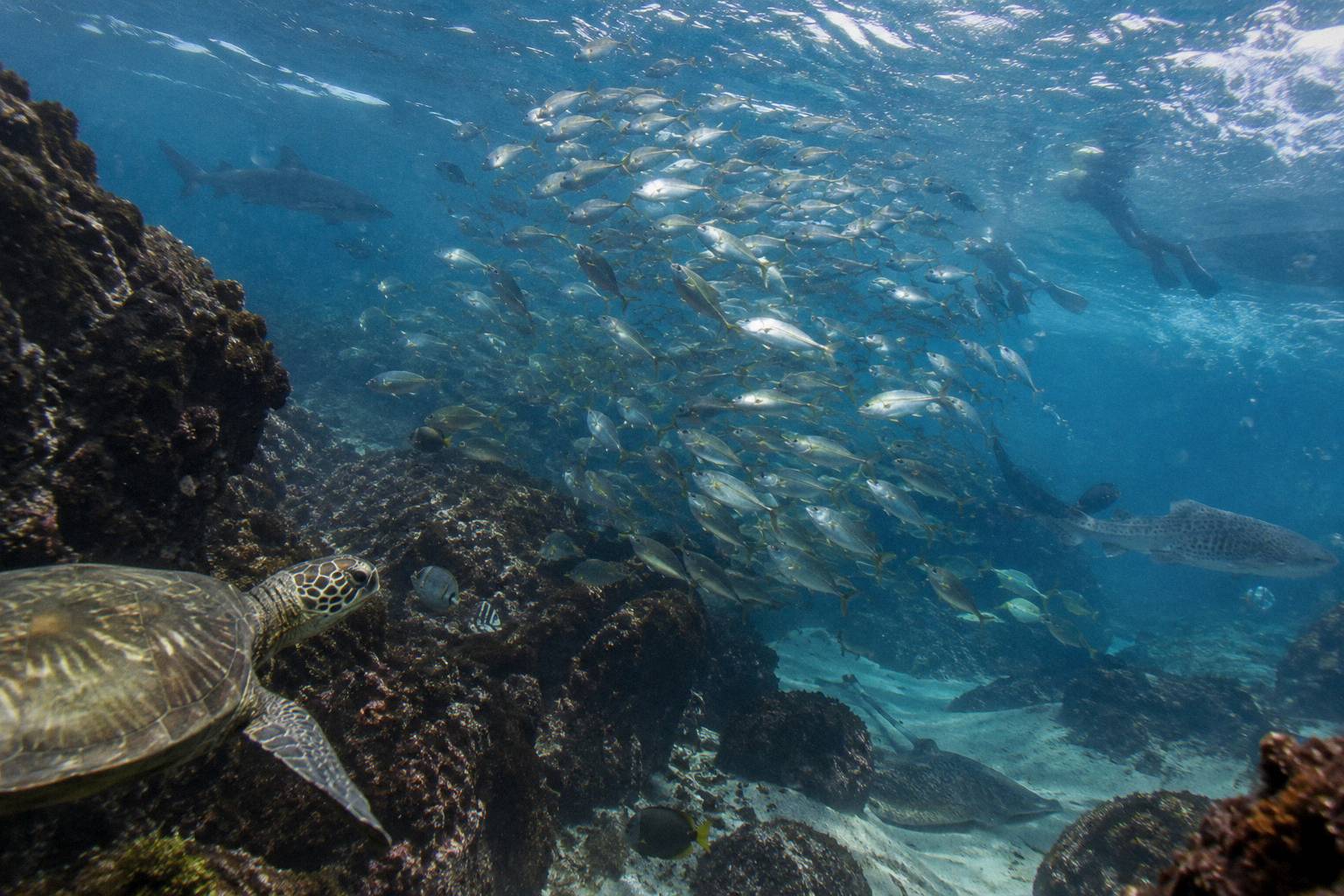
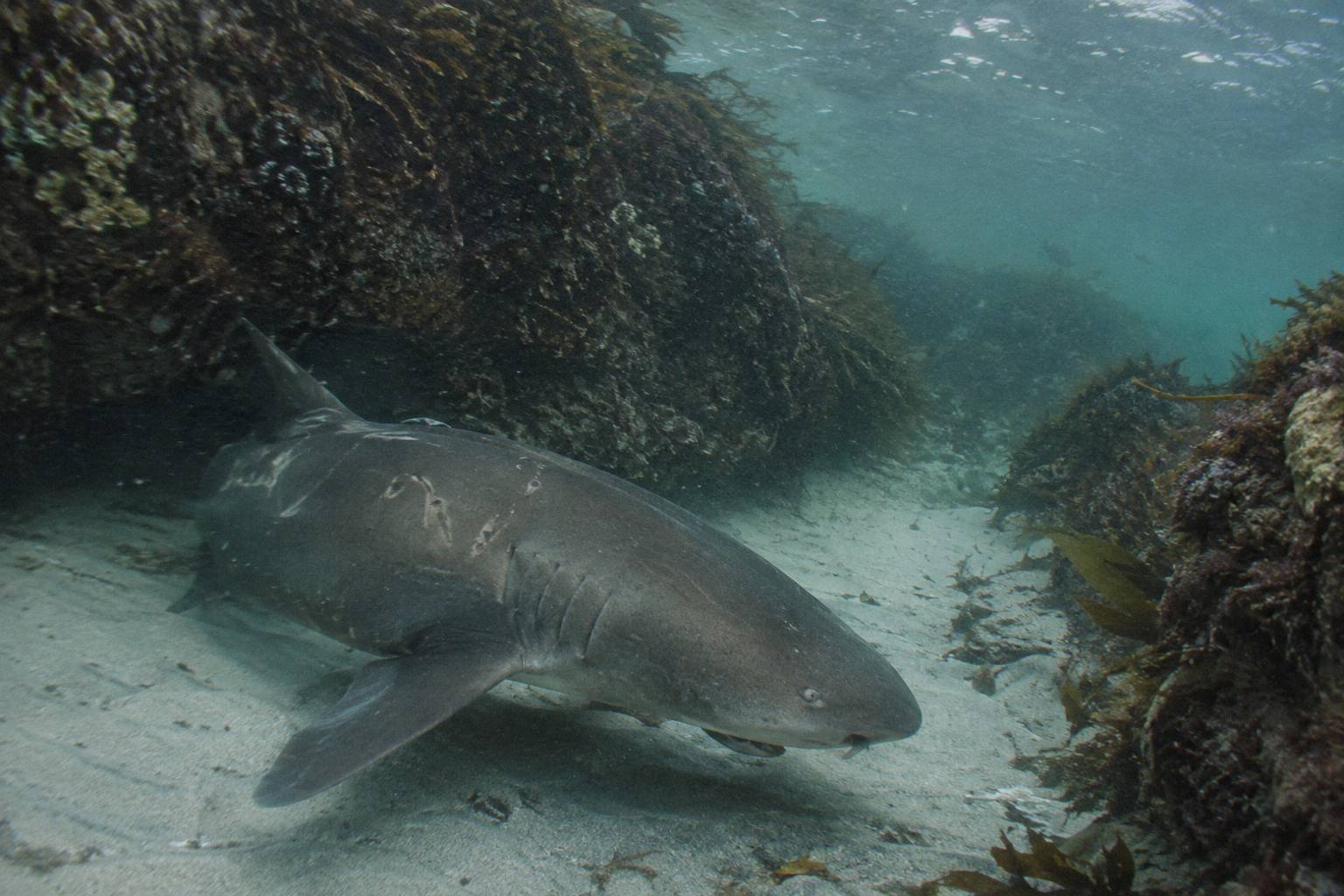
Grey nurse sharks are described at Julian Rocks from June to November, per one dive operator's dive-site page, which places them in the sand trenches "during colder months". The same page puts leopard sharks in the warmer months, December to April, and lists turtles all year. These are operator descriptions of dive seasons, not sighting schedules, and no operator promises a shark on any given trip.
The season split comes from a dive operator that runs trips to the rocks year round. Its page describes the site as shaped by the meeting of the warm East Australian Current and cooler southern water, which is the same framing the NSW Department of Primary Industries and Regional Development uses for the whole marine park. In summer that convergence brings manta rays and leopard sharks; in the cooler winter water come the endangered grey nurse sharks.
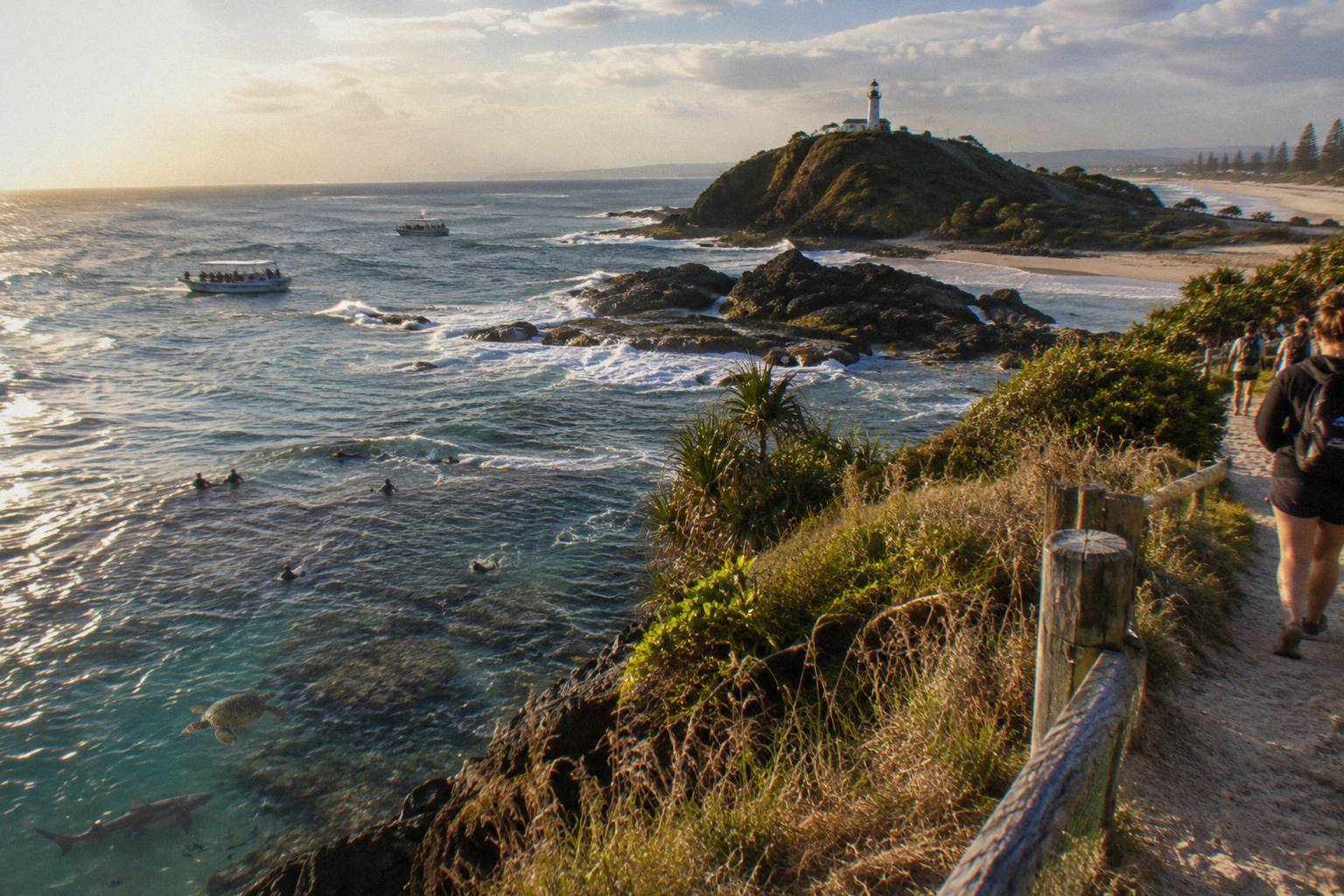
Two things matter for a snorkeller reading that. First, the trenches where grey nurse sharks gather sit at dive depths of 8 to 24 m, and snorkel trips are described by operators as staying in shallow sheltered areas of 3 to 12 m. Second, winter water at the site "can drop to 17 °C (avg. ~20 °C)" per that same operator's dive-site page, which is why 5 mm long wetsuits are advised on the Byron Bay Dive Centre's FAQ for trips of this length.
If timing your visit around marine life is the main decision, the broader picture is covered in our guide to the best month to snorkel Julian Rocks, and the shark family as a whole, including the summer leopard sharks that snorkellers do meet in shallow water, is covered in Byron Bay sharks for snorkellers.
| What | When | Source wording | Depth |
|---|---|---|---|
| Grey nurse sharks | June to November | "during colder months" in the sand trenches | Dive depths, 8 to 24 m |
| Leopard sharks | December to April | "warmer months", mostly the Needles sandy arena | Dive site, not stated |
| Manta rays | Summer months | Listed with leopard sharks | Not stated |
| Turtles, rays, octopuses, eels, fish | All year | Listed year-round by operators | Snorkel and dive areas |
Are Grey Nurse Sharks Dangerous To Snorkellers?
No source on this page describes grey nurse sharks at Julian Rocks as a danger to snorkellers, and no official approach distance for them was found in the sources. The marine park's user guide names them a threatened species, meaning they are protected, and snorkelling is a permitted activity in the sanctuary zones where they live. No safety statistics, incident counts or bite figures appear in any source used here.
What the sources do say is procedural. The DPIRD user guide lists grey nurse sharks among the threatened species of Cape Byron Marine Park, and all species are protected in sanctuary zones. Fish feeding, including shark feeding, is prohibited in the marine park, so no legal tour chums or feeds sharks to attract them. Byron Bay Dive Centre's FAQ asks guests not to touch, collect or harass marine life, and allows waterproof cameras only, with no flash.
It is worth being plain about the limits of this page. Blue Seafaris states that you must be comfortable swimming in open water, and Out Of The Blue requires you to swim 200 m unassisted before booking; neither listing states a weight limit or fitness standard. Where an operator states a rule it is quoted below, and where nothing is stated, the answer is not stated, so ask the operator. This site does not publish safety claims beyond what the operators and agencies publish themselves.
For the safety question in full, including operator swim requirements and who each trip suits, read whether it is safe to snorkel at Julian Rocks. The protection angle matters here in a way that is easy to miss: a listed threatened species in a no-take zone is, by design, a species that is not baited, chased or fed by any licensed operator. The rules that guard the sharks also shape the trip you would join.
If the shark question has settled the bigger decision and you are ready to look at trips, these three cover the range of Julian Rocks snorkel options: the biologist-guided trip from Brunswick Heads, the turtle-focused trip from Byron town, and the Out Of The Blue trip.
Will You See A Grey Nurse Shark While Snorkelling?
Realistically, rarely. The grey nurse shark gatherings described by operators happen in sand trenches at 8 to 24 m, below the 3 to 12 m shallow areas where snorkel trips are described as working. Operators describe snorkel trips as seeing turtles, rays, colourful fish and crustaceans, not sharks. No operator promises a shark sighting, and no sighting counts or odds appear in any source.
That is the plain answer, and it is worth sitting with before booking. The dive operator's page that describes trenches "full" of grey nurse sharks in winter is describing scuba diving depths. The same operator's snorkelling page describes a different experience entirely: shallow sheltered water, turtles and rays. Snorkellers who want a realistic chance of meeting a shark at Julian Rocks should look at the summer leopard shark season instead, when leopard sharks gather in the Needles sandy arena from December to April, still a dive-site description but in a setting snorkellers sometimes share.
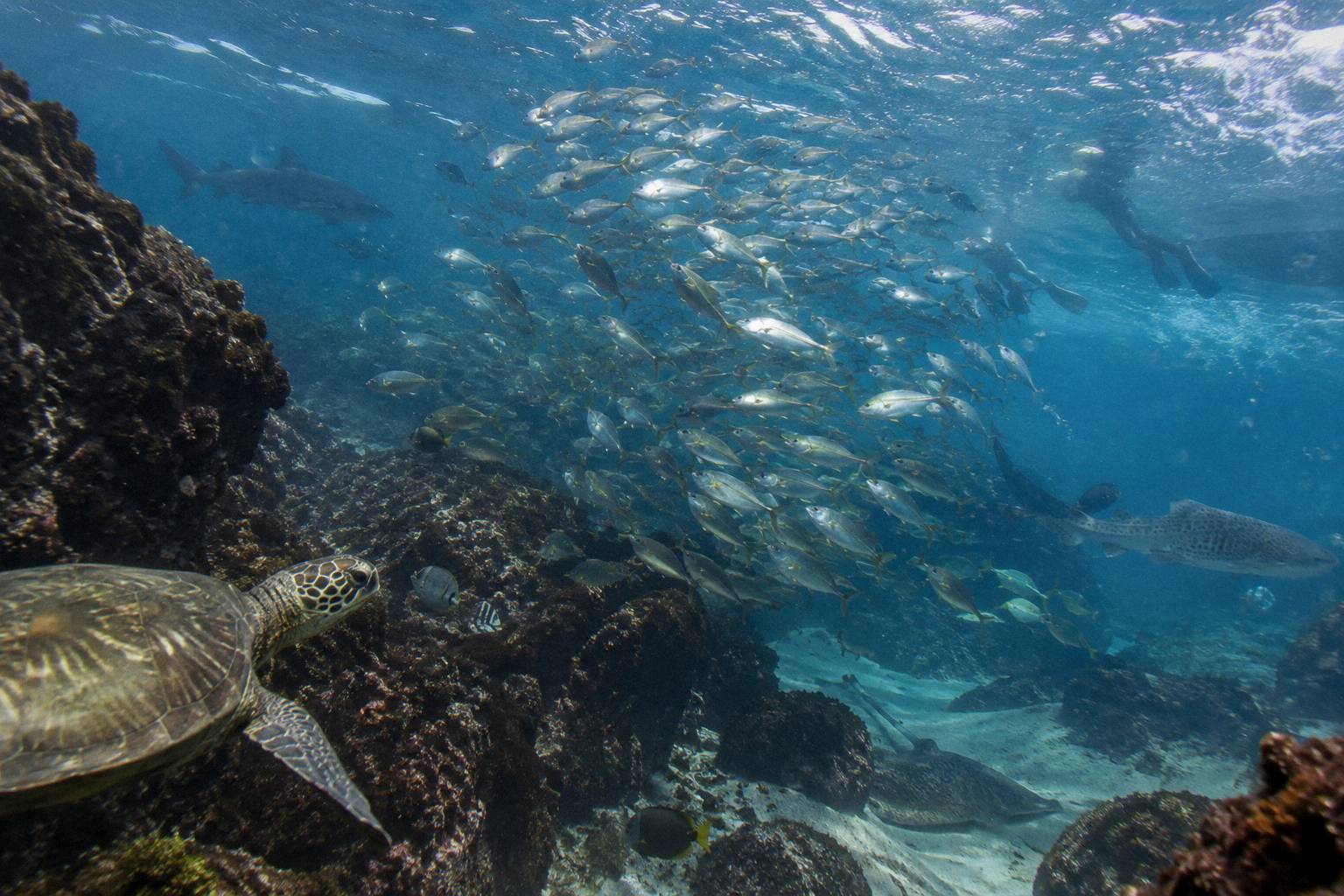
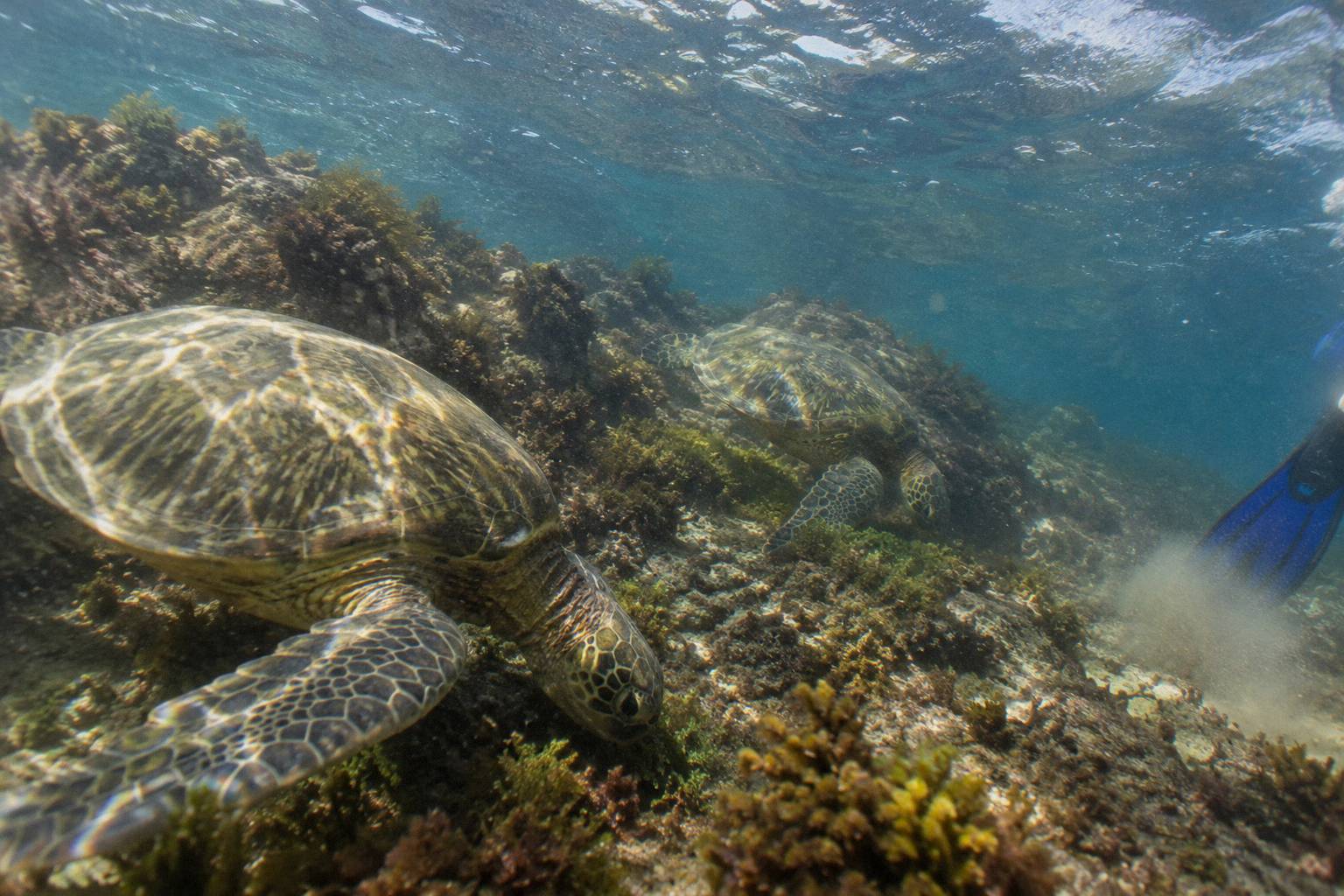
The turtle picture is firmer. One operator lists green, hawksbill and loggerhead turtles all year, and Byron Bay Dive Centre says turtles "can be spotted year-round throughout the whole day", while also saying it cannot guarantee turtles will be there. That is the honest ceiling of any promise on this page: year-round presence, no guarantee, on any trip, in any season.
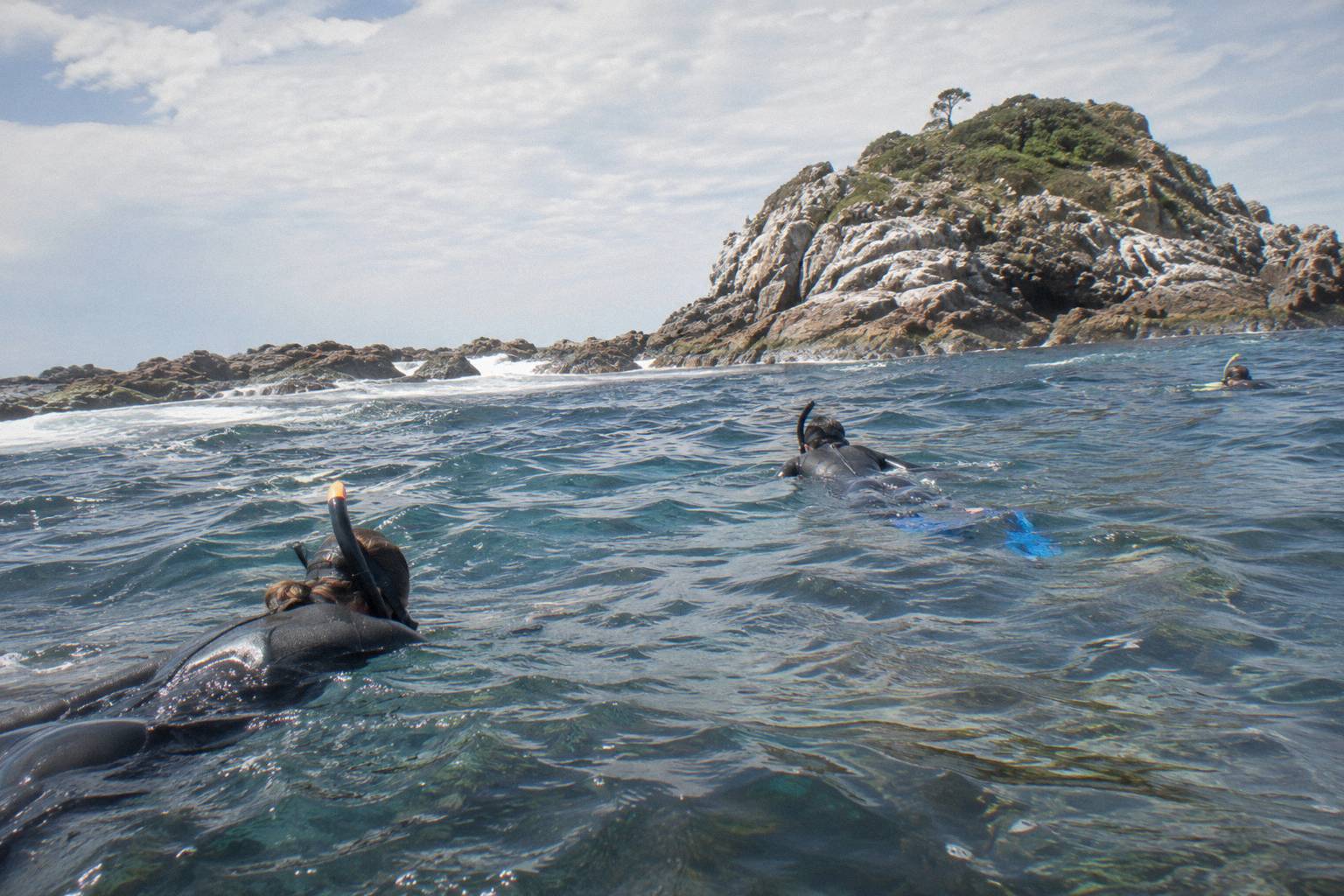
The full marine life calendar, including the rays and wobbegongs that stay all year, is in our Julian Rocks marine life guide, and the turtle species in detail in turtles at Julian Rocks. Between the two, a reader planning around any species gets the full seasonal picture without the need to cross-check operator pages one by one.
Which Julian Rocks Snorkel Trips Are There To Choose From?
Four snorkel listings cover Julian Rocks: Blue Seafaris (from AUD 94 per person, about 2.5 hours, rated 4.5 across 448 reviews on its booking page), Out Of The Blue (from AUD 94, about 2.5 hours, rated 4.4 across 167 reviews), and two Byron Bay Dive Centre listings, one of about 2.5 hours and one of about 3 hours, whose prices and ratings sit on the booking pages. All four visit the same reef system; they differ in meeting point and trip shape.
“This was a great active tour, saw some amazing marine wildlife. I would say if you are inexperienced or nervous then be aware it is out in the ocean and can have strong currents but if your comfortable with that then its amazing.”
Blue Seafaris and Out Of The Blue both meet at Brunswick Heads Boat Harbour, about 15 minutes north of Byron Bay per the Blue Seafaris listing, and both run about 2.5-hour trips. Blue Seafaris' listing is the one this site features, from AUD 94 per person with a 4.5 rating across 448 reviews on its booking page. Out Of The Blue's main booking page reads 4.4 across 167 reviews at from AUD 94, and a second booking page for the same trip shows 4.7 across 58 reviews. Ratings there are printed as found, not compared or ranked.
The Byron Bay Dive Centre listings are town-based. The Turtle School listing meets at Byron Plaza on Jonson Street, with transport to the boat at The Pass, runs about 2.5 hours, and its rating and price are on the booking page. The Sea Turtle Snorkel listing is a second booking page of near-identical scope, also about 2.5 hours, also with price and rating on the booking page. The operator's own pages add detail the booking pages do not: gear and wetsuit included, a minimum age of 10, 60 minutes in the water, and 5 mm long wetsuits advised.
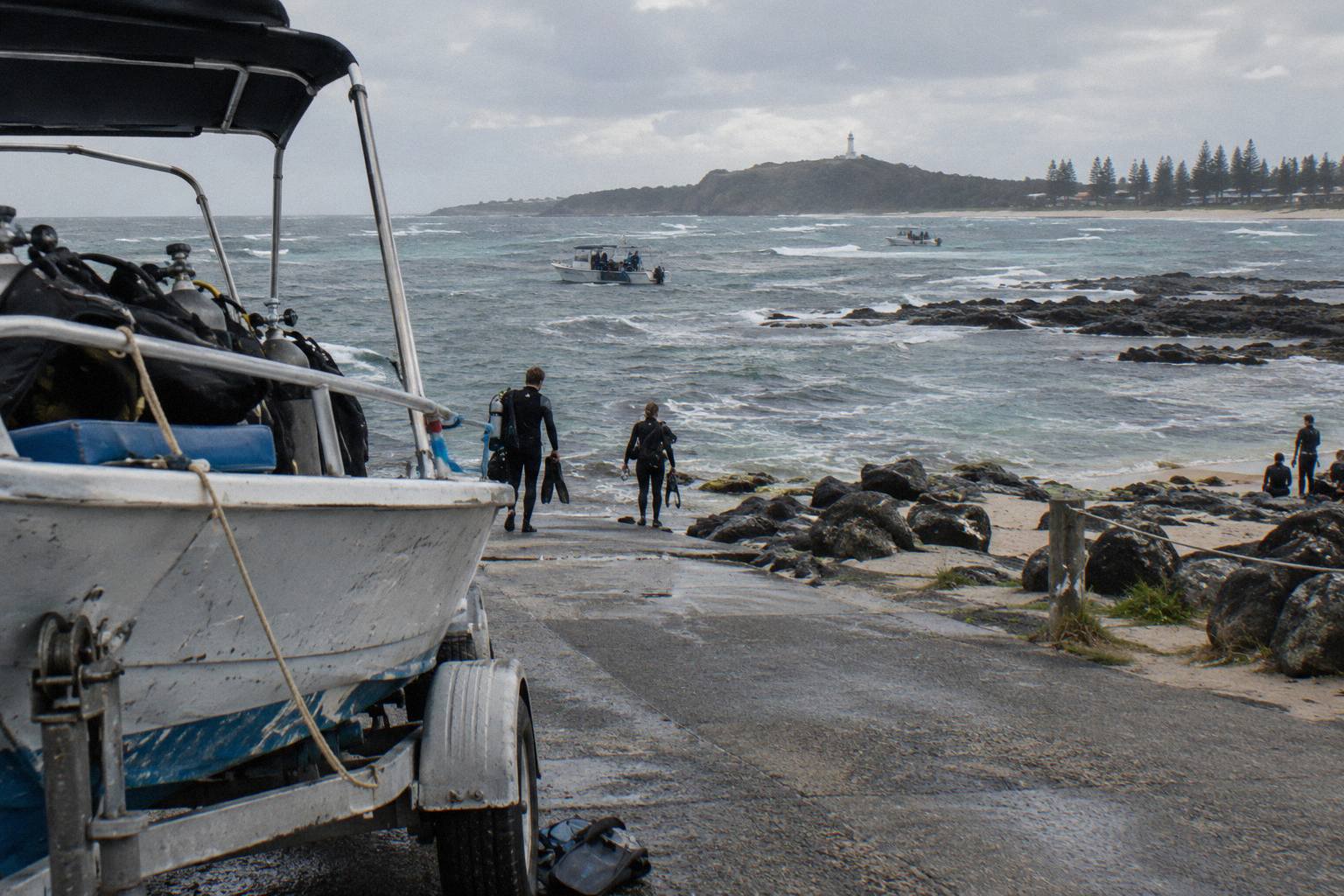
The differences that actually change a day are small but real. A Brunswick Heads meeting point means a drive out of Byron and a sheltered harbour departure; a town meeting point means checking in on Jonson Street and being driven to The Pass, on the headland side of town. The time in the water is broadly similar across the listings, around an hour, with the boat ride itself short: operators put the run from Byron Bay out to the rocks at 5 to 10 minutes, since the site sits only about 2.5 km offshore.
| Trip | Operator | Meeting point | Length | Booking-page figures |
|---|---|---|---|---|
| Blue Seafaris Julian Rocks Snorkelling Tour | Blue Seafaris | 43 Harbour Way, Brunswick Heads Boat Harbour | About 2.5 hours | From AUD 94, 4.5 across 448 reviews |
| Out Of The Blue Julian Rocks Snorkelling Tour | Out Of The Blue Adventures | Brunswick Heads Boat Harbour | About 2.5 hours | From AUD 94, 4.4 across 167 reviews; a second booking page shows 4.7 across 58 reviews |
| Turtle School Julian Rocks Snorkelling Tour | Turtle School (Byron Bay Dive Centre) | Byron Plaza, Jonson Street, Byron Bay | About 3 hours | On the booking page |
| Byron Bay Dive Centre Sea Turtle Snorkel | Byron Bay Dive Centre | Not stated, check the booking page | About 2.5 hours | On the booking page |
If the choice between town meeting point and boat harbour is the sticking point, our guide to choosing a Julian Rocks snorkel operator walks the trade-offs, and what happens on a Julian Rocks snorkel day covers the shape of the day itself. Cost expectations, including what is and is not in a from-price, are set out in the Julian Rocks snorkel trip cost guide.
The Blue Seafaris listing is the featured trip on this page: biologist-guided, Brunswick Heads based, about 2.5 hours.
What Rules Protect The Sharks, And What Do They Mean For You?
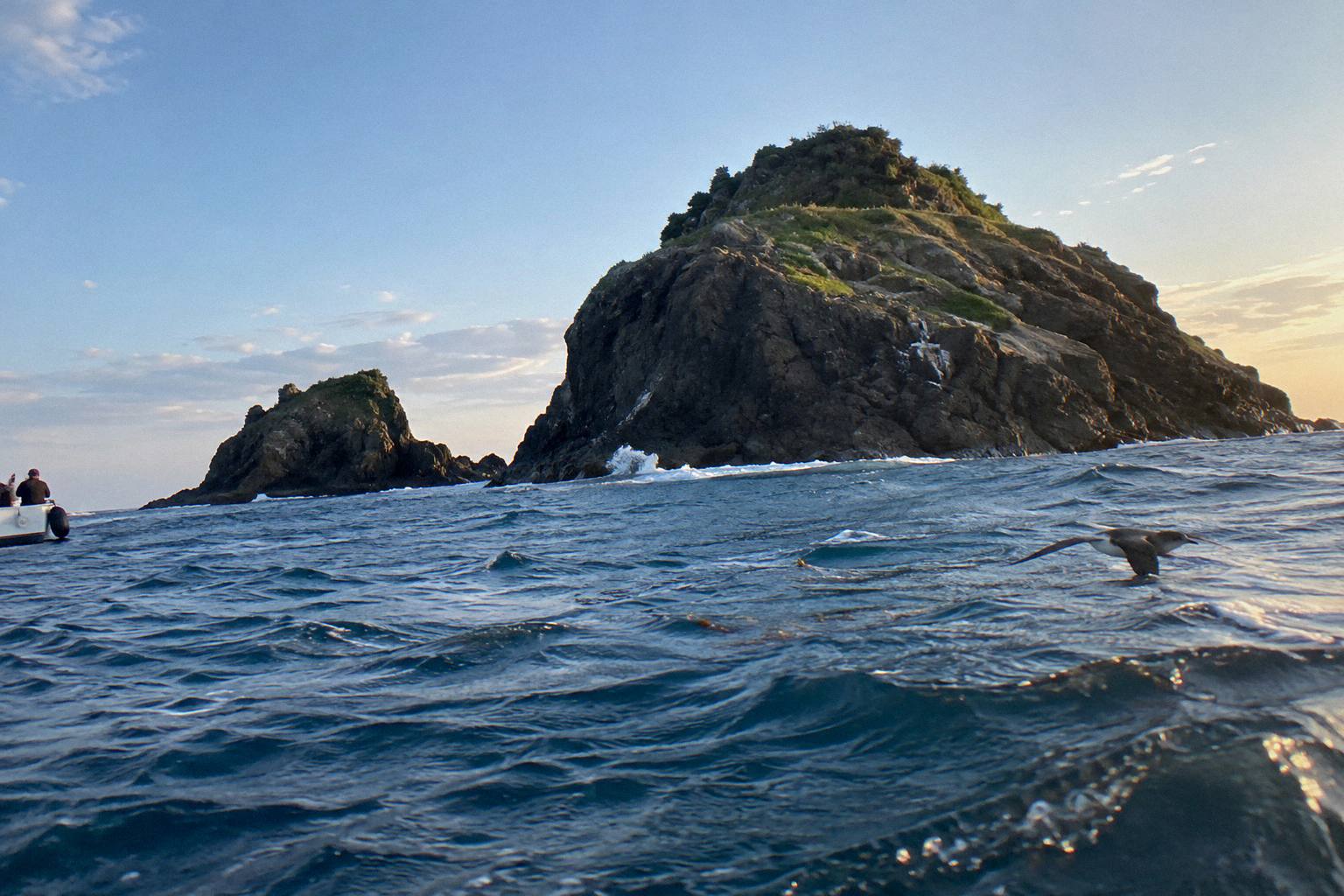
Julian Rocks sits inside a sanctuary zone of Cape Byron Marine Park, the highest protection class: no fishing, no collecting, no anchoring on reefs. Grey nurse sharks are a listed threatened species, all species in the sanctuary zone are protected, and snorkelling is expressly permitted. Boats hold to 4 knots within 200 m, and anchoring is banned within 700 m of the rocks.
“Amazing snorkelling experience! Guides were great- super friendly and knowledgeable!”
The numbers behind those rules give a sense of scale. Cape Byron Marine Park covers about 37 km of coastline from the Brunswick River to Lennox Head and about 220 km2 of state waters, with zones and rules in force since May 2006. Sanctuary zones cover 6,118 ha, 27.5% of the park per the June 2018 user guide. The DPIRD page for the park describes Nguthungulli Julian Rocks as home to sharks, rays, turtles, eels, starfish and corals. You can read the park's own summary at the DPIRD Cape Byron Marine Park page, and the full rule set in the Cape Byron Marine Park user guide; note that URL is the user guide as listed in our research records, so if it has moved, search the guide title on the DPIRD site.
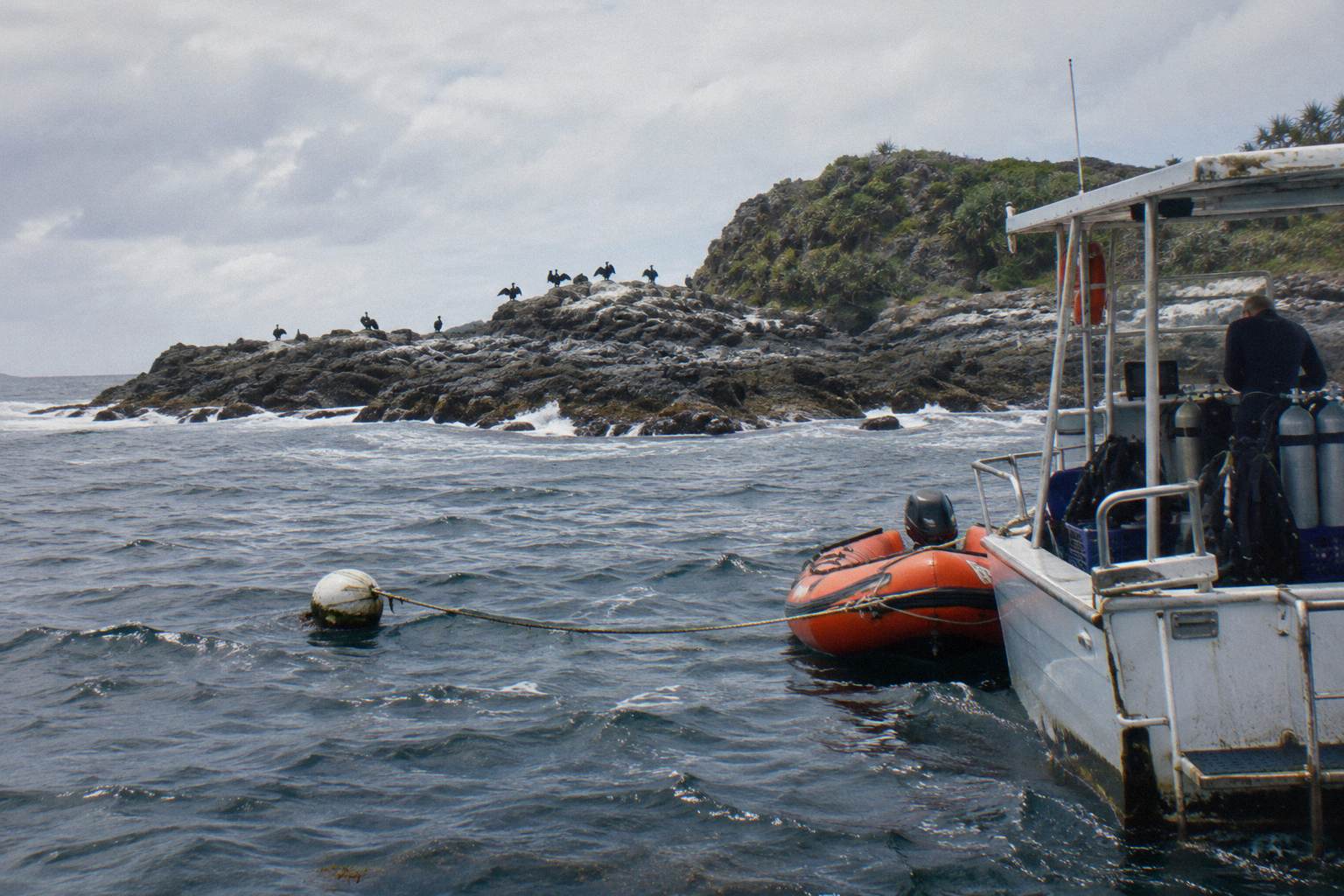
Seven marine park moorings sit at Julian Rocks, rated for vessels up to 15 tonnes or 10 m in winds of 24 knots or less, with a 2-hour maximum stay, no fishing from a moored vessel and no rafting. For you as a snorkeller the practical effect is simple: the trip you join arrives on a licensed boat, ties to a mooring, and operates under rules that exist partly for the sharks you came to read about. The 2-hour mooring limit is also, quietly, the reason trip lengths look the way they do: about an hour in the water plus boat time fits the window a mooring allows.
The NSW Government page for the rocks adds a land-side note: the islands are a bird sanctuary, with gulls, terns, tattlers, cormorants and plovers, and collecting or destroying animals and spear fishing are prohibited. None of that touches a snorkeller's day directly, but it explains why the site feels as untouched as it does, and why the rules around it are written the way they are.
The full rule set for snorkellers, including the zone map logic and what is prohibited, is in our Cape Byron Marine Park snorkel rules guide, and the island's protected status and dual naming, Nguthungulli meaning "Father of the World" in Bundjalung and adopted as the official dual name in July 2023, is covered in the Nguthungulli Julian Rocks Nature Reserve guide.
What Should You Ask The Booking Desk Before You Go?
Ask four things: what the operator's swim requirement is, what the minimum age is, what the weather-cancellation policy is, and what gear is included. Each operator states these differently, and the sources show real variation: minimum ages of 5, 7 and 10 appear across operator pages, and Sundive Byron Bay requires proven open-ocean experience and a 200 m unassisted swim.
“An unforgettable experience in a unique place, accessible to all with very friendly professionals. I highly recommend it.”
The variation is not a gap in the research; it is genuinely how the operators set their rules. The minimum age question matters for families, and our kids on the Julian Rocks snorkel trip guide goes deeper. The swim requirement matters for nervous snorkellers: the Byron Bay Dive Centre sea turtle tour asks that all participants swim at least 25 m unassisted and be comfortable in the water, and it does not provide life jackets to snorkel in. Turtle School, also run through Byron Bay Dive Centre, requires a 200 m unassisted swim in open ocean. Blue Seafaris states you must be comfortable swimming in open water, offers pool noodles, and carries no flotation jackets for non-swimmers; Out Of The Blue Adventures requires a 200 m unassisted swim before booking, and crew remove snorkellers who cannot manage it, with no refund.
Gear is the quiet variable in winter. Byron Bay Dive Centre includes fins, mask, snorkel and wetsuit, advises a 5 mm long wetsuit for the duration of the trip, does not offer prescription masks (contact lenses are fine), and carries ginger seasickness tablets on the boat while recommending guests bring their own. If you are booking a different listing, asking what wetsuit thickness is provided is a fair question in the colder months, because the answer shapes how long an hour in 17 to 20 degree water feels.
| Question to ask | What the sources show |
|---|---|
| Swim requirement | BBDC: swim at least 25 m unassisted and be comfortable in the water; no life jackets to snorkel in. Sundive Byron Bay: swim at least 200 m unassisted in open ocean. Blue Seafaris: you must be comfortable swimming in open water; pool noodles offered, no flotation jackets for non-swimmers. Out Of The Blue: swim 200 m unassisted before booking; crew remove snorkelers who cannot, with no refund |
| Minimum age | 5, 7 and 10 years appear across operator pages; the Byron Bay Dive Centre turtle trip states 10 |
| Weather cancellation | BBDC: text or phone contact, full refund or reschedule if the sea is unsuitable; 48-hour cancellation window, 100% fee inside it |
| Gear included | BBDC: fins, mask, snorkel, wetsuit; 5 mm long wetsuit advised; no prescription masks; ginger seasickness tablets on board |
| Health restrictions | BBDC: pregnancy, back or spinal injuries prohibited from vessel-based activities |
One more booking-desk note: if the sea is unsuitable, Byron Bay Dive Centre contacts guests by text or phone and offers a full refund or reschedule, with a 48-hour cancellation window and a 100% fee inside it; bookings made through an agent follow that agent's policy. The what-if on weather is covered in full in what if the Julian Rocks snorkel trip is cancelled for weather.
What Is A Winter Trip Actually Like, And How Should You Plan For It?
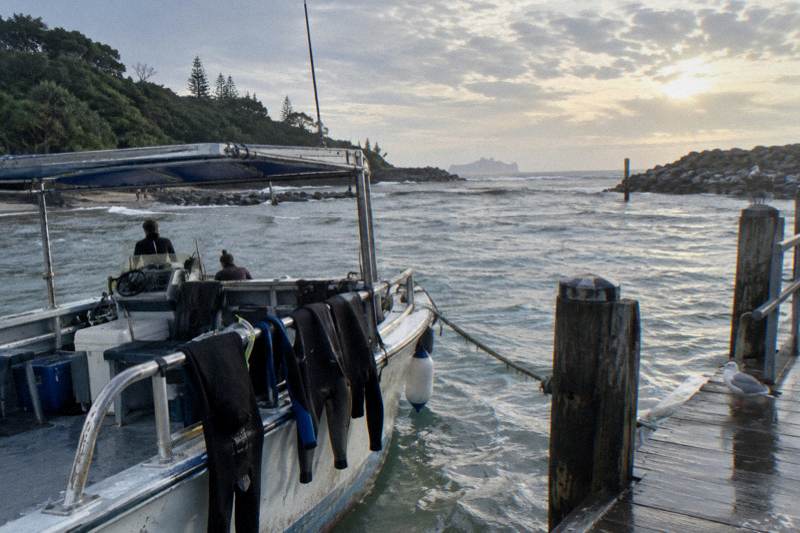
A winter Julian Rocks trip is a short open-ocean crossing, 5 to 10 minutes by boat, into cool water one operator pegs at 17 °C to about 20 °C, with the site exposed to strong swells, currents, surges and winds, and strong northerlies blowing between September and Christmas. None of that is a reason not to go; it is a reason to pack for the cold and book around the weather.
The planning follow-through is straightforward. Check the sea forecast before booking, which our where to check Byron Bay sea conditions guide covers, and read will I get seasick on the Julian Rocks boat if the short open crossing is a worry. For clothing and gear, the Julian Rocks snorkel packing list is the practical rundown, and the winter water question is answered directly in is Byron Bay water too cold for snorkelling in winter.
Timing the booking matters too. Winter is outside the peak summer rush, but shark-season readers are not the only ones in the water: turtles are year-round, and operators describe them throughout the whole day, so morning and afternoon departures both have a case. Our how far in advance to book a Julian Rocks snorkel trip post covers the lead-time question, and visibility expectations by season, without any invented figures, sit in Julian Rocks visibility by season.
Which Trip Fits Which Traveller?
A grey nurse shark reader usually fits one of three profiles. The confident ocean snorkeller who wants the shortest boat ride can take either Brunswick Heads trip. The town-based traveller who wants a meeting point without a drive takes a Byron Bay Dive Centre listing. The traveller whose real goal is marine wildlife in general, sharks included, may be better served by a kayak or whale-watching trip in season.
Start honest about the shark. If seeing a grey nurse shark from the water is the goal, the sources point to diving, not snorkelling: the trenches are at 8 to 24 m. Our snorkelling or diving Julian Rocks comparison and the Julian Rocks diving guide cover that path. If snorkelling is fixed and sharks are a bonus, the turtle and ray sightings that operators actually describe are the realistic prize, and any of the four listings delivers the same reef.
“This was an incredible experience! We got lucky with the conditions and saw a huge variety species. Loved this even more than when I snorkelled the Great Barrier Reef. Not to be missed!”
For the wildlife-first traveller, the adjacent trips earn their place. Humpback whales pass Byron Bay on a season the operators state differently: one runs whale trips between May and November, another lists whale watching from June to October, and no operator claims whales on a snorkel trip. Dolphins are the everyday sighting, and the Byron Bay dolphin kayak vs snorkel comparison is the full rundown.
The Out Of The Blue listing is the natural contrast: same harbour, same length, same from-price, a different boat and crew.
Common Questions About Grey Nurse Sharks At Julian Rocks
When Can You See Grey Nurse Sharks At Julian Rocks?
One dive operator's season page describes grey nurse sharks in the sand trenches around Julian Rocks during the colder months, June to November. Those trenches sit at dive depths of 8 to 24 m, and grey nurse sharks are rarely seen on snorkel trips, which stay in shallow areas of 3 to 12 m.
Are Grey Nurse Sharks Dangerous To Snorkellers At Julian Rocks?
No source used on this page describes them as a danger to snorkellers, and no safety statistics were found. They are a threatened species protected inside the marine park's sanctuary zones, shark feeding is prohibited, and snorkelling is a permitted activity in those zones.
Will I See A Shark On A Julian Rocks Snorkel Trip?
No operator promises a shark sighting, and none should. Operators describe snorkel trips as seeing turtles, rays, colourful fish and crustaceans in shallow sheltered water. Leopard sharks, December to April per one dive operator, are the shark species most associated with shallower warm-month water.
What Is The Minimum Age For A Julian Rocks Snorkel Trip?
It differs by operator: ages 5, 7 and 10 appear across operator pages. The Byron Bay Dive Centre turtle trip states a minimum age of 10. Check the booking page for the specific trip you are considering.
How Cold Is The Water In Grey Nurse Shark Season?
One operator's dive-site page says winter water at the rocks can drop to 17 °C, averaging about 20 °C. That operator and Byron Bay Dive Centre both advise long wetsuits, and the Dive Centre includes gear and wetsuit in its trips.
Do I Need To Be A Strong Swimmer?
Every operator here sets a swimming standard. Blue Seafaris requires you to be comfortable swimming in open water; pool noodles are available, but there are no flotation jackets for non-swimmers. Out Of The Blue Adventures requires a 200 m unassisted swim before booking. Snorkellers who cannot manage it are removed from the water, and no refund is given. The Turtle School (Byron Bay Dive Centre) tour asks for 200 m unassisted in open ocean, while the operator's separate sea turtle tour asks for 25 m unassisted and comfort in the water, with no life jackets to snorkel in.