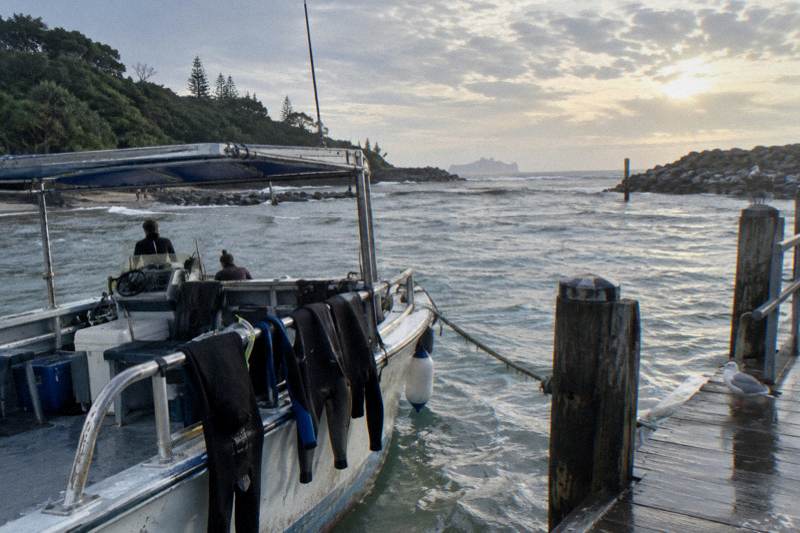
Best Month To Snorkel Julian Rocks: A Season By Season Guide
The honest answer to when to snorkel Julian Rocks is that there is no single best month, only the month that matches what you want from the water. Here is what each operator and agency actually says about every season.
Short answer
Turtles are listed at Julian Rocks all year, leopard sharks and manta rays are summer sightings (December to April per one operator), and grey nurse sharks run June to November but at dive depths of 8 to 24 m, not snorkel depths. Trips run year round. Blue Seafaris and Out Of The Blue both snorkel from AUD 94 per person.
The best month to snorkel Julian Rocks depends less on a calendar and more on what you want to see and how you handle open-ocean water. Unlike most snorkel destinations, this one has no tidy month-by-month temperature chart, because no official monthly sea-temperature source exists for it. What does exist is specific, attributable wording from the operators who run the trips and from the NSW agency that manages the marine park, and that wording is enough to make a clear decision.
That is the standard used throughout this guide. Every season claim below is tied to the operator or agency that said it. Where two operators disagree, both positions are printed. Nothing here is a sighting promise, because no honest source can promise you a turtle, a shark or a ray in open water, and the operators themselves say so plainly.
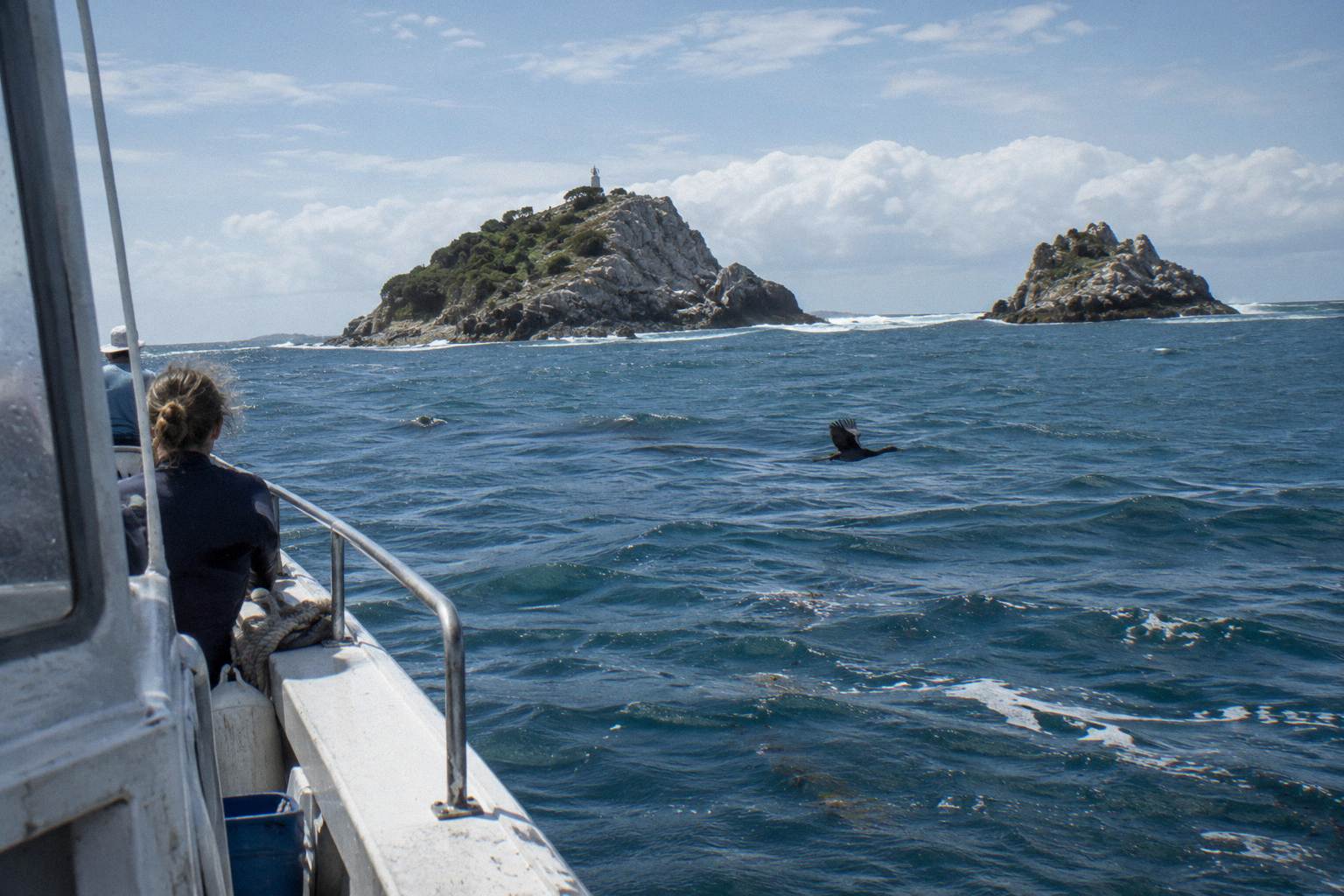
One framing note before the seasons: Julian Rocks Snorkelling is a site about one specific place, Nguthungulli Julian Rocks, a nature reserve sitting about 2.5 km off Cape Byron inside Cape Byron Marine Park. The trips that visit it are short, typically 2.5 to 3 hours door to door, with roughly an hour in the water. That brevity is why the month you choose matters: you get one window, and it pays to know what that window is likely to hold.
What Is The Best Month To Snorkel Julian Rocks?
There is no single best month, and no source claims one. Turtles are described as present all year by every operator reviewed. Leopard sharks and manta rays are summer sightings, December to April. Grey nurse sharks appear June to November, but at dive depths of 8 to 24 m, which are not snorkel depths. Weather, not wildlife, is the real variable, and it is not predictable by month.
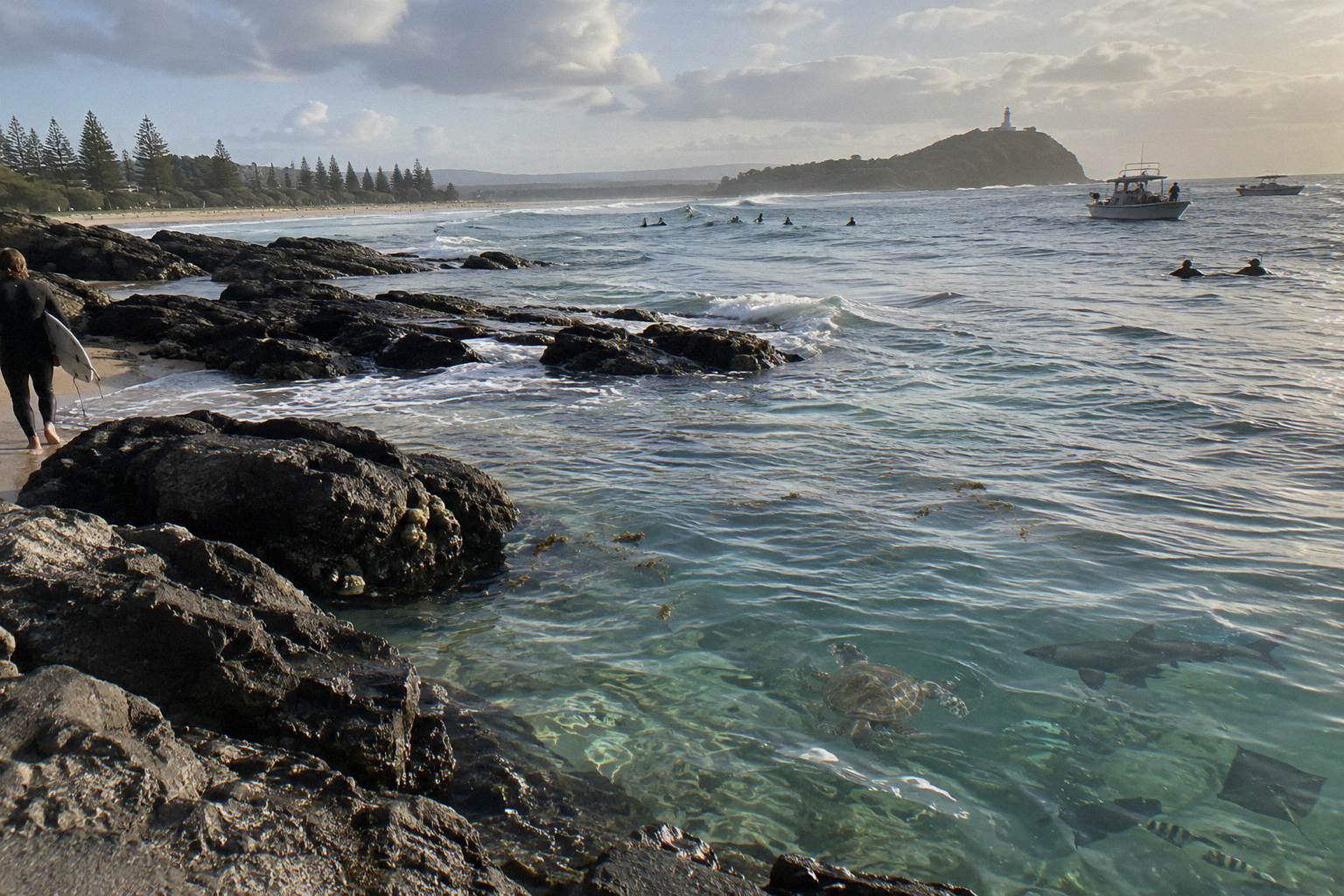
That is the whole honest answer in one paragraph, and it is worth pausing on why it is structured that way. Many destinations publish monthly wildlife calendars with confidence levels and percentage sighting rates. The sources for Julian Rocks do not. The NSW Department of Primary Industries and Regional Development lists sharks, rays, turtles, eels, starfish and corals at the rocks but attaches no months to any of them. The operators go further and attach seasons only to the headline species, and even then with careful wording like "can be spotted" rather than "will be seen".
So the decision logic flips. Instead of hunting for a magic month with the most animals, you are really choosing between three profiles. Summer, roughly December to April in the southern hemisphere, is the warm-water profile: leopard sharks in the sandy areas and mantas on the operator's summer list. Winter, June to November, is the grey nurse shark season, but critically at dive depths, so a snorkeller should not book winter expecting them. And every month carries turtles, rays, colourful fish and crustaceans in the shallow sheltered areas where snorkel trips actually spend their time.
“AMAZING! The fun began on the boat ride out there and the marine life we saw was spectacular. Our guides, Matt and Will, were brilliant and had an obvious passion for marine life. 10/10 would recommend.”
It is November 2026 as this guide is written, which is late spring in Australia. Spring sits between the two headline seasons, which makes it a fair example of the honest middle case: turtles and rays on the operator's all-year list, no headline seasonal species guaranteed, and trip choice driven more by sea conditions and water confidence than by a calendar. The rest of this guide works through each season in that same spirit, then matches traveller types to months.
If you want the short version of the trips first, the table later in this guide lists every Julian Rocks snorkel trip with its duration, price where the booking page states one, and meeting point. The featured trip on this site is a short boat trip from Brunswick Heads, gear included, about 2.5 hours total.
What Each Season Holds At Julian Rocks
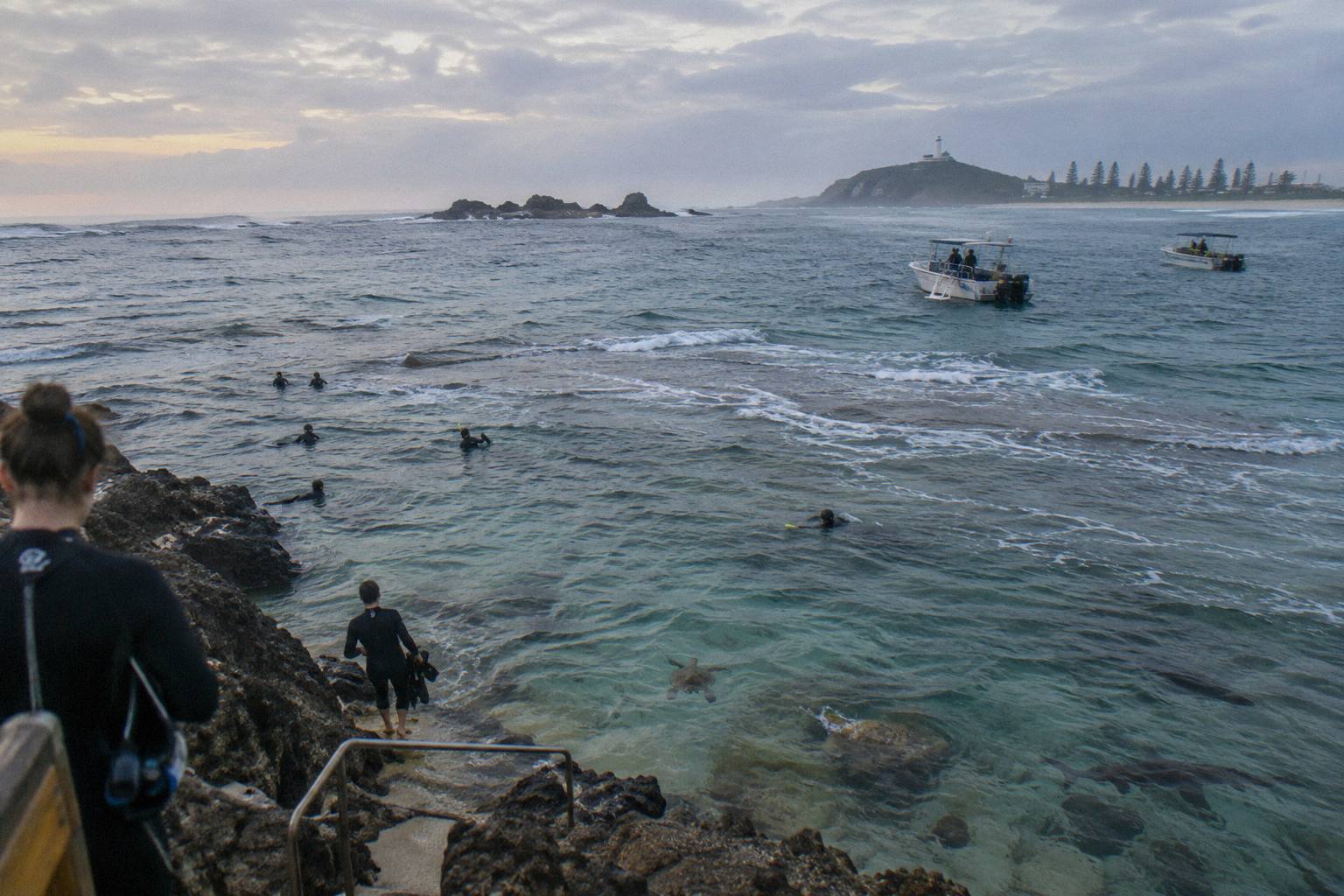
The single most useful sentence in all the source material comes from a dive operator's page about the site: in summer months manta rays and leopard sharks, in cooler winter water endangered grey nurse sharks, and turtles, rays, crustaceans, nudibranchs, octopuses, eels and fish all year. That is a clean three-way split, and it is worth reading precisely. Two of the three categories are seasonal headline species; the third, the long all-year list, is the realistic baseline of what a snorkel trip actually encounters, because snorkel trips are described as seeing turtles, rays and a variety of colourful fish and crustaceans in shallow sheltered areas 3 to 12 m deep.
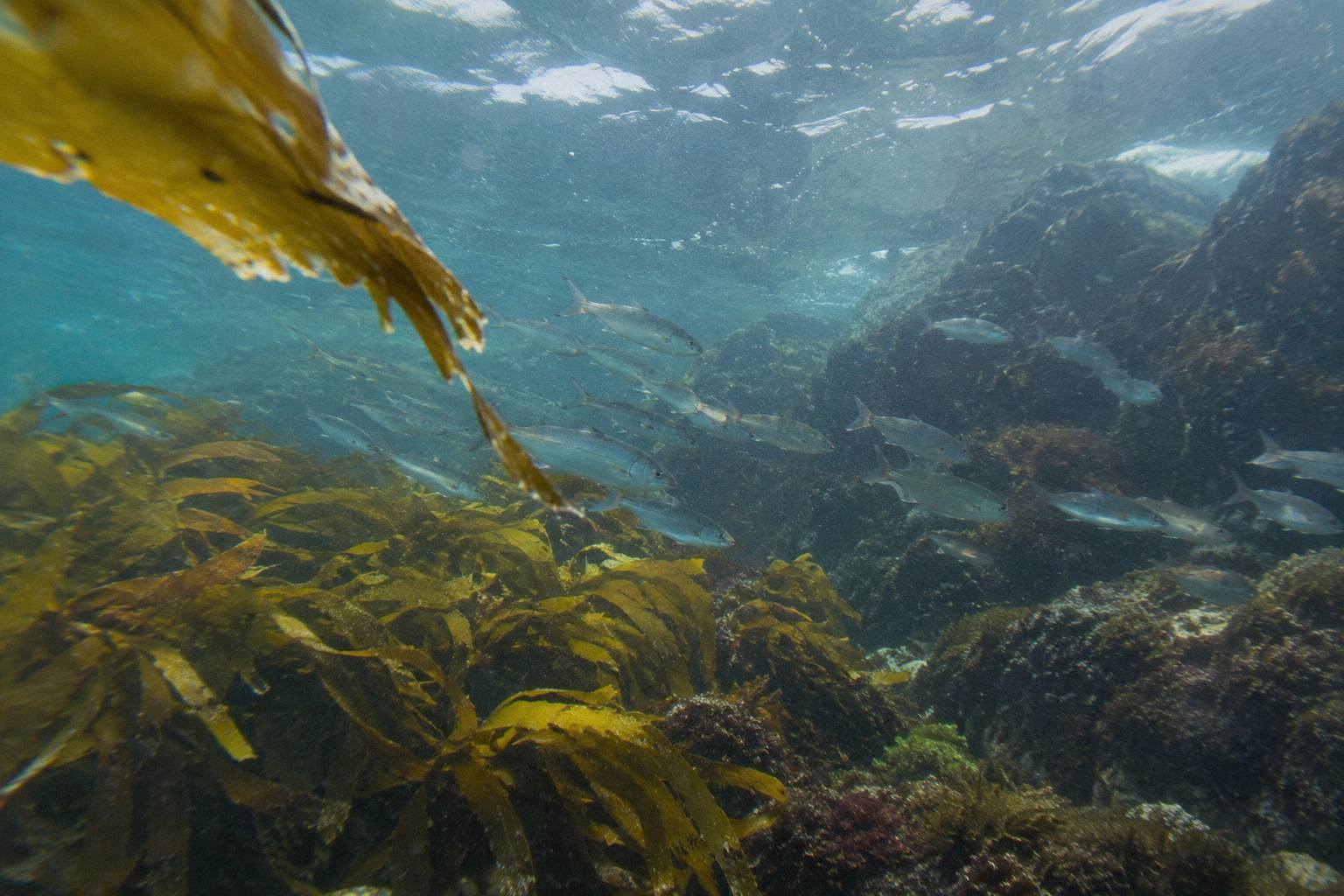
The table below puts each source's seasonal claim side by side. Read it as a record of who said what, not as a forecast.
| Season | What is stated to be present | Who states it | Applies to snorkellers? |
|---|---|---|---|
| Summer months | Manta rays, leopard sharks | One dive operator's site page | Leopard sharks yes, in shallow sandy areas; mantas listed for the site generally |
| December to April | Leopard sharks, mostly in the Needles sandy arena | Same dive operator | Yes, the Needles is a shallow site leopard sharks favour |
| June to November (cooler winter water) | Grey nurse sharks, in sand trenches | Same dive operator | No, the trenches are at 8 to 24 m dive depths |
| All year | Turtles (green, hawksbill, loggerhead), rays, wobbegong, crustaceans, nudibranchs, octopuses, eels, fish | Dive operator and Byron Bay Dive Centre | Yes, this is the snorkel baseline |
| No months attached | Sharks, rays, turtles, eels, starfish, corals at the rocks | DPIRD, the NSW marine park agency | Yes, as a general species list |
Two cautions keep this table honest. First, the grey nurse shark season is a dive-season fact. The trenches where those sharks gather sit well below snorkel depth, and grey nurse sharks are rarely seen on snorkel trips, so a winter booking should be made for the winter water experience, not for sharks. Second, the all-year list is a list, not a guarantee. The Byron Bay Dive Centre, which runs the Turtle School trips, says turtles can be spotted year-round throughout the whole day but the operator says it cannot guarantee turtles will be there. That is the standard of honesty worth holding every operator to, and this one holds itself to it in writing.
For planning around the site itself rather than the seasons, the Julian Rocks marine life guide works through the species in more depth, and the marine park snorkel rules page covers what protection means for you in the water.
If you already know your month, these are the three trips this site features for the seasonal decision:
Summer At Julian Rocks: Leopard Sharks And Manta Rays
Summer is the season the operators write about most. One dive operator puts leopard sharks in the Needles sandy arena during the warmer months, December to April, and lists manta rays among summer sightings. Turtles and rays continue on the all-year list. Summer is also when the water is warmest, though no official monthly temperatures exist.
Leopard sharks are the standout summer fact because they are a shallow-water species that snorkellers genuinely encounter. The operator wording is specific: leopard sharks mostly gather in the Needles sandy arena during the warmer months from December to April. The Needles is one of the named sites around the rocks, and its sandy arena is within the range snorkel groups can view from the surface. Nothing in the sources states a count or an odds figure, and this guide will not invent one, but a December-to-April booking is the window the operator itself associates with the species.
Manta rays sit on the same summer list but with less location detail. If mantas are the species driving your timing, the honest move is to ask the booking desk directly what the summer manta sightings have been like recently, because the source is a season listing rather than a site-specific pattern. That question, and others like it, are collected into a checklist near the end of this guide.
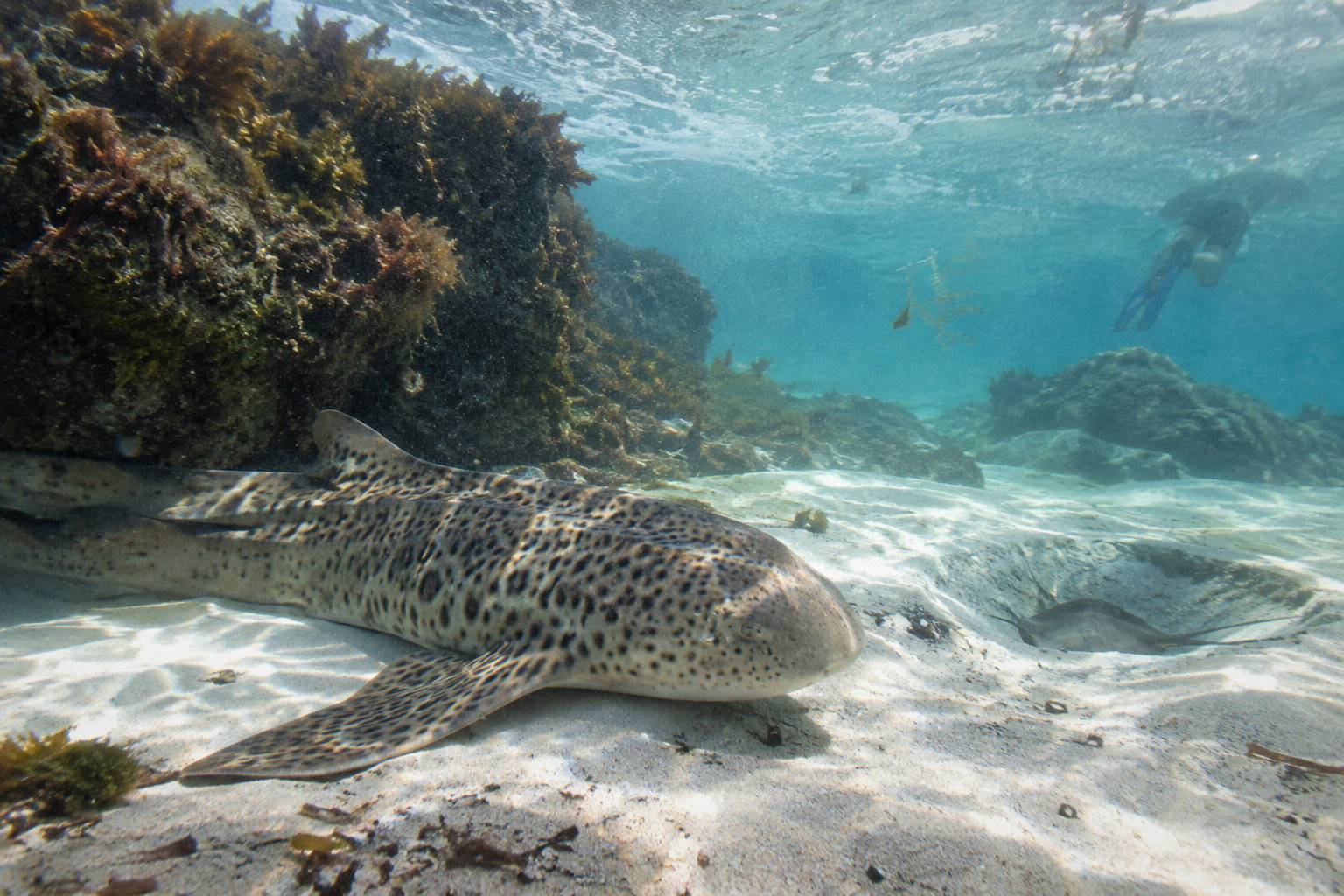
The featured trip on this site fits the summer window well. The Blue Seafaris Julian Rocks Snorkelling Tour, a biologist-guided snorkel from Brunswick Heads, runs about 2.5 hours, is rated 4.5 across 448 reviews on its booking page, and costs from AUD 94 per person. A biologist guide adds context exactly when the seasonal species are around. It departs from 43 Harbour Way at Brunswick Heads Boat Harbour, which puts the boat ride to the rocks at minutes rather than a crossing. You can read the full Blue Seafaris trip page here, or check the live listing for summer dates.
Wondering which month inside the summer window to aim for? The sources say nothing that separates January from March, so the decision factors are practical ones: school holidays crowd the town but not necessarily the boats, and the wind pattern discussed later in this guide runs from September to Christmas, which touches early summer.
Winter At Julian Rocks: Grey Nurse Sharks And Cooler Water
The grey nurse shark season deserves the most careful handling of any fact on this page, because it is the one most often oversold elsewhere. The operator wording is unambiguous: grey nurse sharks gather in the sand trenches during colder months, June to November, and in winter those trenches can be full of them. But the trenches are diving territory, 8 to 24 m down, and the same sources describe snorkel trips staying in shallow sheltered areas of 3 to 12 m. A snorkeller who books July expecting to look down on a trench full of grey nurse sharks has been misled by someone, but not by the operators' own pages. For the full picture on that species, including the safety question, see the grey nurse sharks at Julian Rocks guide.
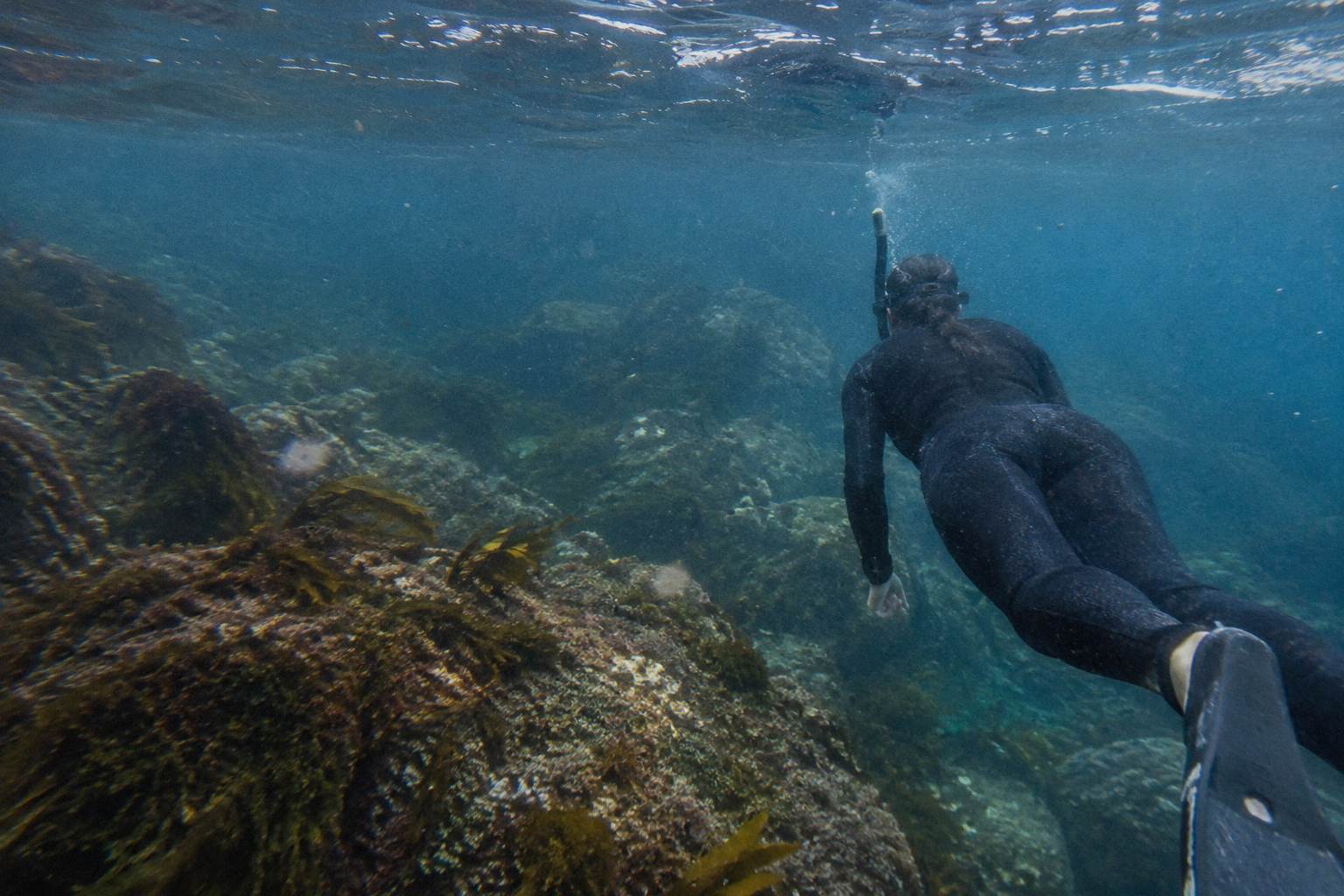
Winter water temperature is the other fact that matters, and it comes with an attribution. One operator's dive-site page states winter water can drop to 17 °C, averaging around 20 °C. That is the only winter figure in the sources, it belongs to that operator, and this guide prints it once rather than spreading it across a monthly chart, because no official monthly sea-temperature source was found. Practically, it means a wetsuit, and the Byron Bay Dive Centre advises 5 mm long wetsuits for the duration of its trips. The question of whether you need a wetsuit at Julian Rocks gets its own treatment on this site.
Winter snorkelling at the rocks is therefore a real option, just a different one: fewer people, cooler water, turtles and rays on the all-year list, and the possibility that dive boats on the same moorings are down among the grey nurse sharks below you. The winter water question is worth reading alongside this section if cold water is your main hesitation.
Among the trips, the Turtle School Julian Rocks Snorkelling Tour is a town-based winter option: it meets at Byron Plaza on Jonson Street, runs about 2.5 hours, and includes transport to the boat at The Pass. Rating and price are on the booking page, and the sources reviewed here disagree on both, so this guide prints neither.
“A fantastic morning out! Leopard sharks, turtles, eagle rays and even a Manta! Couldn’t have wished for more! Choppy conditions to start but both the guide and skipper handled it well so everyone felt safe and looked after! Early morning session was a brilliant way to start the day!”
Turtles At Julian Rocks: The Year-Round Constant
Turtles are the only headline species listed for every month. Green, hawksbill and loggerhead turtles are described as present all year, and Byron Bay Dive Centre says they can be spotted year-round throughout the whole day, while stating it cannot guarantee turtles will be there. For turtle-focused snorkellers, every month is on the table.
If your whole trip is about turtles, the seasonal question largely dissolves. Three turtle species, green, hawksbill and loggerhead, appear on the all-year list, and the operator that runs turtle-branded trips is also the one most explicit about the limits of the claim. That pairing, a turtle-branded product and a written no-guarantee statement, is a good sign: it means the operator is selling the search, not the sighting, and a well-run briefing will say the same thing on the boat.
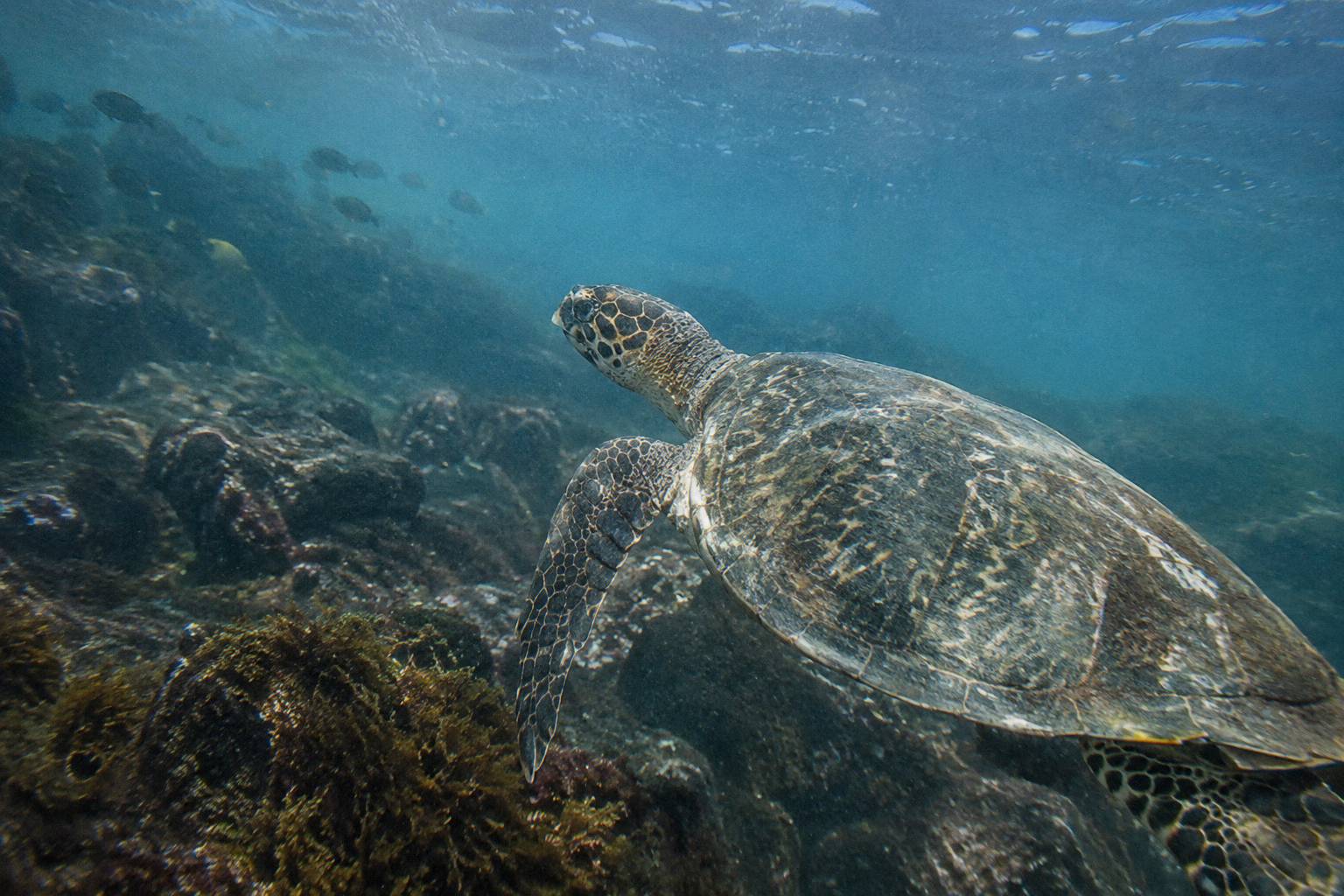
The turtle-focused trip that fits this decision is the Byron Bay Dive Centre Sea Turtle Snorkel, about 2.5 hours with roughly an hour in the water, the same operator behind Turtle School. No price and no rating are printed here because the sources reviewed do not state them cleanly; the live listing carries both. The broader question of whether you will reliably see turtles, sharks and rays snorkelling Julian Rocks has its own page, and the species-by-species detail lives in the turtles at Julian Rocks guide.
One rule worth attaching to any turtle month: in the marine park all species in sanctuary zones are protected, and touching or harassing marine life is prohibited, a point the operators repeat in their camera and conduct policies. The rules on touching turtles in Australia are covered separately on this site.
Humpback Whales: Why The Operators Disagree
Whale watching around Byron Bay runs on a seasonal window, but the operators differ: one runs whale trips between May and November, while Byron Bay Dive Centre lists whale watching June to October. Whales are not part of snorkel trips, and no source claims a whale encounter from a snorkel boat.
“A very nice trip. We saw a lot, including turtles and a small shark. Our two skippers were also super friendly and very attentive. In the water, a skipper accompanied us and went in search of turtles, etc. I highly recommend the trip. You head out on a fast speedboat, so there's also an adrenaline rush.”
This is the clearest example in the whole research file of why this guide prints both claims instead of merging them. Two operators, both running boats out of the same area, publish different whale seasons: May to November on one, June to October on the other. The honest read is that whale season here is a rough window with soft edges, and the difference between those two ranges is exactly the noise you would expect at the margins of a migration.
| Operator statement | Season stated | Trip type | Includes snorkellers? |
|---|---|---|---|
| One dive operator | Whale trips between May and November | Dedicated whale watching trips | No, separate product |
| Byron Bay Dive Centre | Whale watching listed June to October | Whale watching listing | No, separate product |
The critical point for this guide is the last column. No source anywhere claims whales on a snorkel trip. What snorkellers realistically get during whale season is what any boat gets: the possibility of seeing dolphins and whales from the deck when in season, which is one operator's exact wording about its trips. That is a bonus, not a booking reason, and a month chosen for whales should be a month booked on a whale trip, not a snorkel.
For snorkellers weighing the water conditions against the calendar, the relationship between whale season and your snorkel trip is laid out in its own guide. The dedicated whale product on this site's roster is Out Of The Blue Adventures' whale watching trip with a marine biologist on board, about 2.5 hours, with price on the live listing.
Wind, Swell And The September To Christmas Stretch
This is the section that should actually drive your calendar more than any species list. Julian Rocks is an open-ocean site with no bay shelter, and the operator's own dive-site page describes the full range of what that means: strong swells, currents, surges, cold water and winds. The named pattern, strong northerlies between September and Christmas, sits squarely across spring and early summer, which happens to be exactly the period a northern-hemisphere reader might book for warm-weather assumptions. The pattern is real but it is a tendency, not a schedule, and calm days happen inside it.
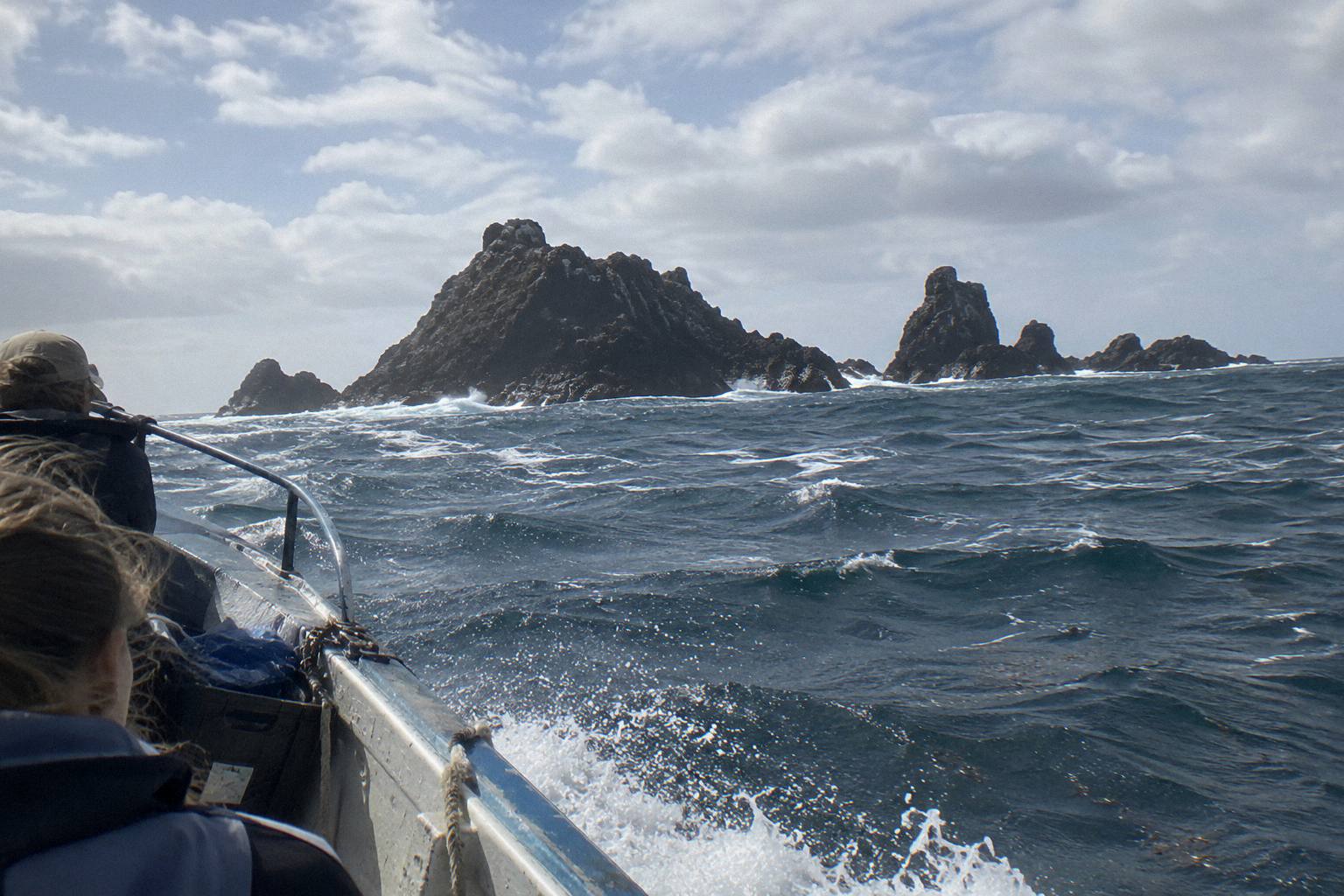
The practical response is threefold. First, book with cancellation terms you understand: the sources describe weather cancellations with full refund or reschedule as the standard handling, though each operator's window differs, and the weather-cancellation process is worth reading before you pay. Second, leave yourself a spare day in Byron Bay so a cancelled trip can move rather than vanish from your holiday. Third, watch the forecasts yourself; the where to check Byron Bay sea conditions page lists the tools locals actually use.
For the protection rules that shape the site itself, the NSW National Parks page for Nguthungulli Julian Rocks Nature Reserve is the official reference, and the marine park user guide holds the mooring and speed rules your boat will follow.
Choosing Your Month By Traveller Type
Families with young children should read the minimum ages first, since 5, 7 and 10 years appear on different operator pages. Wildlife-focused snorkellers should target December to April for leopard sharks. Budget and flexibility-driven travellers can take any month, since from AUD 94 pricing appears year round on the main listings.
“We saw leopard sharks, turtles and many other fish – truly impressive!”
The month decision is really a traveller-type decision, and the sources support three clear profiles. The first is the family profile, and it is dominated not by seasons but by age limits: operator pages state minimum ages of 5, 7 and 10 years depending on the operator, with the Byron Bay Dive Centre turtle trips stating 10. A family with a six-year-old has a shorter list of eligible trips than a family with an eleven-year-old, and that constraint beats any wildlife calendar. The kids on the Julian Rocks trip guide works through the full picture.
The second is the wildlife profile, split into two. Leopard-shark motivation points to December to April. Grey-nurse motivation points to a dive course, not a snorkel month, because the season is real but the depth is wrong for snorkelling. Turtle motivation points anywhere, which is why the turtle-focused trips are the most calendar-independent products on the roster. The infographic below compresses the seasonal picture into one view.
The third is the flexibility profile, and it is the largest group: people whose dates are set by school holidays, a wedding, or a road trip up the coast. For this group the honest advice is that every month works for the core experience, the shallow sheltered reef with turtles, rays and fish on the all-year list, and the month matters mainly through the weather risk described above. Build a spare day, check the cancellation window, and book the trip whose meeting point suits your base: Brunswick Heads for Blue Seafaris and Out Of The Blue, Byron town with transfer for Turtle School. The Byron Bay Dive Centre's own FAQ page, which covers swimming ability, gear and cancellation terms, is the primary reference for what your chosen month requires of you in the water.
Which Trips Fit Which Month
Every Julian Rocks snorkel trip on this site's roster runs year round, so the month choice and the trip choice are independent decisions. The two Brunswick Heads trips publish from AUD 94 pricing and their ratings on booking pages; the Byron town trips state duration and inclusions, with price and rating on the listing.
| Trip | Operator | Duration | Price stated | Rating stated | Meeting point |
|---|---|---|---|---|---|
| Blue Seafaris Julian Rocks Snorkelling Tour | Blue Seafaris | About 2.5 hours | From AUD 94 | 4.5 across 448 reviews | 43 Harbour Way, Brunswick Heads Boat Harbour |
| Out Of The Blue Julian Rocks Snorkelling Tour | Out Of The Blue Adventures | About 2.5 hours | From AUD 94 | 4.4 across 167 reviews on its main booking page; a second booking page shows 4.7 across 58 reviews | Brunswick Heads Boat Harbour |
| Turtle School Julian Rocks Snorkelling Tour | Turtle School (Byron Bay Dive Centre) | About 3 hours | On the booking page | On the booking page | Byron Plaza, Jonson Street, with transport to The Pass |
| Byron Bay Dive Centre Sea Turtle Snorkel | Byron Bay Dive Centre | About 2.5 hours | Not stated in sources reviewed | Not stated in sources reviewed | Check the booking page |
Two notes on reading that table honestly. The Out Of The Blue row carries two ratings because the trip genuinely has two booking pages with different pools, 4.4 across 167 reviews on one and 4.7 across 58 reviews on the other, and printing both is fairer than picking one. And the Turtle School row prints no numbers because the sources reviewed disagree on both price and rating, so the guide says once: rating and price are on the booking page. No trip in the table is ranked against another, and small review pools should be read as small review pools, not as verdicts.
The adjacent roster matters to the month question too. The dolphin kayak trips and the whale watching trip are about 2.5 hours each, with price and rating on their live listings, and they give a month-flexible backup if the snorkel cancels for weather. The comparison between the dolphin kayak and the snorkel trip is a separate guide on this site.
What To Ask The Booking Desk Before You Commit To A Month
Ask five things before paying: recent sightings of the species you care about, the minimum age and swimming requirement for your group, the exact cancellation and weather policy, what gear is included in the water temperature you will face, and which site around the rocks the trip aims for that day. No operator objects to these questions.
“This was a great active tour, saw some amazing marine wildlife. I would say if you are inexperienced or nervous then be aware it is out in the ocean and can have strong currents but if your comfortable with that then its amazing.”
The research behind this guide found that operators answer these questions readily in their FAQs, which is the strongest signal that asking them is normal. The checklist below turns the source material into questions, with the reason each one matters.
| Question to ask | Why it matters | Source basis |
|---|---|---|
| What have the last few weeks of turtle or leopard shark sightings been like? | Seasons are listings, not guarantees; recent sightings are the only live signal | Operators list seasons but state no guarantee on turtles |
| What is the minimum age and swimming standard for this trip? | Ages of 5, 7 and 10 appear on different operator pages, and some require open-ocean experience | Operator pages reviewed |
| What is the cancellation window and what happens on a weather call? | Windows differ by operator, typically 48 hours, with refund or reschedule on weather | Byron Bay Dive Centre FAQ |
| Is a long wetsuit included, and how thick? | Winter water can drop to 17 °C per one operator, and 5 mm suits are advised | Operator dive-site page and FAQ |
| Which site around the rocks will the trip use? | Leopard sharks favour the Needles; snorkel areas are the shallow sheltered spots | Operator site descriptions |
| Is seasickness support available on the boat? | The crossing is short but open-ocean; one operator carries ginger tablets | Byron Bay Dive Centre FAQ |
A final word on the honest limit of this whole question. The sources say almost nothing that separates one month from another beyond the seasons already printed here, and this guide will not manufacture confidence the operators do not claim. What remains after the seasons is decision logic: match the species you care about to its stated window, match your group to the age and swimming rules, and protect your date with cancellation terms and a spare day. Everything beyond that, the booking desk can tell you, and the rest is not stated anywhere.
If that decision is made, the trips are below, and the best next step is a live availability check for your exact dates.
Common Questions About The Best Month To Snorkel Julian Rocks
What Is The Best Month To Snorkel Julian Rocks?
There is no single best month. Turtles are listed all year, leopard sharks and manta rays are summer sightings with leopard sharks noted December to April, and grey nurse sharks run June to November at dive depths rather than snorkel depths. Choose by species interest and weather flexibility, not by a calendar claim no operator makes.
Will You Reliably See Turtles, Sharks And Rays Snorkelling Julian Rocks?
Not reliably, and no operator claims so. Turtles, rays and fish are on the all-year list, but Byron Bay Dive Centre states it cannot guarantee turtles will be there. Leopard sharks are a December-to-April shallow-water season; grey nurse sharks are a dive-depth season.
Is Byron Bay Water Too Cold For Snorkelling In Winter?
One operator states winter water can drop to 17 °C, averaging around 20 °C, and advises 5 mm long wetsuits, which its trips include. Winter snorkelling is a normal, bookable experience with the right suit; the cold is manageable rather than exclusionary.
Do I Need A Wetsuit At Julian Rocks?
Yes, in practice. Operators include wetsuits in the trip price, and one advises 5 mm long suits for the duration, summer included, because the site is open ocean where cold water and currents occur in any month.
When Is Whale Season Around Byron Bay?
Operators differ: one runs whale trips between May and November, and Byron Bay Dive Centre lists whale watching June to October. Whales are watched from dedicated boats, not on snorkel trips, though a snorkel boat may pass dolphins and whales in season.
How Far In Advance Should I Book A Julian Rocks Snorkel Trip?
The sources reviewed do not state booking lead times, so this guide prints no figure. The practical approach is to book ahead for school-holiday and summer-weekend dates, confirm the cancellation window, and keep a spare day in Byron Bay in case of a weather call.