Julian Rocks Marine Life: What Snorkellers See And When
Julian Rocks packs sharks, rays, turtles and hundreds of fish species into a small patch of protected reef two and a half kilometres off Byron Bay. Here is what actually lives there, what each operator says you might encounter, and how the seasons change the cast.
Short answer
Julian Rocks sits inside Cape Byron Marine Park, about 2.5 km offshore. DPIRD lists sharks, rays, turtles, eels, starfish and corals at the rocks. Snorkel trips stay in shallow sheltered areas 3 to 12 m deep and are described as encountering turtles, rays, colourful fish and crustaceans; deeper residents like grey nurse sharks live at dive depths of 8 to 24 m.
What Animals Live At Julian Rocks?
Nguthungulli Julian Rocks is a protected reef about 2.5 km off Byron Bay that the NSW Department of Primary Industries and Regeneration describes as home to sharks, rays, turtles, eels, starfish and corals. Operators go further, crediting the site with over 1000 marine species and more than 500 different species of fish in their own wording. The resident cast spans tiny nudibranchs and octopuses up to manta rays and grey nurse sharks, with turtles present all year.
That species list is not marketing shorthand. The rocks sit where the warm East Australian Current meets cooler water pushing up from the south, so tropical visitors and temperate locals share the same patch of reef. A green turtle hatched on a Queensland beach, a leopard shark that summered in the same sandy arena, and a wobbegong wedged under a ledge can all occupy a few hundred metres of rock on the same morning. The site's dive pages read like a full field guide compressed into one location.
The state government's own marine park page keeps its language conservative but the breadth is the point: DPIRD notes the rocks host "many fascinating animals, including sharks, rays, turtles, eels, starfish and corals". The counts above a thousand species come from operator pages, not an official census, and should be read as operator wording rather than a scientific figure. Nobody has counted every nudibranch. What is undisputed is that the reef holds far more life than any single snorkel session can reveal, which is why local divers return for years.
The reef's variety is the main reason a snorkel here feels different from a swim off Main Beach. The table below groups the cast by where each animal actually lives, using the operator and agency wording as the source for every row.
| Group | Named species at the rocks | Source |
|---|---|---|
| Turtles | Green, hawksbill, loggerhead | One dive operator's site; Byron Bay Dive Centre FAQ |
| Sharks | Leopard sharks, grey nurse sharks, wobbegongs | One dive operator's dive-site page |
| Rays | Manta rays, bull rays, eagle rays, shovelnose rays | One dive operator's dive-site page |
| Reef fish and crustaceans | "More than 500 different species of fish" (operator wording); crabs and other crustaceans | Operator pages |
| Small reef residents | Nudibranchs, octopuses, eels | One dive operator's site |
| Fixed life | Starfish and corals | DPIRD marine park page |
Why Do So Many Species Gather At One Small Rock?
Julian Rocks sits where the East Australian Current meets cooler southern water, mixing warm and temperate seas around a single outcrop. DPIRD describes the marine park as shaped by that collision of currents. Operators attribute the resulting "over 1000 marine species" to the convergence, and the meeting of water masses is why tropical and cold-water animals coexist here within a few hundred metres of rock.
The East Australian Current pushes warm tropical water south along the coast, and around Byron Bay it runs into cooler water moving north. Larvae, juveniles and full-grown tropical visitors ride that current down and find the rocks, the first substantial reef structure in their path, while temperate species already hold the ledges and trenches below. The rock itself is small, a pair of outcrops roughly 2.5 km from the mainland, yet it functions as a crossroads. In Bundjalung lore, as reported on the nature reserve's background, a broken canoe became the two halves of the rocks, and the name adopted in July 2023, Nguthungulli, means Father of the World.
That oceanographic position explains the odd pairings the reef is known for. A manta ray, an animal more associated with tropical Queensland, can pass over the same reef where grey nurse sharks, a cool-water species, gather in winter trenches. It also explains why the seasons matter so much here: the cast changes when the current changes, and the same site can feel like two different reefs six months apart. If you are weighing the trip against a guide to the best month to snorkel Julian Rocks, the species calendar below is the reason month choice matters.
Protection is the second half of the story. Cape Byron Marine Park was established in November 2002 with zones and rules commencing May 2006, covering about 37 km of coastline and about 220 square kilometres of state waters out to 3 nautical miles. The sanctuary zones ban fishing, collecting and reef anchoring, which keeps the resident fish populations and the reef structure intact. The Bundjalung People of Byron Bay (Arakwal) hold a strong association with the land and sea in the park's northern parts, and the Jali people in the southern section, a connection DPIRD names on the park page.
Three snorkel trips cover this reef between them, each with a different starting point and shape of day.
Which Animals Can Snorkellers Actually See?
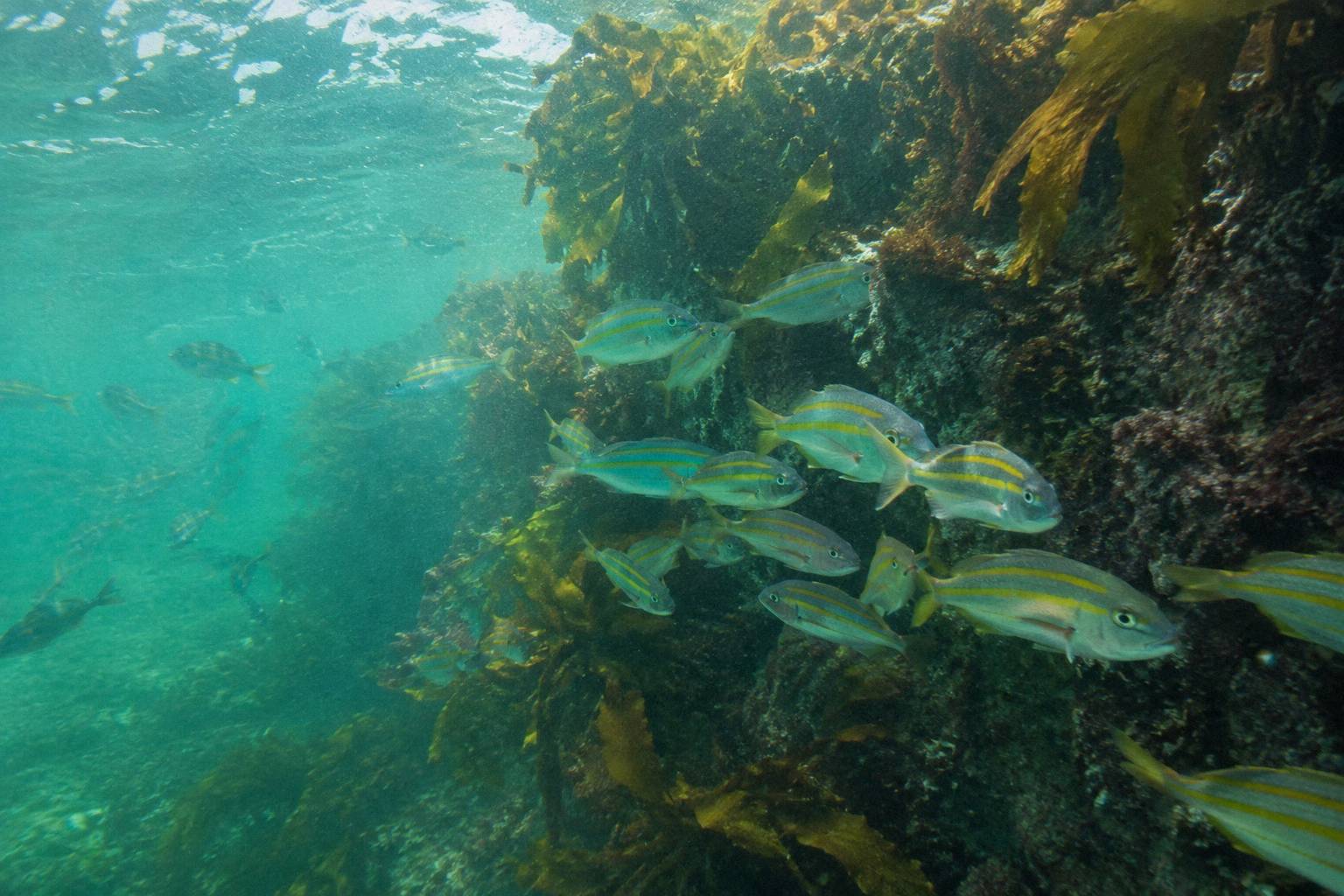
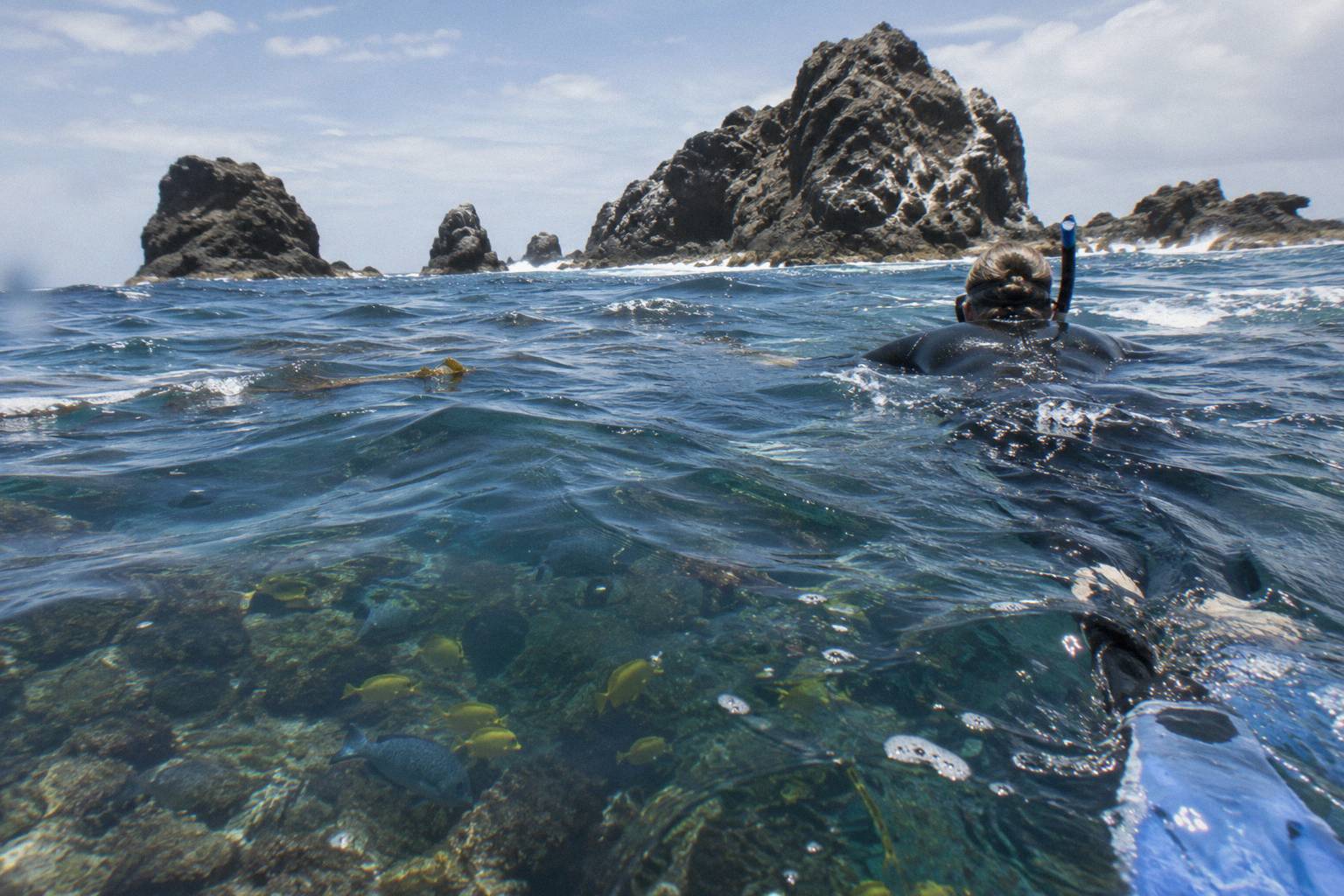
Snorkel trips stay in shallow, sheltered areas of the rocks in 3 to 12 m of water, and operators describe those areas as holding turtles, rays, a variety of colourful fish and crustaceans. The deeper residents, including grey nurse sharks in trenches 8 to 24 m down, sit below snorkel depth and are rarely encountered from the surface. Turtles, rays and reef fish are the shallow water's core cast.
This depth split is the single most useful thing to understand before booking, because it separates what the reef holds from what a snorkel session holds. The dive depths at the rocks run 8 to 24 m, and that is where one dive operator places the sand trenches that fill with grey nurse sharks between June and November. A snorkeller floating at the surface over 3 to 12 m of sheltered water shares the reef with a different community: turtles grazing, rays passing over the sand, schools of smaller fish around the rock edges, and the octopuses and nudibranchs that live in the shallower cracks.
| Where | Depth (operator wording) | Animals described there | Source |
|---|---|---|---|
| Snorkel areas | 3 to 12 m, shallow and sheltered | Turtles, rays, colourful fish, crustaceans | One operator's snorkelling page |
| Dive depths | 8 to 24 m | Grey nurse sharks in sand trenches, June to November | One dive operator's dive-site page |
| The Needles (dive site) | Dive depth, sandy arena | Leopard sharks December to April; wobbegongs and rays all year | One dive operator's dive-site page |
| Line of Smiles (dive site) | Dive depth | Wobbegong, bull rays, eagle rays, shovelnose rays all year | One dive operator's dive-site page |
Wobbegongs are the interesting edge case. They are listed as year-round residents at the Needles and the Line of Smiles, both dive sites, so an encounter from the surface is a bonus rather than the norm. Leopard sharks, which gather in the Needles' sandy arena through the warmer months, swim at depths that put them within the outer fringe of snorkel visibility on calm days, but the operator's seasonal note is written for divers. The honest framing: the shallow water delivers turtles, rays and fish reliably enough that operators build trips around them, while sharks and mantas belong to the luck column for a snorkeller.
The featured trip on this site is a natural fit for that shallow cast. The Blue Seafaris Julian Rocks Snorkelling Tour runs about 2.5 hours from Brunswick Heads Boat Harbour, is rated 4.5 across 448 reviews on its booking page, and costs from AUD 94 per person. Its meeting point at 43 Harbour Way keeps the boat ride short, and the whole trip is built around the sheltered shallows where the reef's most visible animals live. If you are still weighing surface swimming against tanks, the comparison of snorkelling or diving at Julian Rocks works through the same depth question in more detail.
When Does Each Species Turn Up? The Season Calendar
Operator pages give each headline species a stated season: leopard sharks from December to April, grey nurse sharks from June to November at dive depths, mantas in the summer months, and turtles all year. Whales are a separate case, with one operator running whale trips May to November and another listing June to October. Every date below is operator wording, not a guarantee of an encounter.
The reef runs on two overlapping calendars. The warm-water season brings manta rays and leopard sharks when the current is at its warmest, roughly the Australian summer, while the cool season swaps in grey nurse sharks as the water drops. One dive operator's page even puts a number on winter, saying water "can drop to 17 °C (avg. ~20 °C)" in the cooler months, its own figure for the dive site. Turtles ignore the calendar entirely: green, hawksbill and loggerhead turtles are listed all year, and Byron Bay Dive Centre says they "can be spotted year-round throughout the whole day", while adding that it cannot guarantee turtles will be there on any given trip.
| Species | Stated season | Depth where described | Source |
|---|---|---|---|
| Green, hawksbill, loggerhead turtles | All year | Snorkel and dive | One dive operator; Byron Bay Dive Centre FAQ |
| Manta rays | Summer months | Not stated | One dive operator's site |
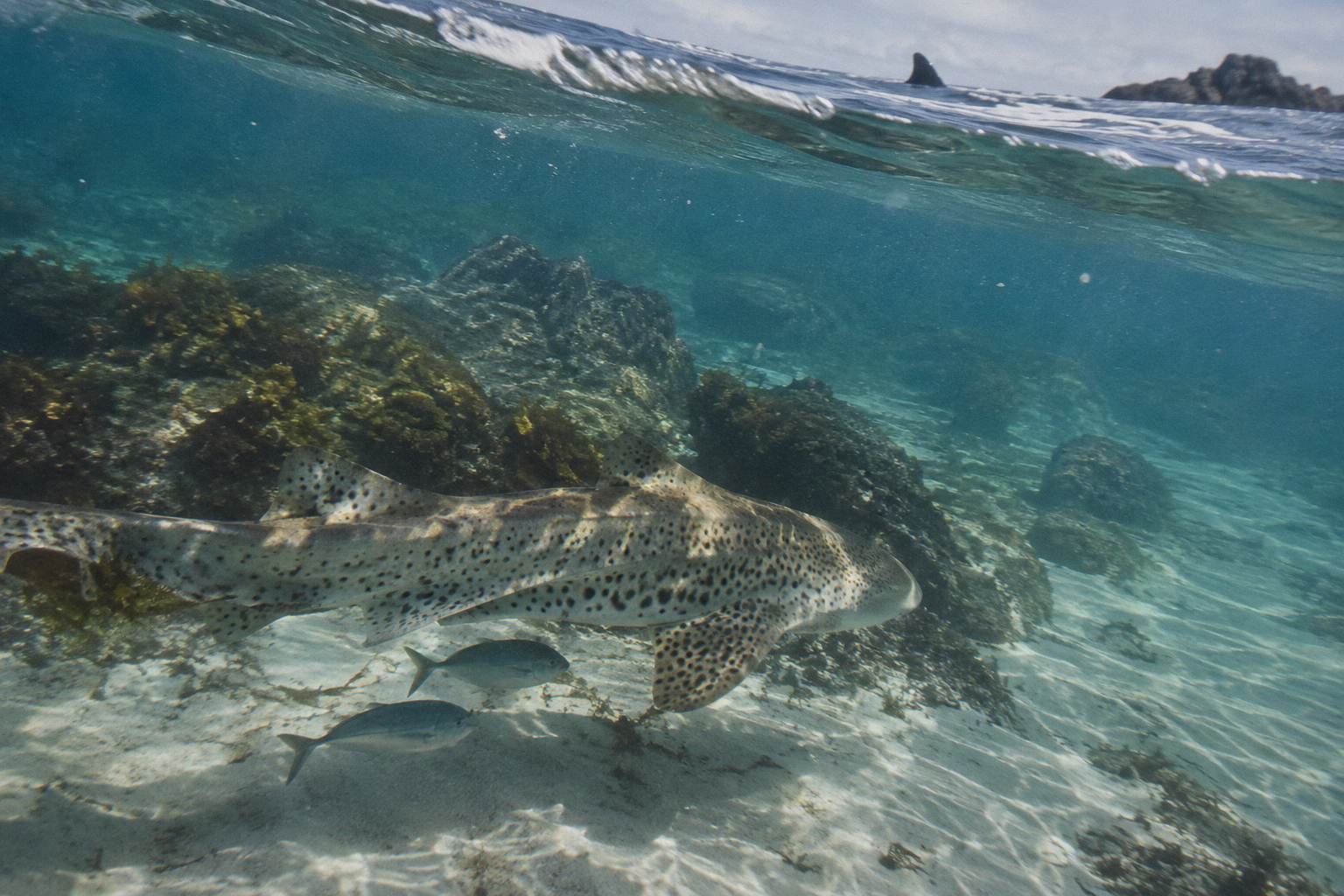
| Leopard sharks | December to April | Needles sandy arena, dive site | One dive operator's dive-site page |
| Grey nurse sharks | June to November | Sand trenches, 8 to 24 m, dive depths | One dive operator's dive-site page |
| Wobbegong, bull, eagle and shovelnose rays | All year | Needles and Line of Smiles, dive sites | One dive operator's dive-site page |
| Humpback whales (separate trips) | May to November per one operator; June to October per another | Surface, from whale-watch boats | Two operators' pages |
The whale row deserves its own note. Operators in Byron Bay genuinely differ on the whale season: one dive operator runs whale trips between May and November, while Byron Bay Dive Centre lists whale watching from June to October. Both are printed here as stated, because merging them into one season would misreport at least one operator. And no snorkel trip here is a whale trip; whales are seen from dedicated boats, or occasionally from the surface as distant passes, never as a promised part of a reef snorkel.
Weather shapes the calendar as much as biology. One dive operator warns that strong northerlies can blow between September and Christmas, and that this open-ocean site can throw up "strong swells, currents, surges, cold water and winds". Trips get rescheduled when that happens, which is worth knowing when you plan a spring booking. The site's month by month look at Byron Bay water temperature covers the comfort side of that equation.
The turtle calendar being open all year is what makes the turtle-focused trips viable in every season. The Byron Bay Dive Centre Sea Turtle Snorkel runs about 2.5 hours with the same operator's long turtle track record behind it, and its price and rating are on the booking page rather than printed here.
“Amazing snorkelling experience! Guides were great- super friendly and knowledgeable!”
What Are Turtles Like At The Rocks?
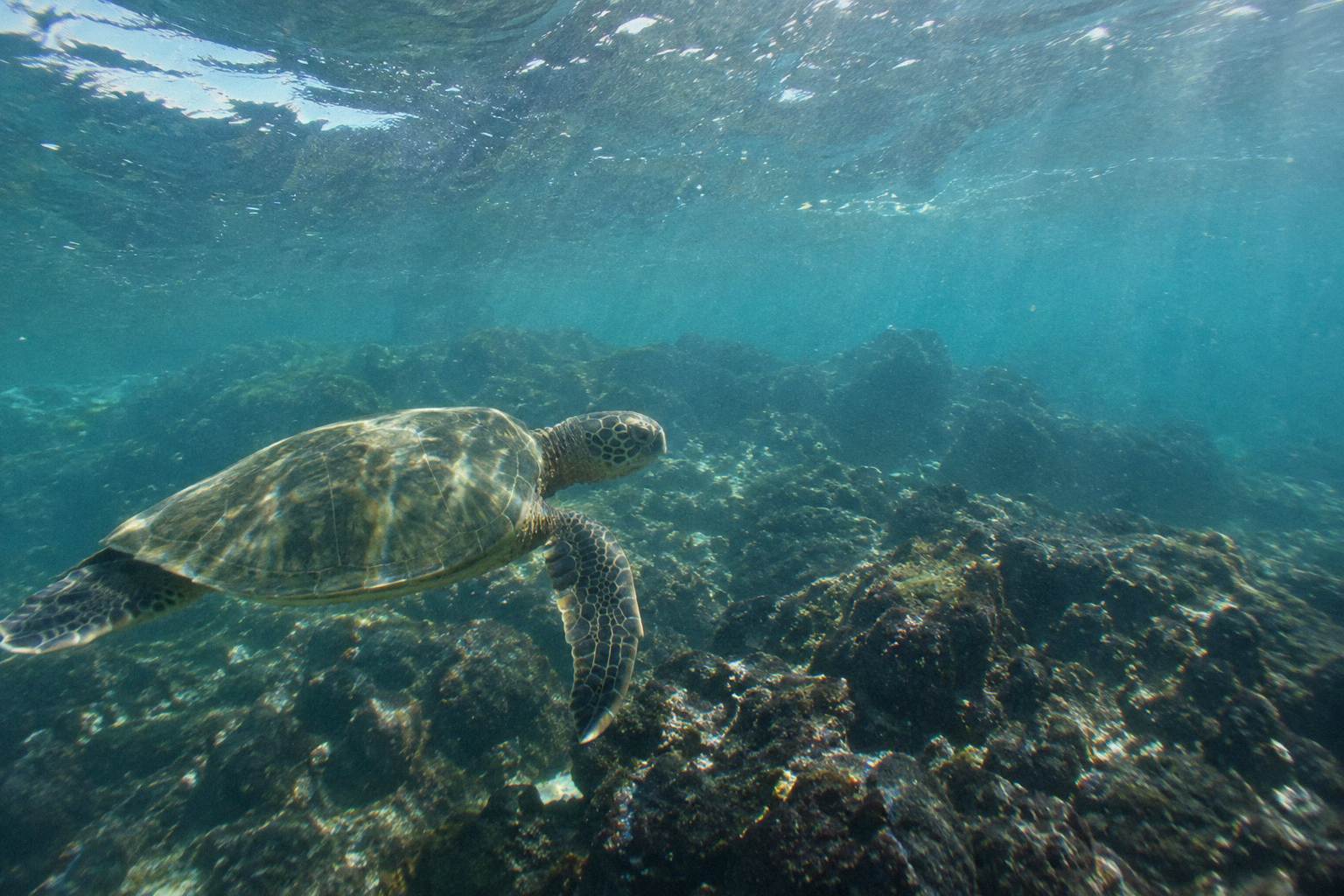
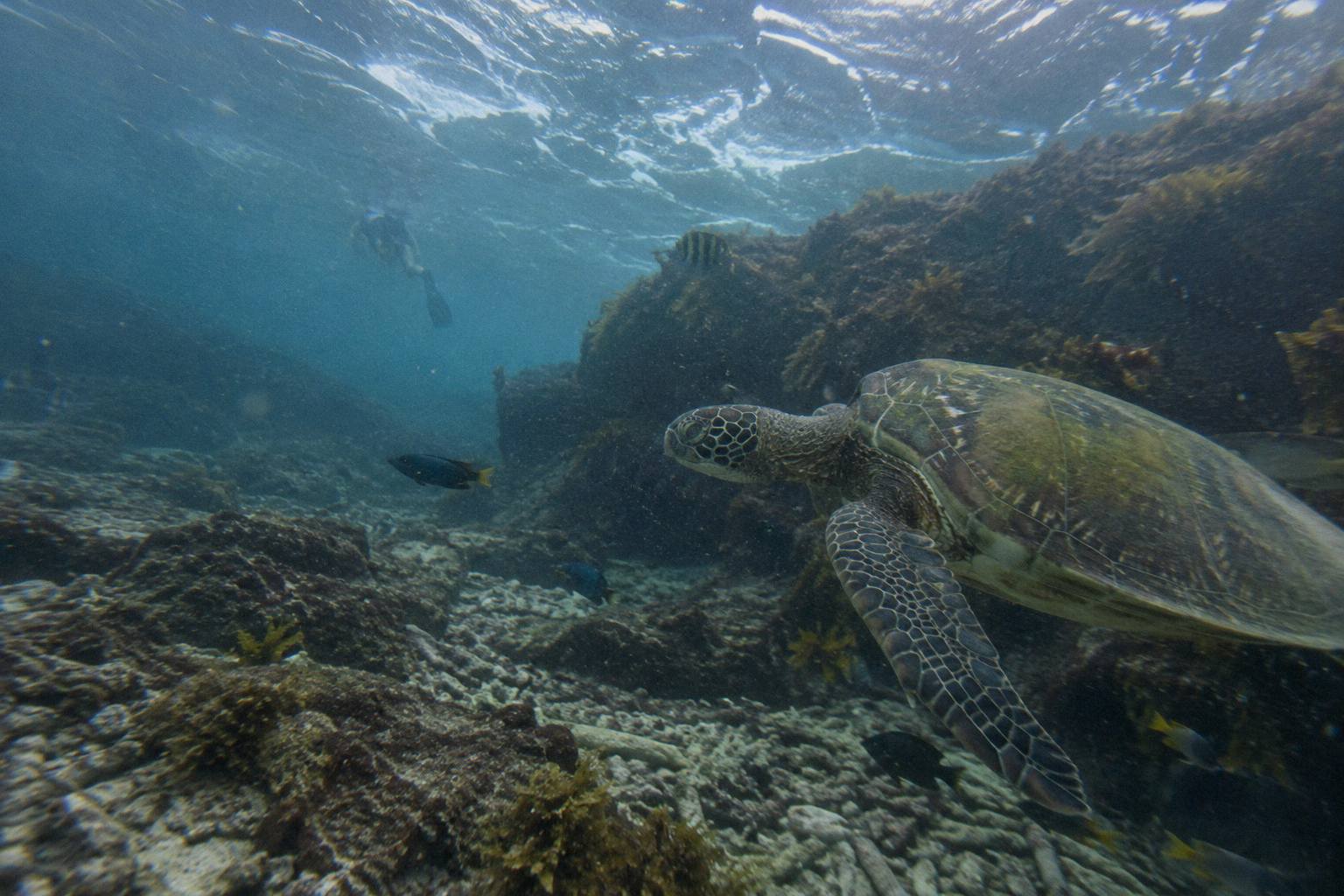
Three turtle species, green, hawksbill and loggerhead, are listed at Julian Rocks all year, and Byron Bay Dive Centre says they can be spotted year-round throughout the day while stating plainly that it cannot guarantee turtles will be there. Turtles are the reef's most persistent residents and the animal most trips are organised around, but every operator frames them as likely, never promised.
Green turtles are the ones most snorkellers picture, and they behave accordingly: grazing on the reef, rising to breathe, and continuing about their business while people float above. Hawksbill and loggerhead turtles share the same habitat, and distinguishing them is part of the fun, hawksbills with their pointed beaks and patterned shells, loggerheads bigger and blunter-headed. Because the species are protected and the site is a no-take sanctuary, the animals are entirely unused to being fed or handled, which means they act naturally rather than associating boats with food. Fish feeding of any kind, including shark feeding, is prohibited in the marine park.
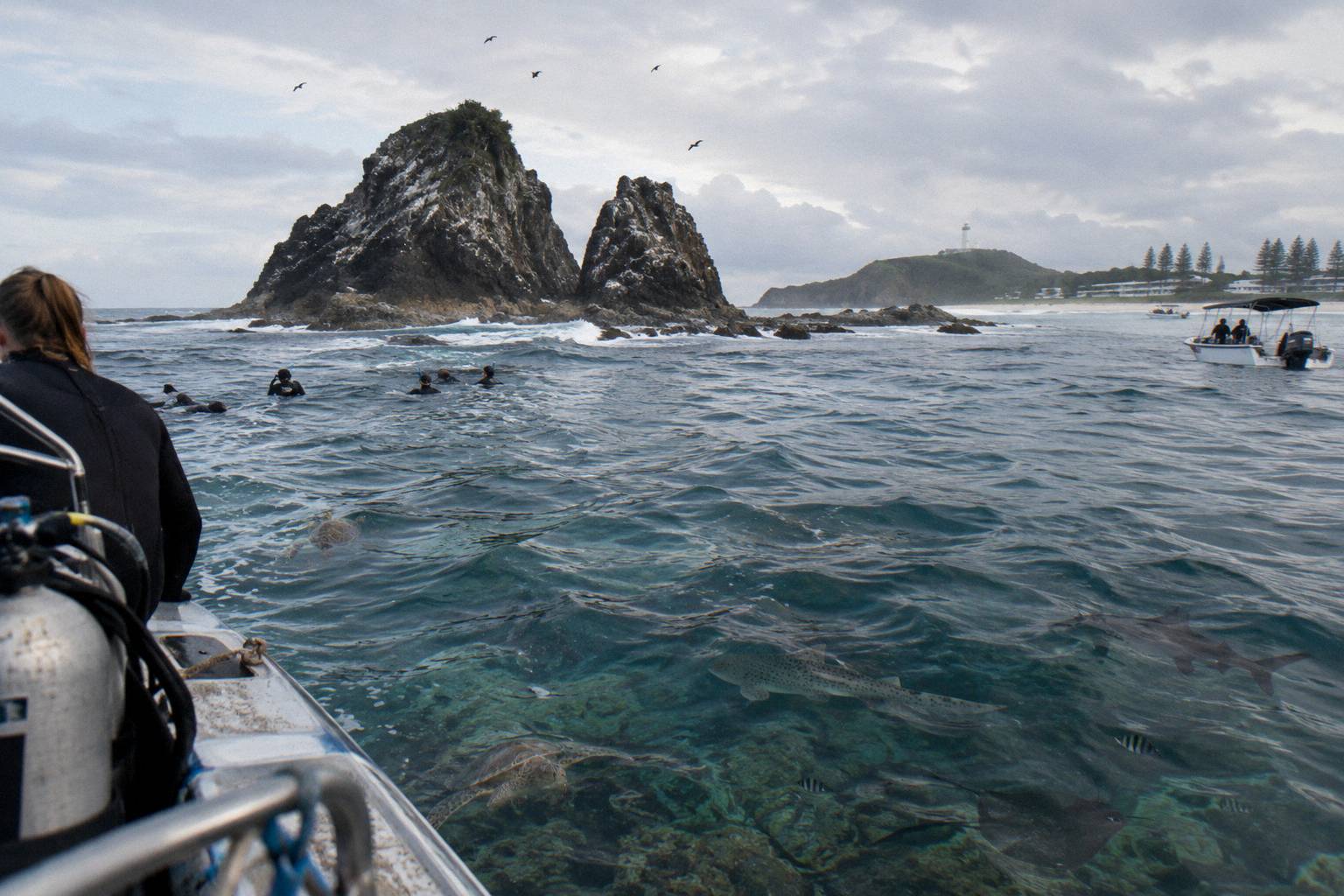
The operator honesty on guarantees is worth pausing on, because it tells you how the good operators behave. Byron Bay Dive Centre's FAQ says turtles can be spotted year-round throughout the whole day, then immediately qualifies it: the operator says it cannot guarantee sea turtles will be there. Wild animals on an open-ocean reef do not keep schedules. In practice the reef's turtle density makes encounters the norm rather than the exception, but a trip sold on a guarantee would be a trip lying to you, and none of the operators here do that. For rules on distance and behaviour in the water, read up on whether you can touch turtles when snorkelling in Australia before you go.
Turtle-focused trips earn their name through time and guiding rather than through promises. The Turtle School Julian Rocks Snorkelling Tour, run by Byron Bay Dive Centre, spends about 2.5 hours all up with roughly an hour in the water, meets at Byron Plaza on Jonson Street, and includes transport from the meeting point to the boat at The Pass, plus gear and wetsuit. Its rating and price are on the booking page. The full turtle guide for Julian Rocks goes deeper on the three species and their habits.
“We saw so many sharks and turtles and different types of rays, the instructors and the skipper were great the whole time knowing the best spots and helping out along the way. I would recommend the early session as it was nice and quiet out by the rocks. One of the best things you can do on the east Coast.”
Which Sharks And Rays Live Around The Rocks?
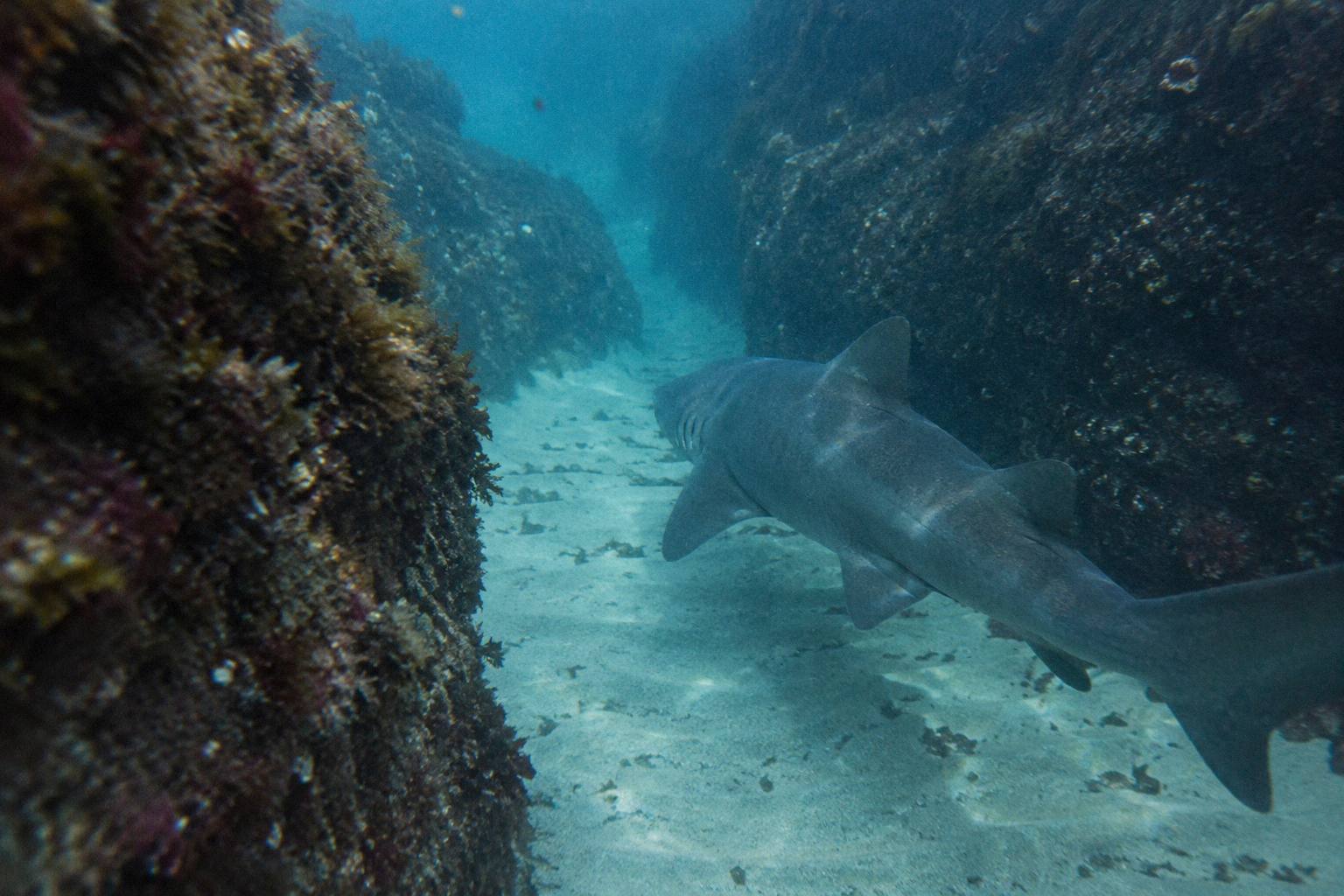
The shark and ray list at Julian Rocks runs to leopard sharks, grey nurse sharks, wobbegongs, manta rays, bull rays, eagle rays and shovelnose rays, per one dive operator's site. The catch for snorkellers is depth: leopard sharks gather in a dive-site arena, grey nurse sharks occupy trenches 8 to 24 m down, and wobbegongs and most rays hold at dive sites. Mantas pass overhead in summer.
Grey nurse sharks are the reef's most famous residents and its most misunderstood. They are a threatened species named in the marine park's own user guide, and the sand trenches where they gather between June and November sit at dive depths, well below a snorkeller's view. One dive operator describes those winter trenches as capable of being full of grey nurse sharks, an experience that belongs to divers with tanks. Snorkel trips rarely encounter them, and no honest operator suggests otherwise. The question of whether it is safe to swim with grey nurse sharks at Julian Rocks has a longer answer, but the short version is that they are not aggressive and most snorkellers never see one.
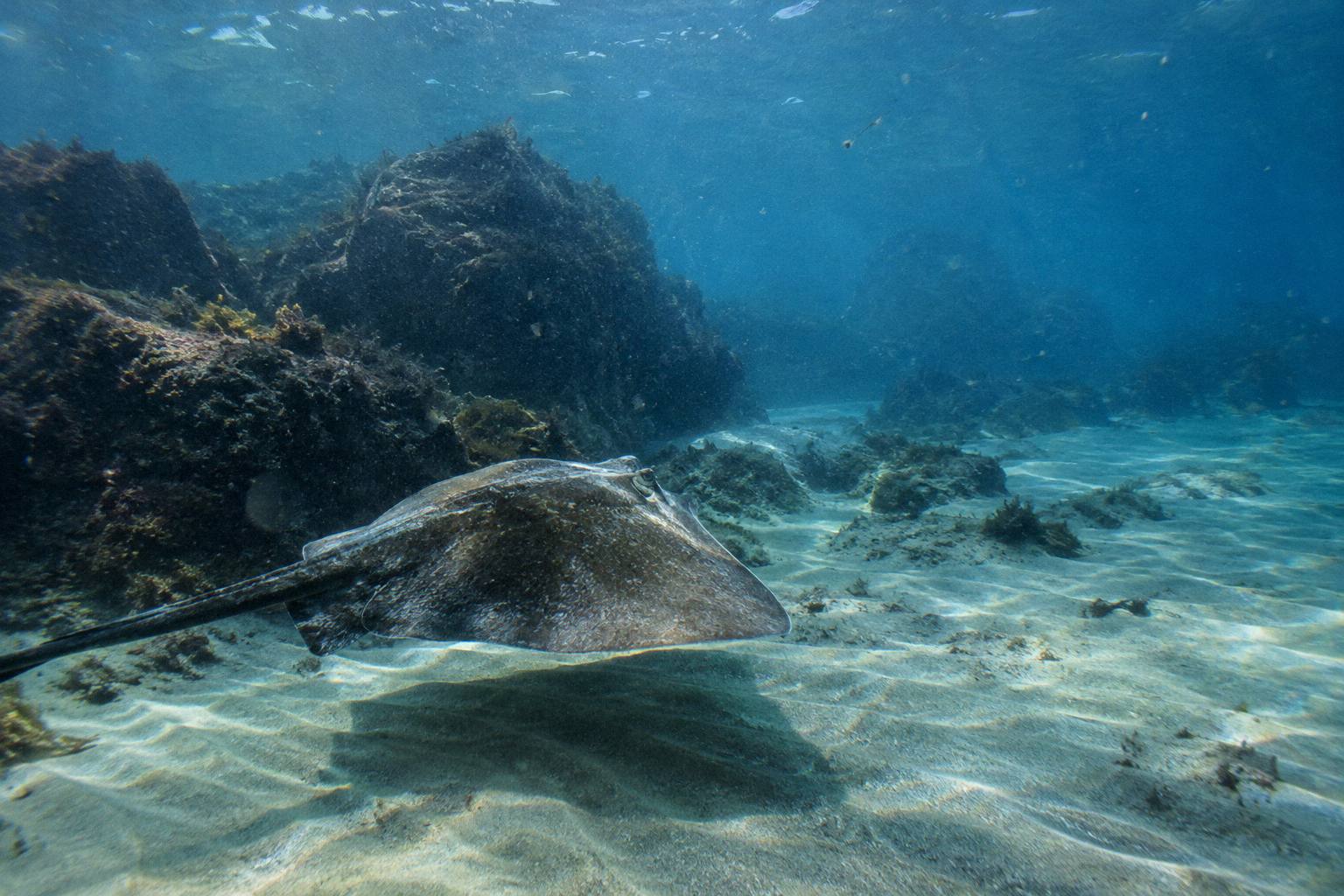
Leopard sharks are the more realistic shark hope from the surface. Their season, December to April per one dive operator, coincides with Byron's warmest water, and while the Needles sandy arena is described as a dive site, leopard sharks cruise at depths that occasionally bring them into a snorkeller's view on calm, clear days. Mantas are the summer wildcard: one operator lists them for the summer months without attaching a depth or a count, which is exactly as non-committal as a wild animal sighting should be written. Rays are the steady performers, with bull, eagle and shovelnose rays listed all year at the Needles and Line of Smiles, and rays appearing regularly in the shallow snorkel areas too.
If sharks are your main interest, timing and depth expectations matter more than operator choice. The site's guide to leopard sharks at Julian Rocks and the grey nurse shark season guide break down each species' months in detail. A snorkeller who books in January with realistic expectations, rays likely, a leopard shark a genuine possibility, a grey nurse a rarity, will judge the trip fairly. One who books expecting a shark convention will not, no matter what the reef delivers.
Out Of The Blue's Julian Rocks Snorkelling Tour is one of the two Brunswick Heads options for chasing this cast, about 2.5 hours, from AUD 94 per person, rated 4.4 across 167 reviews on its main booking page, with a second booking page showing 4.7 across 58 reviews.
How Do The Marine Park Rules Protect The Reef?
Julian Rocks sits in a sanctuary zone of Cape Byron Marine Park where all fishing, collecting and reef anchoring are banned, snorkelling is explicitly permitted, and vessels must stay under 4 knots within 200 m of the rocks. Anchoring is prohibited within 700 m, and seven marine park moorings serve the site with a 2 hour maximum stay. The rules are why the reef still looks like this.
“This was an incredible experience! We got lucky with the conditions and saw a huge variety species. Loved this even more than when I snorkelled the Great Barrier Reef. Not to be missed!”
The zoning story starts in November 2002 when the park was established, with zones and rules commencing in May 2006. Sanctuary zones are the highest protection tier: no-take, no collecting, no anchoring on reefs, covering 6,118 ha or 27.5% of the park. Snorkelling, diving, surfing and boating are all permitted inside them because none of those activities harm animals, plants or habitat when done properly. The park stretches about 37 km of coast from the Brunswick River's north training wall to Lennox Head and about 220 square kilometres of state waters, and the rocks sit near its northern end, two and a half kilometres out. NSW National Parks now lists the site under its dual name on the Nguthungulli Julian Rocks Nature Reserve page.
| Rule | Detail | Where it applies |
|---|---|---|
| No anchoring | Not permitted within 700 m of the rocks, or on any reef in a sanctuary zone | Around Julian Rocks and all sanctuary reefs |
| Speed limit | 4 knots within 200 m of the rocks | All vessels |
| Moorings | Seven moorings, vessels up to 15 tonnes / 10 m, 2 hour maximum, no fishing from a moored vessel, no rafting | At the rocks |
| No feeding | Fish feeding including shark feeding prohibited | Whole marine park |
| Sanctuary zone | No-take: all fishing and collecting banned; snorkelling and diving permitted | 27.5% of the park, 6,118 ha |
For a snorkeller the rules translate into a few practical points. The mooring time limit is one reason trips run roughly 2.5 to 3 hours total with about an hour in the water: the boat can only hold its mooring for 2 hours, and the transit is short. The no-touch, no-collect rule is absolute, and operators extend it to behaviour, with Byron Bay Dive Centre's FAQ asking guests not to touch, collect or harass marine life and allowing only waterproof cameras without flash. The full set of rules for snorkellers is laid out in the site's guide to Cape Byron Marine Park snorkel rules, and the official detail sits in the marine park user guide published by DPIRD.
Which Trip Suits The Animals You Want To See?
The turtle-focused Byron Bay Dive Centre trips, about 2.5 hours each, suit visitors whose priority is turtles, while the Brunswick Heads operators, Blue Seafaris and Out Of The Blue, both about 2.5 hours and from AUD 94, run compact trips to the same shallow reef. Kayak and whale-watch trips cover dolphins and whales instead, about 2.5 hours each. No trip promises any species, and depth rules what a snorkeller can meet.
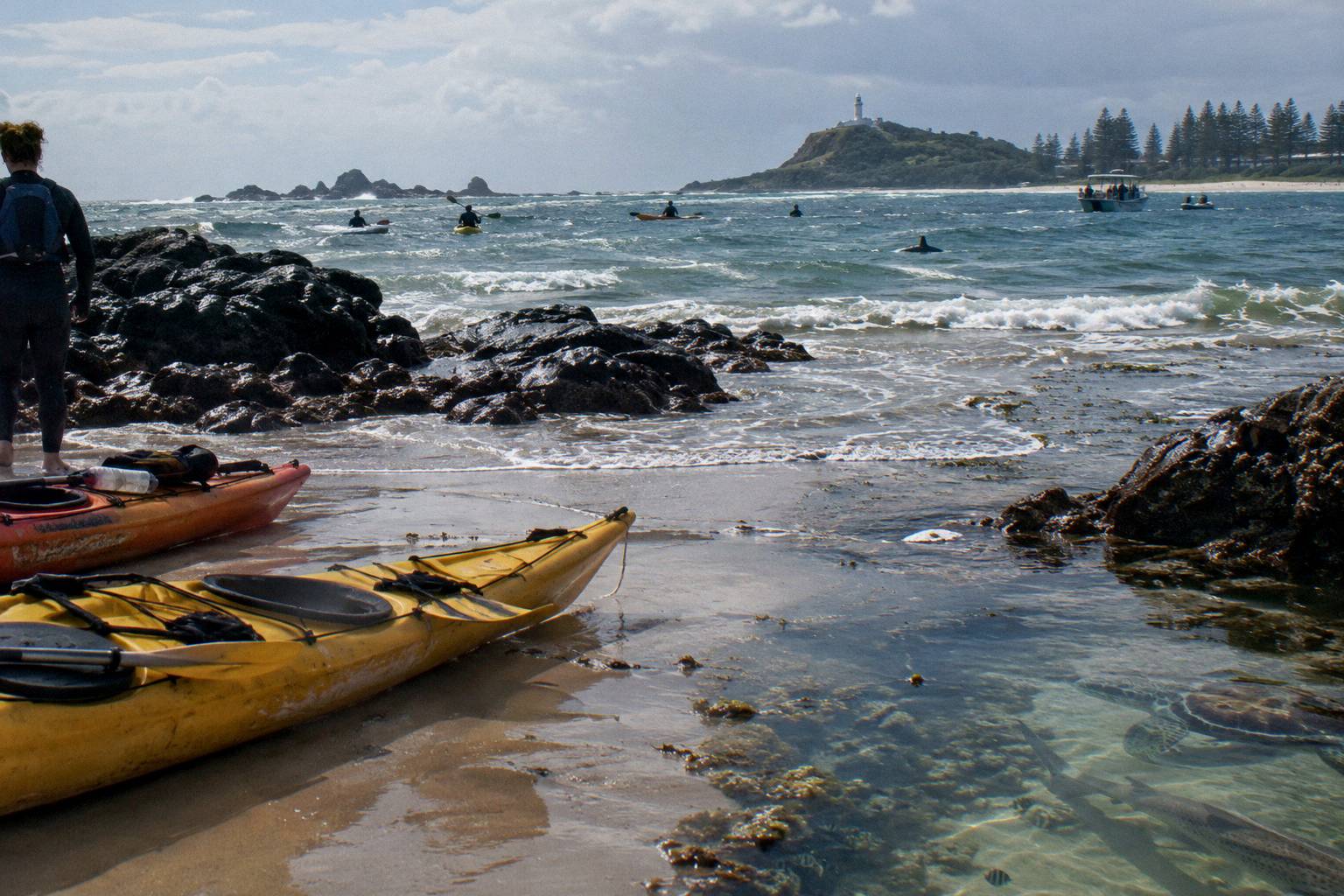
Choosing by animal is really choosing by season and starting point. The two Brunswick Heads operators, Blue Seafaris and Out Of The Blue, both meet at Brunswick Heads Boat Harbour and both run about 2.5 hours, which suits a short itinerary or a morning with other plans. Blue Seafaris is rated 4.5 across 448 reviews on its booking page; Out Of The Blue is rated 4.4 across 167 reviews on its main page. Byron Bay Dive Centre's turtle trips start from Byron Plaza in town with transport to the boat, take about 2.5 hours, and lean on the operator's decades of local turtle experience; prices for those sit on the booking pages. If dolphins rather than reef life are the goal, the adjacent kayak trips, the Byron Bay dolphin kayak versus snorkel comparison lays out the trade-offs.
The featured trip here is the Blue Seafaris snorkel: about 2.5 hours, from AUD 94 per person, rated 4.5 across 448 reviews, meeting at 43 Harbour Way, Brunswick Heads Boat Harbour. It is the straightforward version of the day, a short boat ride out to the sheltered shallows where turtles, rays and the reef fish community live, with gear and guide included. As a publisher, Julian Rocks Snorkelling rates it the default choice for a first visit because it matches the reef's most accessible cast with the least friction.
“Ride out, location, gear. And what we saw was great! Really enjoyed it. Signage and directions where to meet could be improved.”
Whatever you book, hold the reef's own terms in mind. Turtles all year, leopard sharks in the warm months, grey nurse sharks in the deep cold season, mantas as a summer possibility, whales on their own boats in their own months, and nothing guaranteed by anyone honest. The reef's richness is real, and so is its wildness. Readers planning around school holidays may find the guide to kids on the Julian Rocks snorkel trip useful, since minimum ages differ by operator at 5, 7 and 10 years on the various pages.
These three trips cover the reef between them, whichever season you choose.
Common Questions About Julian Rocks Marine Life
What Animals Live At Julian Rocks?
DPIRD lists sharks, rays, turtles, eels, starfish and corals at the rocks. Operator pages name green, hawksbill and loggerhead turtles, leopard sharks, grey nurse sharks, wobbegongs, manta rays, bull, eagle and shovelnose rays, plus octopuses, nudibranchs and hundreds of fish species. Operators credit the site with over 1000 marine species in their own wording.
Will I See Turtles Snorkelling At Julian Rocks?
Turtles are listed at the rocks all year and are the animal most trips are organised around, but no operator guarantees them. Byron Bay Dive Centre says turtles can be spotted year-round throughout the whole day and states plainly that it cannot guarantee they will be there on any given trip.
Will I See Sharks On A Snorkel Trip?
Snorkel trips stay in shallow sheltered areas 3 to 12 m deep, while the shark hotspots sit at dive depths of 8 to 24 m. Grey nurse sharks gather in sand trenches from June to November at dive depth and are rarely seen on snorkel trips. Leopard sharks, in the warmer months of December to April, occasionally pass into view from the surface on calm days.
When Can You See Manta Rays At Julian Rocks?
One dive operator lists manta rays for the summer months, without attaching a count or a depth. As with every wild species at the rocks, mantas are a seasonal possibility rather than a scheduled appearance, and no operator promises them.
Why Are There So Many Species At Julian Rocks?
The rocks sit where the warm East Australian Current meets cooler southern water, letting tropical and temperate species share one small reef. Strict sanctuary zoning inside Cape Byron Marine Park, with all fishing and collecting banned, keeps the resident populations intact.
Can You See Whales While Snorkelling Julian Rocks?
Whales are not part of reef snorkel trips. Separate whale-watch trips run in the area, with one operator stating a May to November season and another listing June to October; the two operators differ, so check the specific trip's own listing for its dates.