Can You Touch Turtles When Snorkelling In Australia?
The short answer on touching turtles while snorkelling, the rules that apply at Nguthungulli Julian Rocks in Cape Byron Marine Park, and how to pick a trip that gets you close without contact.
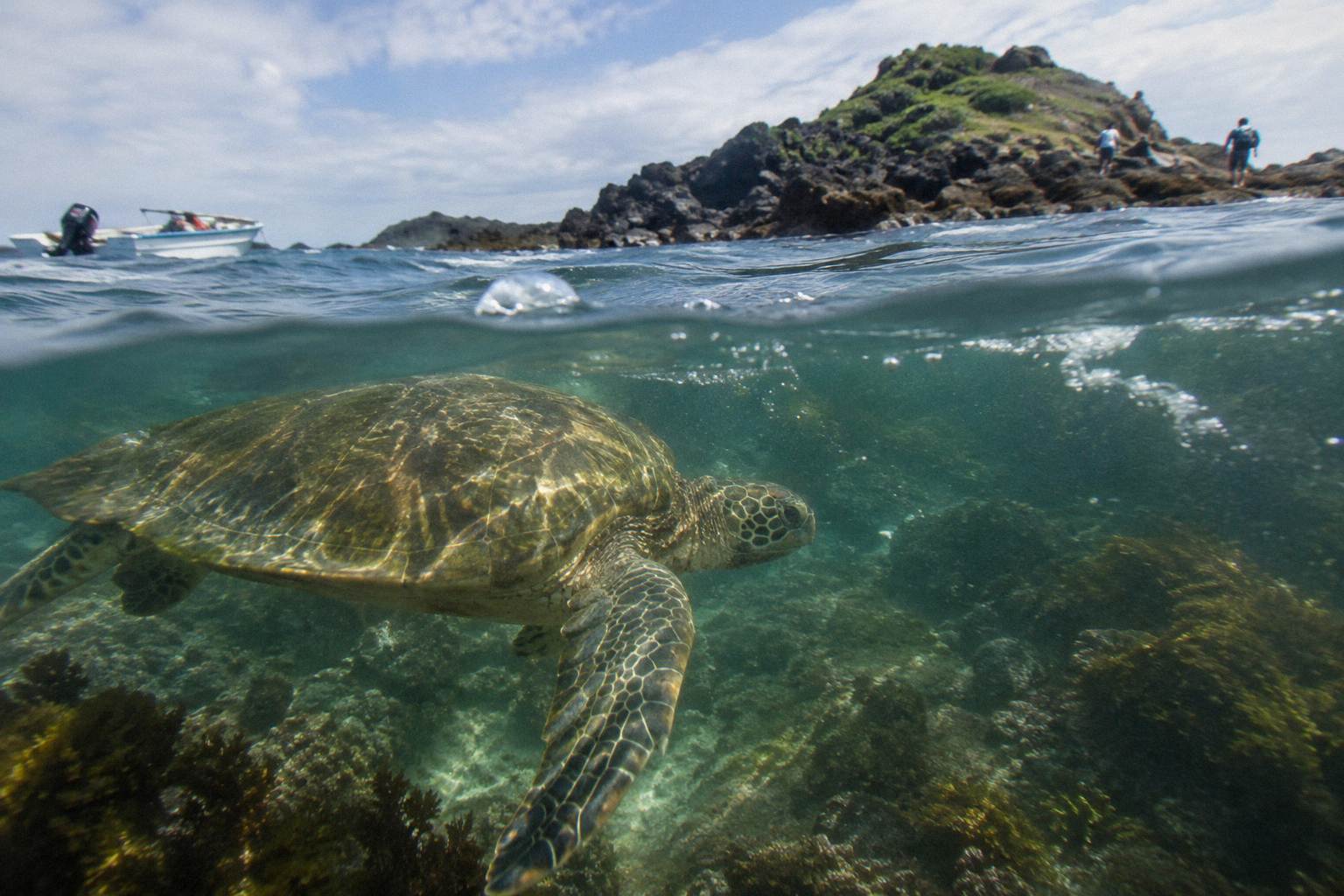
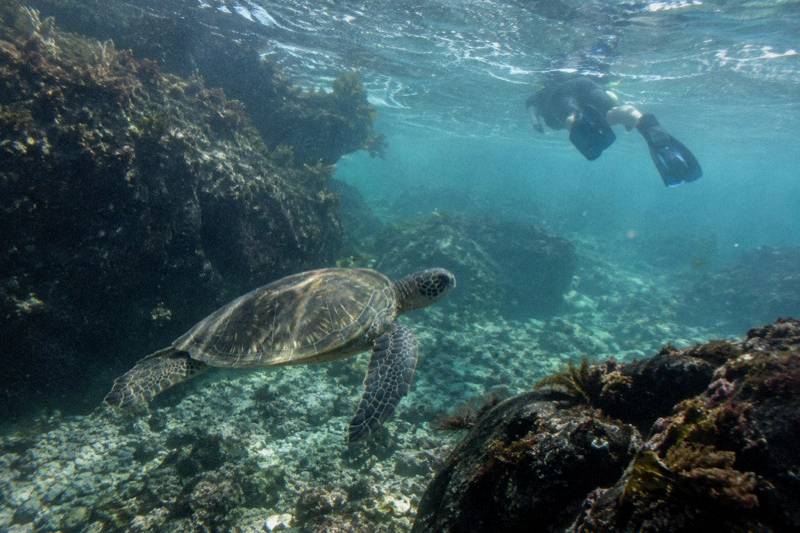
No. At Nguthungulli Julian Rocks, the site most people mean when they ask this question about Byron Bay, the instruction is consistent across every source on file: do not touch, collect or harass marine life. Cape Byron Marine Park's sanctuary zone rules protect all species, and the local operator briefings say the same thing. Turtles at the rocks are green, hawksbill and loggerhead turtles, and they are seen year-round, but touching one is off the table.
The question usually arrives in one of two moods. Either somebody has watched a video of a snorkeller resting a hand on a turtle's shell and wondered whether that is allowed, or a nervous first-timer wants to know whether the turtle might touch them. Both versions deserve a straight answer, and the straight answer is built from three sources this site has verified: the marine park's own zoning rules published by the NSW Government's DPIRD, the operator pages for the trips that run to the rocks, and the booking pages for those trips. Nothing in this article goes beyond what those sources say, and where a source is silent, this article says so rather than filling the gap.
The rules matter here more than at a typical beach snorkel spot because Julian Rocks sits inside a sanctuary zone, the highest level of protection in the Cape Byron Marine Park. Sanctuary zones are "no-take": they ban all fishing and collecting and anchoring on reefs, and all species inside them are protected. Snorkelling is explicitly permitted, so long as the activity does not harm any animal, plant or habitat. That single sentence carries the whole answer: swim, watch, float, enjoy, and leave everything exactly where it was.
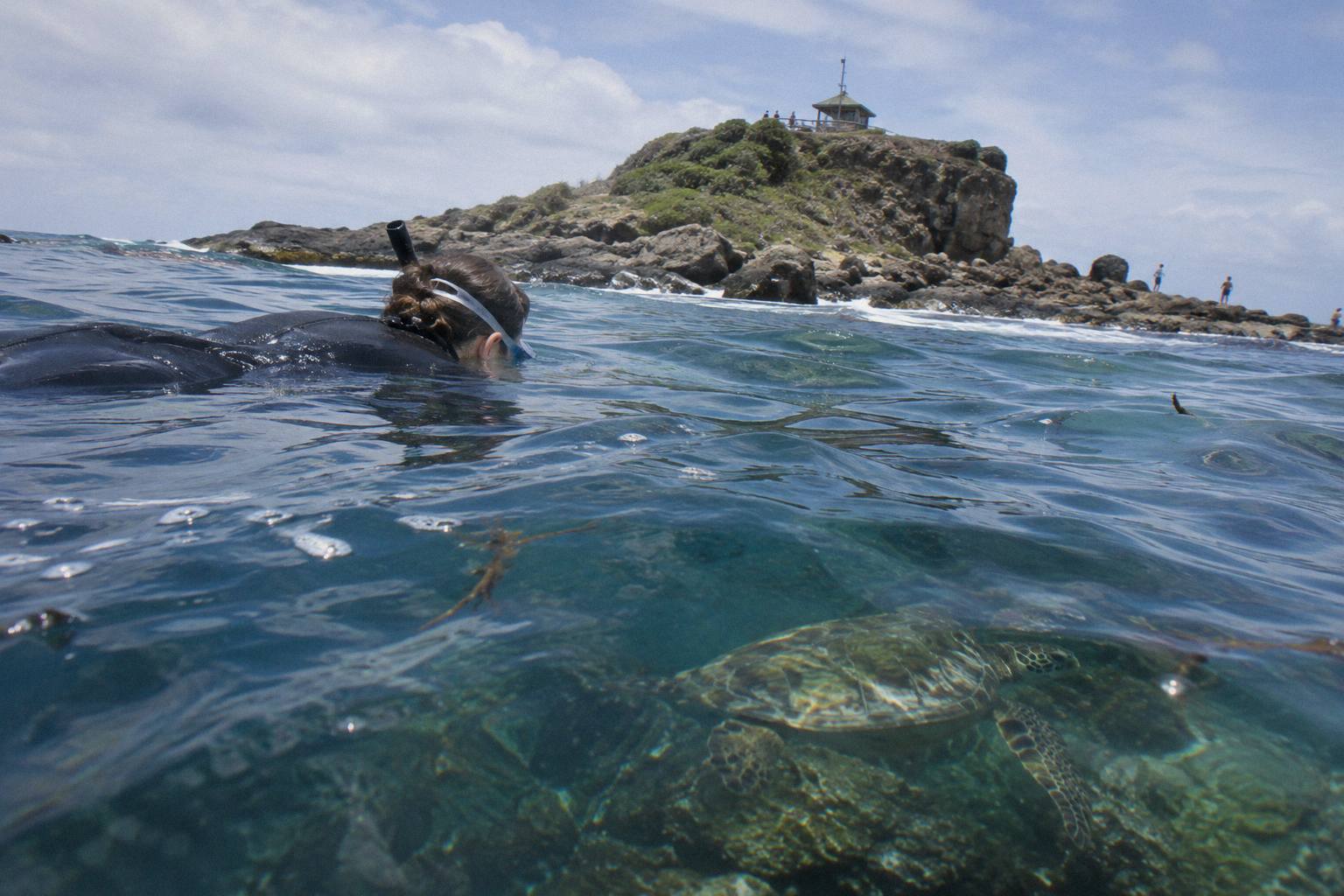
For readers planning a trip around the turtles specifically, the practical half of the answer is choosing an operator whose trip style suits you, because all of the legal trips to the rocks follow the same no-touch rule but differ in length, meeting point and minimum age. The selection below covers the three trips this site tracks that run from the Byron Bay area, and the rest of the article walks through the rules, the questions worth asking a booking desk, and which trip fits which traveller.
What The Marine Park Rules Actually Say
Cape Byron Marine Park's sanctuary zone rules ban fishing, collecting and harming any animal, and the NSW Government page for the rocks adds that collecting or destroying animals is prohibited there. Snorkelling is a permitted activity in sanctuary zones as long as it does not harm any animal, plant or habitat. Turtles fall squarely inside that protection, so the marine park's own wording settles the question before any operator policy even enters the picture.
The detail sits in the DPIRD zoning rules. Sanctuary zones are described as "no-take", the highest protection in the park: they ban all fishing and collecting, and anchoring on reefs. The June 2018 user guide records sanctuary zones covering 6,118 hectares, 27.5% of the marine park, and states that all species are protected in sanctuary zones. The permitted-activities list includes boating, surfing, snorkelling, diving and permitted research and education, framed as activities that do not harm any animal, plant or habitat. Touching a turtle is not named in a sentence of its own anywhere in the sources on file; what is named is the standard the activity must meet, and touching does not meet it.
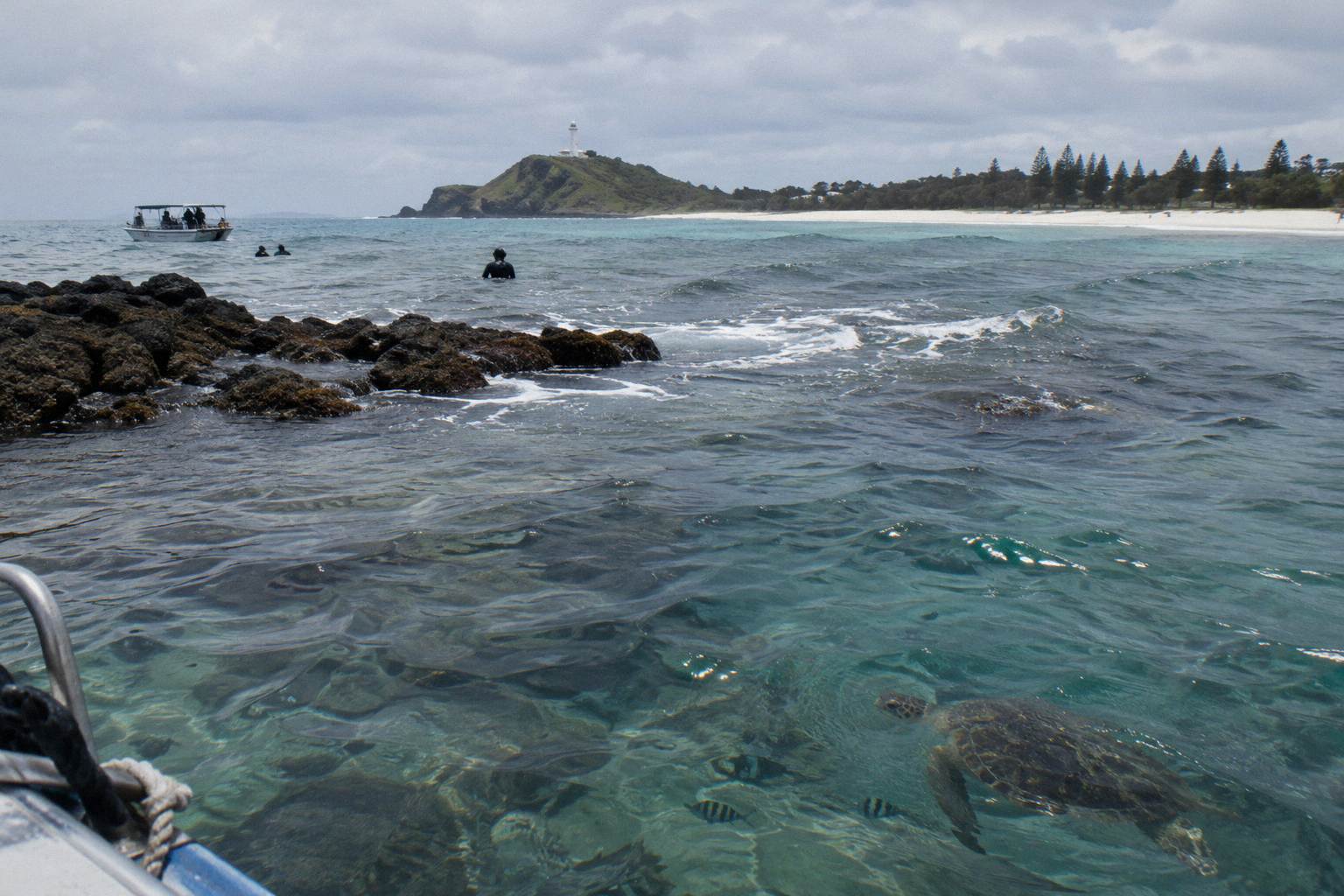
The NSW Government page for Nguthungulli Julian Rocks Nature Reserve adds its own layer: collecting or destroying animals and spear fishing are prohibited at the rocks, and the rocks themselves are a bird sanctuary. The DPIRD page for the marine park lists sharks, rays, turtles, eels, starfish and corals among the animals that live there. Put together, the picture is of a place where the default setting is protection, and where snorkellers are welcome as observers. The official zoning detail is published on the DPIRD Cape Byron Marine Park page, and the full rules, including the mooring and speed limits, are in the marine park user guide. This site also keeps a plain-language summary in its Julian Rocks Snorkelling coverage of the park rules, including what they mean for a day on the water.
If you want the fuller background on the protected area around the rocks, the guide to the marine park rules snorkellers should know walks through every zone type and restriction in order.
What The Operators Tell Their Snorkellers
Byron Bay Dive Centre, the operator behind the Turtle School trips, states it plainly: do not touch, collect or harass marine life. Its camera rule points the same direction, waterproof cameras only and no flash. No source on file contradicts it, and no operator running to the rocks tells guests anything different, so treat no-touch as universal practice for every trip in this article.
That instruction comes from the operator's own FAQ page, and it sits alongside a set of participant rules that tell you a lot about how these trips run. All participants must be comfortable swimming in open water. Fins, mask, snorkel and wetsuit are included, with 5 mm long wetsuits advised for the duration. There are no prescription masks, though contact lenses are fine. Lifejackets are on board, and the operator suggests a long wetsuit or a pool noodle for nervous snorkellers. Ginger seasickness tablets are on the boat, and bringing your own is recommended. Guests with pregnancy or back or spinal injuries are prohibited from vessel-based activities; that is this operator's rule and this article does not generalise it to any other trip.
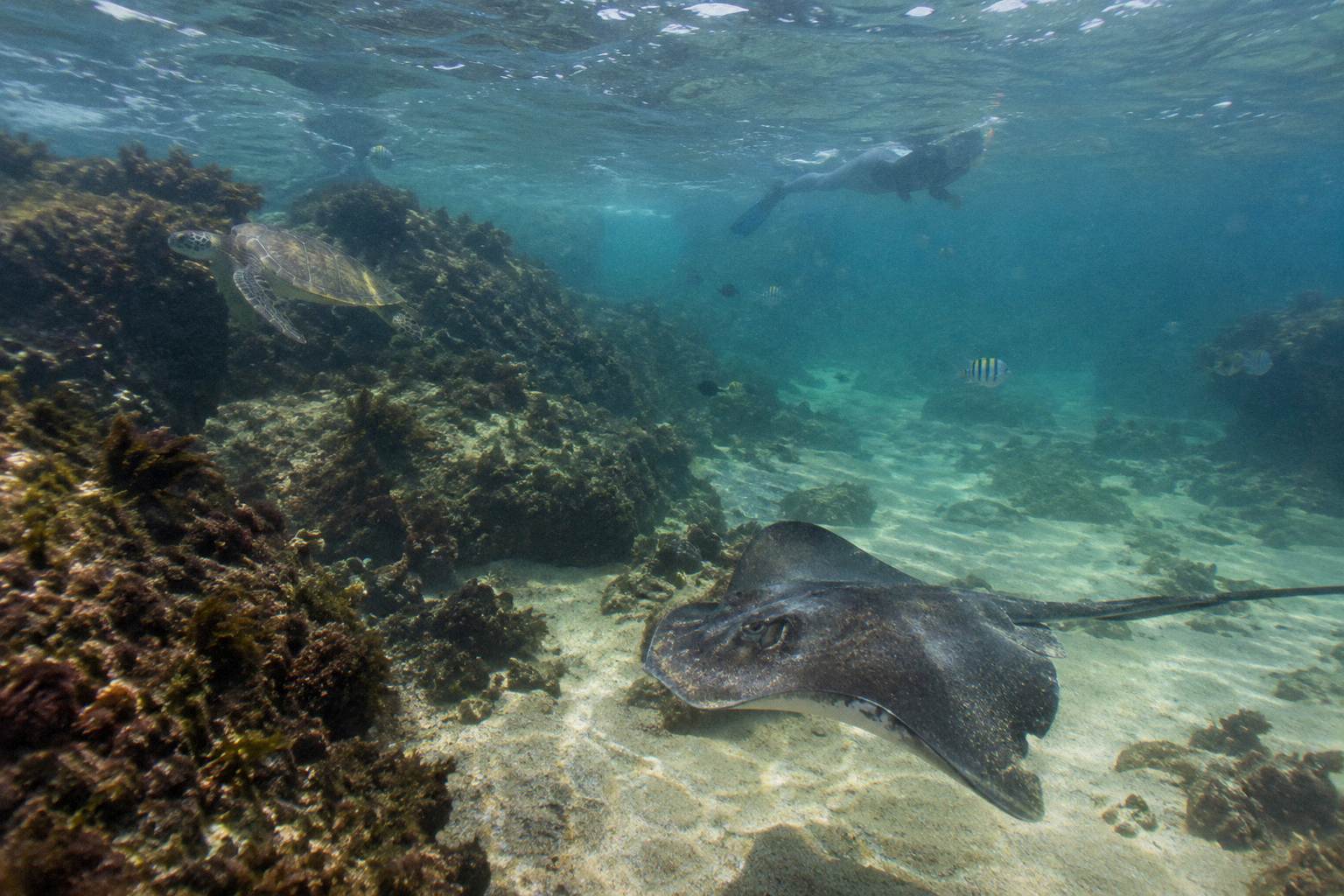
The harassment wording deserves a beat of attention, because it covers more than a hand on a shell. Chasing, grabbing, cornering or blocking an animal's path all sit inside a reasonable reading of "harass", and the operator chose a broad word deliberately. A turtle at Julian Rocks is typically going somewhere: grazing, resting mid-water, or heading up for a breath, which they must do periodically. The snorkeller's job on these trips is to be boring, float still, and let the turtle decide the distance.
If you are reading this while weighing up whether the destination suits you at all, the guide to which turtles live around Julian Rocks covers the three species and their year-round presence without promising a sighting.
Will A Turtle Come Close To You On Its Own?
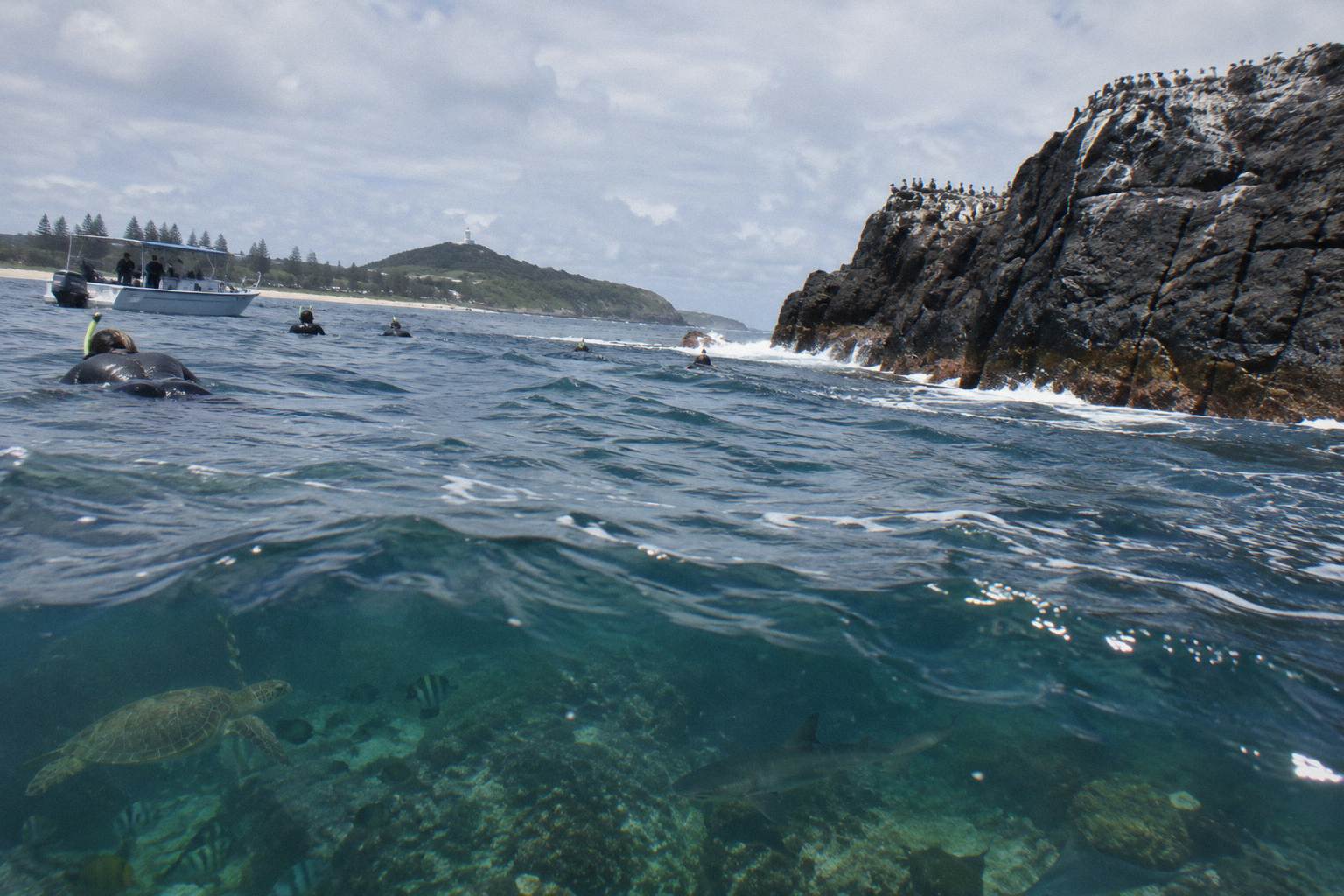
Quite possibly, and this is the honest substitute for touching. One dive operator's page describes snorkel trips seeing turtles, rays and a variety of colourful fish and crustaceans in the sheltered shallow areas, 3 to 12 m deep, and Byron Bay Dive Centre says turtles can be spotted year-round throughout the whole day. The same operator says it cannot guarantee sea turtles will be there. Close passes happen on the turtles' terms, not yours.
The distinction between a sighting and a guarantee matters enough to repeat carefully. The operator's own words, per its FAQ, are that turtles can be spotted year-round throughout the whole day, and, in the same breath, that it cannot guarantee sea turtles will be there. This article will not soften that into a promise, and neither should any article you read about Julian Rocks. What the sources do support is that the rocks host green, hawksbill and loggerhead turtles, listed as present all year, in water shallow enough that snorkellers share it with them.
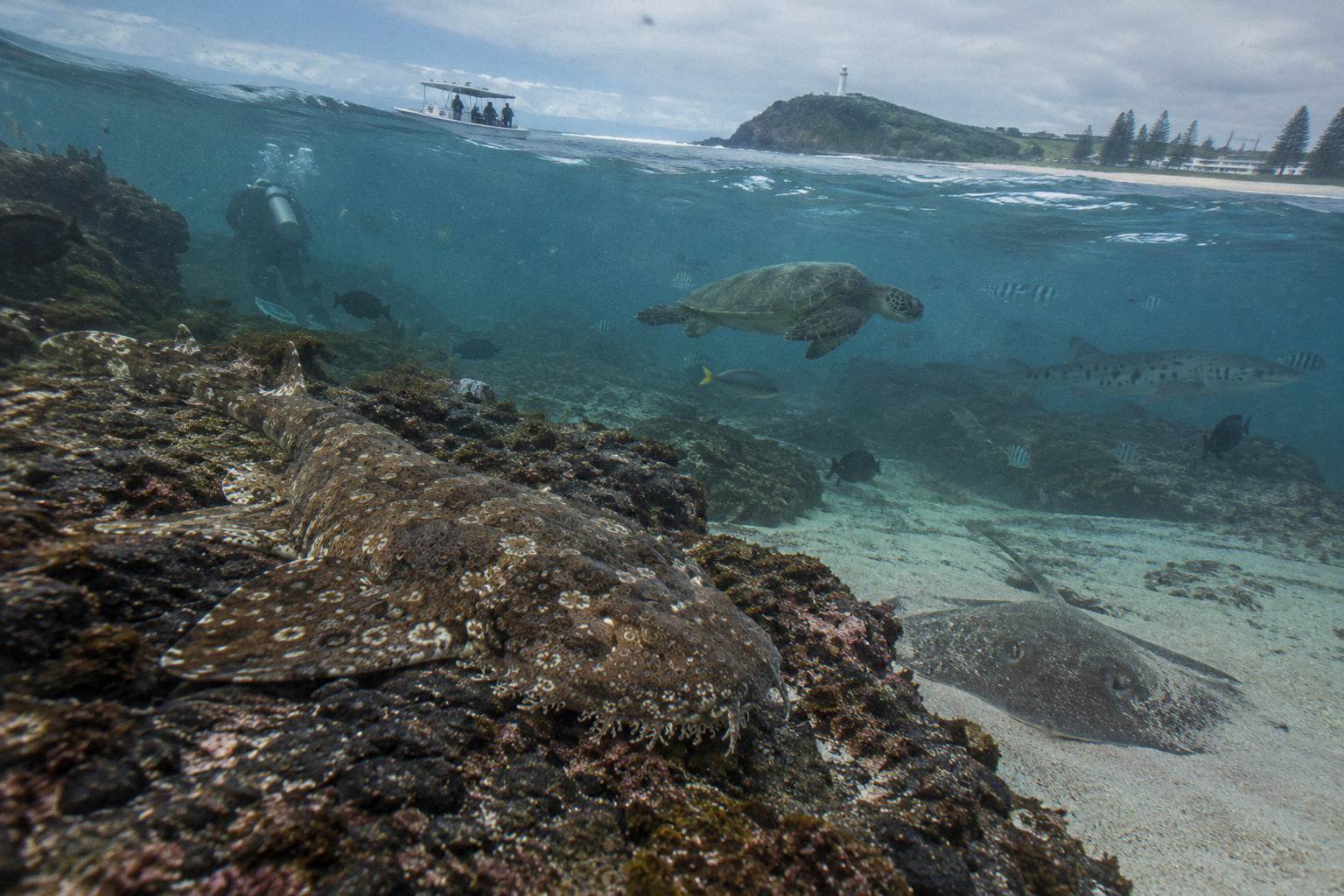
Behaviourally, the pattern snorkellers report at calm, well-visited sites like this is that an unhurried turtle keeps its line and a hurried snorkeller loses the encounter. The marine park's no-take status has spanned decades, since the zones and rules commenced in May 2006, and the animals at the rocks have lived their whole lives around slow, neutral bathers. Floating still with hands tucked in is not just the polite option; it is the one that produces the long, close looks people travel for. The DPIRD marine park page lists the site's residents, sharks, rays, turtles, eels, starfish and corals among them, on the NSW National Parks page for the reserve and the DPIRD page cited above.
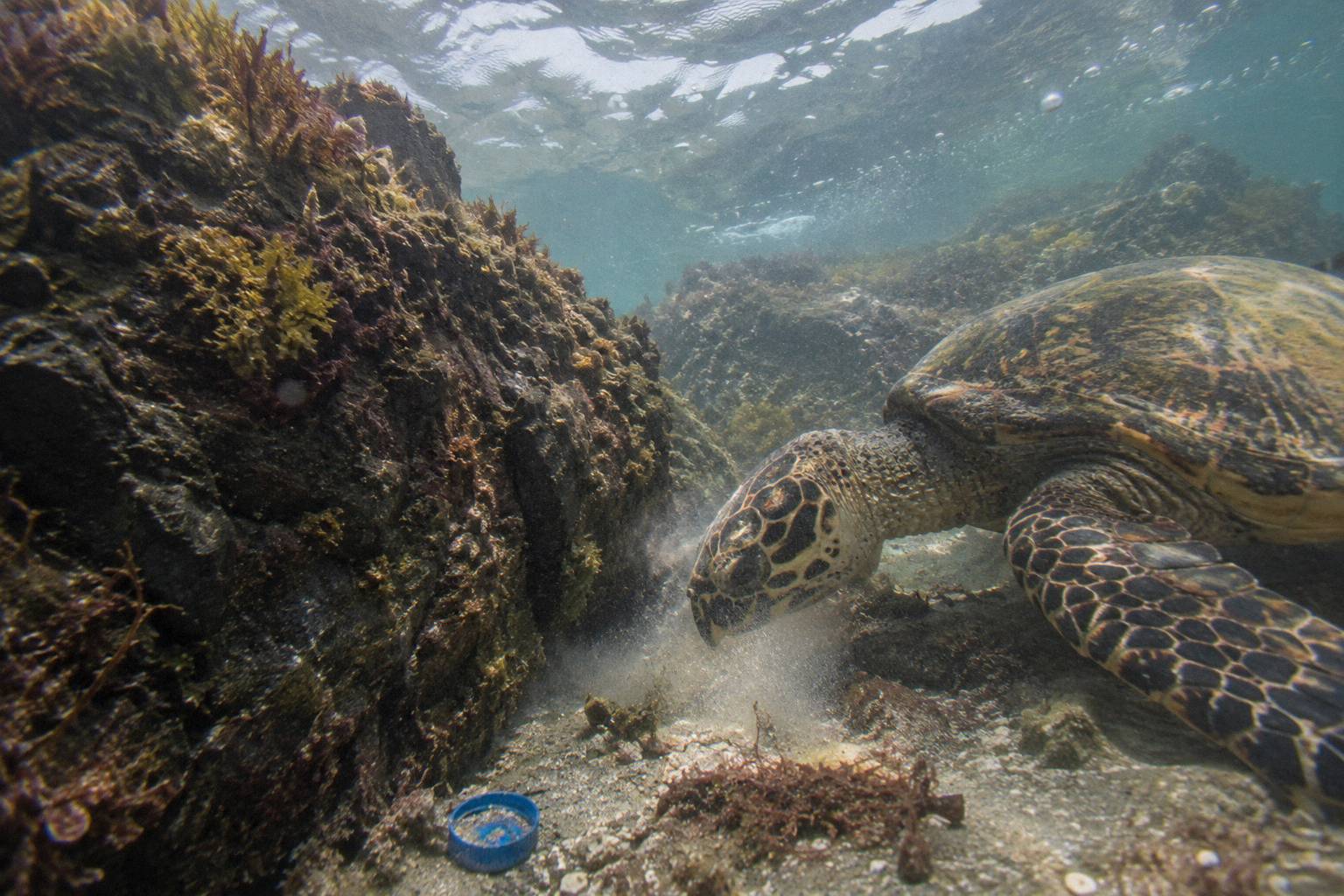
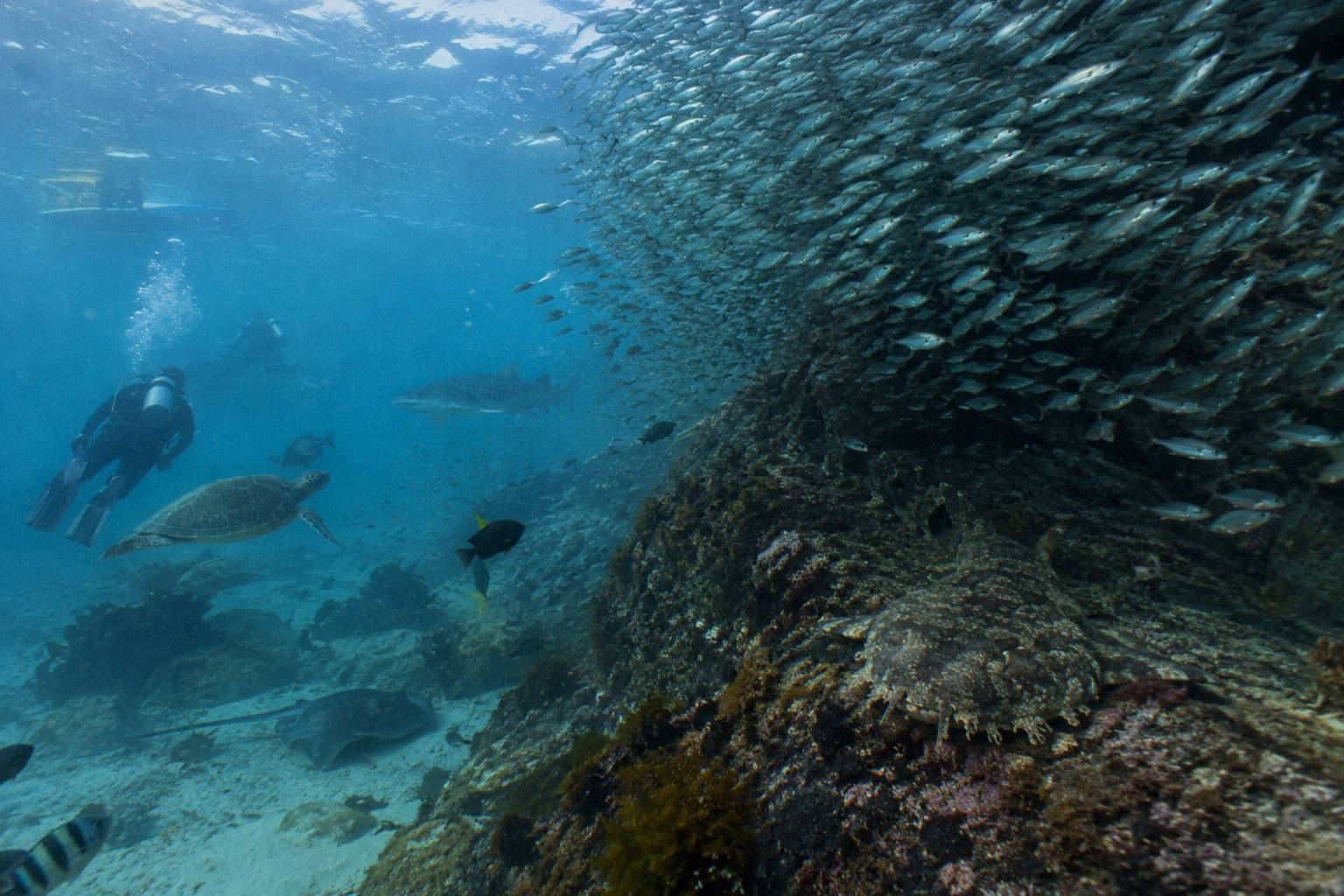
One more thing the sources say, and it reframes the whole touching question for most readers: Julian Rocks snorkelling is not a single-turtle experience even when a turtle is the headline act. The same shallow sheltered water holds rays, crustaceans and colourful fish on the operator's own description, and the wider site, at dive depths, adds wobbegong, bull rays, eagle rays and shovelnose rays year-round, leopard sharks from December to April, and grey nurse sharks from June to November at 8 to 24 m, which is below snorkel range and rarely seen from the surface. Keeping your hands to yourself costs you nothing here; the reef does the entertaining.
How Close Are You Allowed To Get?
No official approach distance in metres exists in any source on file, and this article will not invent one. What the sources give is a standard, no harm to any animal, plus an operator instruction not to touch, collect or harass marine life. In practice that means the turtle sets the distance, and you hold your position and let it swim past or away.
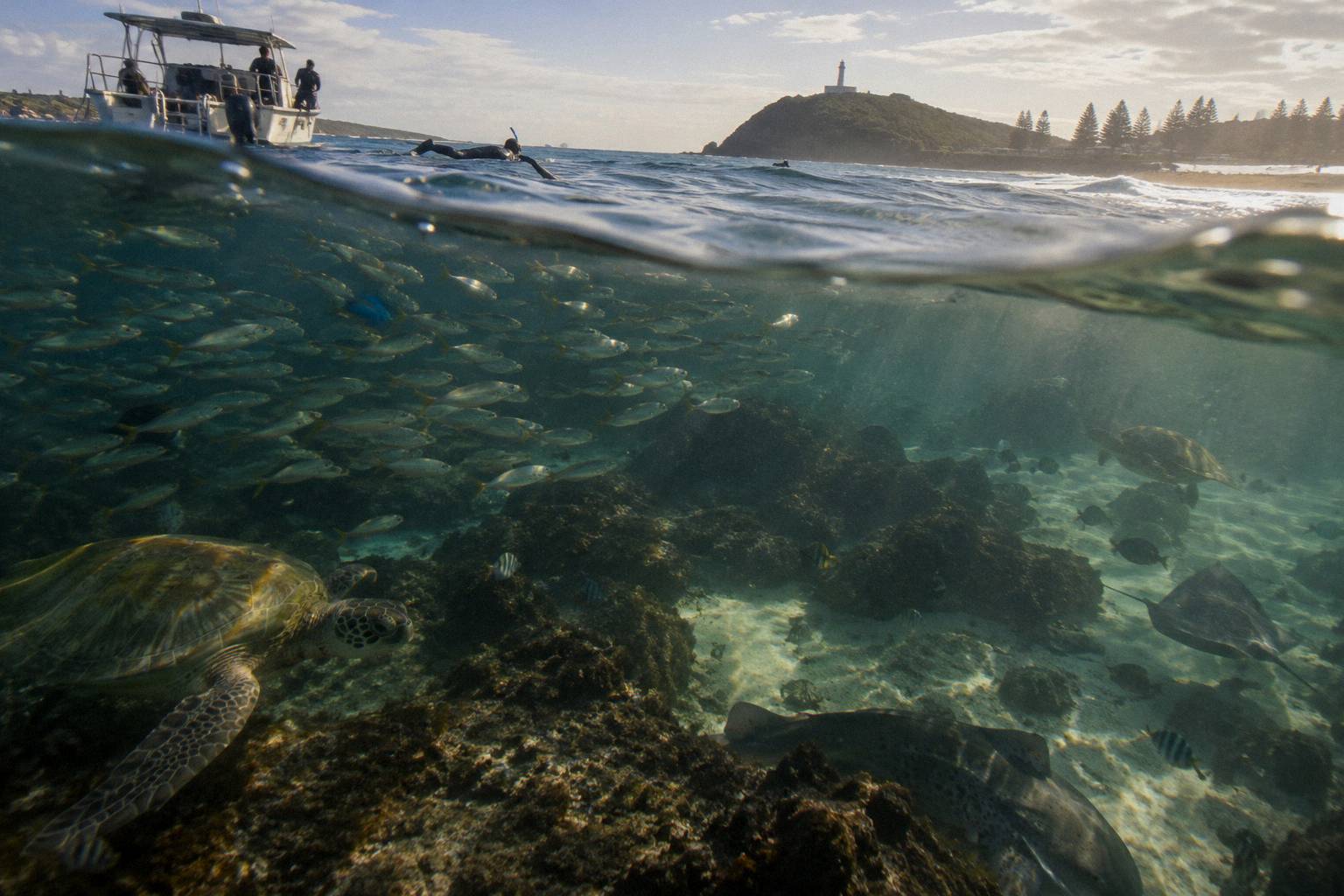
This is worth spelling out, because Australia does have numeric approach rules for some marine animals in some jurisdictions, and readers reasonably assume one exists for turtles at Julian Rocks. The verified sources for this page, the DPIRD user guide, the DPIRD zoning pages, the NSW Government page for the rocks and the operator pages, state no number. Rather than guess at a figure that could be wrong in either direction, the honest answer is: if a metres-based rule matters to your planning, ask the operator or check the booking page before you travel, and meanwhile follow the stricter instruction already on file, which is no touching, no collecting and no harassing of any kind.
The practical reading of the two rules together is straightforward. Drift or fin gently, keep a relaxed buffer, and never swim directly at an animal. A turtle that changes course because of you has been affected by you, and every source here is built on the opposite principle. Photos fall under the same logic: the operator permits waterproof cameras but bans flash, and a camera is not a licence to close the gap.
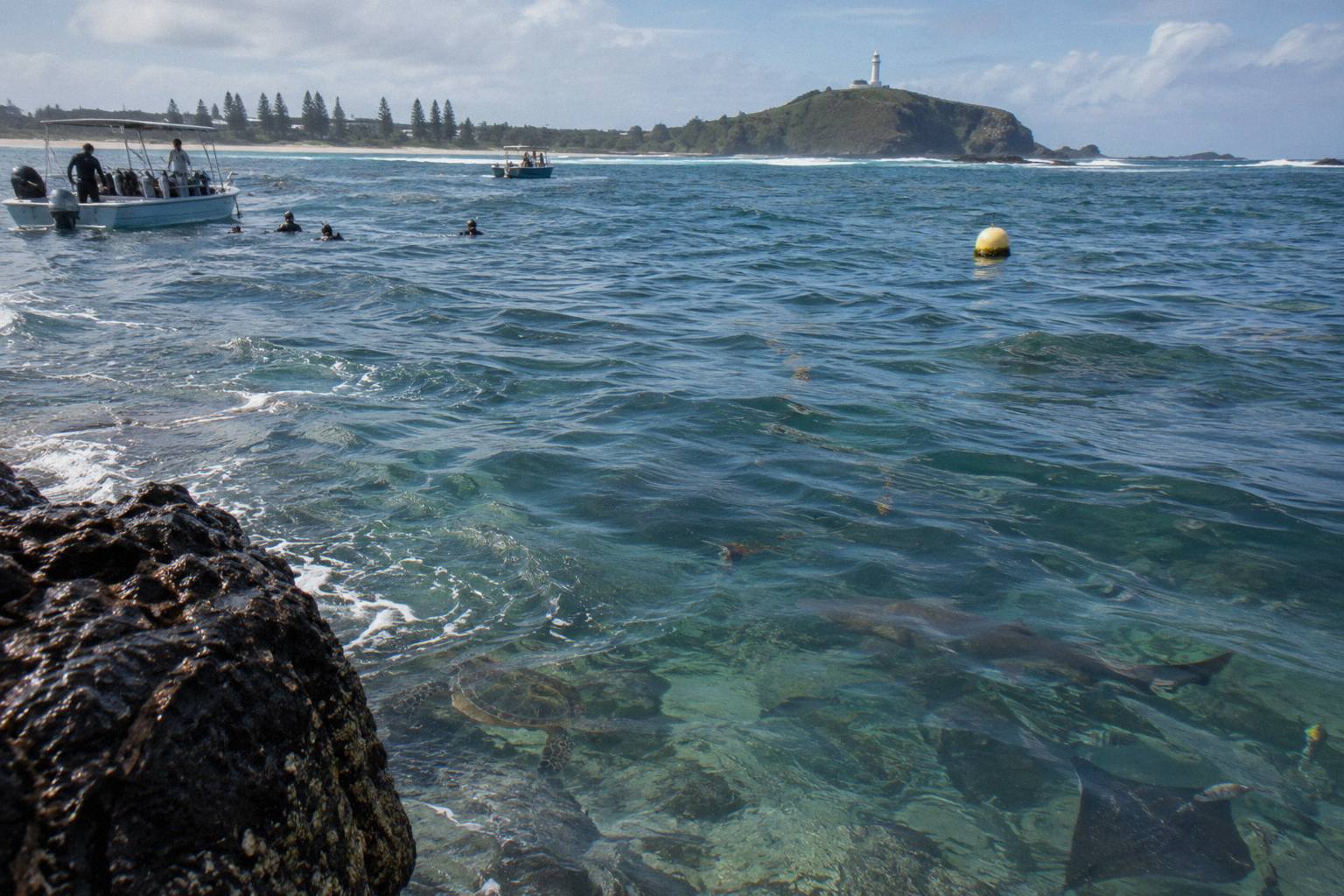
Nervous snorkellers sometimes ask the question in reverse, whether a turtle will touch them. A calm, floating human is largely ignored at a site like this; the encounters people describe are close passes initiated by the animal. If nerves are the real issue, the article on the briefing nervous snorkellers get before the water covers the pool-noodle and wetsuit options the operator offers.
Which Julian Rocks Trips Suit Turtle Watchers?
Three tracked trips snorkel the rocks with different shapes: the Turtle School trip at about 2.5 hours with roughly 60 minutes in the water and a minimum age of 10, the Out Of The Blue trip at about 2.5 hours from Brunswick Heads, and the Byron Bay Dive Centre sea turtle snorkel at about 2.5 hours. All operate under the same no-touch marine park rules; they differ in meeting point, length and who they accept.
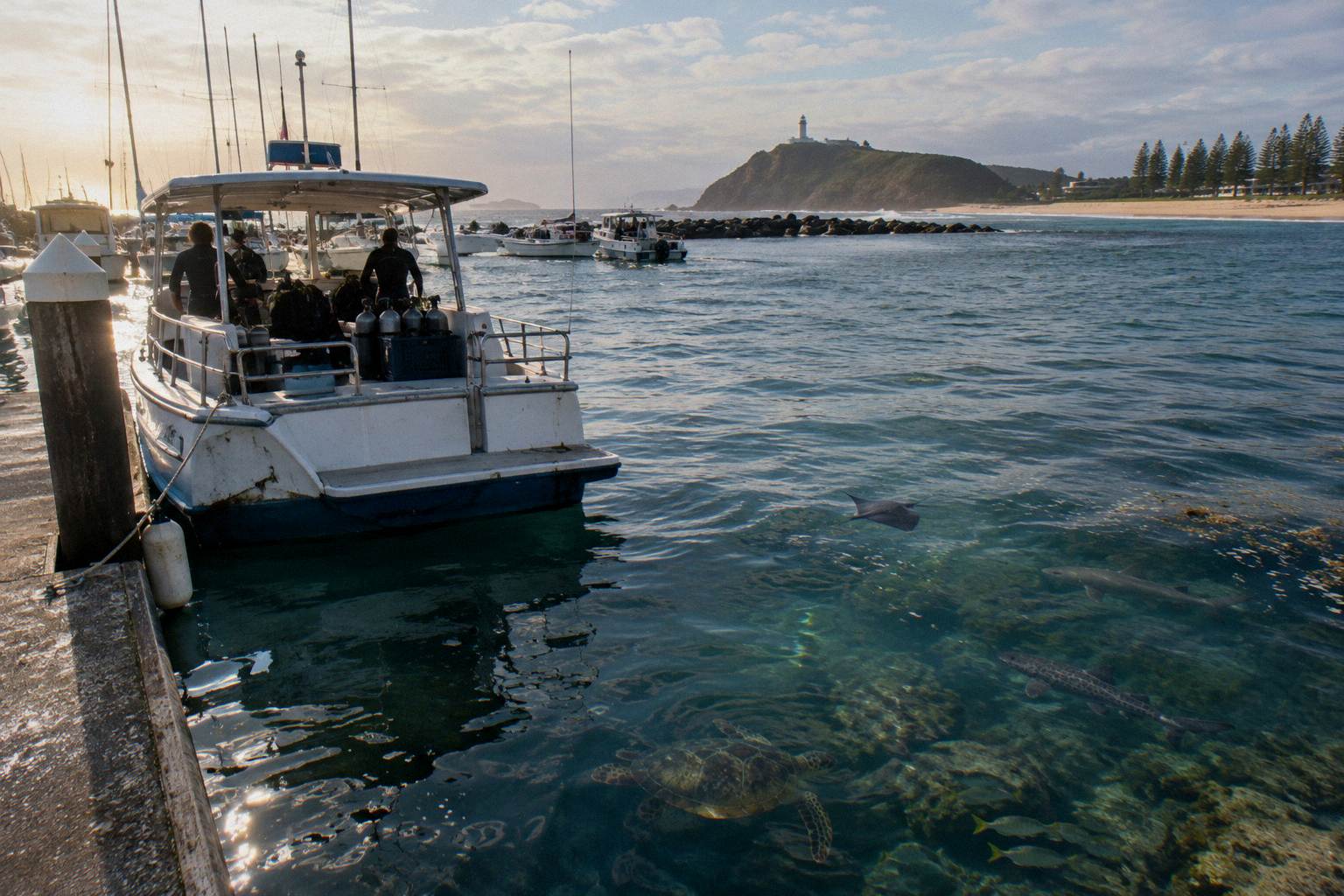
The Turtle School trip is the one this site features for turtle-focused readers, not because it promises turtles, no trip can, but because its format spends the longest briefing-and-water combination on the subject. The trip runs about 3 hours in total with around 60 minutes in the water, a range of tour times, snorkel gear and wetsuit included, and transport from the central meeting point at Byron Plaza on Jonson Street to the boat at The Pass. Minimum age is 10 on the operator's page. Its price is on the live listing rather than restated here. You can read the full Turtle School trip profile on this site, or check availability at a genuine decision moment.
The Out Of The Blue trip, about 2.5 hours, meets at Brunswick Heads Boat Harbour, and its booking page shows 4.4 across 167 reviews, from AUD 94 per person. A second booking page for the same operator shows 4.7 across 58 reviews, and this site prints both rather than picking the flatter one. The Byron Bay Dive Centre sea turtle snorkel runs about 2.5 hours, and it carries no printed rating or price here.
| Trip | Length | Meeting point | In the water | Minimum age | Price and rating |
|---|---|---|---|---|---|
| Turtle School (Byron Bay Dive Centre) | about 3 hours | Byron Plaza, Jonson Street; boat from The Pass | about 60 minutes | 10, operator page | on the live listing |
| Out Of The Blue | about 2.5 hours | Brunswick Heads Boat Harbour | Not stated | ask the operator | from AUD 94; 4.4 across 167 reviews |
| BBDC sea turtle snorkel | about 2.5 hours | not stated, check the booking page | Not stated | ask the operator | on the live listing |
Two other operators run to the rocks under different rules, and they widen the age range in both directions. One, Sundive Byron Bay, sets minimum age 7, requires previous open-ocean snorkelling experience and the ability to swim 200 m unassisted. A third, Wild Byron, sets minimum age 5, caps tours at 12 passengers and uses a naturalist guide. Blue Seafaris, which per its listing has a marine biologist guide at about 2.5 hours, and meeting at Brunswick Heads, states no minimum age on its booking page; ask the operator. So there is no single minimum age for Julian Rocks snorkelling: the minimum is whatever is printed on the page of the trip you actually book.
The choice among these is mostly logistics and stamina rather than turtle odds. Brunswick Heads departures suit anyone staying north of Byron; The Pass departure via Byron Plaza suits anyone in town on foot. A 60-minute water session suits confident swimmers; a shorter session suits first-timers and families with younger teens. None of these trips can guarantee a turtle, and any page that implies otherwise is writing a cheque the ocean will not cash.
A Checklist Of What To Ask The Booking Desk
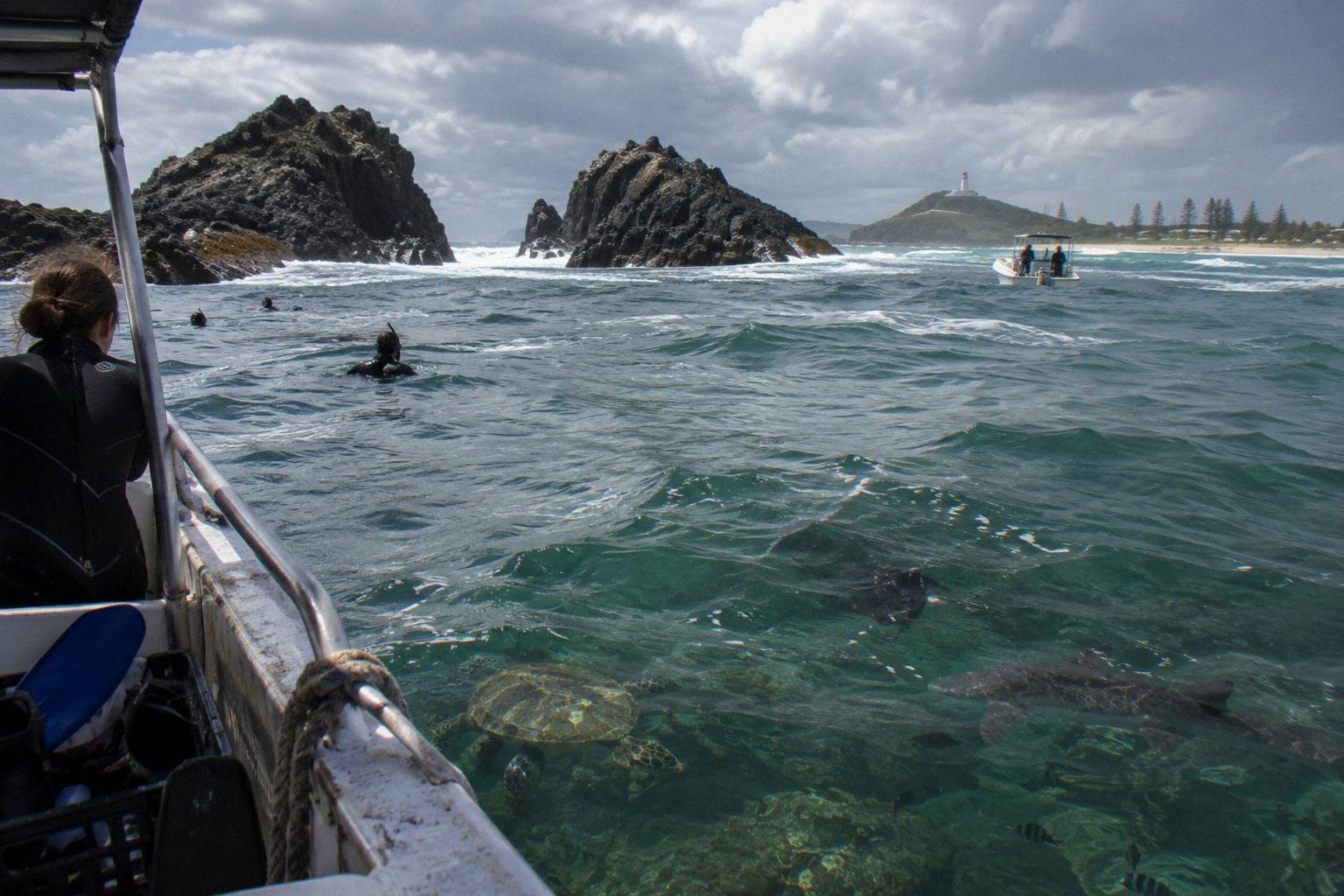
Five questions cover nearly everything the sources leave unstated: the minimum age for your group, the meeting point and how you get to the boat, the refund and weather policy, what gear is included, and whether the trip suits a nervous or first-time snorkeller. Ask before you pay and you remove almost every surprise a Julian Rocks trip can hold.
| Question to ask | Why it matters | What the sources show |
|---|---|---|
| What is the minimum age? | Ages 5, 7 and 10 appear across operator pages; there is no standard | Turtle School states 10; other trips state none, so ask |
| Where do we meet, and is transport included? | Departures split between Brunswick Heads harbour and The Pass | Turtle School includes transport from Byron Plaza to The Pass |
| What is the cancellation and weather policy? | Storms and swells cancel trips; refunds differ by operator | Byron Bay Dive Centre: contact by text or phone, full refund or reschedule; 48-hour window, 100% fee inside it |
| What gear is included? | Wetsuit thickness changes the whole experience in cooler months | Turtle School includes fins, mask, snorkel and wetsuit; 5 mm suits advised |
| Is this trip right for a nervous snorkeller? | Support options vary | Lifejackets on board; long wetsuit or pool noodle suggested for nervous snorkellers |
The cancellation answer deserves its own sentence, because it is the one that costs money when it goes wrong. If weather or sea is unsuitable, Byron Bay Dive Centre contacts guests by text or phone with a full refund or reschedule; its cancellation window is 48 hours with a 100% fee inside it, and a booking made through an agent follows the agent's refund policy. That is this operator's policy and may not match others, which is exactly why it belongs on your question list.
Which Trip Fits Which Traveller?
Families with children over 10, confident swimmers and turtle-first planners line up naturally behind the Turtle School trip; shorter-stay visitors and Brunswick-based groups fit the Out Of The Blue 2.5-hour trip; anyone wanting the 2.5-hour sea turtle format without the school component fits the BBDC sea turtle snorkel. The no-touch rule is identical on all three, so etiquette never decides the choice, logistics do.
For a family, the arithmetic is simple: the youngest snorkeller's age picks the trip. A 10-year-old clears the Turtle School threshold; an 8-year-old does not, and the family needs one of the lower-age operators or a different activity. The site's guide to taking kids on the Julian Rocks snorkel trip works through the age rules operator by operator. For a nervous adult, the pool noodle and lifejacket options matter more than any spec sheet, and it is worth saying so on the phone when booking rather than discovering mid-ocean.
For a solo traveller or couple on a short Byron visit, the 2.5-hour format wins on schedule: morning or afternoon slots exist across operators, and a range of tour times is listed for the Turtle School trip specifically. For someone whose whole holiday is built around turtles, the honest framing is that the longer trips give the same reef more time, and more time in sheltered shallow water is the only variable that genuinely moves turtle odds in your favour. Beyond that, the ocean decides.
One caution that belongs in any decision section: never let a desire to touch or hold a turtle steer you toward unlicensed arrangements. The tracked trips all operate inside the marine park's rules, mooring at one of the seven official moorings rather than anchoring, and their briefings carry the no-touch instruction. That whole framework is what keeps the site worth snorkelling. The turtles at Julian Rocks have no shortage of company, and the only encounters worth having are the ones they swim into themselves.
Common Questions About Touching Turtles When Snorkelling
Can You Touch Turtles When Snorkelling In Australia?
No. At Nguthungulli Julian Rocks in Cape Byron Marine Park, sanctuary zone rules protect all species and the operator instruction is do not touch, collect or harass marine life. Snorkelling is permitted; touching the wildlife is not part of that permission.
Is It Illegal To Touch A Turtle At Julian Rocks?
The sources on file do not state a penalty, and this site will not invent one. What they state is that collecting or destroying animals is prohibited at the rocks and all species are protected in sanctuary zones. The safe and correct behaviour is the same either way: do not touch.
How Close Can You Swim To A Turtle?
No official approach distance in metres appears in any verified source for this site. The standard that does appear is no harm to any animal, plus the operator's instruction not to harass marine life. In practice, hold your position and let the turtle choose the distance.
Will I Definitely See A Turtle If I Snorkel Julian Rocks?
No trip can promise that. Byron Bay Dive Centre says turtles can be spotted year-round throughout the whole day, and in the same breath that it cannot guarantee sea turtles will be there. Green, hawksbill and loggerhead turtles are listed at the rocks all year.
Can I Photograph Turtles While Snorkelling There?
Yes, with limits. The operator's rule is waterproof cameras only and no flash. The no-touch and no-harass instruction applies to photography exactly as it does to swimming, so let the animal set the distance rather than closing it for a shot.
Which Trip Is Best For Turtle Watchers?
The three tracked trips all snorkel the same protected site under the same rules. The Turtle School trip runs about 2.5 hours with roughly 60 minutes in the water and a minimum age of 10; the Out Of The Blue trip runs about 2.5 hours from Brunswick Heads; the BBDC sea turtle snorkel runs about 2.5 hours. Choose on logistics and stamina, not on turtle promises.