Turtles At Julian Rocks: How Likely Snorkellers Are To See One
Three sea turtle species are recorded around Julian Rocks year-round, and the site's shallow sheltered snorkel areas are exactly where trips report seeing them. But no operator guarantees a turtle, and the booking pages say so in plain words. This guide sets out what is actually on record, trip by trip, so you can decide whether to book.
Short answer
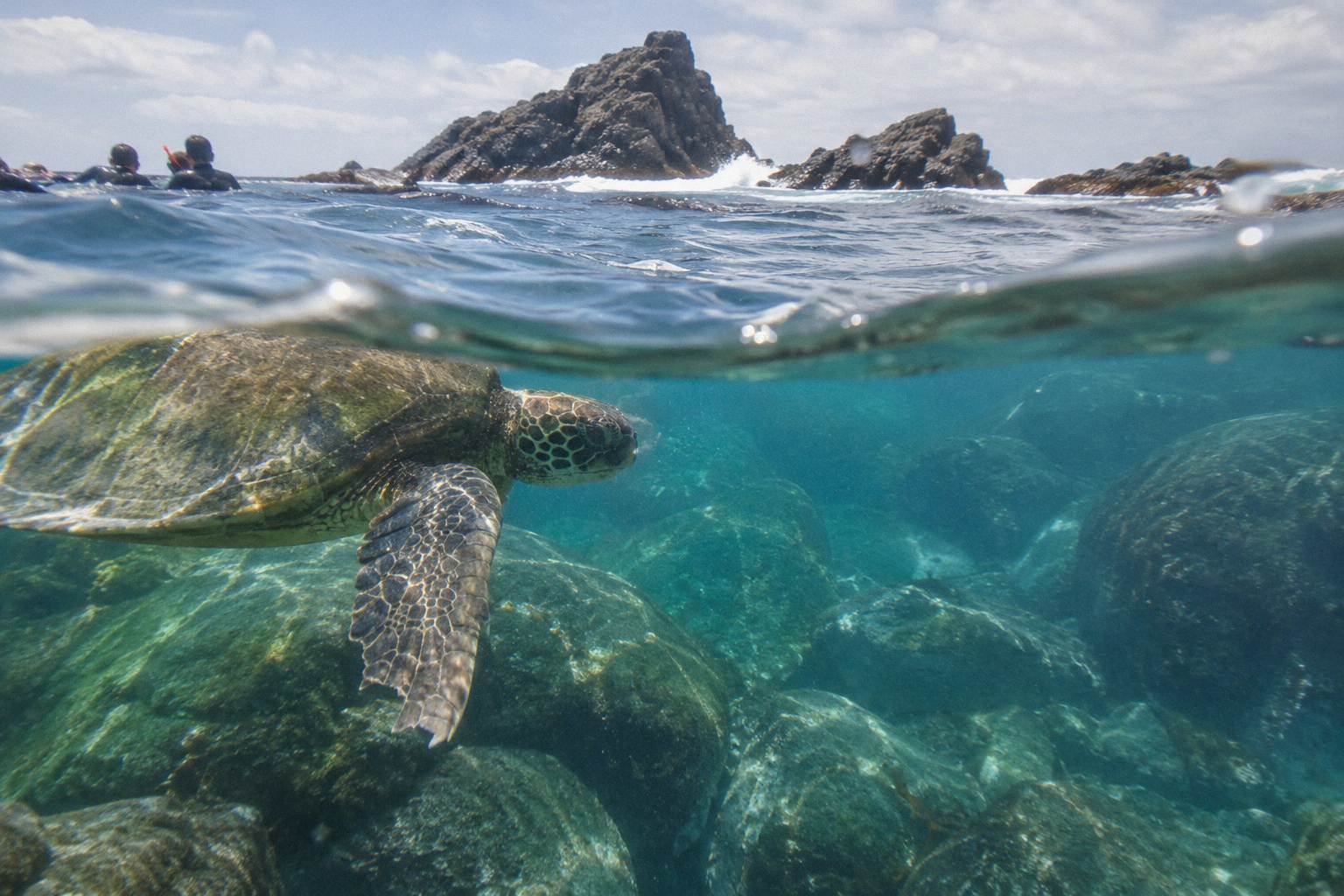
Green, hawksbill and loggerhead turtles are listed at Julian Rocks all year, and one operator says they can be spotted year-round throughout the whole day. Snorkel trips work shallow sheltered areas of 3 to 12 m. No trip guarantees a sighting: the operator itself says it cannot guarantee turtles will be there. Trips run about 2.5 to 3 hours, from AUD 94.
Open-ocean snorkelling does not come with promises, and Julian Rocks is an open-ocean site. What it does come with is an unusual concentration of marine life in a small, protected patch of water about 2.5 km off Cape Byron, where the East Australian Current meets cooler southern water and operators describe more than 500 fish species overall. Turtles are part of that mix in every season, which is why so many people book a Julian Rocks snorkel trip hoping to swim beside one. This guide pulls together what government agencies and the operators themselves actually say, species by species and trip by trip, so your expectations are set by the record rather than by a brochure.
Which Turtle Species Live At Julian Rocks?
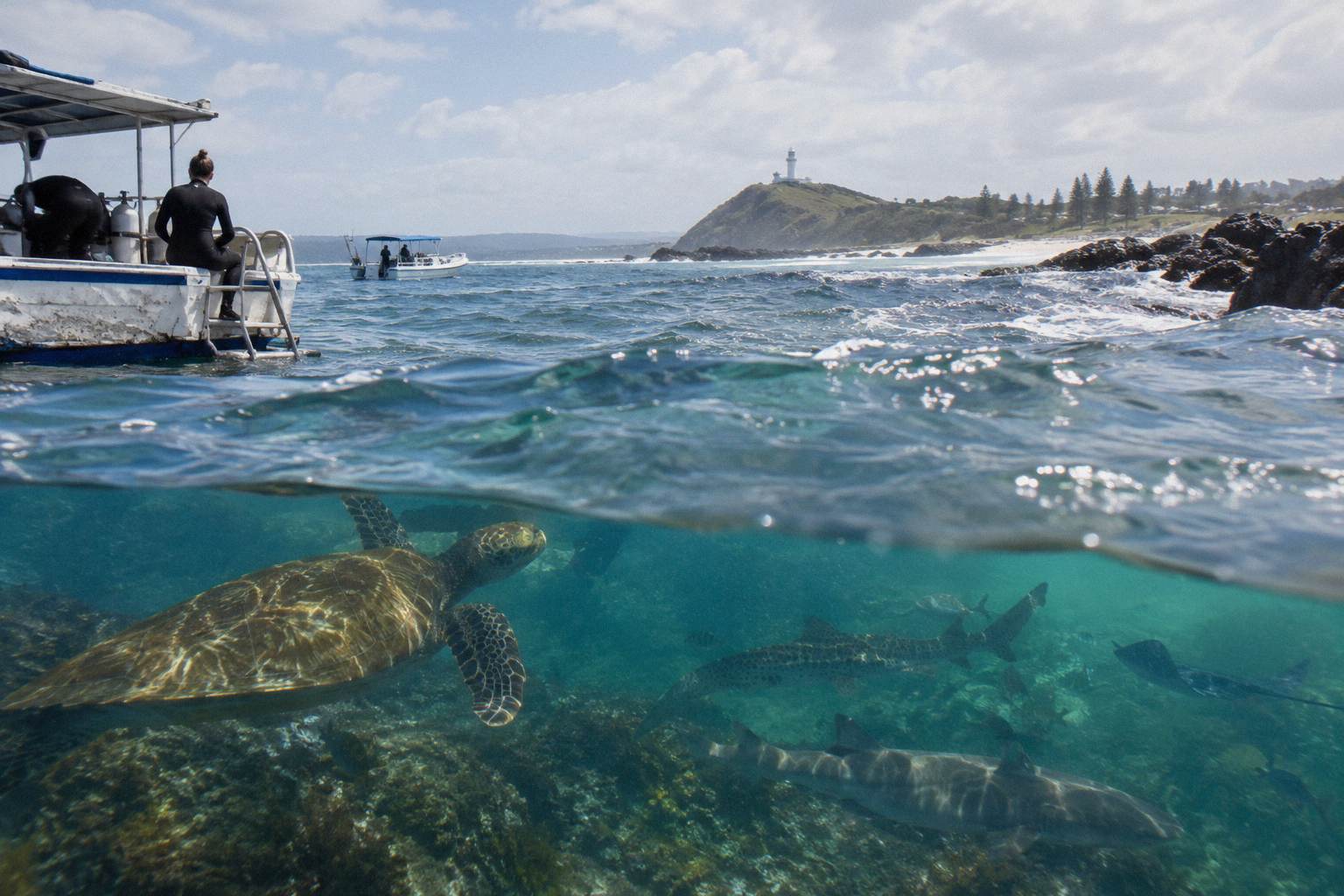
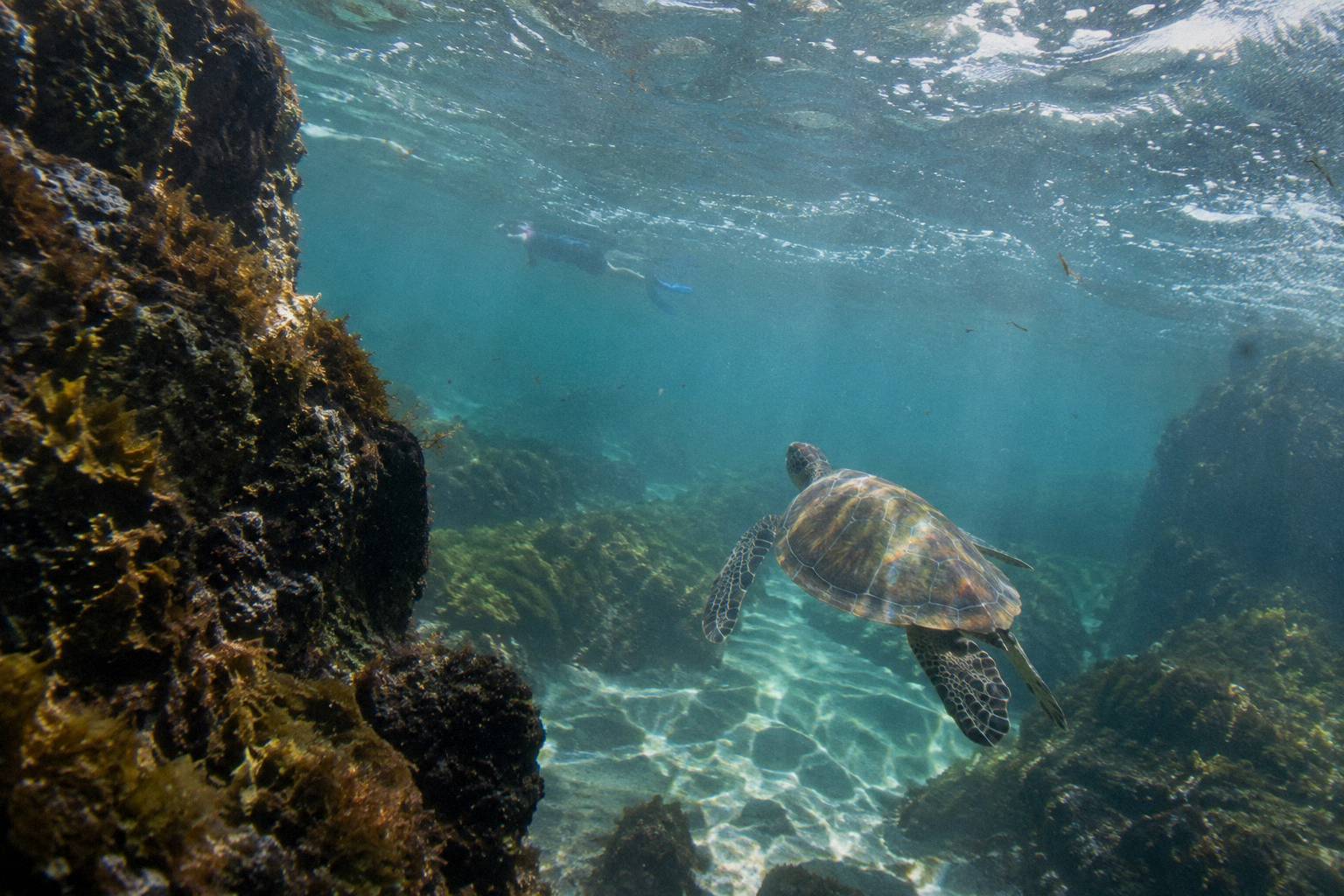
Three sea turtle species are on record at the rocks: green, hawksbill and loggerhead turtles, and operators list them all year rather than in a season. One dive operator's site groups turtles with rays, crustaceans, nudibranchs, octopuses, eels and fish as animals present year-round. The state agency's own page for the marine park lists turtles among the sharks, rays, eels, starfish and corals found there.
That is the official picture, and it matters because it is unusual. Most famous snorkel destinations have a turtle season. At Julian Rocks the operator pages simply place turtles outside the seasonal column altogether: leopard sharks get a December-to-April window, grey nurse sharks a June-to-November window, manta rays a summer mention, and turtles get "all year".
The reason is structural. The rocks sit where warm tropical water carried south by the East Australian Current mixes with cooler temperate water, so the site hosts both warm-water and cool-water species across the calendar. A green turtle grazing the shallow areas in July is not an anomaly here; it is the normal state of a place where the operators describe over 1000 marine species overall. The site is also fully protected inside a sanctuary zone of Cape Byron Marine Park, which bans fishing and collecting, so the resident population is not being fished out between your visits.
| Species | When operators list it | Where it fits for snorkellers |
|---|---|---|
| Green turtle | All year | The species most associated with the shallow sheltered snorkel areas |
| Hawksbill turtle | All year | Listed alongside green turtles in the year-round group |
| Loggerhead turtle | All year | Listed as present year-round; a threatened species in Australian waters |
If you want the wider picture of everything else in the water, our Julian Rocks marine life guide covers the rays, sharks and fish in detail, including which of them a snorkeller realistically shares water with.
How Likely Am I To Actually See One?
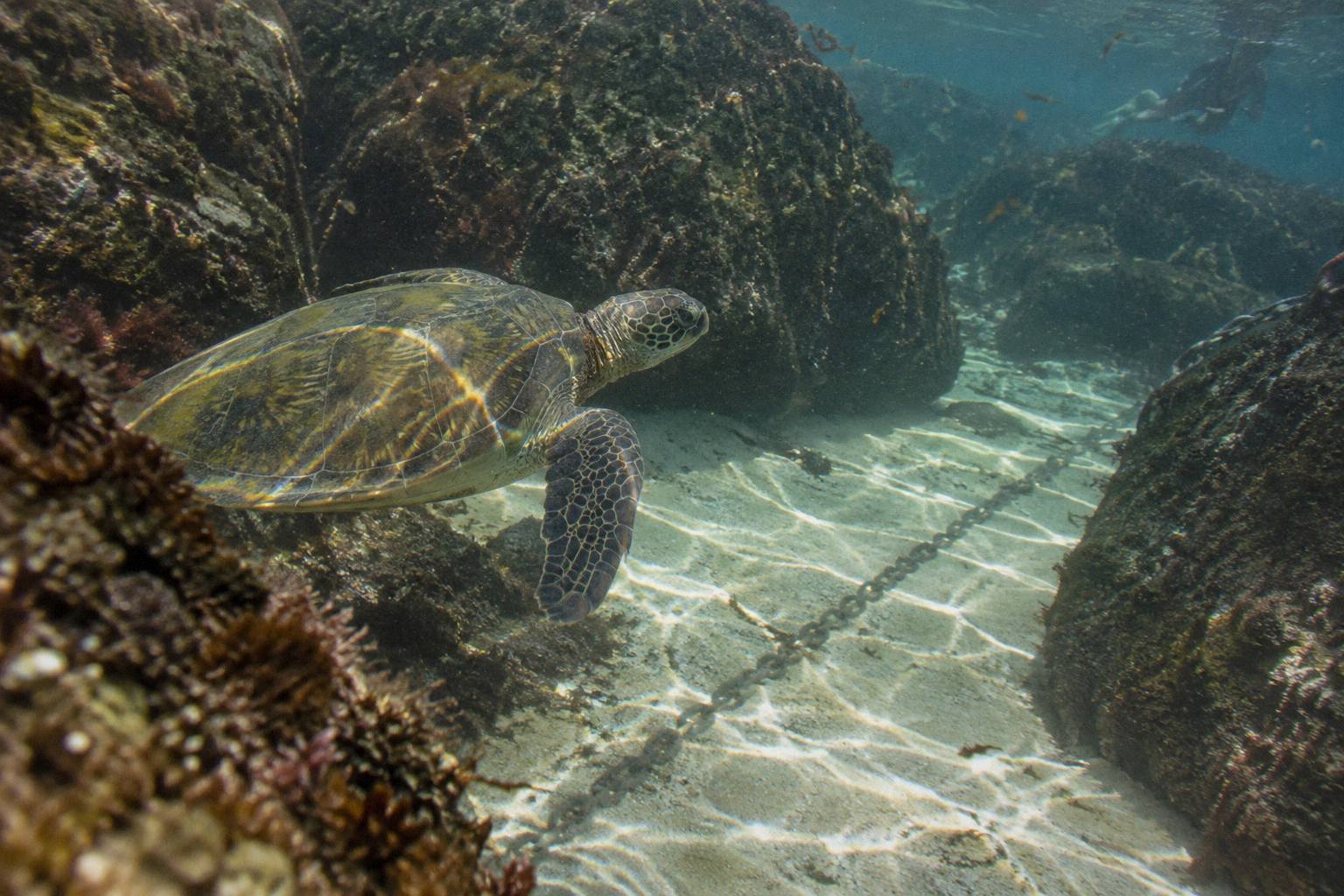
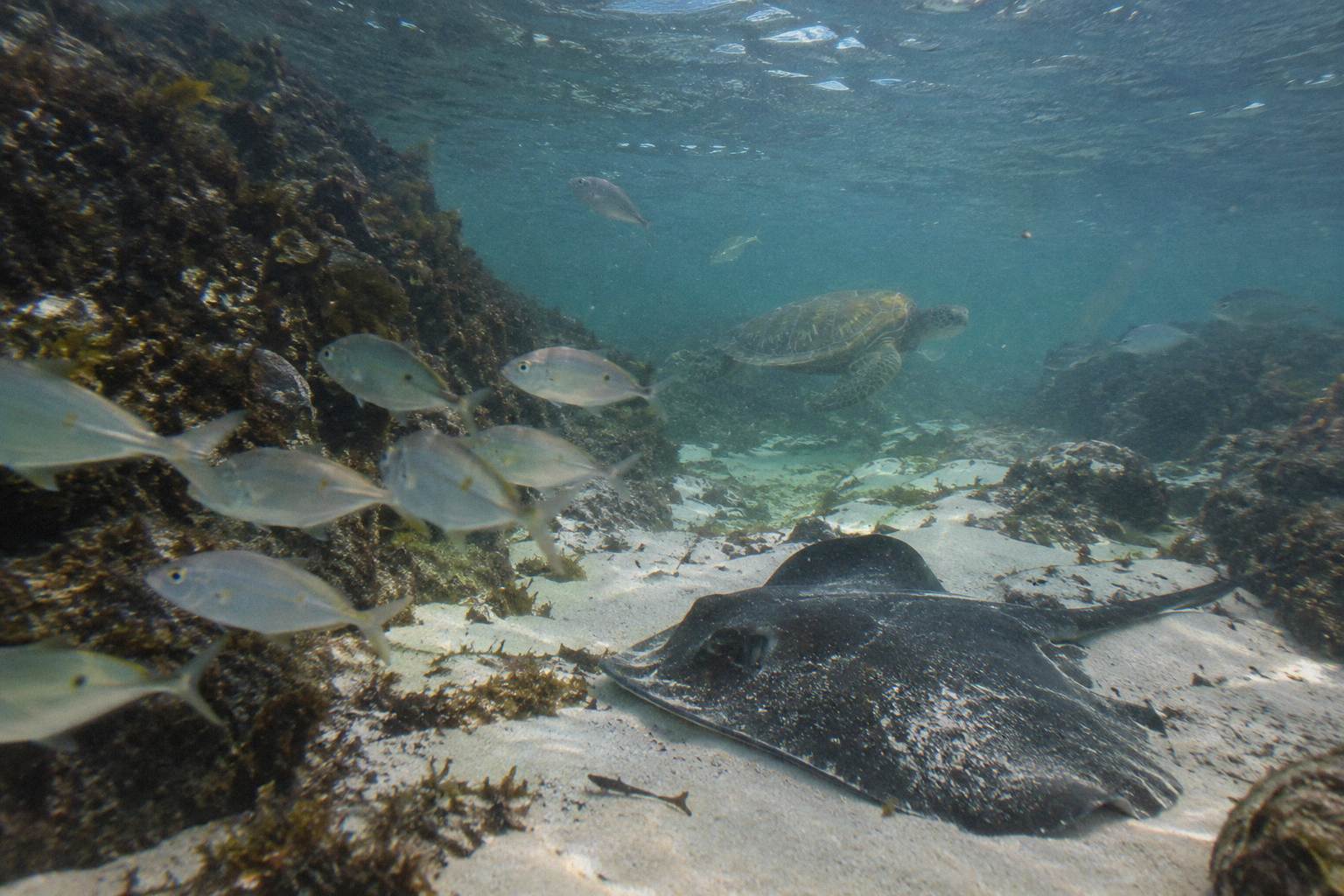
No sighting odds exist anywhere on the record, and no honest page can give you one. What the record does say: one operator states turtles can be spotted year-round throughout the whole day, and the same operator says it cannot guarantee sea turtles will be there. Snorkel trips are described as seeing turtles, rays and colourful fish in shallow sheltered areas 3 to 12 m deep, which is the habitat turtles use.
Both halves of that operator wording deserve equal weight. The first half is genuinely encouraging: year-round, throughout the day, means there is no better month or better departure time to chase. The second half is the part discount brochures leave out. The sea is not an aquarium, the boat moors where conditions on the day allow, and a turtle that was feeding at the surface at 9 am may be resting under a ledge at noon.
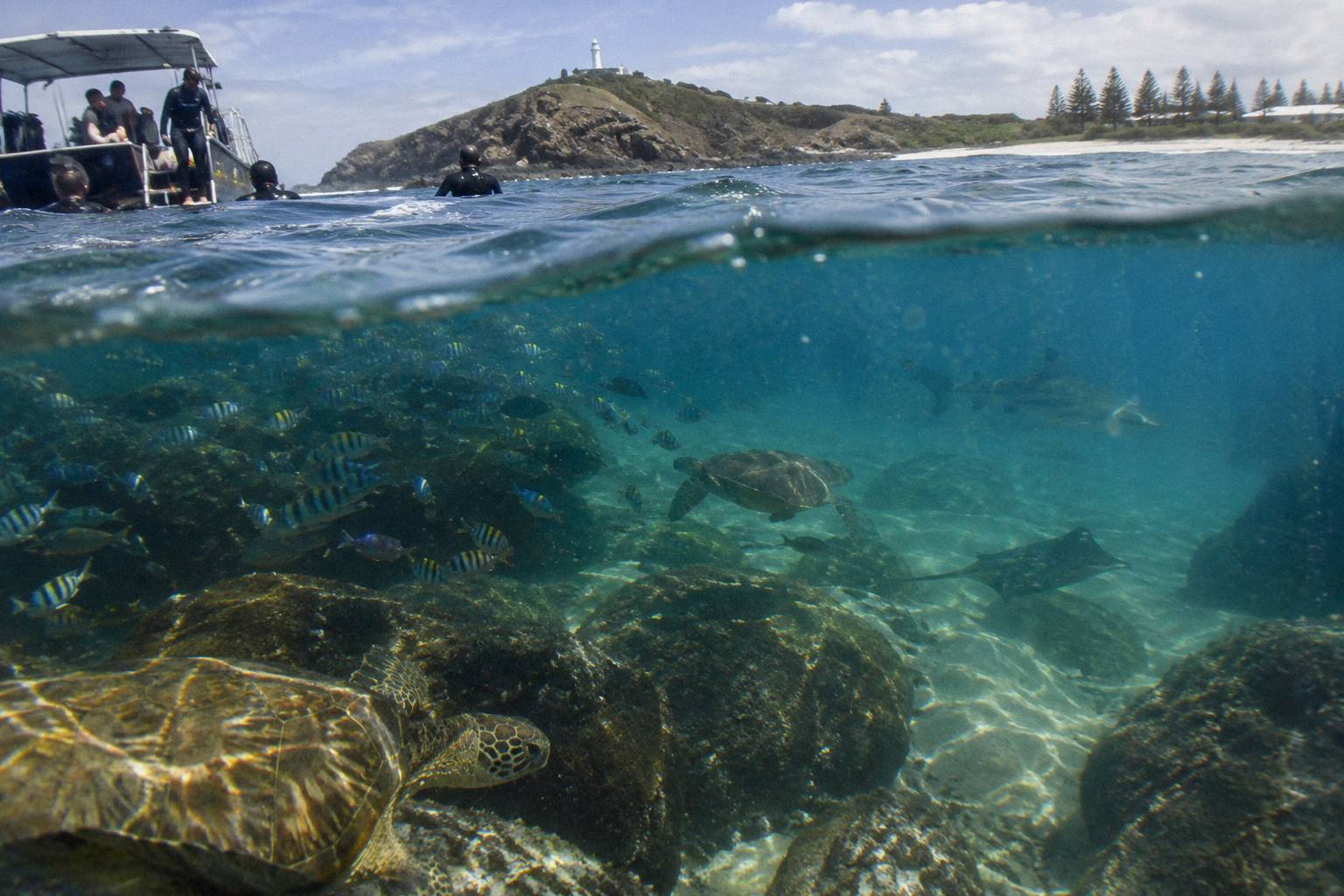
The practical reading is this: turtle encounters at Julian Rocks are common enough that trips are named around them, and uncertain enough that the operator whose entire brand is turtle education still prints a no-guarantee line. Set your expectation at "a good chance of at least one turtle, and plenty else either way" and you will not be disappointed. The site's shallow areas hold rays, wobbegongs at the dive sites, octopuses, eels, nudibranchs and clouds of reef fish, so a turtle-free hour is still a full hour.
For a deeper look at how seasons change the odds for every animal at the rocks, see our best month to snorkel Julian Rocks breakdown.
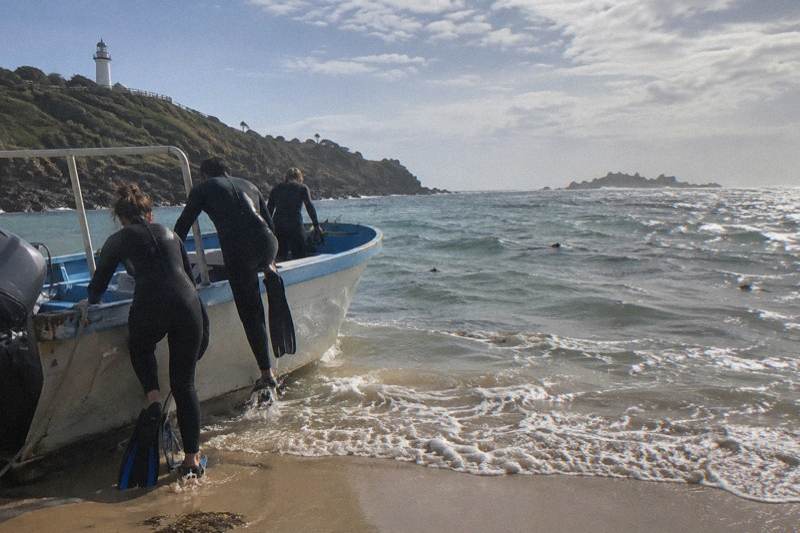
Three trips cover the same shallow water in slightly different formats, which is the real decision in front of you. The turtle-focused option runs from town with a transfer to the boat; the two Brunswick Heads options run about 2.5 hours from the harbour north of Byron Bay.
Which Snorkel Trip Is The Turtle-Focused One?
The trip built around turtles is the Byron Bay Dive Centre Sea Turtle Snorkel, about 2.5 hours total with roughly 60 minutes in the water, minimum age 10. Its sister listing, the Turtle School trip, is the same operator and format from a Byron Plaza meeting point with transport to the boat at The Pass. Both include gear, wetsuit and the transfer.
“Ride out, location, gear. And what we saw was great! Really enjoyed it. Signage and directions where to meet could be improved.”
The distinction between the two listings is mostly where you meet. The Turtle School trip checks in at Turtle School in Byron Plaza on Jonson Street, in the middle of town, then drives you to The Pass where the vessel departs; there is no pick-up from accommodation. The Sea Turtle Snorkel listing covers the same operator's turtle-format trip.
What the operator's own pages say about the experience is unusually specific, and the swimming standard depends on who you book with. Blue Seafaris asks that all participants be comfortable swimming in open water, offering pool noodles for float support though no flotation jackets for non-swimmers. Out Of The Blue Adventures is stricter: you must be able to swim 200 m unassisted before booking, and crew can remove snorkelers who cannot, with no refund. Fins, mask, snorkel and wetsuit are included, with 5 mm long wetsuits advised for the duration. There are no prescription masks, though contact lenses are fine. For nervous snorkellers the operator suggests a long wetsuit or a pool noodle. Ginger seasickness tablets are on the boat, and bringing your own is recommended. One rule to know early: guests with pregnancy or back or spinal injuries are prohibited from vessel-based activities on this operator's trips.
The weather and cancellation terms are also on the operator's own FAQ. If weather or sea is unsuitable, the operator contacts guests by text or phone with a full refund or a reschedule. Otherwise the cancellation policy is 48 hours, with a 100% fee inside that window, and a booking made through an agent follows the agent's refund policy. Rating and price are on the booking page.
| Trip | Format | Duration | Meeting point | Price and rating |
|---|---|---|---|---|
| Turtle School trip (Byron Bay Dive Centre) | Turtle-format snorkel from town with transfer | About 3 hours | Byron Plaza, Jonson Street, then The Pass | On the booking page |
| Blue Seafaris snorkel | Biologist-guided snorkel from the harbour | About 2.5 hours | 43 Harbour Way, Brunswick Heads Boat Harbour | From AUD 94, 4.5 across 448 reviews |
| Out Of The Blue snorkel | Boat snorkel from the harbour | About 2.5 hours | Brunswick Heads Boat Harbour | From AUD 94, 4.4 across 167 reviews |
What About The Other Julian Rocks Trips?
The Blue Seafaris and Out Of The Blue trips both run about 2.5 hours from Brunswick Heads Boat Harbour, a short drive north of Byron Bay town, and both cost from AUD 94 per person. Blue Seafaris is described on its listing as biologist-guided and shows 4.5 across 448 reviews. Out Of The Blue shows 4.4 across 167 reviews on its main booking page, and a second booking page shows 4.7 across 58 reviews.
Neither of these is branded as a turtle trip, but both snorkel the same shallow sheltered water, 3 to 12 m deep, that the turtle-format trips work. The choice between them and the Byron Bay Dive Centre options is really a choice of logistics: harbour check-in versus town check-in with a transfer, 2.5 hours versus 3, and different minimum ages.
On ages, there is no single rule for the site. The Byron Bay Dive Centre turtle trip states a minimum age of 10. Operator pages elsewhere at the rocks show minimums of 7 and 5 for their own trips, so the minimum is the one printed on the page of the trip you book. For Blue Seafaris and Out Of The Blue the booking pages state none: ask the operator when you book if you are travelling with children. Our kids on the Julian Rocks snorkel trip guide works through the family angles in full.
“We had such a good time, Harry was wonderful and had great energy, we were so happy with the tour!”
One more operator requirement worth flagging, attributed strictly to its own page: another Julian Rocks operator, Sundive Byron Bay, requires previous open-ocean snorkelling experience and the ability to swim 200 m unassisted, with a minimum age of 7. A third, Wild Byron, sets minimum age 5, caps tours at 12 passengers and uses a naturalist guide. Read the requirements on the specific listing before you assume they are all the same.
After that paragraph, here is the Blue Seafaris listing on its own, since the biologist-guided format is the closest alternative to the turtle-focused trips:
And the Out Of The Blue listing, for the format and price contrast:
Does The Time Of Year Change Turtle Sightings?
For turtles specifically, no operator publishes a better or worse season: turtles are listed all year. The calendar matters more for everything else at the rocks, with leopard sharks mostly December to April and grey nurse sharks June to November, and the grey nurses sit at dive depths of 8 to 24 m, which snorkel trips do not reach. Water temperature swings are the other seasonal factor.
That seasonal detail is worth understanding properly, because it shapes what a turtle trip feels like through the year. In summer months operators highlight manta rays and leopard sharks, with the leopards gathering in the Needles sandy arena during the warmer months from December to April. In the cooler winter water, endangered grey nurse sharks move into the sand trenches during colder months, June to November. Trenches full of grey nurses are a diving story, not a snorkelling one: those trenches run 8 to 24 m down, while snorkel trips stay in the shallow sheltered areas of 3 to 12 m where the turtles, rays and reef fish hold. The rest of the planning pages sit on Julian Rocks Snorkelling.
Winter water can drop to around 17 °C against an average near 20 °C, which is why 5 mm long wetsuits are advised and why all the trips include one. One operator also flags strong northerlies between September and Christmas as the site's roughest weather pattern, and the site is genuinely open-ocean: strong swells, currents, surges, cold water and winds are all listed as possible. When the sea turns, trips are rescheduled or refunded rather than pushed through, which is exactly what the Byron Bay Dive Centre weather policy describes.
| Season | What operators highlight | Relevance to a turtle snorkel |
|---|---|---|
| December to April | Leopard sharks in the Needles sandy arena; manta rays in summer | Turtles still listed all year; warmer water |
| June to November | Grey nurse sharks in sand trenches at 8 to 24 m | Trench depth is dive-only; snorkel areas unaffected |
| All year | Turtles, rays, wobbegongs at dive sites, octopuses, eels, nudibranchs, reef fish | The baseline for every trip |
If your dates are flexible, our Byron Bay water temperature by month guide has the month-by-month detail, and the Julian Rocks visibility by season page covers how clear the water is through the year.
What Rules Protect The Turtles, And What Do They Mean For You?
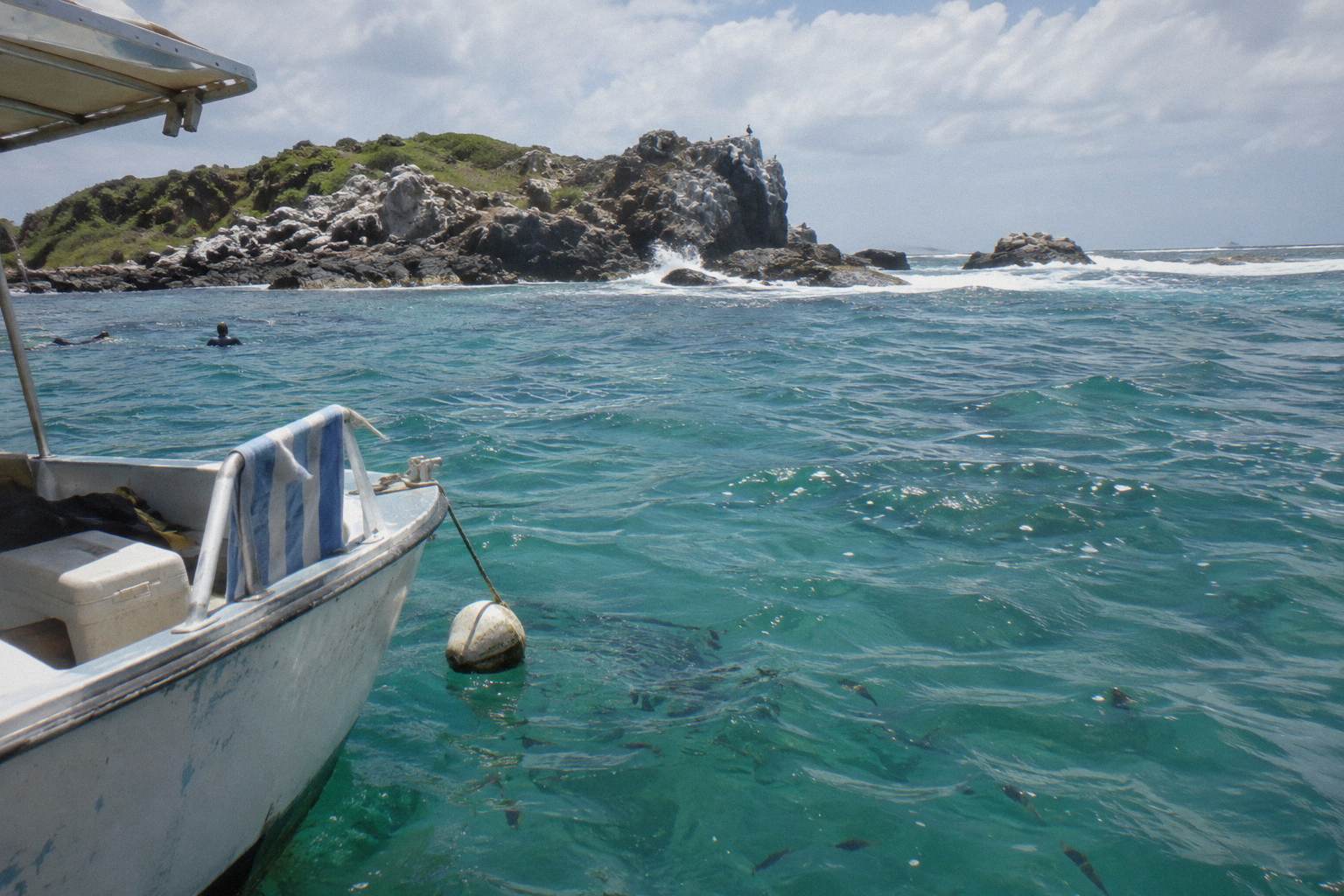
Julian Rocks sits in a sanctuary zone of Cape Byron Marine Park, the highest protection: no fishing, no collecting, no anchoring on reefs, all species protected. Snorkelling is expressly permitted. Boats hold 4 knots within 200 m, anchoring is banned within 700 m, and the seven marine park moorings have a 2 hour maximum. Touching, collecting or harassing marine life is prohibited.
The zoning is the reason the turtles are still here in numbers, and it is worth knowing the specifics because they shape your trip without limiting it. Sanctuary zones cover 6,118 ha, 27.5% of the marine park, and the activities permitted in them are those that do not harm any animal, plant or habitat: boating, surfing, snorkelling, diving and permitted research and education. So nothing about the protection restricts a snorkeller's freedom in the water; what it restricts is taking things out of it. Collecting or destroying animals and spear fishing are prohibited at the rocks, which NSW Government pages also record as a bird sanctuary for gulls, terns, tattlers, cormorants and plovers.
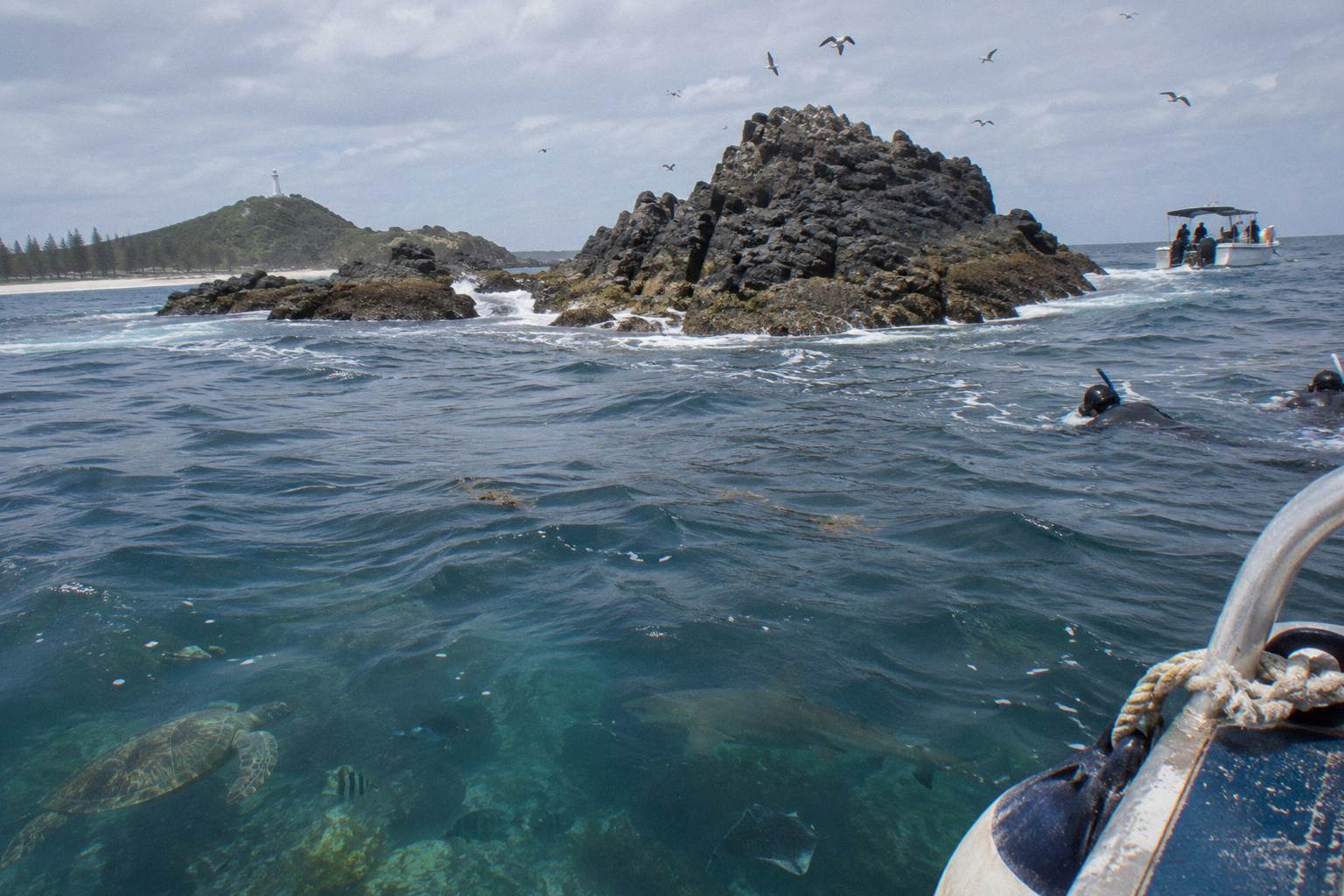
The boat-side rules explain part of your trip's rhythm. Vessels must limit speed to 4 knots within 200 m of the rocks, anchoring is not permitted within 700 m, and the seven Marine Parks moorings take boats up to 15 tonnes or 10 m in winds of 24 knots or less, with a 2 hour maximum stay, no fishing from a moored vessel and no rafting. That 2 hour cap is one reason trips are built around roughly an hour in the water. Fish feeding, including shark feeding, is prohibited across the marine park, so nothing is chummed to the surface for your benefit.
For you in the water, the operator rules line up with the park rules. Byron Bay Dive Centre's FAQ is explicit: do not touch, collect or harass marine life, and cameras must be waterproof with no flash. Say nothing beyond that about approaching wildlife, no official approach distance figure exists, so the honest instruction is simply to keep your distance and let the turtle choose the encounter. The marine park's own user guide names grey nurse sharks among its threatened species, which tells you how seriously the state treats this patch of water.
The official detail sits on the DPIRD Cape Byron Marine Park page, and the full rules are in the marine park user guide. Our plain-language summary is the Cape Byron Marine Park snorkel rules guide.
Can You Snorkel With Turtles If You Are Nervous Or Not A Strong Swimmer?
Every trip requires competent swimming. Two operators, Out Of The Blue Adventures and Turtle School, require 200 m unassisted; the other Byron Bay Dive Centre turtle tour asks for 25 m plus comfort in the water. Blue Seafaris offers pool noodles for nervous snorkellers but no flotation jackets for non-swimmers, and crew are in the water with you. There is no non-swimmer option on any listed trip; if you cannot swim that far, a boat-based wildlife trip is the better booking.
Start with the honest baseline. Byron Bay Dive Centre's sea turtle tour asks that participants swim at least 25 m unassisted and be comfortable in the water, with no life jackets to snorkel in, while its Turtle School tour at the rocks sets the bar higher at 200 m unassisted in open ocean. Blue Seafaris states up front that you must be comfortable swimming in open water, offering pool noodles but no flotation jackets for non-swimmers, and Out Of The Blue requires a 200 m unassisted swim before booking, with crew removing snorkelers who cannot manage it, no refund. So the requirement, like the minimum age, is a per-trip fact, and it is on the listing.
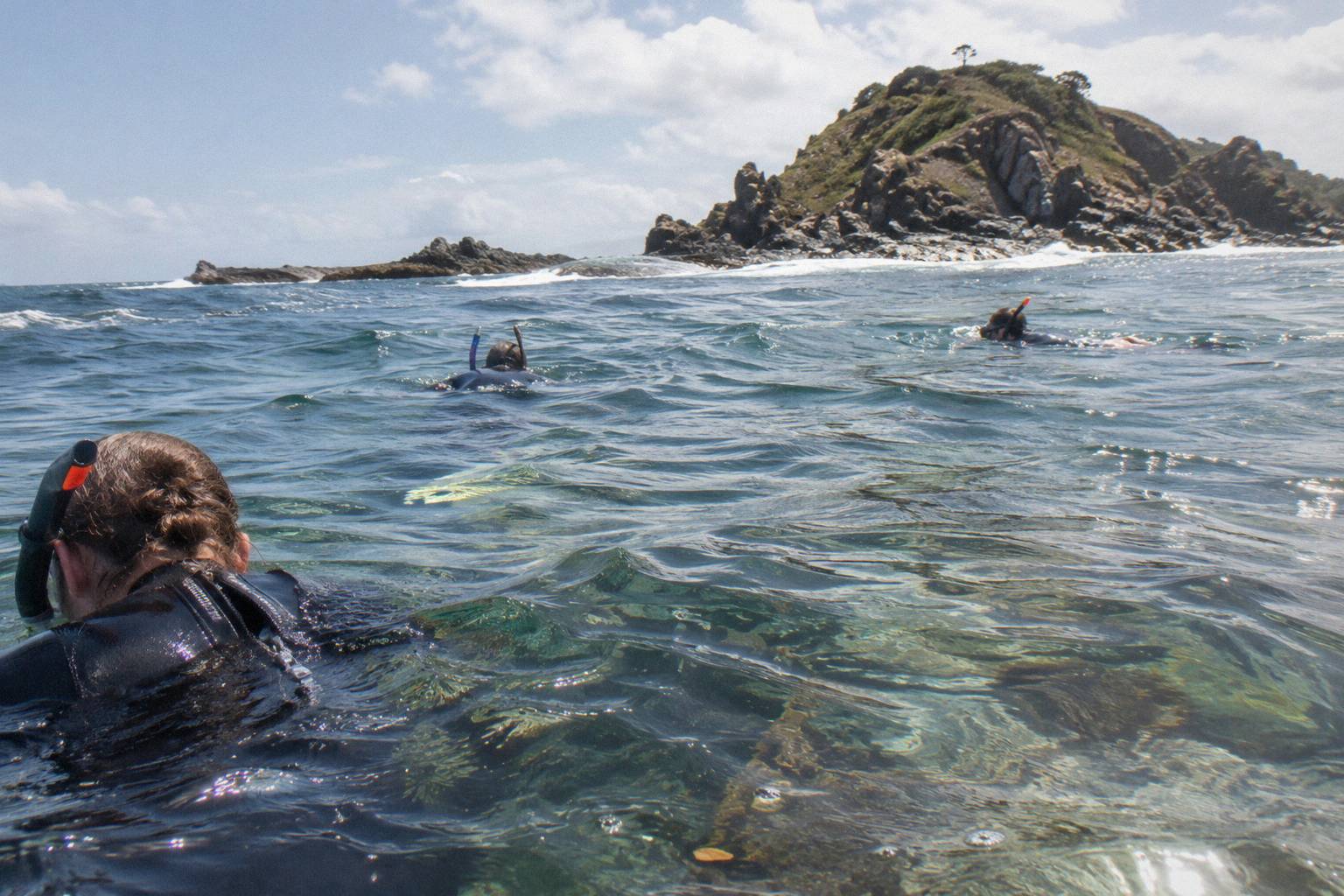
If you can swim but open water worries you, the record offers real comfort. The turtle trips stay in shallow, sheltered areas rather than open current lines, and the operator explicitly suggests a long wetsuit or a pool noodle for float support, with lifejackets on board. Trips carry guides, the turtle-format trip caps its water time at about an hour, and the boat is never more than a short swim away in 3 to 12 m of water. Seasickness is treated the same way: ginger tablets on the boat, own tablets recommended. Our snorkelling safety at Julian Rocks and how fit you need to be posts cover the nervous-snorkeller ground in detail.
One adjacent option is worth naming for the swimming-averse. The Byron Bay Sea Kayak Tour is built around dolphins and turtles viewed from a kayak rather than the water, about 2.5 hours, with no price or rating printed on its booking page. It is not a snorkel trip and you will not share the water with a turtle, but it puts you over the same coastal ecosystem with a lower swim requirement.
Planning Your Turtle Trip: The Short Checklist
Book the turtle-format trip for town convenience with a transfer, or a Brunswick Heads trip for a shorter 2.5 hour format from AUD 94. Dress for the season's water temperature, bring contact lenses rather than expecting prescription masks, note the 48 hour cancellation window on the turtle trip, and check the meeting point on the booking page for any trip where it is not printed.
Run through the practicalities once, in one place. Meeting points differ by trip and only by trip: Blue Seafaris at 43 Harbour Way, Brunswick Heads Boat Harbour; Out Of The Blue at Brunswick Heads Boat Harbour; Turtle School at Byron Plaza on Jonson Street with transport to The Pass; for the Sea Turtle Snorkel and the kayak trips, check the meeting point on the booking page. Never assume a launch from Main Beach or Clarkes Beach, because none of the listings says so. Give the drive between Byron Bay town and Brunswick Heads a few extra minutes in holiday traffic.
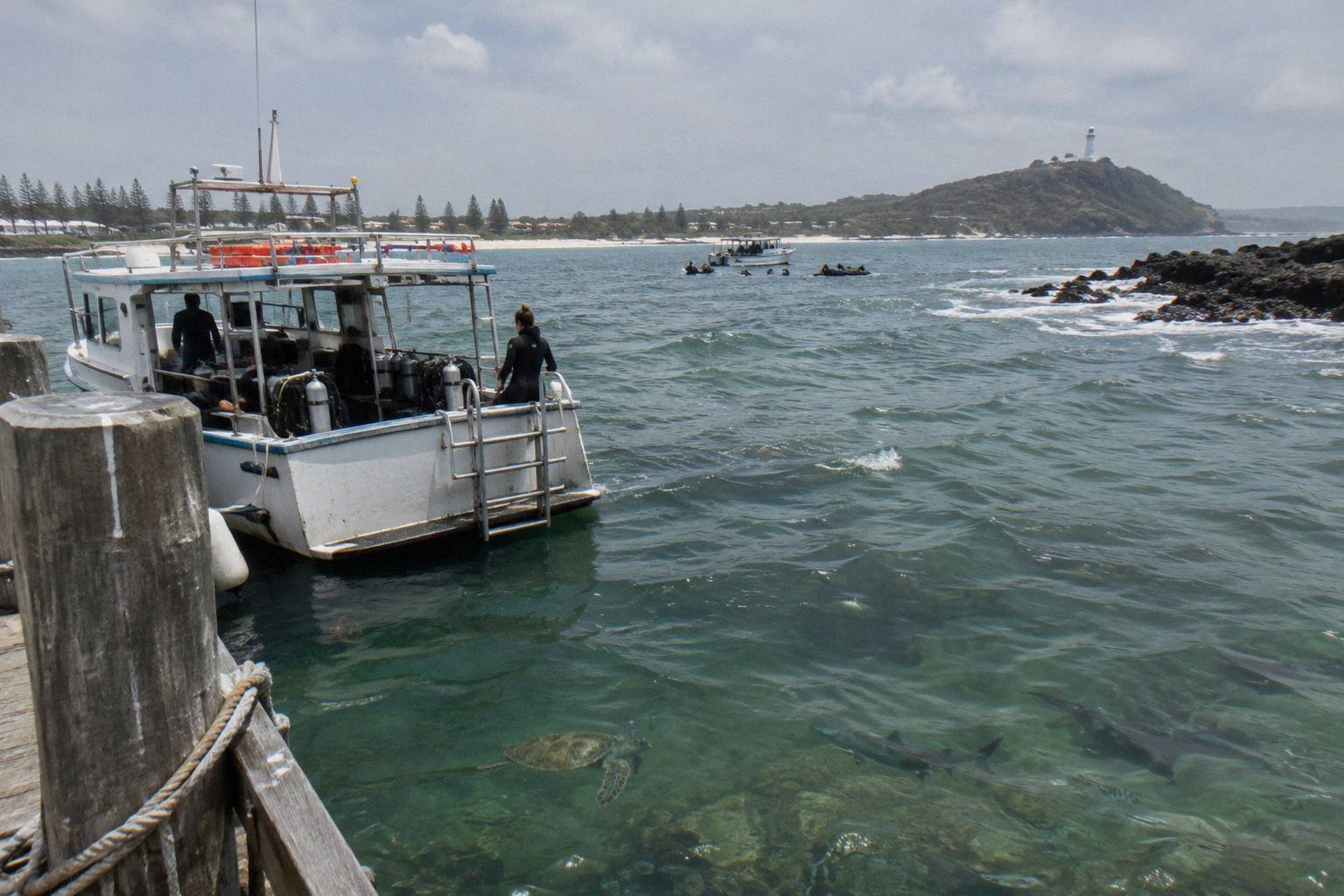
Gear and clothing are simple because so much is included. Every trip profiled here includes snorkel gear and a wetsuit, and the turtle trips advise a 5 mm long suit year-round. What is not included anywhere: prescription masks, so wear contact lenses if you need correction. Waterproof cameras are welcome, flash is not, and the rule against touching, collecting or harassing marine life applies to every operator and every guest in the park. If your dates are tight, our post on how far in advance to book has the timing detail.
Whichever trip you choose, the honest summary from the whole record is a good one: a fully protected reef where three turtle species are present in every month, shallow water built for snorkelling, and operators who tell you plainly that the sea keeps its own schedule. For everything else at the rocks beyond turtles, the complete Julian Rocks Byron Bay guide is the site's overview page.
Common Questions About Turtles At Julian Rocks
Which Turtle Species Live At Julian Rocks?
Green, hawksbill and loggerhead turtles, and operators list all three year-round rather than seasonally. The state agency's marine park page also lists turtles among the sharks, rays, eels, starfish and corals found at the rocks.
Will I Definitely See A Turtle Snorkelling At Julian Rocks?
No, and no operator promises one. One operator says turtles can be spotted year-round throughout the whole day, and the same operator says it cannot guarantee sea turtles will be there. Snorkel trips work the shallow sheltered areas of 3 to 12 m where turtles feed.
When Is The Best Time Of Year To See Turtles At Julian Rocks?
There is no turtle season on record: they are listed all year. Seasons matter more for other animals, with leopard sharks mostly December to April and grey nurse sharks June to November at dive depths of 8 to 24 m, well below snorkel range.
Can You Snorkel With Turtles At Julian Rocks?
Yes, snorkelling is expressly permitted in the sanctuary zone that covers the rocks, and trips are described as seeing turtles, rays and colourful fish in shallow sheltered water. All species are protected, so the encounter is on the turtle's terms.
Can You Touch Or Feed The Turtles?
No. Touching, collecting or harassing marine life is prohibited, collecting and spear fishing are banned at the rocks, and fish feeding is prohibited across the whole marine park. Operators repeat the same rule: look, do not touch.
Which Trip Is The Turtle-Focused One?
The Byron Bay Dive Centre Sea Turtle Snorkel, about 2.5 hours with roughly 60 minutes in the water, minimum age 10, meeting in Byron town with transport to the boat at The Pass on the Turtle School listing. Price and rating are on the booking page.