Is It Safe To Snorkel At Julian Rocks?
An honest look at snorkelling safety at Julian Rocks (Nguthungulli): what operators require, what the marine park rules are, and what happens when conditions turn.
Yes, in the sense the operators mean it: this is a guided open-ocean snorkel for competent swimmers. Blue Seafaris asks that you be comfortable swimming in open water; Out Of The Blue Adventures and Turtle School require 200 m unassisted. It is not a swimming lesson, and every trip is called off when conditions are unsuitable.
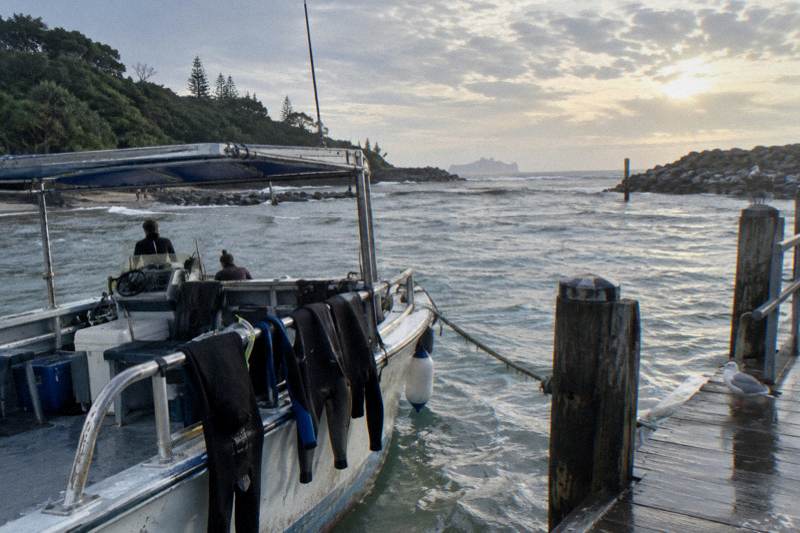
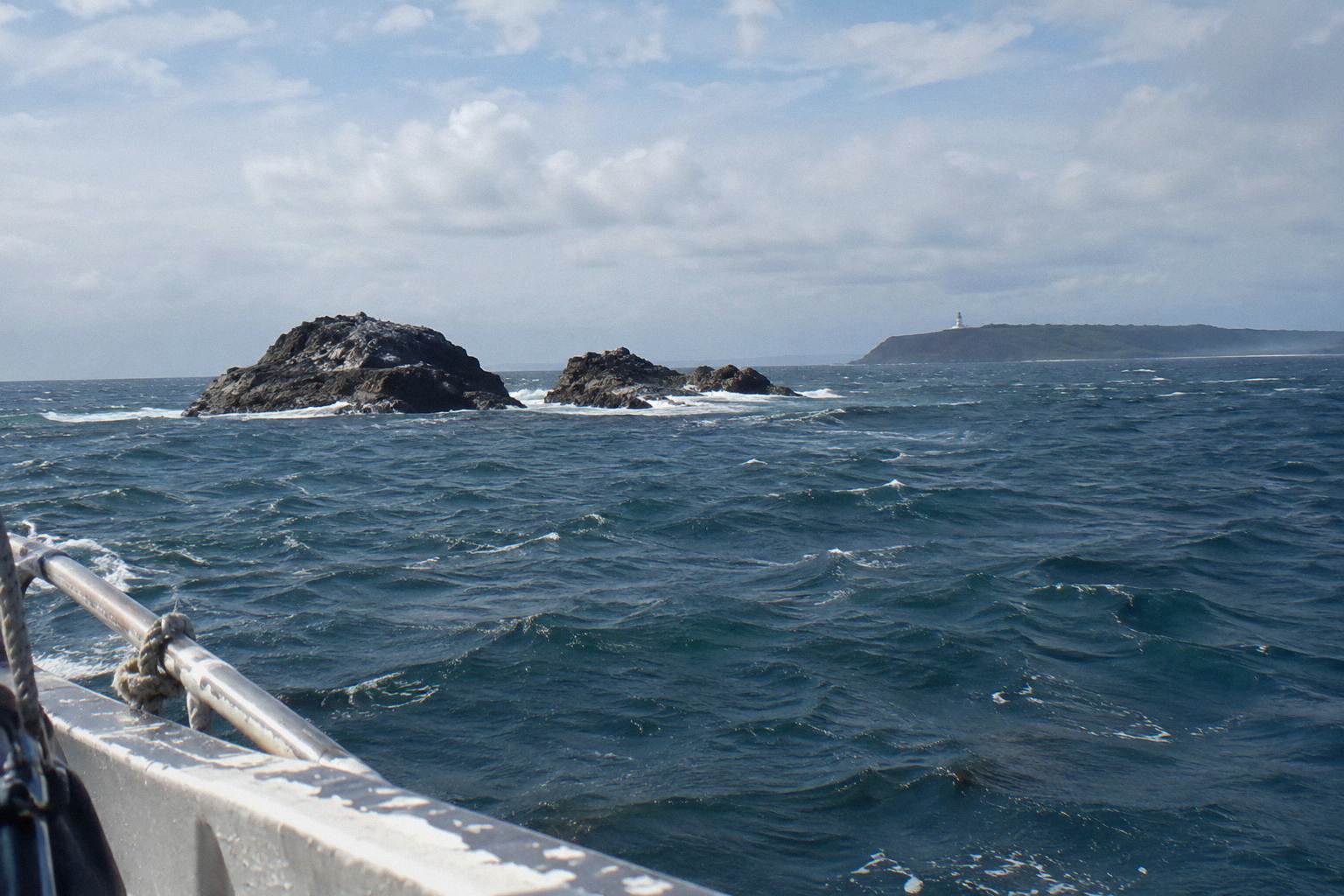
Julian Rocks, officially Nguthungulli Julian Rocks since the dual name was adopted in July 2023, sits about 2.5 km off Cape Byron, a boat ride the operators put at 5 to 10 minutes from Byron Bay. It is not a beach snorkel. You board a vessel, ride out through open water, and snorkel in sheltered shallow areas that operators describe as 3 to 12 m deep. That framing matters for the safety question, because the honest answer depends on the swimmer as much as the site.
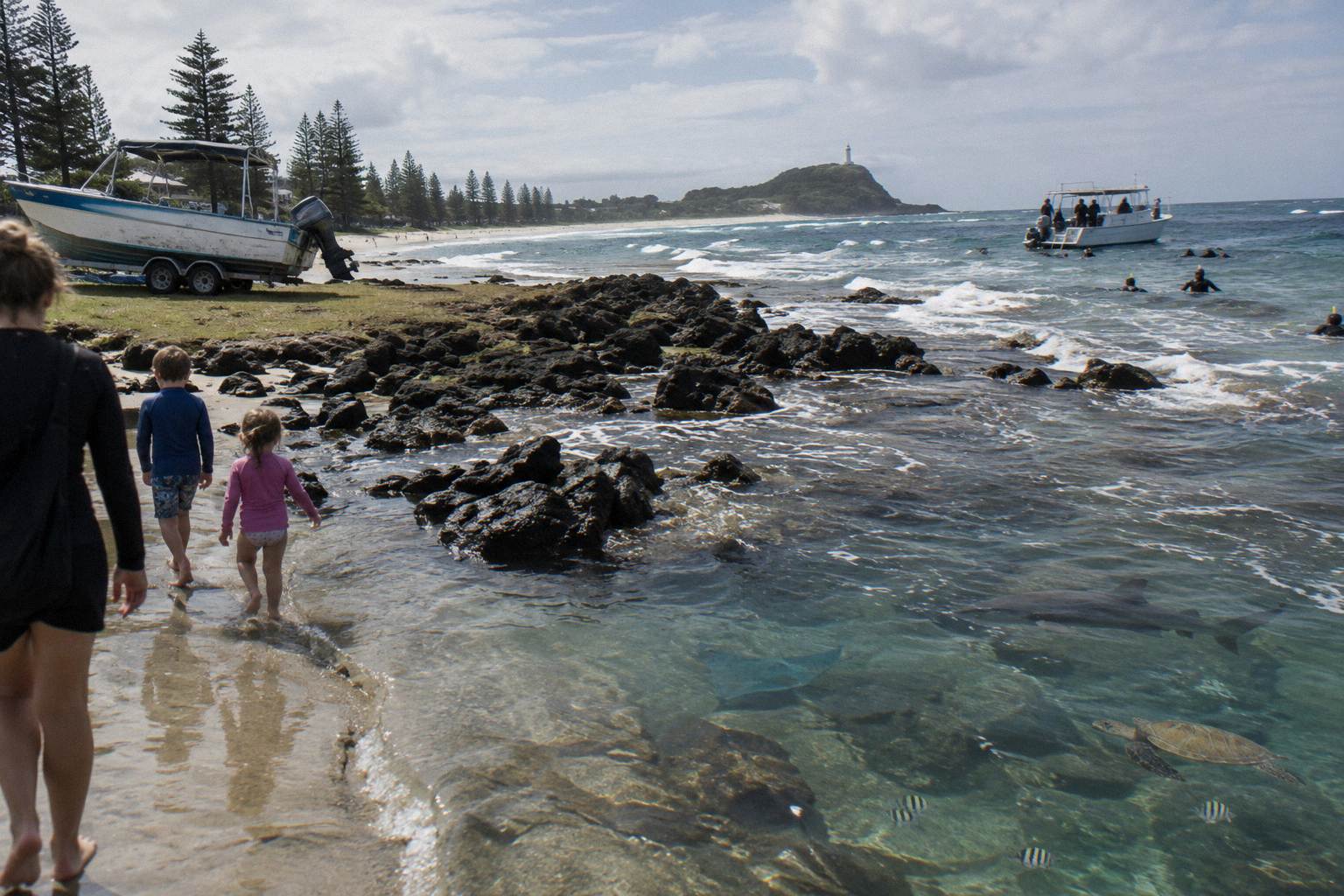
What the site has going for it is protection. The rocks sit inside Cape Byron Marine Park, a park covering about 37 km of coastline and about 220 square km of state waters, where zones and rules commenced in May 2006. The area around the rocks is a sanctuary zone, the highest level of protection in the park, and snorkelling is explicitly listed by NSW's Department of Primary Industries and Regional Development as a permitted activity there. The DPIRD park page describes the rocks as home to sharks, rays, turtles, eels, starfish and corals, all of them protected.
Protection of the place is one thing. Protection of the person is another, and that is where the operator rules come in. No operator promises a safe day, and none should. What they publish instead are conditions for joining, gear that comes with the trip, and a clear process for calling off a departure when the sea is wrong. This article walks through each of those, using only what the operators and agencies actually say.
If you are weighing a booking, three trips cover the range of formats: the biologist-guided Blue Seafaris trip from Brunswick Heads, the Turtle School trip that meets in Byron Bay town, and the Turtle-Focused Snorkel From Byron Town, also run by Byron Bay Dive Centre.
“This excursion was absolutely incredible! We got to see turtles and were even lucky enough to see whales and dolphins very close to us in the water. The explanations from the marine biologist guide were a real plus, and a big thank you to the boat captain, who was so kind and friendly! We highly recommend this experience, without hesitation!”
The featured Blue Seafaris trip, from AUD 94 per person and rated 4.5 across 448 reviews on its booking page, runs about 2.5 hours from Brunswick Heads Boat Harbour at 43 Harbour Way. Out Of The Blue runs a similar 2.5-hour trip from the same harbour, from AUD 94 per person, rated 4.4 across 167 reviews on its main booking page. Both listings do state swimming expectations: Blue Seafaris asks that you be comfortable swimming in open water, with pool noodles available, while Out Of The Blue requires everyone to swim 200 metres unassisted, as the water is too deep to stand in. Neither listing states a minimum age, so ask the operator before you book if that matters to your group.
What Do Operators Require Before You Get In The Water?
Each operator sets its own eligibility bar, and no single standard exists across the trips. Blue Seafaris asks that participants be comfortable swimming in open water, with pool noodles offered and no flotation jackets for non-swimmers. Out Of The Blue Adventures requires a 200 m unassisted swim before booking, and crew will remove snorkelers who cannot manage it, with no refund. The Turtle School (Byron Bay Dive Centre) tour also asks for a 200 m unassisted swim in open ocean, while the separate Byron Bay Dive Centre sea turtle tour asks for just 25 m unassisted and general comfort in the water, with no life jackets to snorkel in.
These are the operator's own published rules, not generic advice, and they vary more than most first-time visitors expect. The practical takeaway for a family or a mixed-ability group is simple: the swimming requirement and any minimum age are the ones on the page of the trip you actually book. Blue Seafaris asks that you are comfortable swimming in open water; Out Of The Blue requires everyone to be able to swim unassisted in water too deep to stand. Neither listing states a minimum age, so if that matters to your group, ask the operator directly before you book.
Byron Bay Dive Centre, which runs both the Turtle School trip and the Turtle-Focused Snorkel From Byron Town, is the most detailed of the operators on file. Its FAQ is explicit that there is no pick-up from accommodation, that the Turtle School tour requires participants to swim at least 200 m unassisted in open ocean, and that its separate Sea Turtle Snorkel Tour asks for at least 25 m unassisted plus comfort in the water, with a minimum age of 10. It also states that guests with pregnancy or back or spinal injuries are prohibited from vessel-based activities. That last rule is Byron Bay Dive Centre's own, and it should not be assumed to apply to any other operator.
“Beautiful trip and saw so much sea life. It was absolutely amazing. The guide did a great job! Overal 12/10 experience!”
The second operator in the research, Sundive Byron Bay, is stricter still. Its snorkel trips require previous open-ocean snorkelling experience, the ability to swim 200 m unassisted in open ocean, accompanying adult guardians for children aged 7 to 18 who can swim, and a GP clearance letter for guests over 65, with the same letter applying over 70. The third operator takes the opposite approach: minimum age 5, tours capped at 12 passengers, and a naturalist guide aboard. Three operators, three different doors.
| Trip (operator) | Swimming requirement | Minimum age | Other conditions stated |
|---|---|---|---|
| Sea Turtle Snorkel Tour (Byron Bay Dive Centre) | Must swim at least 25 m unassisted and be comfortable in the water; no life jackets to snorkel in | 10 | Pregnancy, back or spinal injuries prohibited from vessel-based activities |
| Sundive Byron Bay's snorkel trip | Prior open-ocean experience, 200 m unassisted swim | 7, with adult guardian to 18 | GP clearance over 65, same letter over 70 |
| Wild Byron's tour | Must be able to swim | 5 | Max 12 passengers, naturalist guide |
| Blue Seafaris and Out Of The Blue trips | Open-water confidence (Blue Seafaris); 200 m unassisted swim (Out Of The Blue) | Not stated | Ask the operator before booking |
For anyone unsure whether their swimming is up to an open-ocean site, the honest framing is this: the operators treat swimming comfort as the entry condition, and the site itself is described by one dive operator as subject to strong swells, currents, surges, cold water and winds. If you want a fuller picture of that boundary, the guide to whether non-swimmers can join a Julian Rocks trip works through the same operator statements in more detail.
Do You Have To Be A Strong, Confident Swimmer?
Yes, but the bar differs by operator. Blue Seafaris asks that you be comfortable swimming in open water; pool noodles are available, though flotation jackets for non-swimmers are not provided. Out Of The Blue Adventures requires everyone to swim 200 metres unassisted, as the water is too deep to stand in, and crew remove snorkelers who cannot, with no refund. Turtle School (Byron Bay Dive Centre) sets the same 200-metre bar in open ocean on its Nguthungulli tour, while the separate Byron Bay Dive Centre sea turtle tour asks for 25 metres unassisted plus comfort in the water, with no life jackets to snorkel in. Neither Blue Seafaris nor Out Of The Blue states a minimum age.
Byron Bay Dive Centre's requirements deserve a close read. The Nguthungulli Julian Rocks tour, run by Turtle School (Byron Bay Dive Centre), requires you to swim at least 200 m unassisted in open ocean. The separate 2.5-hour sea turtle experience asks for at least 25 m unassisted, adds that you must be comfortable in the water, and offers no life jackets to snorkel in. Comfort, like distance, is a prerequisite rather than a bonus.
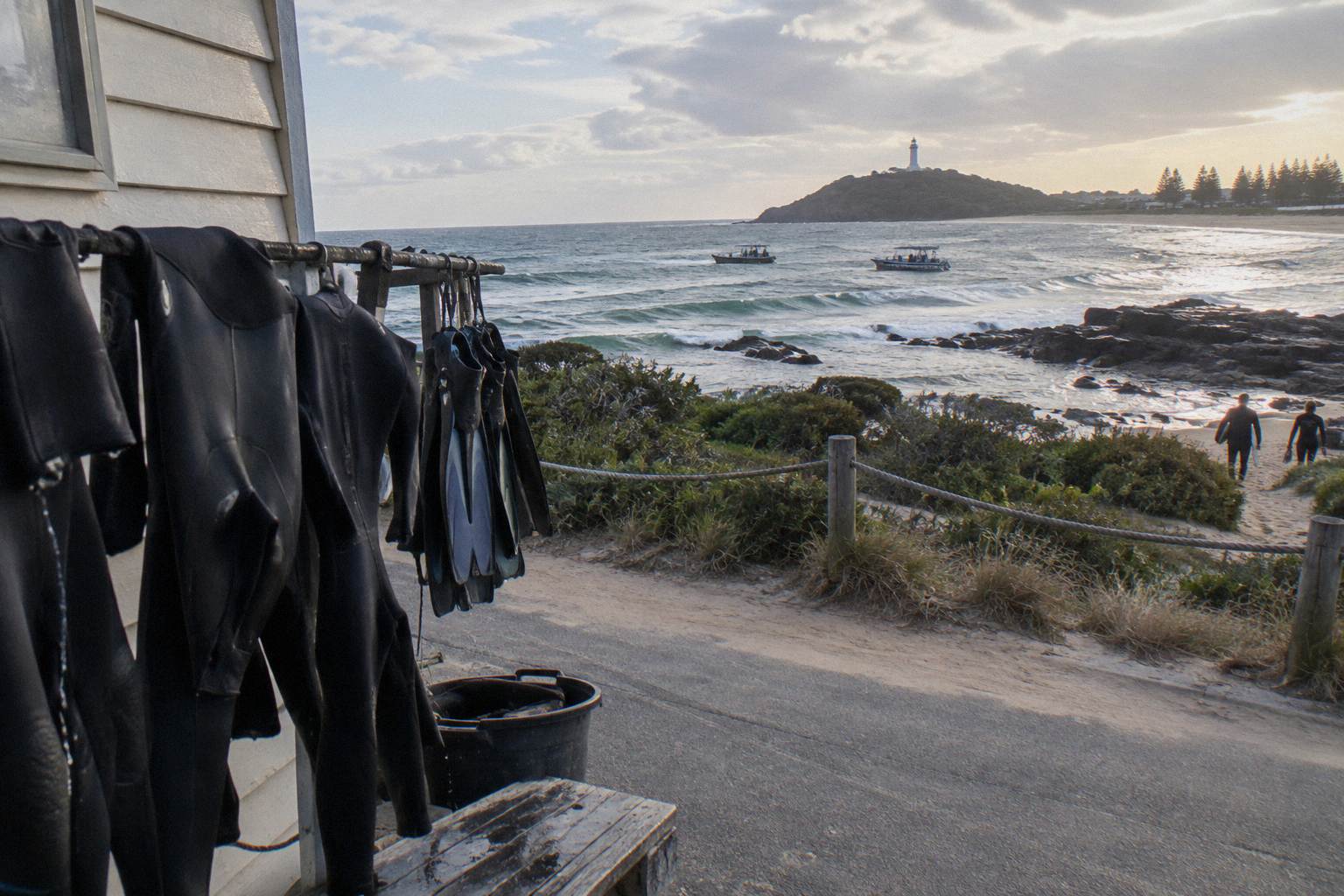
The gear list supports that reading. Fins, mask, snorkel and wetsuit are included on the Byron Bay Dive Centre trips, and the operator advises 5 mm long wetsuits for the duration of the swim, which tells you the water is cool enough that exposure is part of the calculation. Winter water at the rocks can drop to 17 degrees Celsius against a yearly average near 20, in one dive operator's wording, so the wetsuit is safety equipment as much as comfort equipment. There is a separate rundown of whether you need a wetsuit at Julian Rocks if thickness and seasons are the detail you are after.
“I had an amazing trip! The boat was super fun, the guide was excellent and I swam with turtles, wobbegongs, a spotted ray and saw two octopus! Heaps of beautiful fish too. I wouldn’t have noticed half the sea creatures without our expert guide pointing them out! Thoroughly recommend the team at Blue Seafaris!”
Nervous snorkellers get specific, practical help rather than a hard no. Byron Bay Dive Centre says lifejackets are on board, and that a long wetsuit or a pool noodle is suggested for nervous snorkellers, both of which add buoyancy and something to hold. The trip is about 2.5 hours in total with about 60 minutes in the water on the Sea Turtle Snorkel Tour, so the in-water portion is a bounded, guided window rather than an open-ended swim.
One limitation worth flagging plainly: Byron Bay Dive Centre does not offer prescription masks, though contact lenses are fine. If you cannot see clearly at distance without correction, that is a real safety consideration at an open-ocean site, and it belongs on your checklist before booking. Beyond that, the operator's medical framing is deliberately minimal, and if you have any health question at all, the answer is to ask your doctor rather than a tour desk.
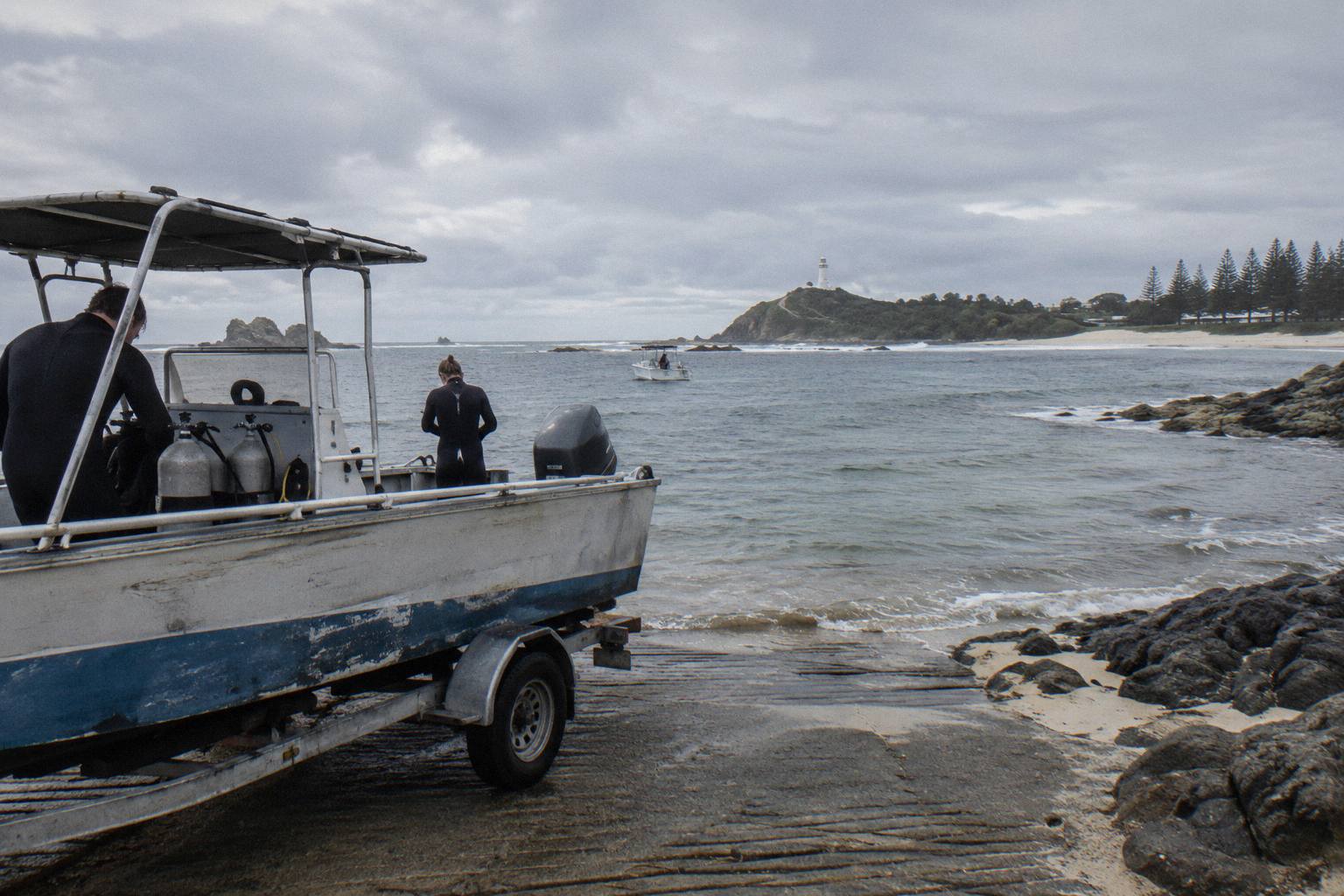
Still deciding which trip suits your group's swimming? The Turtle School trip, about 2.5 hours including transport from the central meeting point at Byron Plaza to the boat at The Pass, includes gear and wetsuit, and its eligibility rules are the most clearly spelled out of any trip to the rocks.
What About Sharks At Julian Rocks?
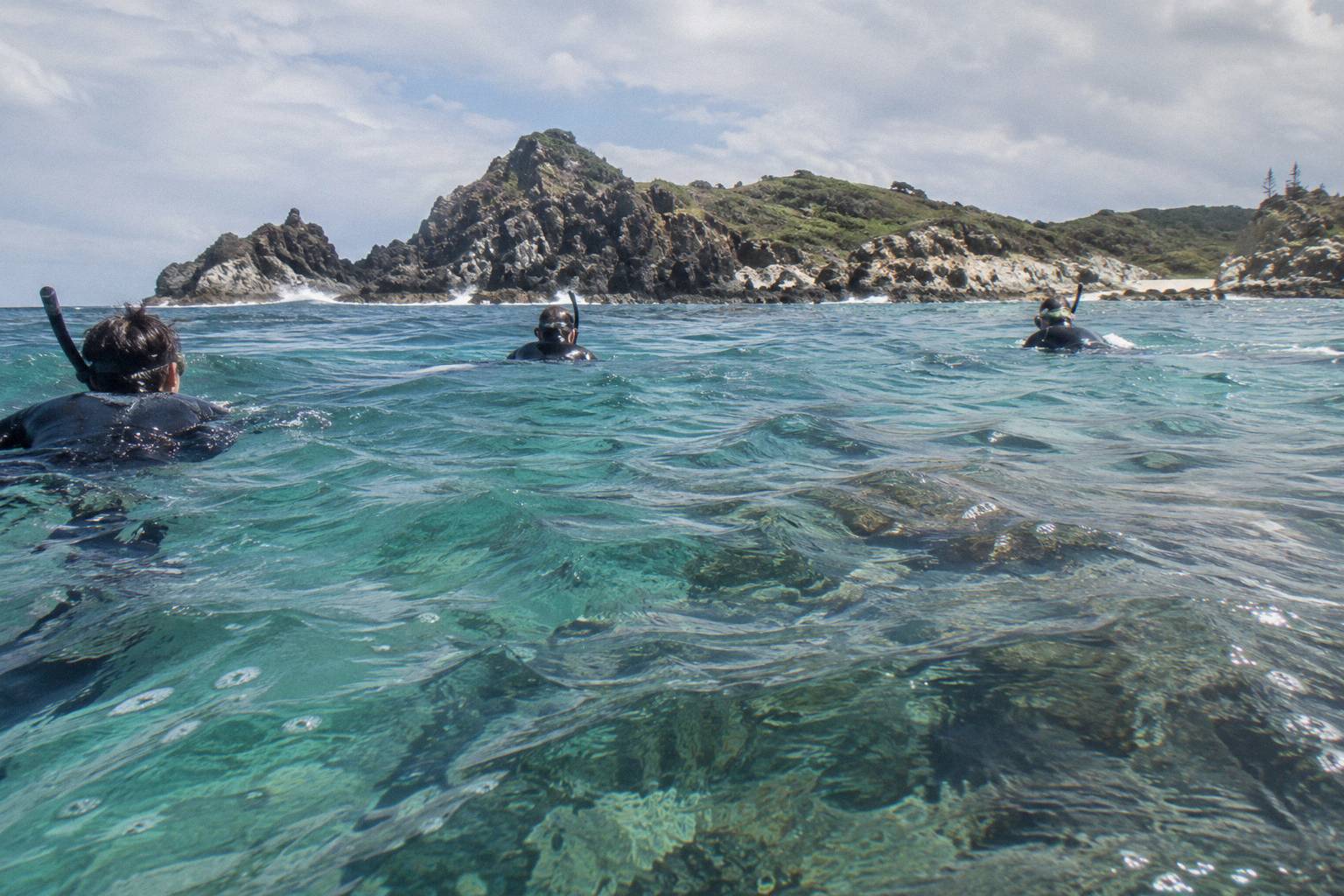
This is the question people actually type, so it deserves a straight answer built only from what the sources say. DPIRD lists sharks among the animals at the rocks, and the marine park's own user guide names the grey nurse shark among the park's threatened species. One dive operator's seasonal breakdown puts leopard sharks in the Needles sandy arena during the warmer months from December to April, and grey nurse sharks in the sand trenches during the colder months of June to November. The same operator notes those trenches sit at dive depths of 8 to 24 m, which are not snorkel depths, which is why grey nurse sharks are rarely seen on snorkel trips.
The rules side is just as relevant to the safety question, because the park's protections shape how any trip behaves around wildlife. Fish feeding, including shark feeding, is prohibited in the marine park. Collecting is not permitted in sanctuary zones, and all species are protected there. Byron Bay Dive Centre's guest rules echo the park's: do not touch, collect or harass marine life, waterproof cameras only, and no flash photography. There is more on the sharks themselves in the guide to sharks around Byron Bay for snorkellers, including the seasonal detail.
What no source on file supports is a bite statistic, an incident count, or any number that would let anyone quantify shark risk at the rocks. Those figures do not appear in the operator pages or the agency material, so they do not appear here. What the sources do establish is a structure: the animals are protected, the feeding that would change their behaviour is banned, and the one species people worry about most lives deeper than snorkellers go.
The broader wildlife picture is the reason most people book in the first place. Turtles, green, hawksbill and loggerhead, are listed all year, though Byron Bay Dive Centre is careful to say it cannot guarantee sea turtles will be there. Manta rays and leopard sharks characterise summer, and rays, crustaceans, nudibranchs, octopuses, eels and fish are present year-round. None of that is a promise, and the operators are consistent in not making one.
“A fantastic morning out! Leopard sharks, turtles, eagle rays and even a Manta! Couldn’t have wished for more! Choppy conditions to start but both the guide and skipper handled it well so everyone felt safe and looked after! Early morning session was a brilliant way to start the day!”
Do The Marine Park Rules Make Snorkelling Safer?
They change the conditions around you: boats at the rocks cannot anchor, must travel at 4 knots within 200 m, and must use one of seven moorings with a 2-hour limit, which keeps vessel behaviour slow and predictable near snorkellers. The sanctuary rules also mean the marine life you swim among is undisturbed by fishing and collecting.
“A very nice trip. We saw a lot, including turtles and a small shark. Our two skippers were also super friendly and very attentive. In the water, a skipper accompanied us and went in search of turtles, etc. I highly recommend the trip. You head out on a fast speedboat, so there's also an adrenaline rush.”
The marine park user guide sets out the boating rules that matter most to a snorkeller. No anchoring within 700 m of the rocks and none on any reef in a sanctuary zone, so day boats tie up to the marine park moorings instead. Those moorings are rated for vessels up to 15 tonnes or 10 m in winds of 24 knots or less, with a two-hour maximum on any mooring, no fishing from a vessel on a mooring, and no rafting up to another vessel. For someone in the water, the practical effect is a small number of slow, moored boats rather than a fleet dropping anchor over a reef full of people.
| Rule at the rocks | What it means on a snorkel trip |
|---|---|
| 4-knot speed limit within 200 m | Boat traffic around snorkellers is slow |
| No anchoring within 700 m | No anchors near swimmers or reef |
| Seven moorings, 2-hour maximum | Predictive, short-stay boat behaviour |
| No fish or shark feeding | Wildlife does not associate boats with food |
| All species protected in sanctuary zones | Fishing and collecting are banned around you |
The sanctuary status also answers a question people rarely ask out loud: what is actually in the water with me? In a no-take zone where collecting and fishing are banned and every species is protected, the animals you meet are living an undisturbed life rather than reacting to bait or spearfishing. The NSW Government's page for the rocks adds that the rocks are a bird sanctuary, home to gulls, terns, tattlers, cormorants and plovers, and that collecting or destroying animals and spear fishing are prohibited there. Julian Rocks Snorkelling sits inside that protection, which is exactly why the site's operator base is guide-led and rules-bound rather than free-for-all.
None of this makes the water itself tame. The park's protections govern people and boats, not swell, current or temperature. One dive operator describes the site honestly as capable of strong swells, currents, surges, cold water and winds, and notes strong northerlies between September and Christmas. That is the open-ocean reality the operator eligibility rules are built around, and it is why the weather call-off process exists.
“We saw leopard sharks, turtles and many other fish – truly impressive!”
What Happens If Conditions Are Unsafe On The Day?
Byron Bay Dive Centre contacts guests by text or phone if the weather or sea is unsuitable, offering a full refund or a reschedule, and its cancellation policy is 48 hours with a 100% fee inside that window. If you booked through an agent, the refund follows the agent's policy. That is the published process for the trip you are most likely reading about.
The weather call-off is the safety mechanism nobody markets and everybody should understand. Julian Rocks is an open-ocean site with no sheltered lagoon, so when the swell, surge or wind is wrong, the trip does not run, and the decision sits with the operator rather than the guest. A full rundown of that process, and what to do with your day if the boat stays tied up, is in the piece on what happens when a trip is cancelled for weather.
“This was a great active tour, saw some amazing marine wildlife. I would say if you are inexperienced or nervous then be aware it is out in the ocean and can have strong currents but if your comfortable with that then its amazing.”
The cancellation economics are worth knowing before you book rather than after. Byron Bay Dive Centre's window is 48 hours for tours, with a 100% fee inside it and a 7-day window for courses, and the operator notes a booking fee is charged by the booking platform. A different operator on file advertises a 100% refund on cancellations up to 48 hours before, conditions applying. The message across operators is consistent: the weather is the weather, the operator absorbs it with a refund or a new date, and the guest's obligation is to cancel early for reasons within their control.
What this means practically for a safety-conscious planner is that you should not read a cancellation as bad luck. It is the system working. A trip that pushes out into strong surge to protect a booking is the failure mode, and the published refund-and-reschedule terms exist precisely so that never becomes the rational choice.
Is There A Briefing Or Help For Nervous Snorkellers?
Yes on the trips where it is documented: Byron Bay Dive Centre keeps lifejackets on board, suggests a long wetsuit or a pool noodle for nervous snorkellers, includes gear and wetsuit, and stocks ginger seasickness tablets on the boat while recommending you bring your own. Its trips are guided, and the Turtle School trip includes transport from the town meeting point to the boat.
“Amazing snorkelling experience! Guides were great- super friendly and knowledgeable!”
The nervous-snorkeller provisions are the most human part of the safety picture, and they are specific enough to be useful. A long wetsuit adds buoyancy as well as warmth, which is why it doubles as the operator's comfort recommendation for anxious swimmers. A pool noodle is exactly what it sounds like, a cheap float to hang onto. None of this softens the entry bar. Blue Seafaris asks that you be comfortable swimming in open water, and both Out Of The Blue Adventures and Turtle School set it at 200 m unassisted. The gear narrows the gap between "can swim" and "feels relaxed while doing it in the ocean".
Seasickness gets equal billing in the operator's FAQ, and rightly so, since the ride out and the surface wait can be harder on some guests than the snorkelling itself. Ginger tablets are on the boat, and the operator recommends bringing your own as well. The boat ride from Byron Bay is short, roughly 5 to 10 minutes in the operators' wording, though trips meeting at Brunswick Heads add the harbour run before that.
“We saw so many sharks and turtles and different types of rays, the instructors and the skipper were great the whole time knowing the best spots and helping out along the way. I would recommend the early session as it was nice and quiet out by the rocks. One of the best things you can do on the east Coast.”
The Turtle-Focused Snorkel From Byron Town, about 2.5 hours, is the second Byron Bay Dive Centre listing of near-identical scope to the Turtle School trip, and the same operator rules, gear inclusions and briefing culture apply to it. If the meeting logistics of Brunswick Heads versus Byron town matter to your planning, the choosing-an-operator guide compares them.
What Ages Can Go, And Who Should Ask First?
Minimum ages are 5, 7 and 10 years depending on the operator, so the minimum that applies is the one on the page of the trip you book. Adults over 65 need GP clearance on one operator's trips only. Guests with pregnancy, back or spinal injuries are excluded from Byron Bay Dive Centre's vessel-based activities. If your trip's page states none of this, ask the operator.
The age spread is the clearest illustration of why no single safety answer covers Julian Rocks. One operator welcomes children from 5 with a cap of 12 passengers and a naturalist guide; another sets 7 with an adult guardian required to 18; Byron Bay Dive Centre sets 10 on its Sea Turtle Snorkel Tour. A family with a keen 8-year-old has one yes, one maybe and one no across the available trips, purely by operator policy rather than by anything about the water.
“An unforgettable experience in a unique place, accessible to all with very friendly professionals. I highly recommend it.”
Medical exclusions follow the same operator-by-operator pattern. Byron Bay Dive Centre's prohibition on vessel-based activities for guests with pregnancy or back or spinal injuries is its own rule and appears nowhere else in the sources. The GP-clearance requirement over 65, with the same letter over 70, belongs to Sundive Byron Bay. Nothing on file suggests these rules transfer between trips, and the NSW National Parks page for Nguthungulli Julian Rocks Nature Reserve is silent on visitor eligibility, since commercial trips are licensed operations with their own conditions.
For a planner, the sequence is straightforward. Check the trip page for its stated swimming requirement, because the operators word it differently: Blue Seafaris asks that you be comfortable swimming in open water, while Out Of The Blue requires everyone to swim 200 metres unassisted. If a page lists nothing, send the operator your question before paying, and treat "not stated" as "unconfirmed" rather than "no rule". Then apply the honest self-check the operators themselves rely on: swimmer first, sightseer second.
So Is It Safe? An Honest Summary
Snorkelling at Julian Rocks is a guided open-ocean activity with real conditions and real rules: swimmers only by every operator's standard, protective marine park regulations around the boat and the wildlife, a hard weather call-off with refund or reschedule, and buoyancy support for nervous guests. Whether it is safe for you is decided by your own swimming comfort and the rules on your trip's page.
“This was an incredible experience! We got lucky with the conditions and saw a huge variety species. Loved this even more than when I snorkelled the Great Barrier Reef. Not to be missed!”
If there is a single sentence that carries this whole article, it is that every Julian Rocks snorkel operator sets a swimming standard and states it plainly. Blue Seafaris asks that you be comfortable swimming in open water, with pool noodles on hand but no flotation jackets for non-swimmers. Out Of The Blue Adventures requires you to swim 200 m unassisted, and crew will end the trip for anyone who cannot, with no refund. Turtle School (Byron Bay Dive Centre) asks for 200 m unassisted in open ocean, and its separate sea turtle tour for 25 m. Everything else, the moorings and 4-knot zones, the no-feeding rules, the wetsuits and noodles, the refund-or-reschedule weather policy, exists to support people who meet that baseline. People who do not, or who are not sure, should settle that question before booking, and there is no shame in a kayak or a whale-watching deck as the alternative.
The trips below are the three most relevant to this question: the biologist-guided Blue Seafaris trip from Brunswick Heads, and the two Byron Bay Dive Centre snorkel trips whose operator rules this article quotes most heavily.
Common Questions About Snorkelling Safely At Julian Rocks
Is It Safe To Snorkel At Julian Rocks?
It is a guided open-ocean snorkel inside a protected marine park with strict boating rules, cancelled outright when conditions are unsuitable. Every operator sets a swimming standard: Blue Seafaris requires comfort swimming in open water, Out Of The Blue Adventures requires 200 m unassisted, and the Turtle School tour asks for 200 m unassisted in open ocean, while Byron Bay Dive Centre's separate sea turtle tour asks for 25 m and comfort in the water. The trip you book is the one whose rules apply.
Do I Need To Be A Strong Swimmer To Snorkel Julian Rocks?
Blue Seafaris asks that you are comfortable swimming in open water, with pool noodles available and no flotation jackets for non-swimmers. Out Of The Blue Adventures requires that you can swim 200 m unassisted before booking, and crew remove snorkelers who cannot, with no refund. The Turtle School tour (Byron Bay Dive Centre) requires a 200 m unassisted swim in open ocean, while its separate sea turtle tour asks for 25 m unassisted and comfort in the water, with no life jackets to snorkel in.
Are There Sharks At Julian Rocks, And Is That Dangerous?
Sharks live at the rocks, including leopard sharks from December to April and threatened grey nurse sharks from June to November. Grey nurses gather at dive depths of 8 to 24 m, not the 3 to 12 m snorkel zone, and are rarely seen on snorkel trips. Fish and shark feeding is prohibited in the marine park, and all species are protected.
What Help Is There For Nervous Snorkellers?
Byron Bay Dive Centre carries lifejackets on board and suggests a long wetsuit or a pool noodle for nervous snorkellers, both of which add buoyancy. Gear and a 5 mm wetsuit are included on its trips, and ginger seasickness tablets are on the boat, though bringing your own is recommended.
Can Children Snorkel At Julian Rocks?
It depends entirely on the operator: minimum ages of 5, 7 and 10 years appear across the trips on file. The minimum that applies is the one on the page of the trip you book; the Blue Seafaris and Out Of The Blue booking pages state none, so ask the operator before booking.
What Happens If The Weather Is Bad On My Trip Day?
Byron Bay Dive Centre contacts guests by text or phone if the weather or sea is unsuitable and offers a full refund or a reschedule. Its cancellation window is 48 hours with a 100% fee inside it, and bookings made through an agent follow the agent's refund policy.