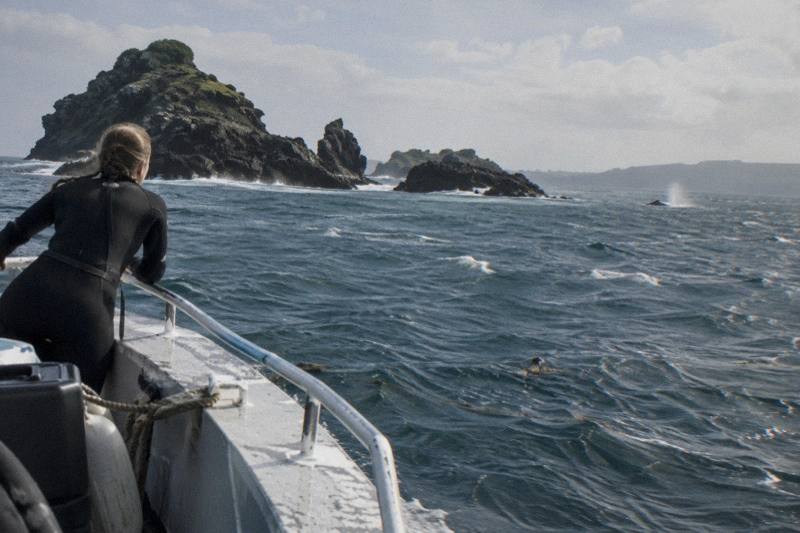
Whale Season In Byron Bay And What It Means For A Snorkel Trip
Every year humpback whales pass the Byron coast, and every year visitors ask the same thing: does whale season change the snorkel trip? The short answer is no, whales are not part of a snorkel tour, but the season overlaps with real changes in water conditions, shark seasons and what else is worth booking while you are in town.
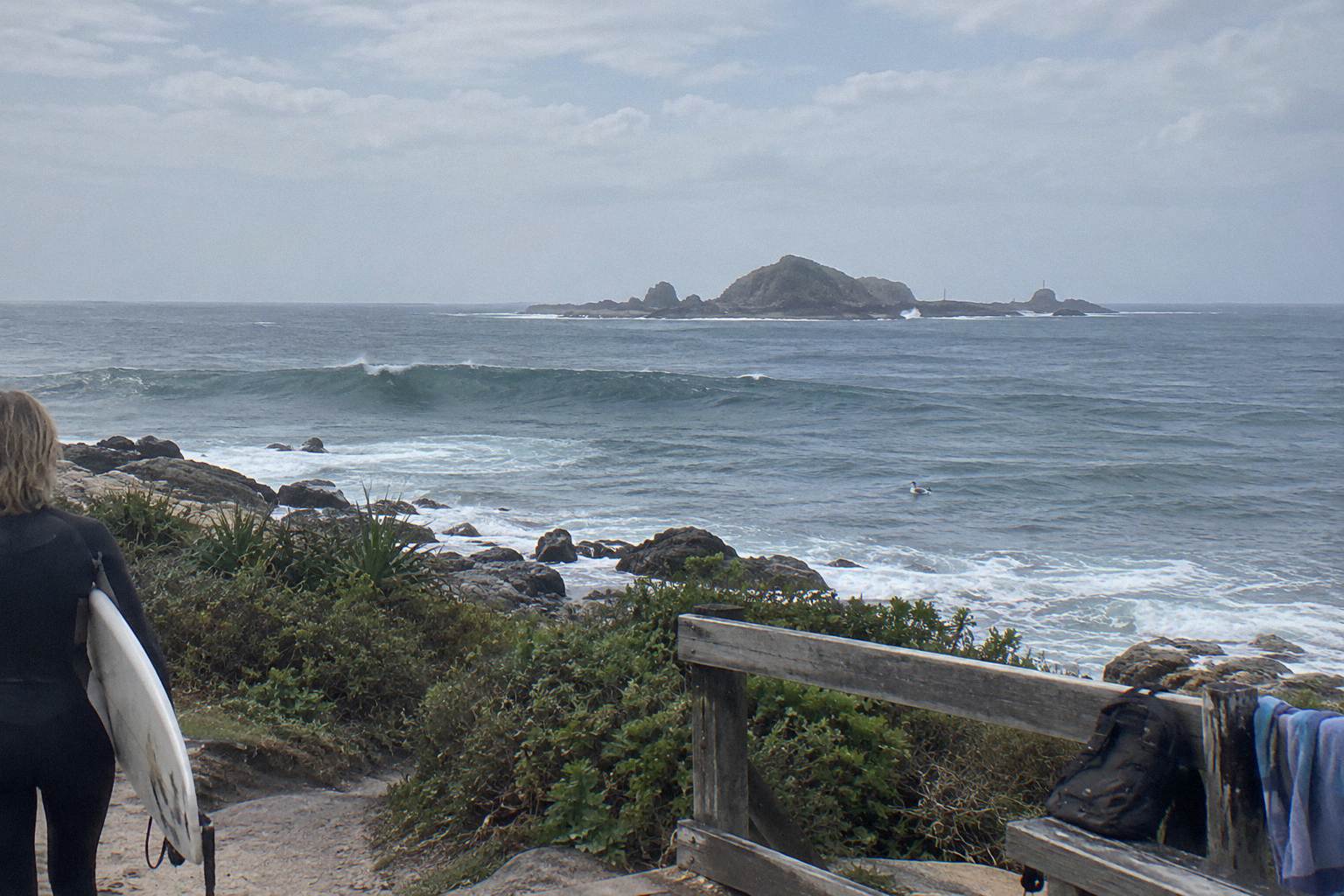
Short answer
Whale season in Byron Bay is operator-stated and differs: one operator runs whale trips between May and November, another lists whale watching from June to October. Whales are never part of a Julian Rocks snorkel trip; the whale watching tour is a separate product from Out Of The Blue Adventures, about 2.5 hours, departing Lance Ferris Wharf in Ballina.
Every southern-hemisphere winter, humpback whales migrate along the New South Wales coast and pass close to Cape Byron. Visitors arrive with a reasonable expectation: if the whales are here, surely the snorkel boat sees them too. The honest answer is more layered. Whale watching and snorkelling at Julian Rocks are two different products, run to different schedules, and even the whale season itself depends on which operator you ask, because the two sources on file state different windows.
This guide sets out what the sources actually say, where they disagree, and how to plan a visit that lands in whale season without assuming anything about the snorkel trip that is not true. The site behind this page, Julian Rocks Snorkelling, exists to keep those two questions separate.
When Is Whale Season In Byron Bay?
There is no single official "whale season" published for the Byron coast in the sources on file. What exists are two operator statements, and they differ at both ends. One dive operator's snorkelling page says it runs whale trips "between May and November" and sees "dolphins and whales when in season". Byron Bay Dive Centre's own home page lists whale watching from June to October. That is a two-month disagreement, which matters if you are booking flights for early June or late October hoping to catch the tail of the migration.
The practical read is straightforward. If your trip falls in the overlap, roughly June through October, both operators would call that whale season. If you are travelling in May or November, one operator's season includes you and the other's does not, so the only reliable move is to check the live listing for the trip you actually want before assuming whales are running. A seasonal product can also pause for weather or demand at the fringes, and that kind of detail lives on the booking page, not in a general season statement.
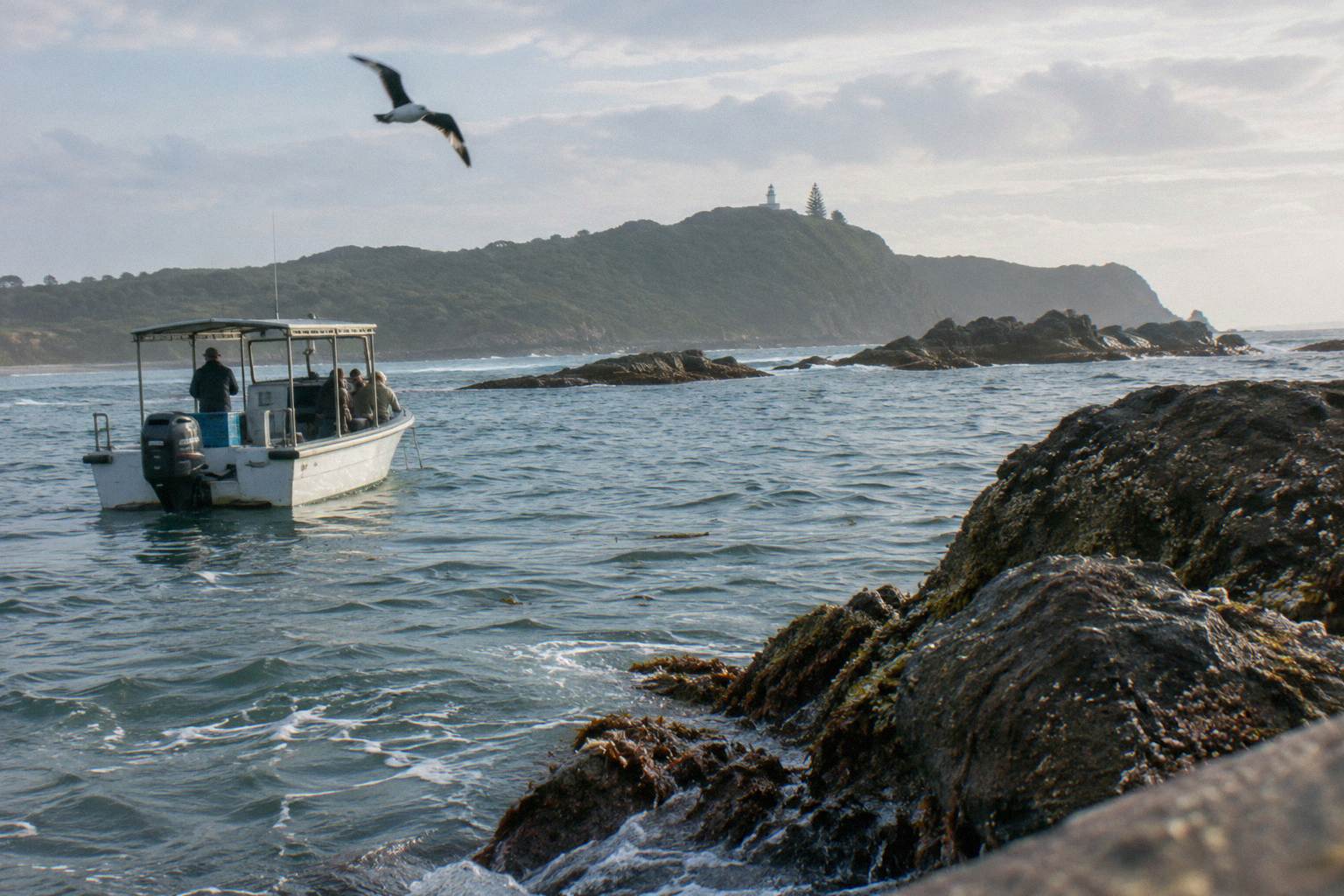
Why the difference exists is not stated anywhere in the sources, and guessing at it would be inventing. It may reflect different vessels, different routes or simply different commercial calendars, but none of that is on file. What is on file is the marine park context: Cape Byron Marine Park covers about 37 km of coast and about 220 km2 of state waters, with zones and rules that commenced in May 2006, and boating and wildlife viewing are permitted activities within those rules, per the NSW Department of Primary Industries and Regional Development.
| Source | Whale statement | Window stated |
|---|---|---|
| Sundive Byron Bay | Runs whale trips, sees dolphins and whales when in season | May to November |
| Byron Bay Dive Centre home page | Lists whale watching | June to October |
Can You See Whales On A Julian Rocks Snorkel Trip?
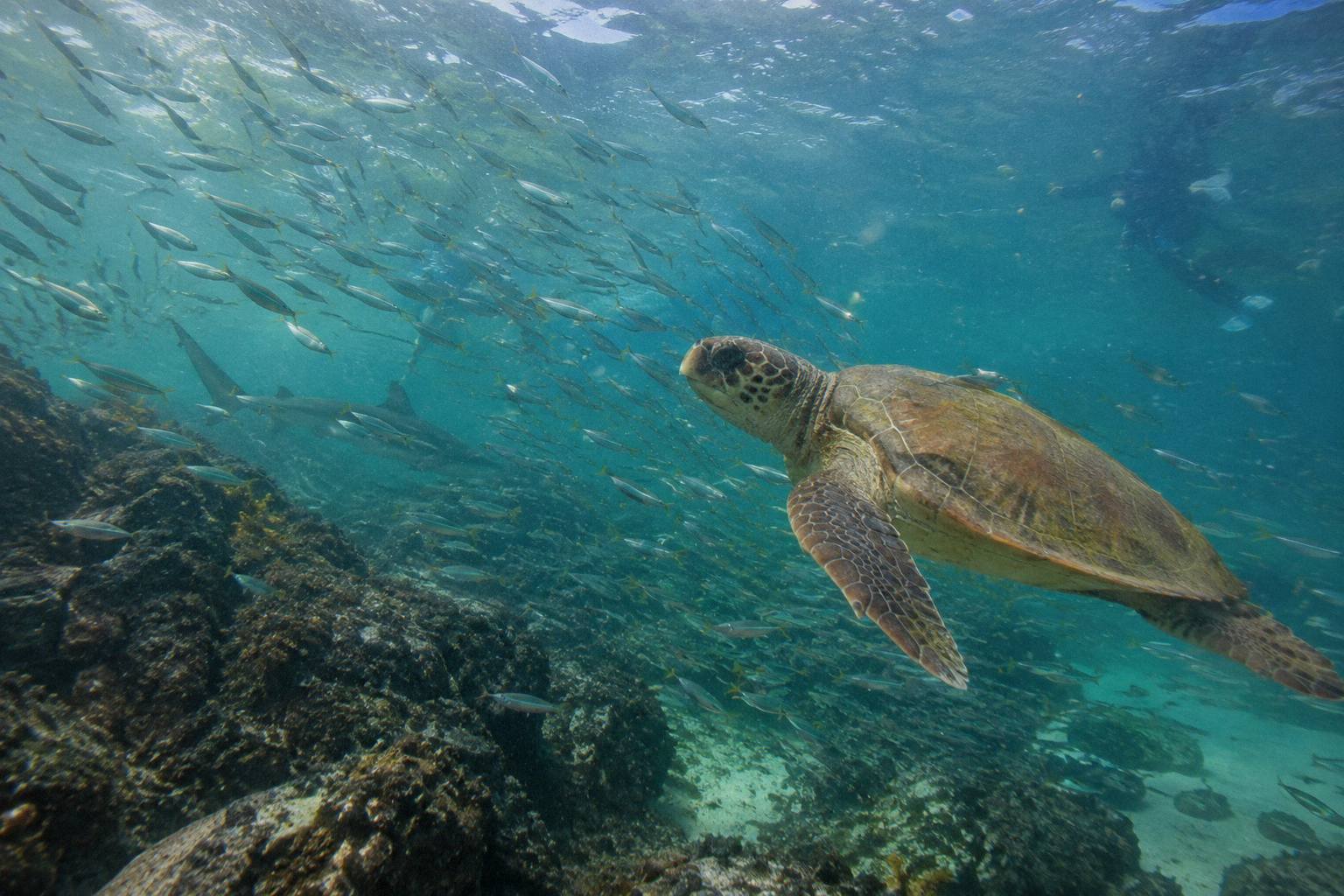
No. Whales are not part of a snorkel trip to Julian Rocks on any product in the roster. The snorkel tours take you to shallow, sheltered areas of the reserve to look at turtles, rays and fish; the whale watching trip is a separate, seasonal product run by Out Of The Blue Adventures, about 2.5 hours long.
This is the single most common point of confusion, and it is worth being blunt about it. A snorkel trip is built around getting in the water at Nguthungulli Julian Rocks, the protected reserve about 2.5 km offshore where operators describe snorkelling in depths of 3 to 12 m among turtles, rays, colourful fish and crustaceans. A whale watch is a boat-based viewing trip. They share a departure coast and, in one case, an operator, but they are different bookings with different purposes.
Could you get lucky and spot a whale spout from the snorkel boat on the ride out? Possibly, and whale season overlaps the snorkel calendar entirely. But nothing in any operator statement or booking page on file promises whales on a snorkel tour, and this page will not imply it. If seeing a whale is a priority for your trip, book the product built for it.
“Ride out, location, gear. And what we saw was great! Really enjoyed it. Signage and directions where to meet could be improved.”
That product exists on this site's roster: Premier Whale Watching Byron Bay, run by Out Of The Blue Adventures, about 2.5 hours per the booking page, seasonal, with the vessel leaving from Lance Ferris Wharf in Ballina. No price, rating, minimum age or inclusions are on file for it, so ask the operator or check the live listing for those. The trip suits wildlife-minded travellers: it is a guided interpretation cruise, not just a ferry to wherever the animals are.
If you are deciding how to split a whale-season visit between the water and the boat, these are the three products that fit:
The whale watch covers the migration, the Blue Seafaris snorkel covers Julian Rocks itself, and the dolphin kayak covers the middle ground: on-water time from Cape Byron with a chance of marine wildlife from a smaller, quieter craft. Whether the kayak trip suits you depends on comfort and fitness questions this page cannot answer for you, and the dolphin and snorkel comparison guide works through in more detail.
Whale Watching Or Snorkelling: Which Should You Book?
If seeing humpbacks is the reason for your trip, book the whale watch; if swimming over a reef with turtles is the goal, book the snorkel. They are not substitutes. During the overlap months, many travellers do both on separate days, because one is a boat viewing trip of about 2.5 hours and the other is an in-water trip of about 2.5 hours.
Think in terms of what you actually want to come home with. A whale watch gives you surface viewing, interpretation from a guide, and the migration spectacle, without getting wet. A snorkel gives you the reserve itself: an area the state agency describes as home to sharks, rays, turtles, eels, starfish and corals, in water shallow enough for swimming. Neither experience contains the other.
Budget behaves differently too, and only partly. The two snorkel products with printed booking-page figures both start from AUD 94 per person: the Blue Seafaris snorkel, rated 4.5 across 448 reviews on its booking page, and the Out Of The Blue snorkel, rated 4.4 across 167 reviews on its main booking page, with a second booking page showing 4.7 across 58 reviews. The whale watch has no price on file, so its cost needs to be read from the live listing. That asymmetry is worth knowing before you compare: the whale trip could sit above or below the snorkel price, and assuming either way is a guess.
Time is the other axis. The whale watch runs about 2.5 hours. The main snorkel products run about 2.5 hours for Blue Seafaris and Out Of The Blue, and about 2.5 hours for the Turtle School trip, which meets in Byron Bay town at Byron Plaza on Jonson Street with transport to the boat at The Pass. Doing both in one day is technically possible with the right timings but leaves no margin for a trip running long or a weather reschedule, and whale season is exactly the time of year when conditions can intervene.
| Trip | Type | Duration | Price on file | Rating on file |
|---|---|---|---|---|
| Blue Seafaris snorkel (Julian Rocks) | In-water snorkel | About 2.5 hours | From AUD 94 per person | 4.5 across 448 reviews |
| Out Of The Blue snorkel (Julian Rocks) | In-water snorkel | About 2.5 hours | From AUD 94 per person | 4.4 across 167 reviews |
| Turtle School snorkel | In-water snorkel with town meeting point | About 3 hours | On the booking page | On the booking page |
| Whale watching with a marine biologist | Boat viewing, seasonal | About 2.5 hours | On the booking page | On the booking page |
One more framing helps. The whale watch is seasonal and disappears entirely outside its window, whatever that window turns out to be on the listing when you book. The snorkel runs year-round with turtles listed all year by operators. If your dates are flexible but your budget covers one trip, the snorkel is the dependable choice and the whale watch is the time-boxed one, which is a reasonable way to decide.
What Does Whale Season Mean For Snorkel Conditions?
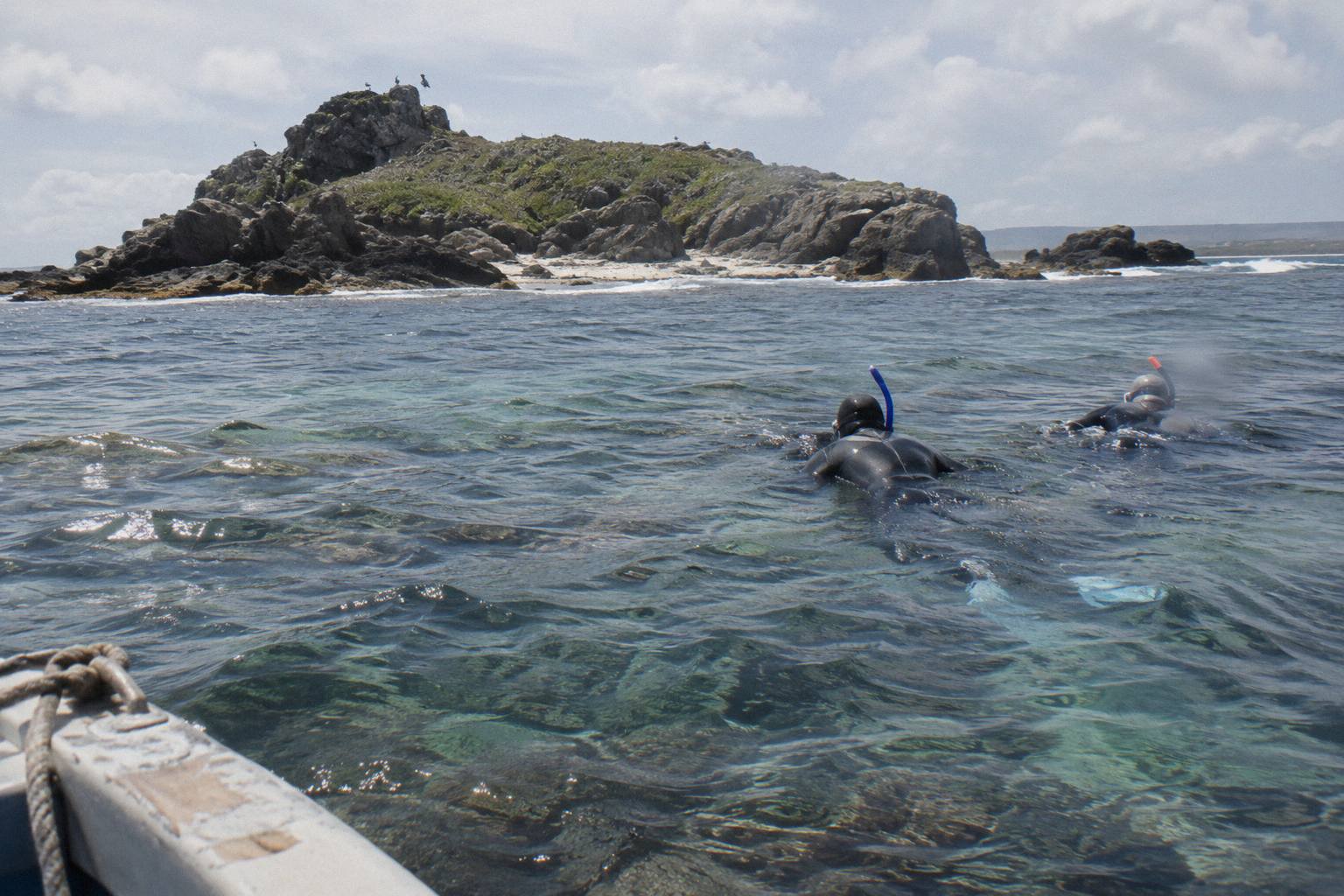
Whale season overlaps the cooler months, and one operator states winter water can drop to 17 °C with an average around 20 °C. The same operator warns the open-ocean site can have strong swells, currents, surges, cold water and winds, and that strong northerlies can blow between September and Christmas. None of this is a whale effect; it is simply the same time of year.
The honest framing is that whales do not change the snorkel conditions at all. The migration happens in cooler months, and cooler months bring their own water temperature, swell and wind patterns, which exist whether or not a single whale passes. Attributing a cold current or a bumpy boat ride to "whale season" would be inventing a causal link no source states.
What the sources do state, attributed: one dive operator's dive-site page says winter water "can drop to 17 °C (avg. ~20 °C)", and that same page lists the site's challenges plainly, strong swells, currents, surges, cold water and winds, with strong northerlies possible "between September and Christmas". That is a spring-and-early-summer pattern that sits inside the whale season for at least one operator, so a November traveller is planning around both. For what that means in the water, the site's wetsuit guidance covers the gear side, and Byron Bay Dive Centre advises 5 mm long wetsuits for its trips, with fins, mask, snorkel and wetsuit included.
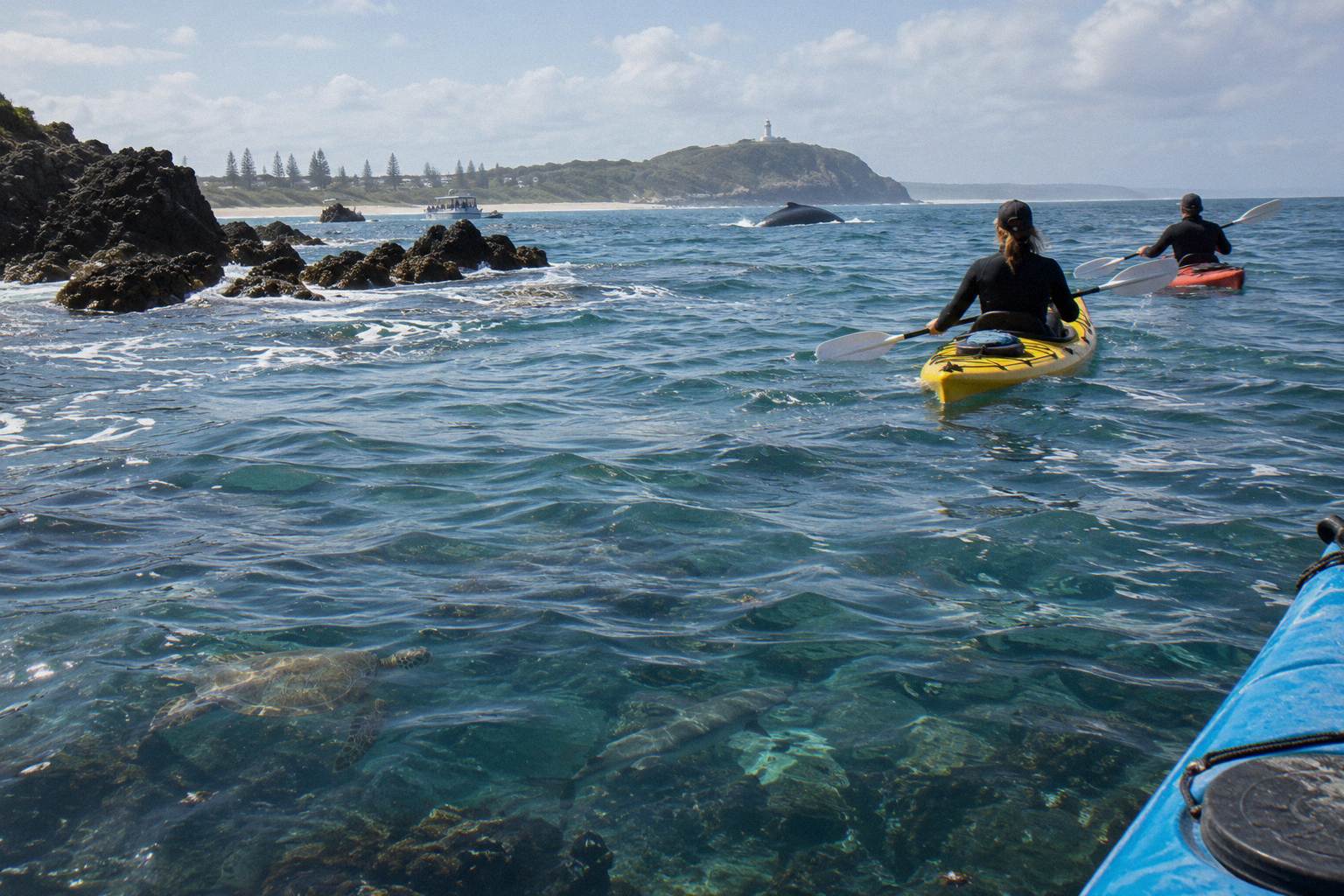
No official month-by-month sea-temperature source exists in the files behind this page, so none is printed here. Any table claiming "the water in July is X degrees" on another site is either operator wording or an estimate, and treating it as an official figure would be misleading. The water temperature overview on this site works with the same constraint and says so.
The other practical overlap is cancellation risk. An open-ocean site with possible strong swells and winds means some trips do not run, and whale season sits inside the windier stretch of the calendar for at least part of its length. Byron Bay Dive Centre's policy states guests are contacted by text or phone if weather or sea is unsuitable, with a full refund or reschedule, and a 48-hour cancellation window otherwise. How other operators handle weather calls is not uniformly on file, so ask when booking; the weather cancellation explainer runs through what to expect.
Which Trips Fit A Whale-Season Visit?
For a whale-season visit, the roster offers the dedicated whale watch from Out Of The Blue Adventures, four Julian Rocks snorkel products, and two dolphin kayak trips, most about 2.5 hours apart from the longer snorkel options. Choosing between them is a question of whether you want to view from a boat, swim at the rocks, or paddle the bay.
Work through the traveller types, because the right answer genuinely differs.
The wildlife-first traveller should start with the whale watch, since it is the only product on the roster built around the migration. Out Of The Blue Adventures runs it, 2.5 hours, seasonal, with the price on the live listing. Pair it with a snorkel day and you have covered both the migration and the reserve.
The swimmer who cares most about turtles should book a snorkel and not be distracted. The Blue Seafaris snorkel, from AUD 94 per person and rated 4.5 across 448 reviews on its booking page, runs about 2.5 hours from Brunswick Heads Boat Harbour at 43 Harbour Way. The Out Of The Blue trip, also from AUD 94 per person, rated 4.4 across 167 reviews on its main booking page with a second booking page showing 4.7 across 58 reviews, departs the same harbour, which makes the two a genuine like-for-like choice on paper.
“We had such a good time, Harry was wonderful and had great energy, we were so happy with the tour!”
The town-based traveller without a car does better with Turtle School, which meets at Byron Plaza on Jonson Street and includes transport to the boat at The Pass, about 2.5 hours total. Its rating and price are on the booking page, and the sources on file disagree about both, so this page prints nothing. The same operator, Byron Bay Dive Centre, runs the turtle-focused 2.5-hour snorkel, with no price or rating on file either.
The traveller who wants on-water time without getting wet, or who wants a backup when the snorkel boat is full, has two kayak options: the Dolphin Kayak Tour from Cape Byron Kayaks and the Byron Bay Sea Kayak Tour from Go Sea Kayak Byron Bay, both about 2.5 hours per their booking pages, with the Go Sea Kayak listing title mentioning it looks for dolphins and turtles. Neither animal is promised by this page, and no prices, ratings, meeting points or minimum ages are on file for the kayak trips: ask the operator.
The marine park permits kayaking and boating as non-harmful activities, and fish feeding is banned outright, so all of these products operate within the same protection framework. The sanctuary zones that cover the best of the reef, 6,118 ha or 27.5% of the marine park, are no-take zones where snorkelling is explicitly permitted, per the DPIRD user guide. Vessels also limit speed to 4 knots within 200 m of the rocks and use the seven marine park moorings there, with a 2-hour maximum on each.
What Should You Ask Before Booking In Whale Season?
Ask the booking desk five things: the operator's own whale season dates, whether your snorkel date falls in a windy stretch, the cancellation terms for weather, the minimum age for your group, and what gear is included. None of these is uniform across the roster, and each one changes which trip fits your dates.
The single most useful question is the first one, because the two stated whale windows disagree by two months. If you are booking a May or November whale watch, confirm the trips are actually running on your dates before you build an itinerary around them. Season statements on websites describe a usual pattern, not a guarantee for a specific Tuesday.
Minimum ages are a quiet trap for families. The sources on file show different operators stating minimum ages of 5, 7 and 10 years, with the Byron Bay Dive Centre turtle trip stating 10. If you are travelling with children, this question comes before price, because no price matters if the youngest member of your family cannot board. The kids on the snorkel trip guide works through the family angle.
| Question to ask | Why it matters | What the sources show |
|---|---|---|
| What are your whale season dates this year? | The two stated windows differ (May to November vs June to October) | Confirm on the live listing |
| What happens if weather cancels my trip? | The site is open ocean; swells and winds are stated risks | One operator states full refund or reschedule, 48-hour window |
| What is the minimum age? | Family trips live or die on this | 5, 7 and 10 years appear on different operator pages |
| What gear is included? | Winter water can drop to 17 °C per one operator | One operator includes fins, mask, snorkel and wetsuit |
| Where do we meet, and is there transport? | Some trips meet an hour from town | Brunswick Heads harbour for two operators; Byron Plaza with transfer for another |
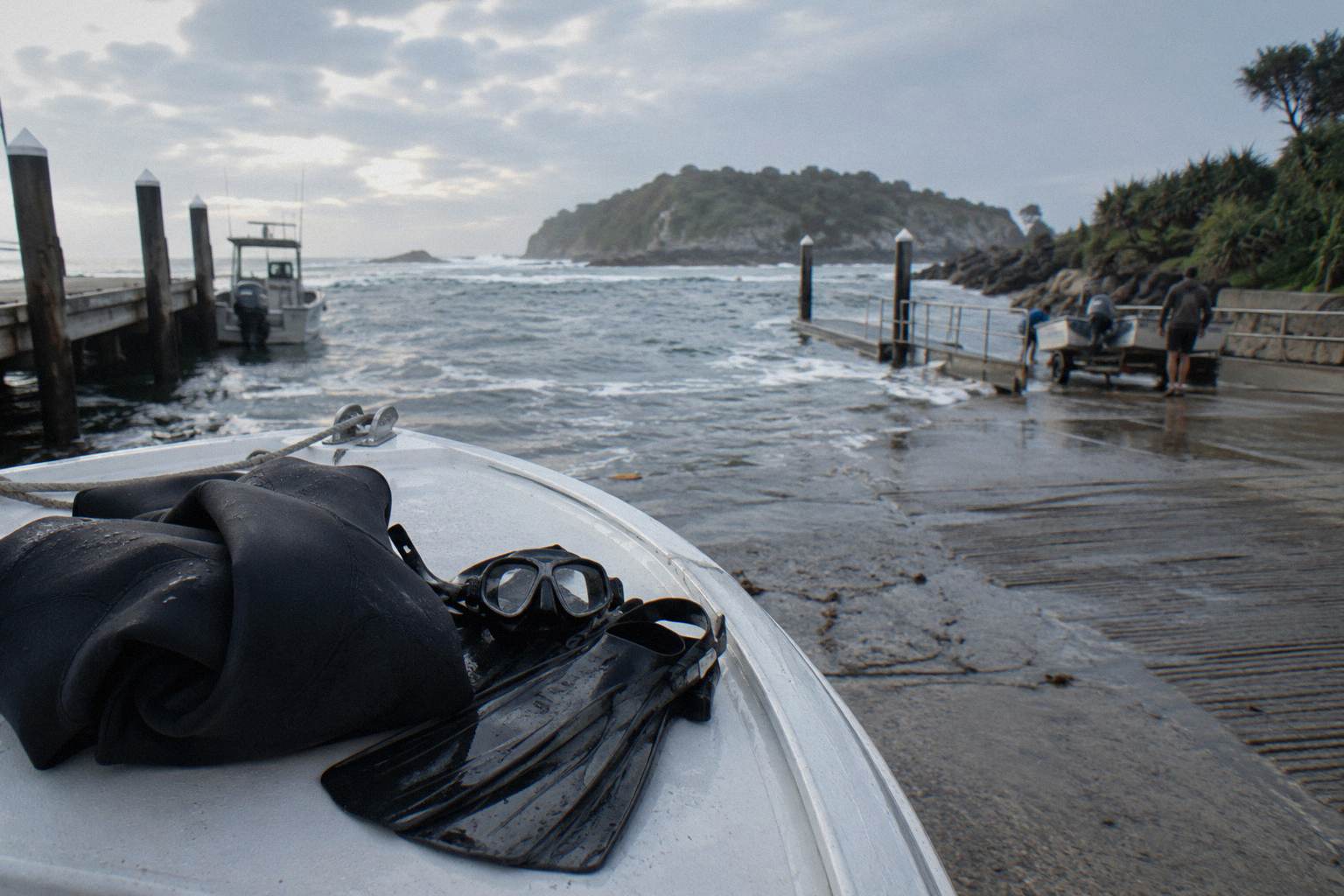
Gear and meeting points are the last mile. Byron Bay Dive Centre includes snorkel gear and wetsuit, advises 5 mm long suits, carries ginger seasickness tablets on the boat, and does not offer prescription masks (contact lenses are fine). Blue Seafaris and Out Of The Blue both meet at Brunswick Heads Boat Harbour, which is a drive from Byron Bay town, while Turtle School meets in town and transfers you to The Pass. For the whale watch and both kayak trips, meeting details are not on file, so ask.
What Marine Life Is On The Snorkel During Whale Months?
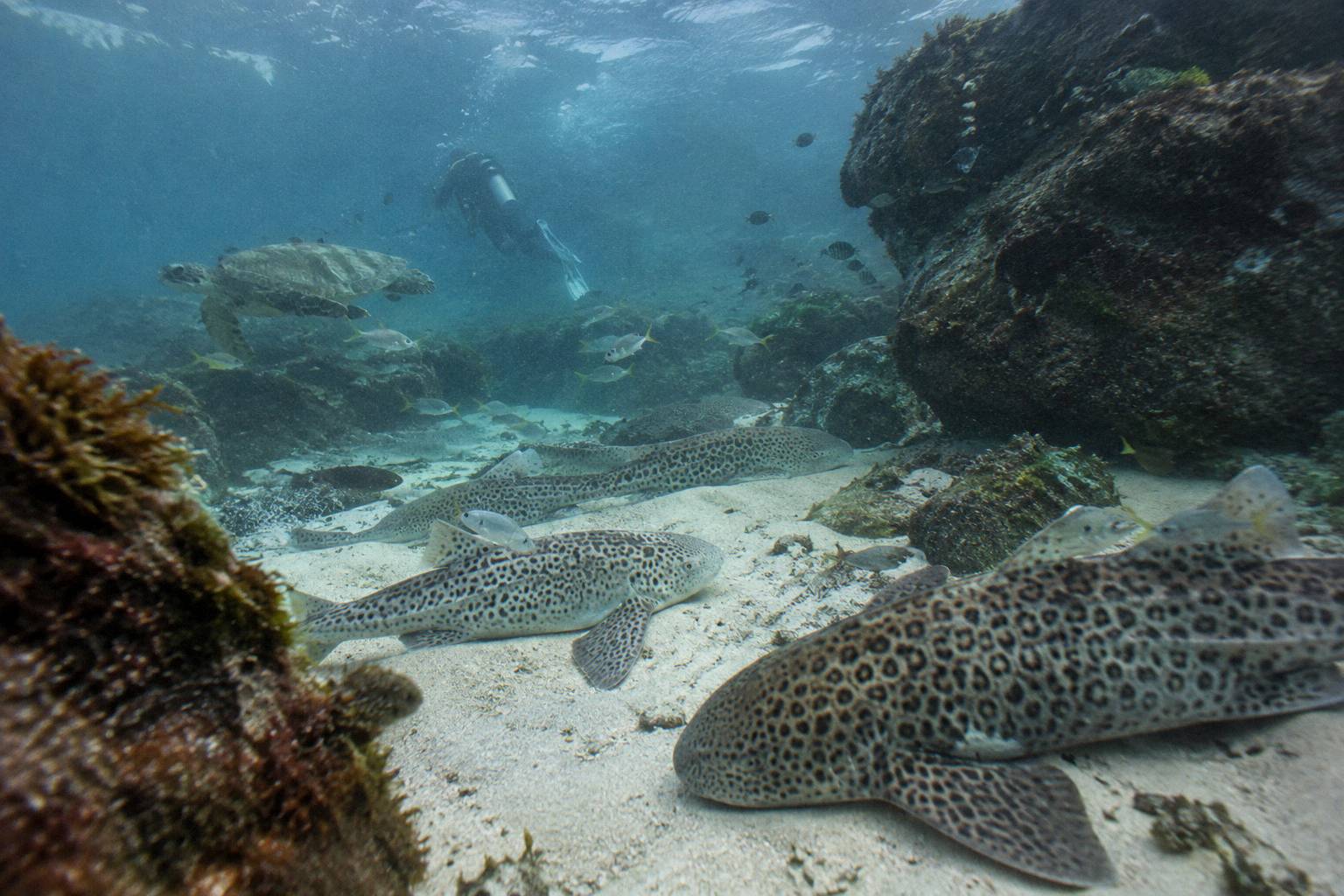
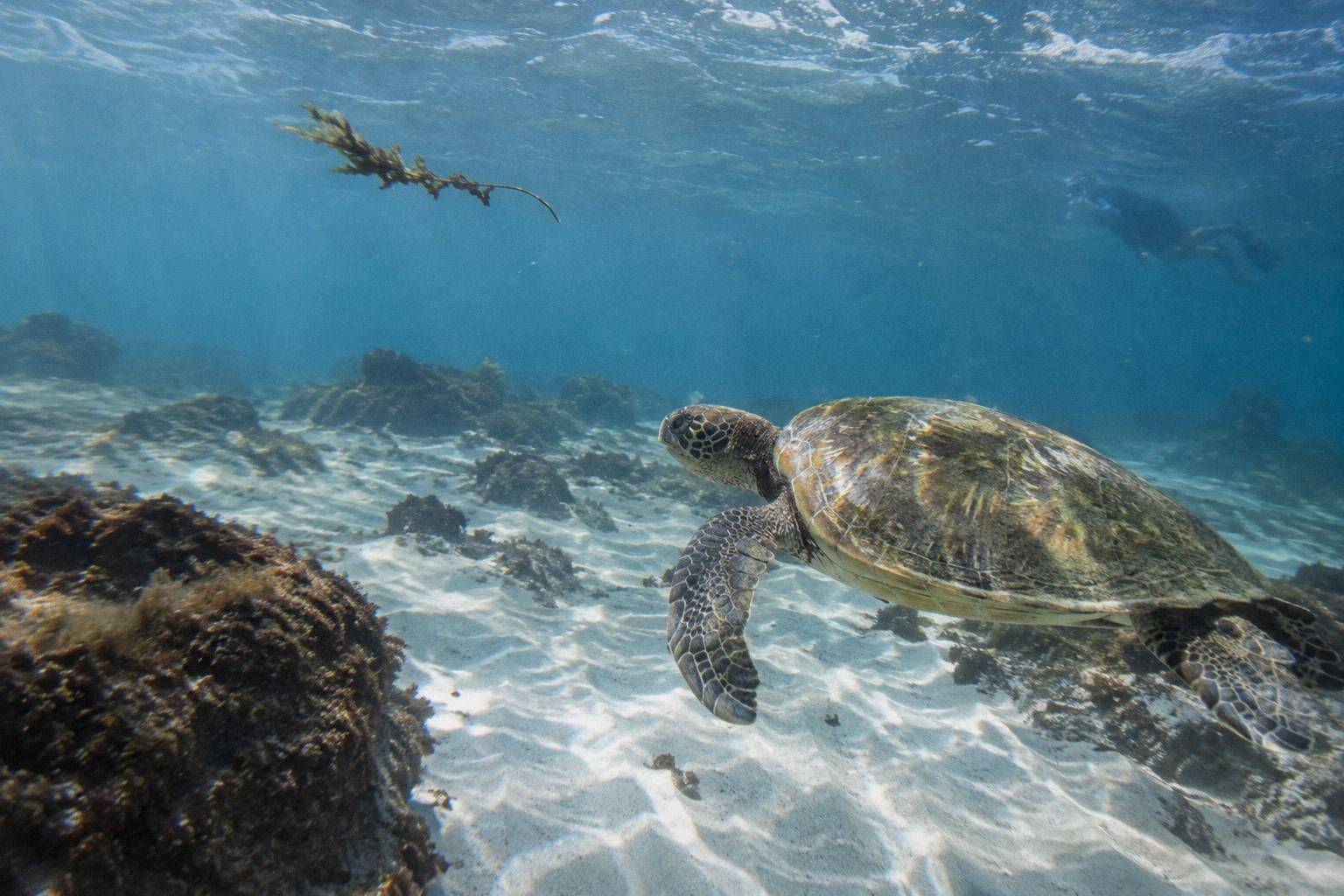
Operators list turtles all year at Julian Rocks, green, hawksbill and loggerhead among them, with no guarantee attached. Leopard sharks are a warmer-months season, December to April, and grey nurse sharks a cooler season, June to November, though the grey nurse trenches sit at dive depths of 8 to 24 m, deeper than the 3 to 12 m where snorkel trips stay.
Whale months, taking the widest stated window of May to November, overlap almost entirely with the grey nurse season and partly with the leopard shark season at its December edge. That means a whale-season snorkeller has a real chance of cooler-water species on the calendar, but the grey nurse sightings operators describe come from the sand trenches at diving depths, and a snorkeller floating in 3 to 12 m of sheltered water should not build an expectation around them.
Turtles are the dependable headline. Operators list green, hawksbill and loggerhead turtles year-round, and Byron Bay Dive Centre says they "can be spotted year-round throughout the whole day" while also stating plainly that it cannot guarantee sea turtles will be there. That is the honest shape of every wildlife claim on this page: season statements describe when animals are around, not when you will see one.
The summer side of the calendar brings manta rays and leopard sharks per operator wording, with leopards gathering in the Needles sandy arena from December to April. A traveller booking the December shoulder, inside one operator's whale window and inside leopard season, gets both seasons at once, which is the quiet argument for late spring and early summer as a booking window if your dates flex. The best month to snorkel guide weighs the whole year.
How Far Ahead Should You Book A Whale-Season Trip?
Book the whale watch as early as your dates allow, because it is a seasonal product with a limited window, and book the snorkel with a little more slack. The sources state no booking horizons for any operator, so this is planning logic rather than a stated rule: seasonal products fill at the shoulders, and snorkel trips run year-round.
No operator on file publishes how far ahead trips sell out, and this page will not invent a number of days or weeks. What can be said from the structure of the products themselves: the whale watch exists for a bounded season, one operator's version of which is only six months long, and demand concentrates in the peak migration months inside it. A traveller with fixed dates and a must-see whale goal books that trip first and snorkels second.
Snorkel capacity behaves differently. Trips run year-round with turtles listed all year, and the roster holds four separate snorkel products, which gives the market more total seats than a single seasonal whale boat. The advance booking explainer covers the practical detail, but the seasonal logic is simple: whale first, snorkel second, kayak as the flexible third.
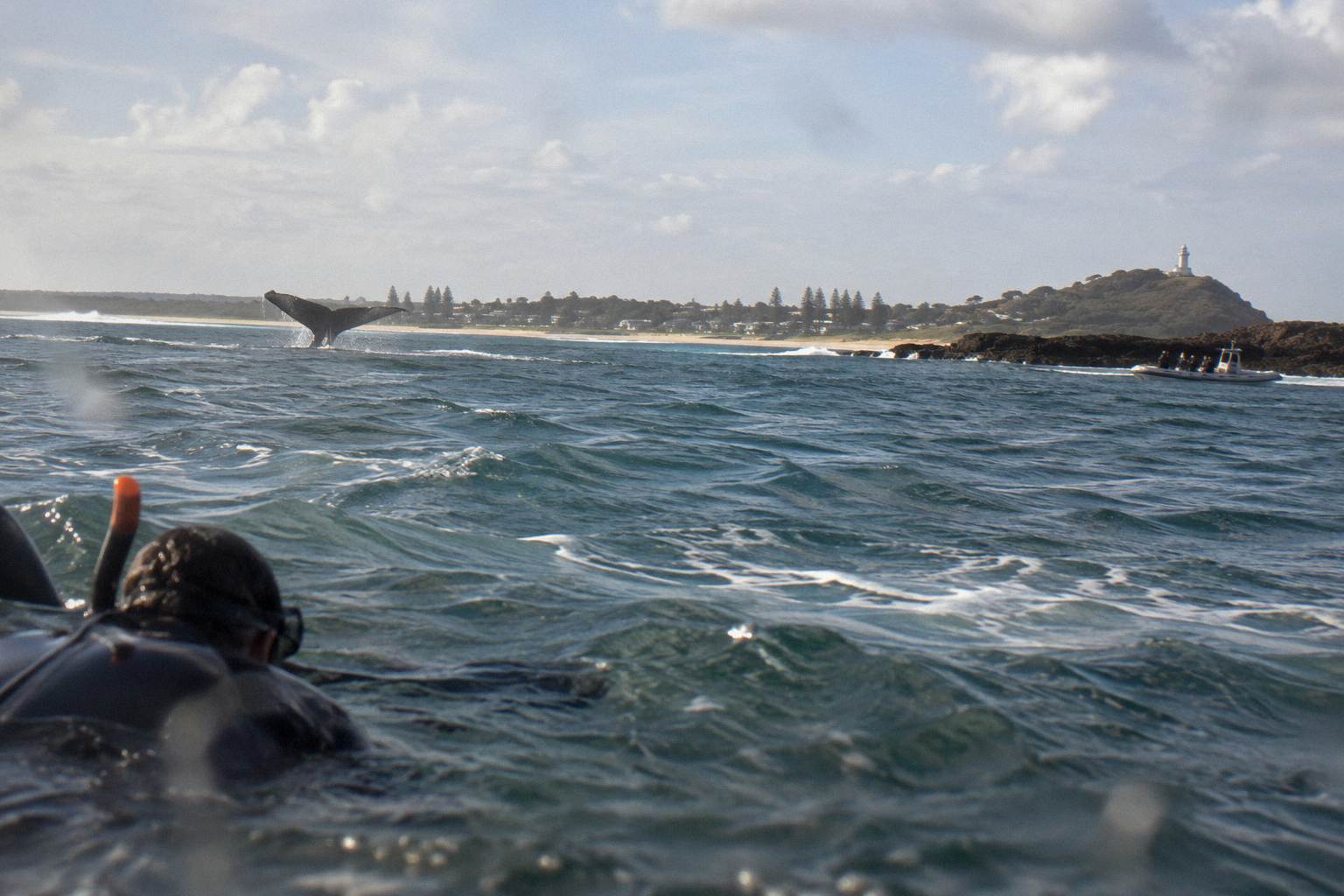
There is a final reason to book both early rather than late, and it is the weather. Whale season overlaps the stretch when one operator warns of strong northerlies between September and Christmas, and open-ocean trips can be rescheduled when the sea does not cooperate. Booking early gives you spare days to rebook into if your first choice is blown out, which is the difference between a rescheduled trip and a missed one on a short visit.
Whatever combination you settle on, these are the three trips that anchor a whale-season visit:
Common Questions About Whale Season And Snorkelling In Byron Bay
When Is Whale Season In Byron Bay?
It depends on the operator. One dive operator runs whale trips between May and November, while Byron Bay Dive Centre lists whale watching from June to October. Both statements are operator wording; confirm the dates for your specific trip on its live listing before planning around them.
Can You See Whales On A Julian Rocks Snorkel Trip?
No. Whales are not part of any snorkel trip on this roster. The whale watching product is a separate seasonal trip run by Out Of The Blue Adventures, about 2.5 hours, and the vessel leaves from Lance Ferris Wharf in Ballina.
Is The Water Cold In Byron Bay During Whale Season?
It can be. One operator's dive-site page states winter water can drop to 17 °C with an average around 20 °C, and advises 5 mm long wetsuits. Gear specifics and what is included vary by operator, so ask the booking desk.
What Marine Life Can You See Snorkelling Julian Rocks In The Whale Months?
Operators list turtles all year, green, hawksbill and loggerhead among them, with no guarantee. Grey nurse sharks are a June to November season at dive depths, leopard sharks run December to April, and manta rays appear in the summer months.
Should I Book The Whale Watch Or The Snorkel Trip?
They answer different wants. The whale watch is for seeing humpbacks from a boat; the snorkel is for swimming over the reef among turtles and fish. During the overlap months many travellers do both on separate days, since each runs about 2.5 to 3 hours.
Do Whale-Season Trips Get Cancelled For Weather?
Some do. One operator states that guests are contacted if weather or sea is unsuitable, with a full refund or reschedule, and a 48-hour cancellation window otherwise. Another operator's home page states a 100% refund up to 48 hours before, conditions applying. Policies differ, so confirm yours at booking.