Byron Bay Dolphin Kayak Versus A Snorkel Trip: Which Water Day Fits
Kayak or snorkel? Both put you on the water off Cape Byron, but the days are built differently: one paddles the surface looking for dolphins, the other puts your face in the water over a protected reef.
Short answer
The dolphin kayak trips run about 2.5 hours and stay on the surface. The Julian Rocks snorkel trips run 2.5 to 3 hours and include roughly 60 minutes in the water over the reef. Snorkel trips cost from AUD 94 per person with Blue Seafaris and Out Of The Blue; kayak prices are on the booking pages.
Both options put you on the same stretch of open coast, and both are sold on the promise of wild animals that no operator can guarantee. The difference is simpler than the marketing suggests. A dolphin kayak trip keeps you on the surface, paddling; a Julian Rocks snorkel trip puts you in the water with your face down over a protected reef. This guide compares the two on the facts that are actually stated: how long each trip runs, where it starts, how much time you spend in the water, who can go, and which traveller each one genuinely suits. Julian Rocks Snorkelling covers the reef side of that choice in depth; this page is where the two water days meet.
Kayak Or Snorkel: What Actually Changes Between The Two Days?
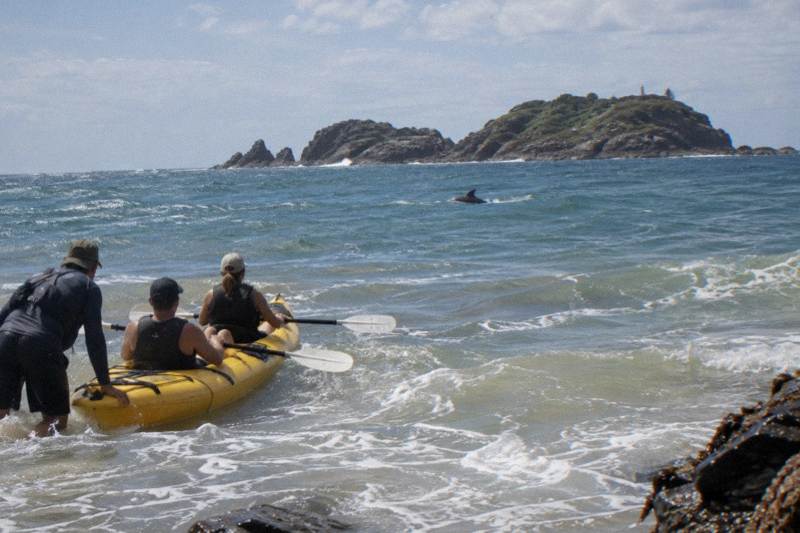
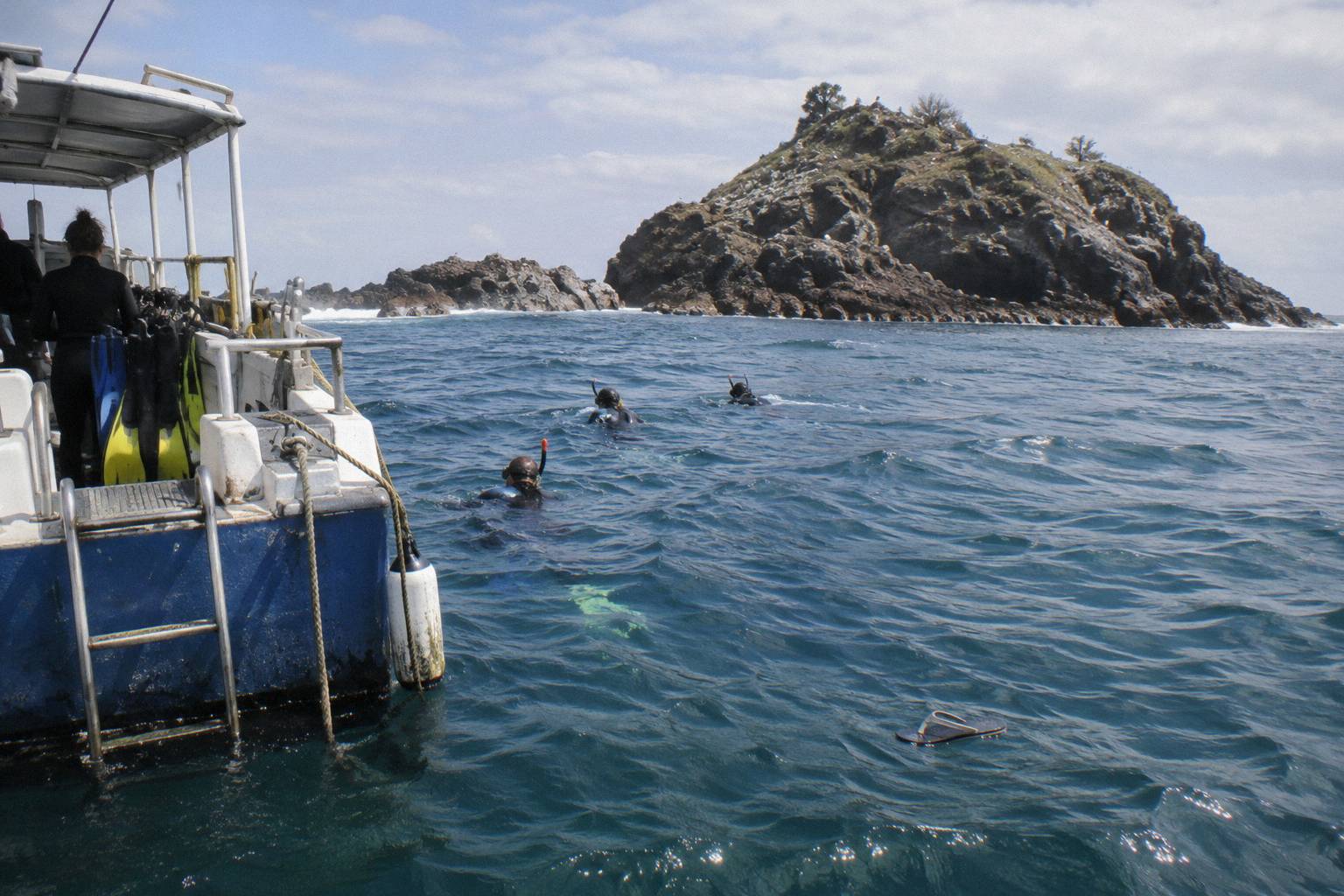
The real difference is your relationship to the water: kayaking keeps you dry, seated and on the surface for about 2.5 hours, viewing wildlife from above, while snorkeling puts you in the ocean itself for roughly 60 minutes over the reef at Julian Rocks, 2.5 km offshore, with boat time, briefing and gear filling the rest of the 2.5 to 3 hour trip.
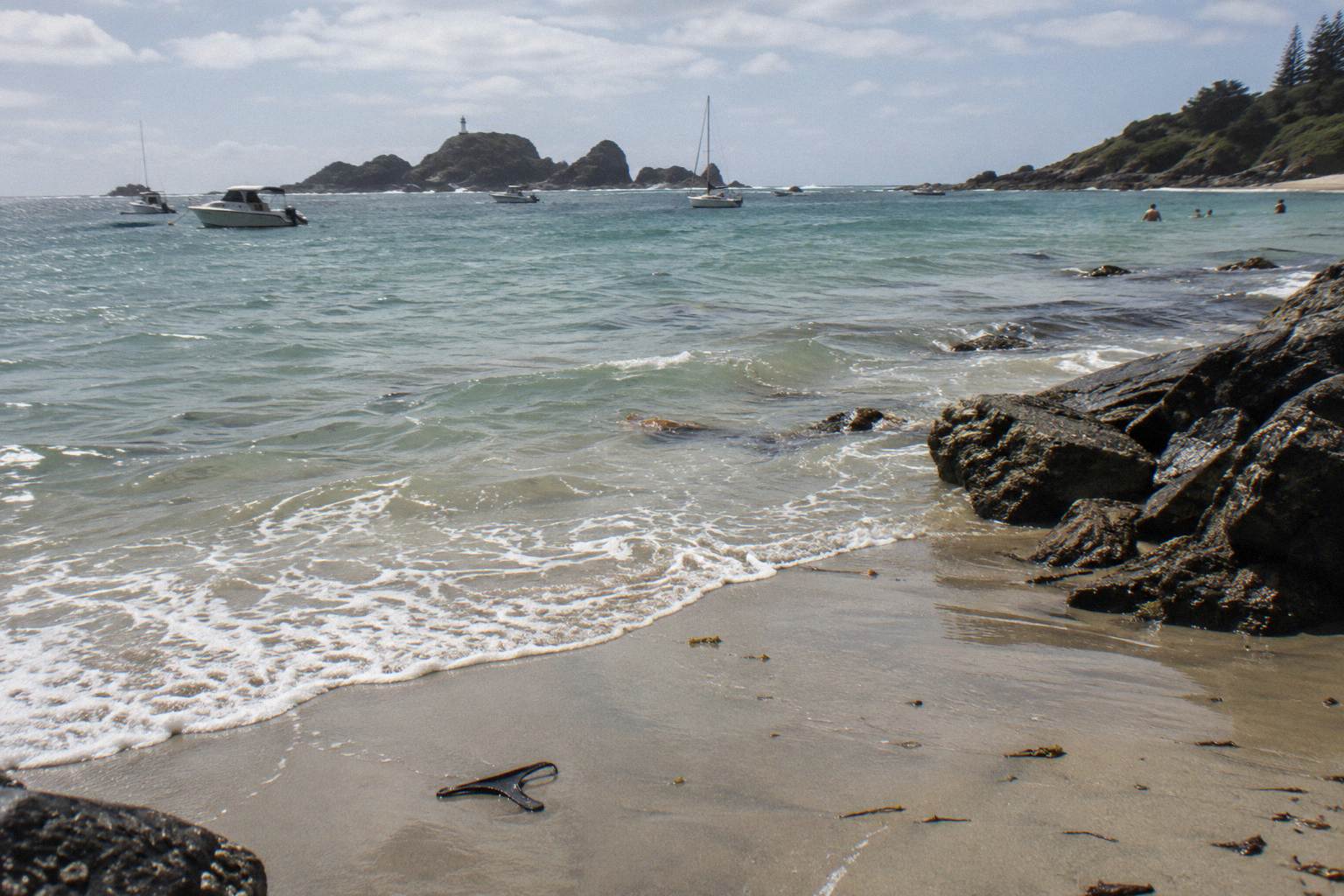
Everything else follows from that split. The kayak trips launch from the beach and stay in the shallower coastal water off Cape Byron, close enough to shore that the paddle itself is part of the experience. The snorkel boats run out to Nguthungulli Julian Rocks, about 2.5 km offshore, which operators put at a 5 to 10 minute ride from Byron Bay. So the snorkel day spends more of its total time travelling and gearing up, and concentrates the payoff into an hour of actual in-water time. The kayak day spreads a longer, gentler effort across the whole session.
The marine park treats both as permitted activities. Cape Byron Marine Park allows boating, surfing, snorkelling, diving and kayaking in its sanctuary zones, provided nothing is harmed, and the NSW Department of Primary Industries manages those rules. One rule is worth knowing whichever trip you pick: fish feeding, including shark feeding, is banned everywhere in the marine park. Operators who talk about feeding anything on a tour are describing something that is not allowed here.
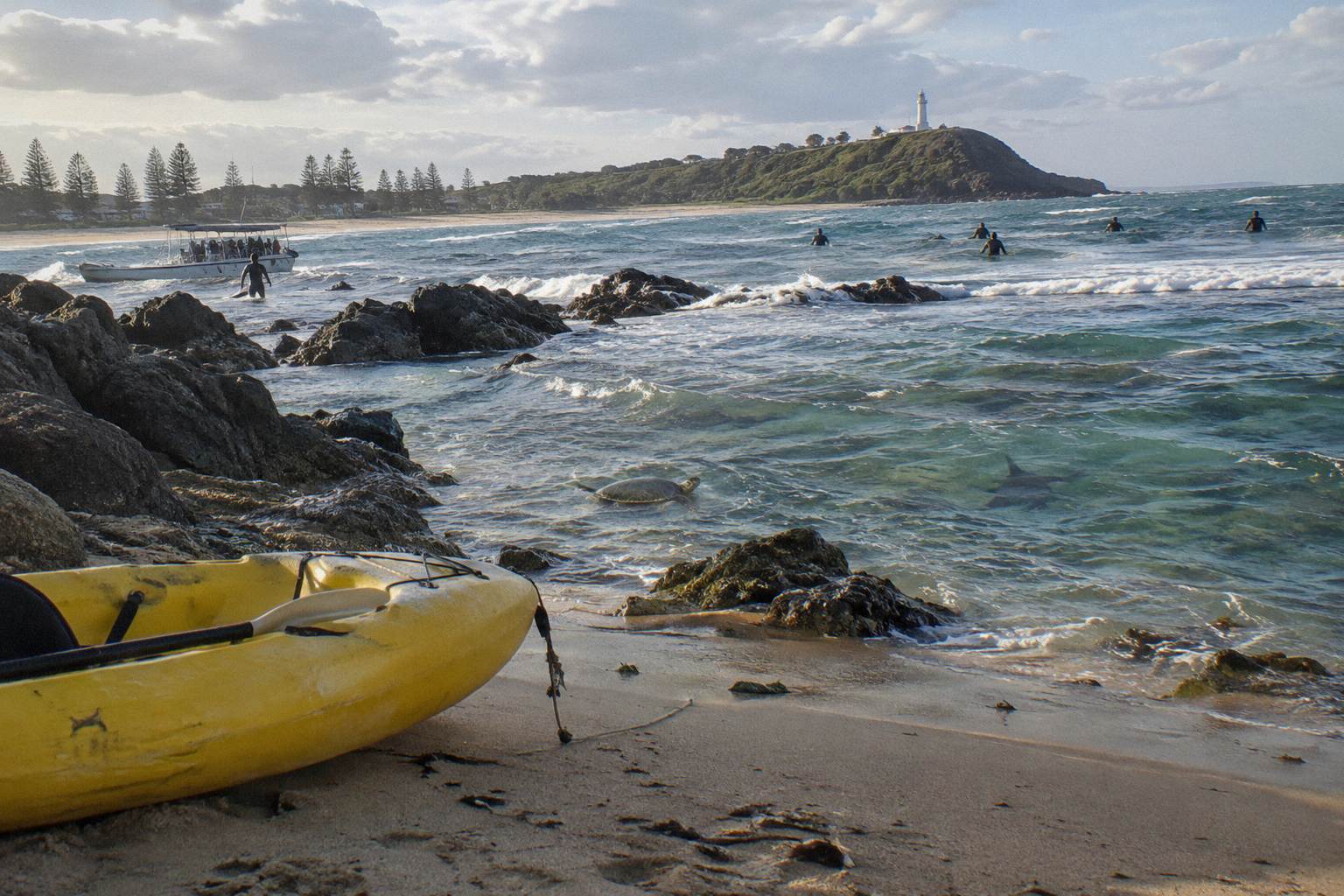
Wildlife is the honest wildcard on both sides. Turtles are listed at Julian Rocks all year with no guarantee, and one operator states plainly that sea turtles may simply not be there. Dolphins are the headline of the kayak trips, but no booking page promises them either. The Go Sea Kayak listing says it looks for dolphins and turtles, which is a statement of intent, not an outcome. Anyone who tells you a sighting is certain is selling you something the operators themselves will not claim.
“A very nice trip. We saw a lot, including turtles and a small shark. Our two skippers were also super friendly and very attentive. In the water, a skipper accompanied us and went in search of turtles, etc. I highly recommend the trip. You head out on a fast speedboat, so there's also an adrenaline rush.”
Which Trip Gets You Closer To The Marine Life?
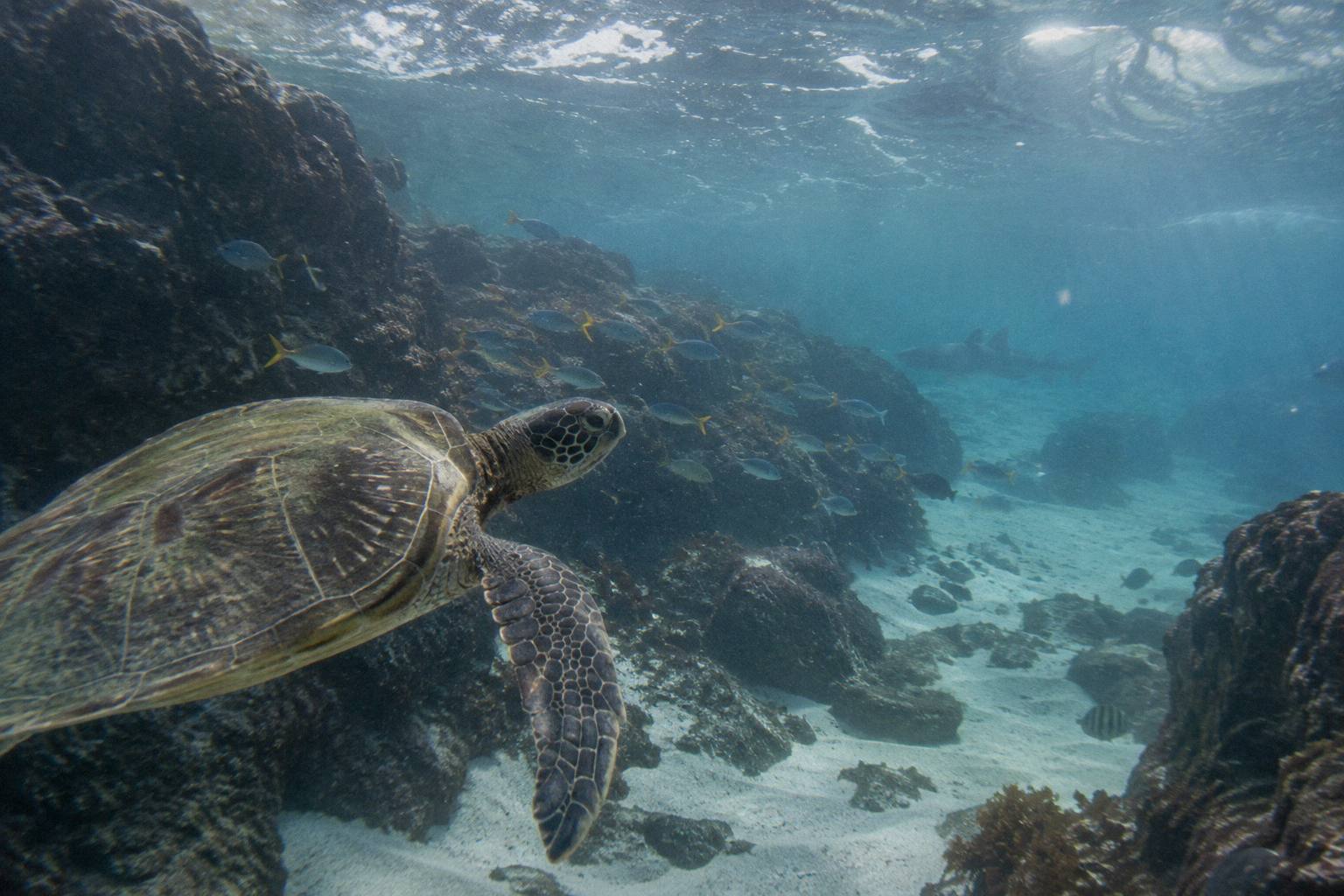
The snorkel trip gets you inside the habitat: you float over the reef where turtles, rays and fish live, in shallow sheltered water 3 to 12 m deep. The kayak trip keeps you on the surface above coastal water, where dolphins may pass close but you watch rather than join. Neither can promise a specific animal, and the operators themselves state no guarantees, so the choice is about how you want to encounter what turns up.
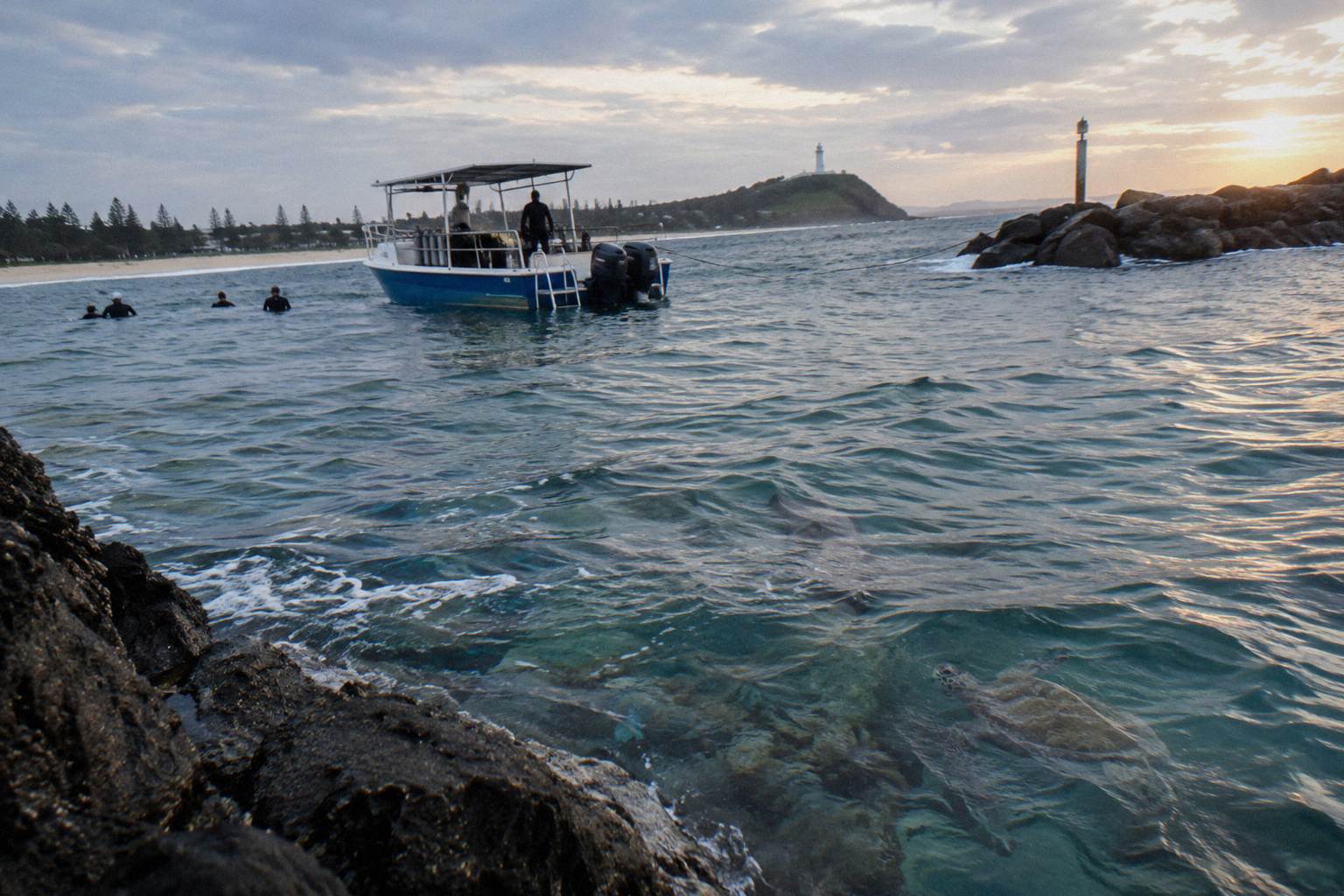
The snorkel side of the ledger is well documented because the reef is a fixed destination. Julian Rocks is home to sharks, rays, turtles, eels, starfish and corals, according to the marine park managers, and operators describe more than 500 species of fish around the site. Snorkel trips stay in the shallow, sheltered areas rather than the deeper dive sites, so what you see is the upper reef: turtles, rays, colourful fish and crustaceans in the operator's own wording. Turtles are the species snorkellers ask about most, and the answer from the operator that runs turtle-focused trips is candid: they can be spotted year-round throughout the day, and there is no guarantee.
The kayak side is a surface game. Dolphins move along the coast, and a paddle group can position near a pod without chasing it, which is the whole appeal. The Cape Byron Kayaks trip and the Go Sea Kayak trip are both about 2.5 hours, and the Go Sea Kayak booking page title says dolphins and turtles, with the obvious caveat that these are wild animals on a wild coast. Humpback whales pass Byron Bay in season, and the operators even disagree on the window: one dive operator runs whale trips between May and November, while Byron Bay Dive Centre lists June to October. Whichever window you trust, a whale sighting from a kayak or a snorkel boat is a bonus, never the product.
If close-up encounters are the whole point of your day, the snorkel trip is the one that physically puts you in the water with the animals. If you would rather stay dry, keep a wider view of the coast and take your chances with a passing pod, the kayak day is the better fit. Some travellers do both across a week, and there is a case for that too: the two trips show you completely different layers of the same marine park.
For a deeper look at what lives around the rocks, our guide to the marine life at Julian Rocks breaks down species by season.
Where Does Each Trip Start, And How Much Time Do You Get?
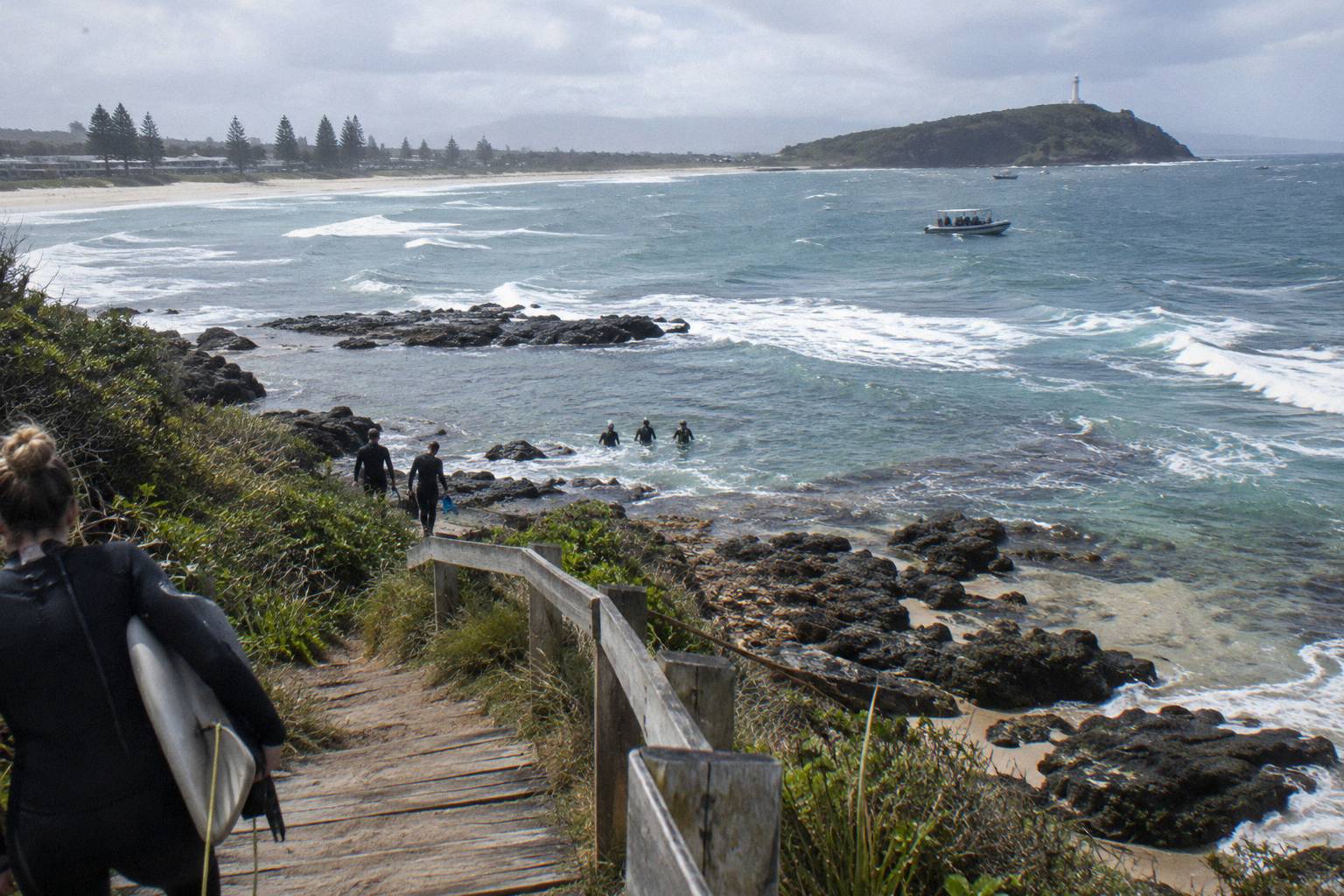
Start points differ trip by trip and must not be generalised. Blue Seafaris and Out Of The Blue both meet at Brunswick Heads Boat Harbour, a short drive north of Byron Bay town. The Turtle School snorkel meets at Byron Plaza on Jonson Street in Byron Bay, with transport to The Pass where the boat departs. Kayak trips meet at the beach, and the booking pages for the two kayak trips print no meeting point: check before you book.
The Brunswick Heads start is the one that surprises people. Two of the three main snorkel operators run their boats from the harbour at Brunswick Heads rather than from Byron Bay itself, and Blue Seafaris lists its check-in as 43 Harbour Way, Brunswick Heads Boat Harbour. If you are staying in Byron Bay without a car, that is a genuine planning detail: the trip is still called a Byron Bay tour, but the boat leaves from the next town north. Out Of The Blue uses the same harbour.
The Turtle School trip, run by Byron Bay Dive Centre, is the exception. It meets in the middle of Byron Bay town, at Byron Plaza on Jonson Street, and the operator's page says transport runs from that meeting point to The Pass, where the boat departs. The booking page adds that there is no pick-up from accommodation. For the Byron Bay Dive Centre Sea Turtle Snorkel, the Whale Watching trip and the two kayak trips, no meeting point is printed on the booking pages, so confirm the start location when you book. Never assume a trip leaves from Main Beach or Clarkes Beach; that is not how any of these operators describe their launches.
Time in the water is the number that separates the experiences most sharply. The Turtle School snorkel is about 2.5 hours in total with roughly 60 minutes actually in the water, per the listing. Blue Seafaris and Out Of The Blue both list about 2.5 hours for their snorkel trips, without stating in-water minutes. The kayak trips are also about 2.5 hours each, and all of that time is on the surface by design, with brief rest stops floating rather than any sustained swim. For the trips that do not state their in-water time, ask the operator.
| Trip | Operator | Duration | Start point (as stated) | Time in the water |
|---|---|---|---|---|
| Dolphin Kayak Tour | Cape Byron Kayaks | about 2.5 hours | not printed: check the booking page | whole session on the surface |
| Byron Bay Sea Kayak Tour | Go Sea Kayak Byron Bay | about 2.5 hours | not printed: check the booking page | whole session on the surface |
| Blue Seafaris snorkel | Blue Seafaris | about 2.5 hours | 43 Harbour Way, Brunswick Heads Boat Harbour | Not stated |
| Out Of The Blue snorkel | Out Of The Blue Adventures | about 2.5 hours | Brunswick Heads Boat Harbour | Not stated |
| Turtle School snorkel | Byron Bay Dive Centre | about 3 hours | Byron Plaza, Jonson Street, Byron Bay; boat from The Pass | about 60 minutes |
What Do The Trips Cost, And What Do You Get For It?
Only the snorkel trips carry printed from-prices here: Blue Seafaris runs from AUD 94 per person, rated 4.5 across 448 reviews on its booking page, and Out Of The Blue runs from AUD 94 per person, rated 4.4 across 167 reviews on its main page. No kayak price, rating or review count is on file, and the Turtle School trip prints neither price nor rating: check the live listing for those.
The pricing picture is deliberately thin on this page because that is what the sources support. Blue Seafaris and Out Of The Blue both sit at from AUD 94 per person on their booking pages, in Australian dollars, per person, and those figures change by date. Out Of The Blue's trip also appears on a second booking page showing 4.7 across 58 reviews, which is worth knowing rather than agonising over: same trip, two listings, two review pools. Neither number makes one trip better than the other, and ranking tours by rating across different pools is not a fair comparison anyway.
“We saw leopard sharks, turtles and many other fish – truly impressive!”
The kayak trips and the whale watching trip carry no printed price here at all, and that is not an oversight. The booking pages are the source, prices change by season and demand, and printing a number that is not on file would be a guess. The same applies to the Turtle School snorkel: rating and price are on the booking page. What is stated is scope: about 2.5 hours, about 60 minutes in the water, and inclusions that are genuinely listed, including snorkel gear, wetsuit and transport from the central meeting point to The Pass.
What the money buys differs between the two kinds of day in ways the from-price does not show. The snorkel price covers a boat ride, gear, a guided in-water session and usually a wetsuit, which matters because winter water can drop to around 17 °C. The Turtle School operator advises 5 mm long wetsuits for the duration of the trip, includes fins, mask, snorkel and wetsuit, and notes there are no prescription masks, so contact lenses are the workaround. Kayak inclusions are not on file for either kayak trip: ask the operator what is provided before you assume a dry bag or a spray jacket is included.
For a fuller breakdown of where the money goes on the reef side, see our guide to what a Julian Rocks snorkel trip costs.
Which Trip Suits Families, Nervous Swimmers And First Timers?
Minimum ages differ by operator and no single rule exists: operator pages show 5, 7 and 10 years in different places, and the booking pages for the Blue Seafaris and Out Of The Blue trips state none. For the kayak trips, minimum ages are not on file: ask the operator. Nervous swimmers are generally better served by the kayak, since staying dry removes the ocean-comfort question entirely; confident swimmers get more from the reef.
The age picture on the snorkel side is a three-way split, and it belongs to the trips rather than the activity. The Turtle School operator states a minimum age of 10 for its sea turtle snorkel. Sundive Byron Bay sets minimum age 7, requires previous open-ocean snorkelling experience and the ability to swim 200 m unassisted, with children aged 7 to 18 needing an accompanying adult guardian and over-65s asked for GP clearance. Wild Byron sets minimum age 5, caps tours at 12 passengers and uses a naturalist guide. Blue Seafaris and Out Of The Blue state no minimum age on their booking pages: ask the operator. The practical advice is simple: the minimum that matters is the one on the page of the trip you actually book.
Swimming ability is where the two days really diverge. The Turtle School operator (Byron Bay Dive Centre) requires all participants to swim at least 200 m unassisted in open ocean, the strictest bar in the set and the clearest statement of what open-ocean snorkelling demands. Out Of The Blue asks for competent swimming with the same 200 m unassisted standard before booking. Blue Seafaris is softer: comfort swimming in open water, with pool noodles offered, though no flotation jackets for non-swimmers. A kayak removes that hurdle almost entirely: you sit in the boat, you paddle, and if you cannot swim at all the trip can still work, subject to the operator's own rules, which are not on file here.
There are health rules worth knowing before you book a boat trip. The Turtle School operator prohibits guests with pregnancy or back or spinal injuries from vessel-based activities, and that is its own rule, not a general one across operators. Seasickness cuts both ways: a kayak in calm conditions and a boat ride of 5 to 10 minutes out to the rocks are different experiences, and the Turtle School boat carries ginger seasickness tablets while recommending you bring your own. If either applies to your group, the checklist in the next section is the conversation to have with the booking desk before you pay.
Families with mixed ages and confidence levels often find the kayak the lower-stress booking: one activity, everyone together, nobody has to prove they can swim in open water. Families with confident swimming kids aged 10 and up, or teens who snorkel already, tend to get more out of the reef day, especially with the turtle-focused options. Our guide to taking kids on the Julian Rocks snorkel trip goes deeper on the age rules.
What Should You Ask The Booking Desk Before Choosing?
Ask five things: the meeting point and the check-in time, the minimum age for your specific trip, what gear and clothing is included, the in-water time if it is not stated, and the cancellation and weather policy. Cancellation rules genuinely differ, with some operators offering free cancellation up to 24 hours before and others requiring 48 hours' notice, so check each listing before you book.
Meeting point first, because it can change your whole day. Two of the snorkel operators meet at Brunswick Heads, a short drive north of Byron Bay, which matters if you are based in town without transport. The Turtle School trip meets in Byron Bay itself with a transfer to the boat. The kayak trips print no meeting point. Confirming the start location before booking is the single highest-value question, and the second is what time it starts, because a 2.5-hour trip can still consume a morning once check-in, gear and travel are counted.
“This was a great active tour, saw some amazing marine wildlife. I would say if you are inexperienced or nervous then be aware it is out in the ocean and can have strong currents but if your comfortable with that then its amazing.”
Gear and clothing questions save discomfort. The Turtle School trip includes snorkel gear, wetsuit and the transfer, and advises a 5 mm long wetsuit; whether the kayak trips include spray jackets, dry bags or paddling gear is not stated, so ask. If anyone in your group wears glasses, note that the Turtle School operator has no prescription masks and contact lenses are the alternative. For in-water time, only the Turtle School states it outright, about 60 minutes; for every other trip, ask rather than assume.
Cancellation and weather is the question people skip and regret. Most listings here carry free cancellation up to 24 hours before the trip: that covers Blue Seafaris, Out Of The Blue, Turtle School and Go Sea Kayak, and the kayak-with-dolphins and whale watching trips offer a full refund if cancelled at least 24 hours ahead. The Turtle School operator contacts guests by text or phone if weather or sea is unsuitable, with a full refund or reschedule, though the dive centre's own page states a 48-hour window, and bookings made through an agent follow the agent's refund policy. Ask, in writing if you can, and note that a fully flexible rate and a strict rate can differ on the same trip.
| Question to ask | Why it matters | What is on file here |
|---|---|---|
| Meeting point and check-in time | Brunswick Heads versus Byron Bay changes travel plans | Stated for three snorkel trips; not printed for kayak trips |
| Minimum age | Ages of 5, 7 and 10 appear across operators | Stated per operator; none on the Blue Seafaris and Out Of The Blue pages |
| In-water time | The payoff hour varies by trip | About 60 minutes for Turtle School; not stated elsewhere |
| What is included | Wetsuit, gear and transfers vary | Turtle School inclusions listed; kayak inclusions not on file |
| Cancellation and weather policy | Fees inside the window can be 100 percent | Turtle School 24 hours on the listing; the operator's own page says 48 hours |
If weather is your worry, our piece on what happens when a Julian Rocks trip is cancelled for weather explains the refund picture.
So Which Water Day Should You Book?
Book the snorkel if you meet the stated swimming standard, floating over turtles and rays, and book the kayak if you would rather stay dry, see the coast from the water, paddle for fun, or your group mixes ages and confidence levels. The snorkel listings set a real bar: Out Of The Blue Adventures and Turtle School (Byron Bay Dive Centre) each require 200 m unassisted, while Blue Seafaris asks that you be comfortable swimming in open water. And if you have three or more days in Byron Bay, the honest answer is that the two trips are not competitors at all.
The strongest case for the snorkel is uniqueness. Julian Rocks is a protected offshore reef inside a sanctuary zone, and you cannot get that experience from the beach; it needs a boat and a guide. From AUD 94 with two operators, roughly 60 minutes in the water where that is stated, and gear included on the trips where inclusions are listed, the reef day is the one travellers come to Byron Bay specifically for. The trade-offs are real. Every listing states its own swimming standard: Blue Seafaris asks that you be comfortable swimming in open water, Out Of The Blue Adventures requires 200 m unassisted, the Turtle School (Byron Bay Dive Centre) trip asks for the same 200 m in open ocean, and the Byron Bay Dive Centre sea turtle tour sets its minimum at 25 m unassisted. Minimum ages can exclude younger kids depending on the operator, and the trip is weather-dependent in a way the operators themselves acknowledge with refund-and-reschedule policies.
“Amazing snorkelling experience! Guides were great- super friendly and knowledgeable!”
The kayak makes its case on accessibility and variety. You are on the water, exercising lightly, seeing Cape Byron from an angle no beach towel offers, with dolphins a genuine possibility and nothing promised. Nobody has to prove a 200 m swim. The unknowns are the ones to resolve at booking: price, meeting point, minimum age and inclusions are all check-the-listing questions for the kayak trips, and a quick message to the operator answers all four at once.
There is also a hybrid logic worth naming. The Go Sea Kayak listing is titled around dolphins and turtles, and some visitors book a kayak day to scout the coastline and a snorkel day to go under it, in that order. Doing the kayak first builds ocean comfort, which is exactly what the stricter snorkel operators are screening for. It is not a requirement, just a sensible order for anyone whose open-water confidence is the open question.
| If you are... | The better first booking | The reason in one line |
|---|---|---|
| A confident swimmer chasing the reef | Snorkel, from AUD 94 | The only way into the sanctuary zone water itself |
| A nervous swimmer or non-swimmer | Kayak | Stays on the surface, no swim requirement stated |
| A family with kids under 10 | Kayak, or the min-age-5 snorkel operator | Ages of 5, 7 and 10 split the operators; ask yours |
| Someone who gets seasick | Kayak in calm conditions, or ask about tablet options | One boat carries ginger tablets; bring your own regardless |
| A traveller with only one morning free | Snorkel | About 2.5 to 3 hours total delivers the headline experience |
| A repeat visitor to Byron Bay | The one you have not done | The two days show different layers of the same coast |
Common Questions About Dolphin Kayak Versus Snorkelling
Kayak Or Snorkel: Which Is Better At Byron Bay?
Neither is objectively better; they are different days. The kayak keeps you dry on the surface for about 2.5 hours; the snorkel puts you in the water over the Julian Rocks reef for roughly 60 minutes where in-water time is stated, within a 2.5 to 3 hour trip. Confident swimmers chasing marine life usually prefer the snorkel; mixed groups and nervous swimmers usually prefer the kayak.
Do The Dolphin Kayak Trips Guarantee Dolphins?
No. No operator or booking page in this comparison guarantees a sighting. The Go Sea Kayak listing says it looks for dolphins and turtles, which is intent, not a promise, and the marine park bans feeding or luring animals. Dolphins are a strong possibility on this coast, but book the paddle for its own sake.
Which Is Cheaper, The Kayak Or The Snorkel Trip?
The only printed prices here are the snorkel trips: Blue Seafaris from AUD 94 per person and Out Of The Blue from AUD 94 per person, both from their booking pages. Kayak prices are not on file, and the Turtle School snorkel prints no price either, so compare the live listings for your dates rather than relying on any summary figure.
Can Children Do Both Trips?
It depends entirely on the operator. Snorkel minimum ages on file run 5, 7 and 10 years across different operators, and the Blue Seafaris and Out Of The Blue booking pages state none. Kayak minimum ages are not on file. One operator also requires children aged 7 to 18 to be accompanied by an adult guardian. Check the specific trip's page before booking.
Do I Need To Be Able To Swim For The Kayak Trip?
Swimming requirements for the kayak trips are not stated on the booking pages, so ask the operator directly. As a comparison point, the stricter Julian Rocks snorkel operators require comfortable ocean swimming, with one requiring a 200 m unassisted swim, while the kayak keeps you seated in the boat throughout the roughly 2.5 hour session.
Where Do The Trips Leave From?
Per trip, not per town: Blue Seafaris checks in at 43 Harbour Way, Brunswick Heads Boat Harbour, and Out Of The Blue uses the same harbour. The Turtle School trip meets at Byron Plaza, Jonson Street, Byron Bay, with transport to The Pass where the boat departs. The kayak trips and the whale watching trip print no meeting point, so confirm at booking.