Is It Safe To Swim With Grey Nurse Sharks At Julian Rocks?
What the sources actually say about grey nurse sharks at Julian Rocks, the marine park rules that protect them, what operators require of snorkellers, and which trips fit your comfort level.
The question sounds dramatic, and the honest answer is calmer than most people expect. Grey nurse sharks are real residents of Julian Rocks in winter, they are listed as a threatened species in Cape Byron Marine Park, and no snorkel tour there is marketed as a shark swim. The gap between those three sentences is where the safety question actually lives, and this page works through it using only what the agencies and operators publish.
Yes. The sources give no reason to treat grey nurse sharks at Julian Rocks as a danger: the NSW agency that manages the marine park lists them as a threatened species while permitting snorkelling in the same sanctuary zones, and encounters are rare anyway, because the sharks sit at dive depths of 8 to 24 m from June to November, well below the 3 to 12 m shallow water where snorkel trips spend their time.
That layered answer matters, because the question usually hides two different worries. One is whether the animal itself is dangerous. The other is whether the trip that takes you out there is safe for you personally, given the open ocean, the swim requirement and the gear. The sources speak to both, separately.
On the first worry: the DPIRD page for Cape Byron Marine Park describes Nguthungulli Julian Rocks as home to sharks, rays, turtles, eels, starfish and corals, and the same agency's rules explicitly permit snorkelling in sanctuary zones, the highest form of protection in the park. Nobody involved in managing this site frames the sharks as a reason not to get in the water. If you want the wider picture of which species appear when, our Julian Rocks marine life guide lays out the seasons in detail.
On the second worry: this is an open-ocean site. One dive operator's own page notes it can have strong swells, currents, surges, cold water and winds, and every operator sets swim requirements before you board. That is the part of the safety question you can actually control, and most of this page is about it.
If you are weighing a booking, these are the three snorkel trips this site compares most often:
Where Do Grey Nurse Sharks Actually Hang Out?
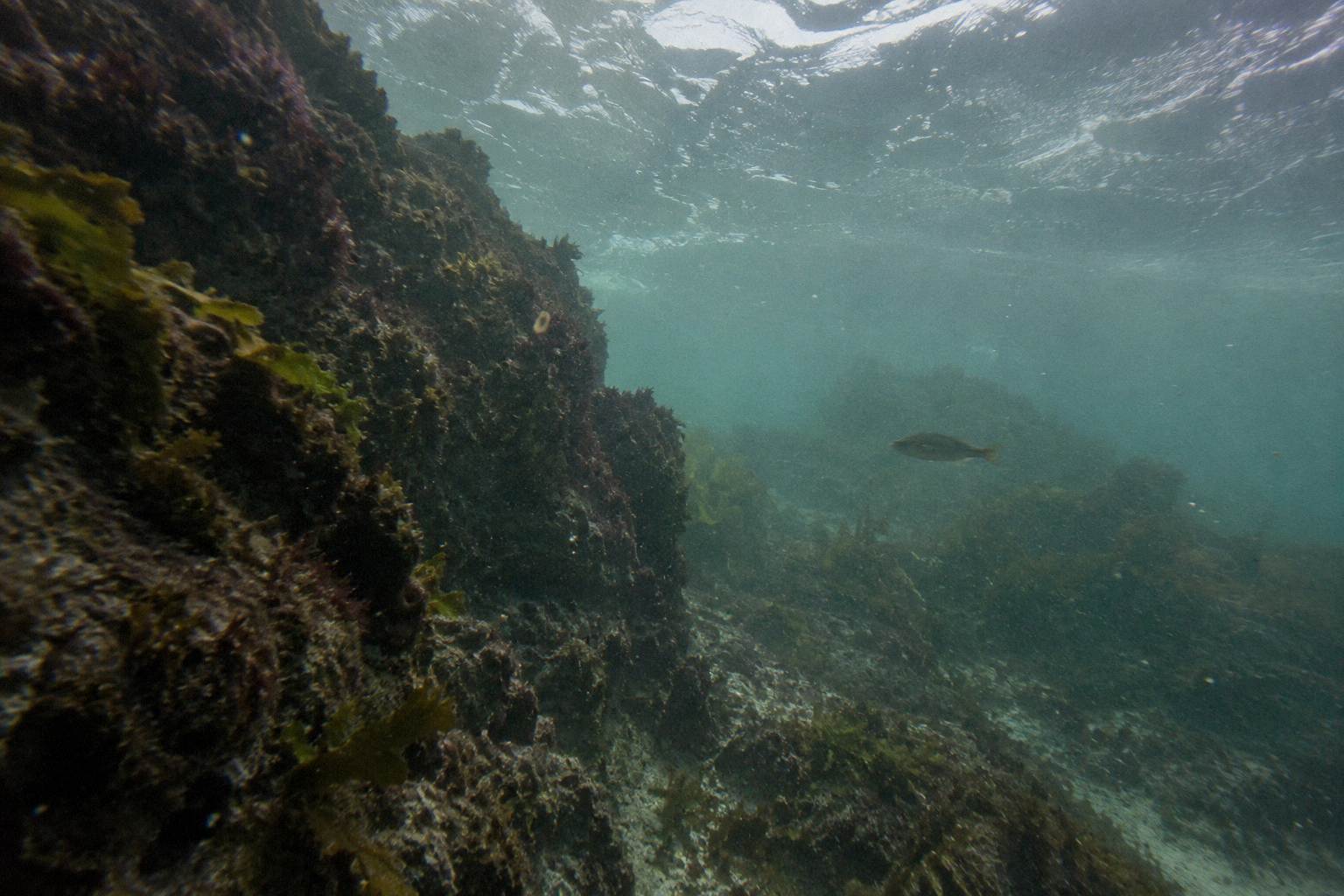
In the sand trenches around the rocks, during the colder months of June to November, at depths of 8 to 24 m, which one dive operator describes as dive territory rather than snorkel territory. The same operator's page describes snorkel trips as staying in shallow sheltered areas of 3 to 12 m, where the published wording lists turtles, rays, a variety of colourful fish and crustaceans rather than sharks. In practice, grey nurse sharks are rarely seen on snorkel trips.
That is not a dodge, it is the geometry of the site. The rocks sit about 2.5 km offshore, and the underwater landscape drops away from the sheltered shallows into the trenches and deeper dive sites where the winter sharks gather. A snorkeller floating on the surface has several metres of water between them and that habitat even when both are present on the same day.
The seasonal picture, in the operators' own words, looks like this:
| Animal | Season, per operator wording | Where, per operator wording |
|---|---|---|
| Grey nurse sharks | June to November, cooler winter water | Sand trenches, dive depths of 8 to 24 m |
| Leopard sharks | December to April, warmer months | Mostly the Needles sandy arena |
| Manta rays | Summer months | Around the dive sites |
| Turtles (green, hawksbill, loggerhead) | All year | Throughout the site; the operator says it cannot guarantee turtles |
| Wobbegong, bull rays, eagle rays, shovelnose rays | All year | The Needles and the Line of Smiles, dive sites |
Note what is missing from that table: any count, any odds, any promise. Operators here are careful with their wording, and this site keeps the same discipline. A diver in the trenches in August may share the water with grey nurse sharks; a snorkeller in the shallows the same day almost certainly will not, and no source claims otherwise.
If your heart is set on the shark season specifically, read our grey nurse sharks at Julian Rocks guide before deciding between a snorkel and a dive, because the depth difference is the whole decision. There is also a longer comparison in snorkelling or diving at Julian Rocks for readers who are new to both.
What Rules Protect The Sharks, And Do They Protect You?
The rules protect the sharks, and only indirectly the people. Sanctuary zones, which cover 6,118 ha or 27.5% of the marine park, are no-take zones that ban all fishing, collecting and reef anchoring; fish feeding, including shark feeding, is prohibited across the marine park; and the DPIRD user guide names grey nurse sharks among the park's threatened species. Snorkelling is a permitted activity in these zones because it does not harm any animal, plant or habitat.
That last clause is the connection between the two halves of the question. The park is managed so that nothing in the water is chummed, fed, chased or harvested, which removes the behaviours that change how wild animals behave around people. The DPIRD user guide sets out the full set of zone rules: vessels slow to 4 knots within 200 m of the rocks, anchoring is not permitted within 700 m, and there are seven Marine Parks moorings with a two hour maximum, built for vessels up to 15 tonnes or 10 m in winds of 24 knots or less.
What the rules do not do is set an approach distance for swimmers. No official figure in metres appears in any source this site was given, and we will not invent one. The practical instruction comes from the operators instead: Byron Bay Dive Centre's FAQ asks guests not to touch, collect or harass marine life, and allows waterproof cameras without flash. That is the standard of conduct, and it applies to turtles and rays just as much as to anything with teeth.
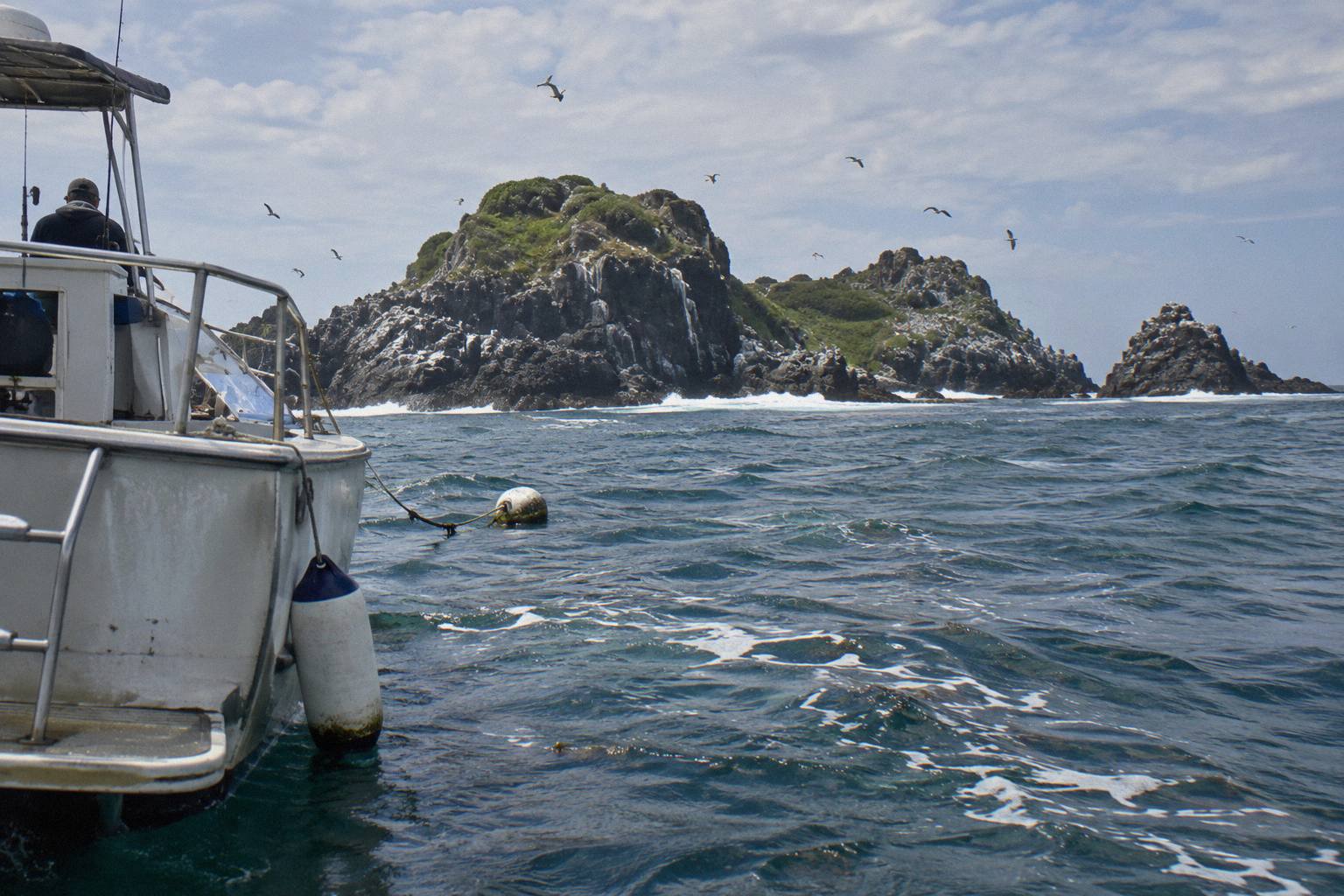
The rocks themselves are also a bird sanctuary; the NSW Government page notes gulls, terns, tattlers, cormorants and plovers, and prohibits collecting or destroying animals and spear fishing. Everything about the place is built around leaving it as it is.
For the broader rulebook, including what the zone map means for where boats can go, see Cape Byron Marine Park snorkel rules.
What Do Operators Require Before You Board?
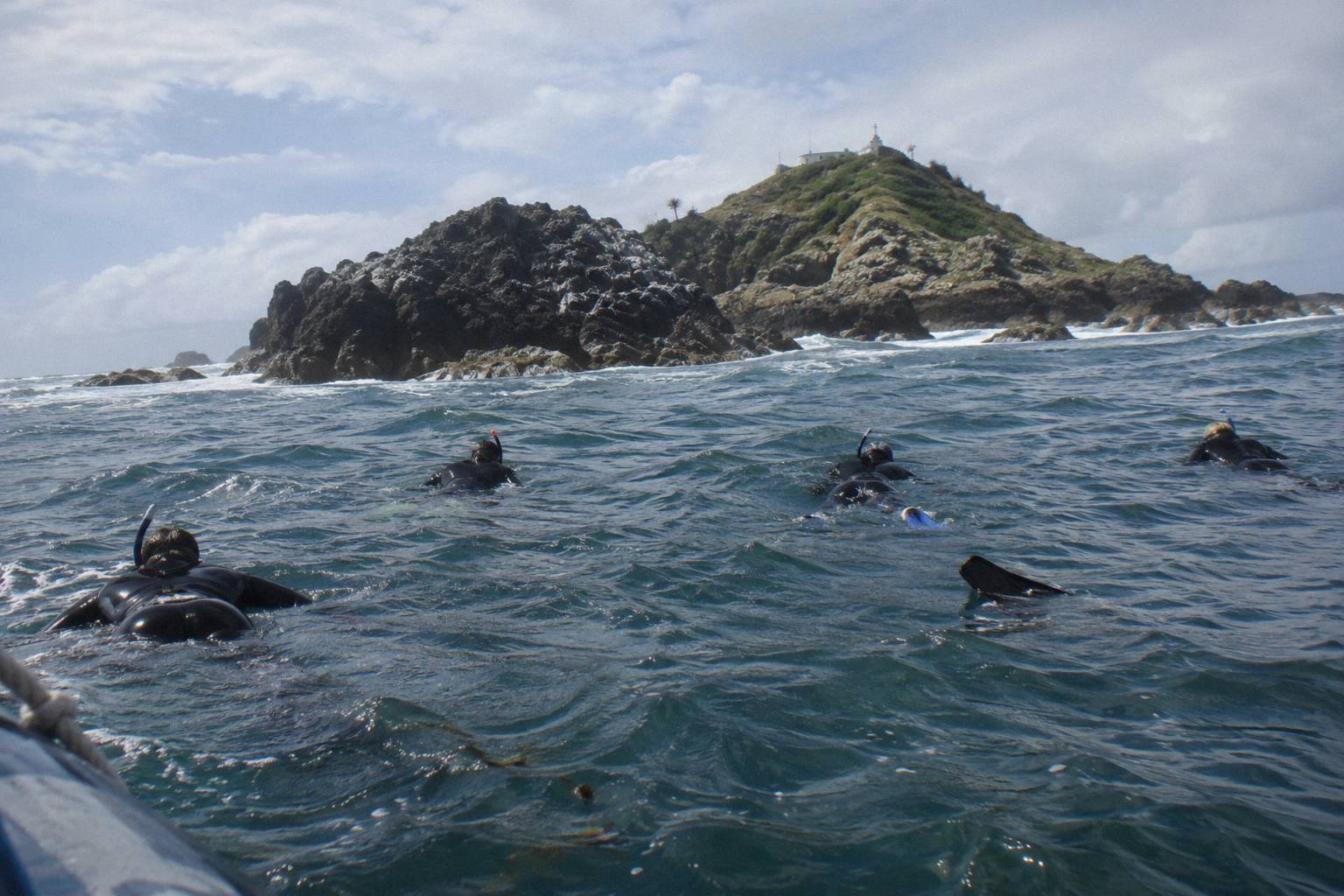
Each operator sets its own swim bar before you board. The Blue Seafaris listing asks that you be comfortable swimming in open water, with pool noodles on offer and no flotation jackets for non-swimmers. Out Of The Blue requires competent swimmers able to cover 200 m unassisted before booking. The Turtle School trip run by Byron Bay Dive Centre asks for a 200 m unassisted swim in open ocean. Check the live listing for each tour before you book, since conditions and ages can change.
This is the part of safety that is genuinely in your hands. The site is open ocean, the water moves, and operators screen for it. Here is what the published sources state, operator by operator:
| Operator (as published) | Swim or experience requirement | Age or medical limits | Support offered |
|---|---|---|---|
| Byron Bay Dive Centre | Must be able to swim at least 200 m unassisted in open ocean | Minimum age 10 on the sea turtle snorkel tour; pregnancy, back or spinal injuries prohibited from vessel-based activities | Lifejackets on board; long wetsuit or pool noodle suggested for nervous snorkellers |
| Sundive Byron Bay | Previous open-ocean snorkelling experience mandatory; 200 m unassisted swim | Kids 7 to 18 must be able to swim and be accompanied by an adult guardian; over 65 need GP clearance | Gear and wetsuit included |
| Blue Seafaris and Out Of The Blue | Blue Seafaris: comfortable swimming in open water; Out Of The Blue: 200 m unassisted | Turtle School asks for 200 m unassisted in open ocean; ask the operator | Both list about 2.5 hour trips from Brunswick Heads Boat Harbour |
That row is no longer blank. Both listings do state a swimming standard: Blue Seafaris asks that you be comfortable swimming in open water (pool noodles are offered, though there are no flotation jackets for non-swimmers), while Out Of The Blue requires a competent swimmer able to swim 200 m unassisted before booking. Weight and fitness standards remain unstated, so ask the operator directly.
The gear side is well documented for Byron Bay Dive Centre: fins, mask, snorkel and wetsuit are included, 5 mm long wetsuits are advised for the duration of the trip, prescription masks are not available (contact lenses are fine), and the boat carries ginger seasickness tablets, though the FAQ recommends bringing your own. Its FAQ page covers all of this directly, including its 48 hour cancellation policy and its weather practice: if the sea is unsuitable, guests are contacted by text or phone and offered a full refund or a reschedule.
If swimming confidence is the real question behind your search, read can non-swimmers snorkel at Julian Rocks and how fit do you need to be to snorkel Julian Rocks for the full treatment.
Which Trip Fits Your Comfort Level?
If you want the shallowest, most conventional first snorkel, the 2.5 hour Brunswick Heads trips fit best: Blue Seafaris runs from AUD 94 per person, rated 4.5 across 448 reviews, and Out Of The Blue also starts at AUD 94, rated 4.4 across 167 reviews. If you are comfortable with more water time, Byron Bay Dive Centre's 3 hour turtle-focused trips spend about 60 minutes in the water.
The choice between them is really a choice of meeting point, duration and in-water time, not of what you might see. All the snorkel products visit the same shallow sheltered habitat, and the species list for that habitat is the same for everyone.
For the featured trip on this site, the 2.5-hour Blue Seafaris snorkel checks in at 43 Harbour Way, Brunswick Heads Boat Harbour, and the rating pool of 448 reviews is the largest of the roster. Julian Rocks Snorkelling rates it the default pick for a first visit precisely because it is short, sheltered and well reviewed, not because of any wildlife promise.
The turtle-focused alternative runs longer. Turtle School, the 2.5-hour snorkel from Byron Bay Dive Centre, meets at Byron Plaza on Jonson Street and includes transport to The Pass, where the boat departs, with about an hour in the water. Its price and rating are on the listing rather than printed here.
A second Byron Bay Dive Centre product, the sea turtle snorkel experience, also runs about 2.5 hours with a 10-year minimum age. Its meeting point is not stated; check the booking page before you plan your day around it.
By traveller type, the fit looks like this:
| Traveller | Best fit | Why |
|---|---|---|
| Nervous first-time snorkeller | A 2.5 hour Brunswick Heads trip | Short in-water time, no stated prior-experience requirement; ask the desk about noodles and lifejackets |
| Confident swimmer wanting more water time | A 3 hour Byron Bay Dive Centre trip | About 60 minutes in the water, gear and wetsuit included |
| Family with children | Check age minimums first | Published minimums differ by operator: 5, 7 and 10 years appear across operator pages |
| Reader hoping specifically for grey nurse sharks | A dive course, not a snorkel | The sharks sit at 8 to 24 m from June to November, below snorkel range |
What Should You Ask The Booking Desk Before You Go?
Five questions cover almost everything the sources leave unstated: the swim standard for your specific trip, the minimum age, what happens if the sea is rough on your date, what flotation is available on the boat, and whether the departure point suits your transport plans. Every one of these is answerable in a two minute exchange, and none of them is printed consistently across listings.
A workable checklist:
| Question to ask | Why it matters |
|---|---|
| What is the swim requirement on this trip? | Standards differ by operator; one requires 200 m unassisted and prior open-ocean experience |
| What is the minimum age? | 5, 7 and 10 years appear on different operator pages |
| What is the rough-sea plan? | Byron Bay Dive Centre offers a full refund or reschedule; other policies vary |
| Is flotation carried on board? | Lifejackets are confirmed on one operator's boat; noodles are suggested for nervous snorkellers |
| Where exactly do we check in? | Brunswick Heads Boat Harbour and Byron Plaza are different towns from Byron's centre |
Weather is the one variable no one controls. One dive operator notes strong northerlies can blow between September and Christmas, and describes the site's possible conditions plainly: strong swells, currents, surges, cold water and winds. If your date falls in that window, the rough-sea question moves to the top of the list.
What About The Cold, The Season And The Sharks You Might Actually See?
Water at the site averages around 20 °C and can drop to 17 °C in winter, per one operator's dive-site page, so 5 mm wetsuits are advised on Byron Bay Dive Centre trips, which include the wetsuit in the price. Grey nurse sharks haunt the deep trenches in the cooler months, while leopard sharks, the headline species at the Needles from December to April, come into shallower water.
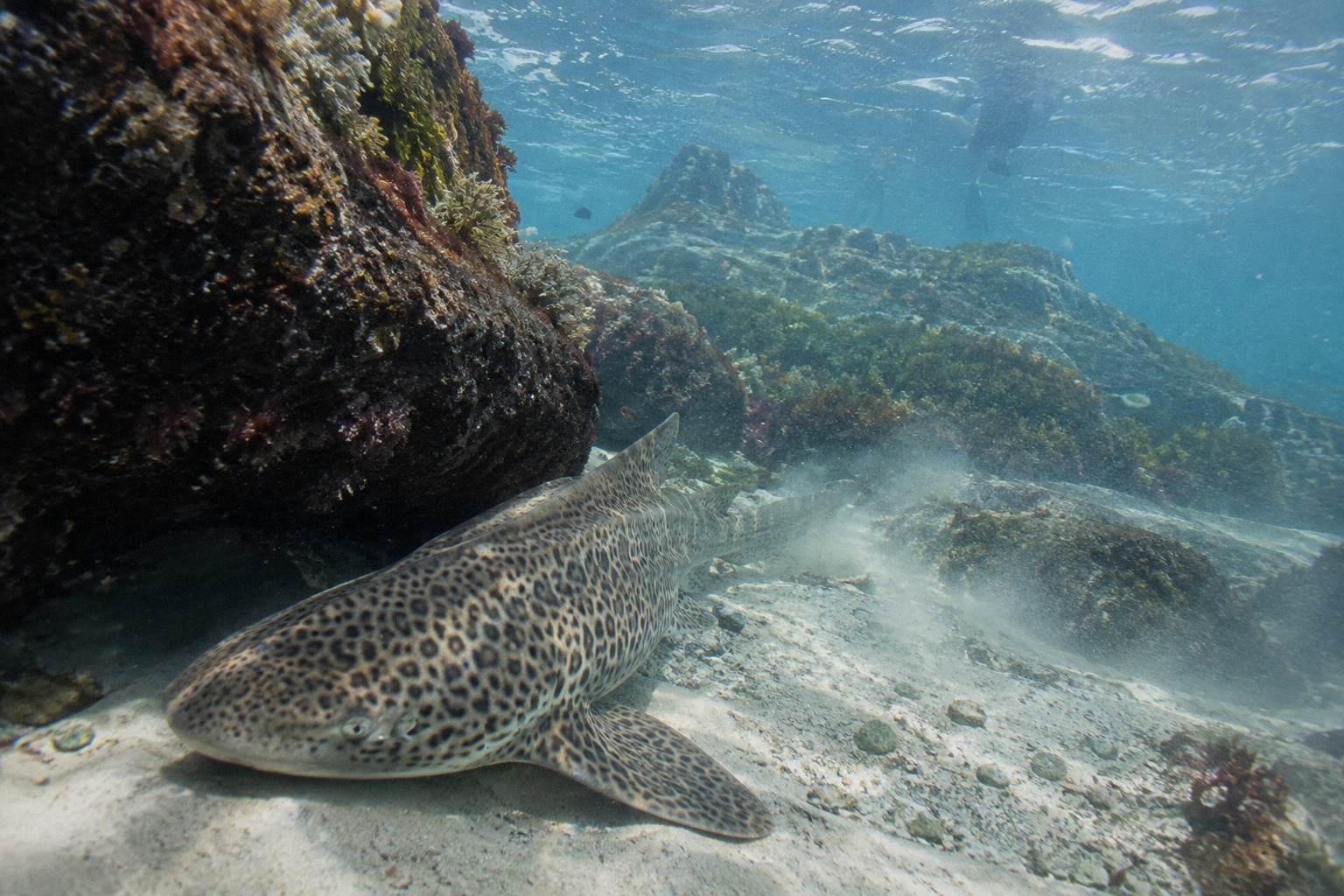
The seasonal split is worth understanding because it inverts many people's expectations. Summer, not winter, is when a snorkeller has the more plausible shark encounter at Julian Rocks: leopard sharks gather in the sandy arena at the Needles from December to April, and they are a surface-visible species in a way the trench-dwelling grey nurse sharks are not. Our leopard sharks at Julian Rocks guide covers that season in full.
On whales, since winter visitors often ask: the operators differ on their whale seasons and this site reports both rather than merging them. One operator runs whale trips between May and November; Byron Bay Dive Centre lists whale watching June to October. Neither claim extends to snorkel trips, and no snorkel product here is sold with whales in it.
There are no official monthly sea-temperature figures in the sources, so this site prints none. The 17 °C winter figure above is one operator's own number from its dive-site page, quoted once, as the operator states it. For planning by month, use Byron Bay water temperature by month and the best month to snorkel Julian Rocks.
The honest summary for a shark-focused reader: if your question is whether the water is safe to enter with grey nurse sharks in it, the park's own management framework answers yes by permitting snorkelling in the same zones where the species lives, and no source suggests otherwise. If your question is whether you will swim beside one, the answer is that snorkel depths and shark depths do not overlap, and no operator here promises otherwise. For the broader safety picture of the site, start with is it safe to snorkel at Julian Rocks.
If you are ready to compare the trips side by side, here is the selection again:
Common Questions About Grey Nurse Sharks At Julian Rocks
Is It Safe To Swim With Grey Nurse Sharks At Julian Rocks?
Yes, in the sense the sources support: the marine park authority lists grey nurse sharks among the park's threatened species and permits snorkelling in the same sanctuary zones, and no source describes them as a danger to snorkellers. In practice, they gather in sand trenches at depths of 8 to 24 m from June to November, below the 3 to 12 m shallows where snorkel trips go, so encounters are rare.
Will I See Grey Nurse Sharks On A Snorkel Trip?
Probably not. One dive operator places them in the sand trenches at dive depths of 8 to 24 m during the colder months, June to November, while snorkel trips stay in shallow sheltered areas of 3 to 12 m. No operator here promotes a shark swim, and no sighting is guaranteed.
Are Grey Nurse Sharks Dangerous To Snorkellers?
The published sources do not frame them that way. The DPIRD user guide names them among the marine park's threatened species, meaning protected rather than feared, and snorkelling is a permitted activity in the sanctuary zones where they live. This site prints no safety statistics, attack figures or incident counts, because none appear in the sources.
When Is Grey Nurse Shark Season At Julian Rocks?
June to November, the colder months, per one dive operator's page, which describes the sand trenches at the site filling with grey nurse sharks in winter. Those are dive depths, not snorkel depths. Leopard sharks are the summer counterpart, mostly at the Needles from December to April.
What Rules Protect Sharks At Julian Rocks?
The rocks sit inside sanctuary zones of Cape Byron Marine Park: 6,118 ha, or 27.5% of the park, fully no-take. Fishing, collecting and reef anchoring are banned, fish feeding including shark feeding is prohibited across the whole park, and operators ask guests not to touch, collect or harass marine life.
Do I Need To Be A Strong Swimmer To Snorkel At Julian Rocks?
Each operator sets its own swim standard. Blue Seafaris asks that you be comfortable swimming in open water; pool noodles are offered, with no flotation jackets for non-swimmers. Out Of The Blue requires a competent swimmer able to cover 200 m unassisted before booking. The Turtle School trip from Byron Bay Dive Centre asks for at least 200 m unassisted in open ocean. Lifejackets ride on at least one operator's boat, and a long wetsuit or pool noodle suits nervous snorkellers.