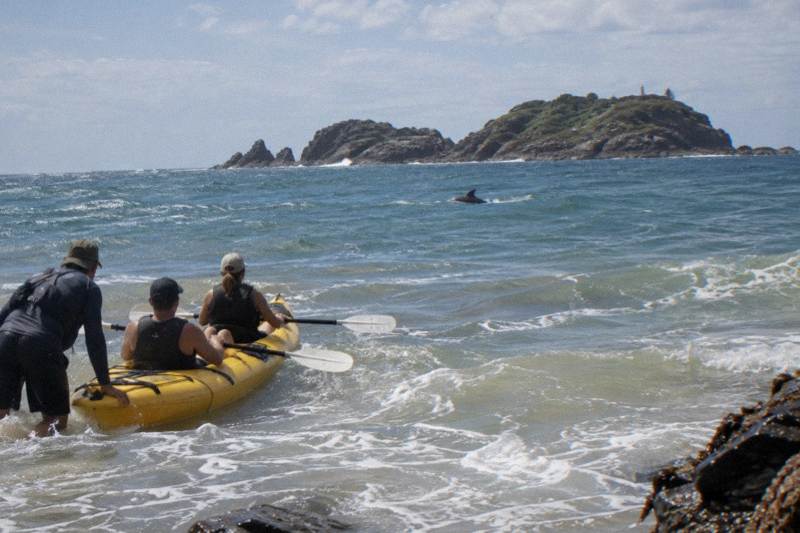
Dolphins Around Julian Rocks: Will Snorkellers Spot Them?
Dolphins are a headline sight around Byron Bay, but the picture at Julian Rocks itself is more specific than the brochures suggest. Here is what the agencies and operators state, and how to pick the trip that fits a dolphin hope.
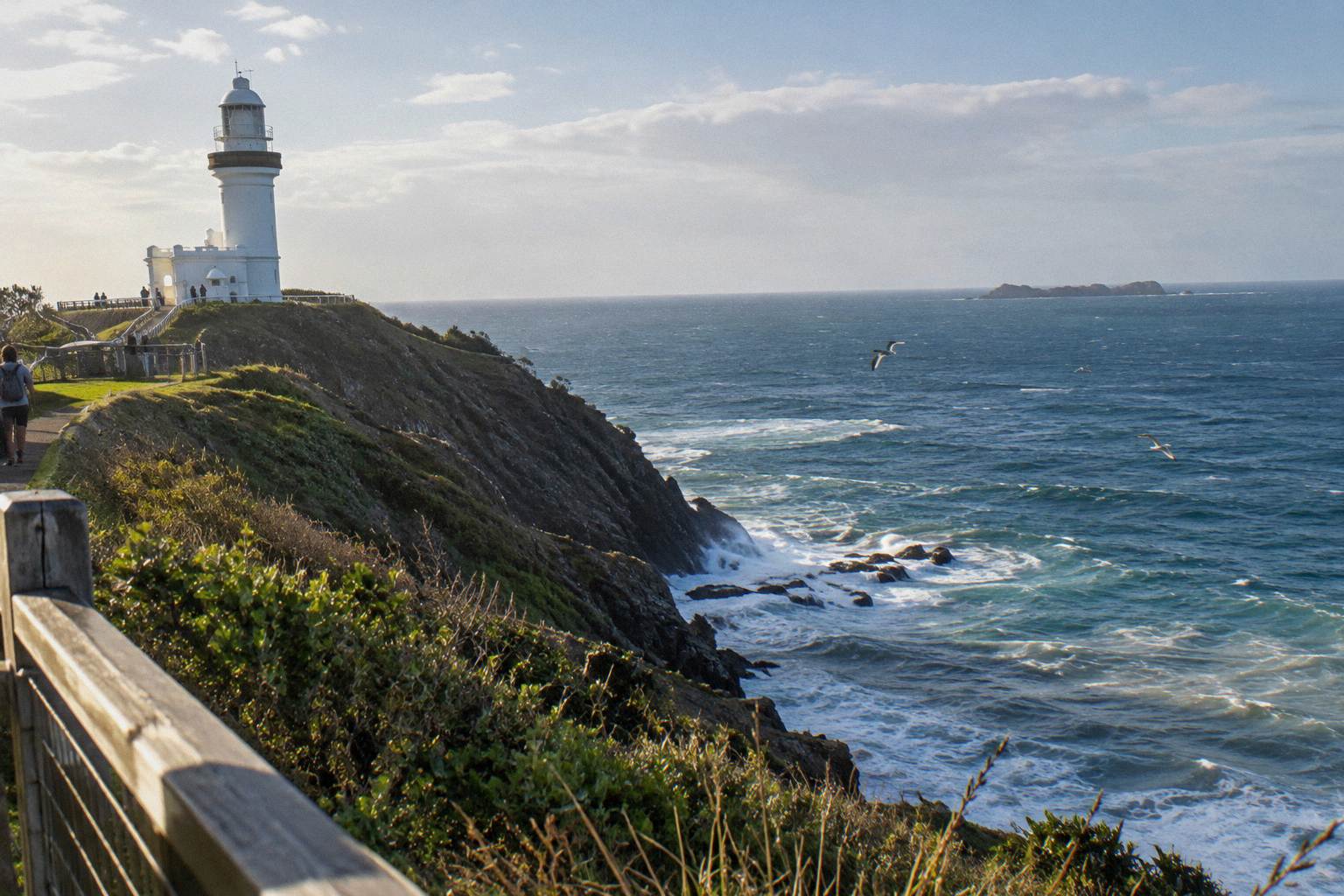
Short answer
DPIRD's marine park pages list sharks, rays, turtles, eels, starfish and corals at Julian Rocks, and do not list dolphins there. One dive operator mentions dolphins and whales 'when in season' on its trips. No operator promises dolphins on a snorkel trip, and the dolphin-focused trip by name is the Cape Byron kayak tour.
Dolphins swim along the whole Byron Bay coastline, and boats crossing to Julian Rocks cross their patch of ocean on nearly every run. That is not the same as a guarantee on a snorkel trip, and it helps to know exactly which claims come from which source before booking. The NSW Department of Primary Industries and Regional Development, which manages Cape Byron Marine Park, lists what lives at the rocks itself, and dolphins are not on that list. Operators describe their trips in looser terms, and one mentions dolphins and whales "when in season" without promising either. This guide separates the firm statements from the hopeful wording, then walks through which of the available trips fits a traveller whose heart is set on dolphins.
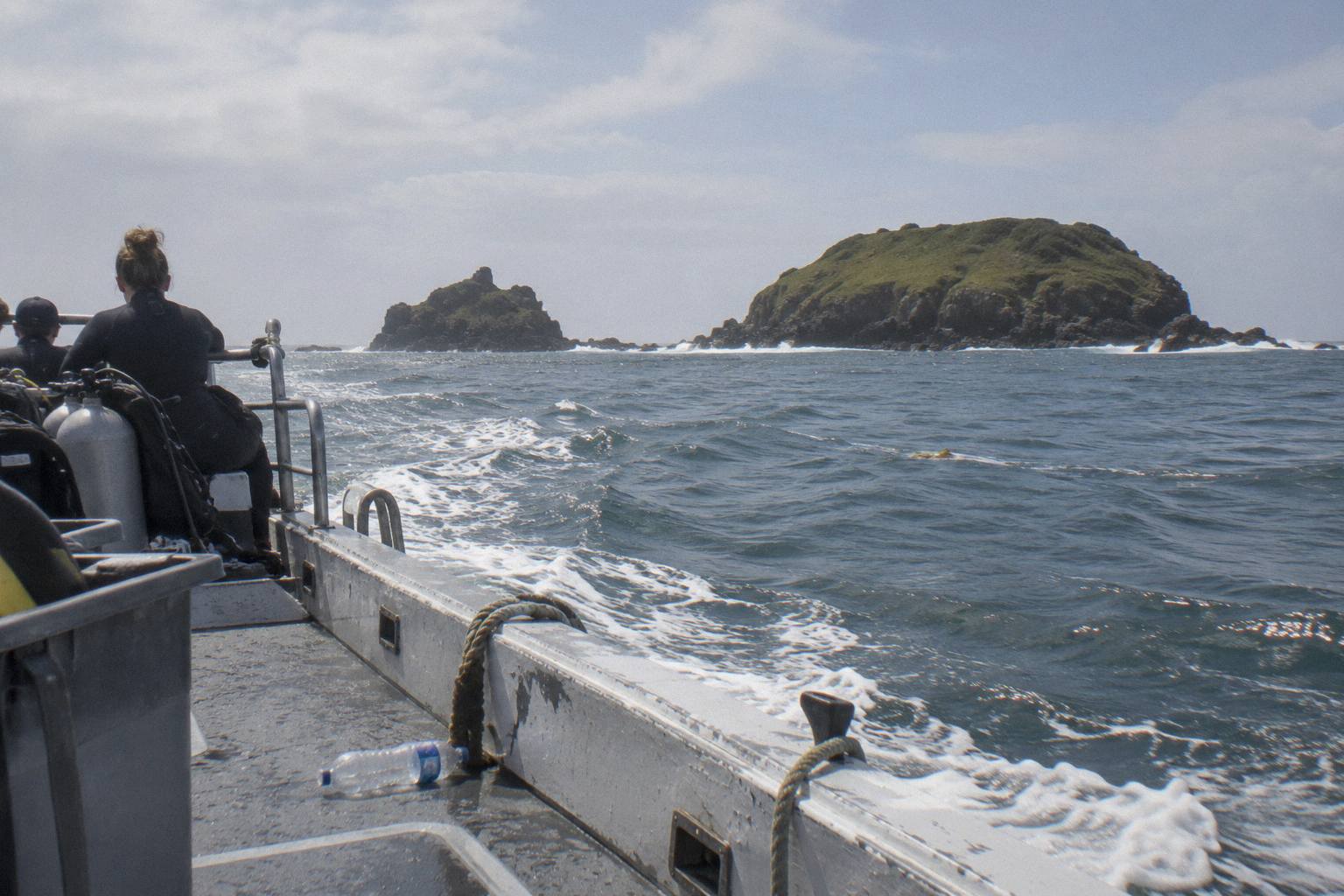
Are Dolphins Actually Around Julian Rocks?
Yes, dolphins live in the waters around Byron Bay and boats to the rocks regularly pass through their territory, but the agency record for the rocks themselves names other animals. DPIRD describes Nguthungulli Julian Rocks as home to sharks, rays, turtles, eels, starfish and corals, and does not list dolphins among them. That is a record of the reef, not a statement about the surrounding open water.
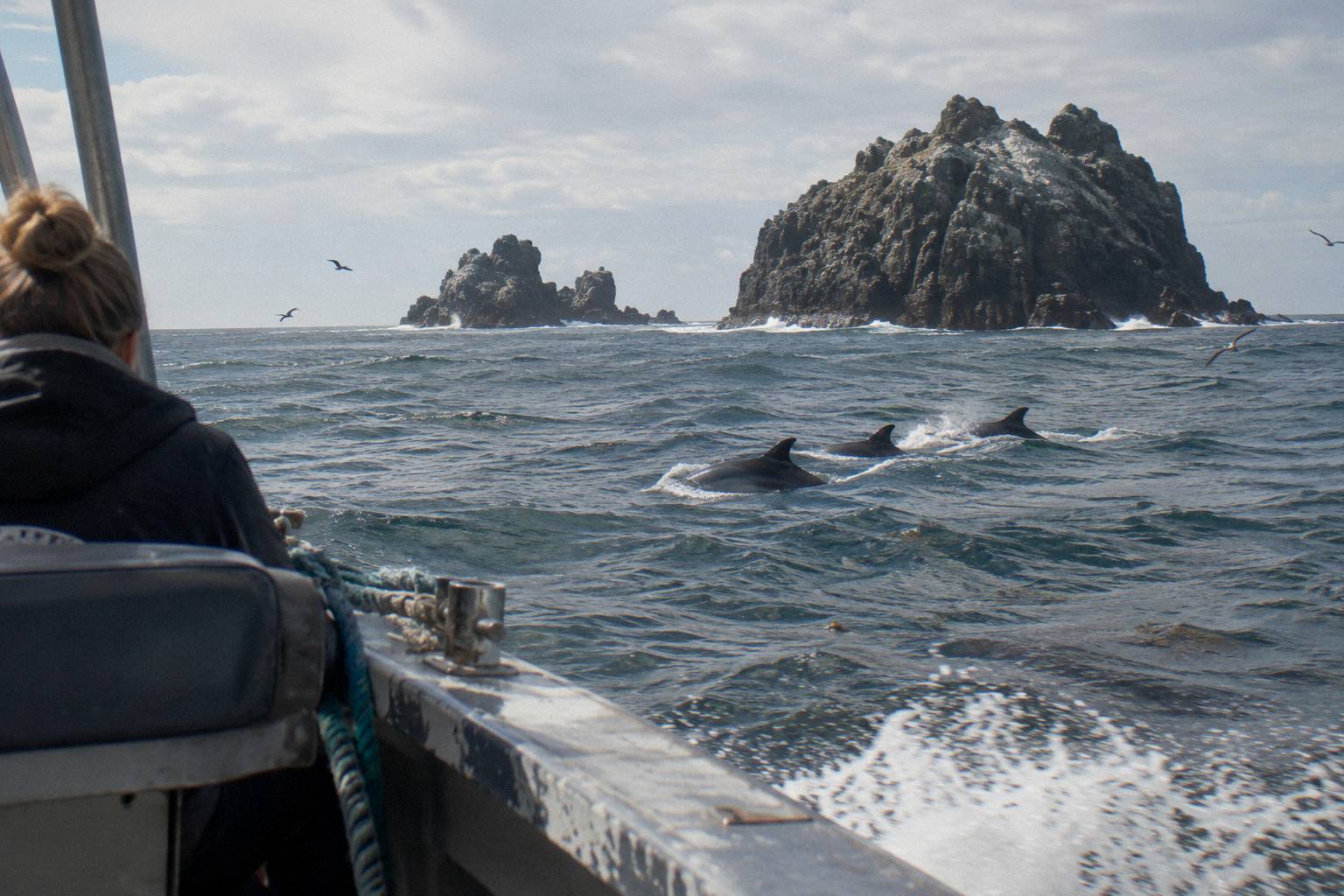
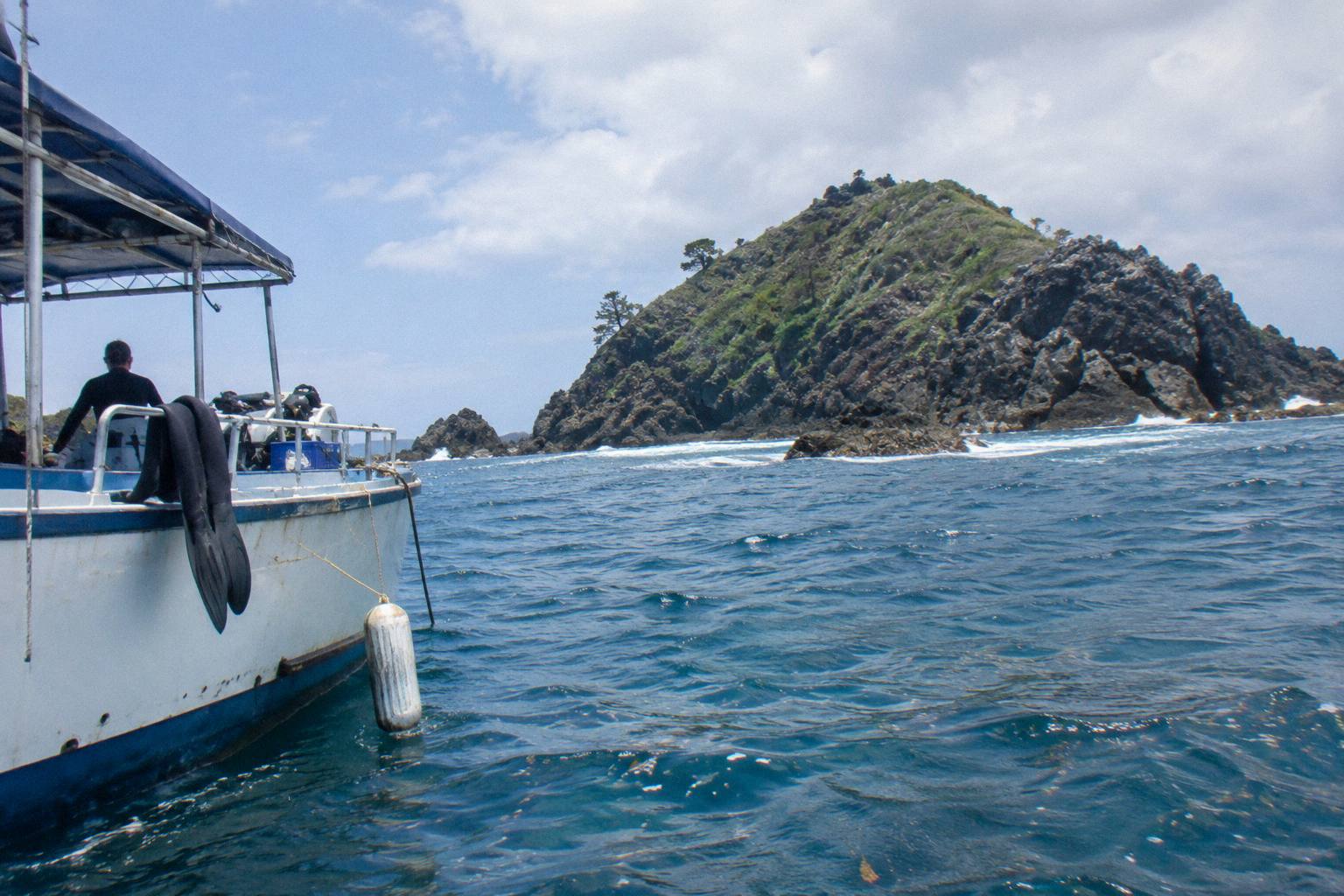
The distinction matters more than it first appears. Julian Rocks is a rocky outcrop about 2.5 km offshore, and the transit to it crosses open ocean where dolphins hunt and travel. A snorkeller standing on the boat may well see dolphins on the ride out, in the same way whale watchers sometimes see dolphins. What the sources do not say is that dolphins come into the shallow, sheltered snorkelling areas, which operators describe as 3 to 12 m deep. The gap between "dolphins in the bay" and "dolphins at your mask" is where most disappointment lives.
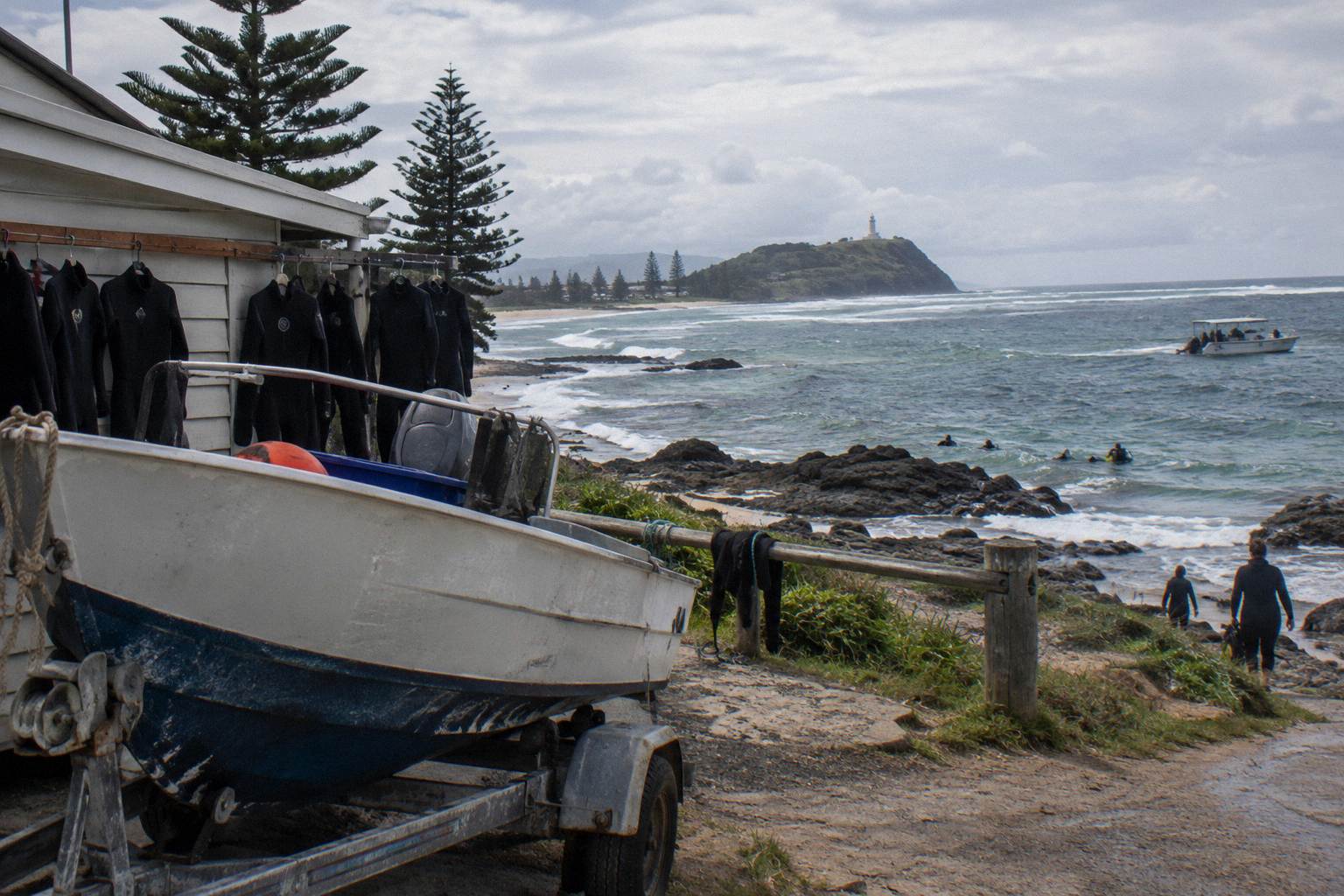
The marine park context explains why the waters are so busy with life in the first place. Cape Byron Marine Park covers about 37 km of coast and about 220 square kilometres of state waters, shaped, as DPIRD's park page explains, by the meeting of the warm East Australian Current with cooler southern waters. That convergence feeds everything from plankton up, and dolphins ride the productivity. The park's zones and rules commenced in May 2006, and the sanctuary zones that protect the rocks now cover 27.5% of the park's area, or 6,118 hectares, which is a large protected patch for dolphins, turtles and everything else to hunt through. For more on the resident cast, see the Julian Rocks marine life guide and the deeper dive into turtles at Julian Rocks, which are the animals the snorkel trip is built around.
So the honest framing is this: dolphins around Byron Bay, yes, frequently. Dolphins as a booked feature of a Julian Rocks snorkel trip, no source supports that, and no operator promises it.
What Do The Operators Actually Say About Dolphins?
The operators are careful. One dive operator says its trips see "dolphins and whales when in season," which is an observation, not a promise. Another operator's snorkel description lists "turtles, rays, a variety of colourful fish and crustaceans" and leaves dolphins out entirely. No booking page in the roster guarantees a dolphin sighting, on any trip.
“A very nice trip. We saw a lot, including turtles and a small shark. Our two skippers were also super friendly and very attentive. In the water, a skipper accompanied us and went in search of turtles, etc. I highly recommend the trip. You head out on a fast speedboat, so there's also an adrenaline rush.”
Reading operator wording closely is the single most useful skill here. "When in season" and "we often see" are honest descriptions of frequency, and they are also legally safe for the operator in a way a guarantee never is. When an operator omits dolphins from a trip description but the trip crosses dolphin habitat, that omission is information too: the operator is choosing not to set the expectation.
For the trips on this site's roster, the dolphin picture looks like this. The Blue Seafaris snorkel trip, about 2.5 hours from Brunswick Heads, is rated 4.5 across 448 reviews on its booking page, from AUD 94 per person, and its description centres on the reef life of the rocks rather than dolphins. Out Of The Blue runs a comparable trip, also about 2.5 hours from Brunswick Heads, from AUD 94 per person, rated 4.4 across 167 reviews on its main booking page, and a second booking page for the same trip shows 4.7 across 58 reviews. Neither listing promises dolphins.
The pattern repeats across the kayak side of the ledger. The Cape Byron Kayaks trip is named for dolphins, which is a marketing claim about focus rather than a promise of a sighting, and the Go Sea Kayak Byron Bay booking page title says the trip looks for dolphins and turtles, with the same built-in caution. The only operator page that mentions dolphins in connection with the rocks at all is the dive operator that adds them alongside whales as seasonal extras. Everything else on dolphin frequency is simply not stated in the sources, so ask the operator or check the live listing rather than trusting a summary like this one to fill the gap.
If a dolphin sighting is the thing that would make or break the day, the practical move is to ask the booking desk directly what the recent sightings pattern has been, and whether the crew points the boat at passing pods on the transit. Crews who run the same crossing every day know the answer, and the good ones volunteer it before you ask.
The next section untangles which fits which traveller.
Snorkel Trip Or Dolphin Kayak Trip: Which Fits You?
If dolphins are the primary goal, the kayak trips are the dolphin-focused products by name, and the Cape Byron Kayaks dolphin tour is the one built around them. If seeing the reef at Julian Rocks is the goal, with dolphins as a possible bonus on the boat ride, the snorkel trips are the better fit. Neither format guarantees dolphins.
The guided dolphin kayak tour with Cape Byron Kayaks runs about 2.5 hours and puts you at water level in the dolphins' own medium. Kayaks can follow pods along the headland in a way a snorkel boat tied to a mooring cannot, and being low to the water changes the encounter entirely. It is a different experience from snorkelling: you are watching, not swimming among, and you stay with the boat the whole time. No price, rating, meeting point or minimum age for this trip is on file here, so ask the operator for the current details.
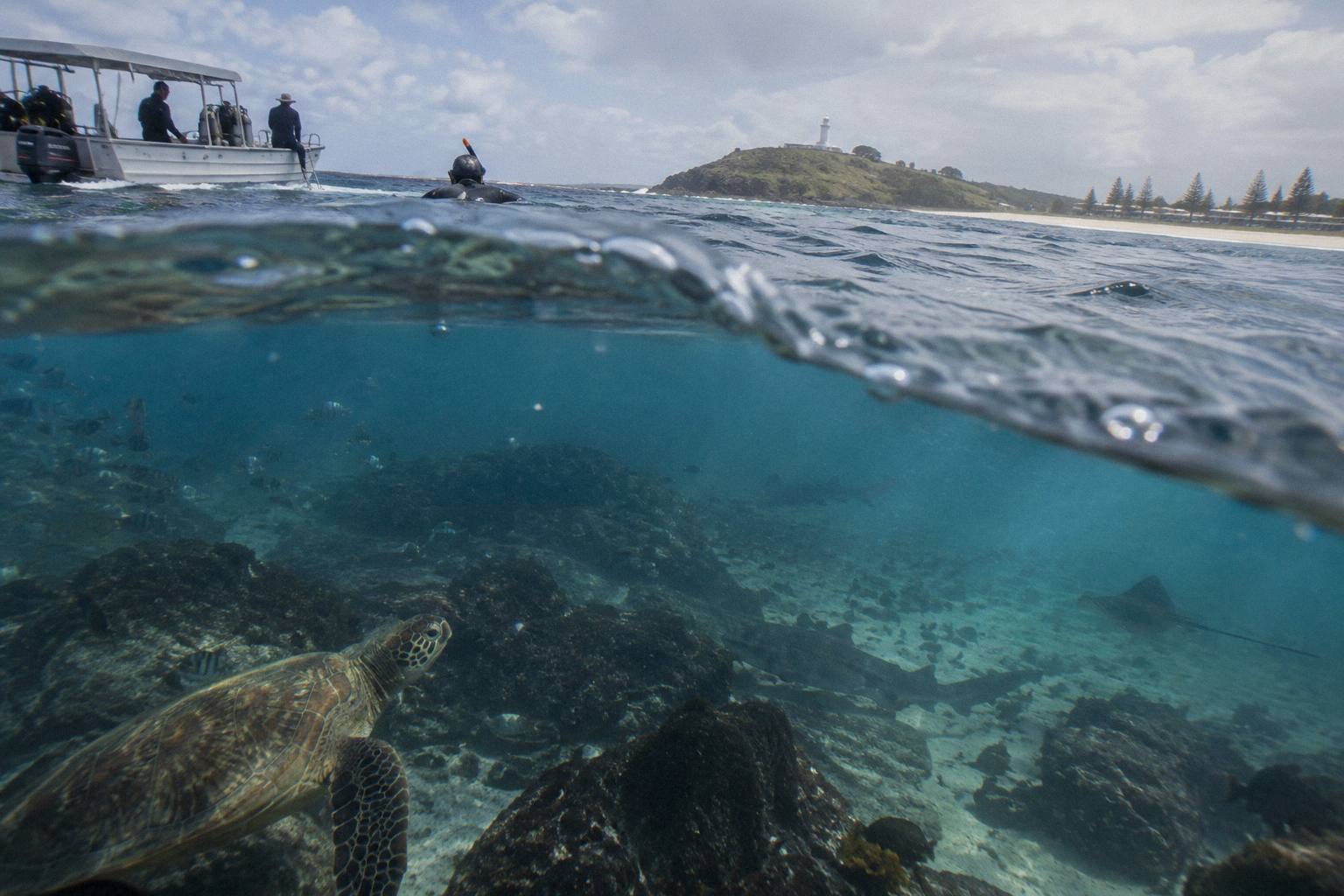
The snorkel trips invert that trade. You give up mobility and surface-level dolphin watching, and you gain the reef: turtles, rays, colourful fish and crustaceans in shallow sheltered water, with gear and wetsuit typically included. For a traveller who wants one ocean morning and would be equally happy with a turtle at arm's length or a dolphin at fifty metres, the snorkel trip usually wins, because the reef sighting rates are the stronger part of its record. There is a fuller comparison in the guide to dolphin kayak versus snorkel trip for Byron Bay.
A third path suits the genuinely torn: book the kayak trip for the dolphins and save the reef for another day. The two formats do not compete for the same money as much as they compete for the same morning, and splitting them across two days costs little in a town where the boat leaves year-round.
Whichever way you lean, one rule holds across the whole coast: no operator can promise a wild dolphin, and any listing that reads like a promise deserves a second read.
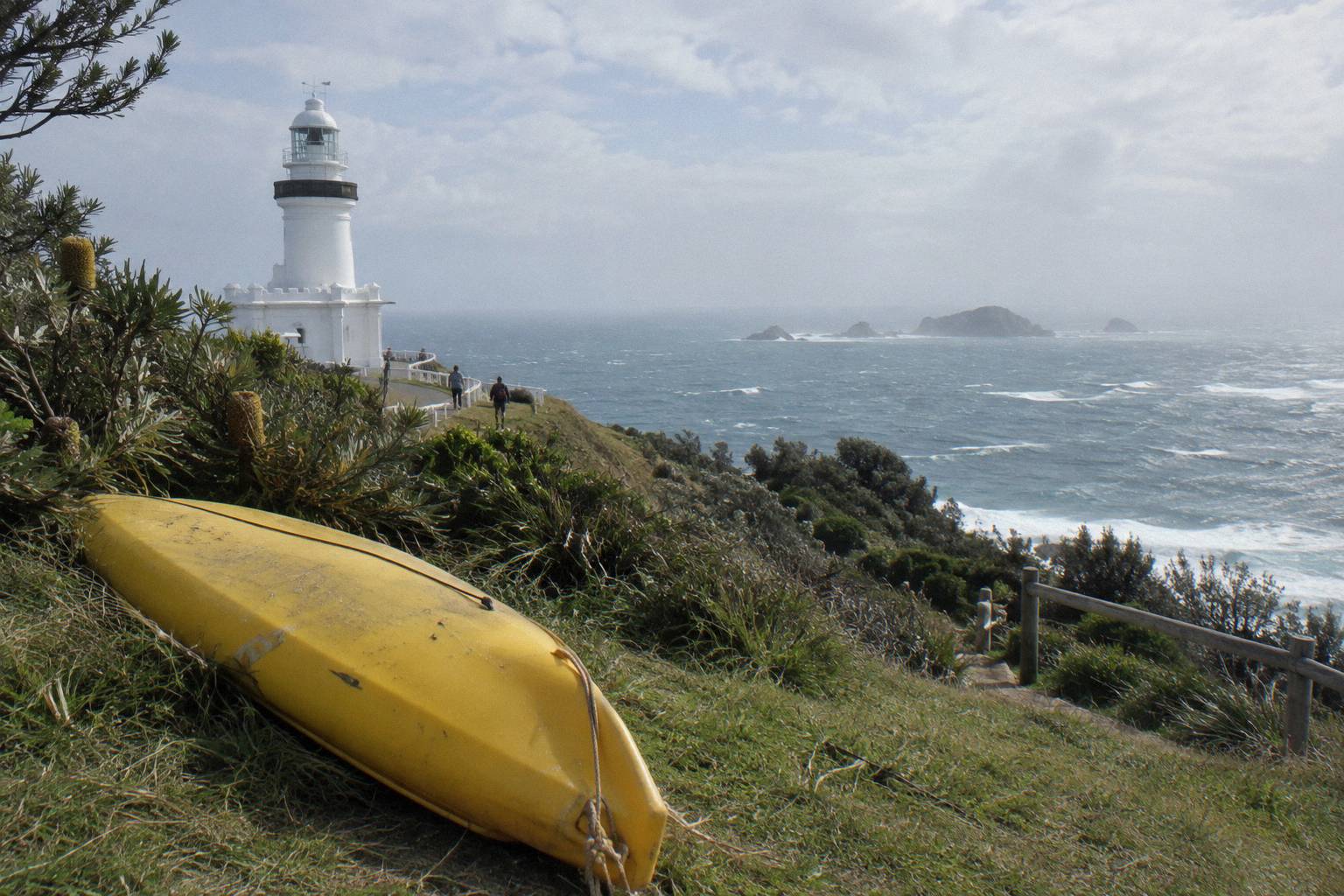
What Will You Realistically See Snorkelling At Julian Rocks?
The realistic snorkel-day list is turtles, rays, colourful fish and crustaceans in water 3 to 12 m deep, per the operators' own descriptions. Green, hawksbill and loggerhead turtles are recorded all year, though Byron Bay Dive Centre says plainly it cannot guarantee turtles. Leopard sharks appear in warmer months and grey nurse sharks are a winter dive-depth sight, rarely a snorkel one.
The turtle record is the strongest thing a snorkeller has going. One dive operator lists turtles, rays, crustaceans, nudibranchs, octopuses, eels and fish all year, and Byron Bay Dive Centre says turtles can be spotted year-round throughout the whole day, while stating it cannot guarantee sea turtles will be there. That pairing, high year-round frequency with an explicit no-guarantee clause, is about as good as honest wildlife tourism wording gets.
The sharks need seasonal framing. Leopard sharks gather in the Needles sandy arena during the warmer months from December to April, per one operator, and they are a shallow-water species a snorkeller can genuinely share space with. Grey nurse sharks sit in the sand trenches during the colder months, June to November, but at depths of 8 to 24 m, which are dive depths rather than snorkel depths, and they are rarely seen on snorkel trips. More detail sits in the guides to leopard sharks at Julian Rocks and grey nurse sharks at Julian Rocks.
Where does that leave dolphins on the snorkel trip itself? In the transit column. The boat crosses open water for roughly 5 to 10 minutes each way, and dolphins in the bay are a live possibility on any crossing, alongside seasonal whales. Treat that as scenery rather than a booked feature and the day tends to end well. The blog post on whether you will reliably see turtles, sharks and rays applies the same honesty test to the rest of the cast.
Among the reef-focused options, the Blue Seafaris trip is the one with the deepest review record on its booking page, 4.5 across 448 reviews, from AUD 94 per person and about 2.5 hours, meeting at Brunswick Heads Boat Harbour.
Questions To Ask The Booking Desk Before You Choose
Ask five things: whether the crew actively detours to dolphins on the transit, what the last fortnight of sightings looked like, what the trip does when the swell is up, what the minimum age and swimming requirement is, and what the cancellation terms are. The answers separate a dolphin-hopeful booking from a reef booking with dolphins as a bonus.
“This was a great active tour, saw some amazing marine wildlife. I would say if you are inexperienced or nervous then be aware it is out in the ocean and can have strong currents but if your comfortable with that then its amazing.”
The dolphin question deserves a direct phrasing: "Do your boats stop for dolphin pods on the way out?" Some crews do, some hold schedule, and neither answer is wrong, but it changes what your morning looks like. Follow with the recent-sightings question, because a crew that tracks its own sightings will happily tell you, and one that deflects is telling you something too. Swimming ability matters as much as the wildlife: requirements differ by operator, with minimum ages of 5, 7 and 10 appearing across operator pages, and one operator requiring confident open-ocean swimming for its trips.
Cancellation terms matter at an open-ocean site where conditions can turn. One operator on file offers a full refund on cancellations up to 48 hours before, conditions applying, and Byron Bay Dive Centre contacts guests by text or phone if weather or sea is unsuitable, offering a full refund or reschedule, with a 48-hour cancellation window. Fish feeding, including shark feeding, is prohibited in the marine park, so no legitimate trip chums or baits animals to manufacture sightings, a point the marine park user guide sets out alongside the zoning rules.
| Question to ask | Why it matters | What a good answer sounds like |
|---|---|---|
| Do you stop for dolphin pods on the transit? | Determines whether dolphins are scenery or a feature | A clear yes or no, with no hedging |
| What have sightings been like recently? | Tests whether the crew tracks its own record | Specific and unprompted detail |
| What happens if the sea is rough? | Open-ocean sites get cancelled | Free refund or reschedule offered plainly |
| Minimum age and swim standard? | Varies by operator: 5, 7 and 10 appear | Stated without being asked twice |
| What is included in the price? | Gear and wetsuit inclusion varies | Mask, fins, snorkel, wetsuit listed |
Keep the answers in one place and compare trips on them rather than on adjectives. A listing that answers all five cleanly is usually a listing that runs a tight boat.
For a town-based meeting point rather than a harbour one, the Turtle School trip with Byron Bay Dive Centre meets at Byron Plaza on Jonson Street with transport to the boat at The Pass, runs about 2.5 hours, and carries its rating and price on the booking page rather than in any summary.
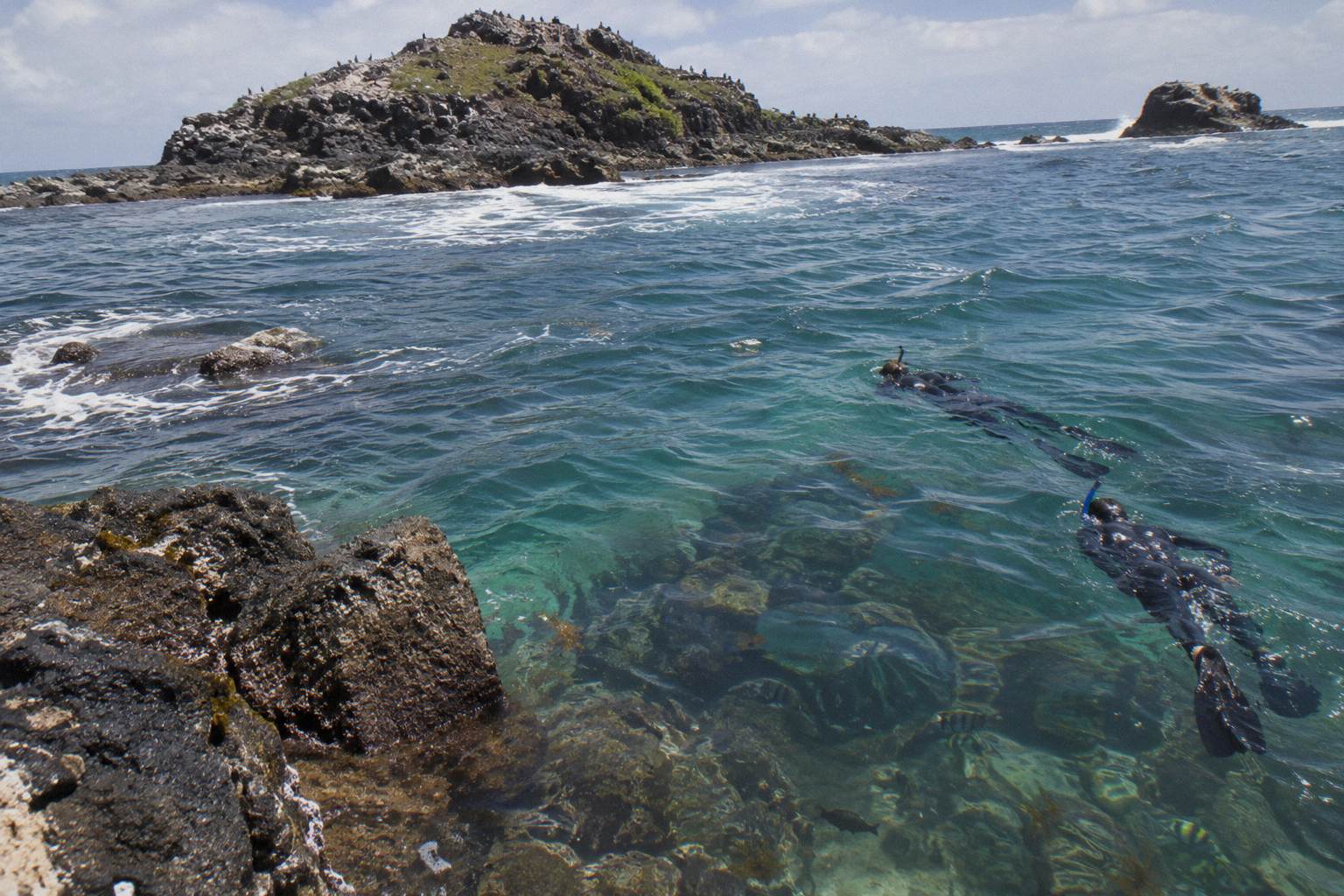
Does The Time Of Year Change Your Dolphin Chances?
The sources do not break dolphin sightings down by month, so no honest monthly answer exists. What is dated is the wider calendar: humpback whales run May to November per one operator and June to October per another, leopard sharks mark December to April, and grey nurse sharks June to November at dive depth. Ask the operator about dolphin seasonality directly.
Dolphin presence in Byron Bay is year-round in the general sense.
What you can plan around is the rest of the calendar. The whale season overlaps heavily with the grey nurse season, so a winter trip stacks a possible surface whale sighting over a dive-depth shark season, while summer stacks leopard sharks and manta rays per one operator's page. Winter water can drop to around 17 °C, averaging about 20 °C per the same operator, which is why 5 mm long wetsuits are advised and why most trips include one. The month-by-month breakdown, including water temperature, sits in the guide to the best month to snorkel Julian Rocks.
| Season | Operator and agency wording | Relevance to a dolphin-hopeful traveller |
|---|---|---|
| December to April | Leopard sharks mostly in the Needles sandy arena; manta rays in summer per one operator | Reef sighting rates at their warm-water peak |
| June to November | Grey nurse sharks in the sand trenches at 8 to 24 m, dive depth, rarely snorkel depth | Winter dive draw, not a snorkel one |
| May to November | Humpback whales on one operator's whale trips | Possible surface sightings on any ocean crossing |
| June to October | Whale watching listed by Byron Bay Dive Centre | The two operators' whale windows differ; ask yours |
| All year | Turtles, rays, crustaceans, nudibranchs, octopuses, eels and fish | The reliable core of a snorkel day |
| Not stated | No month-by-month dolphin record in any source | Ask the operator for the local picture |
The name and the lore are worth carrying onto the boat with you. The NSW National Parks page for the Nguthungulli Julian Rocks Nature Reserve records the reserve's dual naming, and it changes how a day on the water reads when you know the rocks are a story as much as a dive site.
What Each Trip Costs And How Long It Runs
Two of the three Julian Rocks snorkel trips carry printed booking-page prices: Blue Seafaris and Out Of The Blue both start from AUD 94 per person for about 2.5 hours. The three wildlife trips in the wider roster, both kayak tours and the whale watch, run about 2.5 hours each with prices and ratings on their live listings rather than in any summary.
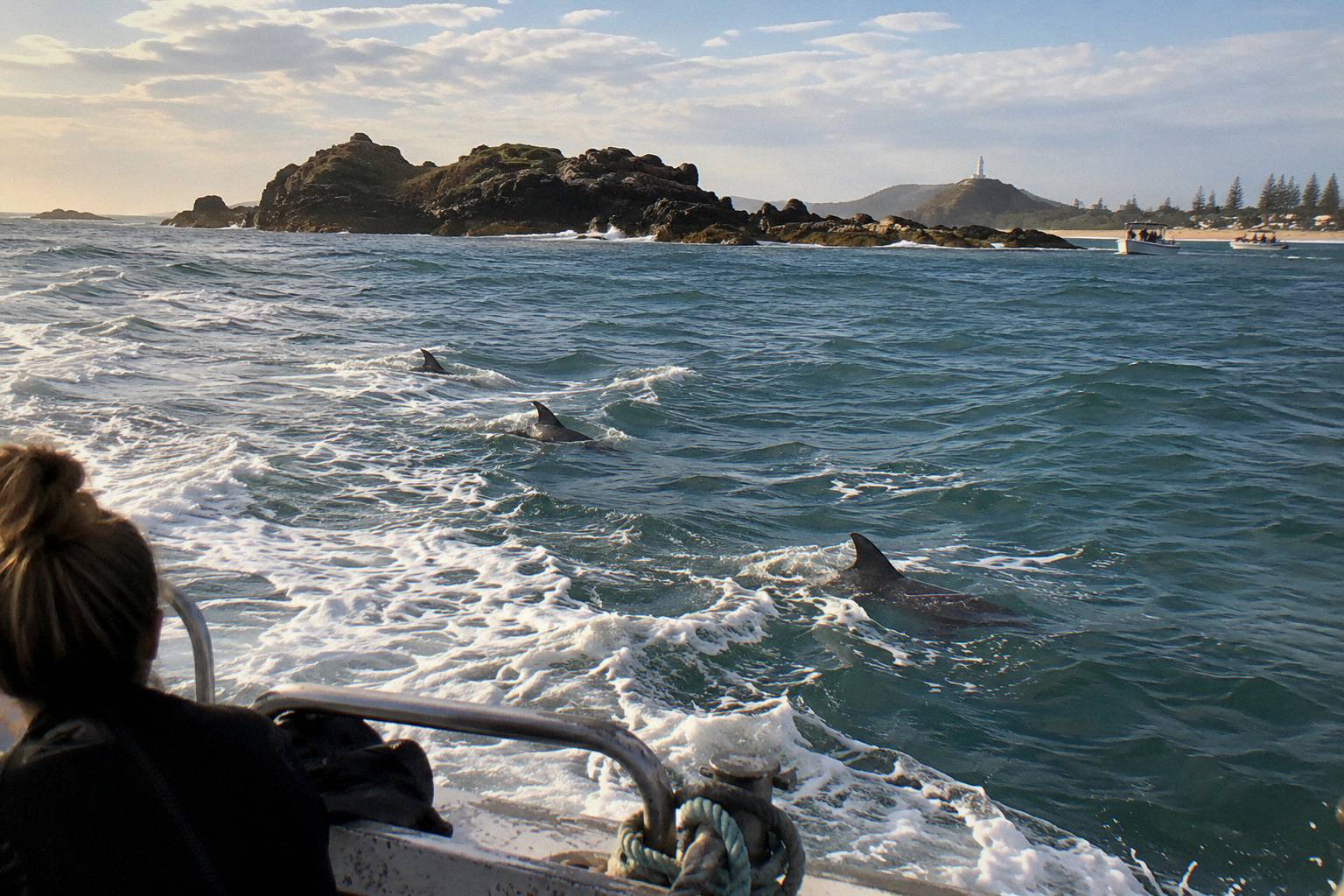
The price spread at the rocks itself is narrow, so the decision leans on format and meeting point rather than cost. Brunswick Heads Boat Harbour serves both the Blue Seafaris and Out Of The Blue trips, a short drive north of Byron town, while the Turtle School option meets in town at Byron Plaza with a transfer to the boat. If you are staying in Byron without a car, that difference is worth more than a few dollars.
| Trip | Operator | Duration | From price | Rating on booking page |
|---|---|---|---|---|
| Julian Rocks snorkel | Blue Seafaris | About 2.5 hours | From AUD 94 | 4.5 across 448 reviews |
| Julian Rocks snorkel | Out Of The Blue | About 2.5 hours | From AUD 94 | 4.4 across 167 reviews |
| Turtle School snorkel | Byron Bay Dive Centre | About 3 hours | On the booking page | On the booking page |
| Dolphin kayak tour | Cape Byron Kayaks | About 2.5 hours | On the booking page | Not stated here |
| Sea kayak tour | Go Sea Kayak Byron Bay | About 2.5 hours | On the booking page | Not stated here |
The kayak trips sit in the same half-day shape as the snorkels, which is what makes the either-or decision real: you cannot comfortably do both in one morning, and most travellers should not try. A fuller cost picture, including what tends to be included and what books out first, is in the guide to the Julian Rocks snorkel trip cost.
One price note worth a plain sentence: the operators' own websites list direct prices that differ from the booking-page from-prices used here, and neither figure is locked. Check the live listing on the day you actually book, because seasonal pricing moves these trips.
The Out Of The Blue trip rounds out the Brunswick Heads options at the same from AUD 94 per person, about 2.5 hours, rated 4.4 across 167 reviews on its main booking page, and a second booking page for the same trip shows 4.7 across 58 reviews.
If Dolphins Are Your Whole Reason For Going
Then book the trip named for dolphins: the Cape Byron Kayaks dolphin kayak tour, about 2.5 hours, is the only roster trip whose product is built around them. Book the snorkel trip for the reef and treat any dolphin moment on the transit as the gift it is. Splitting the two across separate days is the strongest play if Byron is a multi-day stop.
“Amazing snorkelling experience! Guides were great- super friendly and knowledgeable!”
Travellers fall into three camps, and the advice differs by camp. The dolphin-first traveller should kayak, should book early because dolphin-focused trips carry the region's clearest marketing and fill first, and should check dates against the whale season if surface action generally is the draw. The reef-first traveller should snorkel with the expectation set by the operators' own wording: turtles, rays, colourful fish, crustaceans, no guarantees. The torn traveller should do both, on different mornings, and let the weather pick the order, since an open-ocean site with possible strong swells, currents and winds will sometimes decide for you anyway.
There is also a case for the sea kayak option with Go Sea Kayak Byron Bay, about 2.5 hours, whose booking page title says it looks for dolphins and turtles, with the same standing caution that neither is promised. Two kayak formats and one snorkel format between them cover the whole spectrum of how close you want to be to the water, and Julian Rocks Snorkelling keeps the full roster of all three in one place for comparing dates.
A last word on expectations, because it is the difference between a good day and a refund argument: wild dolphins are wild. The sources on file support "dolphins live here and boats see them," not "dolphins will perform for you," and every honest operator in the region words it the same way. Book the format that matches what you actually want from the water, hold the wildlife loosely, and the Julian Rocks morning, on either a kayak or a moored boat, almost always gives you something worth the drive.
Common Questions About Dolphins At Julian Rocks
Will I See Dolphins On A Julian Rocks Snorkel Trip?
No source promises that. The agency record for the rocks lists sharks, rays, turtles, eels, starfish and corals, not dolphins, and one dive operator mentions dolphins and whales "when in season" on its trips. Ask the operator about recent sightings before you book.
Are Dolphins Around Julian Rocks?
Dolphins are a regular presence in the waters around Byron Bay, and boats crossing to the rocks pass through their habitat. Whether they appear in the shallow 3 to 12 m snorkel areas is another matter, and no operator claims it.
Which Byron Bay Trip Is The Dolphin Trip?
The Cape Byron Kayaks guided dolphin kayak tour, about 2.5 hours, is the trip named for dolphins. The Go Sea Kayak Byron Bay sea kayak tour, also about 2.5 hours, says it looks for dolphins and turtles. Neither promises a sighting.
What Animals Are Actually Listed At Julian Rocks?
DPIRD lists sharks, rays, turtles, eels, starfish and corals at Nguthungulli Julian Rocks. Operators add year-round turtles, rays, crustaceans, nudibranchs, octopuses, eels and fish, plus leopard sharks in warmer months and grey nurse sharks at dive depth in winter.
Do Julian Rocks Trips Guarantee Turtles Or Sharks?
No. Byron Bay Dive Centre says turtles can be spotted year-round but that it cannot guarantee sea turtles will be there, and shark seasons are described as tendencies, not appointments. Treat every sighting list as a chance, not a schedule.