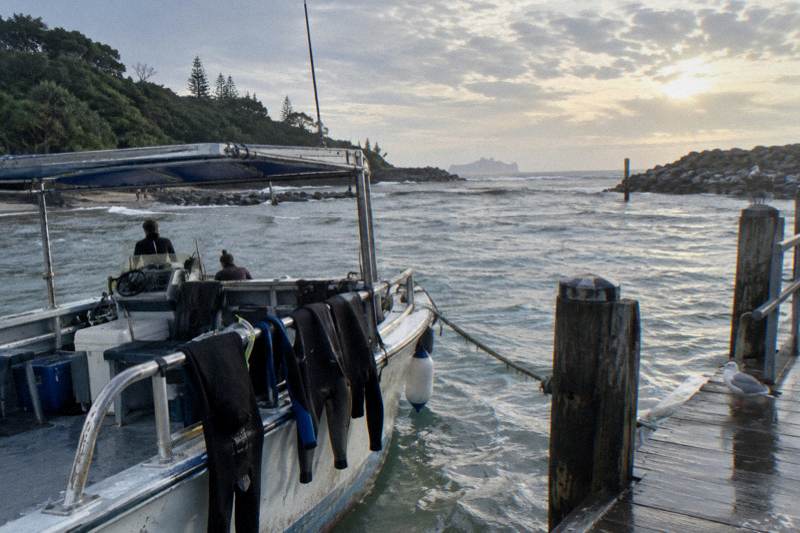
Snorkelling Near Brisbane: Why Many Drive South To Julian Rocks
Brisbane has no headline snorkel site of its own in the sources we hold, and the honest answer for most snorkellers is the three-hour run south to Julian Rocks, where four licensed trips operate inside a marine park sanctuary.
Short answer
The verified sources describe no Brisbane snorkelling sites and no Brisbane operators. The closest well-documented snorkelling is Nguthungulli Julian Rocks at Byron Bay: trips from AUD 94 per person, about 2.5 to 3 hours, with turtles, rays and reef fish listed year-round.
Brisbane snorkellers eventually hit the same wall: the city's waterways are estuaries and bays, not reef, and the sources we verified hold no Brisbane snorkel sites, no Brisbane operators and no local trip data at all. What the verified pages do describe, in detail, is the alternative most people take. Nguthungulli Julian Rocks sits in Cape Byron Marine Park about 2.5 km off Byron Bay, and it is the closest thing to a true tropical-style reef snorkel in the region's documented record. If you want the short version of this whole page: there is no stated Brisbane snorkelling option in our sources, and four booking-page trips run to Julian Rocks from Brunswick Heads and Byron Bay, from AUD 94 per person.
That is an uncomfortable opening for a page titled after Brisbane, but it is the honest one. Rather than invent a list of Moreton Bay spots with figures we cannot verify, this guide does three things: it states plainly what the sources say about the Brisbane question, it explains why Julian Rocks is the documented default, and it gives you the decision logic for choosing among the actual trips. The marine park context matters here, because it is the reason the site exists at all.
For background on the site itself, see Julian Rocks Snorkelling, which covers the reserve, the operators and the trip formats in depth.
What Snorkelling Is Actually Near Brisbane?
Nothing in our verified sources documents a snorkelling site or operator in Brisbane itself. We hold no Brisbane visibility data, no local trip prices, no site lists and no operator rosters for the city, so we will not manufacture any. The closest well-documented, bookable snorkelling in the sources is Nguthungulli Julian Rocks at Byron Bay, roughly a morning's drive south, where licensed trips run inside a marine park sanctuary zone.
That is the whole answer to the literal question, and it is worth being direct about it. Pages that promise "the best snorkelling near Brisbane" usually pad out with estuary swims, tidal pools or weekend-roadtrip listicles. We cannot verify any of those against official or operator pages, so we will not repeat them. What we can verify is the marine park record, and it is substantial.
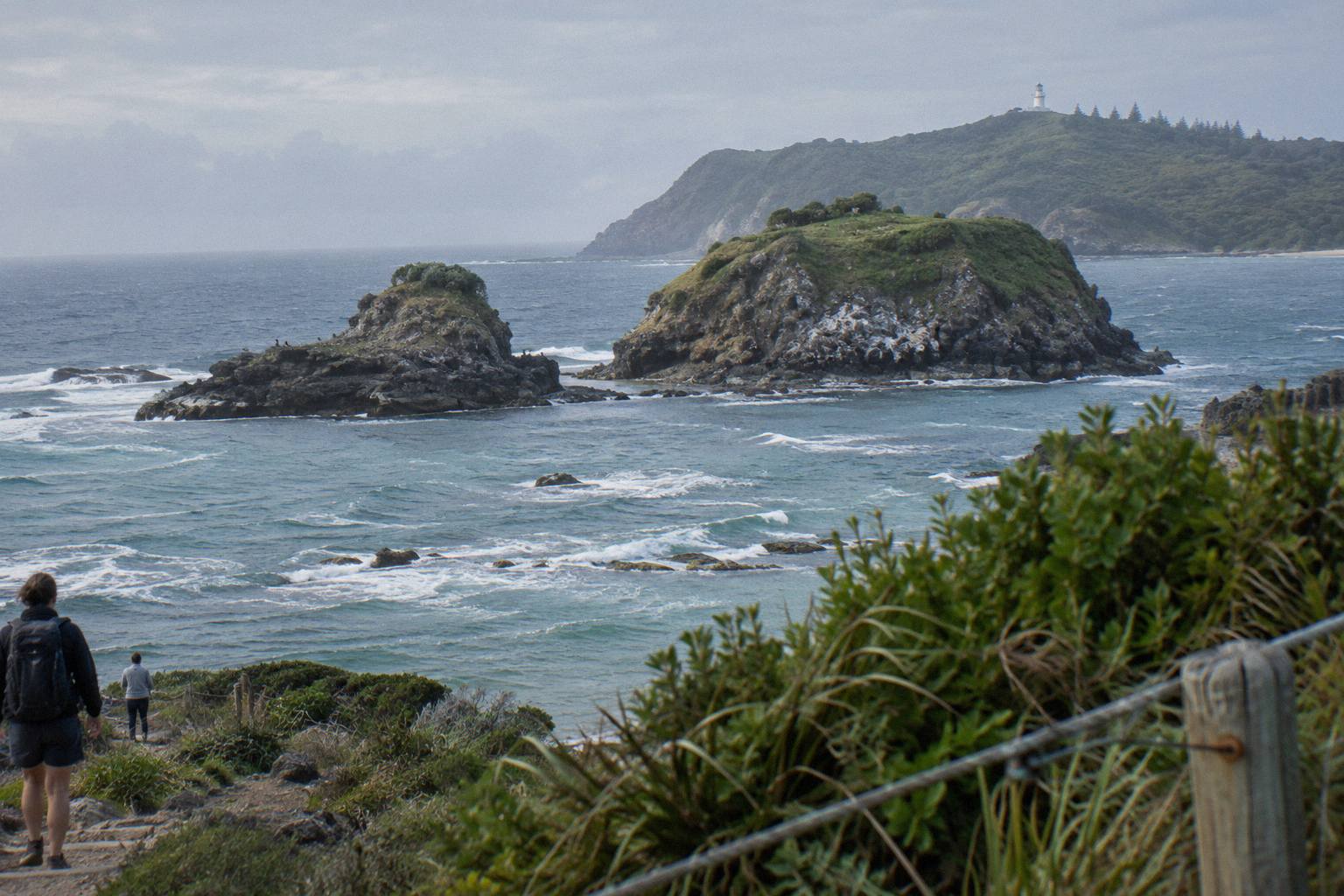
Cape Byron Marine Park runs about 37 km of coast from the Brunswick River north training wall to Lennox Head, covering about 220 km2 of state waters out to 3 nautical miles. It was established in November 2002, with zones and rules commencing May 2006. Within it, Nguthungulli Julian Rocks is the anchor snorkel destination: DPIRD, the NSW Department of Primary Industries and Regeneration, describes the rocks as "home to many fascinating animals, including sharks, rays, turtles, eels, starfish and corals" on its Cape Byron Marine Park page.
“Ride out, location, gear. And what we saw was great! Really enjoyed it. Signage and directions where to meet could be improved.”
The reason the rocks punch above their latitude is oceanography. The East Australian Current pushes warm tropical water south until it meets cooler southern flows right around this stretch of coast, and operators attribute the enormous species list to that convergence, wording like "over 1000 marine species" and "more than 500 different species of fish" appears on operator pages. Treat those as operator claims rather than official counts, but the underlying mechanism, warm and cool water mixing, is the department's own explanation for why this marine park is so biologically rich.
The Bundjalung People of Byron Bay (Arakwal) hold a strong association with the land and sea in the park's northern parts, with Jali people in the southern section, and the rocks carry the Bundjalung name Nguthungulli, "Father of the World", officially adopted as a dual name in July 2023. The NSW National Parks page for the Nguthungulli Julian Rocks Nature Reserve records the dual naming.
Why Do Brisbane Snorkellers Drive South To Julian Rocks?
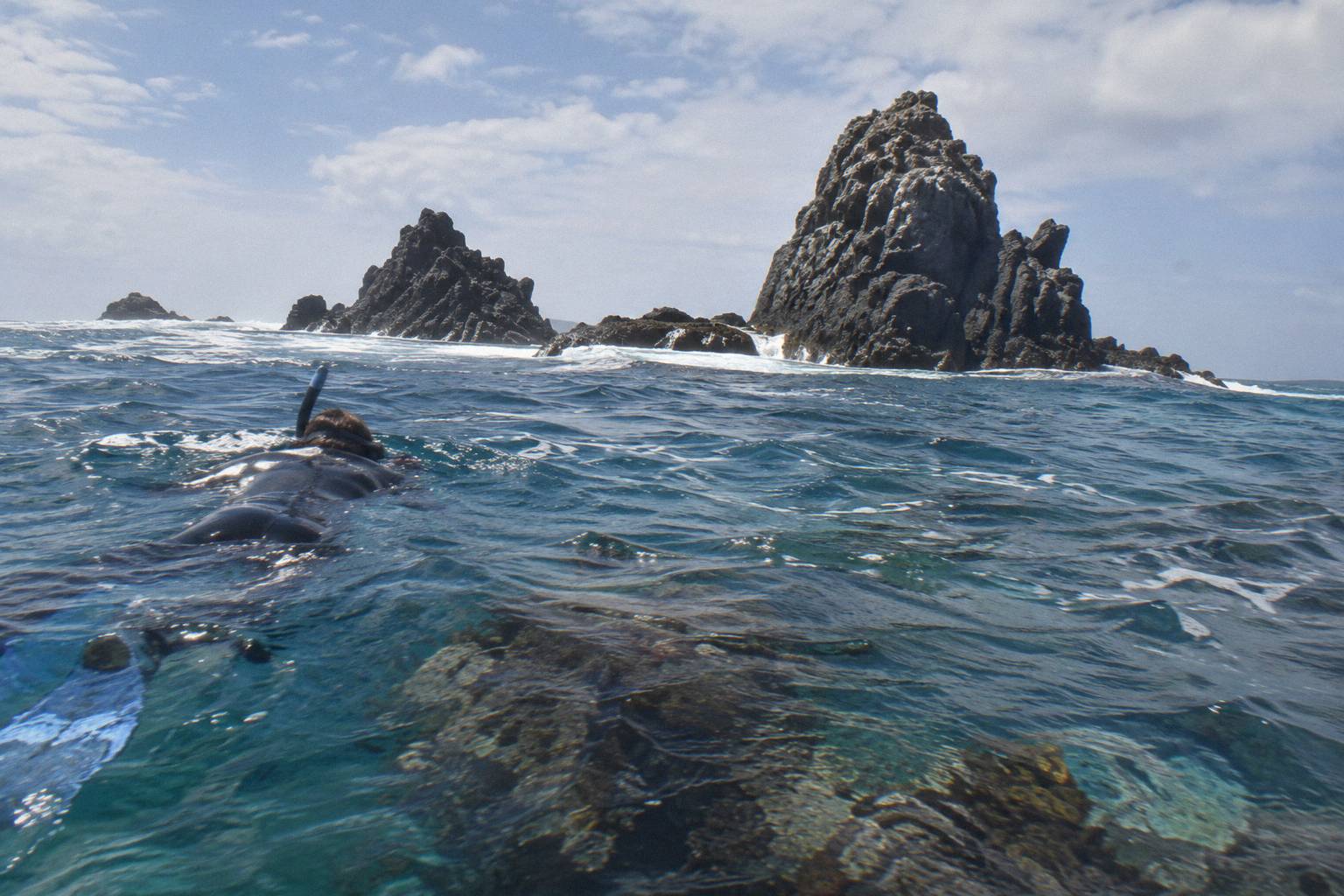
Because Julian Rocks offers the one thing no documented closer option can: a sheltered, shallow reef snorkel with tropical and temperate species together, inside a protected sanctuary zone, reachable by a boat ride the operators put at 5 to 10 minutes. Snorkel trips stay in shallow sheltered areas of 3 to 12 m, dive depths at the rocks run 8 to 24 m, and the trips take about 2.5 to 3 hours door to door.
The protection is the quiet headline. Sanctuary zones make up 6,118 ha, or 27.5%, of Cape Byron Marine Park, and within them all fishing, collecting and reef anchoring are banned; snorkelling is explicitly permitted as a non-harmful activity. The DPIRD user guide adds specific rules around the rocks themselves: no anchoring within 700 m, a 4 knot speed limit within 200 m, and seven marine park moorings with a 2 hour maximum per vessel. Fish feeding, including shark feeding, is prohibited. The practical effect for a snorkeller is a reef that has been effectively unfished for two decades, which is why the animals here behave differently from those at fished sites.
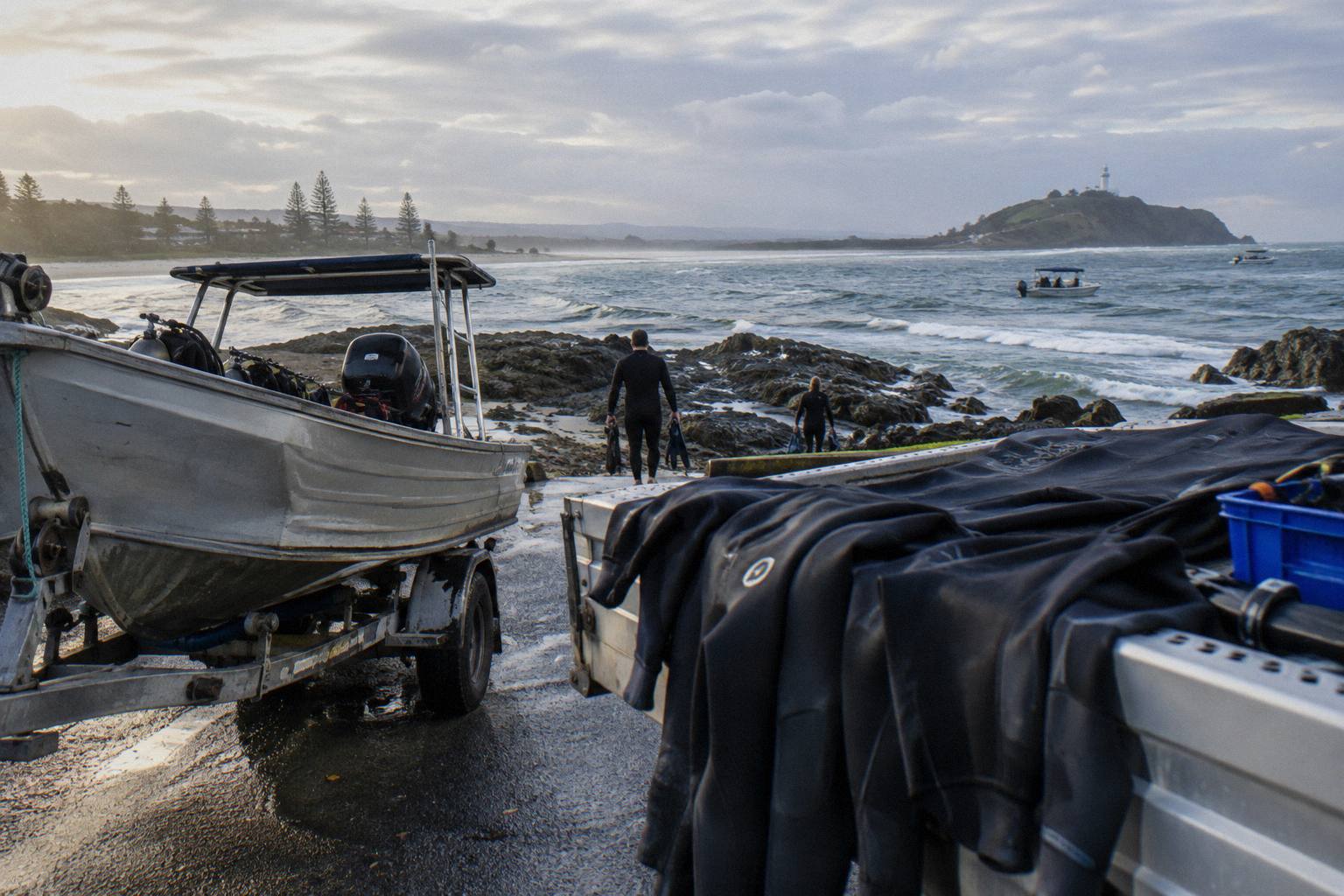
The trip shape also suits a Brisbane visitor. The rocks lie about 2.5 km offshore, and operators state the boat ride from Byron Bay at about 5 minutes, with Byron Bay Dive Centre's FAQ saying approximately 5 to 10 minutes. For trips meeting at Brunswick Heads Boat Harbour, the Blue Seafaris and Out Of The Blue listings both state a speedboat ride of about 15 minutes each way. However you launch, the transit stays short for a reef this good: more time in the water, less time getting there.
If you are weighing the marine park rules in more detail, our guide to the sanctuary rules that shape your snorkel covers zones, moorings and what is prohibited. For the bigger picture on what lives in the water, see the marine life you can meet at the rocks.
For most Brisbane readers, the decision collapses to one question: which Julian Rocks trip? The three formats below cover the range, a Brunswick Heads biologist-guided trip, a town meeting point with transfer, and a turtle-focused option.
The featured trip on this site, the Blue Seafaris Julian Rocks Snorkelling Tour, runs from Brunswick Heads Boat Harbour, is rated 4.5 across 448 reviews on its booking page, costs from AUD 94 per person and takes about 2.5 hours. It is the trip we would point a first-time Brisbane visitor toward first, mainly because the review pool is large enough to be informative.
Which Trips Run To The Rocks, And What Do They Cost?
Two of the four Julian Rocks snorkel trips print a from-price of AUD 94 per person on their booking pages, and two print no price at all. Durations are about 2.5 hours for the Brunswick Heads trips and about 2.5 hours for the Byron Bay Dive Centre trips. Ratings exist for two trips only, and we print the review count beside each: 4.5 across 448 reviews, and 4.4 across 167 reviews.
Here is the full roster as the booking pages record it. Prices are per person, in Australian dollars, and change by date; write them down as "from" figures only.
| Trip (operator) | From price | Rating and reviews | Duration | Meeting point |
|---|---|---|---|---|
| Blue Seafaris Julian Rocks Snorkelling Tour | from AUD 94 | 4.5 across 448 reviews | about 2.5 hours | 43 Harbour Way, Brunswick Heads Boat Harbour |
| Out Of The Blue Julian Rocks Snorkelling Tour | from AUD 94 | 4.4 across 167 reviews; a second booking page shows 4.7 across 58 reviews | about 2.5 hours | Brunswick Heads Boat Harbour |
| Turtle School Julian Rocks Snorkelling Tour | not printed | rating and price are on the booking page | about 3 hours | Turtle School, Byron Plaza, Jonson Street, Byron Bay |
| Byron Bay Dive Centre Sea Turtle Snorkel | not printed | not printed | about 2.5 hours | check the meeting point on the booking page |
Two things to note before comparing. First, do not read the two ratings as a ranking: review pools differ, platforms differ and a 4.5 from 448 people is not the same claim as a 4.4 from 167. Second, the operators' own websites show direct prices in the A$119 to A$145 range, but those are operator-site figures, not booking-page ones, and we do not print them; treat the booking page as the price of record.
The Turtle School trip deserves a plain sentence of explanation: it is the Byron Bay Dive Centre's standard 3 hour snorkel, meeting at Byron Plaza in the middle of town with transport to The Pass, where the boat departs, and about 60 minutes of that is in the water. Its rating and price are on the booking page. The Byron Bay Dive Centre Sea Turtle Snorkel is a second booking page of near-identical scope from the same operator, which is why it also appears here: check the meeting point on the booking page for that one.
Beyond the four snorkel trips, three adjacent experiences run from the same stretch of coast if your group contains people who would rather stay drier: a guided dolphin kayak with Cape Byron Kayaks, a sea kayak trip with Go Sea Kayak Byron Bay, and a whale watching trip with Out Of The Blue Adventures. Each is about 2.5 hours per the booking pages, with no price or rating printed. Our comparison of the dolphin kayak versus the snorkel trip walks through that choice in detail.
Where Does Each Trip Start, And Does It Matter?
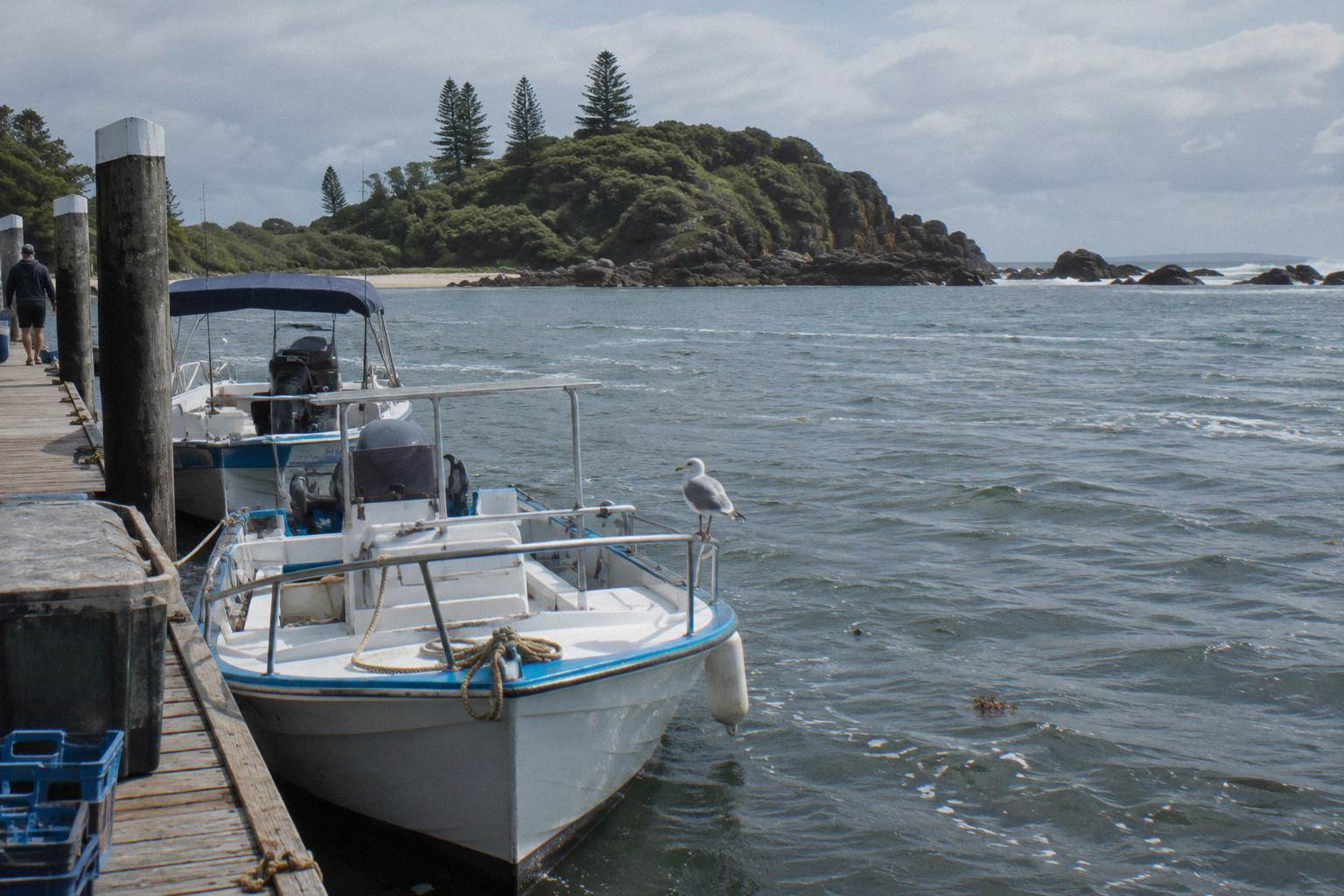
Yes, it matters more than most Brisbane visitors expect: two trips meet at Brunswick Heads Boat Harbour, a short drive north of Byron Bay town, while Turtle School meets in Byron Bay town at Byron Plaza with transport to The Pass. Never assume all trips leave from the same place, and never assume a beach launch: the booking pages attribute each meeting point to its own trip.
The geography splits cleanly. Blue Seafaris lists its address as 43 Harbour Way, Brunswick Heads Boat Harbour, and Out Of The Blue also meets at Brunswick Heads Boat Harbour. If you are driving down from Brisbane and staying anywhere between Brunswick Heads and the Gold Coast, those are the logistically simplest options: park at the harbour, check in, board. For the Byron Bay Dive Centre Sea Turtle Snorkel, the Whale Watching trip and both kayak trips, no meeting point is printed: check the meeting point on the booking page.
The town-based alternative has its own appeal. Turtle School's booking page gives the meeting point as Turtle School, Byron Plaza, Jonson Street in Byron Bay, with transport from that central meeting point to The Pass, and the operator states clearly there is no pick-up from accommodation, so plan to arrive at the shop on time. Byron Bay Dive Centre's own FAQ has more on the logistics, wetsuits and its cancellation policy at byronbaydivecentre.com.au/faq.
“We had such a good time, Harry was wonderful and had great energy, we were so happy with the tour!”
Byron Bay Dive Centre's own operator page records one further detail Brisbane groups should know: the Turtle School trip requires a minimum age of 10. Operator pages across the coast show minimum ages of 5, 7 and 10 for different trips, so if children are in your group, the age question is the first one to ask. The site guide to taking kids on the Julian Rocks trip sets out the differences.
Which Trip Fits Which Traveller?
Families with children under 10 cannot take the Byron Bay Dive Centre trips, whose turtle snorkel states a minimum age of 10 on the operator's own site; budget-focused pairs usually weigh the two from-AUD 94 Brunswick Heads trips; visitors staying in Byron Bay town get the shortest morning with a town meeting point; and nervous or first-time snorkellers should ask each operator directly about experience requirements, because at least one operator mandates prior open-ocean snorkelling experience.
The decision logic is genuinely traveller-shaped here, so here it is as a table rather than prose.
| If you are... | The documented fit is... | Why, from the sources |
|---|---|---|
| A first-time ocean snorkeller | Blue Seafaris or Out Of The Blue, Brunswick Heads | About 2.5 hours total, large review pools, harbour check-in rather than a beach transfer |
| Staying in Byron Bay town, no car | Turtle School, 3-Hour Snorkel | Meets at Byron Plaza with transport to The Pass, about 60 minutes in the water |
| Travelling with children under 10 | Ask before booking | Minimum ages of 5, 7 and 10 appear across operator pages; the BBDC turtle trip states 10 |
| Keen on turtles specifically | The turtle-focused 3 hour trips | Operator lists turtles year-round but states no guarantee |
| Someone who wants to stay dry-ish | Dolphin kayak or whale watching | About 2.5 hours each, same coast, no price printed |
Two honest caveats belong in this section. One operator in the region requires previous open-ocean snorkelling experience and the ability to swim 200 m unassisted in open ocean, though our sources do not state which of the rostered trips carries that requirement, so ask the booking desk directly. And every trip on this page is an open-ocean site where strong swells, currents, surges, cold water and winds are possible, in one dive operator's words; weather cancellations are a normal part of the picture, not an exception.
For the fitness and swimming questions specifically, our post on how fit you need to be to snorkel Julian Rocks is the plain answer, and what happens if your trip is cancelled for weather covers refunds and rescheduling, including the Dive Centre's 48 hour cancellation window.
What Will You Actually See Underwater?
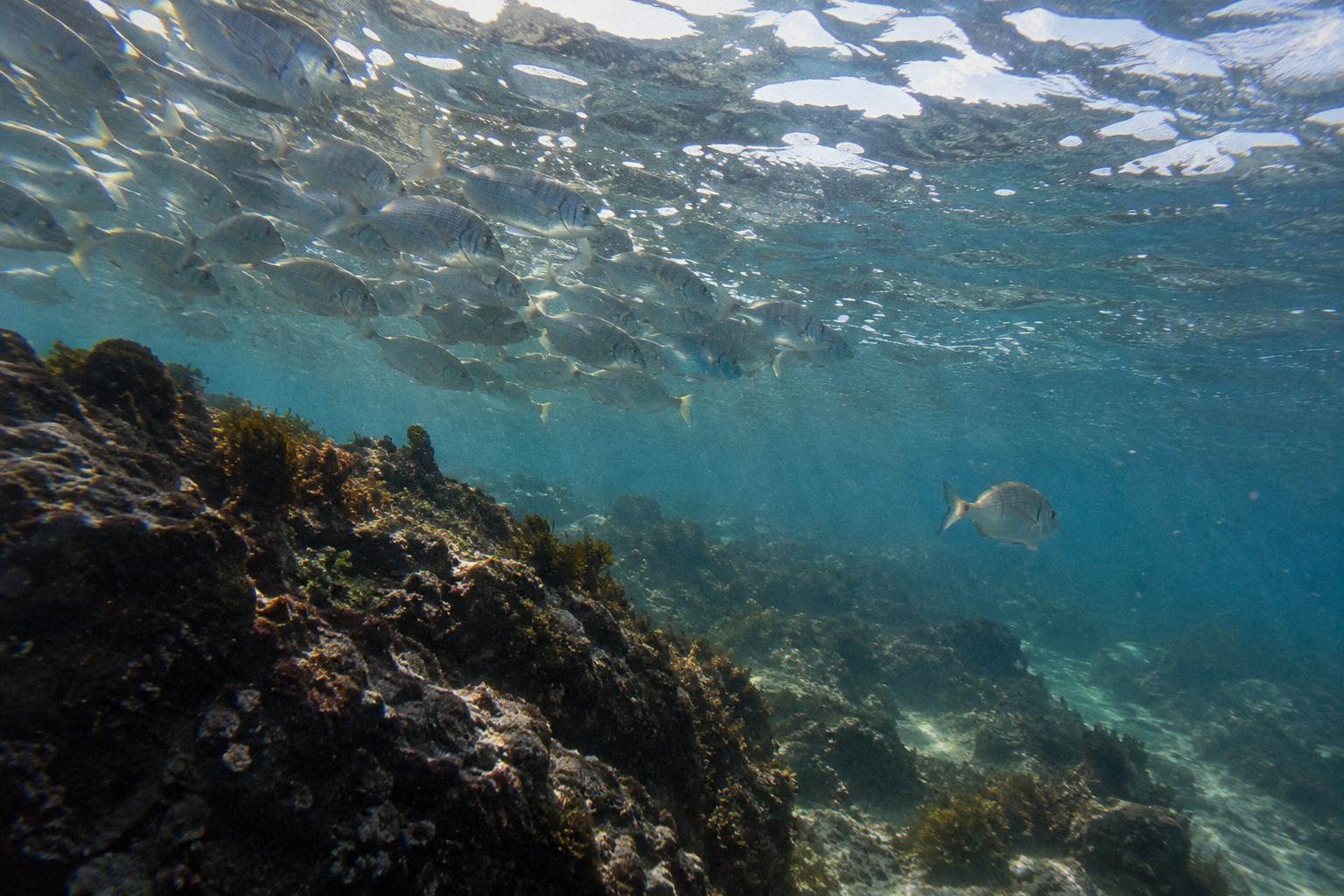
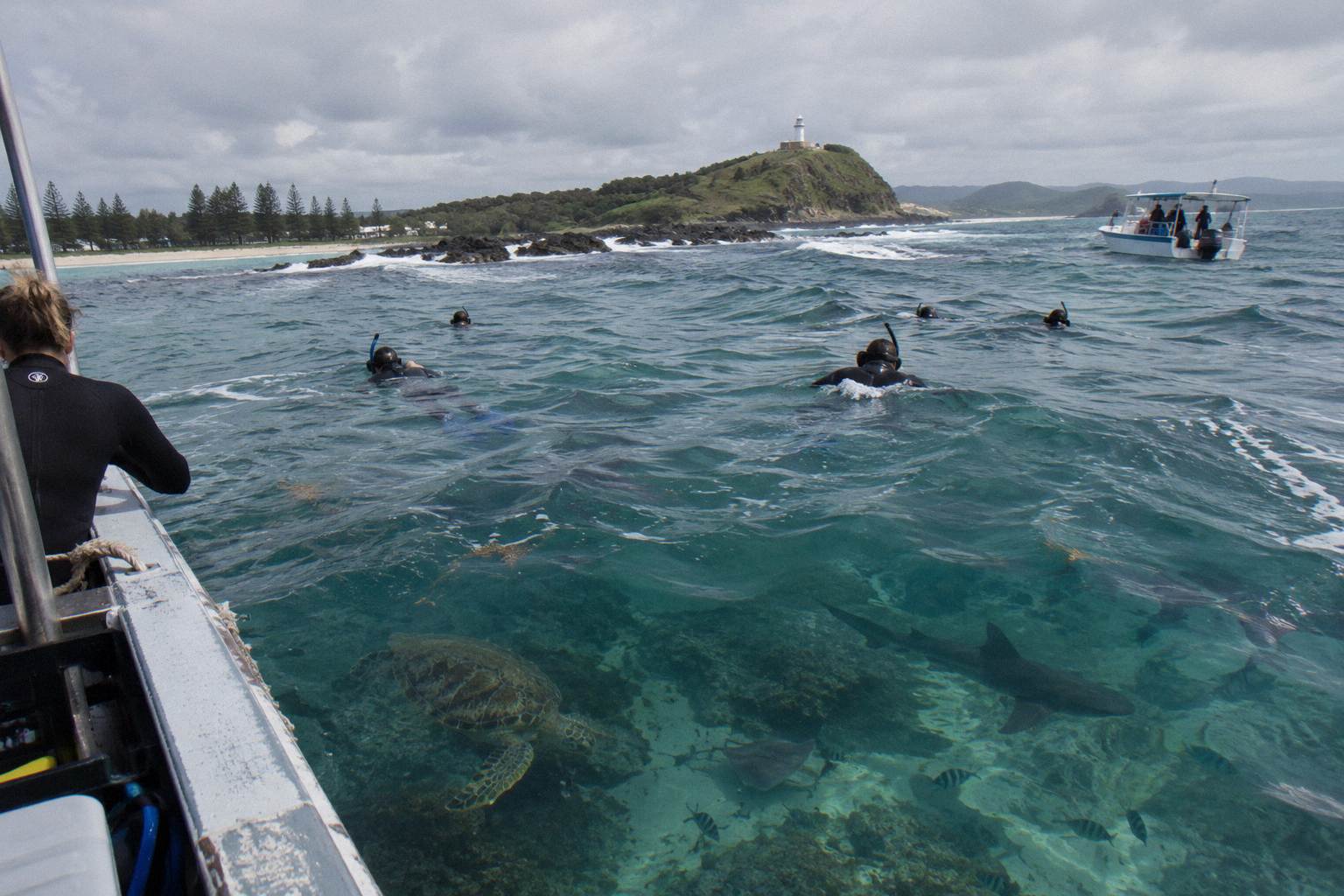
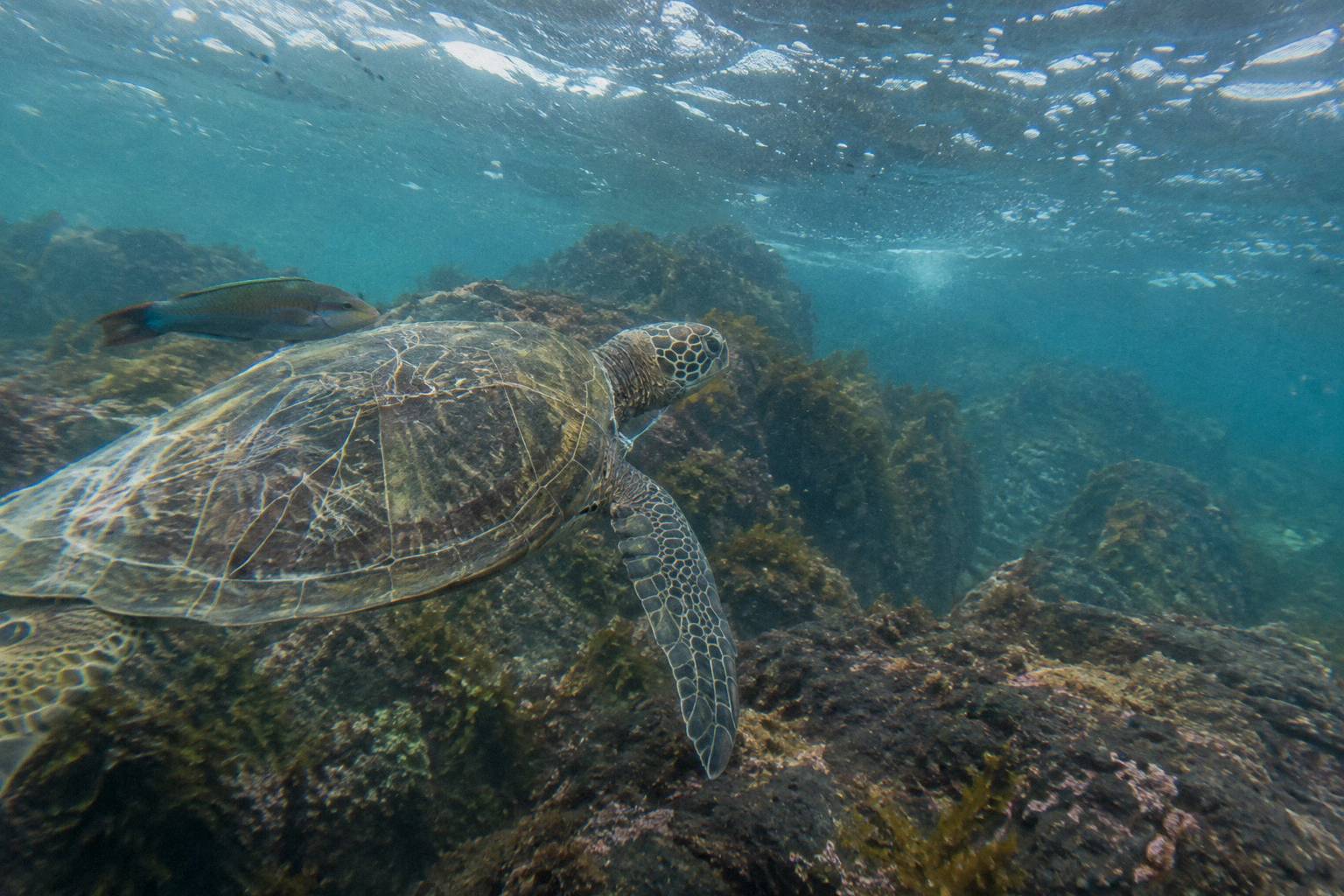
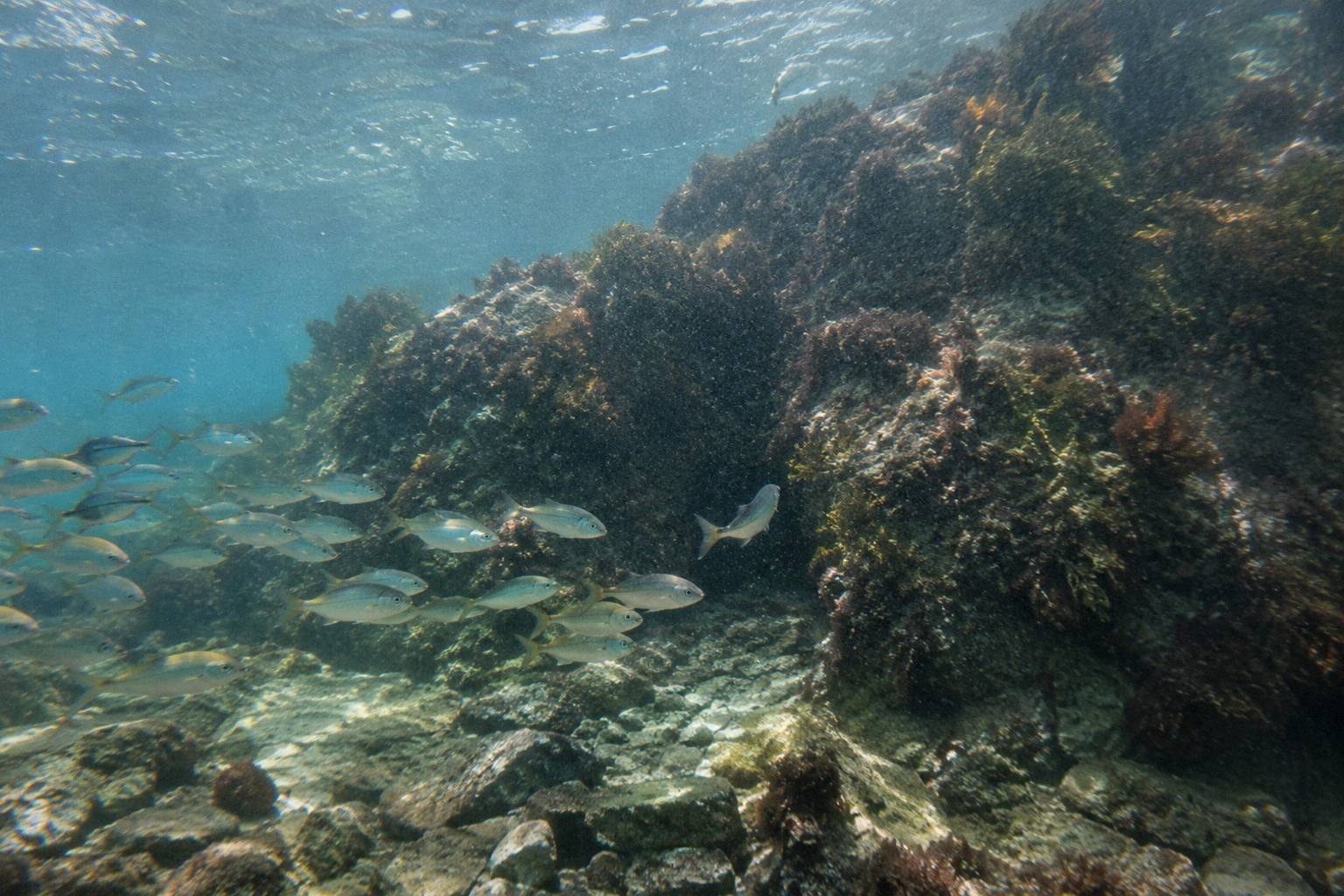
The verified species list for the rocks includes green, hawksbill and loggerhead turtles year-round, rays, wobbegongs, eels, nudibranchs, octopuses and reef fish, with leopard sharks mostly December to April and grey nurse sharks June to November at dive depths. Operators state plainly that no sighting, including turtles, is guaranteed.
Snorkel trips stay in the shallow sheltered areas of 3 to 12 m, where the operator-described sightings are turtles, rays, a variety of colourful fish and crustaceans. The seasonal headline species split by water temperature: summer brings manta rays and leopard sharks, with leopards gathering in the sandy arena of the Needles during the warmer months from December to April, while the cooler winter water brings endangered grey nurse sharks, present June to November, though they school in sand trenches at diving depths of 8 to 24 m rather than snorkel depths.
Turtles are the reliable drawcard. Byron Bay Dive Centre's own wording is that turtles "can be spotted year-round throughout the whole day" but that "we can't guarantee sea turtles will be there", which is the most honest sentence any operator on this coast has written. Season-by-season detail, including the shark seasons, is in our guides to leopard sharks at Julian Rocks and grey nurse sharks at Julian Rocks.
What Should You Ask The Booking Desk Before You Pay?
Ask six things: the minimum age for your children, the exact meeting point, what gear is included, the swimming and experience requirements, the cancellation and weather policy, and whether the from-price covers everything or extras apply. Each of these is answered differently across the operators, and only some answers appear on the booking pages.
This checklist exists because the sources genuinely diverge on every line of it.
| Question | What the sources show |
|---|---|
| What is the minimum age? | 5, 7 and 10 years appear across operator pages; the Byron Bay Dive Centre turtle trip states 10 |
| Where exactly do we meet? | Brunswick Heads Boat Harbour for two trips, Byron Plaza for Turtle School; unstated for the others |
| Is gear included? | Byron Bay Dive Centre includes fins, mask, snorkel and wetsuit; other pages list gear included on their booking pages |
| Must I be a strong swimmer? | Yes. Blue Seafaris asks that you be comfortable swimming in open water. Out Of The Blue Adventures requires a 200 m unassisted swim, as does Turtle School (Byron Bay Dive Centre), while the separate Byron Bay Dive Centre sea turtle tour asks for 25 m unassisted |
| What if weather cancels the trip? | Byron Bay Dive Centre: contact by text or phone, full refund or reschedule; 48 hour cancellation window otherwise |
| Anything else included? | 5 mm long wetsuits advised, no prescription masks, ginger seasickness tablets on the Dive Centre boat |
The wetsuit advice deserves its own sentence: Byron Bay Dive Centre advises 5 mm long wetsuits for the duration of the trip, and while winter water can drop to 17 °C with an average around 20 °C in one dive operator's wording, the suits are included with the trips, so cold water is a comfort question rather than a barrier. If you tend toward seasickness on small boats, note that the Dive Centre boat carries ginger tablets but recommends bringing your own; our post on whether you will get seasick on the Julian Rocks boat covers the practical prep.
For what to bring beyond the basics, the Julian Rocks snorkel packing list is the fuller version, and if you are still weighing which operator suits your group, choosing a Julian Rocks snorkel operator works through the same questions at more length.
How Should A Brisbane Visitor Plan The Day?
Book the trip before you lock in anything else, plan to stay the night before rather than drive down on the morning, arrive at the meeting point 30 minutes early, and leave the afternoon unbooked in case the operator moves your departure within the day for conditions. Brisbane-side logistics beyond that are outside our sources, so treat this as trip-day logic rather than travel advice.
The reason booking comes first is capacity and conditions, in that order. Trips carry small passenger loads, one operator caps tours at 12 passengers, and the rocks' seven moorings each hold a vessel for at most 2 hours, which naturally staggers and limits how many groups are in the water at once. Peak periods fill; our post on how far in advance to book a Julian Rocks trip gets into the timing question. Conditions are the second factor: this is an open-ocean site, and operators reschedule or refund when swell or wind make it unsuitable.
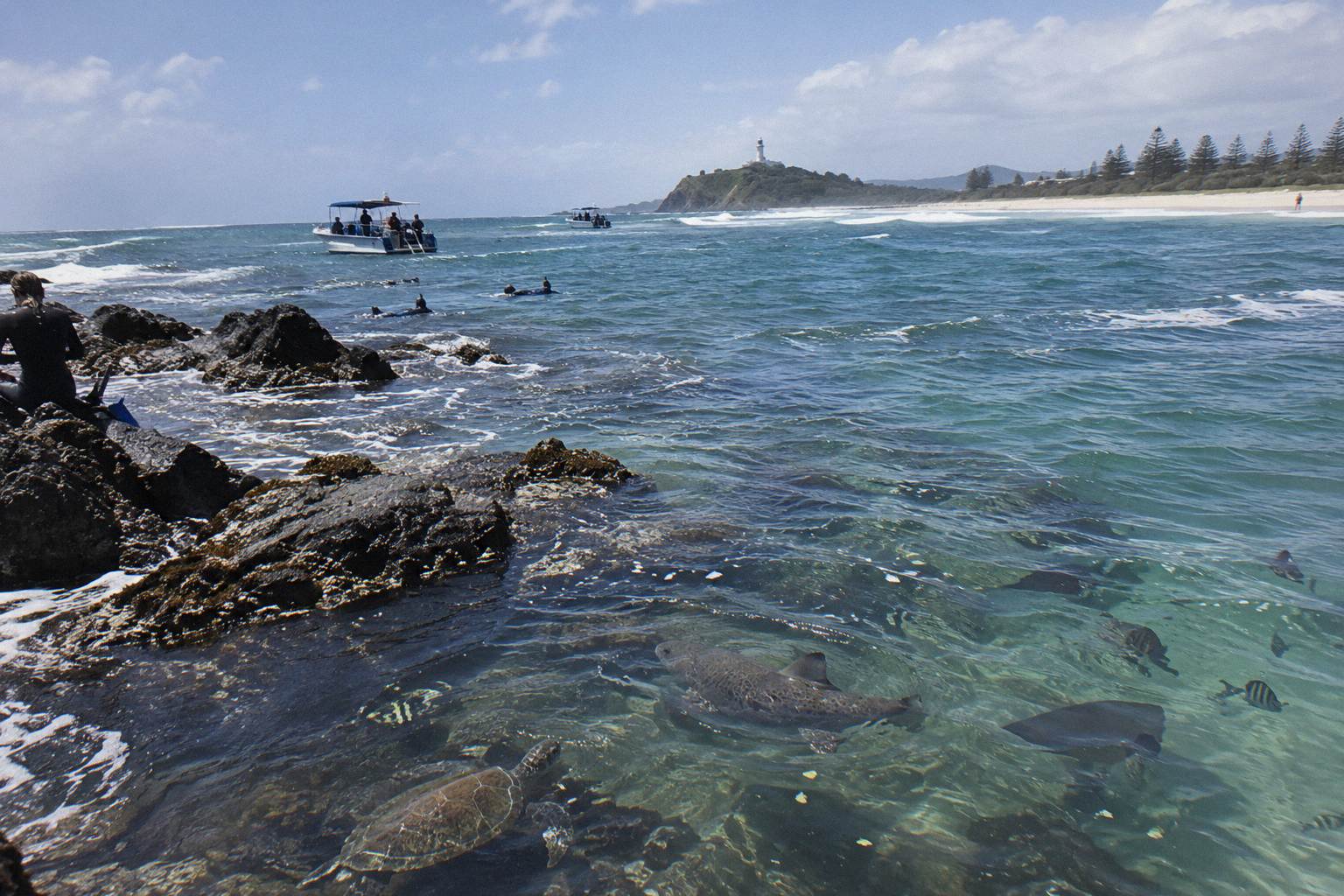
On the day itself, the sequence the booking pages describe is simple: check in at the shop or harbour, gear up, a safety and site briefing, the short boat ride, roughly an hour in the water, and back. Turtle School's 3 hour trip includes about 60 minutes of snorkelling; the Brunswick Heads trips run about 2.5 hours door to door. Waterproof cameras only, no flash, and do not touch, collect or harass marine life: that is operator policy and marine park law at once.
If you want the fuller walkthrough before you commit, what happens on a Julian Rocks snorkel day runs the whole morning step by step, and for the drive-down framing rather than the day itself, see our Julian Rocks day trip from Brisbane planning guide.
Whichever trip you land on, the three below cover the full range of formats and from-prices documented on the booking pages, and each links through to live availability.
Common Questions About Snorkelling Near Brisbane
Is There Any Good Snorkelling Near Brisbane?
Our verified sources document no snorkelling sites or operators in Brisbane itself. The closest well-documented, bookable snorkelling is Nguthungulli Julian Rocks at Byron Bay, inside Cape Byron Marine Park, where four licensed trips run.
How Far Is Julian Rocks From Byron Bay?
About 2.5 km offshore. Operators put the boat ride from Byron Bay at about 5 to 10 minutes. From Brunswick Heads Boat Harbour, both Blue Seafaris and Out Of The Blue list a speedboat ride of roughly 15 minutes each way.
How Much Does A Julian Rocks Snorkel Trip Cost?
Two trips show from AUD 94 per person on their booking pages. The other two print no price; check the booking page for current figures.
Can Children Snorkel At Julian Rocks?
Minimum ages differ by operator: 5, 7 and 10 years appear on operator pages, and the Byron Bay Dive Centre turtle trip states 10. Ask the booking desk before you pay.
Will I See Turtles?
Turtles, including green, hawksbill and loggerhead, are listed year-round, but operators state plainly that no sighting is guaranteed.
Is Snorkelling Safe For Beginners At Julian Rocks?
Trips stay in shallow sheltered water of 3 to 12 m with guides, but it is an open-ocean site where swells, currents and surge are possible. Swimming standards differ by listing. Blue Seafaris requires you to be comfortable swimming in open water, while Out Of The Blue Adventures and Turtle School (Byron Bay Dive Centre) both require 200 m unassisted. The separate Byron Bay Dive Centre sea turtle tour asks for 25 m unassisted.