Will You Reliably See Turtles, Sharks And Rays When Snorkeling Julian Rocks?
Turtles are common but not guaranteed at Julian Rocks, sharks are mostly seasonal dive-depth visitors, and rays appear all year. Here is what operators and park agencies actually say about sightings.
The rocks lie about 2.5 km off Cape Byron, close enough that operators describe the boat ride from Byron Bay as approximately 5 to 10 minutes. That short hop crosses into one of the most protected patches of ocean in New South Wales: Nguthungulli Julian Rocks sits inside Nguthungulli Julian Rocks Nature Reserve, surrounded by the sanctuary zones of Cape Byron Marine Park. Sanctuary zones cover 6,118 ha, or 27.5% of the park, and in them all species are protected and fishing and collecting are banned. The result is a reef system where large animals are not removed, and where snorkellers share shallow, sheltered water with animals that have no reason to fear people.
That is the setup. Whether a specific animal shows up on a specific morning is a different question, and it is the one this page answers straight.
No operator will promise you all three, or even one. Turtles are the most realistic: three species are listed at the rocks all year, and one operator says they can be spotted year-round throughout the whole day, while also saying it cannot guarantee sea turtles will be there. Rays are named for snorkel trips in shallow water. Sharks are the least reliable for snorkellers, because the two headline species are seasonal and mostly live at dive depths.
Reliability is the wrong word for a wild reef, and every serious source on Julian Rocks treats it that way. The NSW Department of Primary Industries and Regional Development lists sharks, rays, turtles, eels, starfish and corals among the animals that call the rocks home, which is a statement about the ecosystem, not a sighting schedule. Operators add their own wording: one dive operator's page describes summer months bringing manta rays and leopard sharks, cooler winter water bringing endangered grey nurse sharks, and turtles, rays, crustaceans, nudibranchs, octopuses, eels and fish present all year. None of that is phrased as a promise, and you should read it as a probability shaped by three things: season, water depth and the simple luck of the day.
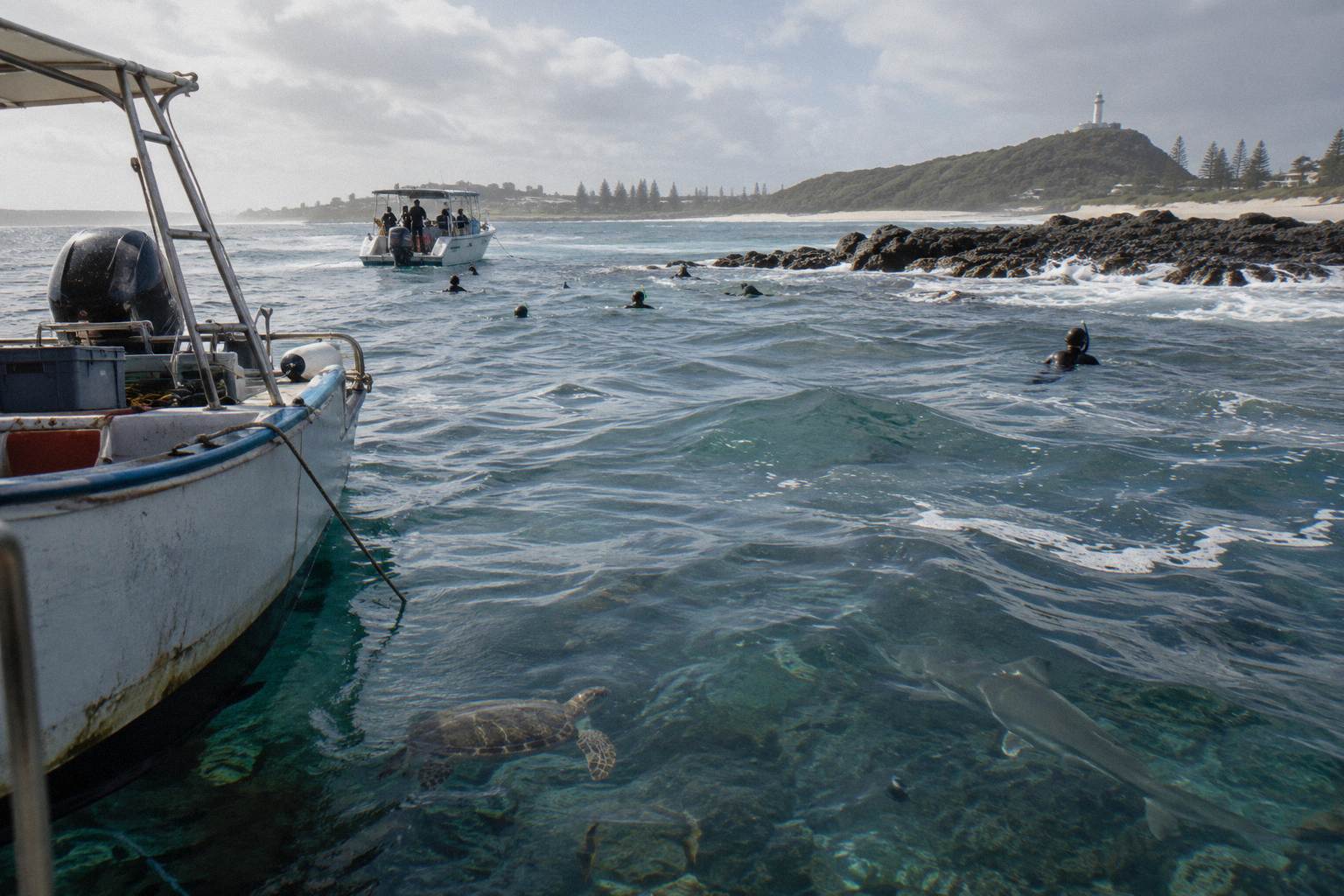
Depth is the factor most first-time visitors underestimate. Snorkel trips at Julian Rocks stay in shallow sheltered areas of 3 to 12 m, per operator wording. Divers work depths of 8 to 24 m, and that deeper band is where some of the famous residents, notably the grey nurse sharks in their sand trenches, actually spend their time. A snorkeller and a diver at Julian Rocks can be on the same boat having genuinely different wildlife days.
The table below is the short version of everything the sources say, and every row carries the caveat that operator and agency wording is a description of the reef, never a promise.
| Animal | Season stated by operators | Where it is usually seen | Realistic for a snorkeller? |
|---|---|---|---|
| Green, hawksbill, loggerhead turtles | All year | Shallow sheltered areas, 3 to 12 m | Frequent, but the operator says it cannot guarantee them |
| Leopard sharks | December to April | The Needles sandy arena | Good in season; slow and near the surface |
| Grey nurse sharks | June to November | Sand trenches at dive depths of 8 to 24 m | Rare on snorkel trips; a diver's sighting |
| Bull, eagle, shovelnose rays | All year | The Needles and the Line of Smiles | Realistic; sand and reef huggers |
| Manta rays | Summer months | Mid-water when present | A bonus, never a benchmark |
| Wobbegong sharks | All year | Reef surfaces inside snorkel depth | Possible for a careful observer |
If you are weighing trips, these three are the ones this site compares most often:
What Turtles Actually Swim At The Rocks, And When?
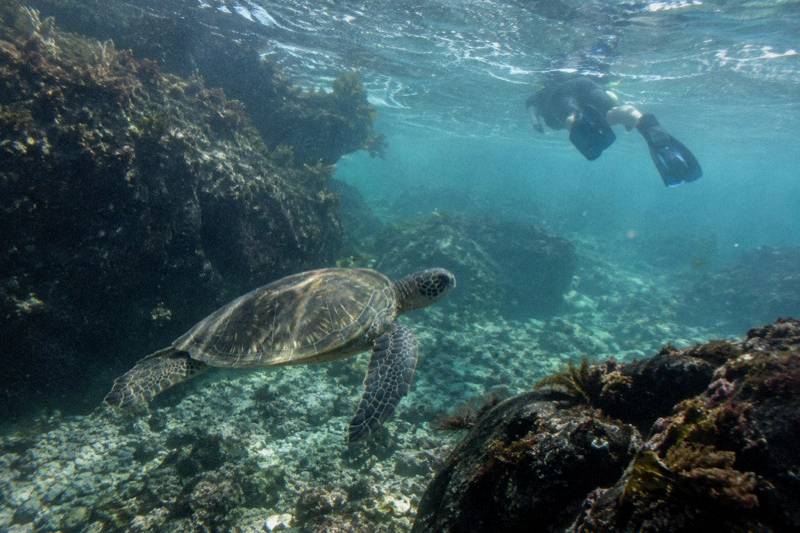
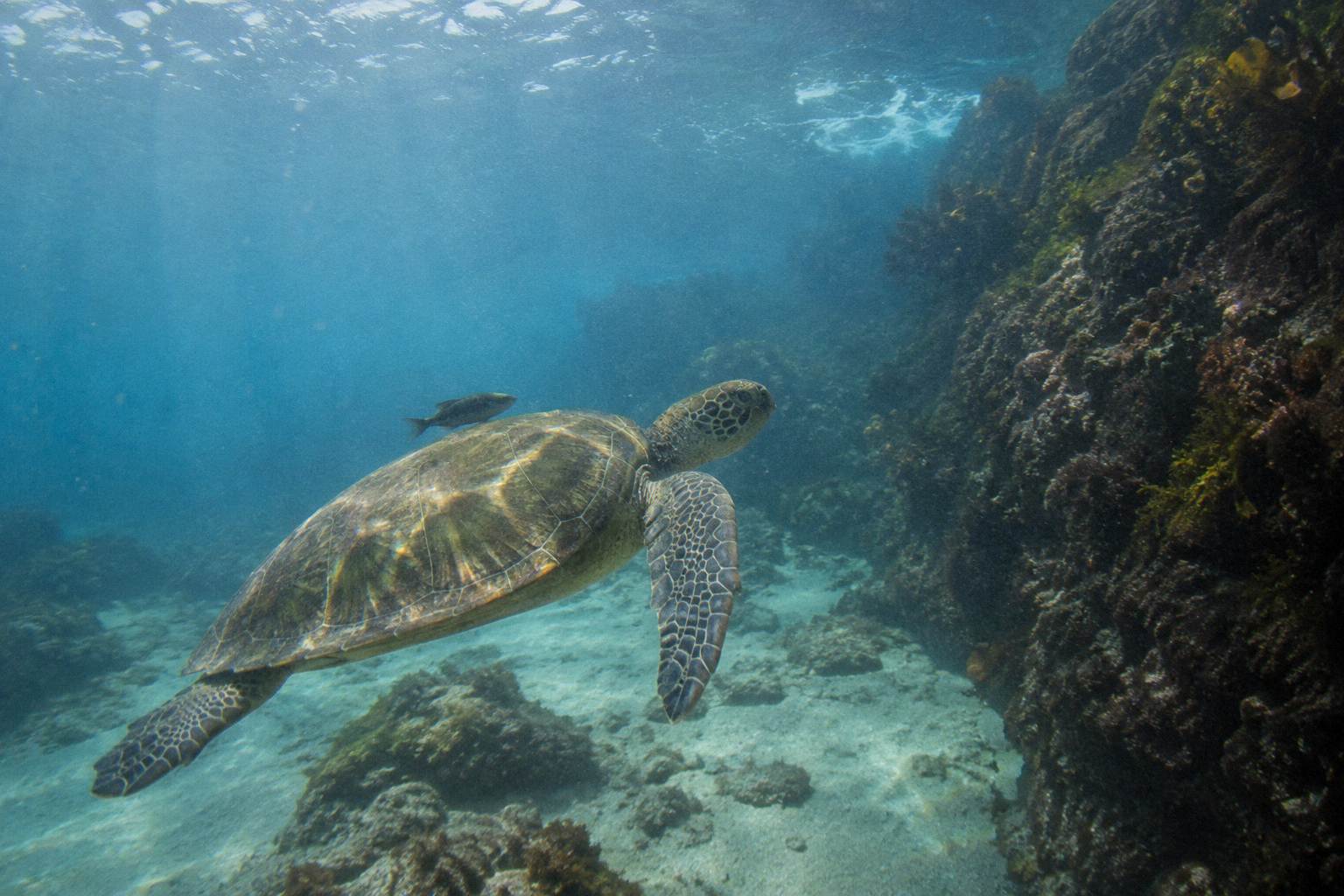
Green, hawksbill and loggerhead turtles are the three species named at Julian Rocks, and all three are listed all year rather than in a season. The operator that runs turtle-focused trips says turtles can be spotted year-round throughout the whole day, then adds in the same breath that it cannot guarantee sea turtles will be there. That pairing, common but unguaranteed, is the most accurate summary you will get.
Turtles are the reason many people book this trip, and the ecology supports the enthusiasm. The rocks offer sheltered shallows, grazing surfaces and cleaning stations, and the sanctuary zoning means nobody is removing them. Day-tripper reviews routinely mention turtles because turtles feed and rest through daylight hours rather than running on a dawn-and-dusk clock.
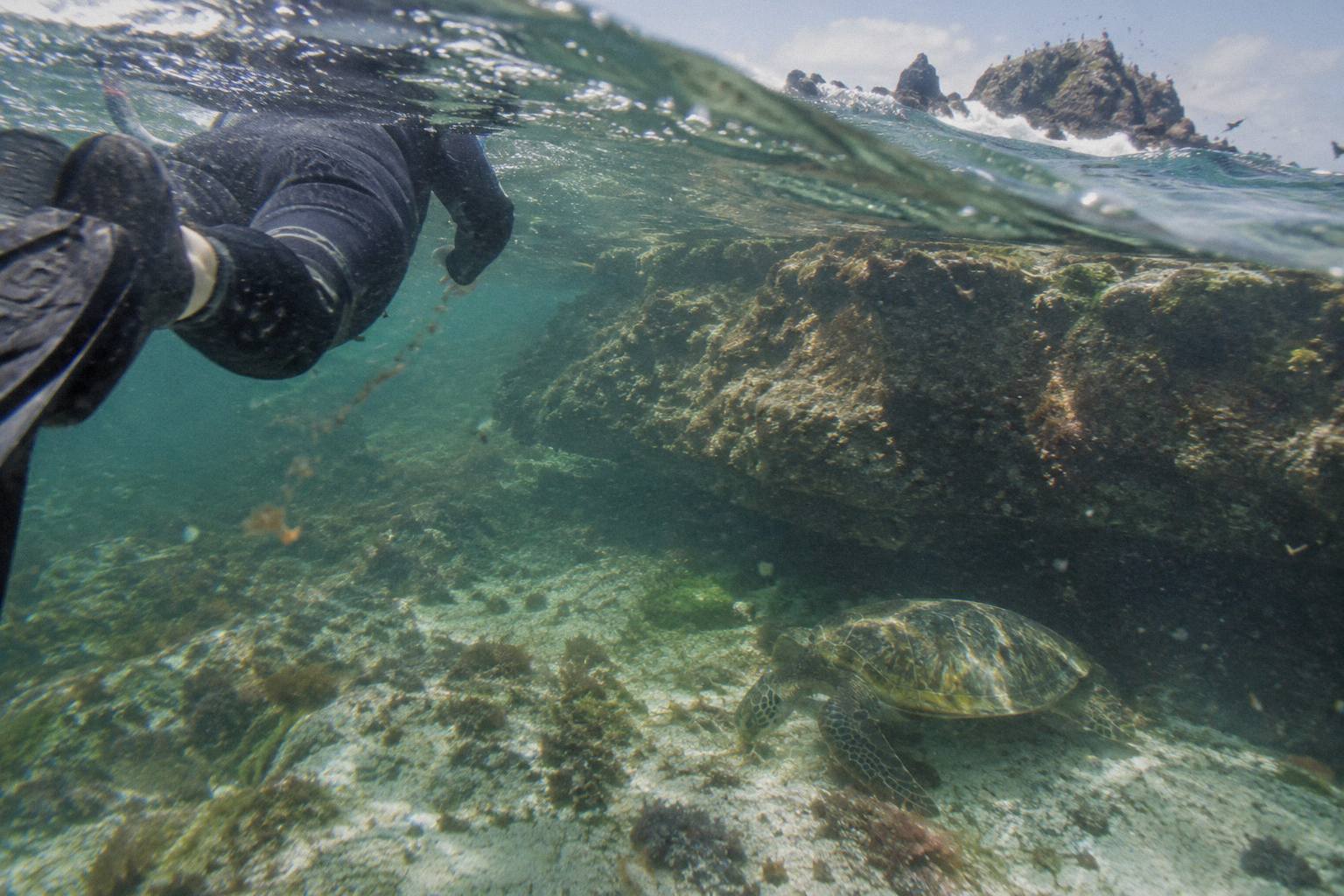
The catch is that a turtle resting under a ledge in 6 m of water is invisible from the surface if it chooses to be. Guides know the spots, and a good briefing will point you toward seagrass edges and sandy patches where turtles graze. But the final word belongs to the animal. The honest framing is that turtle encounters at Julian Rocks are frequent, well documented and discussed in detail on our guide to turtles at Julian Rocks, but no trip on the roster will sell you a certainty.
Which Sharks Are Around, And Can Snorkellers See Them?
Sharks at Julian Rocks are real but seasonal, and the two marquee species are largely a diver's sighting. Leopard sharks are described by one dive operator as present in the warmer months from December to April, mostly in the Needles sandy arena. Grey nurse sharks appear in the sand trenches from June to November at dive depths of 8 to 24 m, and they are rarely seen on snorkel trips.
Leopard sharks are the snorkeller's better bet. They are surface-inclined, slow-moving and patterned like a roof tile, and in their season they gather over sand in numbers that make them hard to miss. The season given by the dive operator, December to April, corresponds with the southern-hemisphere summer, so a visitor snorkelling in January is in the right window while a visitor in August mostly is not. More detail on that species, including why the Needles matter, is in our leopard sharks at Julian Rocks guide.
“I had an amazing trip! The boat was super fun, the guide was excellent and I swam with turtles, wobbegongs, a spotted ray and saw two octopus! Heaps of beautiful fish too. I wouldn’t have noticed half the sea creatures without our expert guide pointing them out! Thoroughly recommend the team at Blue Seafaris!”
Grey nurse sharks are a different story, told fully in our grey nurse sharks at Julian Rocks page. They are a threatened species named in the marine park's own user guide, and in winter the trenches at dive depth can be, in the operator's words, full of them. Snorkellers float above water of 3 to 12 m while that happens several metres below the limit of a breath-hold dive. Some trips do see a grey nurse pass through the shallows, but the reliable viewing is from a tank, and the same open question sits behind our comparison of snorkelling versus diving at Julian Rocks.
Wobbegongs complicate the picture in a good way. The dive operator lists wobbegong sharks at the Needles and the Line of Smiles all year, and a wobbegong sitting flat on reef inside snorkel depth is one shark a surface swimmer genuinely can find.
What About Rays?
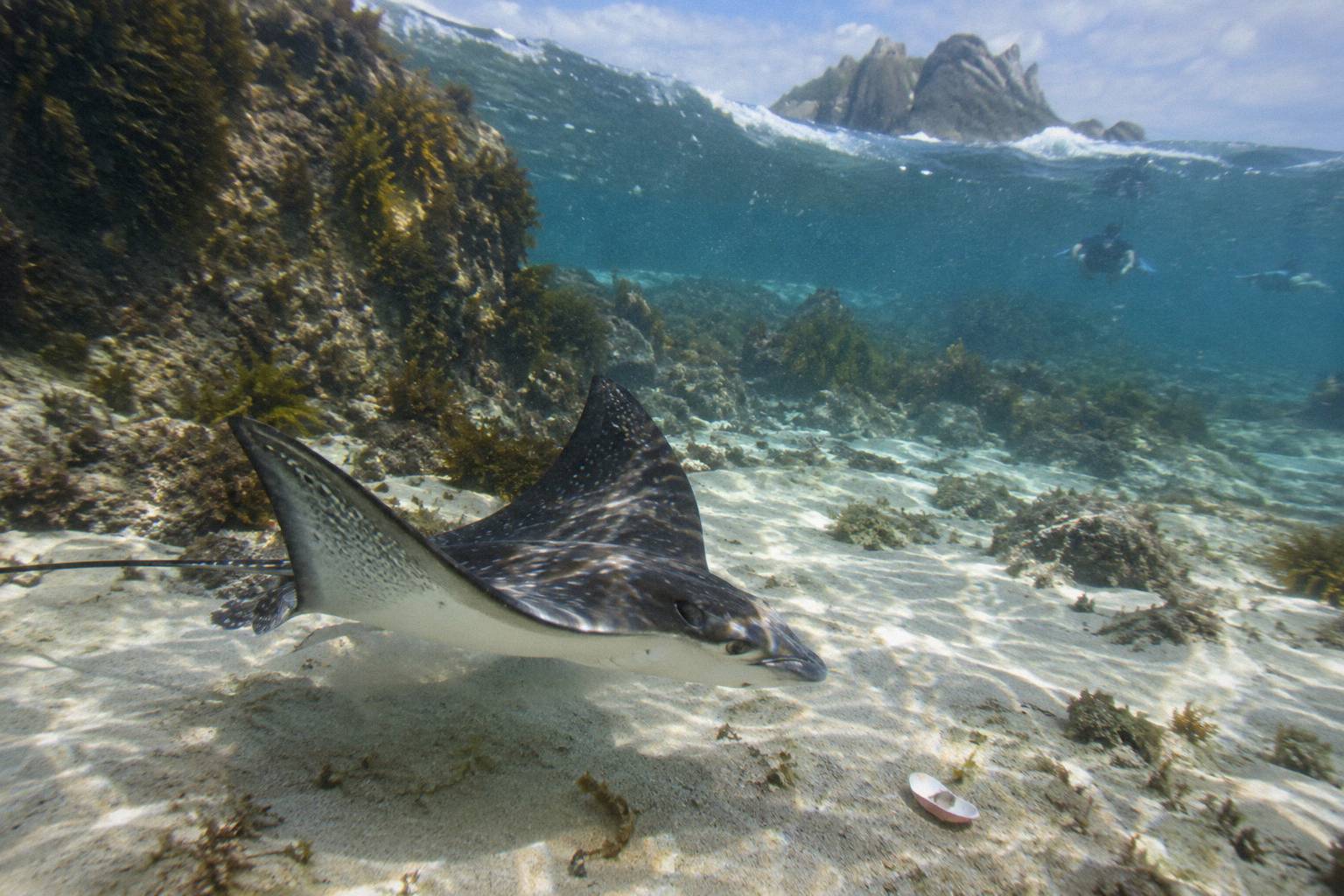
Rays are the quiet overperformer of a Julian Rocks snorkel. Snorkel trips are described as seeing turtles, rays, a variety of colourful fish and crustaceans in shallow sheltered areas of 3 to 12 m, and the dive operator lists bull rays, eagle rays and shovelnose rays at the Needles and the Line of Smiles all year. Manta rays are a summer-month mention, December-leaning rather than a fixed arrival.
The all-year ray list matters more than the headline manta. Eagle rays fly past in open water and are quick, but bull rays and shovelnose rays hug sand and reef, which puts them squarely in the snorkeller's band. A shovelnose, flat and speckled and the length of a coffee table, is one of the more common big-animal encounters a surface swimmer reports from this reef.
Mantas are the exception that draws photographers. The dive operator's page puts manta rays in the summer months, alongside the leopard sharks, and mantas feed in mid-water where snorkellers can see them well when one appears. The same caution applies: "summer months" is a season, not a booking calendar, and mantas are wide-ranging animals that treat the rocks as one stop among many. Treat a manta as a bonus, not a benchmark.
What Does The Season-by-season Picture Look Like?
The seasons operators describe are broad and overlap: leopard sharks and manta rays in the warmer months, with leopards specified as December to April; grey nurse sharks in cooler water from June to November at dive depths; turtles and several ray species all year. Whales are a separate case where two operators disagree, one running whale trips between May and November and another listing whale watching from June to October.
The table below is worth reading as climate, not forecast.
| Time of year (southern hemisphere) | Operator wording on the big animals | The snorkeller's takeaway |
|---|---|---|
| Summer, December to February | Manta rays and leopard sharks; turtles, rays and reef fish all year | The strongest window for surface-level big animals |
| Autumn, March to May | Leopard sharks through April; all-year species continue | A good shoulder option with thinner crowds |
| Winter, June to August | Grey nurse sharks in cooler water, at dive depths; turtles still listed | Shark story belongs to divers; snorkellers lean on turtles and rays |
| Spring, September to November | Transition; all-year species continue; strong northerlies possible | It is spring now, heading toward the leopard shark window |
It is November 2026, spring in the southern hemisphere, so a reader booking now is heading toward the leopard shark and manta window rather than the grey nurse window. The operators' wording, not a temperature chart, is what supports these dates, and no official month-by-month sea-temperature source exists for this reef. One operator's dive-site page notes winter water can drop to 17 °C with an average around 20 °C, and that same page warns the open-ocean site can bring strong swells, currents, surges, cold water and winds, with strong northerlies between September and Christmas. Those are conditions for a wetsuit decision and a sea-sickness tablet, covered in our Byron Bay water temperature guide, not variables in a sighting guarantee.
Whales deserve their own caveat because the two sources genuinely differ. One dive operator runs whale trips between May and November; Byron Bay Dive Centre's home page lists whale watching from June to October. Both are printed here as stated, neither is merged, and neither belongs on a snorkel trip's promised list. Whales at Julian Rocks are a boat-adjacent spectacle, not an in-water encounter, and our whale season and your Byron Bay snorkel trip guide keeps the two activities separate.
Why Does No Operator Guarantee A Turtle?
Because a guarantee would be a lie about a wild animal in a protected area, and the rules reinforce the honesty. Fish feeding, including shark feeding, is prohibited in the marine park, collecting is banned in sanctuary zones, and all species are protected there. Operators legally cannot chum, bait or lure anything toward you, so every sighting is a wild animal behaving wild, on its own schedule.
This is worth appreciating rather than resenting. At some destinations, feeds and bait balls manufacture the sightings the brochure implies. At Julian Rocks, the marine park's rules, speed limits of 4 knots within 200 m of the rocks, a ban on anchoring within 700 m, and seven moorings with a 2-hour maximum all exist to keep the reef as close to natural as a busy boat schedule allows. The DPIRD Cape Byron Marine Park page describes the rocks as home to sharks, rays, turtles, eels, starfish and corals precisely because the protection has held.
“AMAZING! The fun began on the boat ride out there and the marine life we saw was spectacular. Our guides, Matt and Will, were brilliant and had an obvious passion for marine life. 10/10 would recommend.”
The practical consequence for you: choose your trip on the things an operator controls, not the things the ocean controls. Guide quality, group size, briefing care, gear fit and time in the water are all bookable facts. A turtle is not. When a trip does deliver one, and at Julian Rocks that is a frequent outcome, it lands as the encounter it actually was, an animal choosing to share its water with you, as Julian Rocks Snorkelling puts it in our planning guides.
Which Trip Gives You The Best Shot?
No trip guarantees sightings, so the honest comparison is structure: longer trips with more in-water time raise your odds by arithmetic, and guides who know the reef raise them by knowledge. The three trips this site compares below differ in meeting point, duration and guide style, and each states its own conditions on its booking page.
The Turtle School Julian Rocks Snorkelling Tour runs about 2.5 hours with roughly 60 minutes in the water, meets at Byron Plaza in Jonson Street and transfers you to the boat at The Pass, includes gear, wetsuit and transport, and sets a minimum age of 10 on its operator page. Its rating and price are on the booking page. It is the trip this article features because the turtle question is the trip's stated focus, with the operator's own caveat that it cannot guarantee turtles.
“A fantastic morning out! Leopard sharks, turtles, eagle rays and even a Manta! Couldn’t have wished for more! Choppy conditions to start but both the guide and skipper handled it well so everyone felt safe and looked after! Early morning session was a brilliant way to start the day!”
Blue Seafaris, per its listing, has a marine biologist guide, runs about 2.5 hours, is rated 4.5 across 448 reviews on its booking page, and is priced from AUD 94 per person. A biologist guide does not change what swims past, but it does change what gets pointed out, identified and explained while it does. The trip meets at 43 Harbour Way, Brunswick Heads Boat Harbour, which suits anyone staying north of Byron.
“A very nice trip. We saw a lot, including turtles and a small shark. Our two skippers were also super friendly and very attentive. In the water, a skipper accompanied us and went in search of turtles, etc. I highly recommend the trip. You head out on a fast speedboat, so there's also an adrenaline rush.”
Out Of The Blue also runs about 2.5 hours from Brunswick Heads Boat Harbour, is priced from AUD 94 per person, and carries a 4.4 rating across 167 reviews on its main booking page; a second booking page for the same trip shows 4.7 across 58 reviews. Same reef, same animals, different boat and different meeting point, which matters if you are staying in Brunswick Heads rather than Byron township. Neither the Blue Seafaris nor the Out Of The Blue booking pages state a minimum age, so ask the operator if you are travelling with children.
What Else Might You See Besides The Big Three?
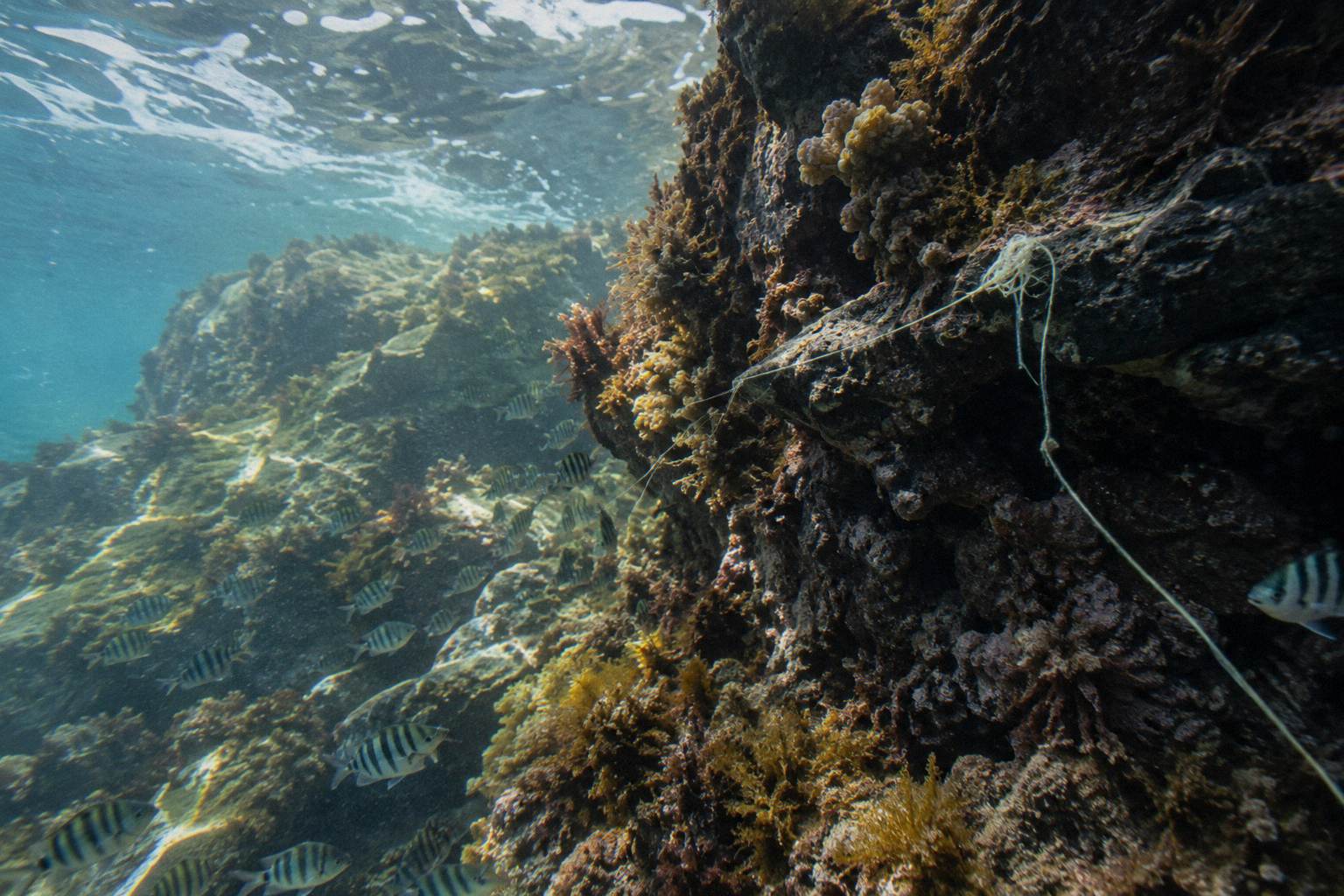
Plenty, and often closer and more reliably than the headline animals. The DPIRD page lists eels, starfish and corals at the rocks, the dive operator adds nudibranchs, octopuses and crustaceans all year, and operator wording credits the meeting of warm and cool currents with supporting over 1000 marine species, including more than 500 fish species.
Most of that biodiversity is small, sedentary and therefore dependable. An octopus in its den, a nudibranch the size of a fingernail on a rock face, a moray's head poking from a crevice: these do not migrate or keep seasonal schedules. Snorkellers who arrive fixated on turtles and leave raving about a cuttlefish or a wobbegong are a common pattern, because the shallow sheltered areas the boats favour are exactly where the resident small stuff lives.
“We saw leopard sharks, turtles and many other fish – truly impressive!”
The bigger picture is worth one more line of context. The rocks sit where the East Australian Current meets cooler southern water, and the Bundjalung connection runs deep: the name Nguthungulli means Father of the World in Bundjalung, and one reported story tells of a spear breaking a canoe in two, the halves becoming the rocks. Marine biologists describe the resulting species mix as unusual for a single site. That mix, not a single guaranteed turtle, is what you are actually buying a ticket to.
How Should You Plan Around The Odds?
Book the season that matches your priority animal, maximise time in the water rather than time on the boat, and treat anything with fins as a possible outcome rather than a line item. December to April for leopard sharks and the manta chance, June to November for the dive-side grey nurse story, and any month at all for turtles and the all-year rays.
Then manage the two things that actually sink trips: conditions and fitness. Julian Rocks is an open-ocean site, and the operator wording quoted above, strong swells, currents, surges, cold water and winds, is not boilerplate. Every operator here moves or refunds when the sea is unsuitable; Byron Bay Dive Centre, for instance, contacts guests by text or phone with a full refund or reschedule, with a 48-hour cancellation window and a 100% fee inside it. All trips require confident swimming, and one operator whose name we do not print requires prior open-ocean experience and the ability to swim 200 m unassisted. If any of that gives you pause, read our piece on whether non-swimmers can snorkel at Julian Rocks before you book.
The final word on reliability is the one the operator already gave: turtles can be spotted year-round, and it cannot guarantee sea turtles will be there. Everything else on this page is footnotes to that sentence, arranged by season.
Common Questions About Snorkeling Julian Rocks
Will You Reliably See Turtles, Sharks And Rays When Snorkeling Julian Rocks?
Turtles are common and listed all year, but the operator says it cannot guarantee turtles will be there. Rays, including bull, eagle and shovelnose rays, are named for snorkel trips all year. Sharks are seasonal and mostly seen at dive depths: leopard sharks December to April, grey nurse sharks June to November.
Are Turtles Guaranteed On A Julian Rocks Snorkel Trip?
No. Green, hawksbill and loggerhead turtles are listed at the rocks all year, and one operator says they can be spotted year-round throughout the whole day, but the same operator states it cannot guarantee sea turtles will be there.
Can Snorkellers See Grey Nurse Sharks At Julian Rocks?
Rarely. Grey nurse sharks gather in sand trenches from June to November at dive depths of 8 to 24 m, while snorkel trips stay in shallow sheltered areas of 3 to 12 m. The reliable grey nurse viewing is on scuba.
When Is The Best Season For Leopard Sharks And Manta Rays?
One dive operator describes leopard sharks in the warmer months, specifically December to April, mostly in the Needles sandy arena, and puts manta rays in the summer months. Neither is guaranteed on any given trip.
Which Rays Can You See While Snorkeling Julian Rocks?
Bull rays, eagle rays and shovelnose rays are listed at the Needles and the Line of Smiles all year, and snorkel trips are described as seeing turtles, rays and colourful fish in shallow water of 3 to 12 m. Manta rays are a summer-month mention.
Why Do The Whale Seasons Differ Between Operators?
Two operators state different windows: one runs whale trips between May and November, and another lists whale watching from June to October. Both are printed as stated. Whales are seen from boats, not promised on snorkel trips.