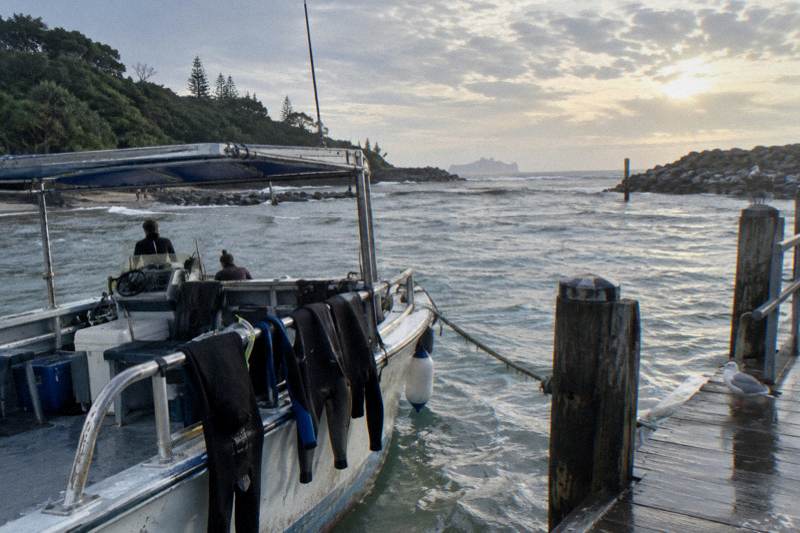
How Far Is Julian Rocks From Byron Bay?
Julian Rocks sits about 2.5 km off Byron Bay and the boat ride takes roughly 5 to 10 minutes. Here is what that short distance means for your snorkel trip.
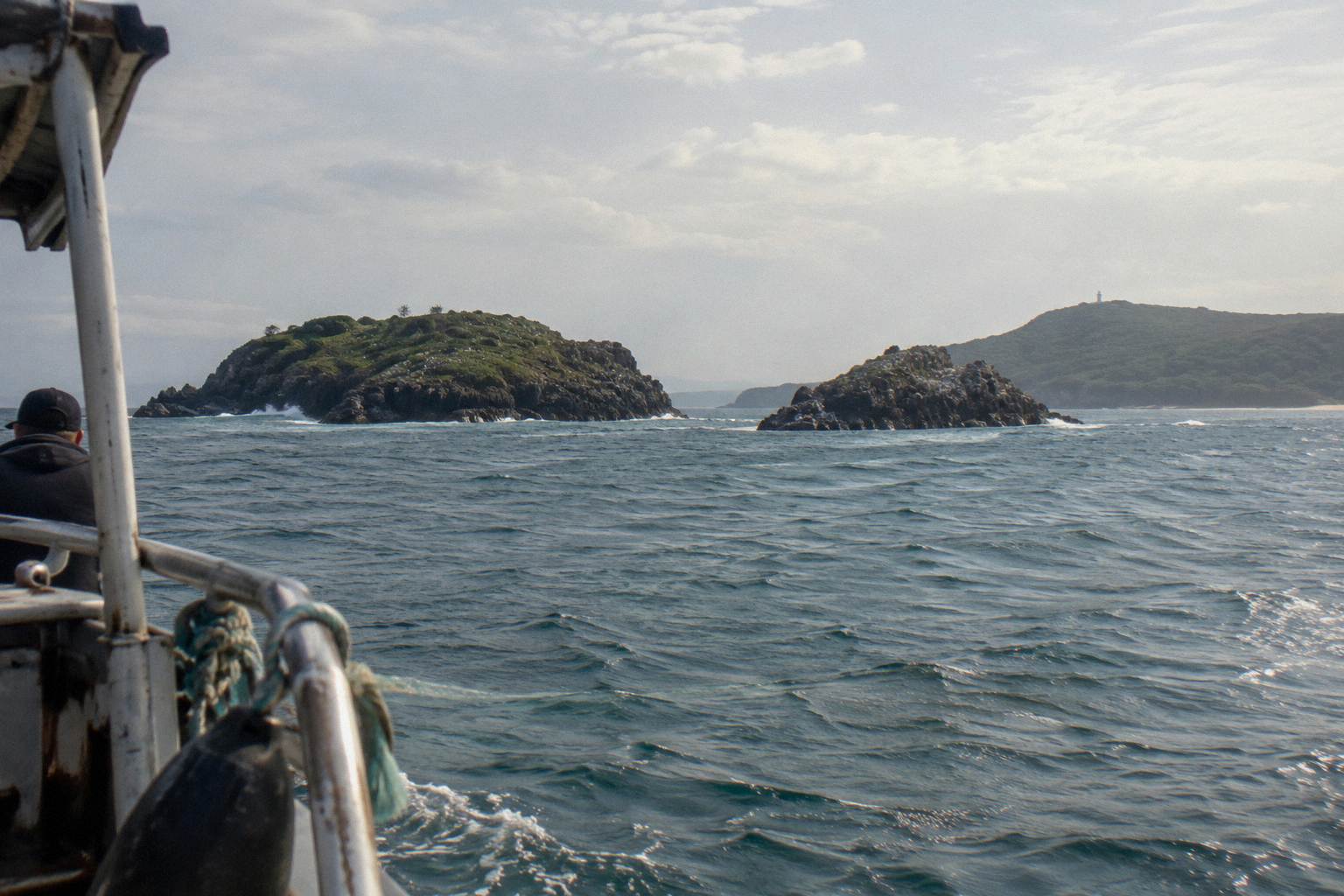
Julian Rocks, officially dual-named Nguthungulli Julian Rocks, sits about 2.5 km offshore from Byron Bay, inside Cape Byron Marine Park. Operators put the boat ride from Byron Bay's launch point at about 5 minutes, or 5 to 10 minutes per Byron Bay Dive Centre's FAQ. That short hop is the whole reason a half-day snorkel trip works here: the transit is minutes, and almost all the tour time goes to the water.
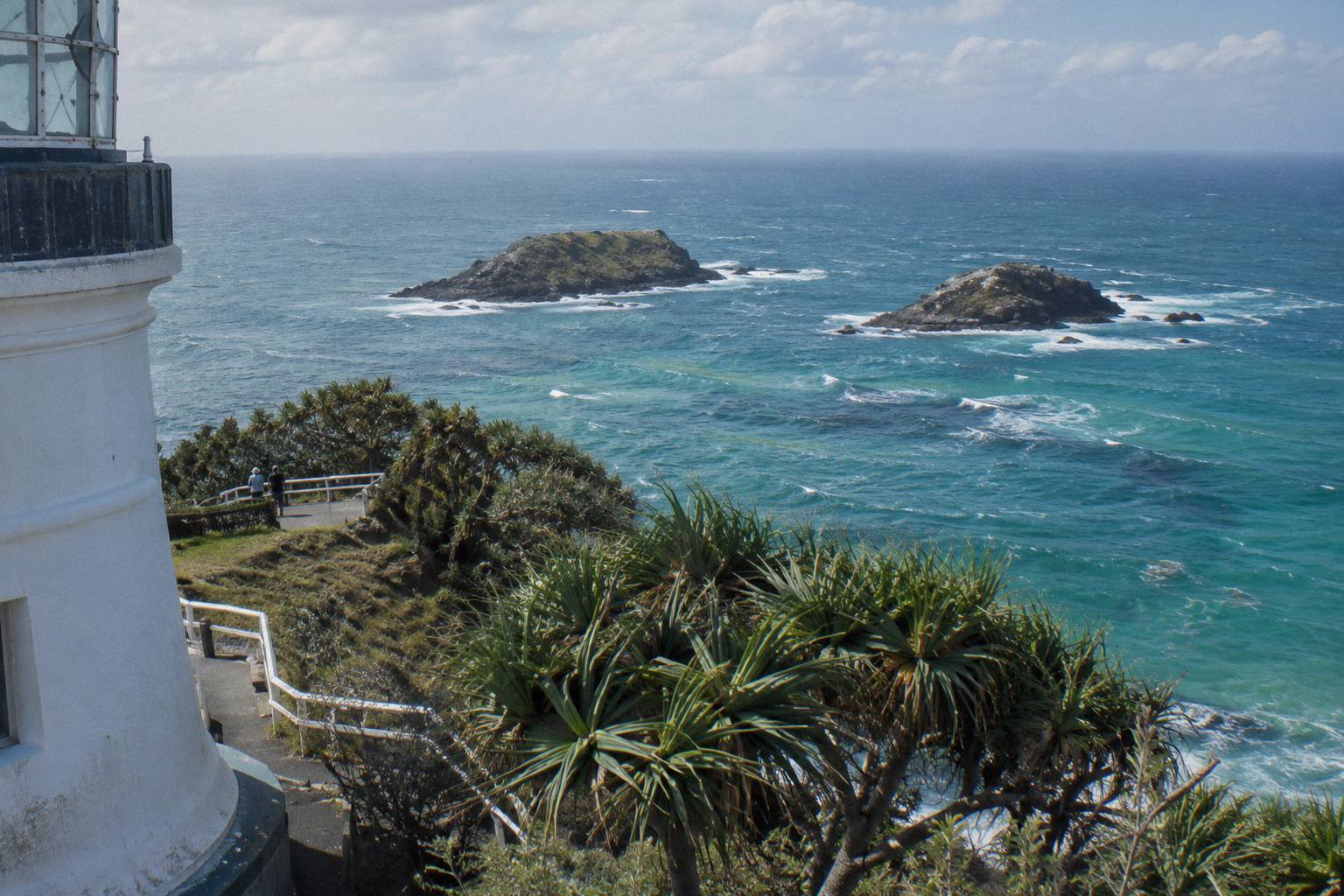
The distance surprises people who expect a long channel crossing. Cape Byron is mainland Australia's easternmost point, and the rocks sit just beyond it, close enough that on a clear day you can pick out the two islets from the Cape Byron lighthouse walk. The Bundjalung story of the place explains the shape differently: as reported in the telling of the local lore, a broken canoe, split in two by a spear, became the rocks. "Nguthungulli" is the Bundjalung word for "Father of the World", and the dual name was officially adopted in July 2023.
Because the crossing is so short, the practical questions shift from "how far" to "how long is the ride, from where, and does it matter for my day". Those questions have surprisingly different answers depending on which operator you book, because the trips do not all leave from the same place. Some meet in Byron Bay town, some meet a short drive north at Brunswick Heads Boat Harbour.
Here is the short version of the choices, and the rest of this article unpacks each one.
How Long Is The Boat Ride To The Rocks?
The ride from Byron Bay's launch point to Julian Rocks is about 5 minutes according to one operator's site, or approximately 5 to 10 minutes per the Byron Bay Dive Centre FAQ. Snorkel trips run about 2.5 to 3 hours door to door, with roughly an hour of that actually in the water. Brunswick Heads departures are a 15-minute speedboat ride each way to Julian Rocks, per those listings.
The 5 to 10 minute figure matters more than the 2.5 km figure for most visitors, because it tells you how much boat time your morning or afternoon involves. A short crossing means less chance of feeling queasy, less time in a wetsuit on a moving deck, and more minutes with your face in the water. If boat time is your main worry, the site's piece on whether you will get seasick on the Julian Rocks boat goes into it in detail.
What the ride lacks in length it makes up for in scenery. Leaving The Pass, the boat rounds Wategos and the Cape Byron headland with the lighthouse above you, and the rocks grow from a smudge to a proper pair of islets within a few minutes. Dolphins often ride the bow in season, and between May and November humpbacks pass close enough that whale trips run in the same waters.
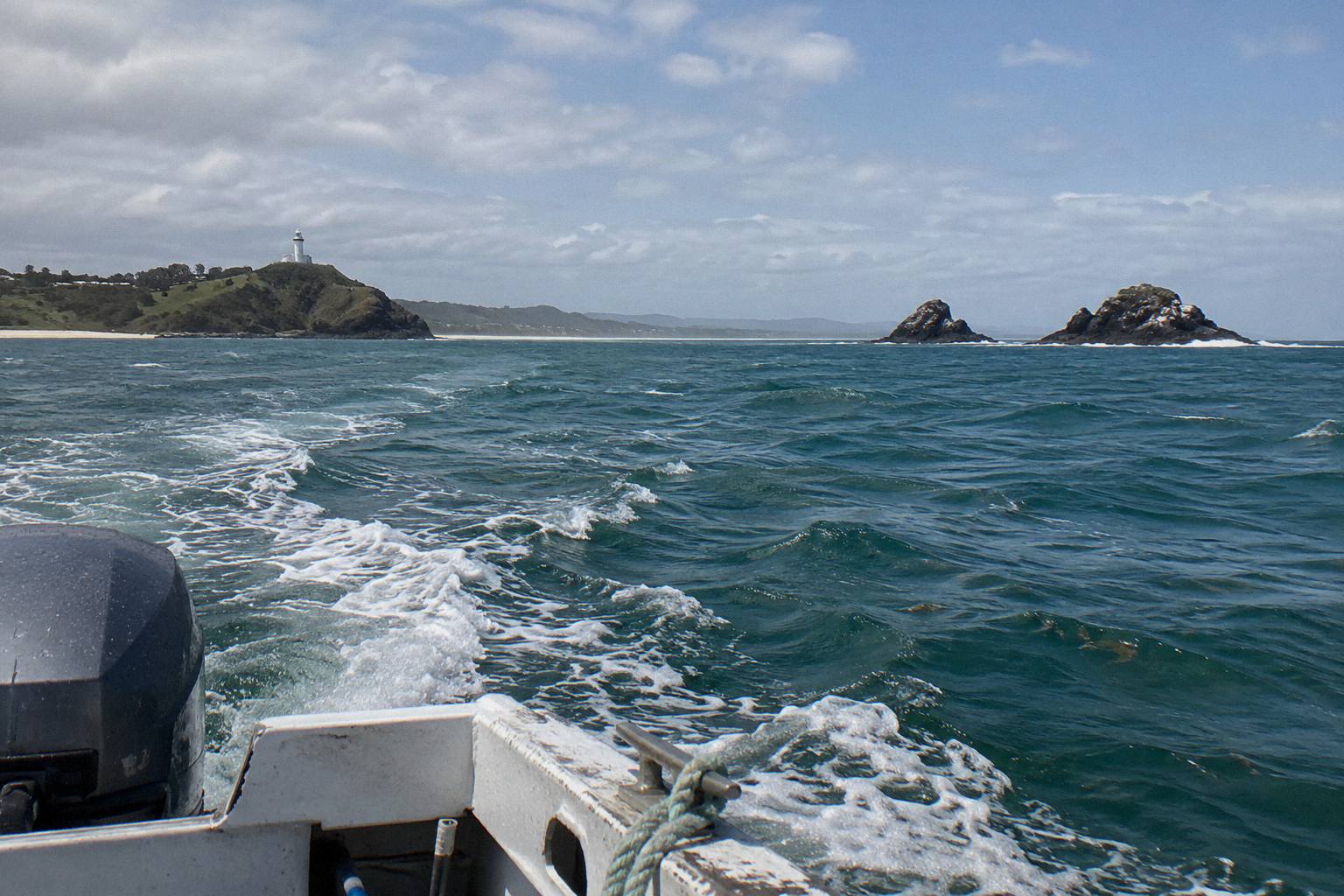
The short transit also explains the tour lengths. Trips run about 2.5 hours for the Brunswick Heads operators and about 2.5 hours for the Byron Bay Dive Centre product, with roughly 60 minutes of in-water time in each case. That is a half-day commitment, not a full-day expedition, which is why so many visitors tack a snorkel onto a Byron Bay weekend.
Compare that with snorkel destinations a long boat ride from anywhere. At many reef locations, transit eats two, three or four hours each way, and the day is gone before the first fin hits the water. Here the mathematics run the other way: the launch point to the mooring is a matter of minutes, the surface interval and gear fitting take longer than the crossing, and you are back on land with more than half the day still in front of you.
| Leg of the trip | Rough time | Notes |
|---|---|---|
| Check-in and gear-up | Around half an hour, sometimes more | Varies by operator; wetsuit, mask, fins, snorkel included on the listed trips |
| Boat ride from Byron Bay launch point | About 5 to 10 min | Operator figures; conditions can stretch it |
| In-water snorkelling | About 50-60 min | In the shallow sheltered areas, 3 to 12 m deep |
| Return and de-kit | Around half an hour, sometimes more | Trips total about 2.5 to 3 hours |
Where Do The Snorkel Trips Leave From?
Blue Seafaris meets at 43 Harbour Way, Brunswick Heads Boat Harbour, and Out Of The Blue also meets at Brunswick Heads Boat Harbour, both a short drive north of Byron Bay town. Turtle School meets at Byron Plaza, Jonson Street, Byron Bay, with transport from there to The Pass where the boat departs. For the Byron Bay Dive Centre Sea Turtle Snorkel and the kayak trips, no meeting point is printed: check the booking page.
The split matters because it changes your logistics, not your snorkelling. The Brunswick Heads departures put you on a bigger harbour boat with a short drive from town; The Pass departure puts you aboard from the beach inside the bay itself. Both reach the same rocks in minutes, and both float you over the same shallow sheltered areas where the turtles, rays and reef fish hold.
The Blue Seafaris trip, the Blue Seafaris Julian Rocks Snorkelling Tour, is listed from AUD 94 per person, rated 4.5 across 448 reviews on its booking page, about 2.5 hours from the harbour. Its sister departure from the same harbour, run by Out Of The Blue, is likewise from AUD 94 per person, rated 4.4 across 167 reviews on its main booking page, and a second booking page for the same trip shows 4.7 across 58 reviews.
“This excursion was absolutely incredible! We got to see turtles and were even lucky enough to see whales and dolphins very close to us in the water. The explanations from the marine biologist guide were a real plus, and a big thank you to the boat captain, who was so kind and friendly! We highly recommend this experience, without hesitation!”
The Turtle School product, also from Byron Bay Dive Centre, is the town option: check in at Byron Plaza on Jonson Street, ride to The Pass, and board there. It runs about 2.5 hours, and the operator's FAQ is explicit that there is no pick-up from accommodation. Its rating and price are on the booking page. The 2.5 km to the rocks is identical from every launch; the difference is purely the first 20 minutes of your day.
Can You See The Rocks From Shore?
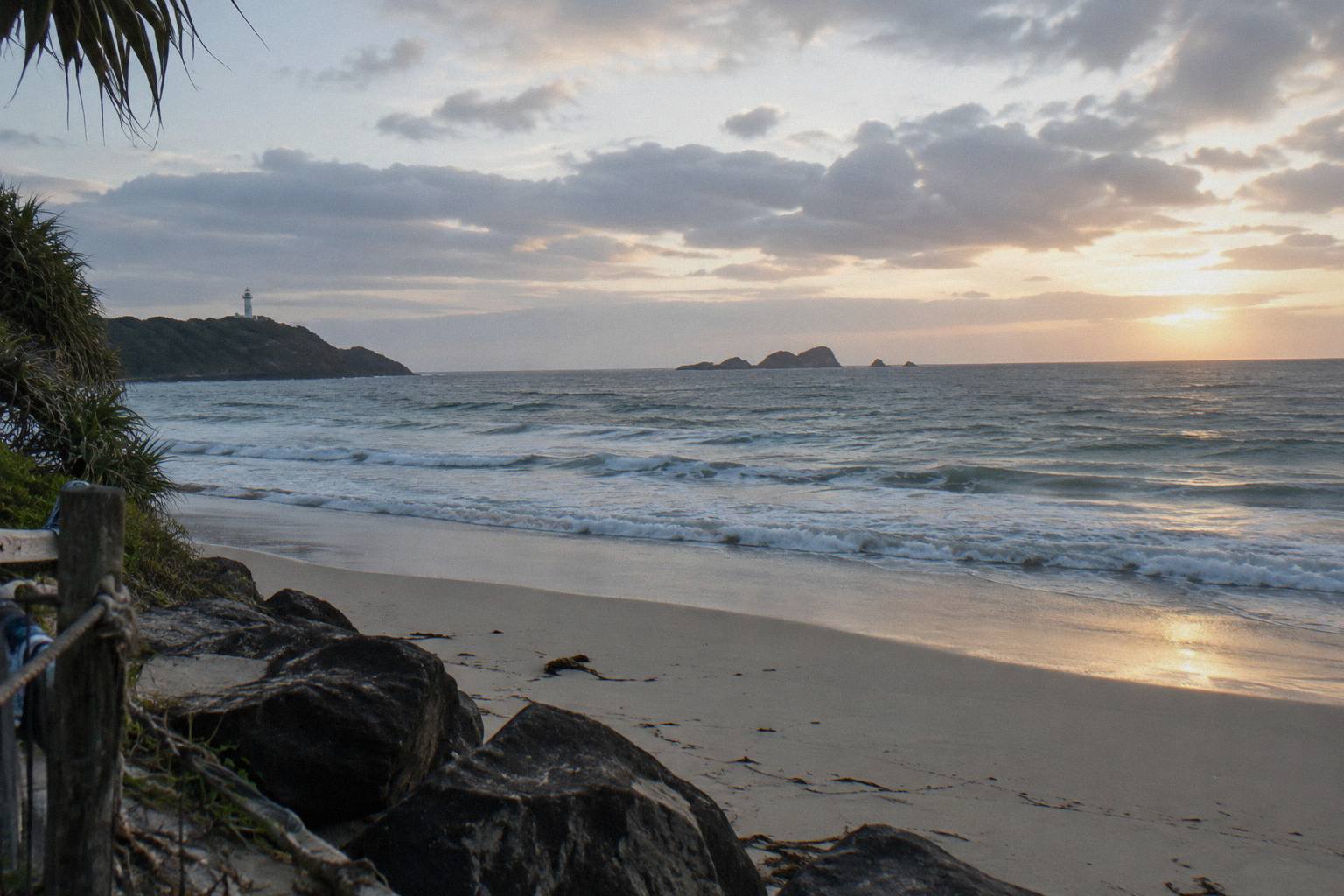
Yes. On a clear day Julian Rocks is visible from the Cape Byron walking track, from Wategos Beach and from several Byron Bay headland vantage points, sitting about 2.5 km out. What you cannot do is judge conditions from the sand: the site is open ocean, and swells, currents and surge can be present even when the bay itself looks calm.
The lighthouse walk is the classic spot for the view. Cape Byron is the mainland's easternmost point, and from the track between the lighthouse and Little Wategos the rocks sit off the headland at roughly eye level. Early morning and the hour before sunset give the best light, and between June and November you can sometimes watch whales passing between the headland and the islets from the same path.
Visibility from shore also cuts both ways: when the horizon is hazy, the rocks can disappear almost entirely even at 2.5 km. Conversely, on the water the coastline feels very close, which is a genuine comfort for nervous snorkellers. The site's guide to whether it is safe to snorkel at Julian Rocks covers the open-ocean side of that reassurance.
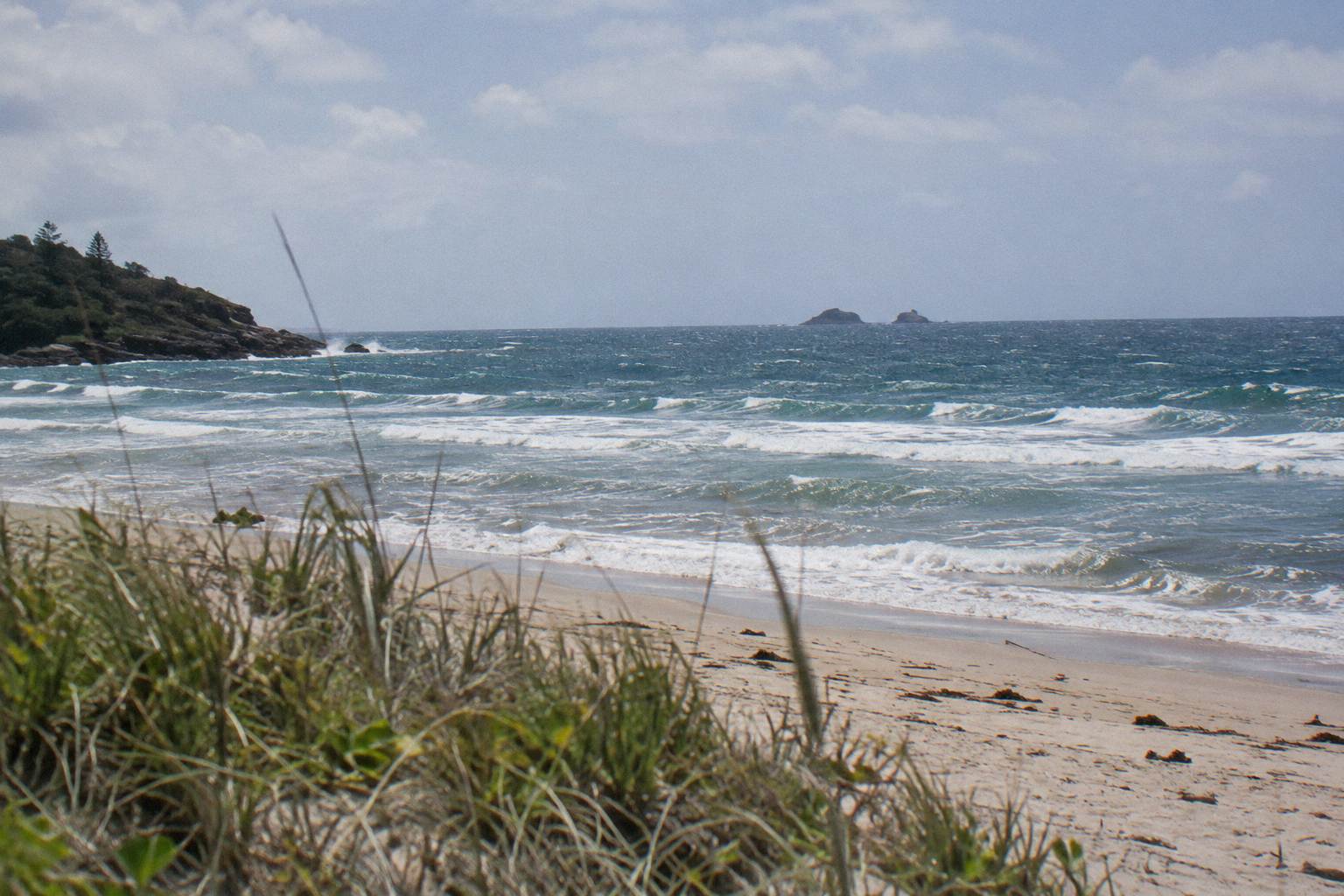
One thing the view from shore cannot tell you is how the marine park rules shape what happens at the rocks. Anchoring is not permitted within 700 m of the islets, vessels must slow to 4 knots within 200 m, and seven marine park moorings with a 2 hour maximum handle the traffic. You can read the zoning detail in the Cape Byron Marine Park snorkel rules guide.
Why Is The Marine Life So Good So Close To Town?
The rocks sit where the warm East Australian Current meets cooler southern water, and Cape Byron Marine Park's sanctuary zones, in force since May 2006, protect the reef from fishing and collecting. Operators credit the convergence with over 1000 marine species and more than 500 fish species, wording worth attributing to them rather than treating as an official census. The short distance from town is geography; the abundance is protection plus current.
The DPIRD pages describe Nguthungulli Julian Rocks as home to sharks, rays, turtles, eels, starfish and corals, and name the Bundjalung People of Byron Bay (Arakwal) as holding a strong association with the land and sea of the northern parts of the park, with Jali people associated with the southern section. Turtles, including green, hawksbill and loggerhead species, are listed all year, though no operator will guarantee them on any given swim.
Seasons shift the cast without changing the address. Leopard sharks gather in the warmer months from December to April, grey nurse sharks appear in the colder months from June to November, mostly at diving depths rather than snorkel depths, and manta rays turn up in summer. The Julian Rocks marine life guide maps the calendar month by month.
For a distance question, this is the payoff. Very few towns in Australia have a protected, current-fed reef system a 5 to 10 minute boat ride from the main street. The 2.5 km figure is not a barrier to be endured, it is the whole reason the trip fits between breakfast and lunch.
“Beautiful trip and saw so much sea life. It was absolutely amazing. The guide did a great job! Overal 12/10 experience!”
The full story is a convergence of luck and law. Geographically, the rocks sit at the pinch point where the East Australian Current pushing south meets the cooler Tasman influence, so tropical visitors ride in on warm eddies while temperate species hold their ground. Politically, the marine park was established in November 2002 and its zones and rules commenced in May 2006, which means the reef has had two decades of no-take protection in the sanctuary zones that cover 27.5% of the park. Remove either half and the site would be ordinary. Keep both and you get a reef that punches far above what its distance from the mainland would suggest.
Does The Short Distance Change How You Should Plan?
Yes, in three ways: book the meeting point that suits your morning, plan around a half-day window rather than a full day, and check conditions before you go because the site is open ocean despite being minutes from shore. The ride is short, but a swell or strong northerly can still cancel a trip, and operators contact booked guests by text or phone with a full refund or reschedule when the sea does not cooperate.
“I loved snorkeling in Byron Bay. The things to do were amazing, and the live guides were reassuring. We saw leopard sharks, turtles, fish, and even a whale on the way back. I recommend the things to do 100%. Thank you!”
Start with the meeting point, since it is the one real difference between the trips. Staying in Byron Bay town without a car? The Byron Plaza check-in with transfer to The Pass removes the drive. Have a car or staying north of town? Brunswick Heads Boat Harbour is a short drive north and the harbour departure is the calmer boarding of the two. Neither choice changes the rocks, the snorkel time or the marine life.
Next, size the day. With about 2.5 to 3 hours door to door, a morning snorkel still leaves an afternoon for the lighthouse walk or Wategos, and the trips run on schedules you can check on each booking page. If you are weighing a bigger day around it, the Julian Rocks day trip from Brisbane and day trip from the Gold Coast guides do the arithmetic.
Finally, respect the conditions side of the equation. One operator notes strong northerlies between September and Christmas and winter water that can drop to around 17 °C, with 5 mm long wetsuits advised for the duration of the swim. Wetsuits are included on the listed trips, so the cold is managed rather than a reason to stay ashore. Weather calls belong to the operators, and the guide to what happens if your trip is cancelled for weather explains the refund mechanics.
| Planning factor | What the distance means | Where to check |
|---|---|---|
| Boat ride | About 5 to 10 min from Byron Bay launch; no published figure from Brunswick Heads | Operator FAQ pages |
| Meeting point | Brunswick Heads harbour or Byron Plaza with transfer to The Pass, depending on the trip | Each booking page |
| Total trip time | About 2.5 to 3 hours with roughly an hour in the water | Booking pages |
| Best vantage from shore | Cape Byron lighthouse walk and Wategos, rocks visible about 2.5 km out | Clear days, early or late light |
| Conditions | Open-ocean site; swells, currents, surge and wind possible despite the short ride | Operator contact on the day |
The Turtle School town departure shown above suits visitors basing themselves in Byron Bay without a vehicle, folding the transfer to The Pass into the ticket. Between that and the harbour options, every traveller type from hostel backpacker to family with a rental car has a departure that fits.
How Close The Rocks Feel Once You Are Out There
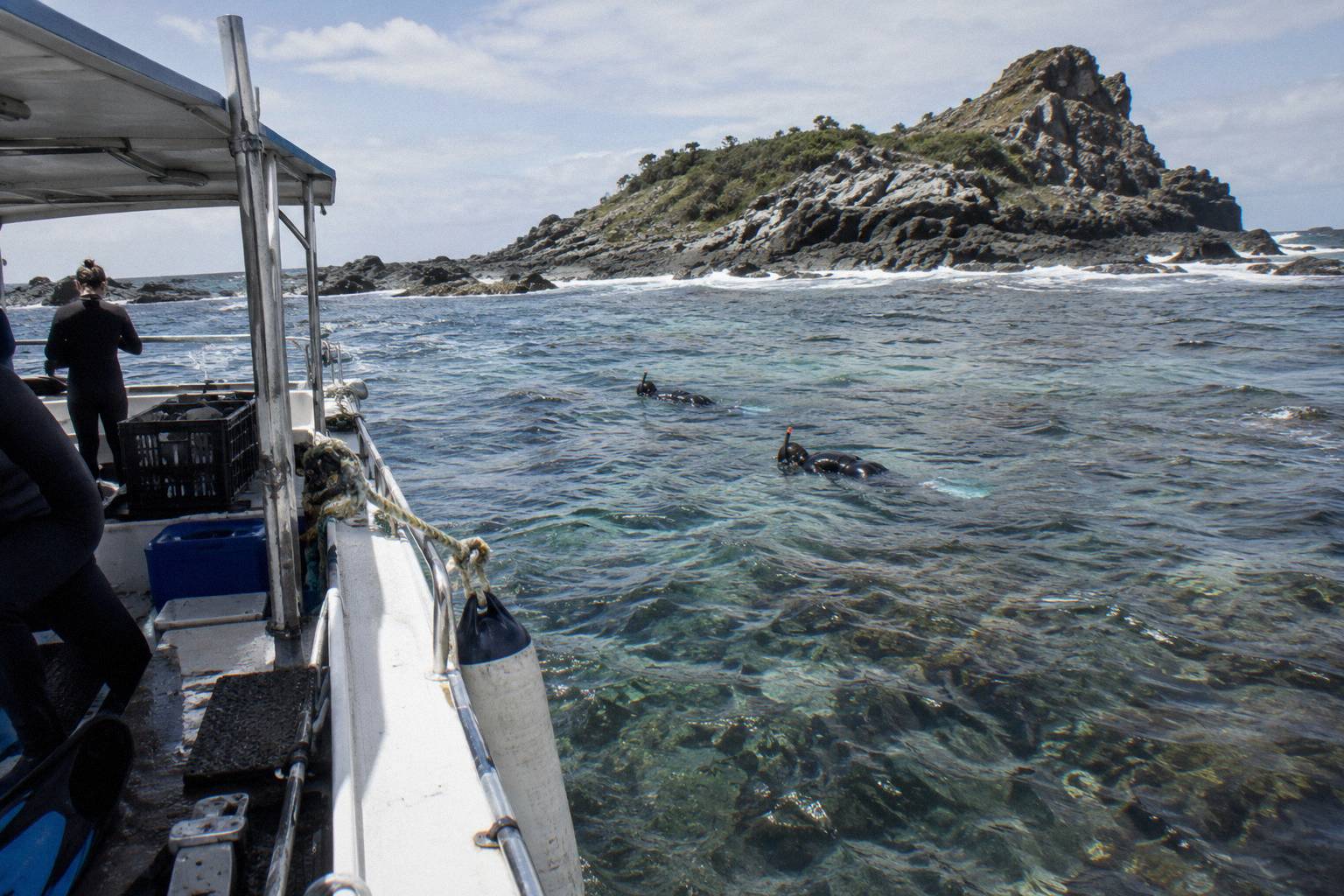
In practice the crossing is shorter than most people's walk from their accommodation to the check-in point. The boat leaves the shelter of the bay or harbour, the headland slides past, and the rocks arrive before the wetsuit has finished doing its job. First-timers regularly say the surprise of the trip is not the marine life, expected, but how quickly the underwater part begins.
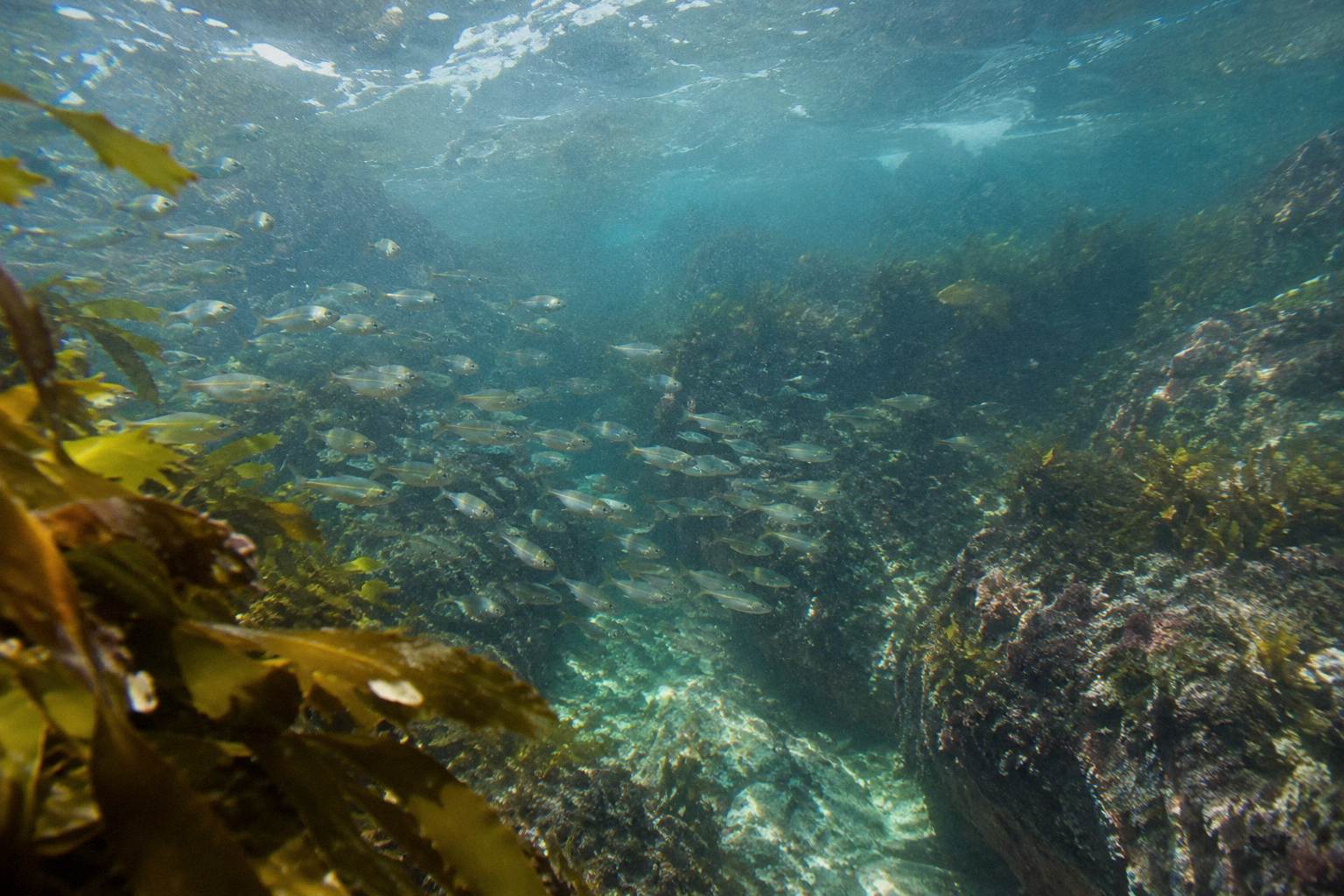
The rocks themselves are small, two islets rather than an island, and the snorkelling concentrates in the shallow sheltered margins where the water is 3 to 12 m deep. Look down and the sand patches, coral bommies and schooling fish arrive immediately. Look back and the Cape Byron headland with its lighthouse fills the view, close enough that conversations carry across the water on a still morning.
That closeness has a safety dimension too. A 5 to 10 minute transit means a 5 to 10 minute transit back to shore if anyone gets cold, anxious or seasick, and the vessels stay on the marine park moorings while snorkellers are in the water. The guide to whether you can swim to Julian Rocks from the beach explains why that tempting 2.5 km is a very different proposition with fins and a wetsuit in open water.
“I had an amazing trip! The boat was super fun, the guide was excellent and I swam with turtles, wobbegongs, a spotted ray and saw two octopus! Heaps of beautiful fish too. I wouldn’t have noticed half the sea creatures without our expert guide pointing them out! Thoroughly recommend the team at Blue Seafaris!”
For readers building a wider trip, the same short distance is why the site can also compare the snorkelling at the Gold Coast versus Byron Bay and rank options for snorkelling near Brisbane: few other launch points in the region put protected reef this close to a departure ramp.
It also changes the rhythm of the day in ways that are easy to miss when reading a map. There is no long idle aboard a crowded vessel, no sea-sickness window to endure before the site, and no clock watching while the crew steams between anchorages. The mooring goes down, the guide briefs, and within minutes of arriving you are floating above the reef. For families with children, who make up a fair share of summer bookings, that compression is the difference between a trip that works and one that unravels before the good part.
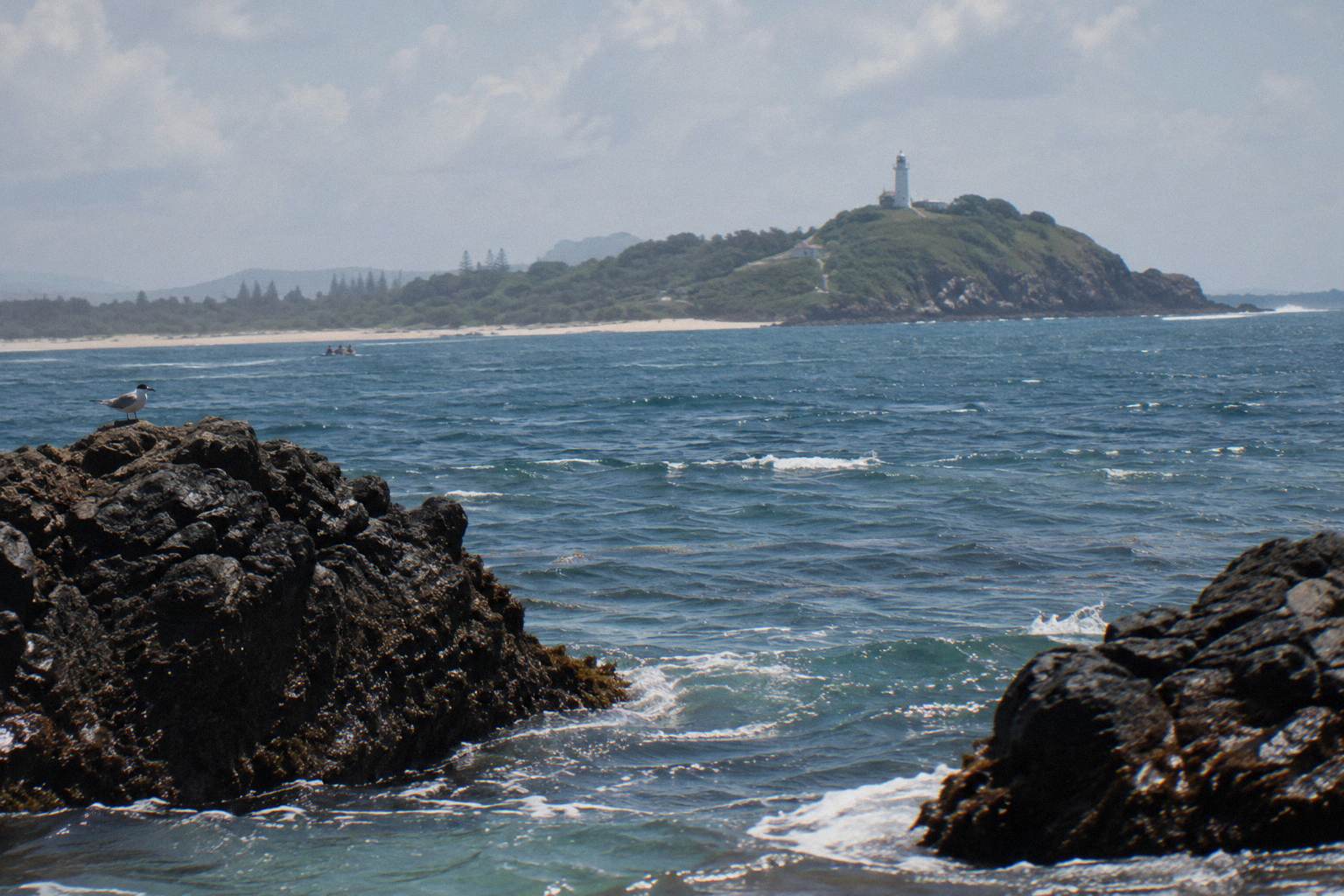
Whatever the departure, the answer to the distance question is the one that sells the trip: the best snorkelling on the far north coast of New South Wales begins within sight of the Julian Rocks Snorkelling home waters of Cape Byron, minutes after the engine starts.
Common Questions About How Far Julian Rocks Is From Byron Bay
How Far Is Julian Rocks From Byron Bay?
Julian Rocks, dual-named Nguthungulli Julian Rocks, sits about 2.5 km offshore from Byron Bay inside Cape Byron Marine Park. Operators put the boat ride from Byron Bay's launch point at about 5 minutes, or approximately 5 to 10 minutes per the Byron Bay Dive Centre FAQ.
Can You See Julian Rocks From Byron Bay Beaches?
Yes. On a clear day the rocks are visible from the Cape Byron lighthouse walk, Wategos Beach and several headland vantage points. On hazy days they can disappear from view entirely despite the short distance.
How Long Does The Whole Snorkel Trip Take?
About 2.5 hours for the Brunswick Heads departures and about 2.5 hours for the Byron Bay Dive Centre product, with roughly 50 to 60 minutes of that spent in the water. The boat ride itself is only minutes of the total.
Do All Snorkel Trips Leave From The Same Place?
No. Blue Seafaris and Out Of The Blue meet at Brunswick Heads Boat Harbour, a short drive north of Byron Bay. Turtle School meets at Byron Plaza, Jonson Street, Byron Bay, with transport to The Pass. Other trips state no meeting point: check the booking page.
Does The Short Distance Mean The Site Is Sheltered?
No. Julian Rocks is an open-ocean site where strong swells, currents, surge, cold water and winds can all occur. Operators cancel or reschedule with a full refund when conditions are unsuitable, despite the crossing being only minutes long.
Can I Swim To The Rocks Instead Of Taking The Boat?
Swimming 2.5 km across open ocean with currents and boat traffic is a very different proposition from a 10 minute ride, and it is not what the trips are built around. The dedicated guide on swimming to Julian Rocks covers the risks in full.