Do Snorkel Tours Visit Different Sites Around Julian Rocks?
What the operators actually say about where snorkel boats go at Julian Rocks, which areas snorkellers use, and how to pick between trips when the sources stay quiet.
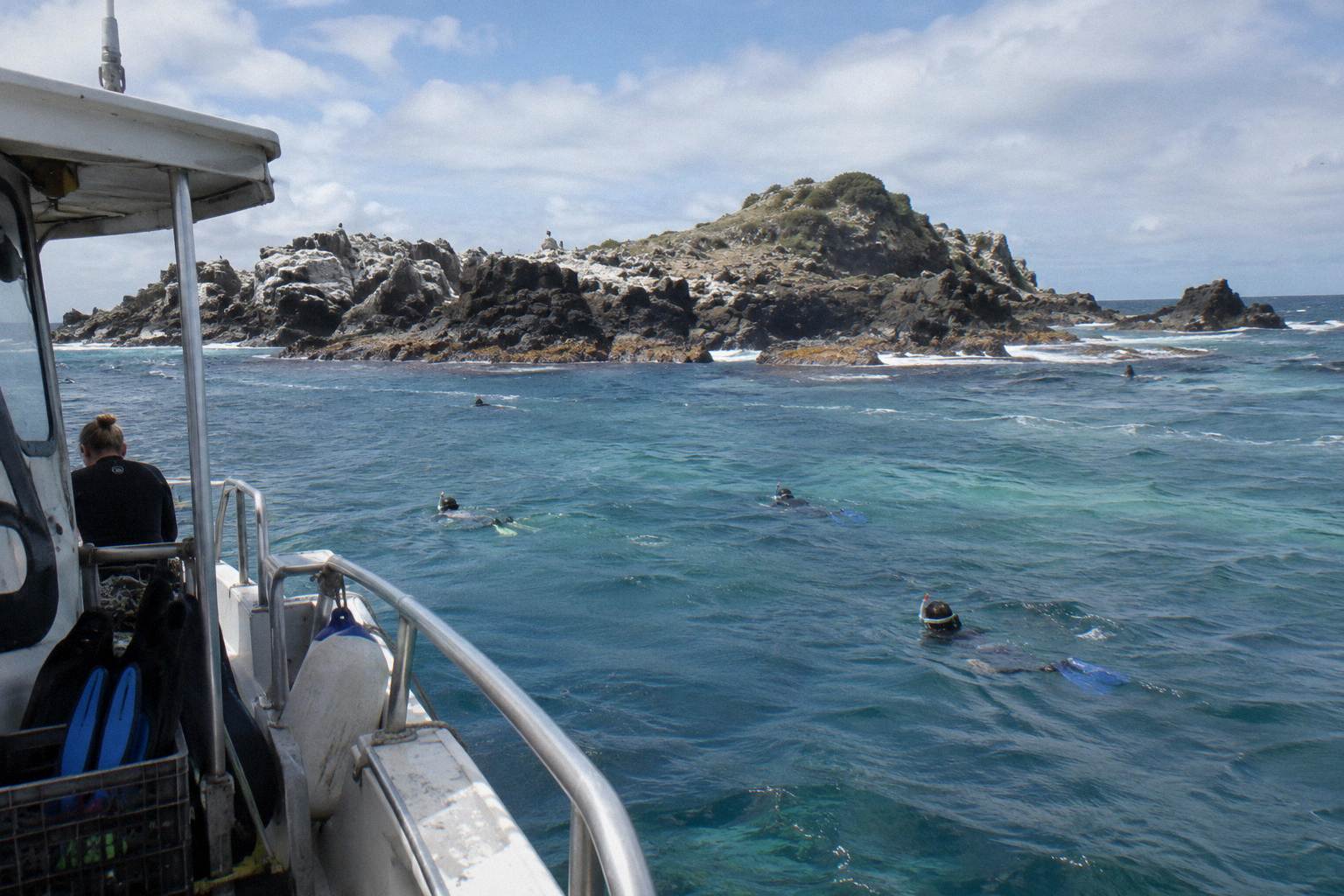
No operator publishes a fixed route or a list of named snorkel sites at Nguthungulli Julian Rocks. What the sources do state is that snorkel trips use the shallow, sheltered areas around the rocks, in 3 to 12 m of water, while divers work the deeper sites at 8 to 24 m. Where each boat actually drops its snorkellers depends on conditions on the day and on the operator's own judgement, and the rest is simply not stated.
That is the direct answer, and it is shorter than most travel writing on this topic because the primary sources genuinely say little more. The DPIRD page for Cape Byron Marine Park describes the rocks as home to sharks, rays, turtles, eels, starfish and corals, but it does not divide them into visitor stops. The operator pages describe snorkelling in general terms, turtles, rays, a variety of colourful fish and crustaceans, without publishing a site-by-site itinerary. Anyone who tells you the boats visit Site A then Site B is filling a gap the sources leave open.
What the sources do give you is enough to make a good booking decision anyway. The shape of the reef, the depth bands, the marine park rules that constrain where boats can go, and the differences between the trips on this site's roster, all of that is documented, and all of it matters more to your day than a site name would. This article walks through what is stated, where the silence sits, and how to choose between trips using questions you can actually ask a booking desk.
The comparison matters because the trips are genuinely different. The Blue Seafaris trip runs about 2.5 hours from Brunswick Heads Boat Harbour, is listed as biologist-guided, and costs from AUD 94 per person. The Turtle School trip through Byron Bay Dive Centre runs about 2.5 hours with roughly 60 minutes in the water, meeting at Byron Plaza with transport to The Pass. Out Of The Blue runs about 2.5 hours, also from Brunswick Heads. Same rocks, different launch points, different trip lengths, different in-water time.
Where The Boats Actually Take Snorkellers
Snorkel trips stay in shallow, sheltered water on the protected sides of the rocks, at depths of 3 to 12 m, per operator wording. Dive depths at Julian Rocks run 8 to 24 m, and those deeper zones are the dive territory, not the snorkel territory. No operator states a named snorkel site, a rotation between sites, or a route, so the honest summary is: one shallow zone, chosen on the day.
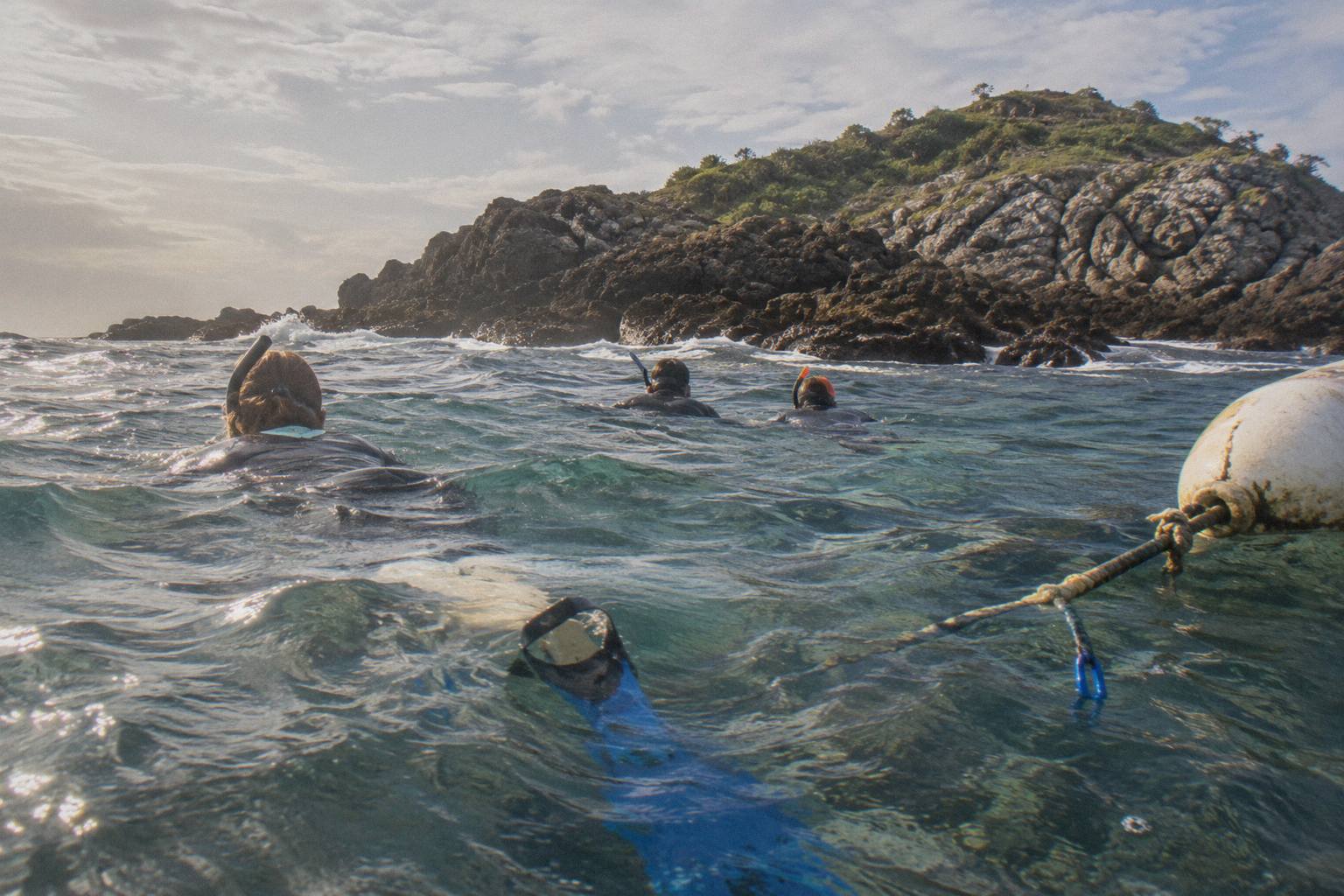
The depth split is the most useful fact in this whole question. One dive operator describes snorkel trips as seeing turtles, rays, a variety of colourful fish and crustaceans in shallow sheltered areas 3 to 12 m deep, and describes its dive terrain as running 8 to 24 m with sand trenches at the deeper end. Those are two different layers of the same reef. A snorkeller floating on the surface is looking down into the top of that shallow band, and the boat positions itself where the water is calm enough and sheltered enough for a group of mixed swimmers on that particular morning.
Why does the sheltered side matter so much here? Julian Rocks is an open-ocean site. The same operator page notes that strong swells, currents, surges, cold water and winds are all possible, and that conditions drive everything about how a day runs. A boat skipper looking at a fresh northerly will not anchor the same spot as one working a glassy south-easterly morning. That is not evasiveness, it is how a small reef with variable exposure works. The marine park rules layer on top: anchoring is not permitted within 700 m of the rocks, vessels limit speed to 4 knots within 200 m, and the seven marine park moorings carry a 2 hour maximum stay. Those constraints, detailed in the marine park user guide, shape where and for how long a trip can hold position.
The mooring limit deserves a second look because it quietly explains trip structure. With a 2 hour maximum on a mooring, no operator can run an all-day drift around multiple corners of the reef. A 2.5 or 3 hour trip with 50 to 60 minutes in the water fits neatly inside that window: steam out, tie up, snorkel one sheltered area, steam home. If you have read accounts of boats "moving to a second spot," treat them as a conditions decision on that day, not a published itinerary.
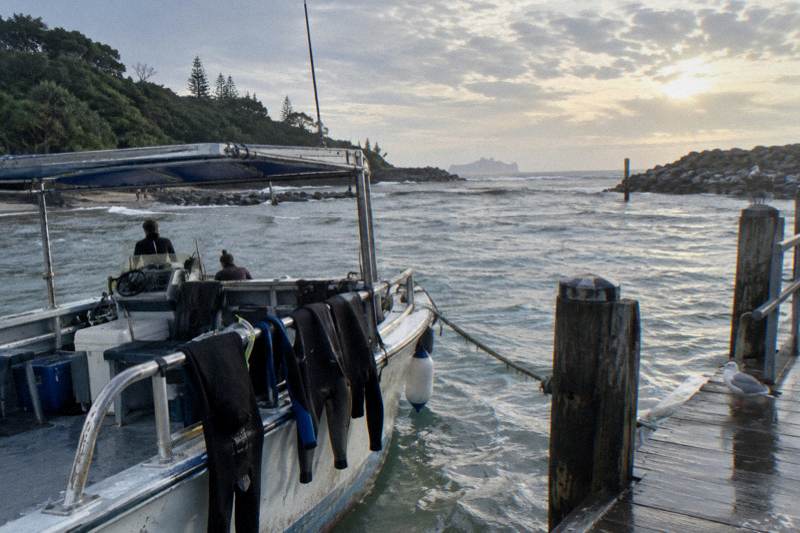
For the trip that runs from Byron Bay itself, the Turtle School operation through Byron Bay Dive Centre, the departure detail is stated clearly: the boat leaves from The Pass, with transport included from the central meeting point at Byron Plaza on Jonson Street. The Blue Seafaris and Out Of The Blue trips both meet at Brunswick Heads Boat Harbour, roughly 15 minutes north by road, which changes the character of the transit but not the destination: everyone is heading for the same rocks, about 2.5 km offshore, with the boat ride from Byron Bay described as 5 to 10 minutes by operators.
Does the meeting point change which part of the reef you get? Nothing in the sources says so. Both harbours serve the same site, and the choice between them is really a choice about convenience and trip length, not about underwater geography. If you are staying in Byron town, the Byron Plaza meeting saves a drive; if you have a car or are coming down the coast, Brunswick Heads is straightforward. The rest of the difference is in the trip design, covered below.
If the site question is your deciding factor, the practical move is to ask the operator directly when you book. The scope limit here is real: the roster's booking pages state trip lengths, meeting points and prices where given, and nothing about named snorkel stops. A quick message asking "which side of the rocks do you usually snorkel, and does it change with the swell?" will get you a straight answer from the people who actually drive the boats, which is more than any published page offers.
Do The Named Dive Sites Matter To Snorkellers?
The named sites at Julian Rocks, the Needles, the sand trenches, the Line of Smiles, are dive sites, and the sources attach them to dive depths of 8 to 24 m, not to snorkel trips. Leopard sharks gather at the Needles from December to April and grey nurse sharks use the trenches from June to November, but both sit below and beyond the 3 to 12 m snorkel band. Snorkellers should not book expecting either.
This distinction is where a lot of confusion enters, so it is worth being precise. When one dive operator describes leopard sharks in the Needles sandy arena during the warmer months, it is describing where divers encounter them. When the same page describes sand trenches full of grey nurse sharks in the colder months at depths of 15 to 24 m, that is deeper than any snorkel trip goes, and grey nurse sharks are rarely seen on snorkel trips. The species list is real, the seasons are real, and the depth band tells you which visitor gets which experience. A diver and a snorkeller on the same boat can have genuinely different days.
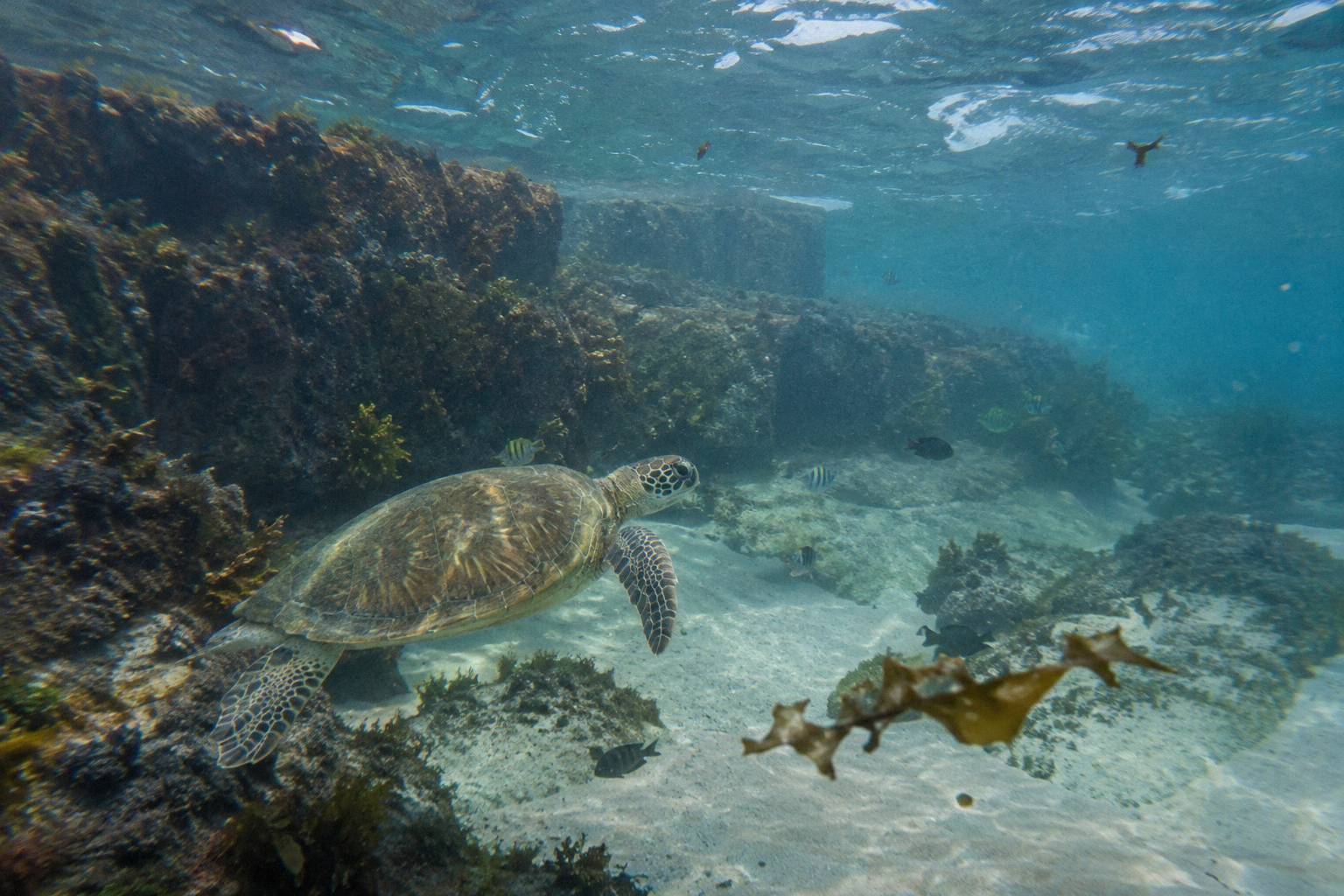
Turtles are the exception that makes snorkel trips work. Green, hawksbill and loggerhead turtles are listed all year, and Byron Bay Dive Centre says turtles can be spotted year-round throughout the whole day, while adding the honest caveat that it cannot guarantee sea turtles will be there. Turtles surface, they graze the shallow sheltered areas, and they are the animal most associated with the snorkel experience at the rocks. Rays, wobbegongs, bull rays, eagle rays and shovelnose rays are listed as year-round residents at the Needles and the Line of Smiles, both dive sites, so treat rays on a snorkel trip as a bonus rather than the headline.
| What the sources name | Depth band stated | Who the sources say gets it |
|---|---|---|
| Shallow sheltered areas around the rocks | 3 to 12 m | Snorkel trips |
| The Needles (sandy arena, leopard sharks Dec to Apr) | Dive depths, 8 to 24 m overall | Divers |
| Sand trenches (grey nurse sharks Jun to Nov) | 15 to 24 m | Divers |
| Line of Smiles (wobbegong and ray territory) | Dive site | Divers |
Manta rays and leopard sharks in summer, endangered grey nurse sharks in cooler winter water: those seasonal notes all come from dive operator pages describing the dive site. The takeaway for a snorkel buyer is seasonal timing rather than site selection. If your heart is set on sharing the water with leopard sharks in the warm months, the month you visit matters far more than the operator you pick, and even then the sources attach no odds and this article will not invent any. The monthly breakdown is covered properly in the guide to the best month to snorkel Julian Rocks, and the full species picture sits in the Julian Rocks marine life guide.
So when a booking page for a snorkel trip mentions sharks or the site's famous residents, read it as context about the reef, not as a promise about your swim. The only thing any operator guarantees is the water, the gear and the guide. Everything with fins arrives on its own schedule.
Which Trip Fits Which Traveller
With no site differences to compare, the real choice between trips is length, launch point, in-water time and minimum age. The Blue Seafaris trip runs about 2.5 hours from Brunswick Heads from AUD 94, the Out Of The Blue trip about 2.5 hours from the same harbour from AUD 94, and the Byron Bay Dive Centre turtle trip about 2.5 hours with roughly 60 minutes in the water, meeting in town.
Think of it as three designs aimed at slightly different people. The short-harbour trips suit travellers who want the reef experience without a big chunk of the day: about 2.5 hours door to water and back, from Brunswick Heads, both from AUD 94 per person on their booking pages. The Blue Seafaris trip is listed as biologist-guided, which appeals if you want interpretation on the boat. The Out Of The Blue trip keeps the same length and harbour with its own crew and vessel. On paper they are near twins; in practice the guide on your day makes the difference, and the review pools, 4.5 across 448 reviews for Blue Seafaris and 4.4 across 167 for Out Of The Blue on their booking pages, are the closest thing to a public signal. The wider set of guides lives on Julian Rocks Snorkelling.
The longer town-based trip suits a different buyer. Byron Bay Dive Centre's Sea Turtle Snorkel Tour runs about 2.5 hours total with roughly 60 minutes in the water, meets at Byron Plaza on Jonson Street, includes transport to The Pass, and supplies fins, mask, snorkel and wetsuit. The extra structure shows in the details on its own pages: 5 mm long wetsuits advised for the duration, no prescription masks though contact lenses are fine, lifejackets on board, and a long wetsuit or pool noodle suggested for nervous snorkellers, plus ginger seasickness tablets on the boat. If you are a first-time ocean snorkeller, that level of stated support is worth weighting heavily, and it is explored in depth in the article on briefings for nervous snorkellers.
Minimum age is where generalising fails hardest, because the sources genuinely disagree, and that is fine. The operator pages show 5, 7 and 10 years as minimums on different trips: Byron Bay Dive Centre's turtle trip states 10, Sundive Byron Bay requires 7 plus open-ocean experience and a 200 m unassisted swim, and Wild Byron takes children from 5 on tours capped at 12 passengers with a naturalist guide. The Blue Seafaris and Out Of The Blue booking pages state no minimum age at all, so the honest line there is simply to ask the operator. There is no single rule, only the rule on the page of the trip you book, a point expanded in the guide to taking kids on the Julian Rocks snorkel trip.
| Trip | Length stated | In-water time | Meeting point | Min age stated |
|---|---|---|---|---|
| Blue Seafaris, 2.5-Hour Snorkel | About 2.5 hours | Not stated | 43 Harbour Way, Brunswick Heads Boat Harbour | Ask the operator |
| Out Of The Blue, Brunswick Heads | About 2.5 hours | Not stated | Brunswick Heads Boat Harbour, NSW 2483 | Ask the operator |
| Turtle School, 3-Hour Snorkel | About 3 hours | About 60 minutes | Byron Plaza, Jonson Street, Byron Bay | 10 (operator page) |
| Turtle-Focused Snorkel From Byron Town | About 2.5 hours | Not stated | Check the booking page | Not stated |
Prices follow the same discipline. The roster gives firm booking-page figures only for the two Brunswick Heads trips, both from AUD 94 per person. The Byron Bay Dive Centre trips carry no price in these sources, and this site will not guess one; their tour pages state a price, so check the live listing. The cost picture across seasons and options is laid out in the Julian Rocks snorkel trip cost guide.
One more decision input that is stated rather than guessed: fitness and swimming requirements. The Turtle School (Byron Bay Dive Centre) tour asks that you can swim at least 200 m unassisted in open ocean, while the separate Byron Bay Dive Centre sea turtle tour asks for 25 m unassisted and comfort in the water, with no life jackets to snorkel in. Out Of The Blue Adventures also requires 200 m unassisted, and crew will remove snorkelers who cannot manage it, with no refund. If that sounds demanding, read the piece on how fit you need to be to snorkel Julian Rocks before choosing, because the answer shapes which trip design suits you more than any site question does.
The turtle-focused trip above is the one to shortlist if the longer, more structured town-based format appeals: about 2.5 hours, meeting in Byron Bay, with gear and wetsuit inclusions stated on the operator's own pages. Its live listing carries the current price and departure times.
What To Ask The Booking Desk
Ask five questions before you pay: which side of the rocks the boat snorkels in your conditions, the exact in-water time, the passenger cap, the minimum age and swimming standard, and the weather-refund process. Every one of these is either stated unevenly or not stated at all in the public sources, and each answer does more for your day than a site name would.
This checklist exists precisely because the published sources go quiet on the site question. Rather than treat that as a problem, treat it as the reason to have one short conversation. Operators answer these questions every day, and the answers separate trips far more clearly than marketing copy does.
First, the water question: how long are we in the water, and is it one swim or two? The stated figures range from about 50 minutes on one Byron Bay Dive Centre product to about 60 minutes on its turtle tour, with no in-water figure published for the Brunswick Heads pair. For a confident snorkeller an hour flies; for a nervous one it is a long time in open ocean, so the number matters. Second, the group question: Wild Byron caps tours at 12 passengers, and nothing is published for the others, so ask. Twelve people and one guide is a different day from a fuller boat.
Third, the standard question: swim requirements and minimum ages differ by operator, as above, and the booking pages for two roster trips state none. Fourth, the conditions question: Byron Bay Dive Centre states that if weather or sea is unsuitable it contacts guests by text or phone with a full refund or reschedule, and that its cancellation policy is 48 hours with a 100% fee inside that window. That is one operator's policy, not an industry rule, so confirm your own trip's terms on the live listing before relying on it. The what-if scenarios are worked through in what happens if the trip is cancelled for weather.
Fifth, the gear and comfort question, especially outside summer. Winter water can drop to 17 °C with an average around 20 °C per one dive operator, and Byron Bay Dive Centre advises 5 mm long wetsuits for the duration of a trip. If your trip does not state its wetsuit thickness, ask, because the difference between a 3 mm shortie and a 5 mm steamer defines whether your last twenty minutes in the water are pleasant or grim. The snorkel packing list guide covers the rest of what to bring.
| Question to ask | Why it matters | What the sources already state |
|---|---|---|
| Which side of the rocks in today's conditions? | The only real "site" decision, made daily | Shallow sheltered areas, 3 to 12 m |
| Exact in-water time? | Ranges from about 50 to about 60 minutes on stated products | BBDC turtle tour: about 60 min |
| Passenger cap and guide ratio? | Shapes crowding and attention | Wild Byron caps at 12 |
| Min age and swim standard? | Varies: 5, 7 and 10 appear across operators | BBDC turtle trip states 10 |
| Weather refund and cancellation window? | One operator states 48 hours, 100% inside | BBDC policy only; ask others |
Does The Site Question Change Which Trip You Should Book?
Not much, and that is the useful conclusion. Every roster trip goes to the same rocks, uses the same shallow 3 to 12 m band, and adapts to the same daily conditions. Choose on trip length, launch point, stated inclusions, minimum age and refund terms instead, and let the skipper pick the spot on the day.
If you booked the Blue Seafaris trip and a friend booked the Out Of The Blue trip on the same morning, the geography of your swims would likely overlap heavily. Both leave Brunswick Heads Boat Harbour, both run about 2.5 hours, and both work the sheltered shallows in whatever state the ocean offers. What would differ is the boat, the crew, the briefing style and the group, which is exactly why this site compares trips on those grounds rather than on imaginary site lists. The fuller comparison lives in the guide to choosing a Julian Rocks snorkel operator.
There is one scenario where the question genuinely has teeth: when the sea state forces a change. An open-ocean site with possible swells, surges and currents means the sheltered side flips with the wind, and a trip that always snorkels the same corner regardless of conditions would be a poorly run trip. So the absence of a fixed site is a feature. You are buying a skipper's judgement plus a guide's eye, not a postcode on a reef. The reserve that protects the whole area is described in the Nguthungulli Julian Rocks Nature Reserve guide, and the rules that apply to every visitor, including the no-touch, no-collect protections in sanctuary zones, are set out by NSW National Parks.
For snorkellers weighing the site question against alternatives, it is also fair to say Julian Rocks is not the only shallow-water option in the region, just the most celebrated. The trade-offs against other spots around town are compared in where you can snorkel near Byron Bay, and the broader marine-wildlife options, dolphin kayaking and whale watching among them, sit in the adjacent category on this site.
The Out Of The Blue trip above gives you the same short harbour format as its Brunswick Heads twin, from AUD 94 per person, rated 4.4 across 167 reviews on its booking page, and it suits travellers staying north of town or pairing the snorkel with a Brunswick Heads morning.
One last framing thought. A reader asking about sites is usually trying to answer a fairer question underneath: will my trip be good, and did I pick the right one? The site answer, one sheltered shallow zone chosen daily, means the variance between operators lies where it should, in people and process. Ask the five questions, match the trip design to your swimmer profile, book the one that fits, and check the live listing before you commit, since prices and departure times are the operator's to change.
Common Questions About Snorkel Sites At Julian Rocks
Do Snorkel Tours Visit Different Sites Around Julian Rocks?
The operators do not publish named snorkel sites or routes. What they state is that snorkel trips use the shallow sheltered areas around the rocks in 3 to 12 m of water, with the exact spot chosen for the day's conditions. The named sites you may read about, such as the Needles and the sand trenches, are dive sites at 8 to 24 m.
Can Snorkellers See The Grey Nurse Shark Trenches?
No. The sand trenches where grey nurse sharks gather from June to November sit at dive depths of 15 to 24 m, well below the 3 to 12 m snorkel band, and grey nurse sharks are rarely seen on snorkel trips. The trenches are diver territory.
Do All The Boats Leave From The Same Place?
No. Blue Seafaris and Out Of The Blue both meet at Brunswick Heads Boat Harbour, while Byron Bay Dive Centre's turtle trip meets at Byron Plaza on Jonson Street in Byron Bay and includes transport to The Pass, where the boat departs. All trips head for the same rocks about 2.5 km offshore.
Why Can't The Boats Anchor Anywhere At The Rocks?
Marine park rules ban anchoring within 700 m of Julian Rocks and limit vessels to 4 knots within 200 m. Boats use the seven marine park moorings, which allow a maximum stay of 2 hours, which is one reason trips are structured around a single sheltered stop rather than a multi-site tour.
Are Turtles Guaranteed On Every Trip?
No operator guarantees turtles. Green, hawksbill and loggerhead turtles are listed at the rocks all year, and Byron Bay Dive Centre says they can be spotted year-round throughout the whole day, but the operator also states it cannot guarantee sea turtles will be there.
Should I Ask The Operator Which Spot They Snorkel Before Booking?
Yes, it is a fair question and the sources do not answer it for you. Also ask the in-water time, the passenger cap, the minimum age and swim standard, and the weather-refund terms, since each of those is stated unevenly across operators and matters more to your day than a site name.