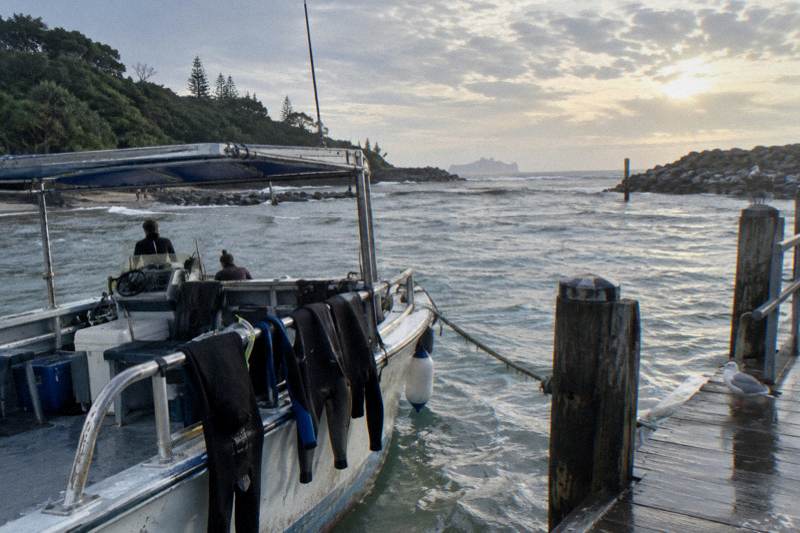
Can You Snorkel Julian Rocks?
Yes, you can snorkel Julian Rocks, but only on a boat trip with a licensed operator. Here is how the trips work, where they start, what they cost and who can go.
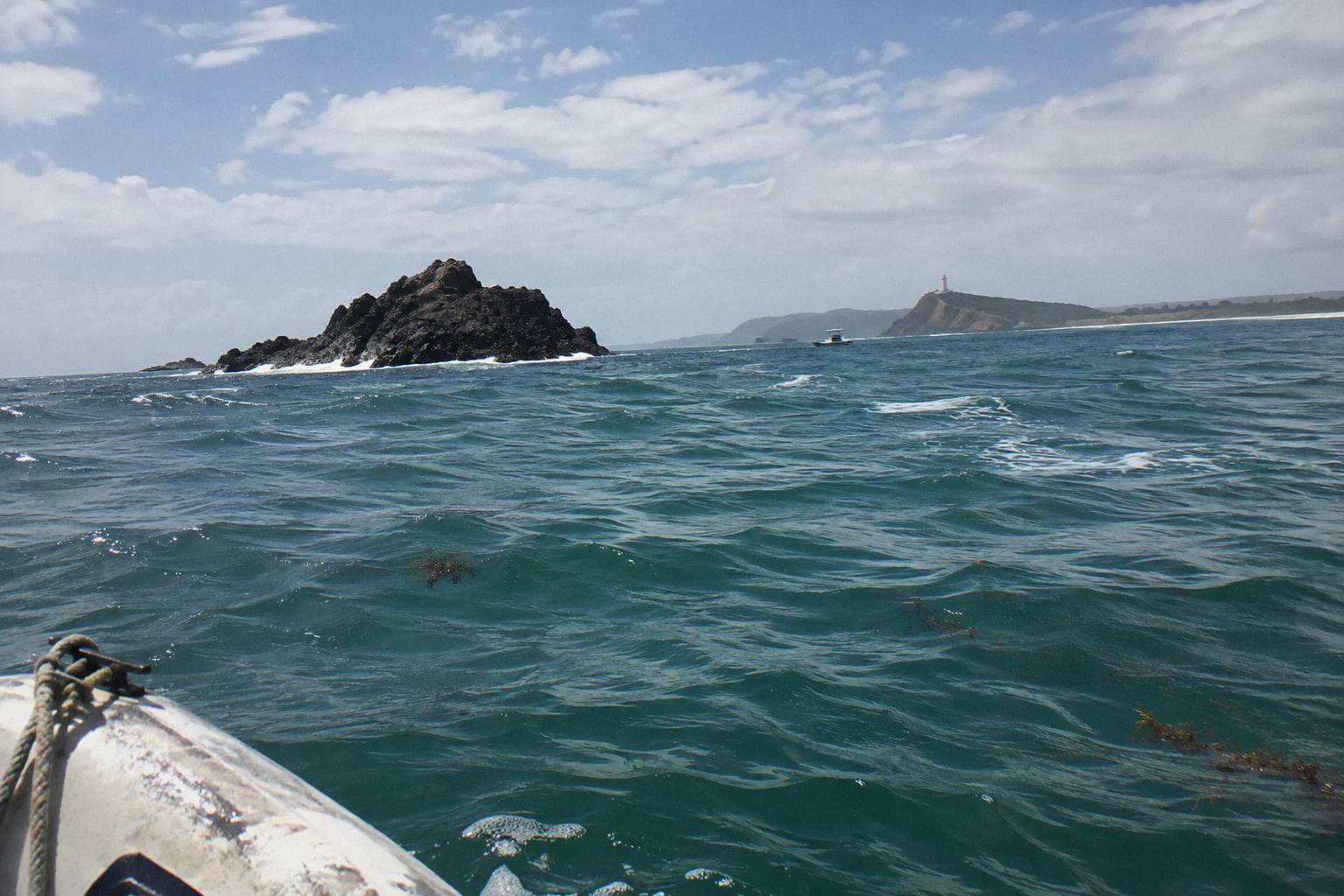
Yes, you can snorkel Julian Rocks, but only on a boat trip run by a licensed operator. The rocks sit about 2.5 km offshore, roughly a 5 to 10 minute boat ride from Byron Bay, and marine park rules allow snorkelling in the sanctuary zone that protects them. Landing on the rocks is not part of any trip, and no operator offers it.
That short answer covers the two things most people are really asking: is it physically possible, and is it allowed. It is possible because several operators run dedicated snorkel trips to the rocks most weeks of the year, weather permitting. It is allowed because the Cape Byron Marine Park rules from NSW's Department of Primary Industries and Regional Development list snorkelling among the permitted activities in sanctuary zones, alongside boating, surfing, diving and permitted research. Sanctuary zones are the highest level of protection in the park, but "no-take" bans fishing and collecting, not swimming.
What you cannot do is treat the rocks like a beach snorkel. There is no shore access, no swimming out from Main Beach on a tour, and no stepping onto the rocks themselves, which are a protected bird sanctuary holding gulls, terns, tattlers, cormorants and plovers. Every trip is vessel-based: you ride out, slip into the water beside the boat or mooring, and snorkel the shallow sheltered areas before riding back.
“We had such a good time, Harry was wonderful and had great energy, we were so happy with the tour!”
The question of whether you should snorkel the rocks, rather than merely whether you can, is worth a beat of thought too. The site earns its reputation from the sheer density of life in a small area: the convergence of the warm East Australian Current with cooler southern waters supports a mix of tropical and temperate species that few places on the east coast can match. For a first-time ocean snorkeller it is a step up from a sheltered bay, but for anyone comfortable in open water it is one of the more accessible world-class sites in Australia, precisely because the boat ride is so short.
The rest of this article walks through the practical detail: how the trips work, where each one starts, what the marine park rules let you do in the water, who qualifies to join, what you are likely to see, what it costs and what happens when the sea says no.
How Do The Snorkel Trips To Julian Rocks Work?
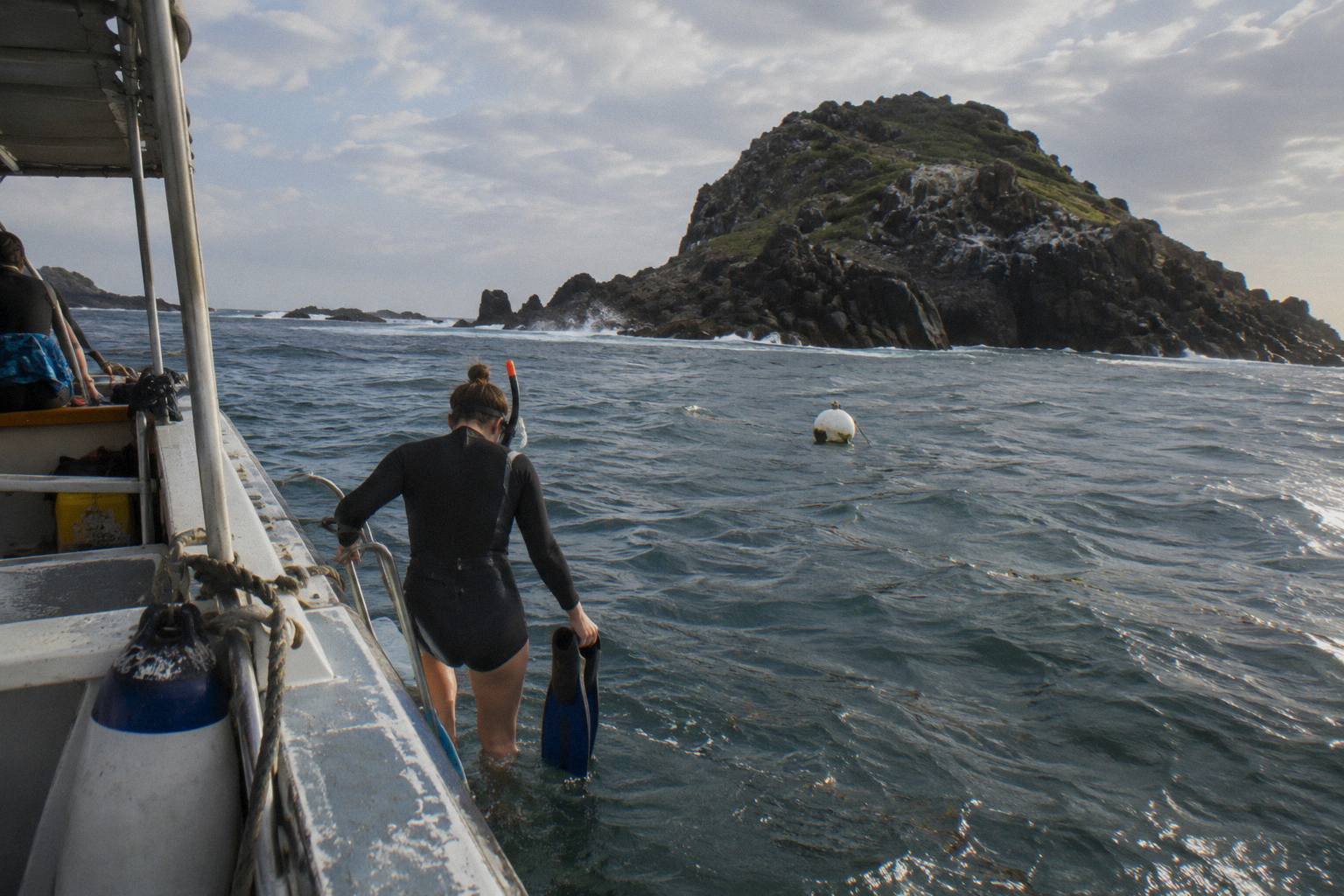
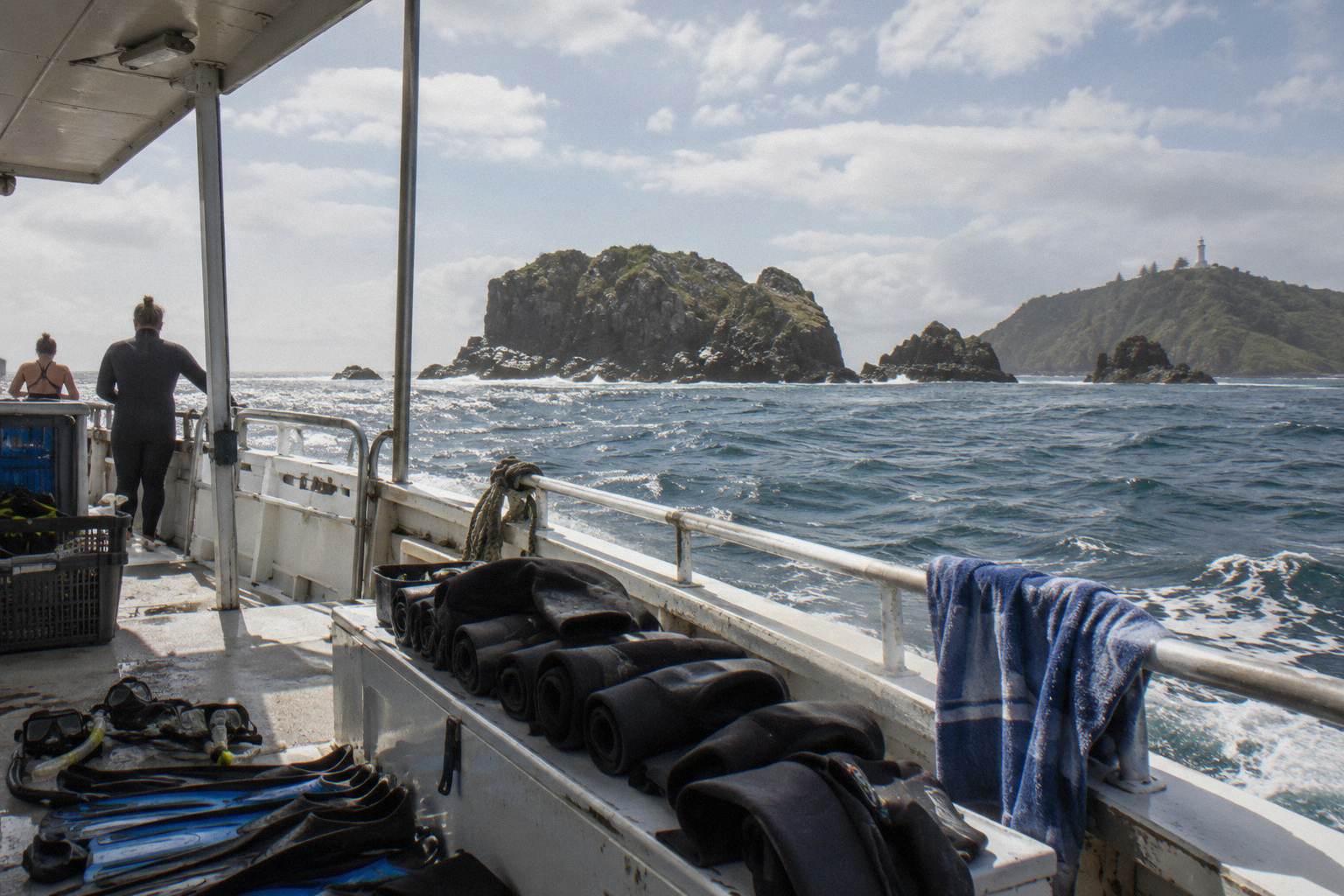
Every Julian Rocks snorkel trip follows the same shape: check in on land, ride a boat out to the rocks, snorkel the shallow areas beside the vessel for roughly an hour, and ride back. Trips run between about 2.5 and 3 hours door to door, with the in-water portion around 50 to 60 minutes. Operators supply mask, fins, snorkel and wetsuit as standard.
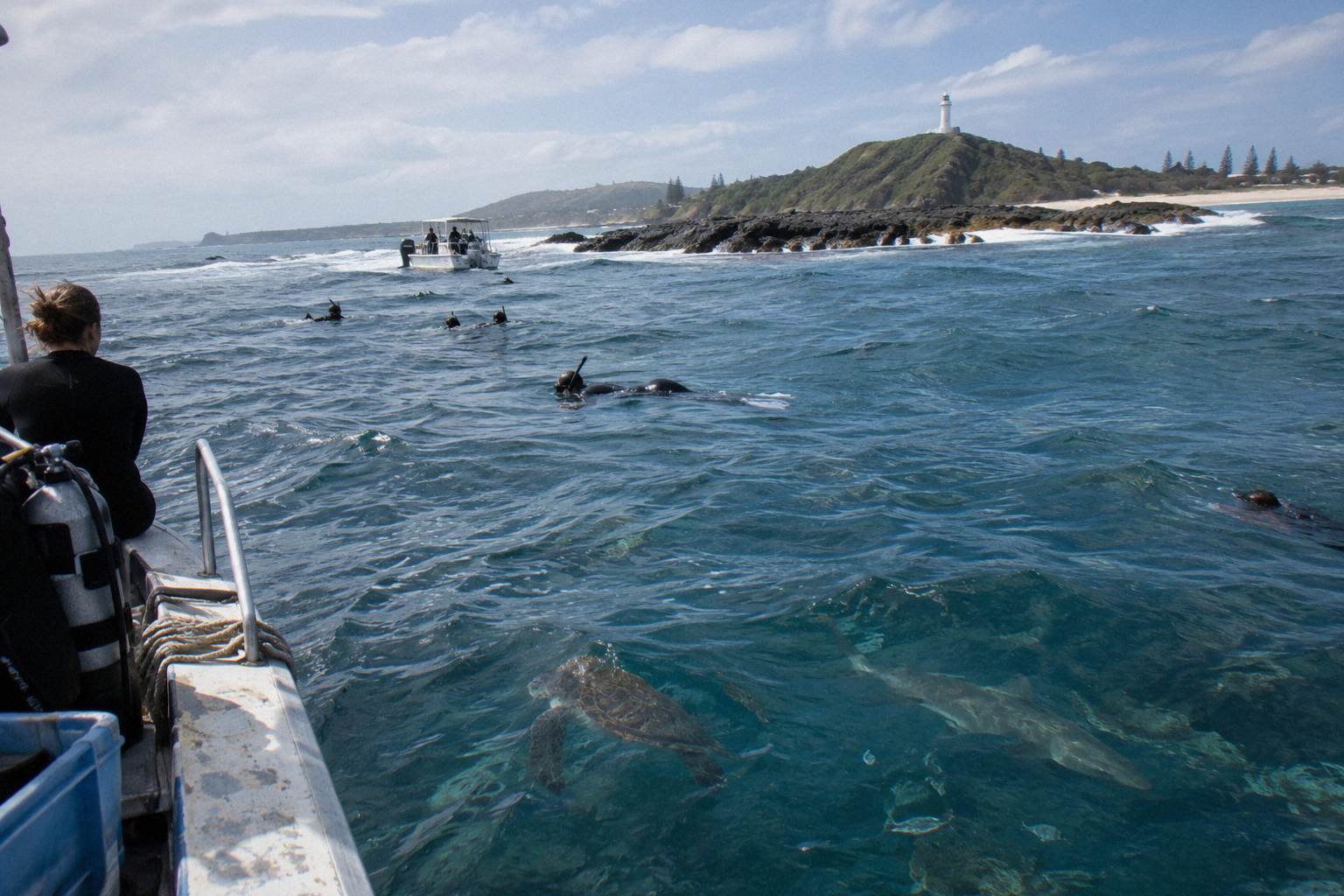
The differences between trips are in the framing rather than the format. The Blue Seafaris trip, described on its booking page as biologist-guided, runs about 2.5 hours. The Out Of The Blue trip, operated by Out Of The Blue Adventures, also runs about 2.5 hours from the same harbour. The longer option is the Turtle School trip run by Byron Bay Dive Centre: about 2.5 hours in total with about 60 minutes in the water and a range of tour times across the day. A second Byron Bay Dive Centre booking page, the Sea Turtle Snorkel, covers near-identical scope at about the same duration.
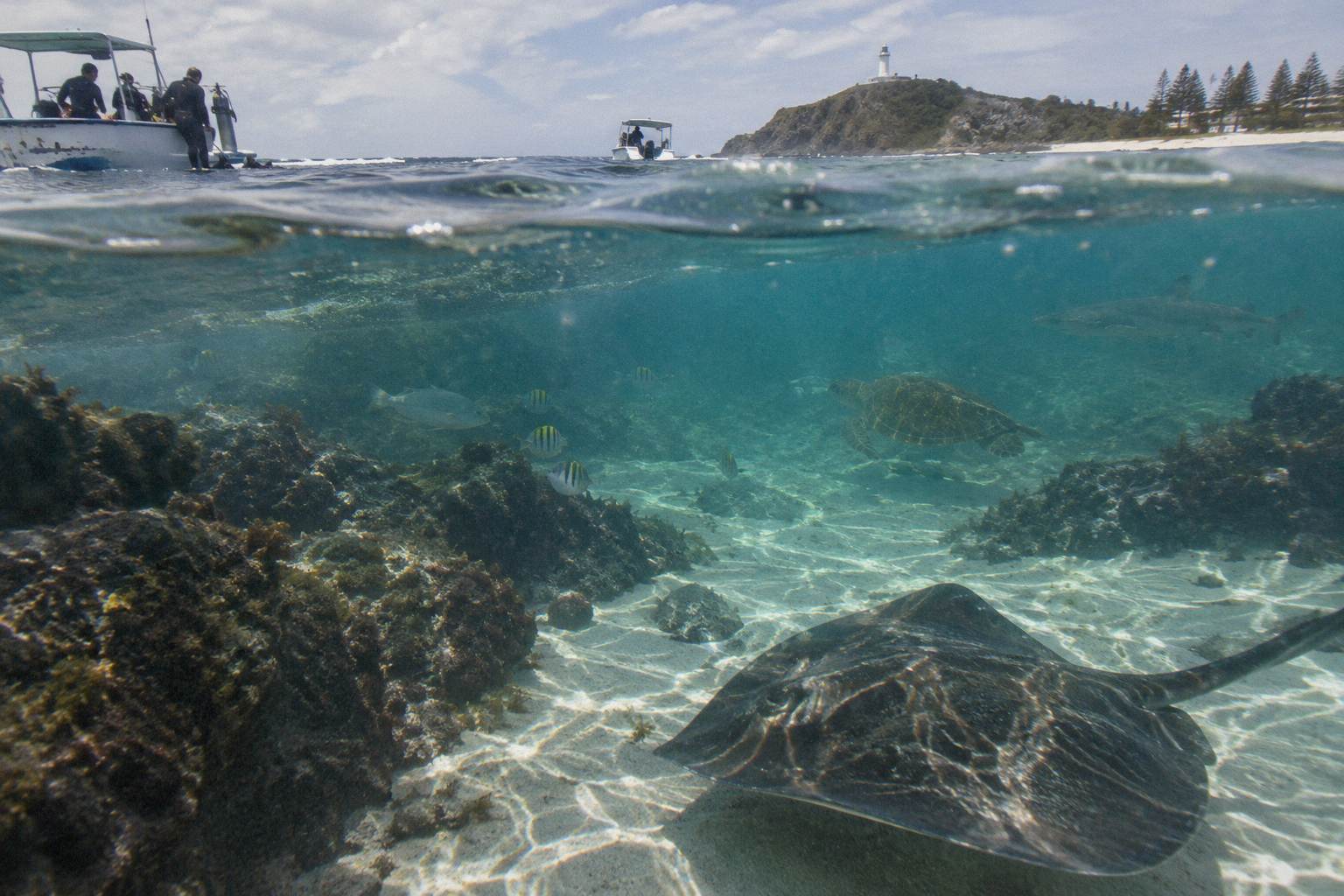
In the water, snorkel groups stay in the shallow, sheltered parts of the rocks, in depths of about 3 to 12 metres according to operator descriptions. Divers go deeper, down to sites at 8 to 24 metres, but snorkellers work the upper water column where the light and most of the fish are. The water is open ocean, so operators brief on currents, surge and keeping contact with the group.
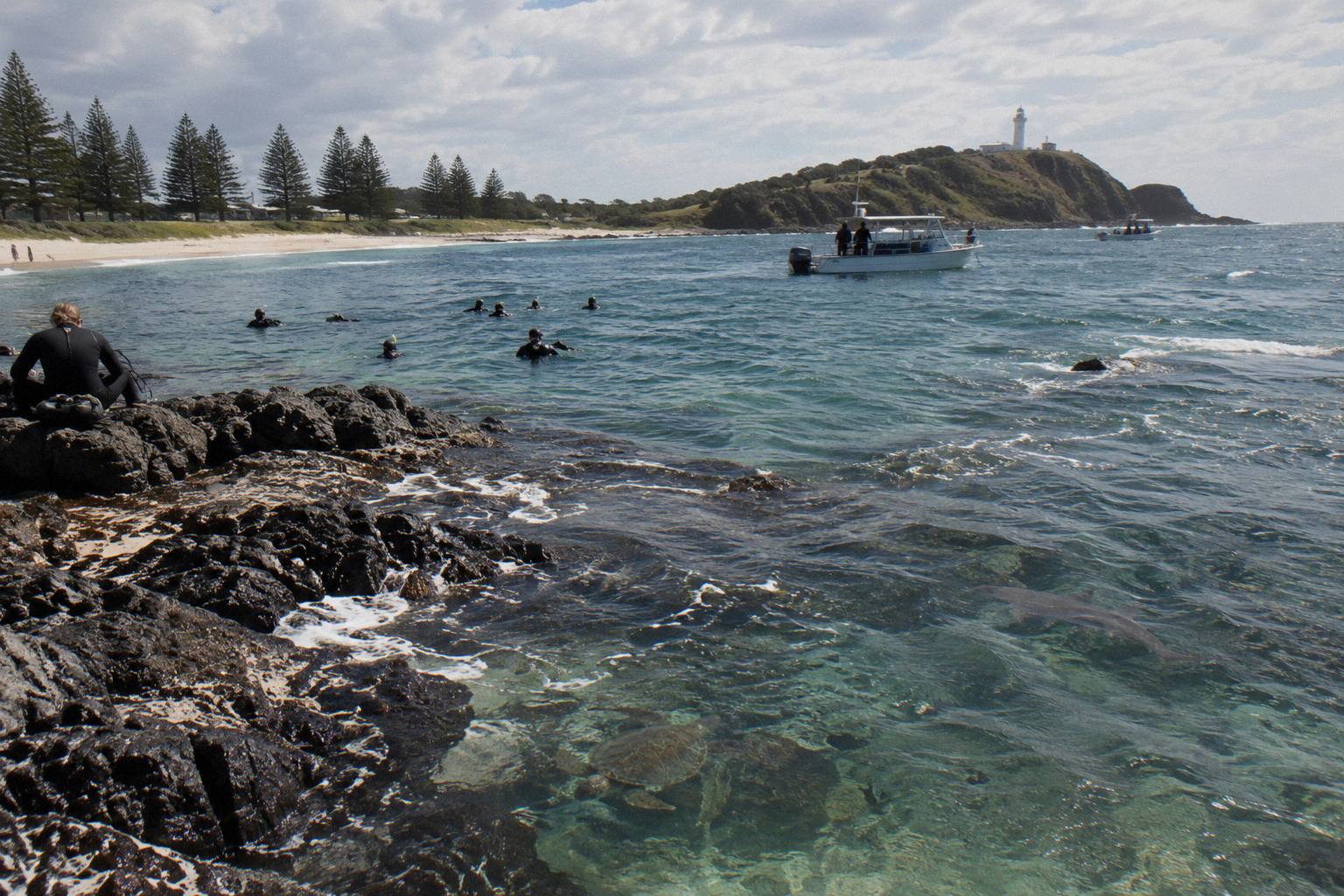
Gear is included across the board on the trips where the booking pages list inclusions: fins, mask, snorkel and wetsuit. Byron Bay Dive Centre advises 5 mm long wetsuits for the duration of a trip and notes it has no prescription masks, though contact lenses are fine. Its boat carries ginger seasickness tablets and lifejackets, and the operator suggests a long wetsuit or a pool noodle for nervous snorkellers rather than a flotation-only setup.
Timing your day around a trip is straightforward. Trips leave at a range of times, and the whole outing, including check-in, briefing, the ride out, the snorkel and the return, fits inside a morning or an afternoon. That leaves the other half of the day free, which is why many visitors pair a Julian Rocks snorkel with a walk to the Cape Byron lighthouse or a afternoon on Wategos, and why the trip works as well for a short stay as it does for a week-long one.
If you are weighing this trip against a dive, whether snorkelling or diving suits you at Julian Rocks is its own question, and our full Julian Rocks Byron Bay guide covers the site in more depth.
Where Do The Julian Rocks Snorkel Trips Start?
There is no single departure point: two of the trips meet at Brunswick Heads Boat Harbour, a short drive north of Byron Bay town, and the Turtle School trip meets in Byron Bay itself, at Byron Plaza on Jonson Street, with transport to The Pass where the boat departs. Each trip's meeting point is that trip's own, so check the listing of the trip you book.
The split matters for planning. If you are staying in Byron Bay without a car, a trip that meets in town saves you a taxi or a bus north. If you are driving, Brunswick Heads is an easy run with parking near the harbour. The Julian Rocks Snorkelling site and each operator's live listing record the check-in address, and it is the single detail most worth confirming before you set out.
The booking pages state meeting points only for three of the trips. For the Byron Bay Dive Centre Sea Turtle Snorkel, the whale watching trip and the two kayak trips, no meeting point is printed: check the meeting point on the booking page before you travel.
| Trip | Operator | Meeting point on the booking page | Duration |
|---|---|---|---|
| Blue Seafaris Julian Rocks Snorkelling Tour | Blue Seafaris | 43 Harbour Way, Brunswick Heads Boat Harbour | about 2.5 hours |
| Out Of The Blue Julian Rocks Snorkelling Tour | Out Of The Blue Adventures | Brunswick Heads Boat Harbour, NSW 2483 | about 2.5 hours |
| Turtle School Julian Rocks Snorkelling Tour | Turtle School (Byron Bay Dive Centre) | Byron Plaza, Jonson Street, Byron Bay; transport to The Pass | about 3 hours |
| Byron Bay Dive Centre Sea Turtle Snorkel | Byron Bay Dive Centre | not stated, check the booking page | about 2.5 hours |
One point worth repeating because it trips people up: not all trips leave from Byron Bay, and not all leave from Brunswick Heads. Attribute the start point to the specific trip. The Turtle School booking page also states there is no pick-up from accommodation, so plan to arrive at the meeting point under your own steam.
The Turtle School arrangement deserves one extra line of explanation, because it is unusual. You check in at the shop in Byron Plaza, get fitted for gear there, and are then transported to The Pass, the sheltered launch beach on the northern side of Cape Byron, from which the vessel departs. It is a two-step process rather than a single marina check-in, so allow a few extra minutes and expect the total trip length, about 2.5 hours, to include that transfer rather than cut into your water time.
What Rules Apply When You Snorkel Julian Rocks?
The rocks sit inside a sanctuary zone where all species are protected: no fishing, no collecting, no fish feeding, and anchoring is banned within 700 metres of the rocks, with vessels limited to 4 knots within 200 metres. Snorkelling itself is expressly permitted, provided it harms no animal, plant or habitat. There are seven marine park moorings at the rocks with a 2 hour maximum stay.
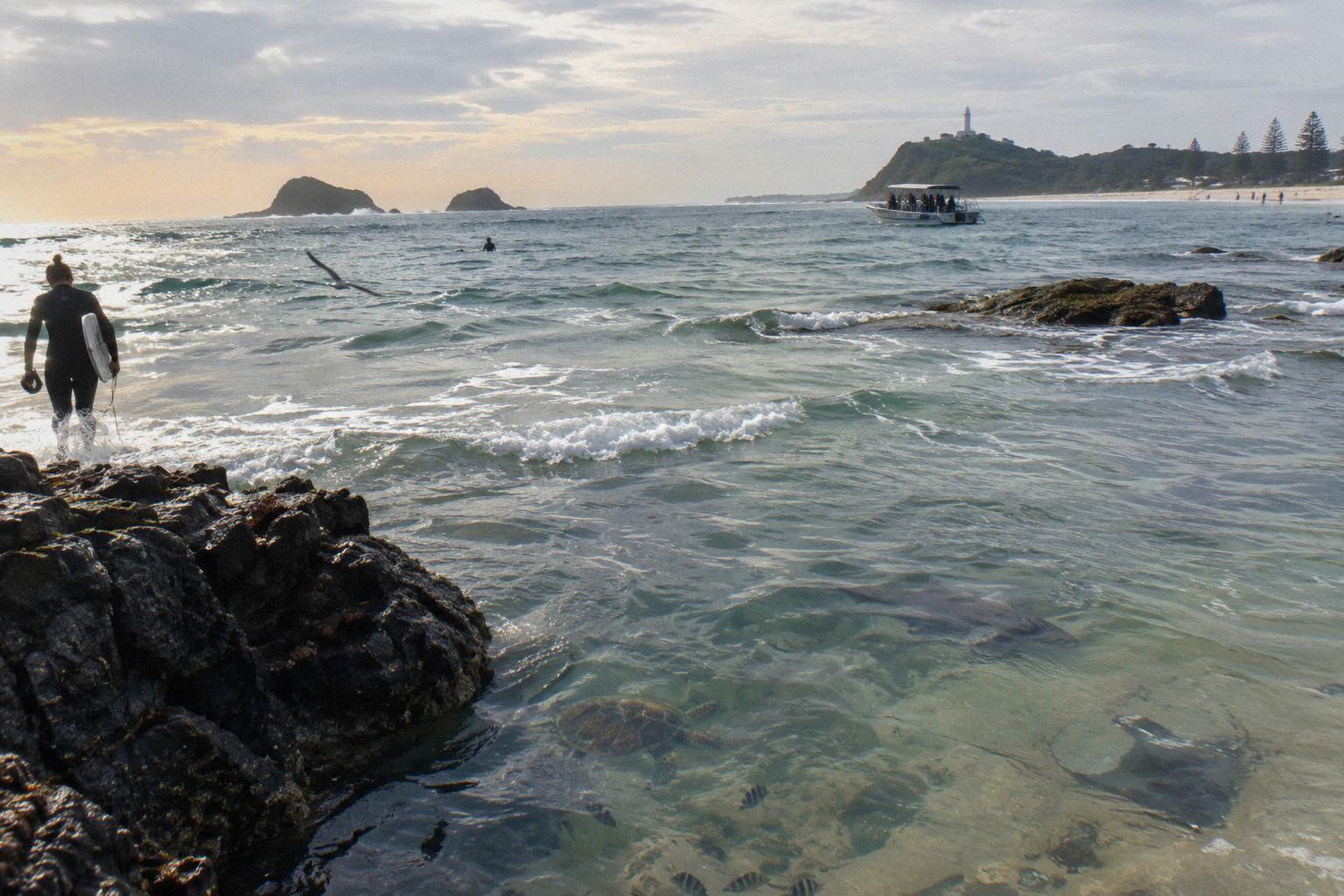
Those rules come from the DPIRD user guide for Cape Byron Marine Park and the department's zones page. Sanctuary zones cover 6,118 hectares, or 27.5% of the marine park, and Julian Rocks sits inside that protection. The park itself runs about 37 km of coast from the Brunswick River north training wall to Lennox Head and covers about 220 square kilometres of state waters, with zones and rules that commenced in May 2006 after the park was established in November 2002.
For a snorkeller, the rules translate into simple behaviour. Byron Bay Dive Centre's own guidance is a fair summary of the spirit: waterproof cameras only, no flash, and do not touch, collect or harass marine life. The NSW Government page adds that collecting or destroying animals and spear fishing are prohibited at the rocks. Touching turtles is off-limits, a question we treat in full in whether you can touch turtles when snorkelling in Australia.
The dual name matters beyond signage. Bundjalung lore, as reported, tells of a spear that broke a canoe in two, the two halves becoming the rocks. The Bundjalung People of Byron Bay (Arakwal) hold a strong association with the land and sea in the northern parts of the park, and the Jali people in the southern section. For more on the site itself, see our Nguthungulli Julian Rocks Nature Reserve guide.
If you want the full regulatory picture before booking, the details sit in our Cape Byron Marine Park snorkel rules guide.
Who Can Join A Julian Rocks Snorkel Trip?
There is no single minimum age or fitness standard: each operator sets its own. The Byron Bay Dive Centre turtle trip states a minimum age of 10; other operators' own pages show minimums of 5 and 7 years. All trips require confident swimming, and one operator requires prior open-ocean snorkelling experience and the ability to swim 200 metres unassisted.
That spread is the honest answer, and it is why the minimum is always the one printed on the page of the trip you actually book. The Blue Seafaris and Out Of The Blue booking pages state no minimum age: ask the operator when you book if you are travelling with children. The wider set of guides lives on Julian Rocks Snorkelling.
Byron Bay Dive Centre's conditions are the most detailed on file. Its sea turtle tour asks that participants swim at least 25 m unassisted and be comfortable in the water, and notes there are no life jackets to snorkel in. Guests with pregnancy or back or spinal injuries are prohibited from vessel-based activities, which is that operator's rule rather than a universal one. Over-65s are addressed differently by different operators: Sundive Byron Bay requires GP clearance, with the same letter required again over 70.
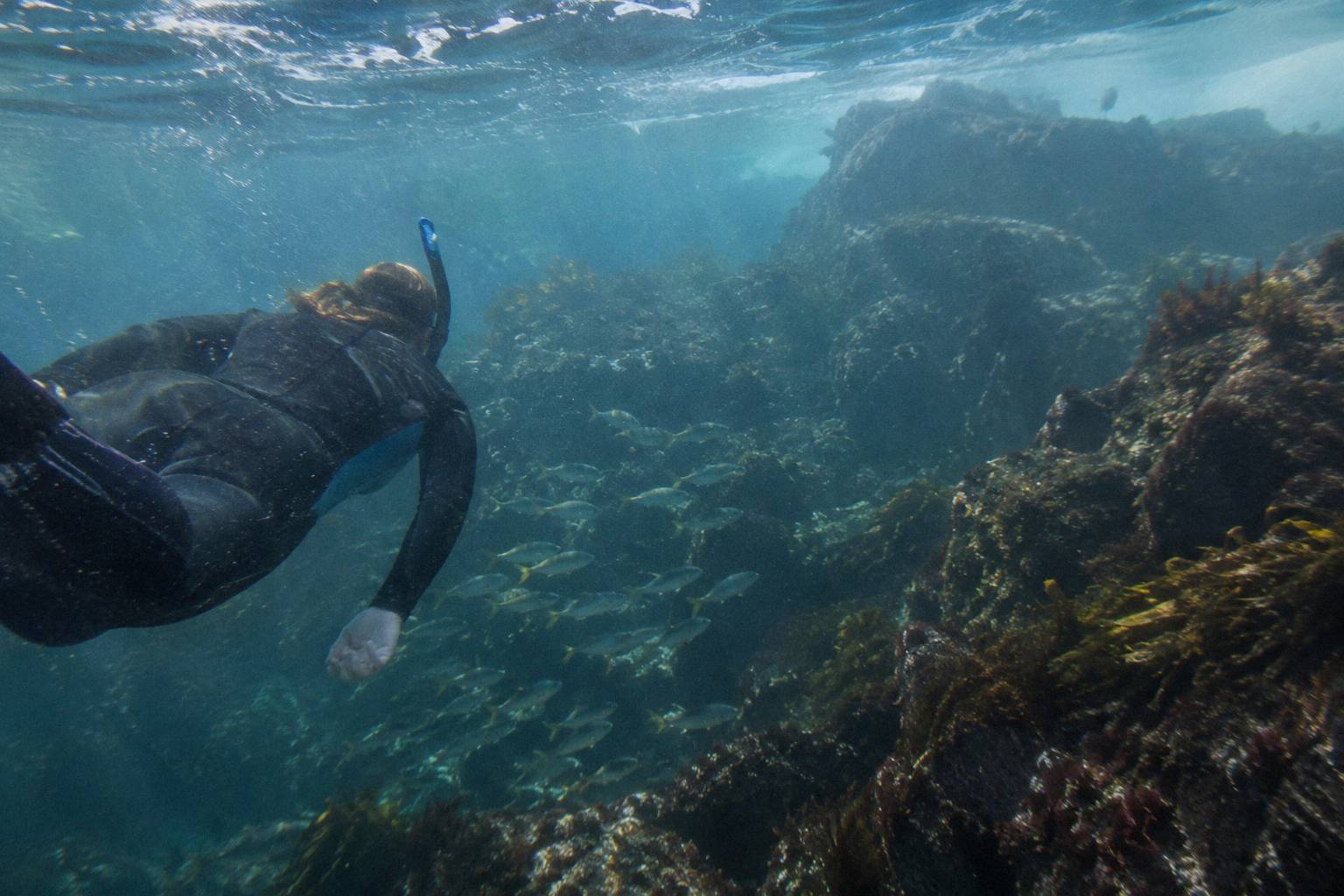
If you cannot swim at all, this is not the site to learn: the water is open ocean where strong swells, currents, surge, cold water and winds are all possible. We cover that question honestly in whether non-swimmers can snorkel at Julian Rocks, and fitness expectations in how fit you need to be to snorkel Julian Rocks.
Families should also read the age rules with the trip format in mind. A 3 hour trip with a 10-year-old minimum is a different proposition from a 2.5 hour trip that welcomes children from 5, and the difference is not just paperwork: younger children feel the cold faster in a long wetsuit and tire sooner in open water. Our guide to kids on the Julian Rocks snorkel trip works through the practical side, including which operator rules suit which ages.
What Will You Actually See Snorkelling Julian Rocks?
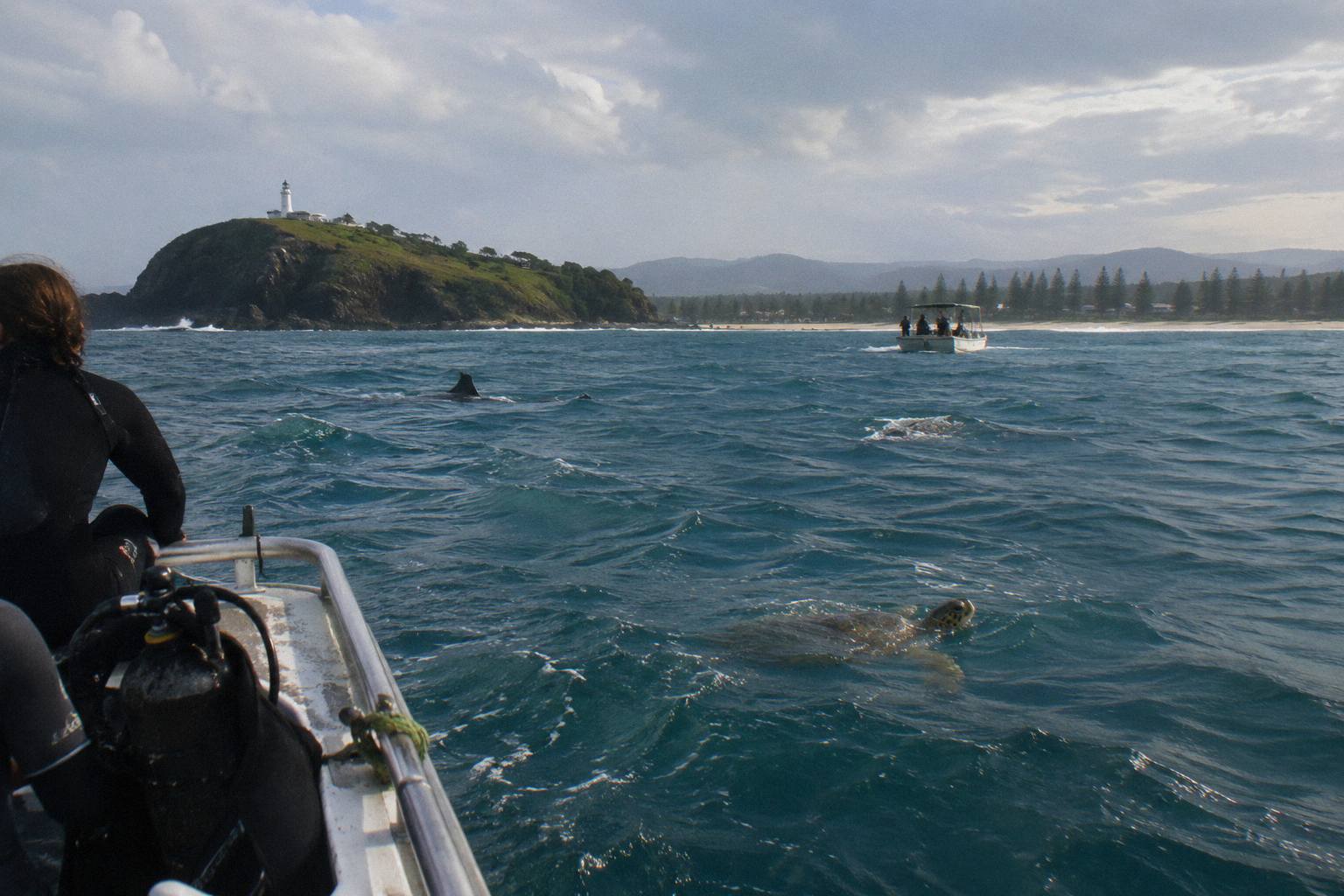
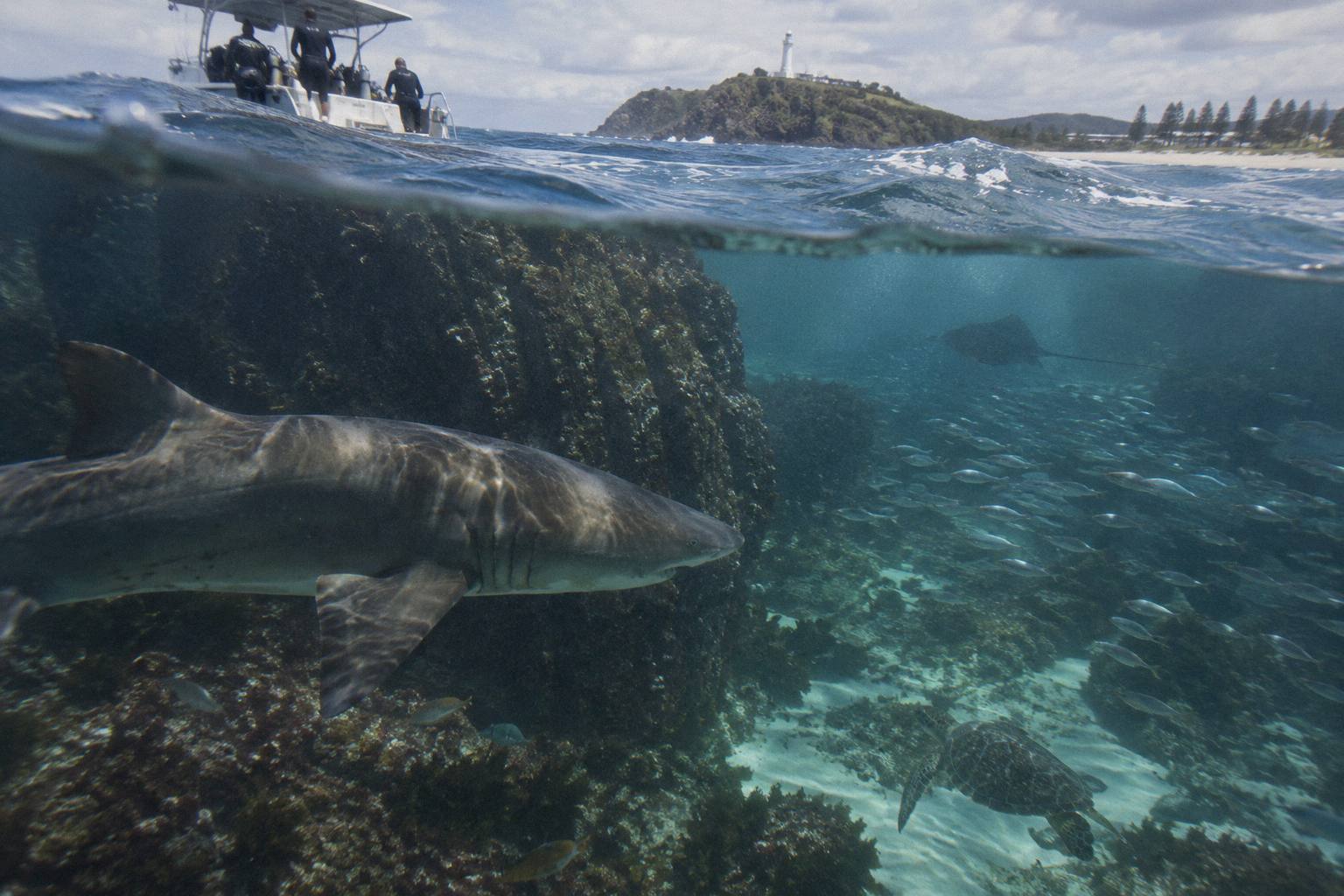
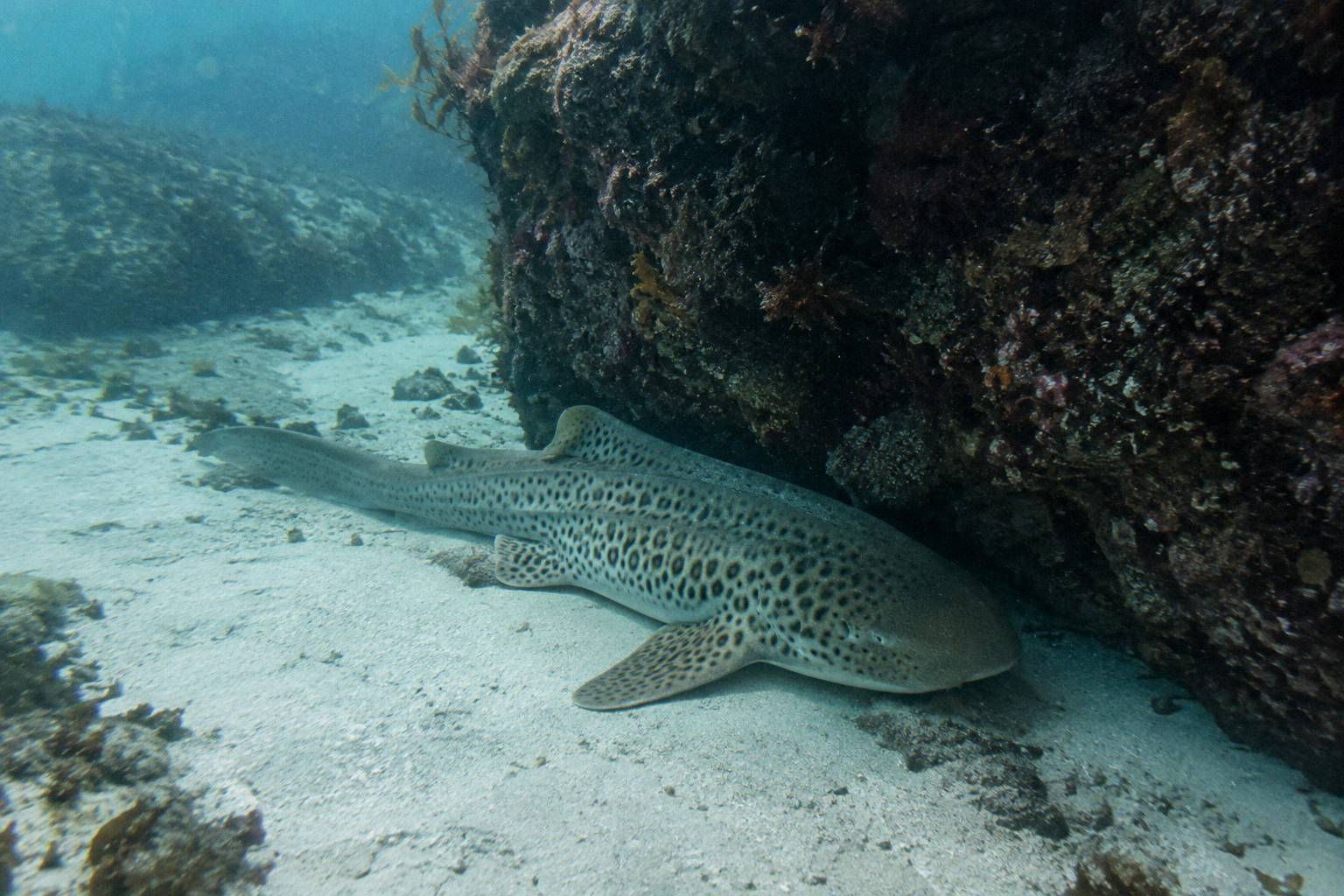
The reliable sightings are turtles, rays and a wide variety of fish and crustaceans, and operators list turtles year-round without guaranteeing them. Seasonal visitors include manta rays and leopard sharks in the warmer months and grey nurse sharks, a threatened species, in the colder ones. Operators credit the mix to the meeting of the warm East Australian Current with cooler southern waters, claiming more than 500 fish species.
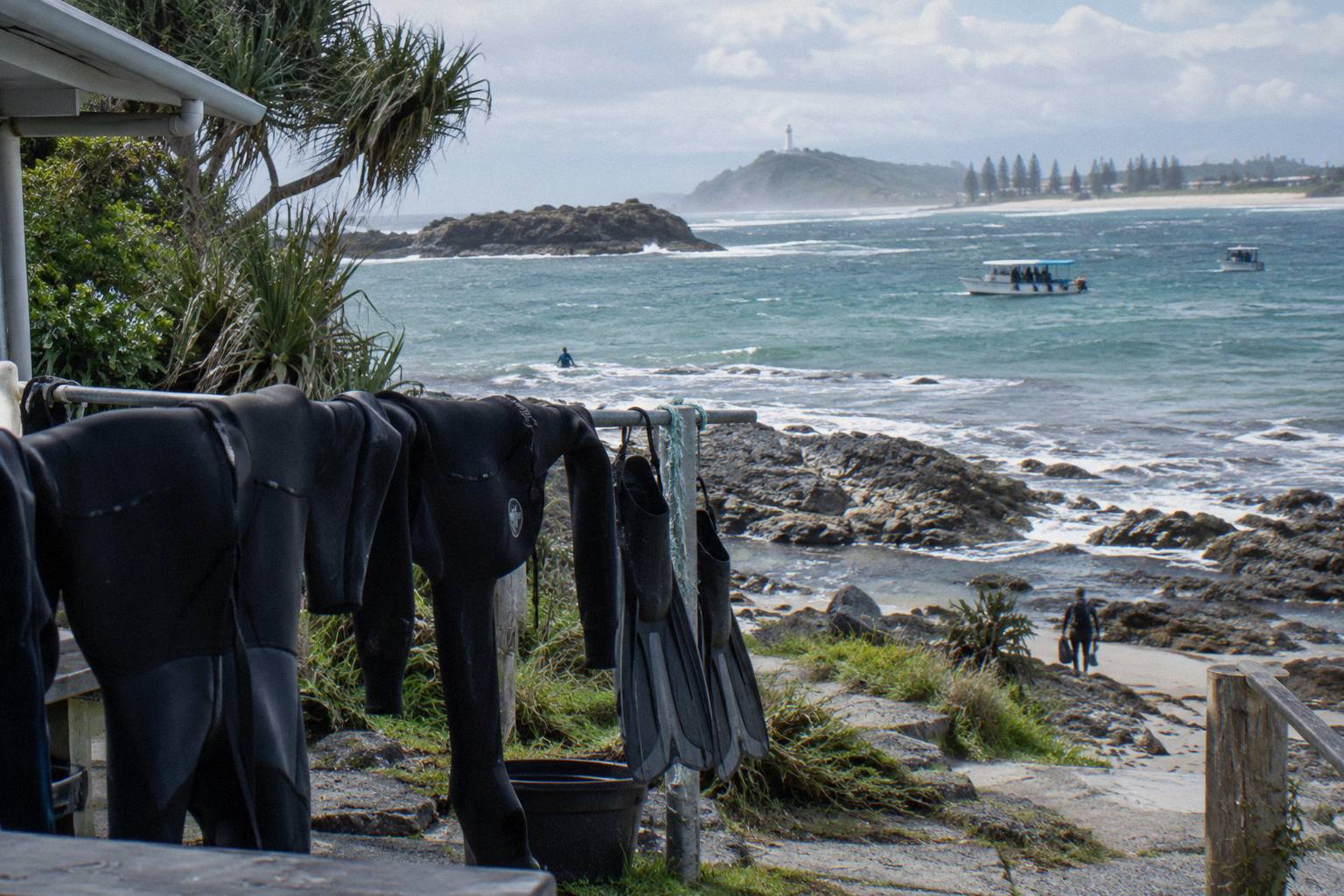
Turtles are the headline and the honest framing is Byron Bay Dive Centre's own: green, hawksbill and loggerhead turtles can be spotted year-round throughout the whole day, but no operator can guarantee sea turtles will be there. Realistic expectations matter more at this site than most, and we treat the question squarely in whether you will reliably see turtles, sharks and rays snorkelling Julian Rocks.
| What | When | Notes |
|---|---|---|
| Turtles (green, hawksbill, loggerhead) | all year | listed year-round, never guaranteed |
| Manta rays, leopard sharks | warmer months, leopard sharks roughly December to April | leopards gather in the Needles sandy arena |
| Grey nurse sharks | roughly June to November | a threatened species in the park, seen in the colder months |
| Rays, wobbegongs, octopuses, eels, nudibranchs | all year | ray species include bull, eagle and shovelnose |
Two caveats on that table. First, the grey nurse and leopard shark seasons are dive-site seasons per one operator's page, and grey nurse sharks congregate in sand trenches at diving depths of 8 to 24 m, deeper than snorkel depths. Snorkellers can still see them near the surface, but the dense aggregations are a diver's view. Second, seasons shift with water temperature, and winter water can drop to around 17 °C, so the month you pick shapes both what you see and how cold you get, questions our best month to snorkel Julian Rocks guide and Byron Bay water temperature by month cover in detail.
The deeper species accounts live elsewhere on this site: Julian Rocks marine life for the full cast, leopard sharks at Julian Rocks for the summer visitors, and grey nurse sharks at Julian Rocks for the winter ones. Whether swimming near grey nurses is safe has its own answer, and it is a calmer one than most people expect.
How Much Does It Cost To Snorkel Julian Rocks?
Two of the Julian Rocks snorkel trips print from-prices on their booking pages: Blue Seafaris from AUD 94 per person and Out Of The Blue from AUD 94 per person. The Byron Bay Dive Centre trips print no price on their booking pages, so price and rating are on the booking page rather than restated here. Gear and wetsuit are included on the trips that list inclusions.
The two priced trips also carry ratings worth reading with their counts. Blue Seafaris is rated 4.5 across 448 reviews on its booking page. Out Of The Blue is rated 4.4 across 167 reviews on its main booking page, and a second booking page for the same trip shows 4.7 across 58 reviews. These are different pools, not contradictory claims, and we do not rank tours by rating: the numbers are simply what the pages say.
Operator-direct prices, the ones on the operators' own websites, run higher than booking-page from-prices, and this article does not print them because the two sources disagree. Treat the booking page as the price of record and expect the usual seasonal and date-based movement in from-prices. For the full cost picture, including what else you might spend on the day, see what a Julian Rocks snorkel trip costs.
One budgeting habit worth adopting: price the trip per hour on the water rather than per ticket. Two trips at the same from-price differ in length, one about 2.5 hours and one about 3, and the longer format includes a town check-in with transfer rather than a marina start. Neither is objectively better; it depends whether you value a shorter outing from the harbour or a fuller half-day experience that begins in Byron Bay itself.
The featured trip on this site is the Blue Seafaris Julian Rocks Snorkelling Tour: about 2.5 hours, biologist-guided per its listing, from Brunswick Heads Boat Harbour, from AUD 94 per person and rated 4.5 across 448 reviews.
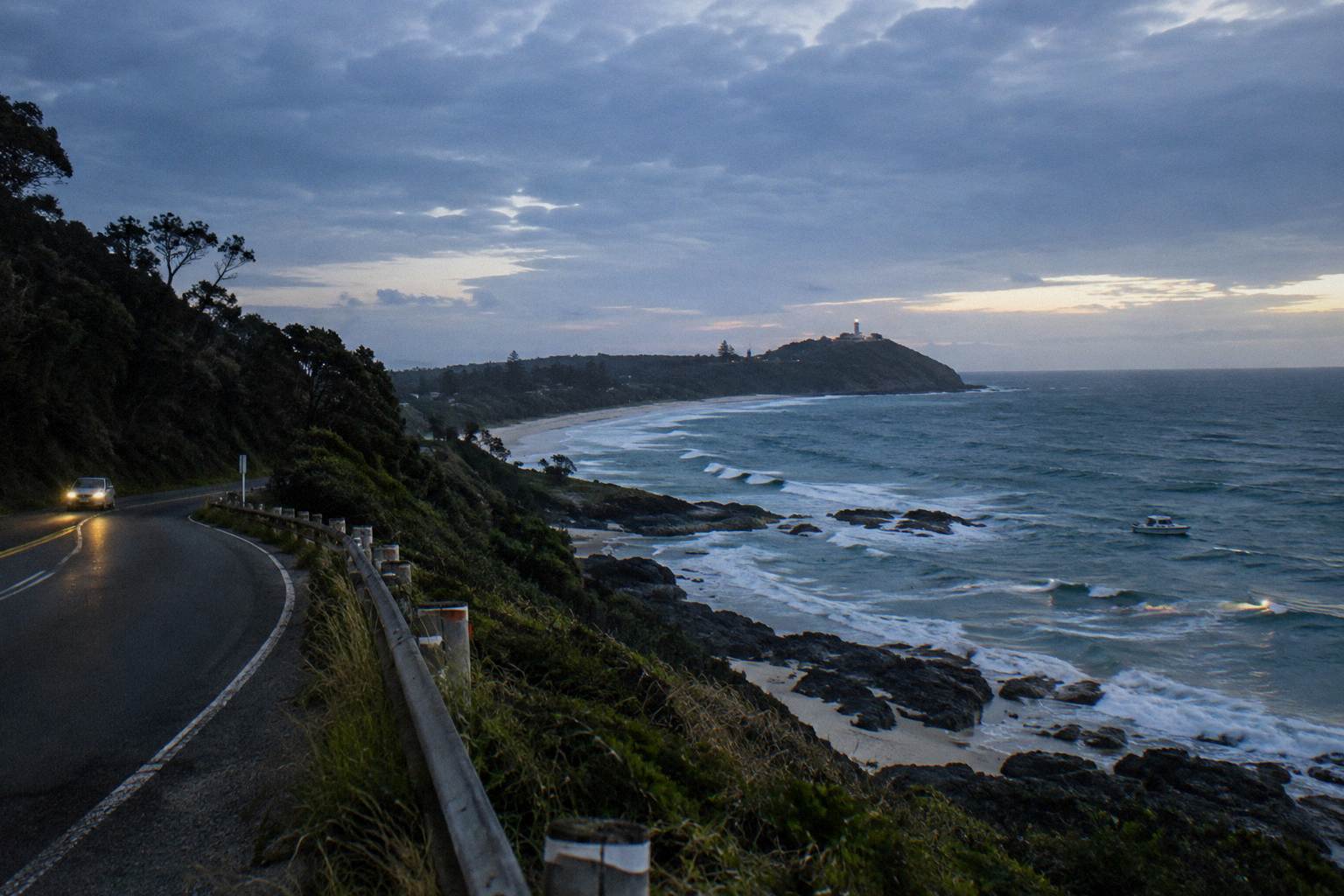
What If Conditions Turn Against Your Trip?
Julian Rocks is an open-ocean site, and trips cancel when swell, current or wind make it unsafe. Byron Bay Dive Centre contacts guests by text or phone when weather or sea is unsuitable, offering a full refund or reschedule, with a 48 hour cancellation window and a 100% fee inside it. Bookings made through an agent follow that agent's refund policy.
That is one operator's published policy, not an industry-wide guarantee, but it is representative of how weather-driven operators work here. The practical takeaway is to build a spare day into a Byron Bay stay if the snorkel is the centrepiece, and to check the forecast yourself the day before: our guide on where to check Byron Bay sea conditions before a snorkel trip lists the sources. One operator also flags strong northerlies between September and Christmas as a factor in trip reliability.
Winter adds cold rather than danger: water can drop to around 17 °C against an average near 20 °C, which is why 5 mm wetsuits are advised for longer trips and why our guide on whether Byron Bay water is too cold for snorkelling in winter is worth a read if you are visiting between June and August. Booking far enough ahead is its own question in how far in advance to book a Julian Rocks snorkel trip.
The last thing to know is that the cancellation risk runs both ways: book too close to your departure date in peak season and you may miss out entirely, book too rigidly and a blowy day may cost you the fee window. A trip with free cancellation up to 48 hours before, which at least one operator offers with conditions, buys flexibility at no premium.
Common Questions About Snorkelling Julian Rocks
Can You Snorkel Julian Rocks?
Yes, on a boat trip with a licensed operator. Snorkelling is a permitted activity in the sanctuary zone, trips run about 2.5 to 3 hours, and no trip lands on the rocks themselves.
Can You Swim To Julian Rocks From The Beach?
No operator runs a swim-out trip, and the rocks sit about 2.5 km offshore in open ocean. Every snorkel trip is boat-based; we cover the question fully in our piece on swimming to the rocks from the beach.
How Much Does A Julian Rocks Snorkel Trip Cost?
From AUD 94 per person on the two trips that print prices: Blue Seafaris and Out Of The Blue both list that figure. The Byron Bay Dive Centre trips print no price; check the live listing.
How Old Do You Have To Be To Snorkel Julian Rocks?
It depends on the operator: published minimums are 5, 7 and 10 years on different operator pages. The Byron Bay Dive Centre turtle trip states 10. The Blue Seafaris and Out Of The Blue booking pages state no minimum age, so ask the operator.
Will I See Turtles At Julian Rocks?
Probably, but not certainly. Green, hawksbill and loggerhead turtles are listed year-round, and the operator wording is explicit that sightings can never be guaranteed.
Is It Safe To Snorkel At Julian Rocks?
The site is open ocean, so conditions matter and trips cancel when the sea is unsuitable. All participants must be confident swimmers, gear and wetsuits are included, and operators brief groups on currents and surge before entering the water.