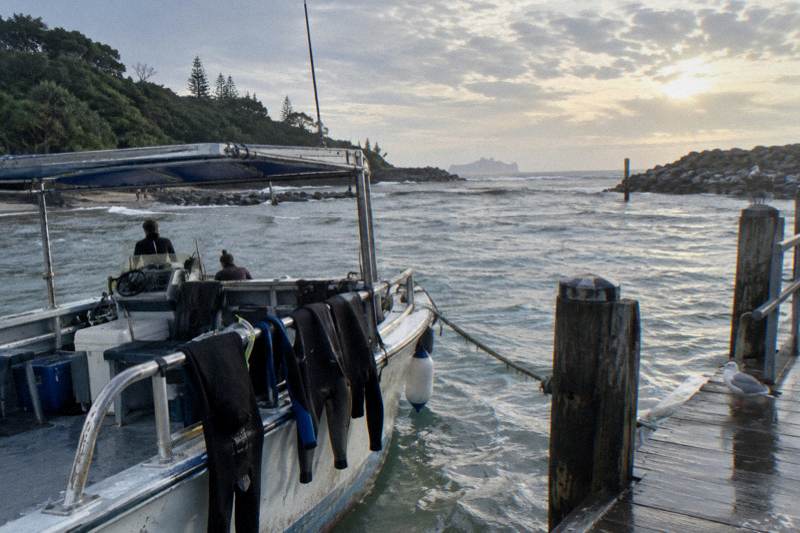
How Deep Is The Water Where You Snorkel At Julian Rocks?
Snorkel trips at Julian Rocks stay in shallow, sheltered water between 3 and 12 metres deep, while the dive sites below reach 8 to 24 metres. Here is what the depth means for your trip.
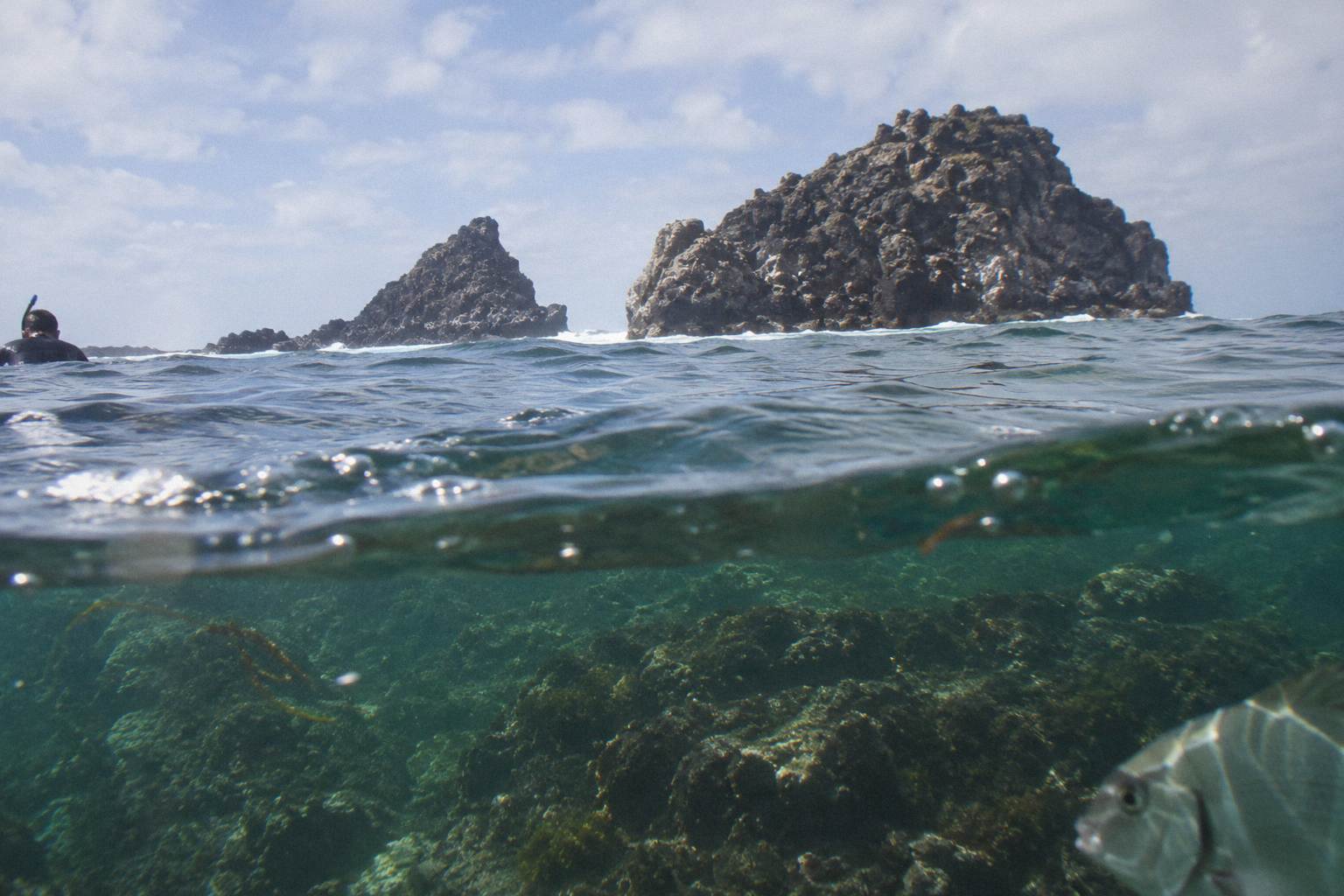
Snorkel trips at Julian Rocks stay in shallow, sheltered areas between 3 and 12 metres deep, according to one operator's description of its snorkel trips. The deeper water belongs to the dive sites beneath and around those shallows, which run from 8 to 24 metres, with sand trenches at 15 to 24 metres. Snorkellers float on the surface and look down into that clear, shallow water.
That single pair of numbers answers most of what people actually want to know when they type this question. If you are weighing up a snorkel trip and wondering whether the water under you will feel like an ocean or like a swimming pool, the honest answer is somewhere between the two. Twelve metres is deeper than any pool, but the areas the snorkel boats use are described by operators as shallow and sheltered, tucked against the rocks where the surface is calm and the light reaches the bottom.
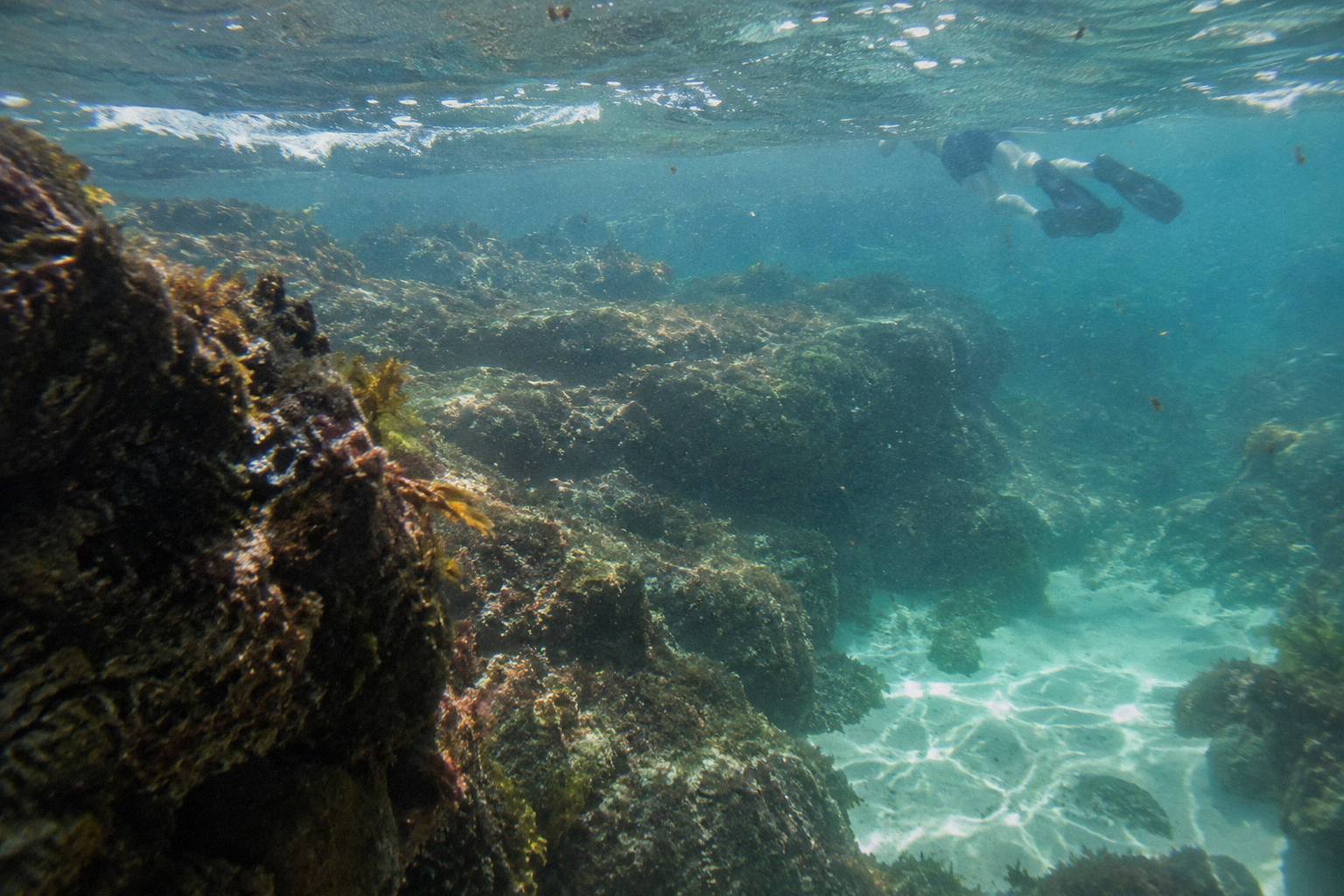
The rocks themselves sit about 2.5 km offshore from Byron Bay, and operators put the boat ride from Byron Bay at roughly 5 to 10 minutes, which tells you something about how close the reserve sits to the mainland shelf edge. What you have at Nguthungulli Julian Rocks is a small cluster of rocky islets where shallow reef, sloping rock and deeper sand trenches all sit within a few hundred metres of each other. That variety in a small footprint is exactly why the place supports so much marine life, and it is also why the answer to the depth question depends on who is asking and what kind of trip they are on.
Snorkellers and divers share the same site but not the same water. A snorkeller floating in 3 to 12 metres of water may be directly above a diver at 18 metres, and both may be a short swim from a trench bottoming out at 24 metres. The depth that matters to you is the depth of the water you are actually in, not the maximum depth of the site. Operators describe the snorkel areas as the shallow, sheltered pockets where turtles, rays, colourful fish and crustaceans are seen, and that is where the boats put their guests.
If the depth question is really a comfort question, a good next step is reading whether the snorkel trip suits nervous swimmers, because the briefing and the floatation options matter as much as the number on the depth sounder. And if you are weighing up the options right now, these three trips all visit the shallow areas:
The featured trip here is the Blue Seafaris Julian Rocks Snorkelling Tour, which runs about 2.5 hours from Brunswick Heads Boat Harbour, is rated 4.5 across 448 reviews on its booking page, and costs from AUD 94 per person. Its snorkelling takes place in exactly the shallow, sheltered water this article describes, which is the standard for every Julian Rocks snorkel trip on the roster.
Why One Side Of The Rocks Is Shallow And The Other Drops Away
Julian Rocks is a cluster of rocky islets rather than a single reef, and its shallow shelves, sloping walls and sand trenches sit close together. One operator describes snorkel areas as shallow and sheltered, 3 to 12 metres, while the dive depths across the site run 8 to 24 metres with trenches at 15 to 24 metres. The shape of the rock, not the tide, sets the depth.
“This excursion was absolutely incredible! We got to see turtles and were even lucky enough to see whales and dolphins very close to us in the water. The explanations from the marine biologist guide were a real plus, and a big thank you to the boat captain, who was so kind and friendly! We highly recommend this experience, without hesitation!”
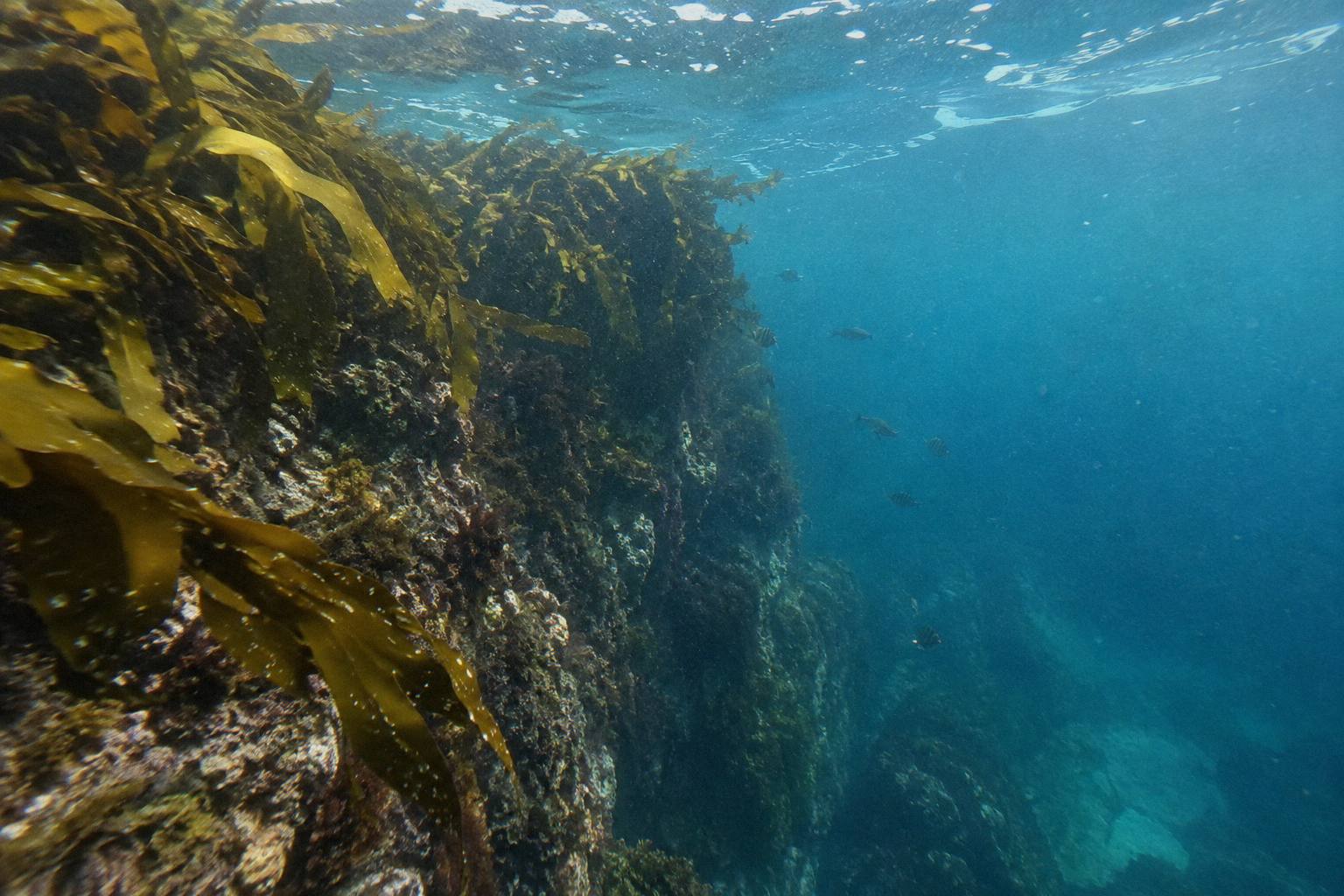
The geology does the work. The rocks rise from a seabed that slopes away unevenly, so on one side of the islets the reef sits metres below the surface, sheltered from swell by the rock itself, while on the other side the bottom falls away into sand trenches. Divers use those trenches: one operator notes that grey nurse sharks gather in the sand trenches during colder months, June to November, at depths of 15 to 24 metres. Those are dive depths, and they are not where snorkel trips go. It is worth saying plainly that snorkellers should not expect to reach the trenches or to see grey nurse sharks, which are rarely encountered on snorkel trips here.
The shallow side is where the light is. In 3 to 12 metres of clear water, sunlight reaches the reef strongly, which is why the snorkel areas are described in terms of colourful fish, crustaceans, turtles and rays rather than the darker, quieter trench life below. This is also why visibility matters so much to a snorkel trip: in shallow water with good visibility you can see the bottom clearly from the surface, and the whole reef reads like a lit aquarium. Conditions at the site are open-ocean, and one dive operator notes strong swells, currents, surges, cold water and winds are all possible, which affects visibility far more than it affects depth.
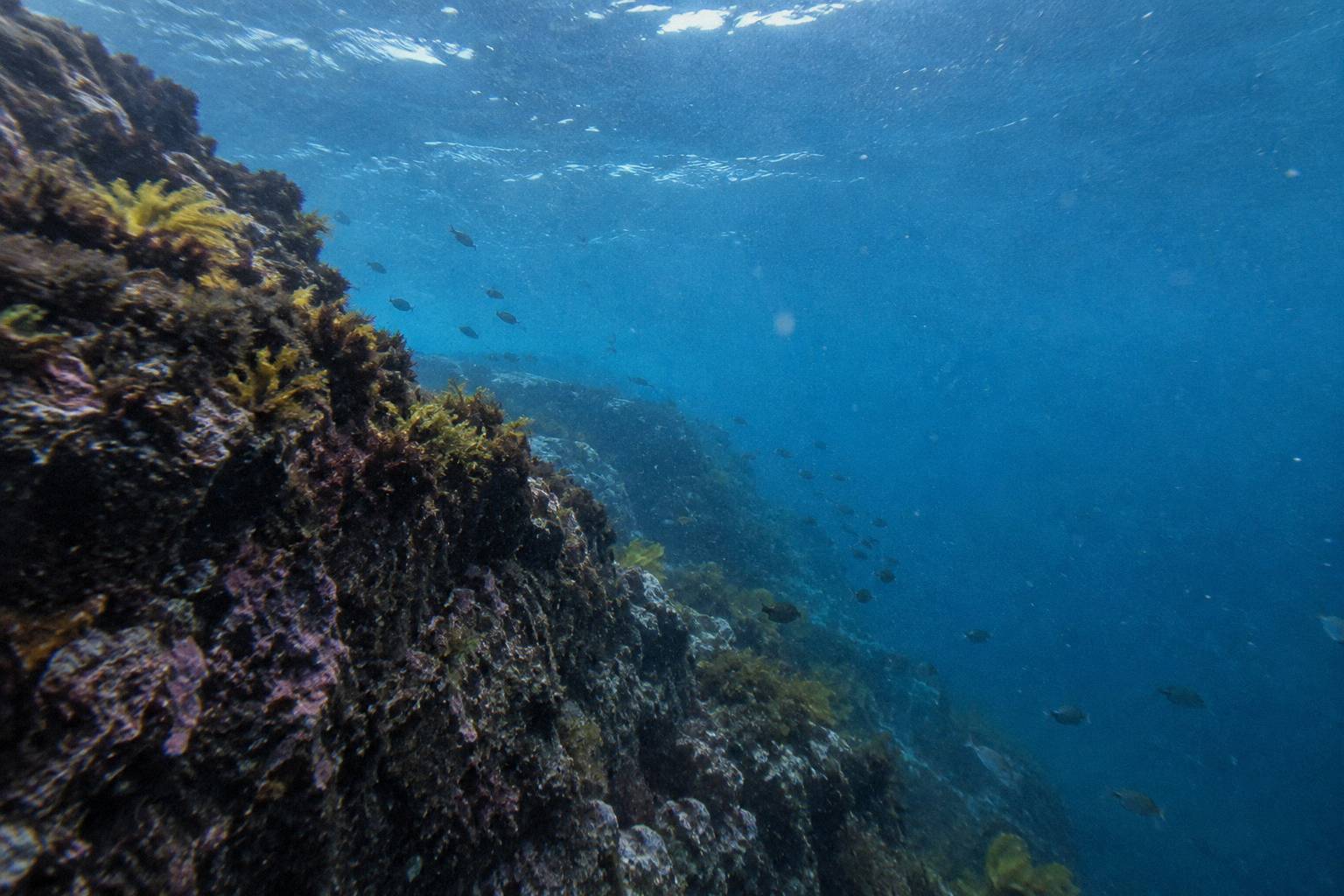
The marine park context explains why the site is so structured. Nguthungulli Julian Rocks sits inside Cape Byron Marine Park, which covers about 37 km of coast and about 220 km2 of state waters out to 3 nautical miles, with zones and rules that commenced in May 2006. The rocks sit in a sanctuary zone, the highest level of protection, where all species are protected and snorkelling is a permitted activity. Depth is fixed by geology, but where boats may anchor, how fast they may travel and which areas they use are all set by park rules, which is covered in detail in the guide to the marine park rules snorkellers should know.
For a sense of how the shallow and deep zones stack up, the table below summarises what the operators and agency pages actually say, with nothing beyond it.
| Zone around the rocks | Depth | Who uses it | Source wording |
|---|---|---|---|
| Snorkel areas | 3 to 12 m | Snorkel trips | One operator: shallow, sheltered areas |
| General dive depths | 8 to 24 m | Scuba divers | One dive operator |
| Sand trenches | 15 to 24 m | Scuba divers, in cooler months | One dive operator; grey nurse sharks gather here |
Notice what the table does not say. There is no depth figure for any specific named snorkel spot beyond the 3 to 12 metre range, because the sources do not give one, and this site does not guess. If a page elsewhere quotes depths to the half-metre for a particular spot at the rocks, treat it with suspicion unless it names an operator or agency source.
Does 3 To 12 Metres Feel Deep When You Are Floating On It?
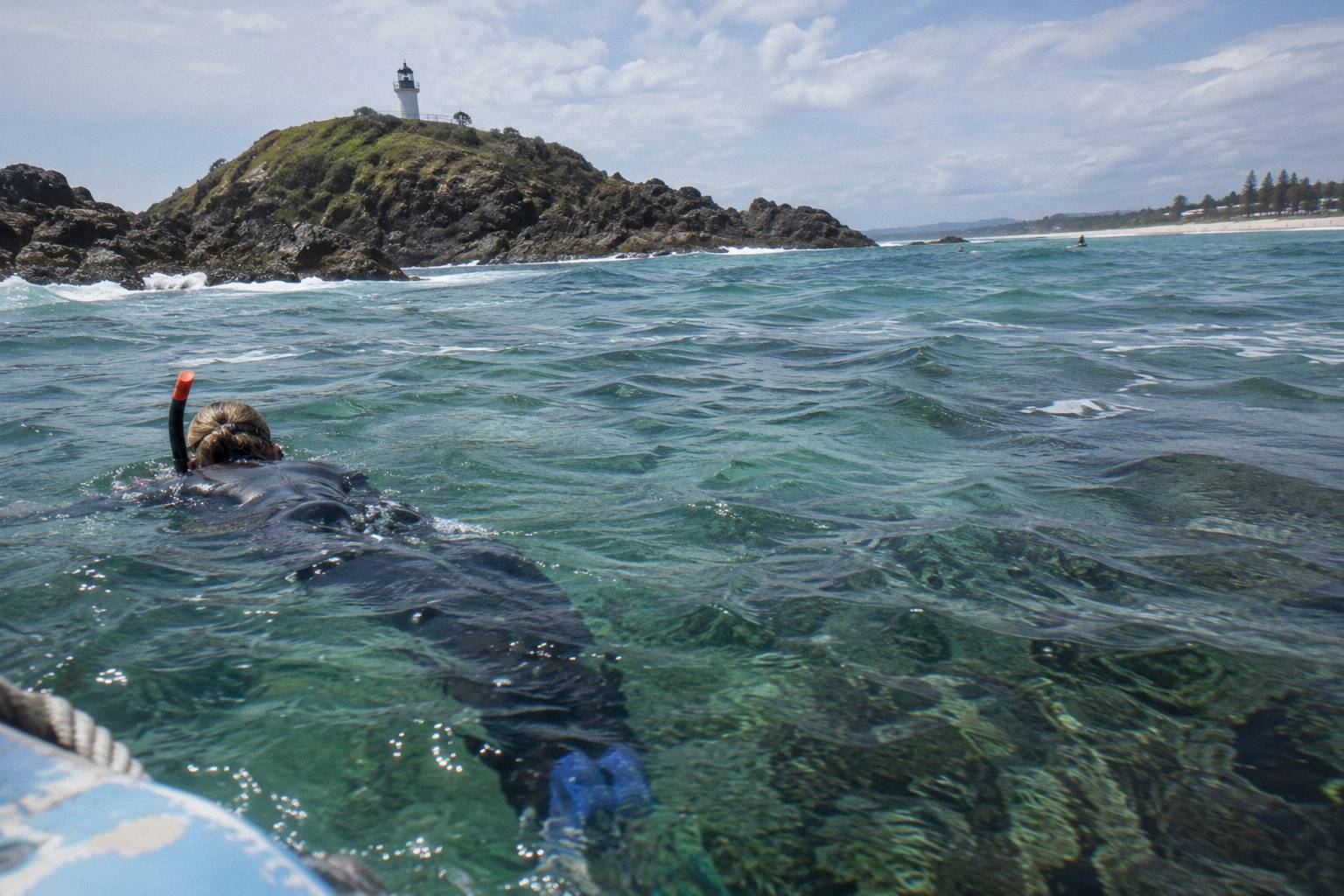
Water 3 to 12 metres deep feels deep from the surface, because you can see the bottom clearly but cannot touch it or stand anywhere. Ten metres is roughly three car lengths of water below your fins. The psychological effect surprises people more than the number does, and it fades within minutes for most snorkellers.
This is the honest version of the depth answer that no depth chart gives you. Three metres feels like a deep pool. Twelve metres, in clear water, feels like flying over a landscape: the bottom is visible, moving, alive, and far enough below that there is no possibility of touching it. Some people find that sensation wonderful, which is a large part of why snorkelling at the rocks is popular, and some people find it briefly unsettling, which is normal and usually passes.
What helps is knowing the water is sheltered. The operators choose the calm, protected pockets of the site precisely because surface conditions there are manageable for snorkellers, and one operator's page describes the snorkel areas as shallow and sheltered in the same breath. You are not floating over open ocean swell in the middle of nowhere; you are beside rock that breaks the wind and wave energy, in water the boat's crew has judged suitable that day. If conditions are not suitable, trips are rescheduled or refunded under the operator's weather policy.
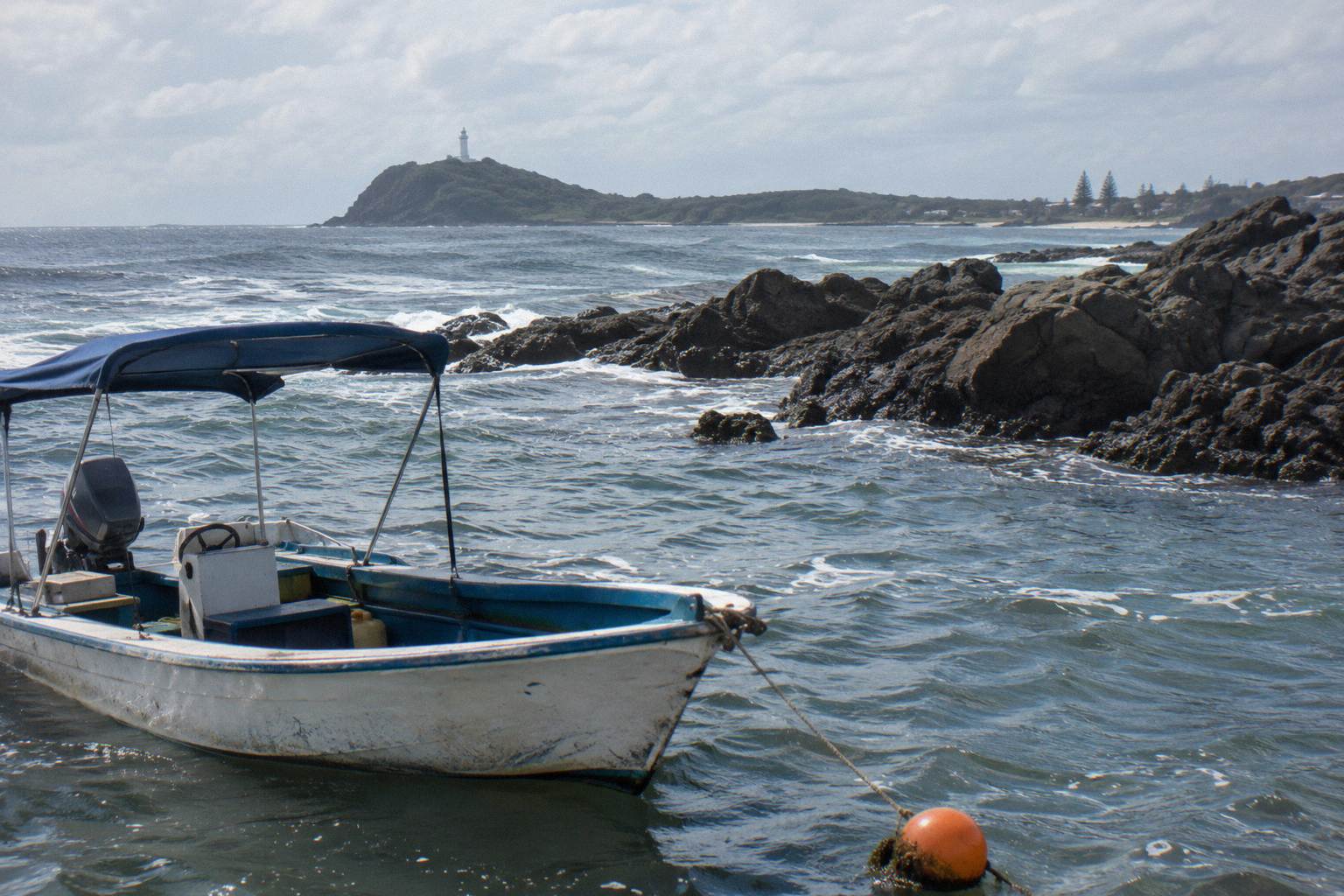
Practical things also reduce the sense of depth. Wetsuits add buoyancy, so floating is effortless rather than a swimming task. Byron Bay Dive Centre includes fins, mask, snorkel and wetsuit on its trips, advises 5 mm long wetsuits for the duration, and keeps lifejackets on board, suggesting a long wetsuit or a pool noodle for nervous snorkellers. That is a good picture of the standard kit across the site: gear that holds you at the surface, in water you never have to leave. The full kit list is in the Julian Rocks snorkel packing guide.
| Water depth | What it feels like from the surface | What you can see |
|---|---|---|
| 3 to 5 m | Like a deep pool; bottom close and detailed | Individual fish, coral, starfish clearly |
| 5 to 9 m | Bottom visible but unreachable; open feeling | Reef shape, rays, schools of fish |
| 9 to 12 m | Flying over a landscape; scale becomes obvious | Wide reef views, turtles passing below |
The table is a planning description, not an operator promise, and the areas a given trip uses depend on conditions on the day. But the bracket is real: 3 to 12 metres is the whole of the snorkel depth range at this site, and no snorkel trip on the roster goes deeper than that.
How Deep Do Scuba Divers Go At Julian Rocks Compared With Snorkellers?
A diver at 10 metres and a snorkeller at the surface may be looking at the same turtle. Below about 12 metres the snorkeller's view ends and the diver's continues, down the slope and into the trenches where one operator says grey nurse sharks gather from June to November. Those sharks are at dive depths, not snorkel depths, and grey nurse sharks are rarely seen on snorkel trips here. The question of whether that is safe is answered separately in whether it is safe to swim with grey nurse sharks at Julian Rocks, but the depth point matters first: the trenches are simply below the snorkel zone.
“Beautiful trip and saw so much sea life. It was absolutely amazing. The guide did a great job! Overal 12/10 experience!”
The distinction matters when you are choosing between the two activities. Snorkelling needs no certification and no dive experience, and every trip on this site's roster is a surface trip. Diving at these depths needs certification: Byron Bay Dive Centre's Fun Dive is about 2.5 hours with about 50 minutes in the water, minimum age 12, and requires Open Water certification. Its combined Turtle School plus Snorkelling option runs about 4 hours with about 60 minutes in the water, minimum age 10. This site does not cover dive pricing or grade dive sites, and no dive price is printed here. If you are weighing the two, the comparison piece on snorkelling versus diving at Julian Rocks goes deeper into the trade-offs.
For a reader whose main interest is comfort in the water, depth is the honest dividing line: snorkelling at the rocks never takes you under the surface involuntarily, never requires clearing your ears, and never puts you in water you cannot float on. The depth under you is scenery. For divers, the same depths are the workspace.
Does The Depth Change With The Tide Or The Season?
No. The tide around Julian Rocks changes the depth by a metre or so at most, and the season changes the temperature, not the depth. The 3 to 12 metre snorkel range and the 8 to 24 metre dive range are set by the shape of the rock and seabed, and they hold year-round. What changes through the year is who is in the water beneath you.
Tidal movement at this part of the coast is modest, and against a range of 3 to 12 metres it rounds to nothing. If a spot is 6 metres deep at mid tide, it will be roughly 5 to 7 metres across the whole tidal cycle. Nobody's snorkel trip changes character because of the tide. What the tide and wind do change is visibility and surface chop, which is a different question, covered in how visibility shifts by season at Julian Rocks.
“I had an amazing trip! The boat was super fun, the guide was excellent and I swam with turtles, wobbegongs, a spotted ray and saw two octopus! Heaps of beautiful fish too. I wouldn’t have noticed half the sea creatures without our expert guide pointing them out! Thoroughly recommend the team at Blue Seafaris!”
The season changes the residents. One operator's page describes manta rays and leopard sharks in the summer months, with leopard sharks mostly in the Needles sandy arena from December to April, and endangered grey nurse sharks in the cooler winter water, in the trenches at dive depths. Turtles, rays, crustaceans, nudibranchs, octopuses, eels and fish are listed all year. Water temperature moves with the seasons: one dive operator notes winter water can drop to 17 °C against an average around 20 °C, which is why wetsuits are standard kit on every trip. None of this changes how deep the water is, only what is swimming in it.
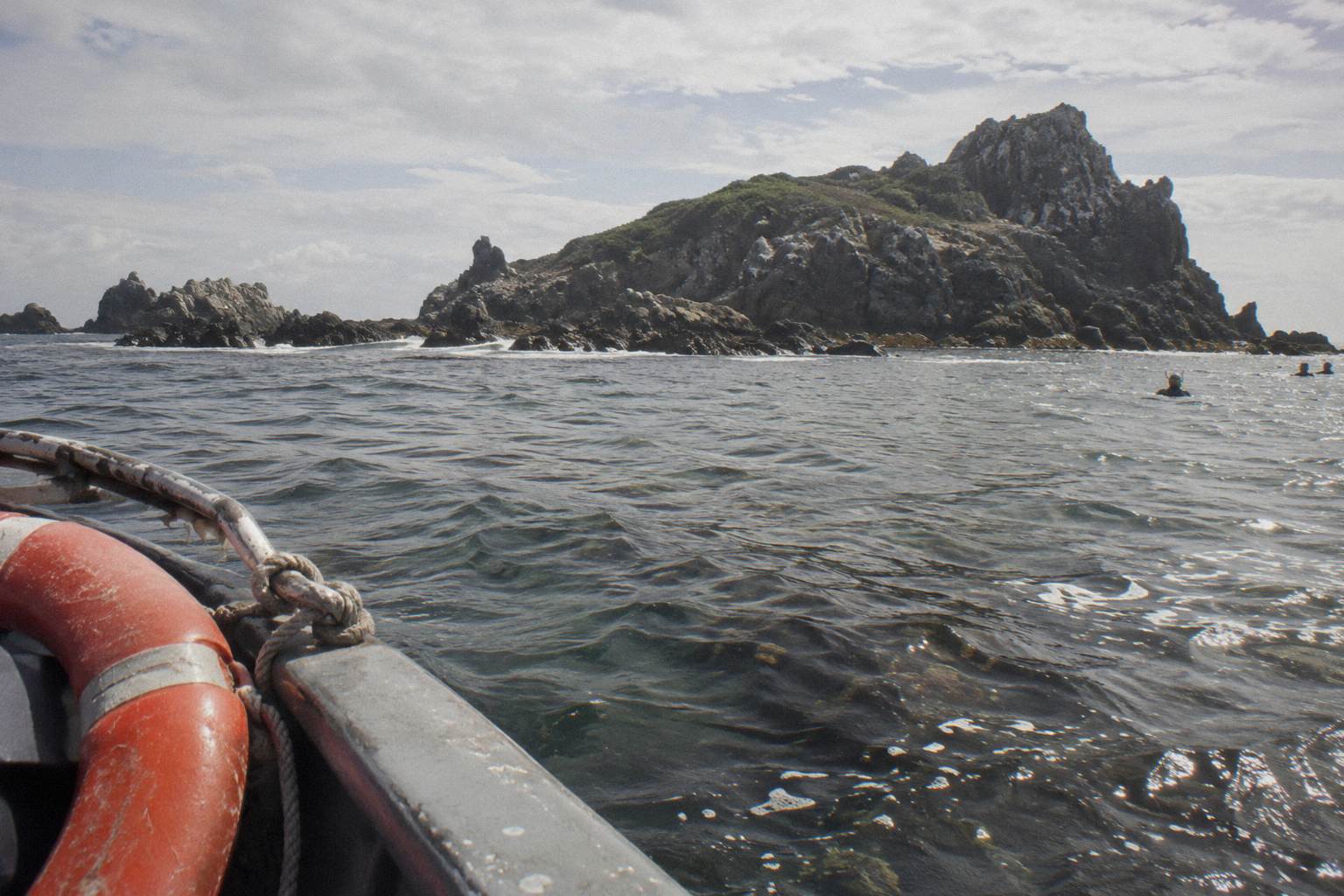
One seasonal factor does touch the experience of depth indirectly: strong northerlies blow between September and Christmas, one operator notes, and wind-driven chop in shallow water stirs sand and cuts visibility. In 3 to 12 metres, turbid water makes the bottom vanish, which makes the water feel deeper and less friendly even though the depth is identical. Operators watch this closely and move trips or reschedule when the shallow areas turn green. Checking conditions before you go is worth the two minutes, and the piece on where to check Byron Bay sea conditions lists the sources.
| Factor | Changes the depth? | Changes the snorkel experience? |
|---|---|---|
| Tide | Barely, around a metre | Slight, through currents |
| Season | No | Yes, through water temperature and marine life |
| Wind and swell | No | Yes, through surface chop and visibility |
| Which trip you book | No | Yes, through site choice on the day |
The row that surprises people is the last one. Booking a different operator does not buy you deeper or shallower water, because the snorkel depth range is a fact of the site, not a feature of the boat. What differs between trips is duration, meeting point, group size and price, which is where the real comparison effort belongs.
Which Trips Put You In The Shallow Water, And How Do They Differ?
Every Julian Rocks snorkel trip on this site's roster uses the shallow 3 to 12 metre areas, so depth does not separate them. What separates them is time on the water, where you meet, and price. Two trips print from AUD 94 per person; two others carry no printed price or rating here, with figures on the booking pages. Durations run about 2.5 to 3 hours.
The Blue Seafaris Julian Rocks Snorkelling Tour is the featured trip: about 2.5 hours, meeting at Brunswick Heads Boat Harbour, from AUD 94 per person, rated 4.5 across 448 reviews on its booking page. Out Of The Blue runs a comparable trip from the same harbour, about 2.5 hours, from AUD 94 per person, rated 4.4 across 167 reviews on its main booking page, and a second booking page for the same trip shows 4.7 across 58 reviews. Those numbers describe the booking pages, not a ranking: this site does not compare ratings between trips.
“AMAZING! The fun began on the boat ride out there and the marine life we saw was spectacular. Our guides, Matt and Will, were brilliant and had an obvious passion for marine life. 10/10 would recommend.”
On the Byron Bay side of things, the Turtle School Julian Rocks Snorkelling Tour runs about 2.5 hours, meeting at Byron Plaza on Jonson Street with transport to the boat at The Pass. Its rating and price are on the booking page. The same operator, Byron Bay Dive Centre, lists a second trip of near-identical scope, the sea turtle snorkel experience, also about 2.5 hours, with its meeting point stated on the booking page. None of these trips goes deeper than the snorkel range, and none requires dive experience.
The three-hour format deserves a note, because time in the water is where duration actually lands. Byron Bay Dive Centre's trip pages describe about 60 minutes in the water within a roughly 3 hour total, so the extra half hour versus the 2.5 hour trips mostly lives in the meeting point logistics and the boat run, not in extra bottom time. Depth, again, is identical.
If your underlying question is fitness rather than depth, read how fit you need to be to snorkel Julian Rocks, and if it is family logistics, the guide to taking kids on the Julian Rocks snorkel trip covers the minimum ages, which differ by operator and appear as 5, 7 and 10 years across operator pages. The depth answer, at least, stays the same for every age: 3 to 12 metres, shallow, sheltered, and visible to the bottom on a good day.
“A fantastic morning out! Leopard sharks, turtles, eagle rays and even a Manta! Couldn’t have wished for more! Choppy conditions to start but both the guide and skipper handled it well so everyone felt safe and looked after! Early morning session was a brilliant way to start the day!”
What The Depth Means For Safety And For What You Will See
The 3 to 12 metre range is snorkel-friendly because it is shallow enough for strong light and sheltered enough for calm surfaces, yet deep enough that marine life passes beneath you rather than around you. Operators describe turtles, rays, colourful fish and crustaceans in those areas. No operator guarantees any sighting, and depth itself is not a safety risk on a guided trip.
The honest framing is this: at Julian Rocks the depth is a feature, not a hazard. Deep enough to hold a real reef community, shallow enough that you never fight pressure, current at depth, or darkness. The risks worth reading about at this site are surface risks, swell and surge and boat traffic, and the park rules manage those: vessels limit speed to 4 knots within 200 m of the rocks, anchoring is not permitted within 700 m, and seven marine park moorings with a 2 hour maximum handle the boats. The full rule set sits in the marine park user guide from the NSW Department of Primary Industries and Regeneration.
“A very nice trip. We saw a lot, including turtles and a small shark. Our two skippers were also super friendly and very attentive. In the water, a skipper accompanied us and went in search of turtles, etc. I highly recommend the trip. You head out on a fast speedboat, so there's also an adrenaline rush.”
As for sightings, keep expectations calibrated to the operators' own wording. Turtles, rays, colourful fish and crustaceans are what operators describe in the snorkel areas, with turtles listed year-round, and the operator says it cannot guarantee turtles will be there. Leopard sharks are a warmer-months, deeper-arena sight; manta rays a summer possibility; grey nurse sharks a winter, dive-depth resident. In 3 to 12 metres of water you are in the turtles' and rays' zone, which is precisely the depth bracket those animals prefer to feed and rest in around the rocks.
“We saw leopard sharks, turtles and many other fish – truly impressive!”
The name above the water carries its own weight. Nguthungulli is the Bundjalung word for Father of the World, adopted as part of the official dual name in July 2023, and the reserve is now listed by NSW National Parks as Nguthungulli Julian Rocks Nature Reserve. Floating in the shallows, you are looking down into a sanctuary zone of a marine park that was zoned in 2006 and protects, in the department's own words, sharks, rays, turtles, eels, starfish and corals. The depth under you is one of the smaller facts about the place, but it is the one that decides what kind of trip you get, and at Julian Rocks it lands in the sweet spot. This is the water that Julian Rocks Snorkelling exists to write about.
If you are ready to see the shallow side for yourself, these are the trips to compare:
Common Questions About Water Depth At Julian Rocks
How Deep Is The Water Where You Snorkel At Julian Rocks?
Snorkel trips stay in shallow, sheltered areas of 3 to 12 metres, per one operator's description. The dive sites at the rocks run 8 to 24 metres, with sand trenches at 15 to 24 metres, but snorkellers stay at the surface in the shallows the whole time.
Can You Touch The Bottom While Snorkelling At Julian Rocks?
No. Even the shallowest snorkel areas at 3 metres are over your head, and touching or standing on the reef is not part of any trip. All the operators here require you to swim, and the marine park protects everything below the surface.
Is The Water At Julian Rocks Deeper Than A Swimming Pool?
Yes. At 3 to 12 metres, the snorkel areas are deeper than any pool, and in clear water you can see the bottom the whole time. It feels like floating over a landscape rather than swimming laps.
Do Snorkellers Ever Go Where The Divers Go?
Only in the overlap zone. Dive depths run 8 to 24 metres, so the shallowest dive areas and the deepest snorkel areas meet around 8 to 12 metres. The sand trenches at 15 to 24 metres are dive-only water.
Does The Water Get Deeper At High Tide?
Barely. The tide shifts depth by about a metre at most, which disappears inside the 3 to 12 metre range. Tide affects currents and visibility far more than it affects how deep the water feels.
Can Non-Swimmers Snorkel In The Shallow Areas At Julian Rocks?
No. Every operator requires comfortable swimming, and this is an open-ocean site even in the sheltered shallows. If swimming ability is the concern, read the site's piece on non-swimmers and snorkelling before booking anything.