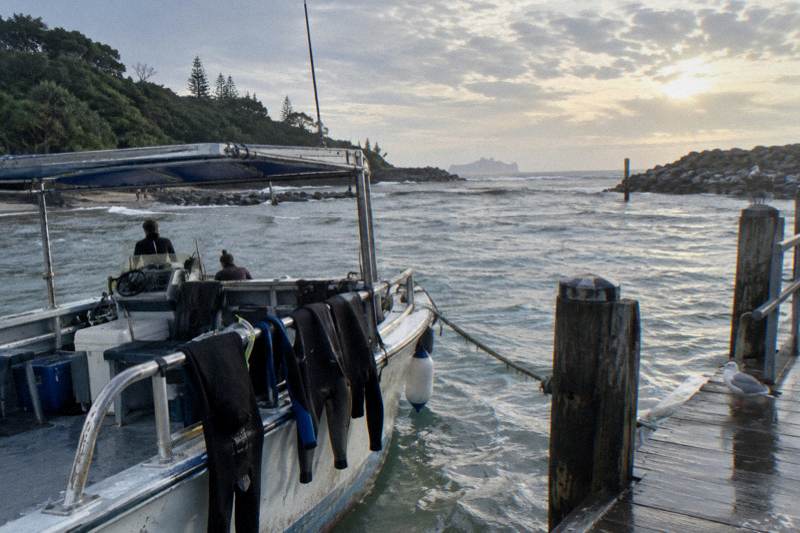
Can You Swim Or Snorkel To Julian Rocks From The Beach?
Julian Rocks sits about 2.5 km offshore in open ocean. Here is what the sources actually say about swimming out from the beach, and how every listed trip reaches the rocks by boat.
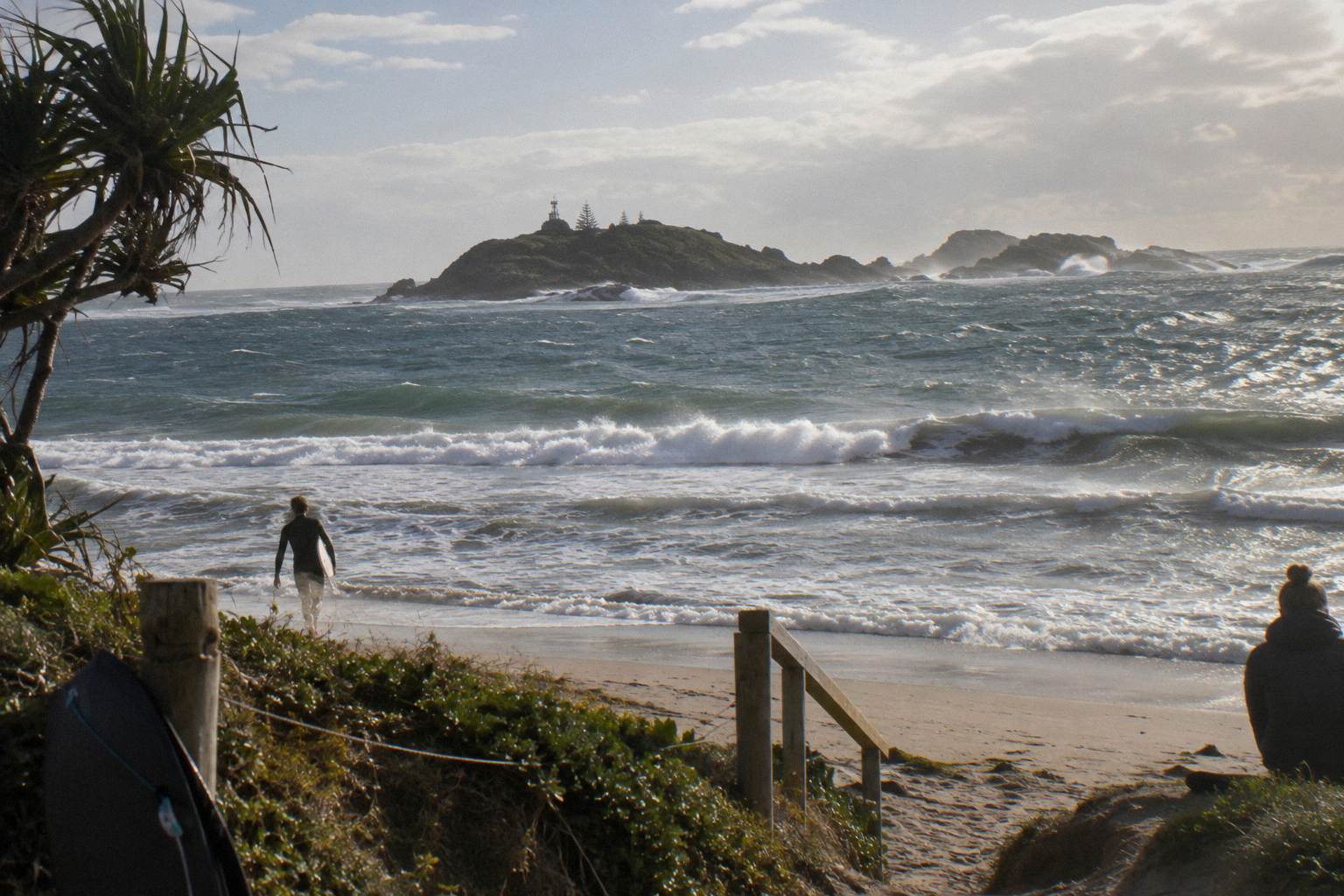
No operator offers a beach-based swim or snorkel out to Julian Rocks, and every trip on this site reaches the rocks by boat. The rocks lie about 2.5 km offshore in open ocean, according to operator pages and NSW Government material. No official statement on swimming out from the beach exists in the sources, so this page does not advise it or forbid it beyond the facts.
The honest starting point is what the record actually says. The NSW Department of Primary Industries and Regeneration, which manages Cape Byron Marine Park alongside NSW National Parks, describes Nguthungulli Julian Rocks as home to sharks, rays, turtles, eels, starfish and corals, sitting about 2.5 km offshore. Operator pages agree on that distance. Byron Bay Dive Centre, one of the local operators, puts the boat ride from Byron Bay at approximately 5 to 10 minutes. That is the scale of the gap: a few minutes by powered vessel, well over an hour of continuous open-ocean swimming for a strong adult in calm water, which is not the usual condition here.
What the sources do not say matters just as much. None of the DPIRD pages, the marine park user guide, the National Parks page for Nguthungulli Julian Rocks Nature Reserve, or any operator page on file addresses a swim from the beach to the rocks at all. There is no permitted route, no prohibited route, no signage description, no patrol arrangement and no guided beach swim product anywhere in the record. Anyone telling you it is allowed or banned is filling that gap with opinion. This site will not do that.
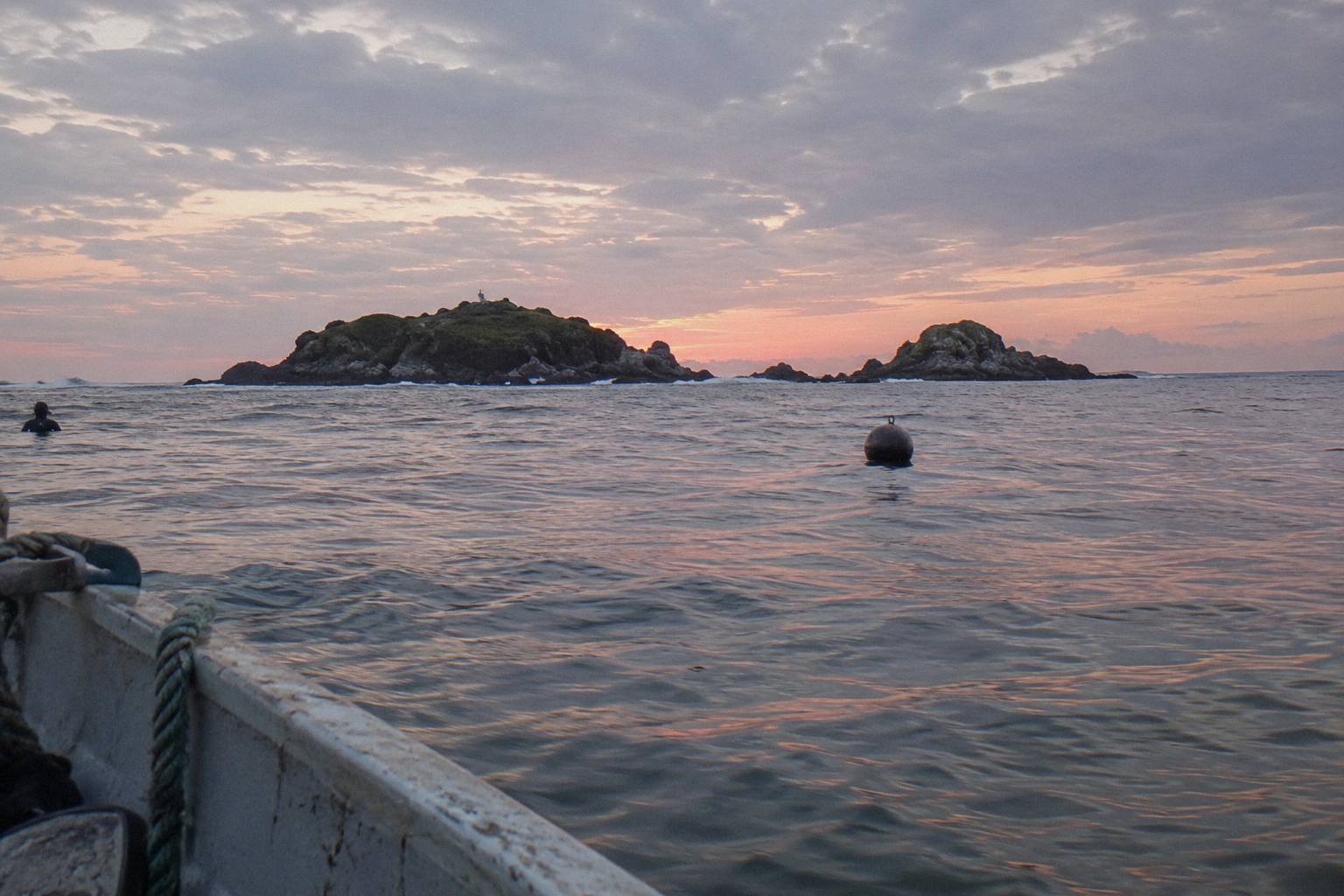
What every listed product does instead is run you out by boat, and that is the route the rest of this page is really about. A reader asking about going without a boat usually ends up booking the snorkel trip once the distance and the conditions are clear, because the boat ride is short, the gear is included and the operators handle the judgement calls on conditions that a solo swimmer would have to make alone. If you are already at that point, these are the three trips this site compares most often.
How Far Is Julian Rocks From The Shore, Really?
The distance every source agrees on is about 2.5 km of open ocean between Byron Bay and the rocks. Operators put the boat ride from Byron Bay at about 5 minutes in one case and approximately 5 to 10 minutes in Byron Bay Dive Centre's wording. From Brunswick Heads Boat Harbour, Blue Seafaris and Out Of The Blue Adventures each run a speedboat, 15 minutes each way to the rocks.
“We had such a good time, Harry was wonderful and had great energy, we were so happy with the tour!”
Two and a half kilometres does not sound like much from the beach. Wavelengths Beach to the rocks crosses open ocean water, not a sheltered bay, and the same operator pages that sell the trips describe possible strong swells, currents, surges, cold water and winds at the site. That wording is from a dive operator describing its own dive site, and it is the reason every commercial product on this roster is vessel-based. The East Australian Current meets cooler southern water around this stretch of coast, which is part of why the marine life is so rich and part of why the water is not a swimming pool with fish in it.
The boat, by contrast, is a non-event. Five to 10 minutes from Byron Bay is the figure Byron Bay Dive Centre prints in its FAQ, and the other operator's page says about 5 minutes. If you were picturing a long channel crossing with a full-day commitment, the reality is closer to a shuttle. The trips are structured around that short ride: roughly 2.5 hours door to door for two of the listed operators and about 2.5 hours for the Turtle School format, with around an hour in the water.
For the details behind the distance question, the dedicated page on how far Julian Rocks sits from Byron Bay breaks down each operator's wording. The short version for this question: the gap is a boat gap, not a swimming gap, and nothing in the sources frames it as a beach swim.
Why Every Listed Trip Goes By Boat
Marine park rules and open-ocean conditions both push the same way. Vessels must limit speed to 4 knots within 200 m of the rocks, anchoring is banned within 700 m, and seven marine park moorings carry a 2 hour maximum. The rocks sit in a no-take sanctuary zone, 27.5% of the 6,118 hectare park, where snorkelling is permitted but collecting and fishing are not.
The rulebook that binds the boats is public and worth reading, because it shows how tightly this site is managed. The DPIRD user guide for Cape Byron Marine Park sets the 4 knot limit within 200 m of Julian Rocks, bans anchoring within 700 m, and allows vessels to tie up on seven marine park moorings rated for boats up to 15 tonnes or 10 m in winds of 24 knots or less, with a 2 hour maximum stay and no fishing from a moored vessel. None of that addresses a swimmer. It addresses vessels, which is what the park expects to be moving people around the rocks.
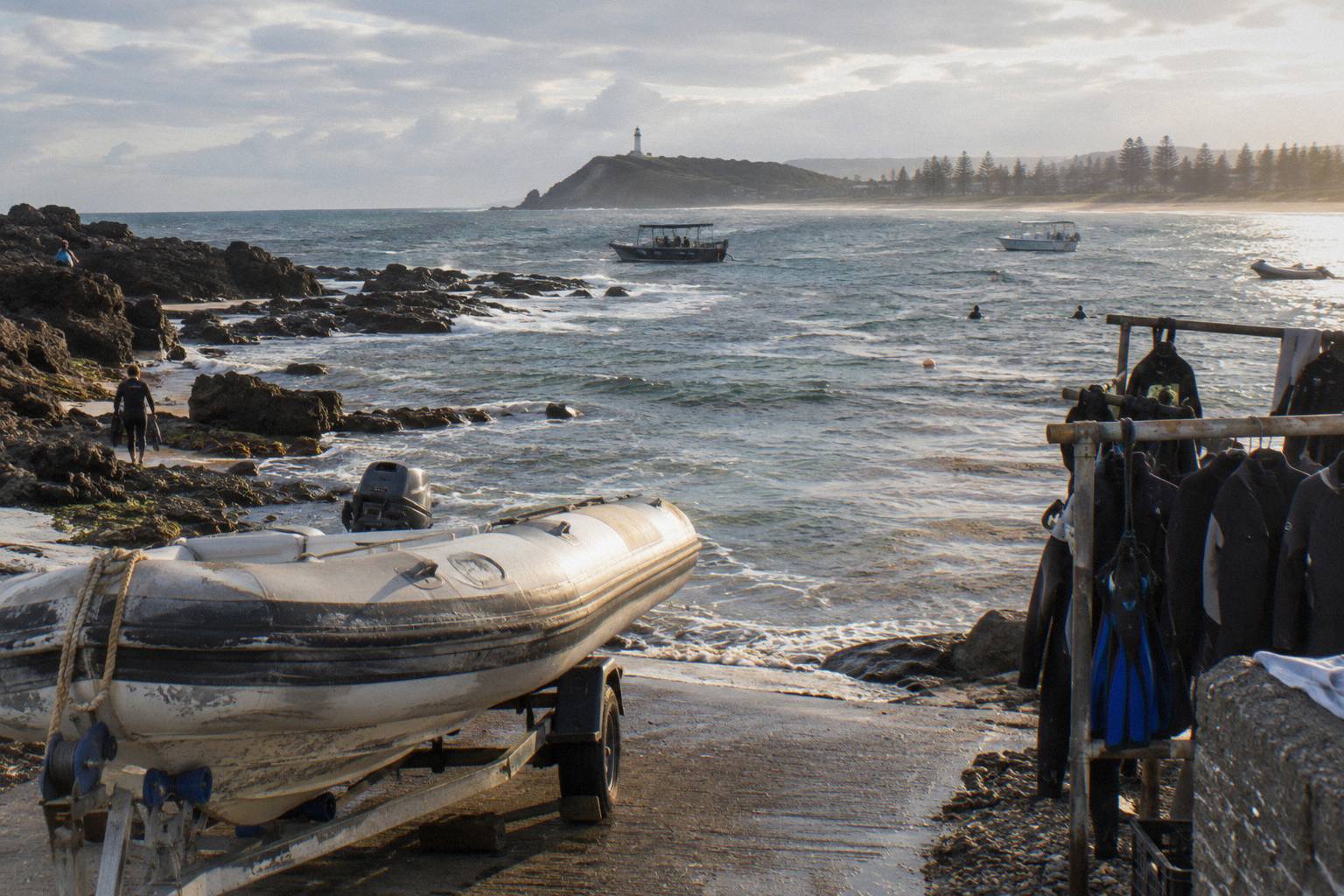
The zoning layer matters too. Sanctuary zones cover 6,118 hectares, or 27.5% of the marine park, and they are strictly no-take: fishing, collecting and reef anchoring are all banned, while boating, surfing, snorkelling and diving are explicitly permitted activities. A NSW Government page adds that collecting or destroying animals and spear fishing are prohibited at the rocks, which are also a bird sanctuary for gulls, terns, tattlers, cormorants and plovers. Byron Bay Dive Centre's own FAQ carries the same thread: waterproof cameras only, no flash, and do not touch, collect or harass marine life. Those are the rules you inherit the moment you are in the water there, whatever brought you.
The practical layer is the one operators talk about openly. The site is open ocean. One dive operator's own page lists strong swells, currents, surges, cold water and winds as possible conditions, notes winter water can drop to 17 °C, and flags strong northerlies between September and Christmas. That is the environment a boat trip manages with a skipper, a weather call and a mooring, and it is why the answer to "can I just swim out" has no commercial or official support in anything on file. For what happens when the operator decides the sea is not right, see what to expect when a trip is cancelled for weather.
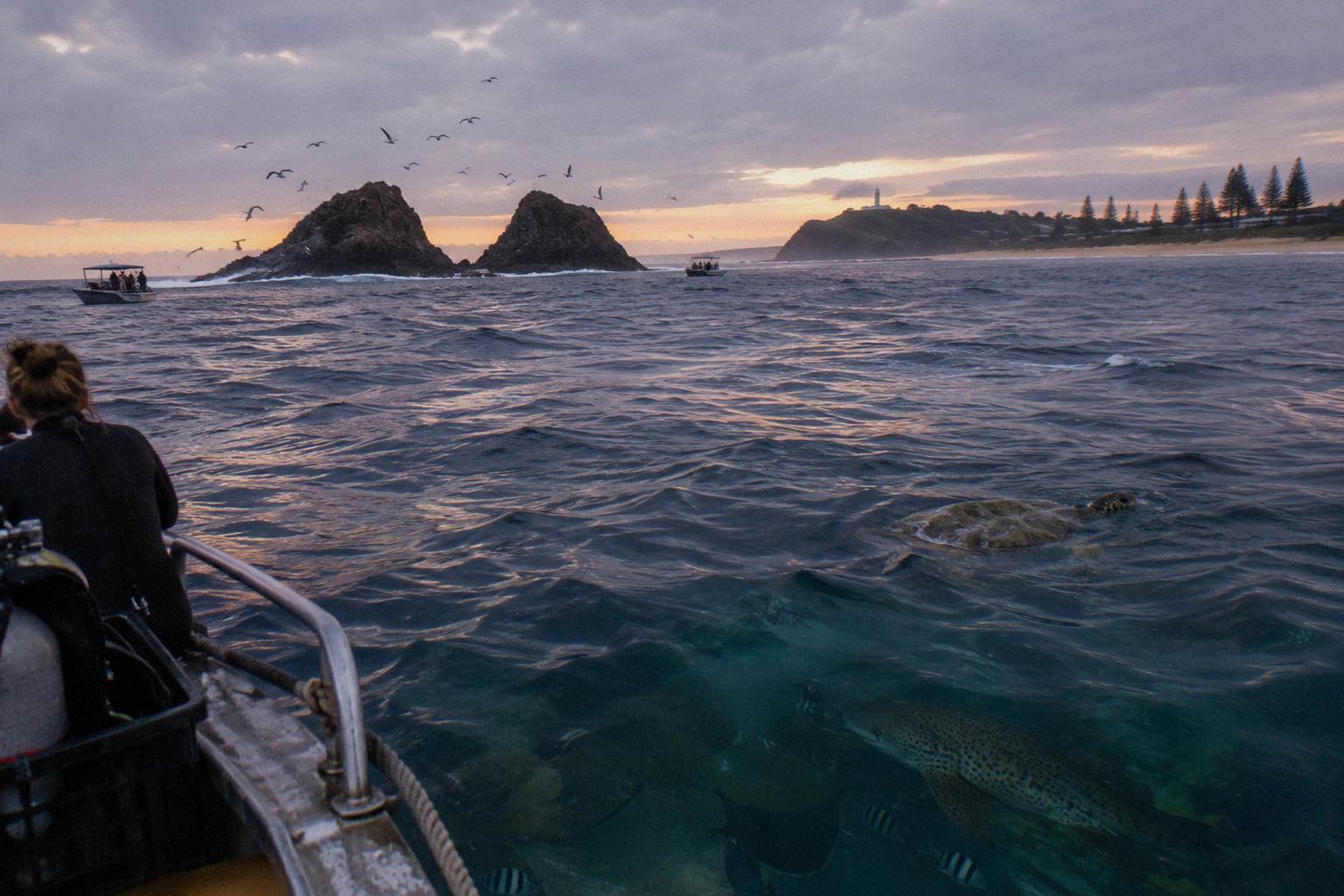
Where The Trips Actually Leave From
Blue Seafaris and Out Of The Blue both meet at Brunswick Heads Boat Harbour, a short drive north of Byron Bay town, with Blue Seafaris listing 43 Harbour Way. Turtle School meets at Byron Plaza on Jonson Street in Byron Bay and runs transport to The Pass, where its boat departs. For the other listed trips no meeting point is printed: check the booking page.
This is where the beach question quietly answers itself. No product hands you fins at the sand and waves you seaward. Each operator runs its own logistics: the Blue Seafaris and Out Of The Blue Adventures trips both cross from Brunswick Heads Boat Harbour by speedboat, 15 minutes each way to Julian Rocks. The table below only states what each trip's own page states.
| Trip | Operator | Meeting point as stated | Duration |
|---|---|---|---|
| Blue Seafaris, 2.5-Hour Snorkel | Blue Seafaris | 43 Harbour Way, Brunswick Heads Boat Harbour | about 2.5 hours |
| Out Of The Blue, Brunswick Heads | Out Of The Blue Adventures | Brunswick Heads Boat Harbour, NSW 2483 | about 2.5 hours |
| Turtle School, 3-Hour Snorkel | Turtle School (Byron Bay Dive Centre) | Turtle School, Byron Plaza, Jonson Street, Byron Bay, with transport to The Pass | about 3 hours |
| Byron Bay Dive Centre Sea Turtle Snorkel | Byron Bay Dive Centre | not stated, check the booking page | about 2.5 hours |
The Brunswick Heads departures surprise some visitors. Two of the three best-documented trips do not leave from Byron Bay at all, so if staying in town without a car, factor the drive north or choose the Turtle School format, whose central Byron meeting point includes transport through to The Pass. The booking page for Turtle School states there is no pick-up from accommodation. Never assume a trip leaves from Main Beach or Clarkes Beach: the sources never say that about any listed trip, and the pages that do state a departure point name Brunswick Heads or The Pass.
The featured trip on this site, the Blue Seafaris biologist-guided snorkel, is one of the Brunswick Heads departures. It runs from AUD 94 per person for about 2.5 hours and carries a 4.5 rating across 448 reviews on its booking page. Out Of The Blue matches it on price, from AUD 94, rated 4.4 across 167 reviews. The Turtle School and Byron Bay Dive Centre sea turtle trips print no price on the pages on file, so ask the operator or read the live listing.
If comparing departure logistics is the deciding factor for you, the longer comparison piece on choosing a Julian Rocks snorkel operator works through it in depth.
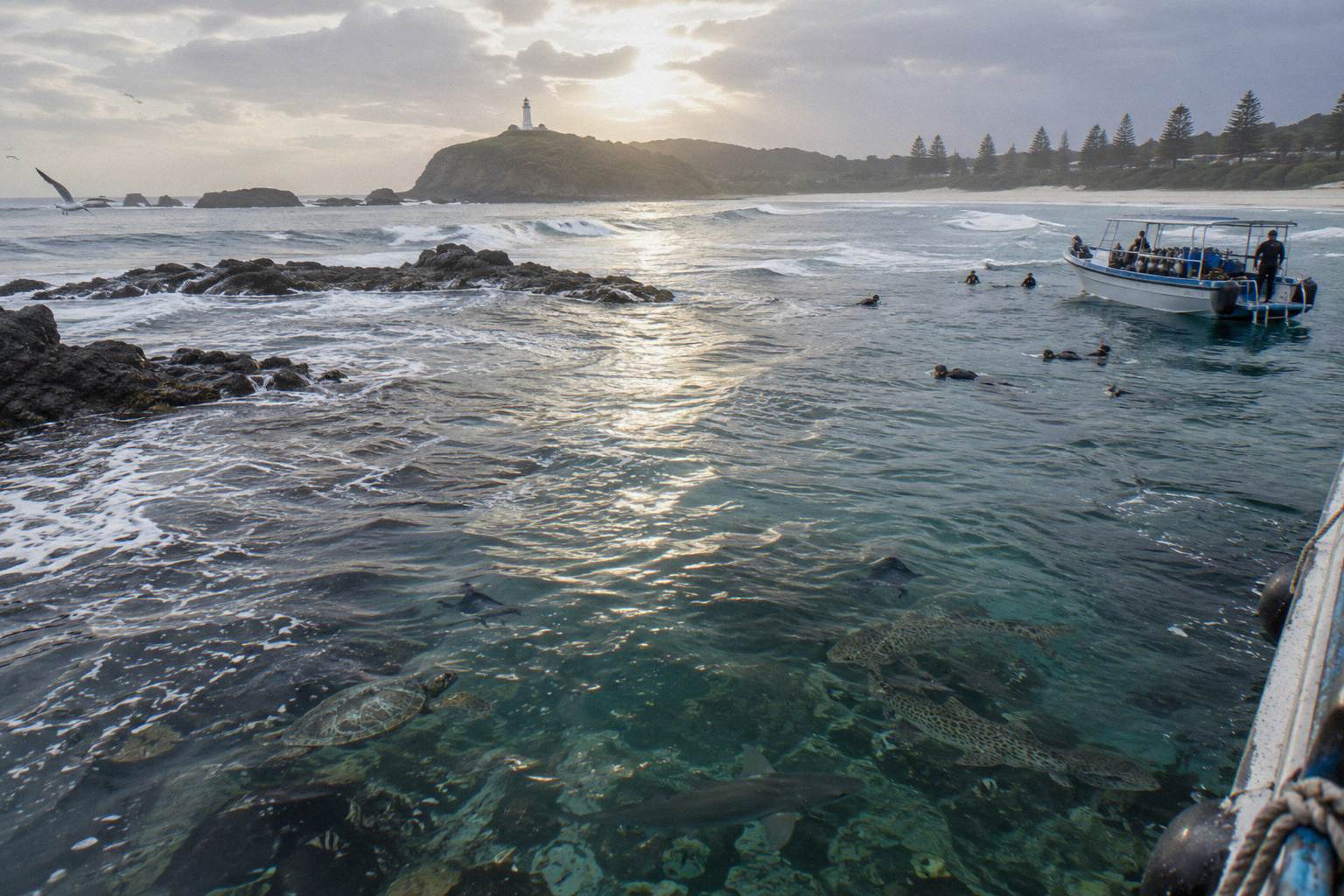
Which Trip Fits You If You Were Hoping To Swim Out
If your instinct was to skip the boat, match the trip to why. Confident ocean swimmers who want time in the water suit the 3 hour turtle-focused formats. Families with younger children should check minimum ages first, since operators set 5, 7 and 10 years on different trips. Nervous or first-time snorkellers get the most support from trips with a naturalist guide and small passenger caps.
The beach-swim instinct usually comes from one of three places, and each points to a different trip. The first is confidence: you swim well and a boat feels like cheating. The honest reply is that the listed trips still put you in the water for around 50 to 60 minutes in the shallow 3 to 12 m sheltered areas where the marine life concentrates, with a vessel to return to. The turtle-focused formats run about 2.5 hours total with roughly an hour in the water, which is the most in-water time on the roster.
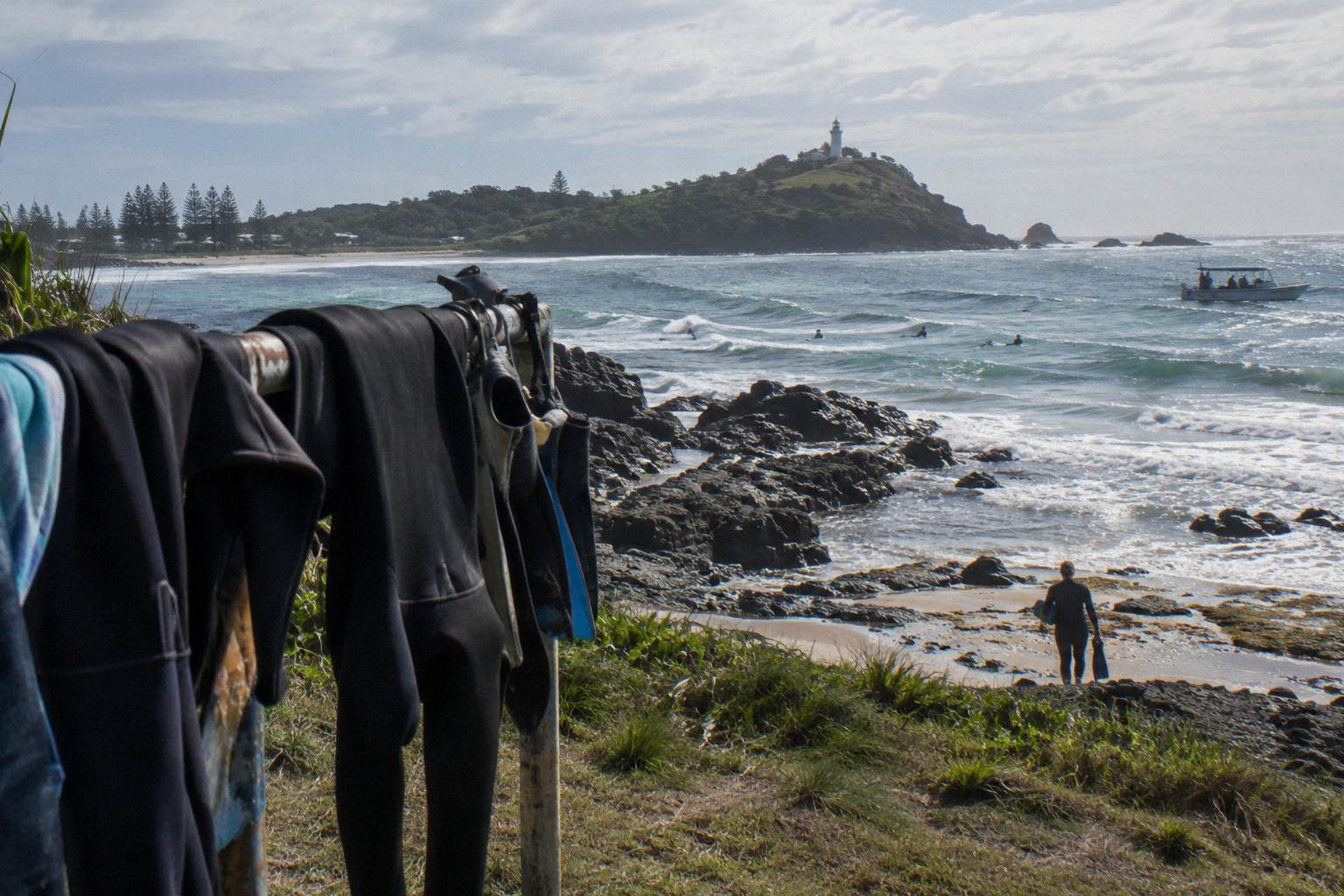
The second is cost: you hoped to avoid a ticket entirely. There is no free self-guided option documented anywhere in the sources, so the comparison is between the listed trips. Two print from AUD 94 per person; the others leave pricing to their live listings. The third is control: you wanted to go on your own schedule. Here the weather reality bites, because every operator reserves the right to call off a departure when the sea is unsuitable, and Byron Bay Dive Centre states it contacts guests by text or phone with a full refund or reschedule in that case.
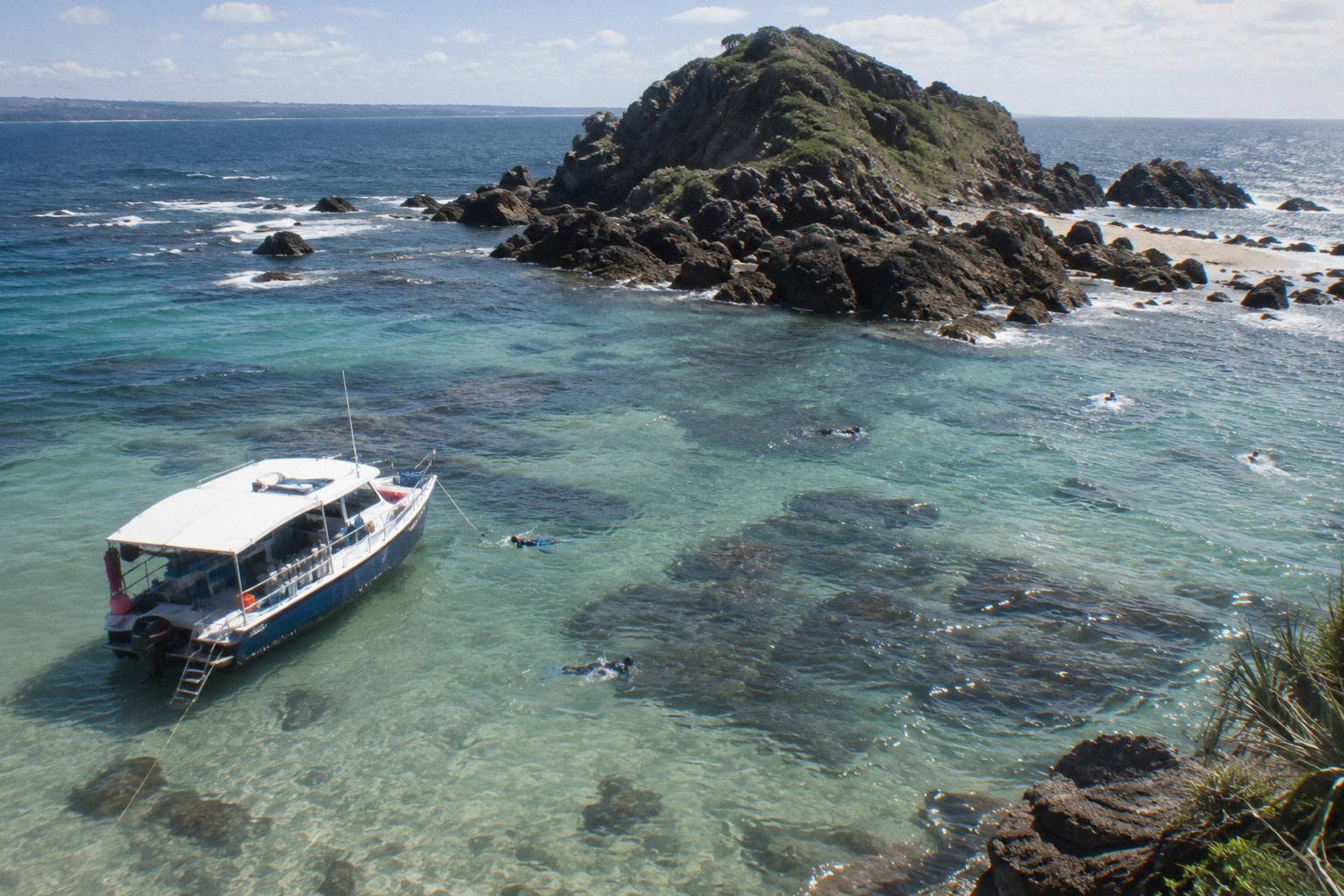
Requirements differ more than most visitors expect, and this is worth checking before booking rather than at the jetty. Turtle School (Byron Bay Dive Centre) requires previous open-ocean snorkelling experience and the ability to swim 200 m unassisted in open ocean, with kids aged 7 to 18 accompanied by an adult and over-65s needing a GP clearance. A second sets minimum age 5 and caps tours at 12 passengers with a naturalist guide. Byron Bay Dive Centre's separate turtle trip states minimum age 10 and asks that all participants swim at least 25 m unassisted and feel comfortable in the ocean; it also prohibits guests with pregnancy or back or spinal injuries from vessel-based activities, which is that operator's rule and not a general one. Blue Seafaris requires comfort swimming in open water and offers pool noodles rather than flotation jackets for non-swimmers, while Out Of The Blue Adventures requires the 200 m unassisted swim before booking. Neither states a minimum age: ask the operator.
| If you are... | What to check first | Trips that commonly fit |
|---|---|---|
| A confident swimmer wanting maximum water time | In-water minutes per trip | Turtle School 3 hour, Byron Bay Dive Centre sea turtle snorkel |
| Travelling with children under 10 | Minimum age, which is 5, 7 or 10 depending on the trip | Ask each operator before booking |
| A first-time or nervous snorkeller | Guide ratio, passenger cap, float support | Small-cap trips with a naturalist guide |
| Prone to seasickness | Boat duration and onboard support | Byron Bay Dive Centre carries ginger tablets; bring your own too |
| Booking on a tight schedule | Cancellation window and refund path | 48 hour policies are common; read the listing |
What To Ask The Booking Desk Before You Commit
Five questions cover almost everything the sources leave open: the exact meeting point and transport, the minimum age for your group, what gear is included, the cancellation and weather policy, and any swimming or medical requirements. Every one of these varies by operator, and none is generalisable across the roster.
Ask where you meet and how you get to the boat. The answers range from Brunswick Heads Boat Harbour to a Byron Plaza shop with transport to The Pass, and a wrong assumption here can cost you the departure. Ask the minimum age if children are involved, because 5, 7 and 10 years all appear on operator pages and the Blue Seafaris and Out Of The Blue pages state none. Ask what is included: Byron Bay Dive Centre lists fins, mask, snorkel and wetsuit, and advises 5 mm long wetsuits; it does not offer prescription masks, though contact lenses are fine.
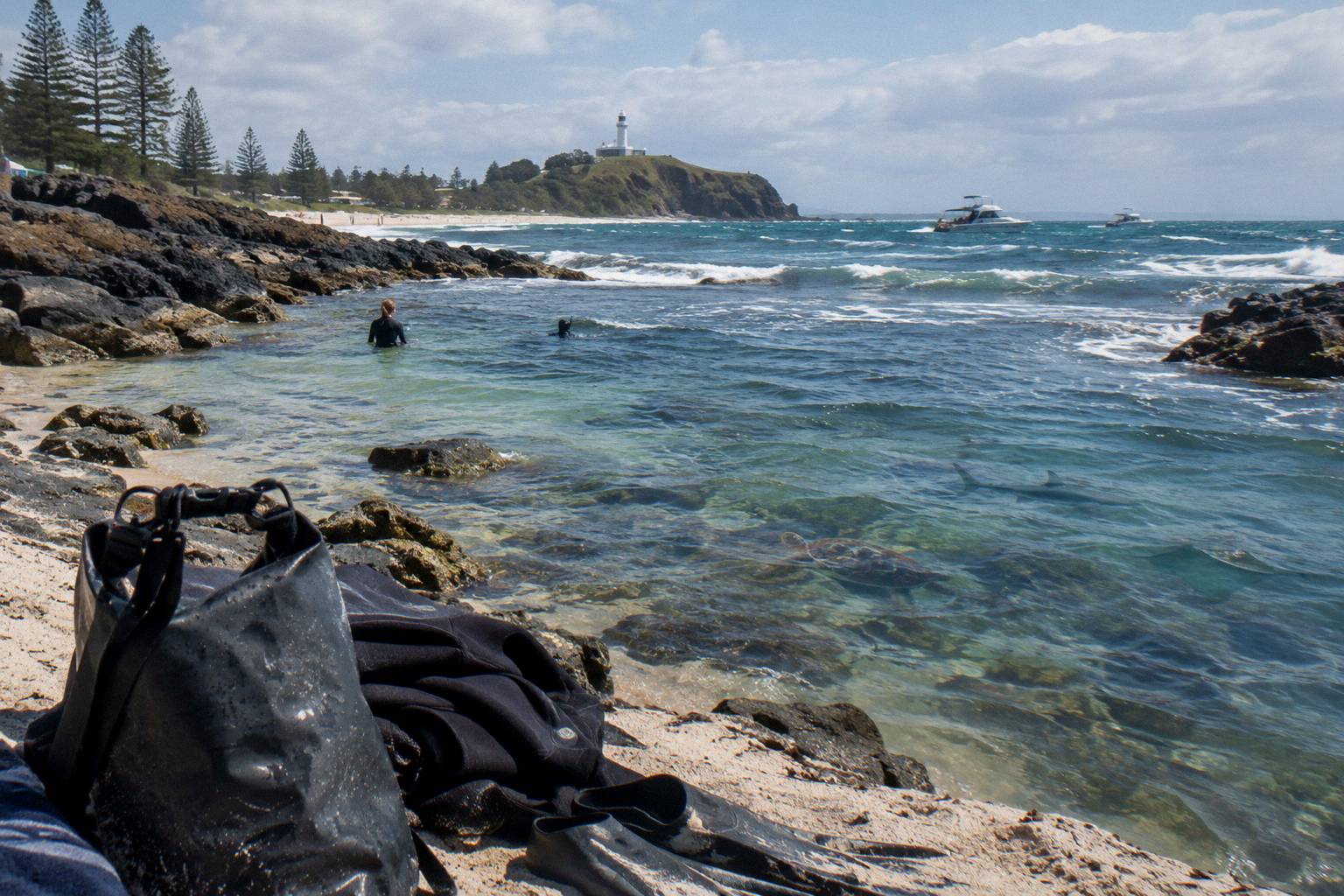
Ask about the cancellation window. Byron Bay Dive Centre's policy is 48 hours with a 100% fee inside the window, and weather calls come with a full refund or reschedule; bookings made through an agent follow the agent's policy. Ask about swimming requirements and medical rules, since the 200 m unassisted swim and the pregnancy and spinal-injury exclusions are real conditions on specific trips. Finally, ask what support exists for nervous snorkellers: one operator suggests a long wetsuit or a pool noodle for buoyancy confidence, and lifejackets are carried on board.
The Wildlife You Only Reliably Reach By Boat
The reason anyone crosses 2.5 km of ocean at all is what waits in that shallow band. Operators describe the meeting of the East Australian Current with cooler southern water as supporting over 1000 marine species and more than 500 species of fish, though that is operator wording, not an official count. Green, hawksbill and loggerhead turtles are listed all year, and Byron Bay Dive Centre notes turtles can be spotted year-round throughout the day while flatly declining to guarantee them. Leopard sharks gather in the warmer months from December to April, and endangered grey nurse sharks fill the sand trenches from June to November, though those trenches sit at dive depths of 8 to 24 m rather than snorkel depths.
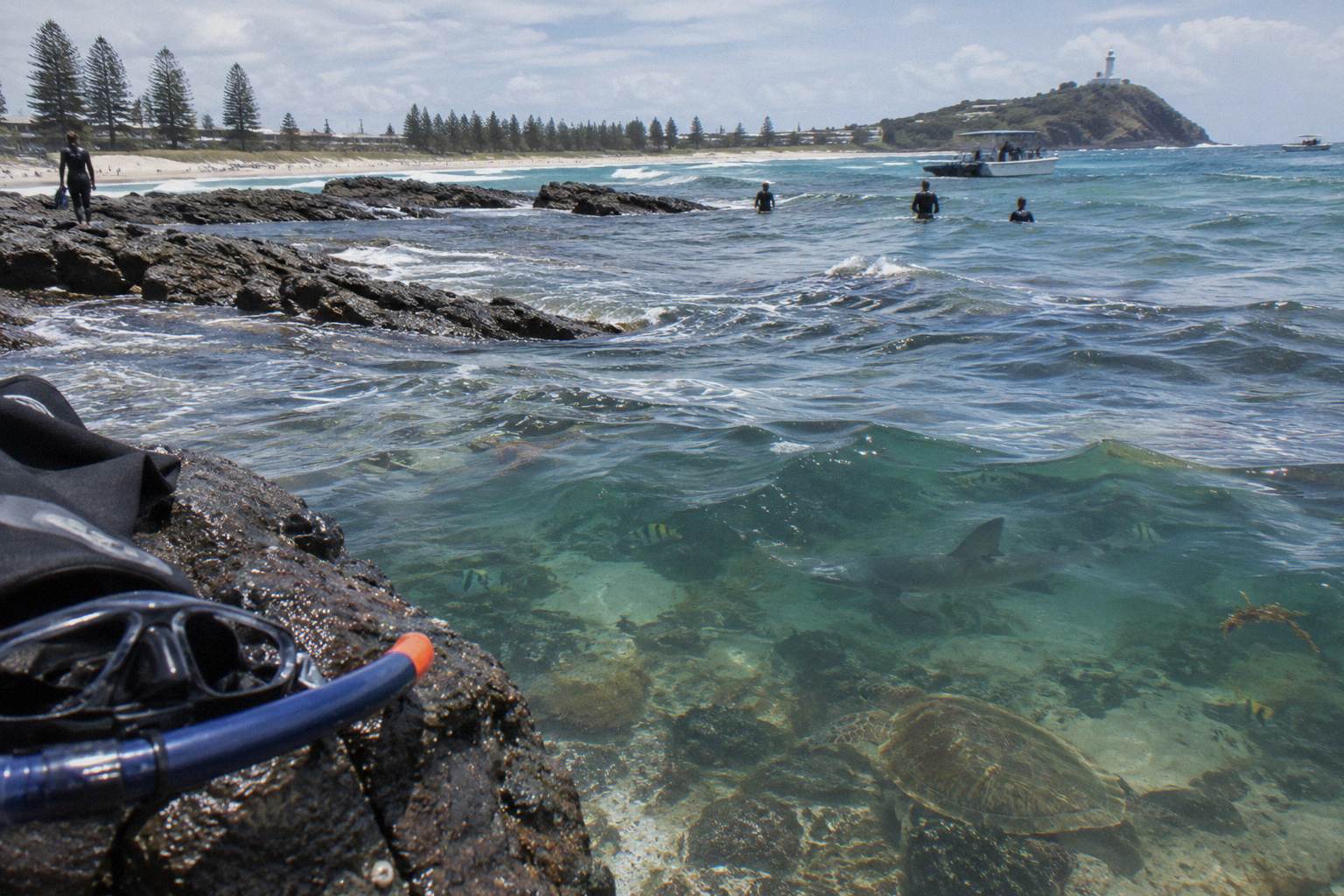
The protected status of the site shapes what the trip feels like, too. The nature reserve listing for Nguthungulli Julian Rocks records the dual name adopted in July 2023, and Bundjalung lore tells of a spear breaking a canoe in two, the halves becoming the rocks, as reported tradition. The Bundjalung People of Byron Bay, the Arakwal, hold a strong association with the land and sea in the park's northern parts, with Jali people in the southern section. The rocks themselves are a bird sanctuary closed to landings, which is one more reason every product on this roster is a water-level experience delivered by boat.
Seasons matter for what you will see, and the planning question is covered in full elsewhere on Julian Rocks Snorkelling, including the month-by-month breakdown of water temperature and the shark seasons. For this question the takeaway is simpler: the shallow sheltered water where the trips operate is the accessible slice of the site, and it is the slice with the turtles in it.
Common Questions About Swimming To Julian Rocks
Can You Swim Or Snorkel To Julian Rocks From The Beach?
No operator offers a beach-based swim out to the rocks, and every listed trip reaches them by boat. The rocks lie about 2.5 km offshore in open ocean. No official statement on swimming from the beach exists in the sources, so this site neither advises nor forbids it beyond those facts.
How Long Does The Boat Ride To Julian Rocks Take?
Operators put the ride from Byron Bay at about 5 minutes, and Byron Bay Dive Centre's FAQ says approximately 5 to 10 minutes. From Brunswick Heads Boat Harbour, both Blue Seafaris and Out Of The Blue Adventures run a 15-minute speedboat transfer each way.
Do All Snorkel Trips Leave From Byron Bay?
No. Blue Seafaris and Out Of The Blue meet at Brunswick Heads Boat Harbour, while Turtle School meets at Byron Plaza in Byron Bay with transport to The Pass. For some listed trips the meeting point is not printed: check the booking page.
Is Snorkelling Allowed At Julian Rocks?
Yes. Snorkelling is a permitted activity in the sanctuary zones of Cape Byron Marine Park, which are no-take areas covering 27.5% of the park. Fishing, collecting and reef anchoring are banned, and all species in sanctuary zones are protected.
Can I Touch Or Feed The Marine Life At Julian Rocks?
No. Fish feeding, including shark feeding, is prohibited in the marine park, collecting is not permitted in sanctuary zones, and operators instruct guests not to touch, collect or harass marine life. Waterproof cameras without flash are the accepted way to record what you see.
What Is The Minimum Age For A Julian Rocks Snorkel Trip?
It depends on the trip: operator pages show minimum ages of 5, 7 and 10 years on different trips, and Byron Bay Dive Centre's turtle trip states 10. The Blue Seafaris and Out Of The Blue booking pages state none, so ask the operator before booking.